A Look into Didi's 2025 Annual Report: International Business Exceeds Expectations, with Continuous Investment in the Latin American Market
On March 13th, Didi released its performance report for the fourth quarter and the full - year of 2025, with its international business outperforming expectations.
The financial report shows that in the fourth quarter of 2025, Didi's international business GTV (Gross Transaction Value) increased by 47.1% year - on - year to 36.6 billion yuan, and the order volume increased by 24.5% year - on - year to 1.265 billion orders. The average daily order volume exceeded 13 million, accounting for one - third of China's mobility market.
In April 2025, after Didi announced the restart of its food delivery service in Brazil, it further increased its investment in key overseas markets such as Latin America. Through the synergy of three major services, "mobility + food delivery + finance", the 99 platform under Didi has created an all - in - one lifestyle service platform for local users in Brazil.

A 99 rider is delivering food.
Continuous investment has enabled Didi to achieve double - digit step - by - step growth in both order volume and GTV in the past three quarters, and the order volume in the fourth quarter reached a new high.
Looking at the whole year of 2025, Didi's international business order volume increased by 24.7% year - on - year to 4.505 billion orders, with a compound growth rate of 32% in the past three years; the annual international business GTV increased by 28.2% year - on - year to 117 billion yuan, continuing to maintain a steady upward trend.
CICC pointed out in its latest research report that it is optimistic about the long - term value brought by Didi's international business and maintains its "outperform the market" rating.
International mobility business has been profitable for two consecutive years, firmly holding the overseas market share
The financial report shows that as the core of Didi's international business, the international mobility business has maintained adjusted EBITDA profitability for two consecutive years.
Since going global in 2018, Didi's international business has served more than 100 million users, covering 14 countries and regions around the world, among which 10 countries are in Latin America with a population of 660 million.
As large countries with a population of over 100 million in Latin America, both Brazil and Mexico have the characteristic of a highly concentrated population in extra - large and large cities, which provides a large market space for mobile mobility, instant delivery, and online food delivery. Coupled with the relatively backward infrastructure development in Latin America, this mismatch between supply and demand has laid a foundation for Didi to enter Latin America to some extent.
After years of operation in Brazil, Didi's services cover more than 3,300 towns in Brazil, and its market share in the mobility business has reached about 40%.
In Mexico, Didi has gradually expanded from a single mobility platform to the financial and food delivery fields, covering more than 70 cities and serving over 30 million users. It has achieved the first place in both the mobility and food delivery market shares.
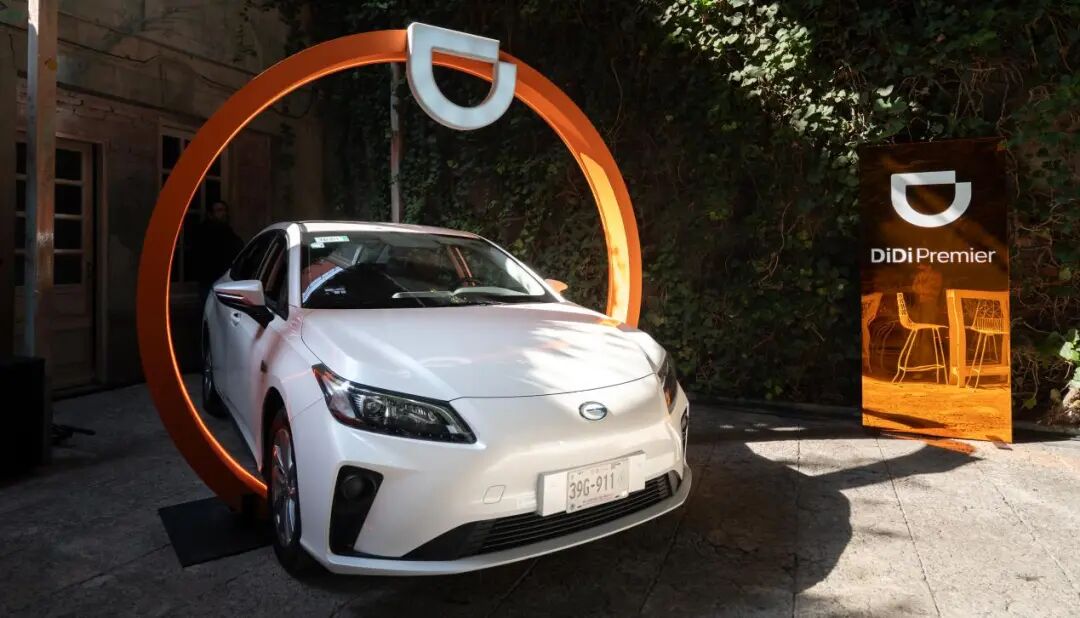
The pure - electric vehicle model introduced by Didi in cooperation with GAC Aion to Mexico.
In addition to the local market demand, Didi's remarkable achievements in distant Latin America also benefit from its approach of adhering to local - based operations.
Taking Brazil as an example, Didi developed its local business by acquiring the Brazilian 99 mobility platform and continuing to use the "99" brand. It retained the core team of 99 and did not overly interfere with the development of the local market.
This approach has enabled local users to maintain their usage habits and natural trust, successfully helping Didi quickly enter the Brazilian market. As of now, Didi has accumulated 55 million active users, 1.5 million drivers, and riders in the local area.
Meanwhile, Didi has also carried out product innovation according to local mobility characteristics. For example, in Latin America, motorcycles have the advantages of low cost, convenient passage, and high usage rate. In response, 99 launched the two - wheeled mobility category 99Moto in 2022, and the cumulative number of orders completed by two - wheeled mobility in the past three years has exceeded 2 billion.
Data shows that the number of motorcycle drivers on the 99 platform increased by 30% in the past year, the number of delivery orders completed by motorcycles increased by 60%, and the number of mobility orders increased by 40%.

A 99 rider is delivering food.
Beyond ride - hailing in Latin America
After consolidating its position in the mobility market, Didi has extended its business in Latin America to include item delivery, food delivery, finance, etc., creating an all - in - one lifestyle service platform for local users.
Mexico is a typical example. In 2019, based on the user and driver base established by its ride - hailing business, Didi officially entered the Mexican food delivery market with DiDi Food. Through the strategy of targeting the sinking market and offering high - cost - performance services, it has grown into a leading food delivery platform in the local area.
At the same time, Didi has further expanded its services in Mexico horizontally to include instant delivery services such as medicine delivery, alcohol delivery, and fresh food delivery. Currently, Didi's services in the local area cover more than 70 cities and over 30 million users, and the prototype of a "super app" ecosystem is taking shape.
The success in the Mexican market has given Didi more confidence to expand its food delivery business in Brazil. In April 2025, Didi announced the restart of its food delivery business in Brazil.
An important consideration for refocusing on the Brazilian food delivery market is that there is significant room for imagination. Currently, the penetration rate of food delivery in Brazil is only about 30%, far lower than the over 50% level in mature markets such as China. At the same time, about 60% of Brazilians still order food by phone, and the online penetration rate is relatively low.
Didi's 55 million active users and 1.5 million drivers in Brazil provide a natural foundation for the expansion of its food delivery service.
After less than a year, 99Food's services have been launched in more than 60 cities in Brazil, covering economically active core urban areas such as São Paulo, Rio de Janeiro, Salvador, Belo Horizonte, and Goiânia. According to the plan, by mid - 2026, it will be further expanded to 100 cities.
Another set of data also verifies this result from the side. According to the data of Worldpanel under the data analysis company Numerator, which was exclusively reviewed by the Brazilian newspaper "Valor Econômico", in terms of market share, in the São Paulo metropolitan area with a population of about 20 million, the market share of iFood decreased from about 64% to 52.3% from August to October 2025; during the same period, the market share of 99Food quickly climbed to 10%, and the user penetration rate reached 15.9%, equivalent to 3.1 million users.
In addition to meeting the all - in - one lifestyle service needs of Latin American users, Didi has also joined hands with other Chinese enterprises to go global and promote local green mobility.
As early as 2022, the 99 platform took the lead in establishing the "Brazilian Sustainable Mobility Alliance". In July 2024, the electric vehicle mobility category "99electric - Pro" on the 99 platform was launched and gradually expanded to five major cities: São Paulo, Brasília, Porto Alegre, Goiânia, and Curitiba.
As of November 2025, this category has served more than 27 million passengers in total, reducing carbon dioxide emissions by about 31,200 tons, equivalent to planting about 245,000 trees.
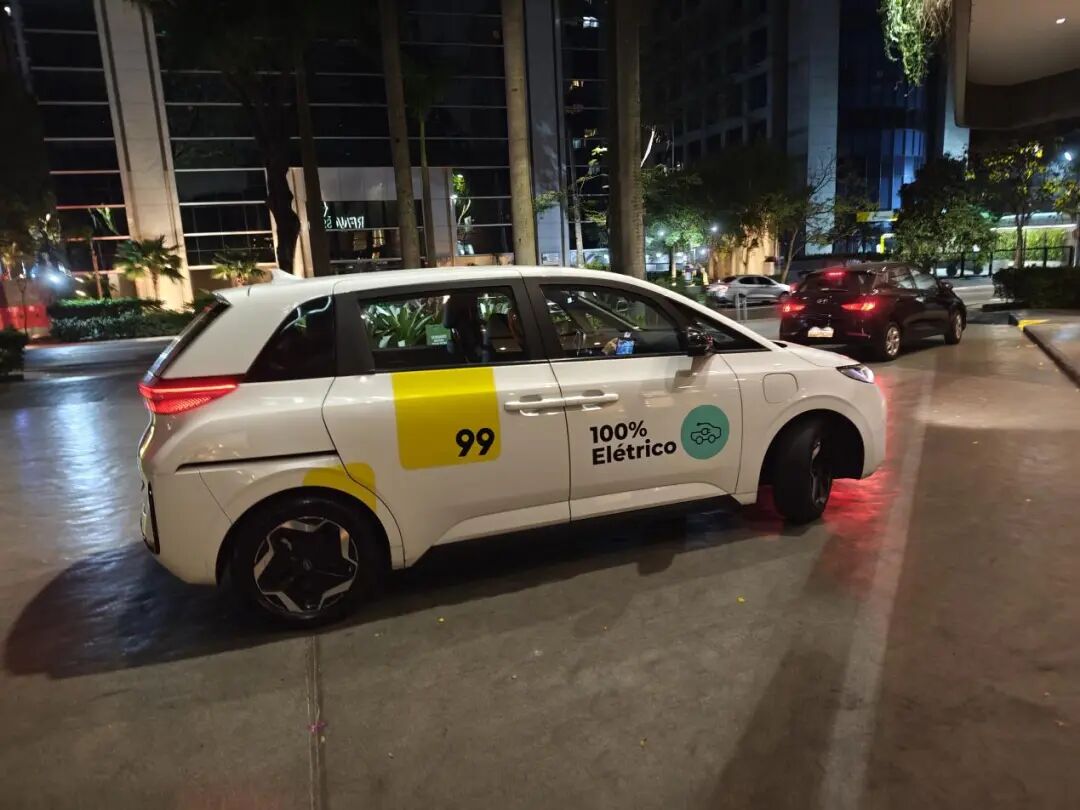
The pure - electric vehicle model BYD D1 introduced by 99 in cooperation with BYD to Brazil.
In Mexico, Didi launched its first standardized premium car service category in October 2025, with 500 pure - electric vehicles all from domestic brands, including GAC Aion and JAC Group. According to the plan, by 2030, Didi will cooperate with automobile manufacturers, charging facility enterprises, financial and insurance institutions, etc. to introduce 100,000 electric vehicles in Mexico.
Industry analysts point out that Didi's strategic investment in new overseas businesses can bring double - digit growth in both order volume and GTV in a relatively short period, proving that the synergistic value of its various businesses in the Latin American market has emerged. With continuous in - depth development, its overseas business may maintain high - speed growth in the future.
*Disclaimer:
The content of this article only represents the author's views.
The market is risky, and investment should be cautious. Under no circumstances does the information in this article or the expressed opinions constitute investment advice to anyone. Before making an investment decision, if necessary, investors must consult professionals and make prudent decisions. We have no intention to provide underwriting services or any services that require specific qualifications or licenses to engage in for all parties in the transaction.