Leapmotor “Squeezes Out” 500 Million Yuan in Profits: The Average Price per Vehicle is 100,000 Yuan, and Each Vehicle Only Earns 905 Yuan
Earned a net profit of 500 million yuan in a year! Leapmotor also achieved annual profitability.
However, what the outside world cares most about is not just how much money was earned, but also the logic behind its profitability.
After all, this is Leapmotor, which is known as "low price with high configuration" and "the king of cost - effectiveness".
Among its competitors with an average vehicle price of easily two or three hundred thousand yuan, Leapmotor's average price per vehicle last year was only a little over 100,000 yuan, and it had a net loss of 2.8 billion yuan the previous year...
How exactly did Leapmotor achieve profitability?
We roughly did some calculations: Each vehicle contributed 905 yuan.
How did Leapmotor achieve profitability?
In 2025, Leapmotor achieved annual profitability for the first time, with a net profit of 540 million yuan; in the same period of 2024, Leapmotor still had a net loss of 2.8 billion yuan.
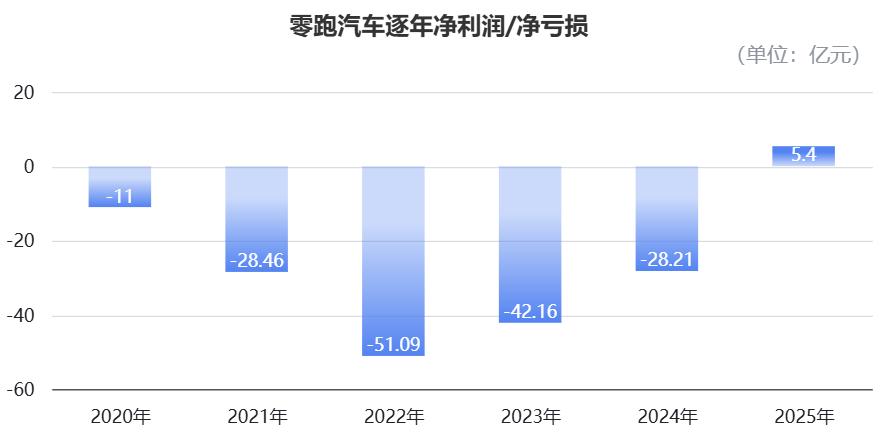
In the new - energy vehicle startup camp, after Li Auto, the second player who truly crossed the threshold of annual profitability has emerged.
This also means that Leapmotor has truly run through its own business model.
From a financial perspective, there are several key variables in Leapmotor's profitability formula: revenue, gross profit margin, and expense ratio.
Looking separately, revenue represents the sales volume scale. In 2025, Leapmotor's revenue was 64.73 billion yuan, a year - on - year increase of 101.3%, achieving a double - digit growth.
Among them, the sales revenue of electric vehicles and components was 62.01 billion yuan, a year - on - year increase of 96.0%, driven by the increase in the delivery volume of complete vehicles and spare parts.
Calculated based on the annual sales volume, Leapmotor's average price per vehicle in 2025 was about 103,900 yuan, a year - on - year decrease of about 3,740 yuan.
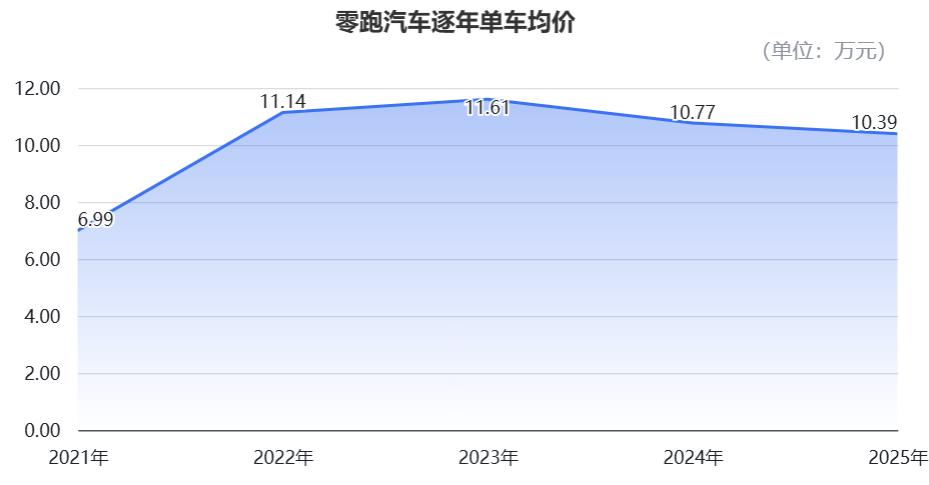
For reference, NIO and Li Auto, which have disclosed their 2025 financial reports, had an average price per vehicle of about 235,800 yuan and 262,300 yuan in 2025 respectively.
The revenue from services and other sales was 2.72 billion yuan, a year - on - year increase of 413.2%, mainly due to the significant increase in overseas vehicle sales, which drove up the revenue from carbon credit trading.
Next, let's look at the important indicator of whether each vehicle is profitable - the gross profit margin.
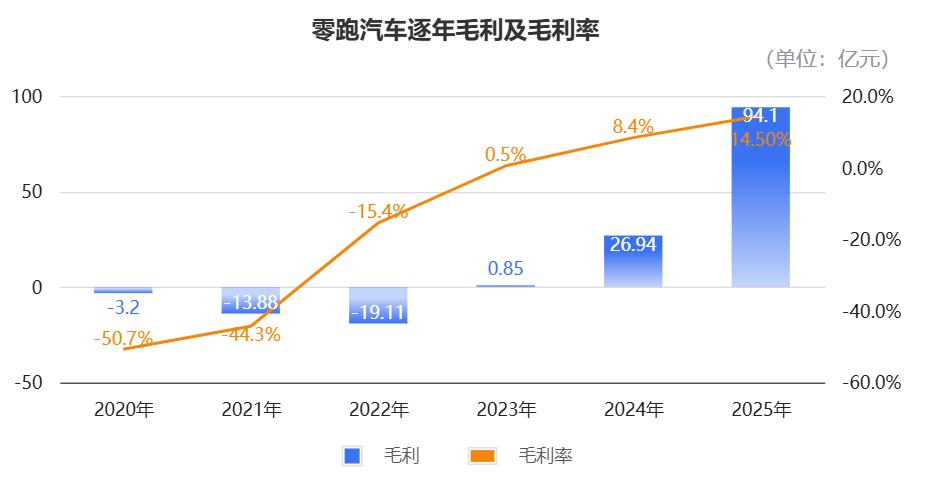
In 2025, Leapmotor's gross profit margin was 14.5%, a year - on - year increase of 6.1 percentage points, reaching double - digit levels for the first time, with an astonishing growth rate.
Among them, the company's gross profit margin in the fourth quarter had reached 15%. According to Li Tengfei, the vice - president and CFO of Leapmotor, the gross profit margin of complete vehicles was about 12 percentage points, and that of other businesses was about 3 percentage points.
Meanwhile, Leapmotor has also relatively tightened its expense side:
In 2025, the company's R & D expenses and sales expenses were 4.29 billion yuan and 3.65 billion yuan respectively, with year - on - year increases of 47.9% and 70.6% respectively.
However, on the premise of a sharp increase in revenue, Leapmotor's R & D expense ratio and sales expense ratio last year were 6.63% and 5.64% respectively, a year - on - year decrease of 2.4 and 1 percentage points respectively.
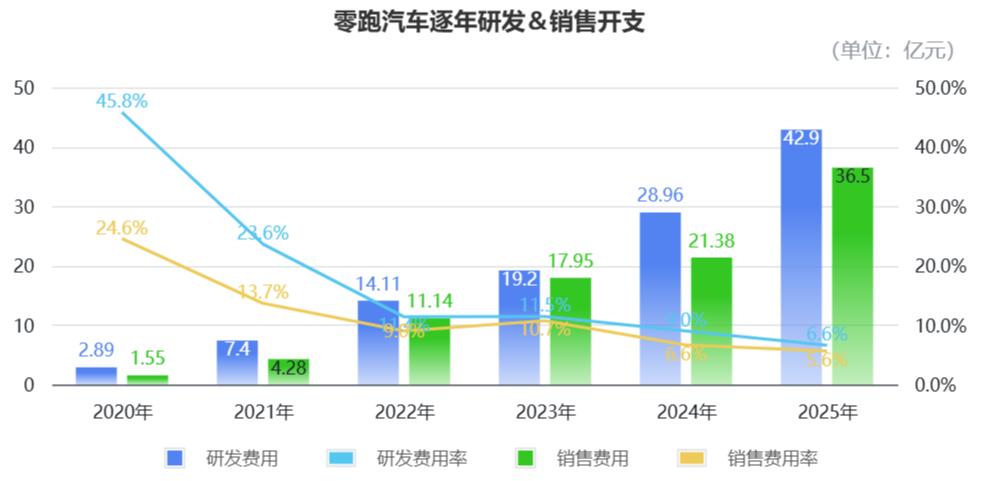
So, comprehensively speaking, Leapmotor's profitability path is clear - for each vehicle sold, it makes more money and saves more money.
If we break it down from a business perspective, Leapmotor's profitability model still holds water.
First of all, the most crucial point is sales volume, which actually corresponds to Leapmotor's revenue level.
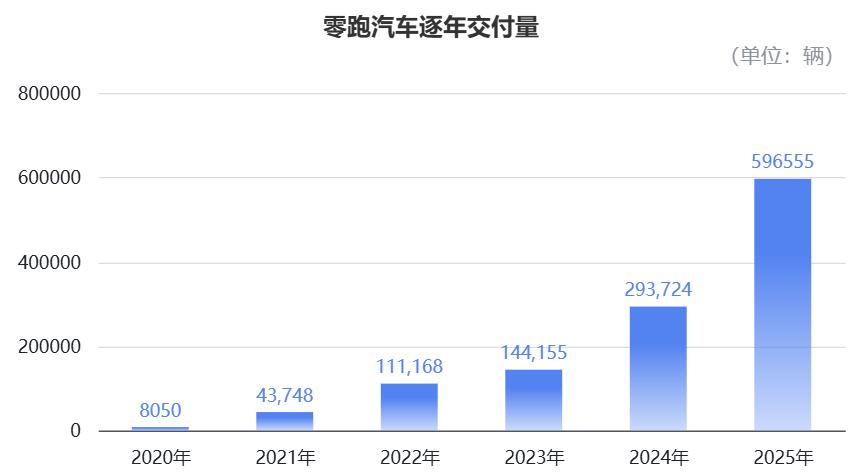
In 2025, Leapmotor's annual sales volume was 596,555 vehicles, a year - on - year surge of 103.1%, achieving double - digit growth for two consecutive years and ranking first among new - energy vehicle startups in 2025.
There is a very typical rule in the automotive industry: Once the scale increases, the cost will be diluted.
The fixed cost for developing a platform, building a production line, and maintaining a sales team is a certain amount. The more vehicles are sold, the lower the cost per vehicle will be.
Therefore, the result of a significant increase in sales volume is that the cost per vehicle decreases, and the profit margin is released - this is the economies of scale.
A large part of Leapmotor's gross profit margin increase from 8.4% to 14.5% is due to the scale dilution.
However, there is a point worth noting: Compared with the gross profit margins of other automakers, Li Auto's is about 19%, and Tesla's is about 18%. Leapmotor's 14.5% actually still falls in the range of "not making much money from selling cars".
In other words, Leapmotor achieved profitability by selling more vehicles, not by selling them at a high price.
Calculated, Leapmotor's net profit of 540 million yuan last year was accumulated from a net profit of 905 yuan per vehicle.
Of course, the premise for ensuring the sales volume is still the competitiveness of the products. In 2025, Leapmotor fully implemented the four major platforms A, B, C, and D, and built a product matrix covering the entire price range from 60,000 to 300,000 yuan.

Among them, the models on the B platform became the best - selling models, contributing more than 70% of the sales volume; the models on the C platform consolidated the competitiveness in the mainstream SUV market, forming a pattern of increasing both volume and price, with "high - volume models ensuring scale and high - end models increasing premium".
Behind the products, what supports the economies of scale still boils down to Leapmotor's two core capabilities.
The first capability is cost control. Leapmotor adheres to full - domain self - research from electric drives, battery management systems to intelligent driving, and its core components are not restricted by suppliers.
Although this model requires a huge initial R & D investment, once a technical platform is formed, it means building a strong cost advantage.
Leapmotor's official has repeatedly emphasized that the proportion of self - developed and self - manufactured core components has reached more than 65% of the vehicle cost.
According to this calculation, if purchased externally, the supplier would keep a 15% gross profit. Self - research means that the vehicle cost can be about 10% lower than others.
This 10% means that for a vehicle sold at 150,000 yuan, the cost can be 15,000 yuan lower. In the price - sensitive market of more than 100,000 yuan, 15,000 yuan can even be regarded as a "life - and - death line" for differentiating from competitors.
Leapmotor's second core capability lies in going global.
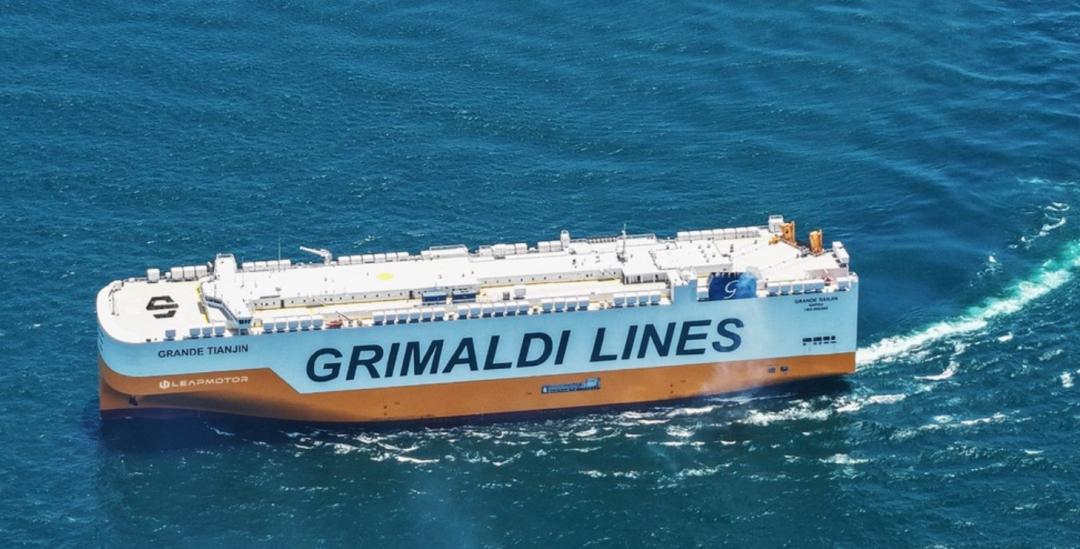
In 2025, Leapmotor's export volume reached 67,000 vehicles, ranking first among new - energy vehicle startups in China.
In about 40 international markets in Europe, the Middle East, Africa, South America, and the Asia - Pacific region, Leapmotor has established about 900 sales and service outlets.
Leapmotor's ability to go global benefits from its adoption of the "asset - light" model, that is, establishing a joint venture with the Stellantis Group and accessing the latter's global dealer network and logistics system. The sales cost is much lower than building its own network from scratch.
In 2025, "Leapmotor International", the joint venture between Leapmotor and Stellantis, has achieved annual profitability, which is also of milestone significance.
In addition, in addition to the incremental revenue from vehicle sales, Leapmotor's profitability structure is also supported by diversified businesses such as technology licensing, component exports, and carbon credits.
Taking technology licensing as an example, Leapmotor reached a cooperation with FAW last year. For the first vehicle jointly launched by the two parties, Leapmotor is responsible for the R & D and manufacturing of the vehicle model. It will be put into production in the third quarter of this year and sold in overseas markets by the end of the year.
At the same time, as Leapmotor's export volume in the European market increases, its carbon credit revenue has also increased year - on - year, reaching a scale of about 1 billion yuan.
Overall, Leapmotor is undoubtedly the biggest dark horse among new - energy vehicle startups in 2025. But this is not Leapmotor's peak.
For 2026, against the backdrop of rising raw material prices and the adjustment of new - energy vehicle subsidy policies, Leapmotor's expectations are the opposite of the outside world's pessimistic views. The guidance for the new year is even more optimistic.
Where does the confidence come from?
Strive for one million annual sales and a net profit of 5 billion yuan this year
Leapmotor's guidance for 2026 was given early at the end of last year:
Strive for an annual sales volume of over one million vehicles;
The annual net profit will further increase to 5 billion yuan.
Moreover, in the context of the generally weak market sales in January and February this year, Leapmotor still adheres to the sales and net profit targets unchanged.
Combined with the information in the earnings conference call, Leapmotor's confidence is supported by progress in roughly three aspects.
The first is the product line. Leapmotor plans to launch four new models this year, namely the A10 launched this month, the first product on the D platform, the D19, to be launched in late April, and the A05 and D99 to be released in June - July.

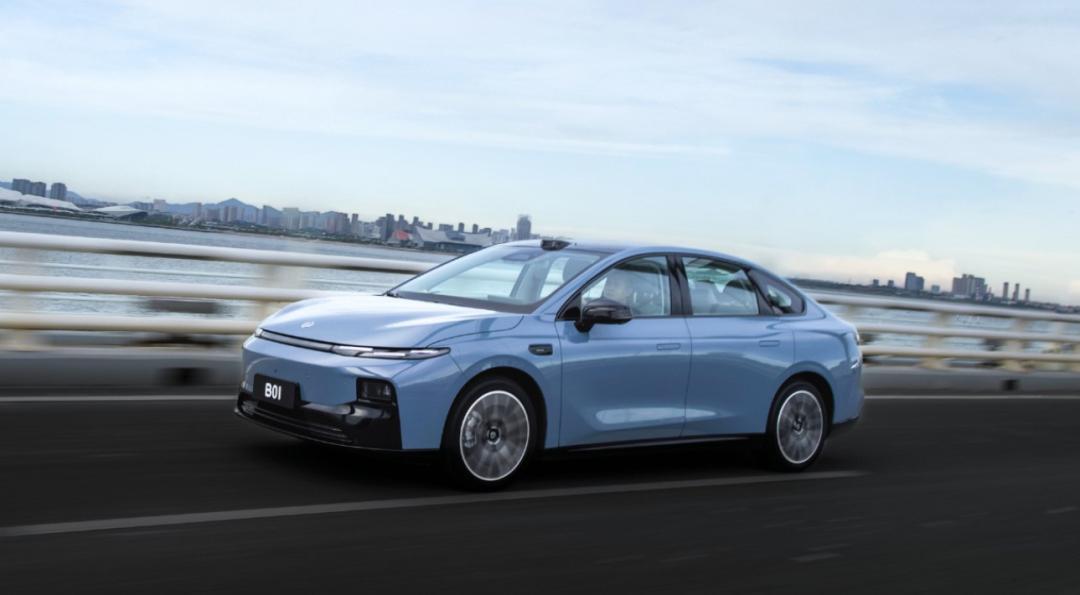
In addition, Leapmotor also has two facelifted models this year, the facelifted B01 and B10 to be launched in the second quarter of this year.
The second aspect is going global. Leapmotor's one - million - vehicle annual sales plan includes 100,000 - 150,000 vehicles for overseas sales.
Europe is currently Leapmotor's main battlefield for going global, with 800 sales channels.
This year, Leapmotor plans to focus on South America, starting from Brazil and gradually expanding to countries such as Chile, Argentina, Ecuador, and Colombia.
The number of the company's channels in the South American market will increase significantly this year; at the same time, the number of channels in the European and Asia - Pacific markets will also expand simultaneously.
From January to February this year, Leapmotor's overseas sales volume has reached 24,000 vehicles, completing 16% - 24% of the annual target. At this pace, it may not be a problem to exceed the overseas target.
