36Kr Global Events | Japan Jo!nting Successfully Held an Offline Closed-Door Sharing Session, Deeply Analyzing the Practical Path for Chinese Robots to Expand into the Japanese Market
Introduction
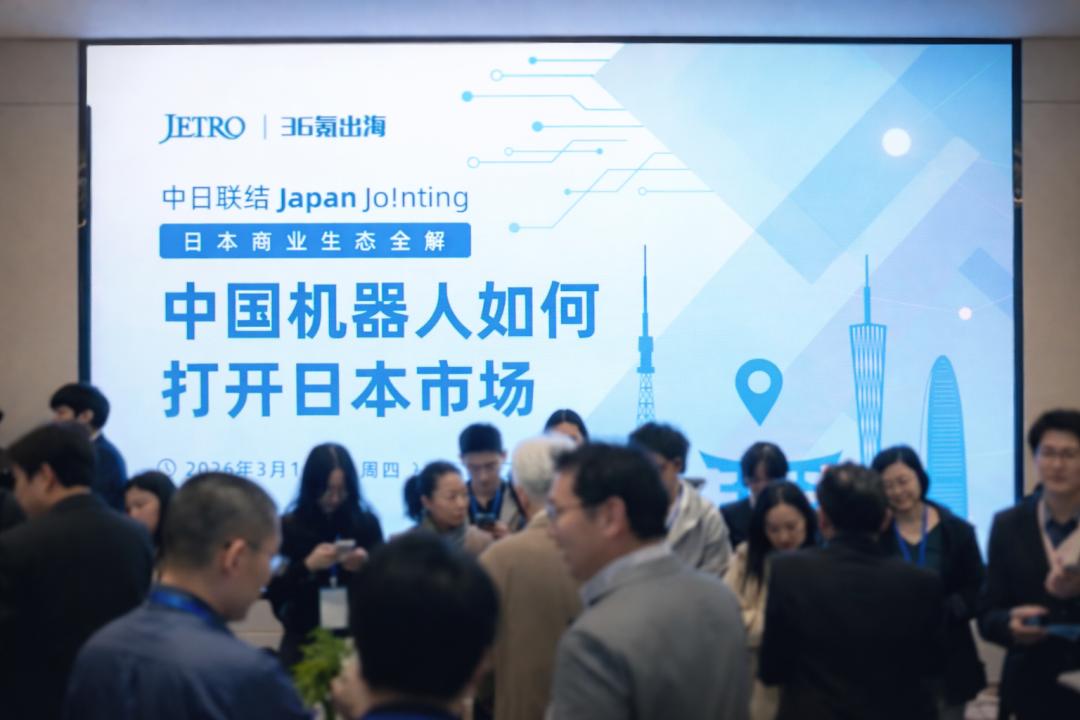
On the afternoon of March 12th, the Japan External Trade Organization (JETRO), in collaboration with 36Kr Global and 36Kr Japan, launched an offline closed - door sharing event titled "Japan Jo!nting: How Chinese Robots Can Enter the Japanese Market" in Shenzhen, with simultaneous online live - streaming. This event focused on the real - world practices of Chinese robot companies entering the Japanese market. Representatives of Japanese enterprises and agents, Chinese companies that have deeply penetrated the Japanese market, and industry experts familiar with Sino - Japanese industrial cooperation attended the event and delivered keynote speeches, sharing practical experiences and methodologies from multiple perspectives.
This seminar aims to build a communication bridge between Chinese enterprises and reliable partners, reduce the information gap regarding the Japanese market, and enable more Chinese enterprises to seize the opportunities to successfully expand their businesses in Japan.
Core Demands of the Japanese Market: In - depth Analysis of Structural Opportunities and Demand Pain Points
The labor shortage in Japan has led to a continuous release of the rigid demand for robots and AI technologies. At the same time, Japanese enterprises hold an open attitude towards robot technology cooperation and attach great importance to the implementation and technical support of robot and AI technologies. This presents a good opportunity for the Sino - Japanese AI robot industry to collaborate in innovation and explore the market.
Labor Shortage and Sustained Release of Robot Demand
The manufacturing and service industries in Japan have long faced the dilemma of structural labor shortages. In terms of specific data, the labor gap shows a trend of normalization and expansion. By 2025, the labor shortage in the nursing industry in Japan will reach 340,000, and in the construction industry, it will reach 780,000 - 930,000. In the manufacturing sector, there is a prominent problem of a shortage of senior skilled workers, and the supply of high - end R & D talents in AI and robotics is insufficient. In the service industry, employees are often overworked.
Regarding the current labor situation in Japan, Yu Ebina, General Manager of Shin - I Consulting (Beijing) and Assistant to the General Representative of the Itochu Group in East Asia, said, "The insufficient labor supply, combined with the retirement of senior craftsmen, the risk of a break in core craftsmanship, and the reluctance of young people to take on high - risk and dirty jobs, have led to a labor shortage in multiple core industries."
Shin - I Consulting (Beijing) is a comprehensive international industrial integration consulting service platform. Relying on the industrial resource advantages of its shareholders, Itochu Corporation of Japan and CITIC Construction, both at home and abroad, it is committed to promoting Sino - Japanese industrial cooperation for mutual benefit and win - win results.
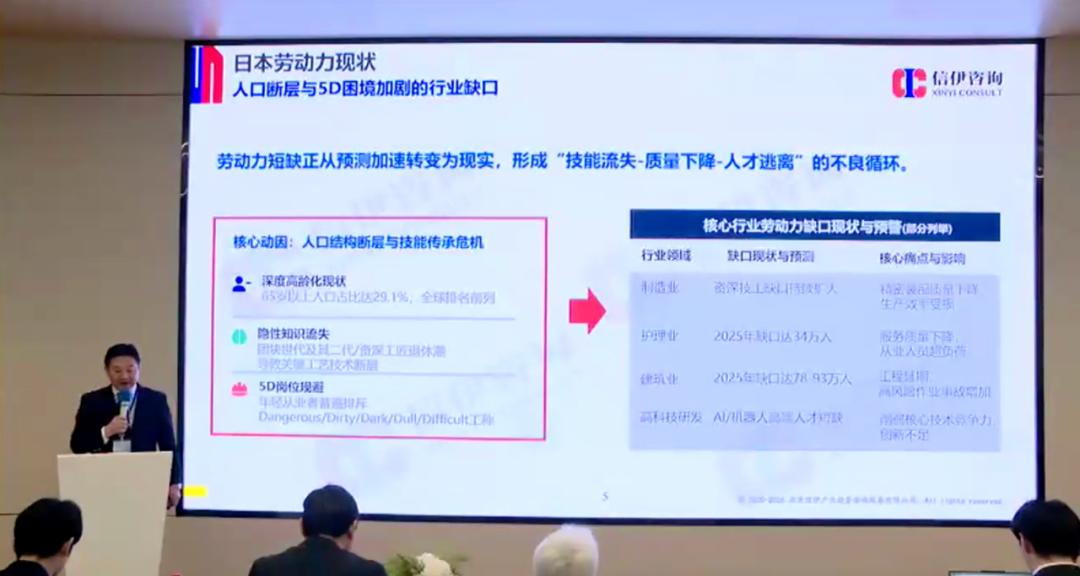
Yu Ebina, General Manager of Shin - I Consulting (Beijing) and Assistant to the General Representative of the Itochu Group in East Asia
Yuki Minazato, CEO of Algomatic Robotics (DMM), also added that the intensifying aging population in Japan has led to a shortage of manpower. By 2025, the manpower shortage has caused more than 400 enterprises to go bankrupt, and this number is still rising. This situation restricts the continuous improvement of industrial competitiveness and has given rise to a rigid demand for robots and AI technologies in the market. It is reported that the Japanese government is focusing on the field of physical AI entities, which will further release market demand.
According to Xiao Jun, Minister of the Overseas Business Department of the DMM Group, the DMM Group is a cross - industry and diversified business company covering fields such as finance, entertainment, hardware, AI training, fire protection, and energy storage. It flexibly promotes new businesses, promotes technology implementation, and conducts local cooperation in the Japanese market.
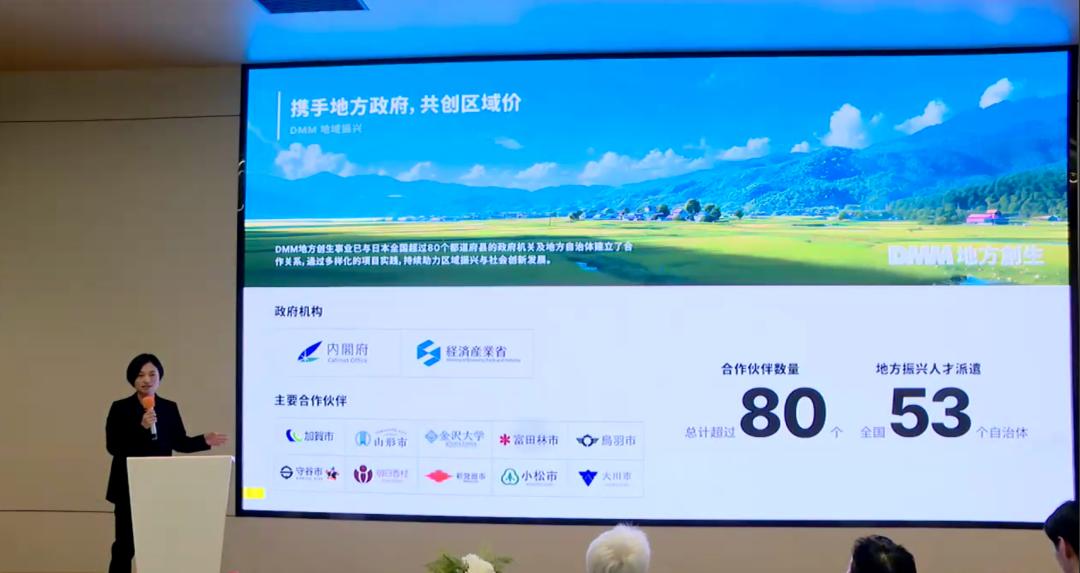
Xiao Jun, Minister of the Overseas Business Department of the DMM Group
POC Window Period: Secondary Development and Implementation Support Become Core Competencies
Currently, the Japanese robot market is in the Proof of Concept (POC) stage from 2025 to 2030. The core demand at this stage has shifted from simple product completion and safety to rapid adaptation to actual scenarios and implementation support.
Kei Wajima, CEO of TRON Co., Ltd., pointed out that the core focus of enterprises is no longer just on core indicators such as product completion or safety during the popularization period, but on secondary development capabilities and implementation support. Japanese customers need not only user manuals but also complete on - boarding guidance, timely support, and clear usage case demonstrations. Chinese robots perform well in practical applications. If information such as framework design and functional implementation ideas can be presented, Japanese customers can better understand the usability and adaptability of the products, which will better meet the needs of Japanese enterprises.
TRON Co., Ltd. is committed to using the world's most advanced technologies to make Japan a country for the application of humanoid robots. It has established a robot laboratory in Nagoya, Japan, and maintains cooperation with Prevu3D and NVIDIA.
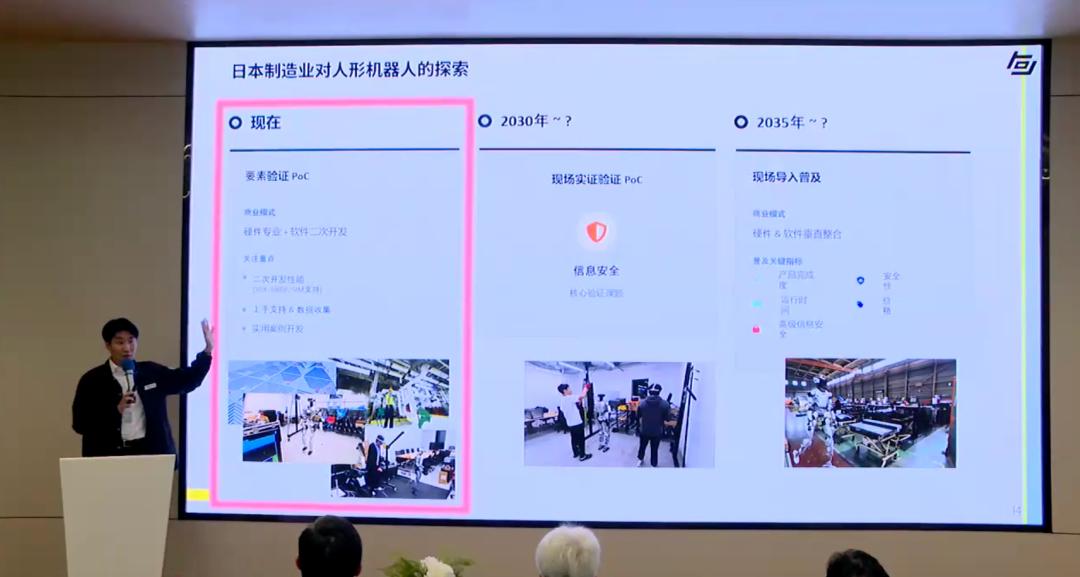
Kei Wajima, CEO of TRON Co., Ltd.
Scenario Adaptation: Actual Operational Results Can Win More Trust
Japanese enterprises' demand for robots focuses on actual operational capabilities rather than "superficial demonstrations" at the video level. Clearly defining the types of processes that can be provided is more likely to build cooperation trust than claiming "universal adaptation."
As a pioneer in the Japanese robot market, Shisheng Cheng, President of IWITH ROBOTICS Co., Ltd., shared his experience from entrepreneurship to order implementation and then to capital integration. He said, "The CEO of our customer lay on the ground himself to check the on - site performance of the robot during the first POC use, which shows that Japanese customers pay extreme attention to the actual operational details of robots."
IWITH ROBOTICS Co., Ltd. focuses on the R & D, sales, and maintenance of commercial cleaning robots and service robots. It has introduced the multi - functional floor cleaning robot POM to commercial places such as convenience stores and supermarkets in Japan.
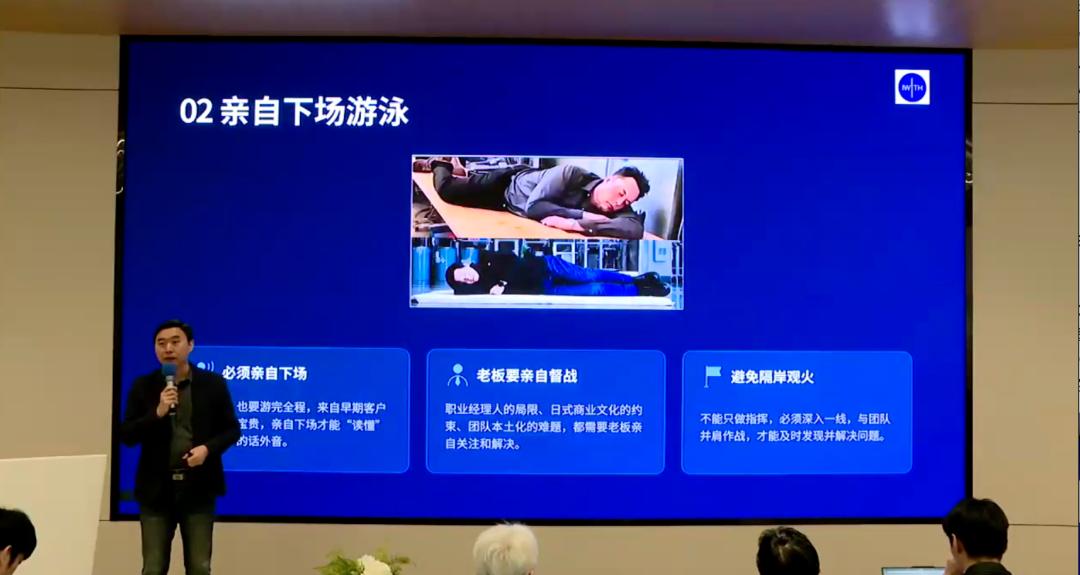
Shisheng Cheng, President of IWITH ROBOTICS Co., Ltd.
Kei Wajima further added that the Japanese manufacturing industry needs robots that can replace skilled workers and achieve whole - body coordination, as well as multi - robot combined processes, such as moving, combining, processing, and arranging. If Chinese enterprises can clearly point out the specific types of operations they can provide, they will gain the trust of many Japanese enterprises. Focusing on actual operational results and doing a good job in scenario adaptation can win more recognition and trust in the Japanese market.
Crossing Sino - Japanese Cultural Barriers: The Way of Business Collaboration Driven by Differences
There are obvious differences between Chinese and Japanese enterprises in business models, product development, and decision - making habits. However, by creating new productivity through human - machine collaboration, the complementary advantages of the two countries can be maximized to achieve win - win cooperation.
Business Model and Product Thinking: Ecosystem - based vs. Single - point Focus
There are significant differences between Chinese and Japanese enterprises in business models and product thinking. The "ecosystem - based and rapid - iteration" approach of Chinese enterprises forms a sharp contrast with the "single - point and rigorous" approach of Japanese enterprises.
Yu Ebina said, "Chinese enterprises tend to provide a complete set of ecosystem solutions, while Japanese enterprises are more accustomed to purchasing equipment separately. In terms of development culture, Chinese enterprises focus on creating the minimum viable product first and then gradually improving the safety level through continuous technological iteration. Japanese enterprises pursue perfection and hope to set the safety standards firmly through rigorous design at the beginning of the project."
Regarding the Japanese manufacturing industry's extreme pursuit of precision, Yuki Minazato also pointed out, "The strength of the Japanese manufacturing industry lies in that when performing the same operation 10,000 times, the error each time is within the centimeter level."
In the face of the differences in cooperation between Chinese and Japanese enterprises, the key is to find a scientific way of collaboration. Yu Ebina proposed two solutions: one is the "dual - project manager mechanism," where the Chinese manager is responsible for local connection and resource integration, and the Japanese manager focuses on technology and quality; the other is the "comprehensive trust system," which translates Japanese experience into executable knowledge by understanding decision - making habits and establishing a cultural translation mechanism, and then makes local adjustments in combination with Chinese algorithms.
Localization Strategy and Partners: Detailing Adaptation Promotes In - depth Implementation
Detailing adaptation and the assistance of local partners are important guarantees for Chinese enterprises to achieve in - depth implementation in the Japanese market.
Yuki Minazato pointed out, "The localization requirements of the Japanese market are different from simple language translation. They are more reflected in UI/UX and subtle details that are difficult to notice. It is difficult to implement only through Chinese operations, so local partners are crucial. Take Notta as an example. Although it is a Chinese enterprise, because its interface and experience are fully in line with the Japanese market, users generally think it is a Japanese local product."
Therefore, localization at the detailed level can impress Japanese users more than simple language translation.
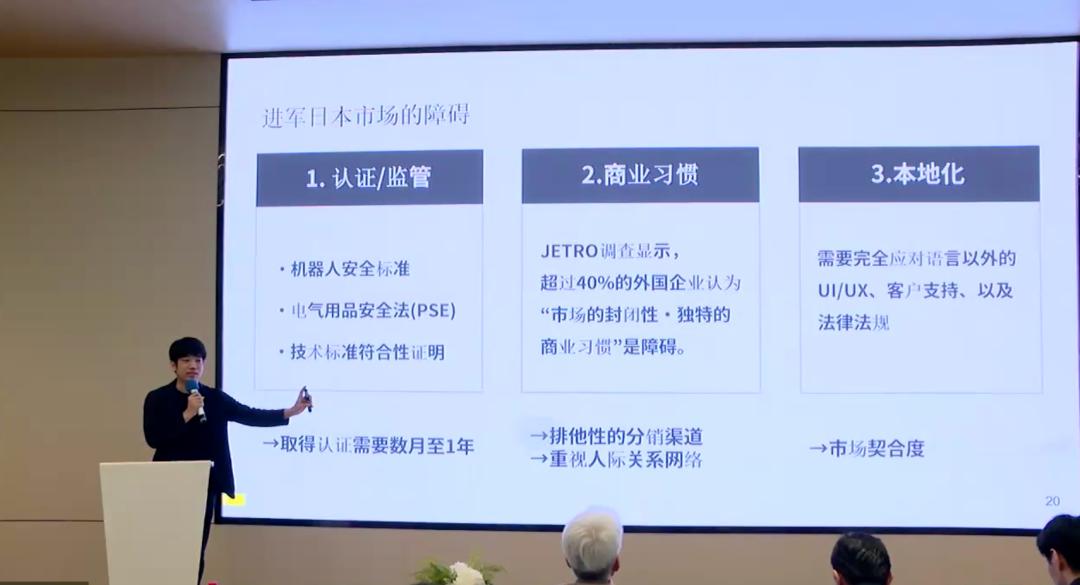
Yuki Minazato, CEO of Algomatic Robotics (DMM)
Values and Long - term Cooperation: Trust Accumulation under the Agent Culture
The core underlying logic of cooperation between Chinese and Japanese enterprises is the consistency of values. Adhering to the principles of altruism first, win - win cooperation, and keeping promises is the key to establishing long - term and stable cooperation and achieving sustainable development.
Shisheng Cheng shared his 12 - year experience in the Japanese market: "Our most successful cooperation in Japan has lasted for more than five years. The core is the alignment of values - altruism before self - interest and solving problems from the customer's perspective." He also pointed out that through the credit endorsement of Japanese local agents, such as Itochu, Chinese enterprises can more quickly expand into the Japanese market and gain recognition.
Breaking the Barriers to Going Global: The Core Path for Chinese Robot Enterprises to Enter the Japanese Market
For Chinese robot enterprises to enter the Japanese market, they need to adhere to the principles of strategic precedence, long - termism, product - centricity, and practical compliance to efficiently promote the stable transformation from "product introduction" to "continuous order growth."
Founders' Personal Involvement to Anchor the Globalization Positioning
The Japanese market has high implicit thresholds. Only when founders get deeply involved in the front - line can they truly perceive market demand and promptly discover challenges in implementation and communication.
Shisheng Cheng emphasized that founders must be present on - site during the ice - breaking stage. The limitations of professional managers, the constraints of Japanese business culture, and the difficulties in team localization can only be discovered and resolved quickly at the front - line.
Yingying Wang, Partner of 36Kr Japan, also said, "The approach to channels is not to cast a wide net. Only when the management 'goes global in person' can they find suitable partners. Enterprise management needs to personally understand the Japanese market and business practices to truly expand their business." It can be seen that the in - depth involvement of founders is the key to breaking through the implicit thresholds and ensuring the smooth implementation of the globalization strategy in the Japanese market.
Slow and Steady Wins the Race: Deeply Accumulate Trust Value
In the Japanese market, only through steady layout, continuous in - depth development, and trust accumulation can long - term value be obtained and continuous growth be achieved.
Shaohong Yan, the person in charge of the overseas business department and brand promotion department of T - chef Tech, said, "Enterprises need to have a long - term mindset. Chinese enterprises are used to trading speed for scale, while Japanese enterprises trade time for trust. The Japanese market is a 'trust - compounding' market. As long as the initial difficulties are overcome, the subsequent customer loyalty and continuous repurchase will compensate for all the previous investments."
T - chef Tech focuses on the R & D of intelligent cooking robots, independently develops AI dynamic algorithms and firepower control systems, and provides intelligent kitchen solutions integrating software, hardware, and data. Its products have been launched in Japan and sold to 25 countries around the world.
Dicong Qiu, Founder and CEO of Jacobi.ai, also agreed with this view, pointing out, "The 'slowness' in Japan essentially represents an extreme pursuit of product quality. It is more important to make good products and gain customer trust than to be hasty." Slow and steady continuous investment and trust accumulation are one of the core strategies to open up the Japanese market and achieve long - term value returns.
Jacobi.ai focuses on the R & D and commercial application of embodied intelligence, develops dual - arm wheeled composite robots, and realizes spatial intelligent perception and automated decision - making in retail scenarios. It has started to contact potential customers in Japan, Europe, Southeast Asia, and Russia.
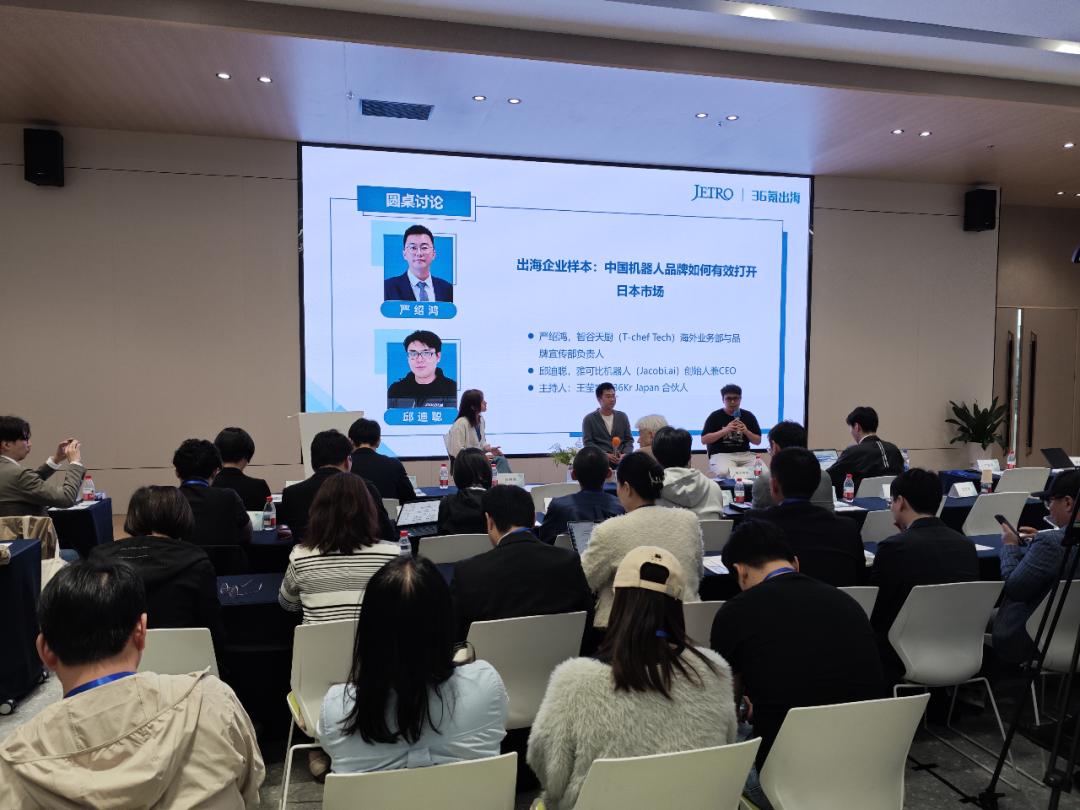
Round - table discussion session
Focus on Stable Adaptation and Strengthen Local Service Support
The core demand of the Japanese market for robot products focuses on stability, usability, and local service capabilities, rather than simply cost - effectiveness or promotional selling points.
Yingying Wang pointed out, "Chinese enterprises often emphasize cost - effectiveness when going global, but this is not the only advantage, and it should not be over - emphasized. Giving Japanese customers a feeling of 'peace of mind, stability, and no trouble' is the highest standard for opening up the Japanese market." Shaohong Yan added