Is the "3.15 Problem Auto Show" Just the Tip of the Iceberg? Be Wary of Automobile Manufacturers Cutting Corners in 2026
New energy vehicles were once again "excluded" from the 3·15 Gala.
However, at the "3·15 Problematic Car Shows" in various places, it was a different scene: Car owners who had nowhere to lodge complaints drove hundreds of kilometers only to be blocked outside. Posters vividly described their car - using experiences, and eye - catching words on the car windows expressed the owners' extreme disappointment...
It is reported that the complaints from car owners mainly include product quality, false advertising, intelligent driving malfunctions, contract and after - sales disputes, scams by secondary dealers/used - car dealers, etc.
A car owner from Wuhan said bluntly that he spent more than 400,000 yuan to buy a new energy vehicle of a joint - venture brand. Soon after the new car was delivered, quality control problems such as peeling of the seat and steering wheel occurred. Subsequently, due to coolant problems, the vehicle was recalled and repaired by the manufacturer twice, and its resale value was damaged.
In fact, with the rapid development of new energy vehicles and the increasing saturation of their penetration rate, while the "price war" is intensifying, problems such as component reduction and shoddy workmanship have also emerged. "Problematic cars" have long become the most concerning and headache - inducing issue for car consumers.
As early as 2020, Tesla caused controversy for "replacing the autopilot hardware of some domestic Model 3 models from the advertised HW3.0 version to the lower - performance HW2.5 version without informing consumers."
Now, in order to maintain profit margins in the price - cut wave, many car companies are taking extreme measures. The behavior of component reduction has gradually evolved from individual cases to an unspoken "hidden rule" in the industry under the price war.
From core components to basic processes, from safety configurations to supporting services, the chaos of component reduction by car companies is everywhere, far exceeding the scope of reasonable cost control.
Some BYD models have rusty bodies, BAIC ARCFOX lacks safety configurations, XPeng Motors has shrunk intelligent driving hardware, and some car companies have replaced charging piles with inferior ones...
Body quality and safety configurations are the basic requirements of consumers when buying a car and also the bottom line that car companies should adhere to. However, under the influence of the price war, some car companies "cut corners" on basic processes and core configurations, sacrificing quality for short - term profits.
Today, let's take stock of the typical cases of car companies "cutting corners" and give you a reminder if you are about to buy a car.
1. Frequent body rust problems, quality of core components in doubt
We all have the experience that in continuous rainy days or in a humid environment, it is normal for brake discs and chassis metal parts to rust slightly and turn yellow when driving or parking. This usually wears off after the car has been driven for some time.
However, rust starting from the door frame, door gap, welding points, and drainage holes, and even bulging and peeling, is obviously abnormal. Especially for cars that have been purchased for less than three years, if the body starts to rust in many places, it is very likely that the galvanizing and painting processes are non - compliant, or the anti - corrosion measures are not well done.
Now, such obvious product defects are occurring frequently in new energy vehicles.
Since the beginning of 2025, car owners of models including BYD Tang, Qin PLUS, BYD Song Pro, and BYD Dolphin have continuously reported that their BYD cars have serious body rust problems.
A BYD car owner said that he spent 168,000 yuan in September 2022 to buy a BYD Song Pro DM - i 110 flagship version. As a result, after only two and a half years of driving, all four doors were rusty.
The above - mentioned car owner said bluntly that he had gone to the 4S store for grinding treatment once before, but the car rusted again soon after. "I only found out after checking online that rusting of the Song Pro is an old problem."
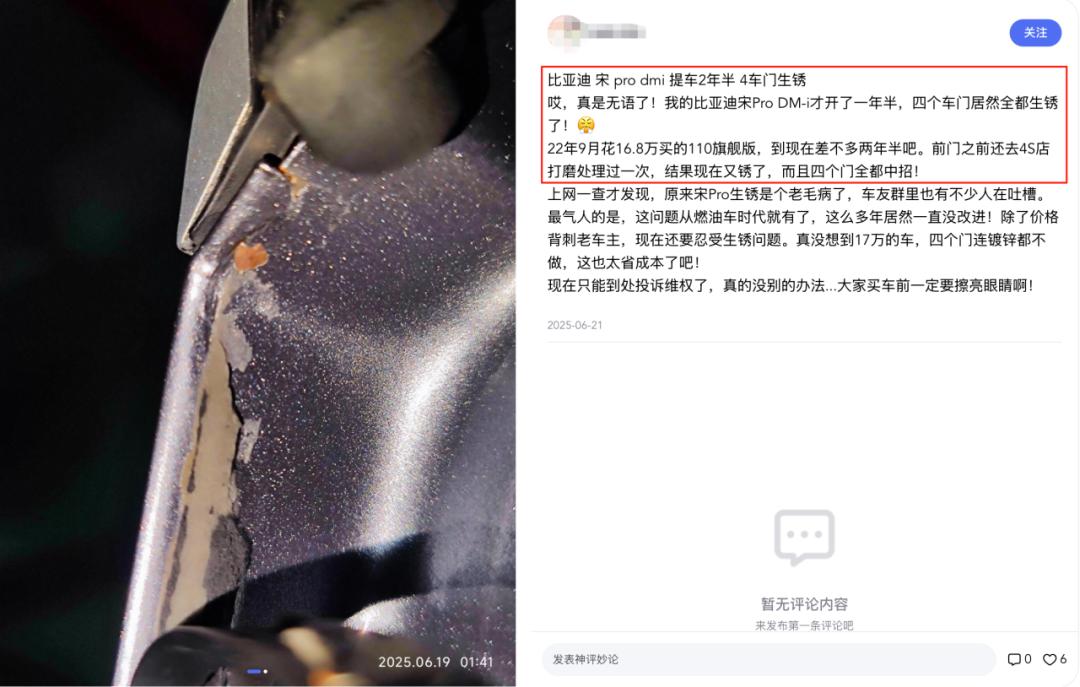
Picture/Problem of rusty four doors of a BYD Song reported by a car owner. Source/Screenshot of New Energy View from the Internet
The owner of a 2023 Qin PLUS Champion Edition DM - i 120KM Transcendence model also complained that although the vehicle had no accidents and was properly maintained, there was still serious rust in the four - door area. The rust also developed from the inside and penetrated the paint to form bulges.
The owner also mentioned that the rust problem of the rear door that had been repaired before recurred, and the rust also affected parts such as the left and right fenders, door hinges, and the inside of the hood.
According to the description of the above - mentioned car owner, after complaining, the 4S store replaced the doors for free and repaired the abnormal noises in other places. However, the replacement of the right fender, which was promised before, was finally implemented after several rounds of communication.
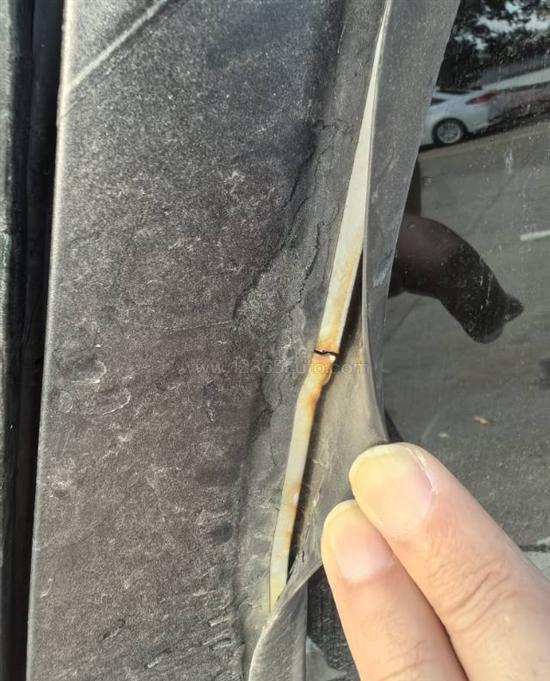
Picture/Rust on a 2023 Qin PLUS penetrating the paint. Source/Screenshot of New Energy View from the Car Quality Network
Some industry insiders said bluntly that abnormal body rust is not essentially a technical problem, but a game between cost control and quality bottom line.
"In the current industry, mature anti - corrosion processes such as galvanized sheets, cathodic electrophoresis, and cavity wax injection have long been popularized. Structural rust and bulge - type rust from the inside out of a new car without bumps or modifications are all due to component reduction, process shrinkage, or design defects, and do not belong to normal wear and tear."
2. Reduction of anti - collision related components, no guarantee for driving safety
If the abnormally rusty body means that car companies have not adhered to the product quality bottom line, then the lack of anti - collision structures and protective components means that car companies have not adhered to the safety bottom line.
In February 2026, some owners of BAIC New Energy ARCFOX T1 continuously complained that there were obvious component reductions in key safety parts such as the anti - collision beam, high - voltage wiring harness guard plate, and cockpit wiring harness protection of the vehicle, and the problems had not been solved.
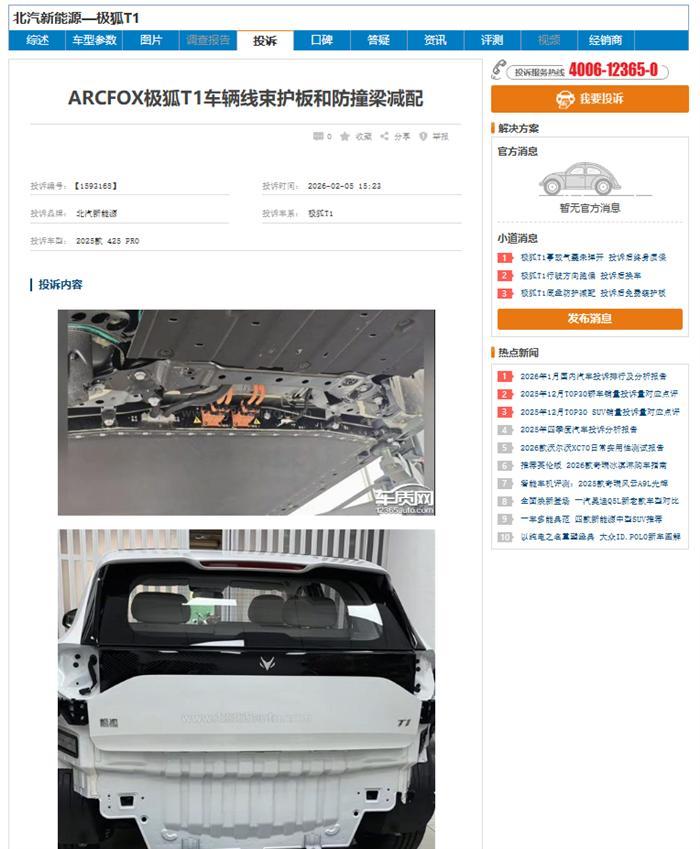
Picture/Problems with the wiring harness guard plate and anti - collision beam of ARCFOX T1. Source/Screenshot of New Energy View from the Car Quality Network
Judging from the feedback and complaint records of car owners, this is not an isolated case, nor is it the first time to safeguard rights. Looking through the previous complaint posts of the above - mentioned car owner, the component - reduction safety hazards he mentioned mainly include:
The high - voltage wiring harness on the chassis is not equipped with a guard plate and is exposed. During driving, if it is affected by impact, scratching, or wading, there are safety hazards such as short - circuit, electric leakage, and fire;
The vehicle is not equipped with a rear anti - collision beam. Although the installation holes for the rear anti - collision beam are reserved in the design, it is not installed when the vehicle is sold. This is extremely irresponsible for the safety of rear - seat passengers and lacks safety guarantee;
The wiring harness at the main driver's brake is not equipped with a guard plate, and the steering column is exposed. If the driver's foot accidentally touches it during driving, it is very likely to cause a safety accident.
According to the vehicle complaint list released by the Car Quality Network in January 2026, the number of complaints about the ARCFOX T1 soared to 277, a month - on - month increase of 114% compared with December 2025. In the complaint content, suspected component reduction and abnormal noises in the car - machine system accounted for more than 80%.
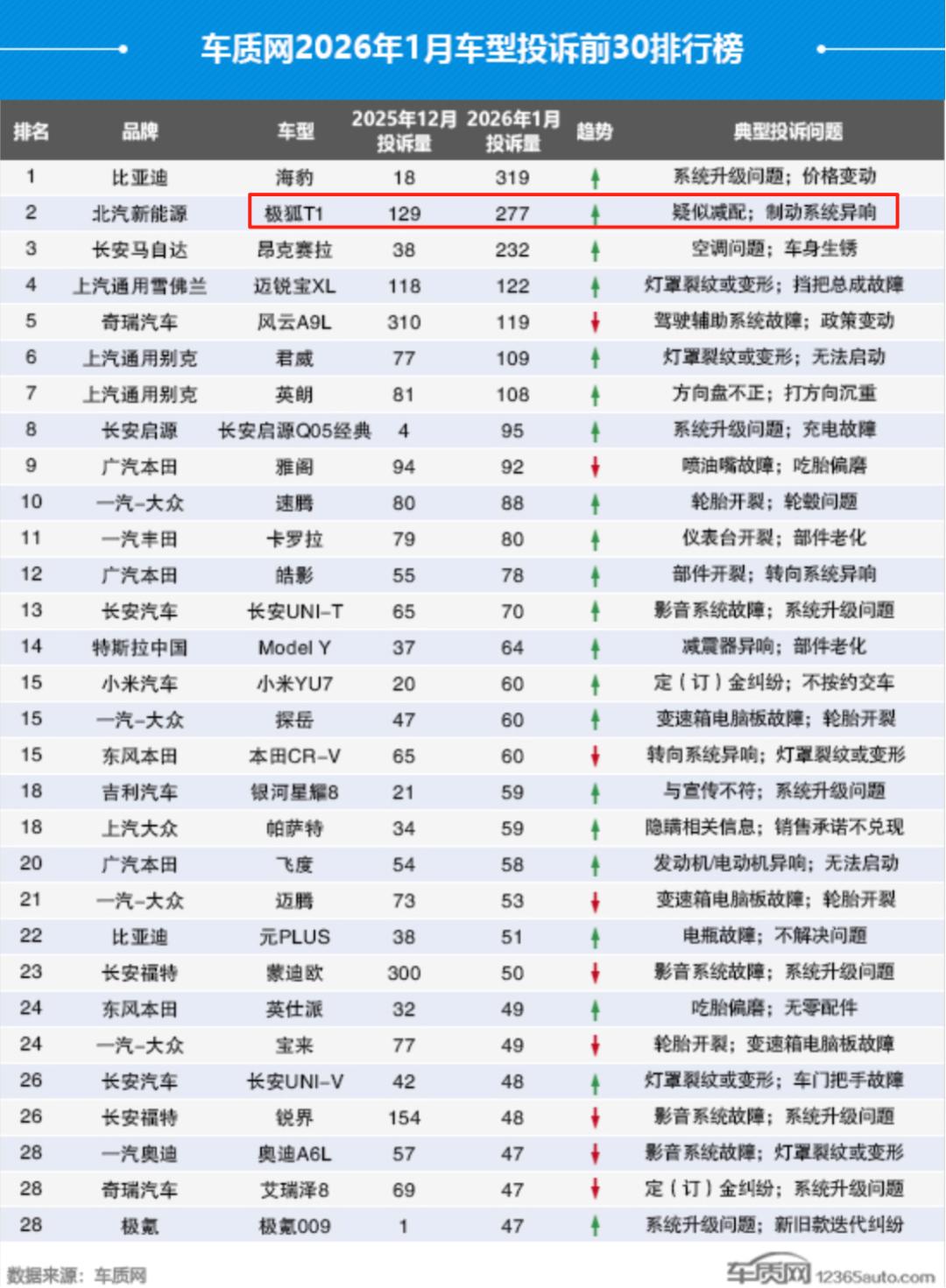
Picture/Top 30 list of vehicle complaints in January 2026. Source/Screenshot of New Energy View from the Car Quality Network
Judging from the growth rate of the number of complaints and the description of the above - mentioned car owner, the ARCFOX T1 may not only have failed to solve the problems, but its attitude has also triggered continuous protests from consumers.
3. Private replacement and component reduction of charging piles, suspected of infringing consumers' rights
Rust is related to product quality, and the reduction of anti - collision related accessories endangers safety. The charging pile seems to be "much better", but in fact, it is challenging consumers' rights.
On February 2nd, a car owner who bought a Fangchengbao Tank 7 2025 190KM Four - wheel Drive Ultra version mentioned that the charging pile promised was found to be a reduced - version model during installation.
According to the description of the car owner, the charging pile does not match the advertising in terms of appearance, software, etc. For example, the appearance has changed, 4G networking has been cancelled, Bluetooth has been cancelled, and there is no remote control or emergency stop function.
The above - mentioned car owner said bluntly in the complaint that "this is a fraudulent act without notifying consumers unilaterally and involves false advertising."
Not only the Fangchengbao Tank 7, but also the owner of a Fangchengbao Tank 3 said, "Before the installation in November 2025, it was confirmed with a third - party that the new pile would not be replaced, but around November 20th, it was informed that the new pile had been replaced. The new pile has problems such as component reduction in functions and poor appearance."
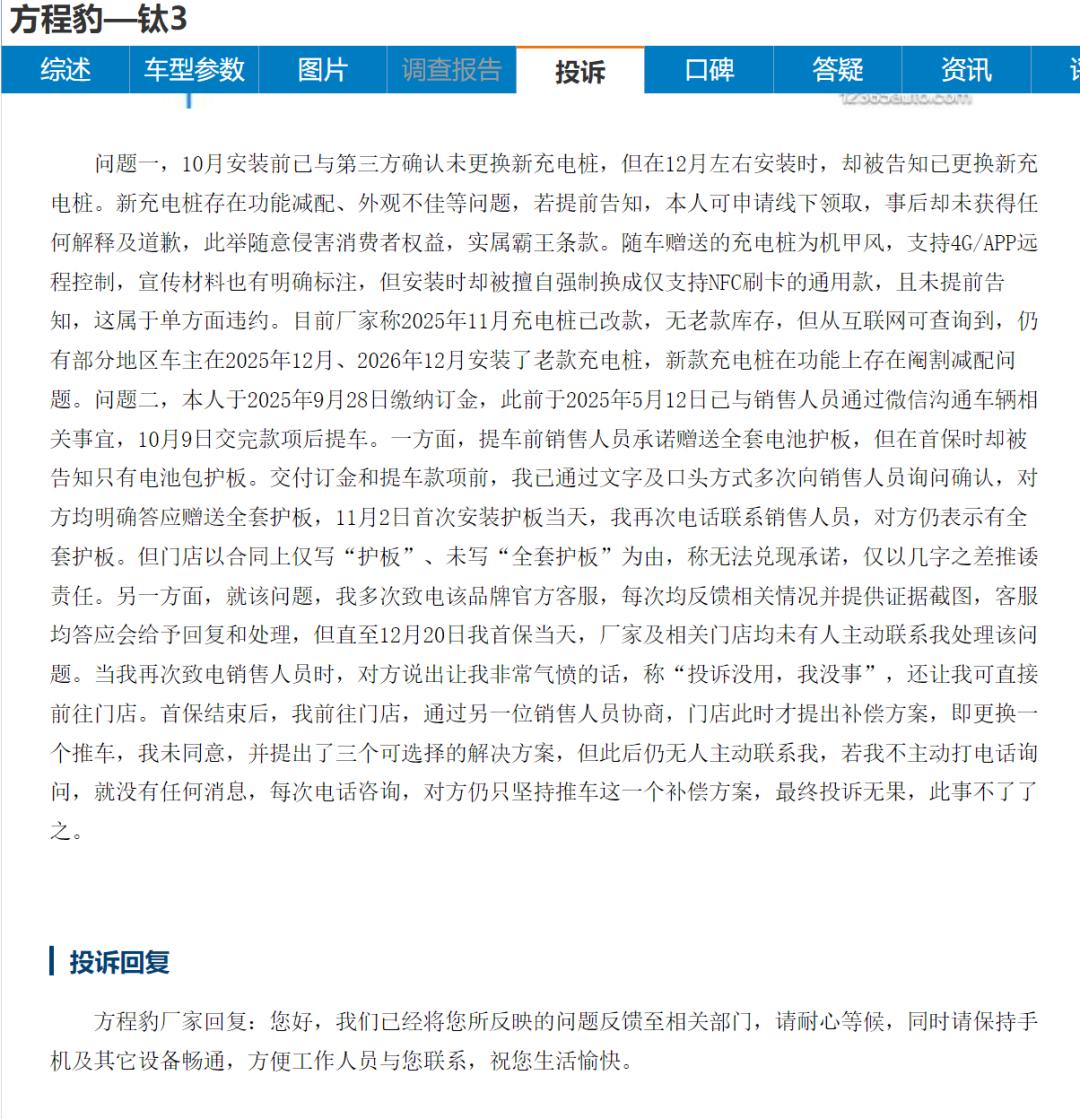
Picture/Problem feedback of Fangchengbao Tank 3. Source/Screenshot of New Energy View from the Internet
Another owner of the Tank 3 mentioned that "I bought a car on June 18th, 2025, and the charging pile delivered was a mecha - style one with 4G/APP remote control as a free gift, which was clearly marked in the promotional materials. But during installation, it was replaced with a general - purpose model that only supports NFC card swiping."
Some consumers said bluntly that this is a common problem with this car. Under the above - mentioned posts, the replies from the Fangchengbao manufacturer were all, "We have forwarded the problem you reported to the relevant department. Please wait patiently."
4. Quiet reduction of millimeter - wave radars, car companies suspected of false advertising
In the era of electrification and intelligence, intelligent driving has become one of the biggest selling points of car companies and also one of the main factors influencing consumers' car - buying decisions.
However, even so, some car companies still choose to go against the trend.
At the end of 2025, according to a report in the Economic Information Daily, many owners of the 2023 XPeng G6 reported that when the car was disassembled for maintenance, they found that the number of front - corner millimeter - wave radars actually installed was two less than the advertised number.
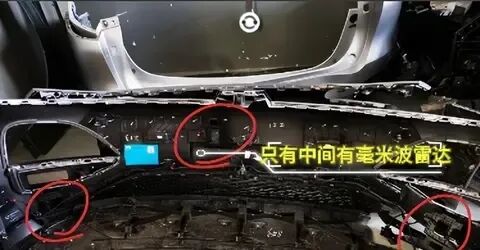
Picture/Situation of millimeter - wave radars in XPeng G6. Source/Screenshot of New Energy View from the Internet
Some car owners also found that XPeng Motors made two radars ineffective through OTA software, effectively achieving component reduction. When Ms. Deng, a car owner from Beijing, complained about this problem and demanded compensation, XPeng Motors' after - sales service refused to compensate on the grounds of "simplifying hardware but not functions".
At the same time, XPeng also mentioned that due to the technological upgrade to a pure - vision assisted driving solution, the use of front - corner millimeter - wave radars was cancelled and the corresponding hardware was simplified, and the relevant configuration changes had been synchronized on the official channels, so there was no concealment or fraud. However, this statement was not recognized by the car owners.
It is reported that currently, 159 car owners have jointly signed a rights - safeguarding document, accusing XPeng Motors of reducing the number of millimeter - wave radars and believing that it is suspected of false advertising and fraudulent sales.
5. Not only hardware reduction, but also software "shrinkage"
The "mismatch" in the number of millimeter - wave radars is "cutting corners" in hardware, while the fact that the intelligent driving system fails to reach the capabilities advertised by car companies during actual operation is "shrinkage" in software.
An FAW Hongqi car owner wrote on the complaint website that on February 12th, 2025, he was driving in the aisle with the intelligent assisted driving function enabled.
At that time, the road surface was well - lit, but the vehicle still crashed into a stopped truck in front.
According to the car owner's complaint, throughout the accident, the intelligent driving system did not withdraw. "Before the collision, the system did not slow down, did not avoid, and did not prompt the driver to take over manually. The vehicle did not trigger the automatic emergency braking (AEB), which ultimately led to the accident."
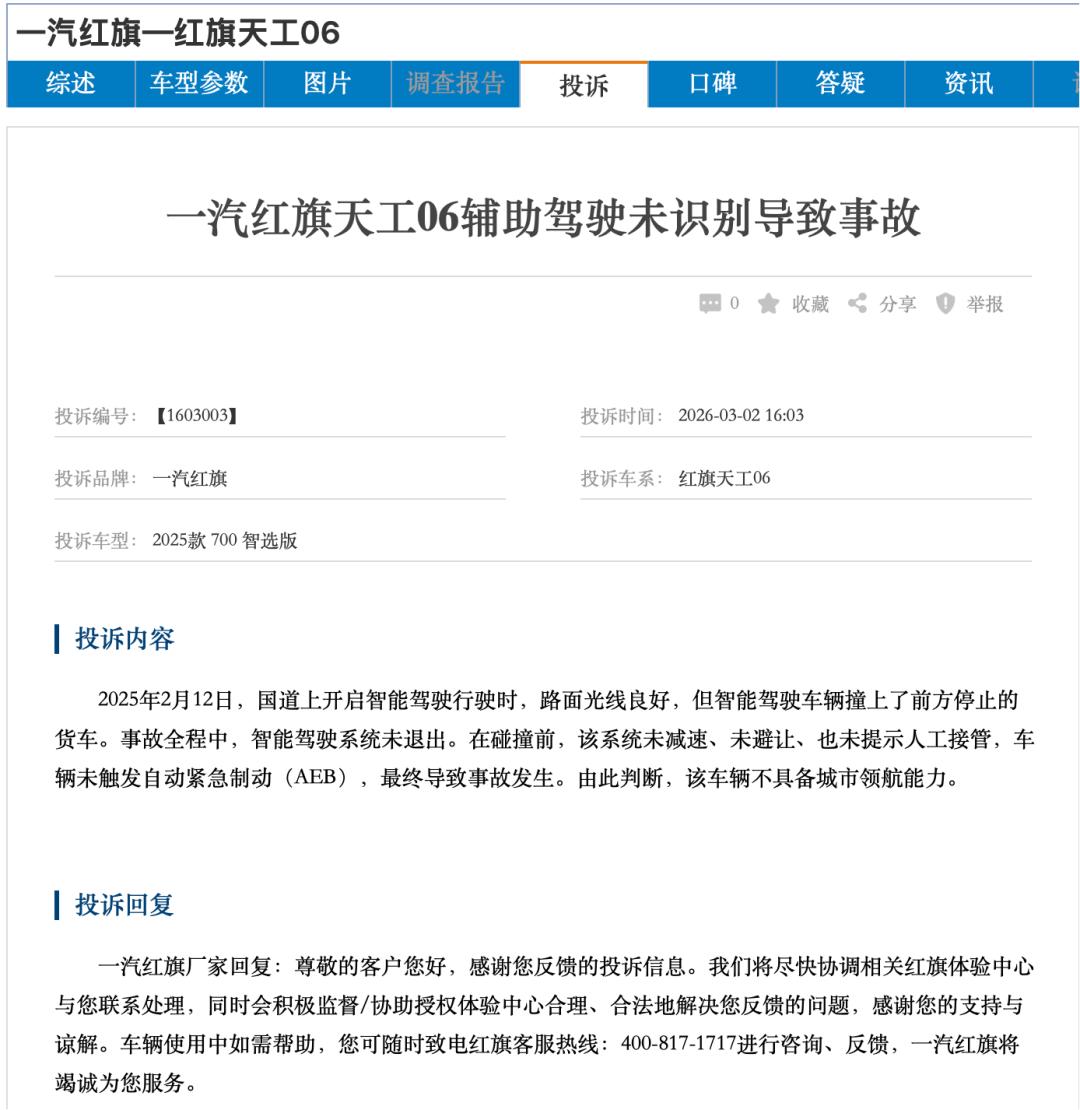
Picture/Hongqi Tian Gong 06's assisted driving failed to recognize the accident. Source/Screenshot of New Energy View from the Car Quality Network
In this regard, the car owner believes that the vehicle's intelligent assisted driving does not have the urban navigation ability, but the car company mentioned in the advertising that