Wu Chenyao: Embodied intelligence, a new era, new technologies, and new entrepreneurs should have new thinking
In 2025, the global field of embodied intelligence witnessed rapid progress. The rapid development of the industry often leaves practitioners and industry observers with insufficient time to deeply ponder many issues and provide answers.
At the beginning of the new year in 2026, Wu Chenyao, a managing partner of GGV Capital, shared his views on the direction of embodied intelligence.

Technology and Practicality of Embodied Intelligence
Investment Note: Just like last year, robot dancing performances appeared again on this year's Spring Festival Gala. How do you view the demonstration of embodied intelligence in such scenarios?
Wu Chenyao: When robots perform dances, whether it's doing flips or demonstrating balance, they are mostly using abilities similar to those of the cerebellum. It is more at the initial stage of the development of embodied intelligence. Through visually impactful skill demonstrations, ordinary audiences can be exposed to this field and develop an interest in it.
However, we must recognize that if a robot cannot handle any changes without a pre - set program, even if the movements are very spectacular, it has not crossed the gap from a "machine" to "intelligence". Audiences are often very excited when watching robot dancing performances and sometimes have the illusion that AI has become as smart as humans. However, a simple dancing performance cannot directly reflect the real technological level of the current development of embodied intelligence.
In our view, the real value and difficulty of embodied intelligence do not only lie in completing pre - set actions, but in transforming robots from "puppets on strings" into general agents that can adapt autonomously and respond flexibly. In real - world scenarios, the value of autonomous decision - making and generalization ability is far higher than the skill demonstrations on the stage.
Therefore, although people may find robot dancing novel the first time they see it, it is difficult to sustain such a demand.
Of course, from the perspective of market popularization, such cases are obviously a good thing. It will make more and more people realize that applying robots to their own industries can be put on the agenda. At the same time, behind the evolution of the robot's cerebellar abilities, there must be a large amount of reinforcement learning training, which will surely accelerate the development of the entire industry.
Therefore, I believe that robot showcases are of positive significance. As insiders, we should understand that their performances are not just for the sake of performance, but to meet some more long - term needs.
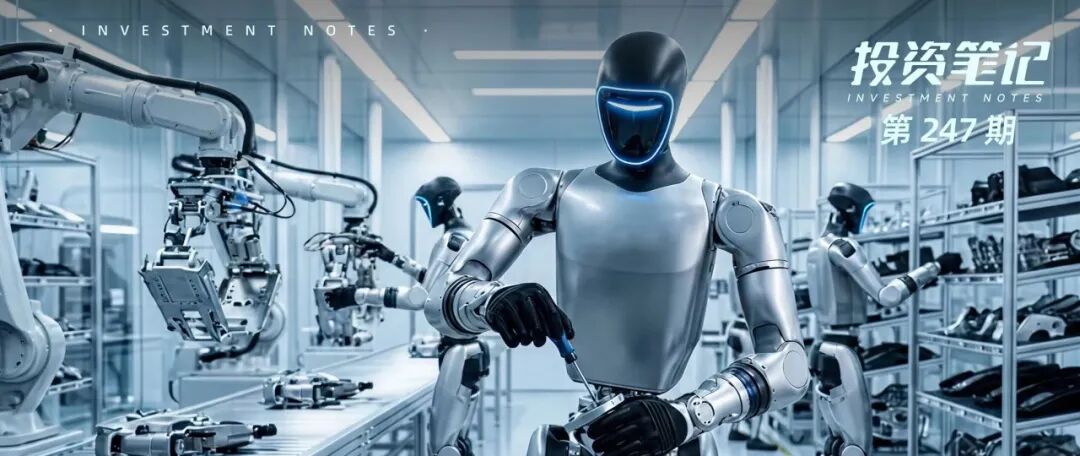
For embodied intelligence, real - world scenario development not only requires the continuous evolution of cerebellar abilities but also the improvement of the brain's generalization ability. In actual application scenarios, what we expect is not just a set of specific handling and grasping actions. Even for a simple task like screwing on a production line, which has been done by workers for the past few decades, if a robot takes over now, does it have the same general generalization ability as humans? Can it adapt to new situations autonomously in real - time, like humans, and still screw every screw well, whether it is at one workstation today and another tomorrow, or when the production line is flexibly adjusted or new products are produced occasionally? These are our expectations for robots in actual application scenarios.
Some people may focus on what "new scenarios" there are for the application of embodied intelligence. In fact, dancing may not be new, and screwing may not be old. The iteration of general generalization ability is the development direction for the industry to move forward.
Investment Note: In the context of large companies entering the field of embodied intelligence, how can innovative enterprises differentiate themselves in the industry?
Wu Chenyao: Embodied intelligence startups can choose to penetrate a specific area and build barriers through in - depth participation and high - level integration in operations and the entire value chain. That is to say, as a hardware - oriented company, its focus can be on the product level, but it can also be on the service level.
For example, Geek+ not only provides warehouse AGV robots but also has the ability to build a warehouse and operate it as a whole. The embodied intelligence technology brings higher operational efficiency, so the overall operational efficiency of the warehouse will also be higher. In this way, Geek+ can provide a packaged warehousing service to customers, rather than just selling AGV robots. Customers no longer need to do complex and cumbersome work such as route planning by themselves.

We have seen an embodied intelligence company in the field of urban cleaning. Instead of selling cleaning robots to municipal - related companies, it directly undertakes urban cleaning tasks. This model of integrating and undertaking a full set of requirements in a specific scenario is a foothold that startups can choose.
Moreover, this insight is not only applicable to the B2B field. In the consumer (C - end) market, product managers trained during the booming period of China's mobile Internet are also fully capable of developing consumer - level integrated embodied intelligence services. Since there are infinite application scenarios in life, startups can always find their own breakthrough points.

Embodied Intelligence in China
Investment Note: How do you view China's advantages in the global competition of the embodied intelligence market?
Wu Chenyao: When it comes to China's competitive advantages, many people first think of low costs, but this is definitely not the only answer.
China has a vast number of application scenarios covering various industries such as manufacturing, logistics, warehousing, and healthcare, which provides a broad testing ground and enviable data richness. China's status as the "world's factory" is still on the rise. At the same time, the demand for embodied intelligence from hundreds of millions of Chinese families will also continue to increase, which enables the continuous generation of high - quality information feedback and data accumulation from the B2B to the B2C sectors.
China also has a systematic multi - disciplinary talent cultivation mechanism. There is a large reserve of high - quality talents in both the field of embodied intelligence itself and in the areas related to the "brain" and "cerebellum" of robots. In fields such as dexterous hands, motors, drives, and batteries, China has extremely significant advantages in the ecosystem and supply chain.

Market and Future of Embodied Intelligence
Investment Note: Is embodied intelligence creating a bubble, similar to the development of the Internet in the past?
Wu Chenyao: It depends on the time frame for judgment. In the long run, embodied intelligence will continue to release energy in the digital and physical worlds. Through the continuous integration of software and hardware and iterative development, it will achieve both software and hardware improvements in efficiency. Especially when the era of AGI truly arrives, the global market will achieve an overlay of efficiency through embodied intelligence, which leaves a huge room for imagination for the entire industry.
Specifically at present, looking at the current shipment volume and commercialization level of embodied intelligence, generally speaking, people have not achieved good monetization yet, and robots have not truly shown an overwhelming advantage in production capacity. I believe that the input - output ratio is still in the climbing stage, and people's expectations need to be verified. We need to wait for this time lag to be digested by the historical process.
On the other hand, some people think that the amount of money flowing into the field of embodied intelligence is still far from enough. I believe that although enterprises need a sufficient amount of money to support computing power improvement and personnel recruitment, like other industries, the marginal cost of embodied intelligence in future development will also decrease. More money flowing in is not a bad thing, but we cannot simply rely on continuous investment to build barriers. We still need to find suitable software - hardware matching solutions for specific scenarios and choose the right technological path. Whether to use dexterous hands or grippers to complete a specific task cannot be answered by money. With appropriate application scenarios and the right technological path, cost investment will yield twice the result with half the effort.
Investment Note: How do you view the upcoming wave of listings in the field of embodied intelligence?
Wu Chenyao: For embodied intelligence, the support from the state and the capital market is naturally a good thing. Of course, these enterprises riding on the wave also need to strive to create corresponding commercial value to match their market valuations.
At the same time, we do not think this state will last forever. We are always ready to face market adjustments. If the adjustment period really comes and public opinion starts to say that the industry is overheated or even predicts an industry winter, we will still remain optimistic and confident in embodied intelligence and continue to increase our investment. Embodied intelligence is a long - term track that especially requires the stability and determination of participants.

Actually, we had already entered the fields related to embodied intelligence before the concept emerged. We are not only involved in companies that develop models and robot bodies but also in some specific scenarios, such as logistics, shipping, ship cleaning, surgical robots, and laboratory automation. At that time, no one used the term "embodied intelligence" to define these fields. Today, as robots have shown significant efficiency improvement in these fields, people have classified these scenarios as part of embodied intelligence. In the future, we will still continue to pay attention to such specific scenarios and every point of potential efficiency improvement.
Investment Note: The new generation of entrepreneurs has grown up in the AI era. How do you view the path they will take in the future?
Wu Chenyao: In a new era with new technologies, new entrepreneurs are bound to take on new thinking.
In the era of AGI, what will be the values of society? What will the economic form be? How much time will people need to work? How can people realize their own values? Should enterprises create content to make people "entertain themselves to death" or liberate the labor force through technological revolution? How to answer such questions determines the internal driving force of a startup. Such questions did not need to be answered by the previous generation of entrepreneurs.
If in the future, working becomes a life choice rather than a necessity, many of our current value judgments may change. Many of the revenues that enterprises can generate today may not be sustainable in the future. For example, advertising still influences the shopping decisions of ordinary consumers today, but in the future, individuals may entrust their shopping needs to AI agents, which will inevitably lead to a significant decline in the value of advertising.
We can see that many new - generation entrepreneurs also engage in such thinking. We often discuss these issues with entrepreneurs from this perspective.
Investment Note: In the talent pool of embodied intelligence, there are both scientists and talents trained in industries such as autonomous driving. How do you view this talent composition?
Wu Chenyao: Embodied intelligence often depends on the overall ability of the team rather than the ability of an individual. A team in the field of autonomous driving may also include scientists. A startup team founded by a scientist will also recruit talents from specific industries.
The embodied intelligence track requires capabilities in various fields such as the robot body, hardware, algorithms, engineering, and commercialization. It needs high - level overall collaboration within the team. The number of "boards" that make up this "barrel" is more than that of any previous startup track. People from the industry can see their own deficiencies, and scientists are also aware of their own shortcomings. Ultimately, everyone needs to build a team where you are part of me and I am part of you.
After all, the future path of embodied intelligence is so long that no one can go it alone.
This article is from the WeChat official account "GGV Capital". Author: GGV Capital. Republished by 36Kr with permission.