Apple retains the top spot, and Huawei returns to the top. This digital circle is so exciting!
Ladies and gentlemen, our annual tradition — the global digital market review — is here, albeit a bit late!
Recently, I've scoured through reports from research institutions like IDC, Omdia, and Counterpoint. After looking at the 2025 data, I found that the situation is much more exciting than last year. As usual, here's a summary for those in a hurry:
The digital market in 2025 can be summed up in one sentence: On the surface, it seems stable, but beneath the calm, there are turbulent undercurrents.
The smartphone market didn't skyrocket, but it didn't slump either; it's making steady progress. Tablets, thanks to government subsidies, have made the "wait-and-see" crowd winners. The PC market has finally emerged from its slump and is experiencing a second spring. The TV industry has undergone a major reshuffle, with domestic manufacturers collectively aiming for the high end.
But the most exciting part is the "comeback" moments. Some have regained the top position after five years, while others were struggling at home but emerged victorious on the global stage.
Without further ado, let's get started.
Smartphones:
Apple Wins the Global Title for Three Consecutive Years, Huawei Returns as the King in China
Let's start with the most talked-about smartphones.
In the past two years, we often criticized Apple for its incremental updates while Android manufacturers were fiercely competing. However, after looking at the 2025 data, I think we might have misjudged Tim Cook. It turns out that he was saving his best moves for 2025.
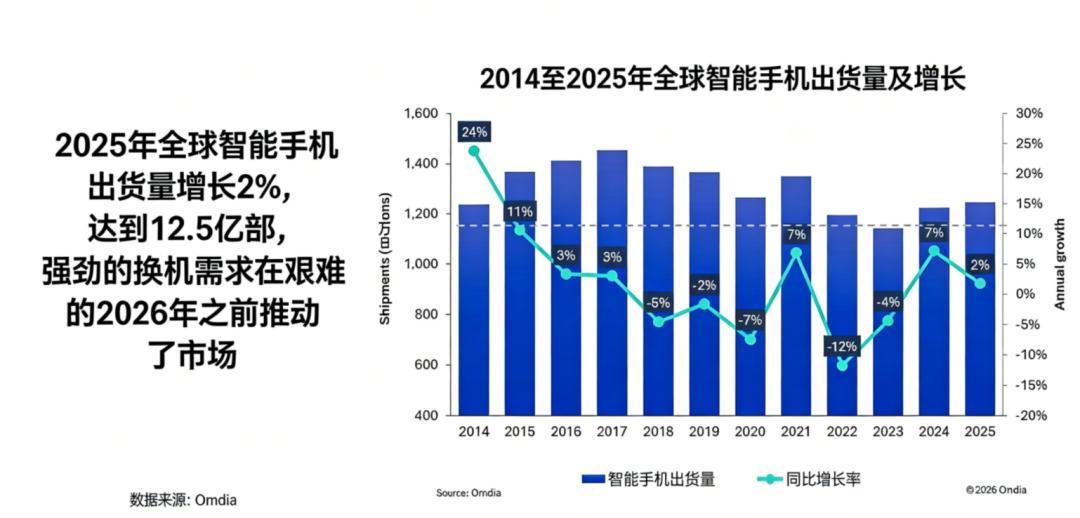
According to Omdia, the global smartphone shipments increased by 2% in 2025, reaching 1.25 billion units, the highest since 2021.
So, who is the best-selling smartphone brand on the planet?
The answer is obvious: Apple. And this is not a fluke; it's the third consecutive year that Apple has ranked first globally, consistently outperforming Samsung in recent years.
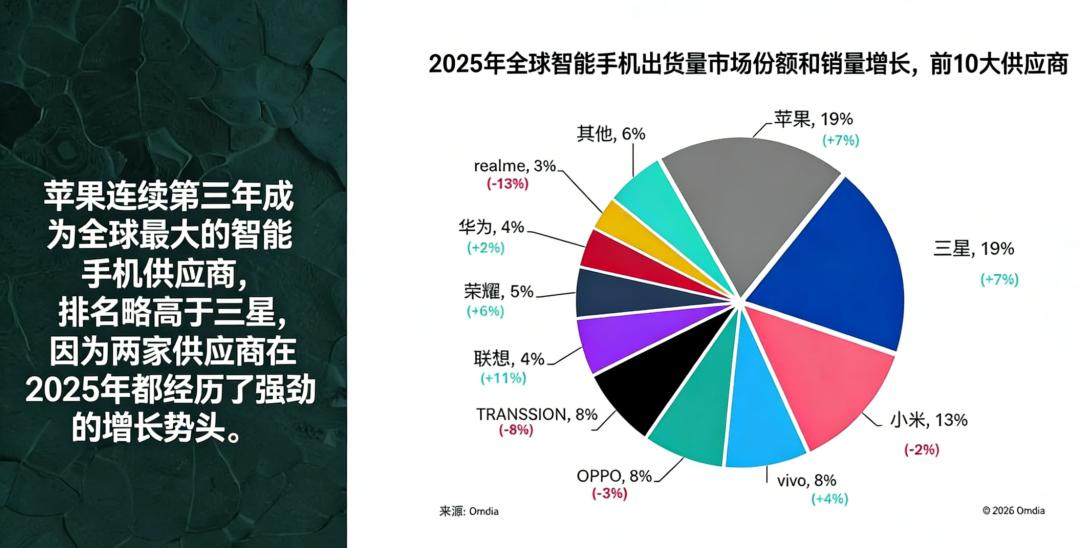
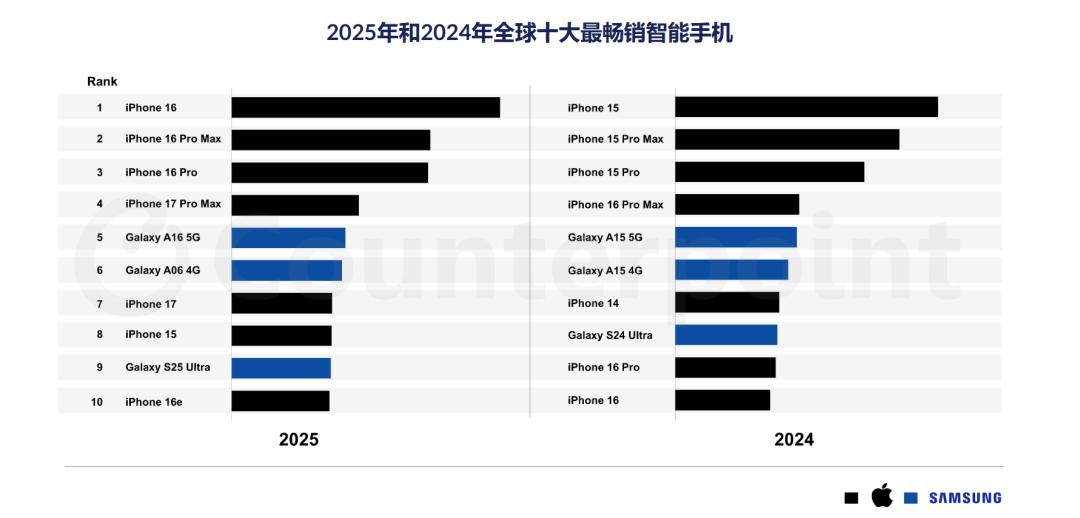
Omdia reported that Apple's annual shipments reached 240.6 million units, a 7% year-on-year increase. Counterpoint was even more straightforward, stating that Apple's market share reached 20%. The iPhone 16 topped the list of the world's best-selling models, and Apple occupied 7 out of the top 10 positions.
Wow, such dominance makes everyone say, "Apple is still Apple; it's always the king."
Although Samsung has little presence in the Chinese market, it is still doing well overseas, with annual shipments of 241.2 million units. The two companies together accounted for nearly 40% of the market share.
What about our domestic brands that we care about the most? Xiaomi maintained its third position globally last year. It seems like it's firmly stuck in the "perennial third" position...
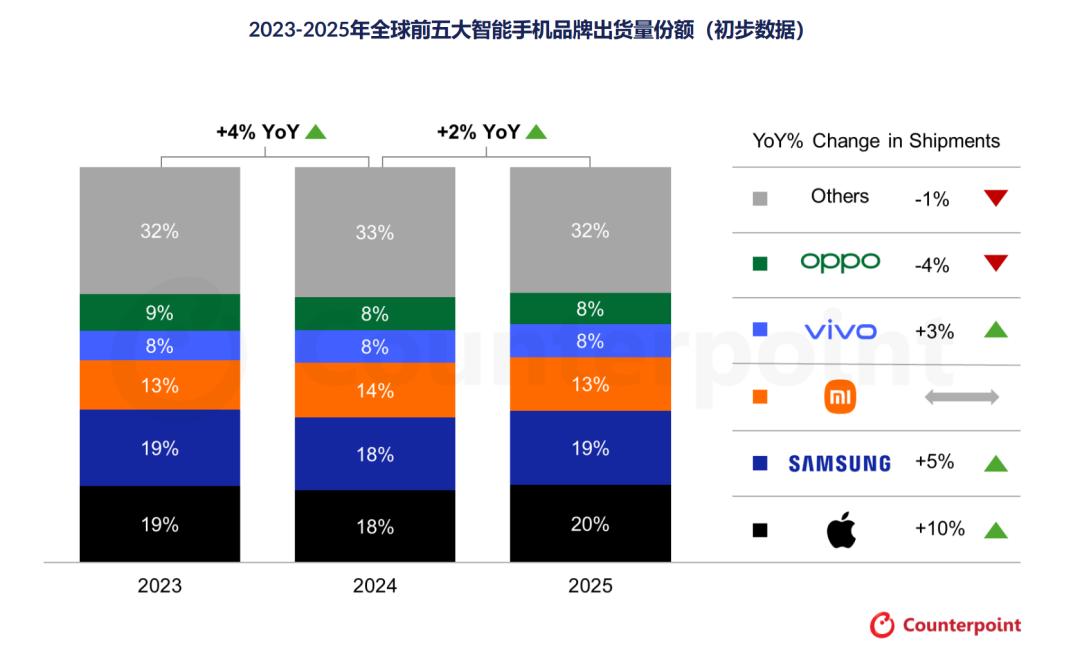
To be honest, its situation is a bit of a mixed bag.
In China, it sold well thanks to its "smartphone-car-smart home ecosystem," unique rear screen, and in - depth collaboration with Leica. However, in its traditional strongholds like India and Europe, it was severely affected by competitors and geopolitical issues, resulting in a 2% year - on - year decline in annual shipments.
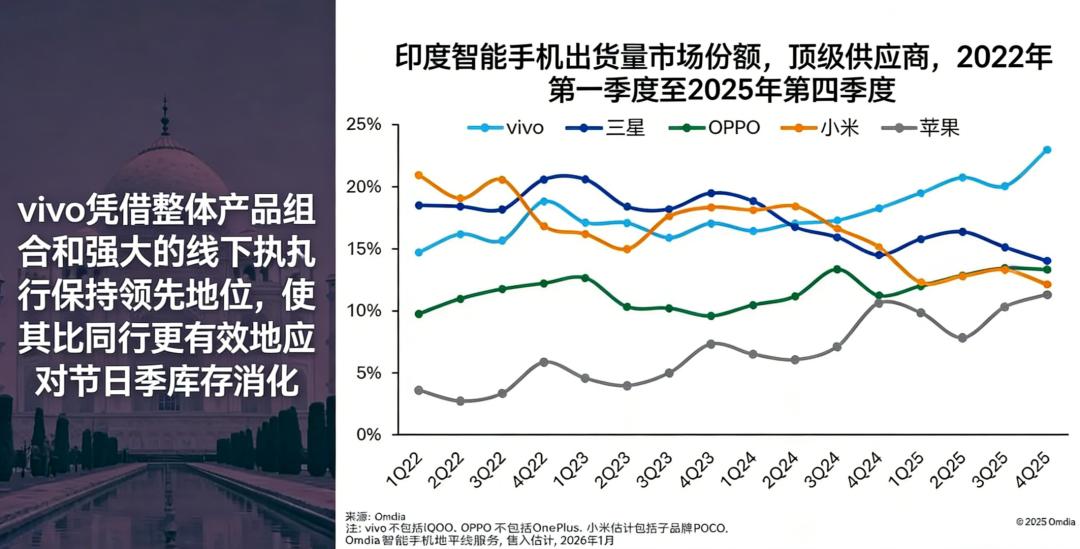
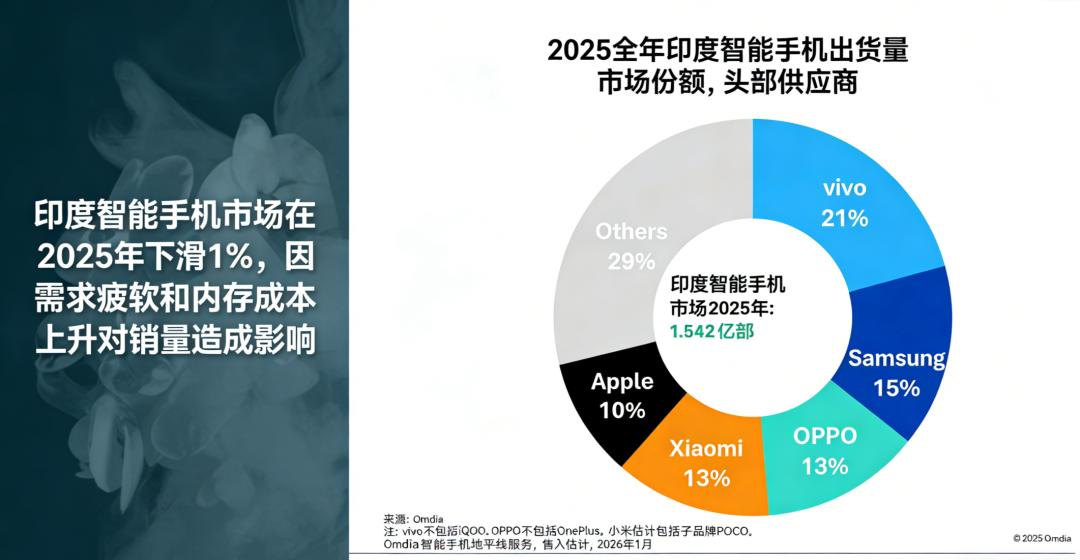
The biggest variable last year was actually vivo. To be fair, vivo really made a fortune quietly. It reached the fourth position globally for the first time, with shipments of 105.3 million units, a 4% year - on - year increase. It was the only one among the three Chinese manufacturers to outperform the market.
The main reason is its in - depth development in the Indian market, a stable offline sales channel, and the successful establishment of the high - end image of its X series. It's like "developing quietly and then astonishing everyone."
OPPO ranked fifth, with a 4% year - on - year decline.
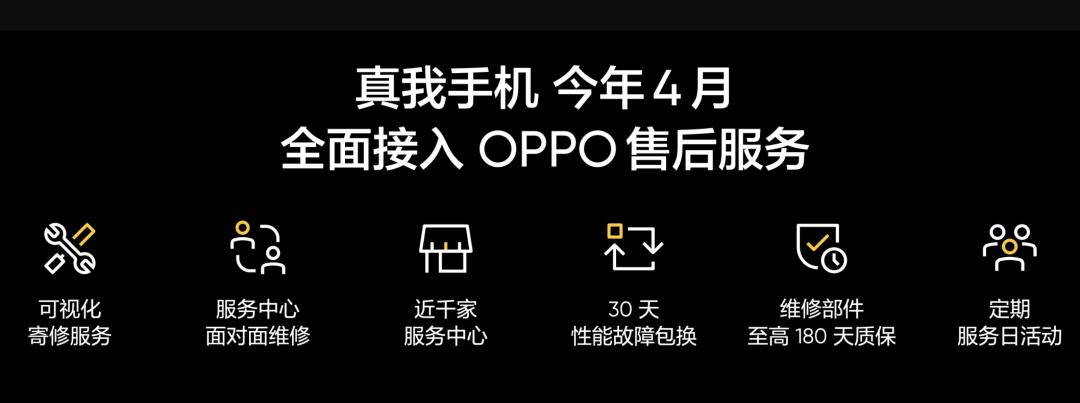
However, there's a detail: starting from January 2026, realme was officially integrated into the OPPO system. This means that when calculating the sales next year, OPPO's global ranking is likely to rise with the addition of realme's sales.
After looking at the global market, let's turn our attention back to the Chinese market. The situation is completely different. If the global market is Apple's "solo show," then the Chinese market is Huawei's "victory celebration."
According to IDC and Omdia, the shipments of the Chinese smartphone market in 2025 were approximately 282 million units, a slight decline compared to 2024. Although the overall market didn't grow, the rankings have completely changed.
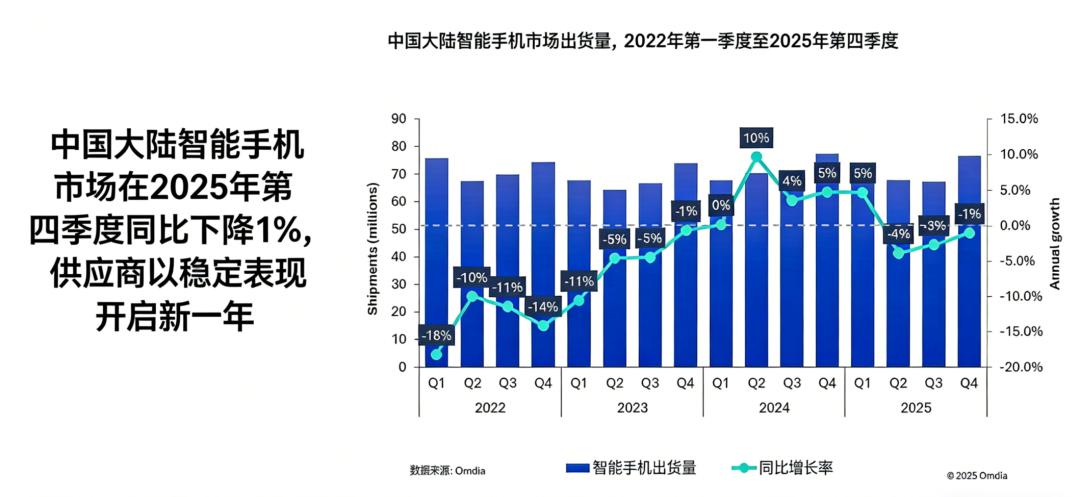
Omdia data shows that Huawei shipped 46.8 million units throughout the year and regained the top position in the Chinese market share.
Believe it or not, Huawei is back, and this time it's not just about sentiment but real products. The Mate series and nova series have increased their market presence, and the HarmonyOS experience has become more and more perfect. It can be described as "irresistible."
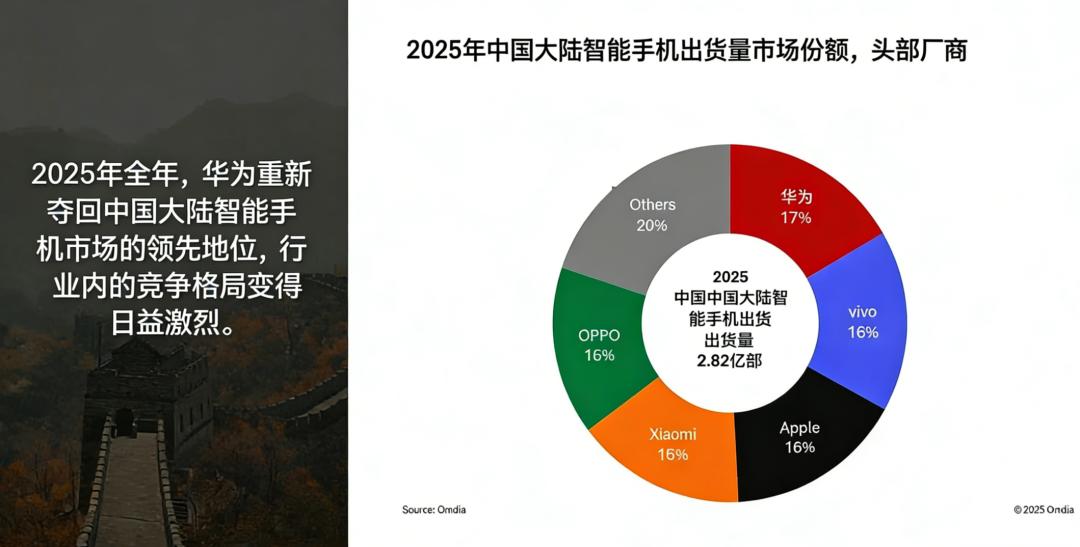
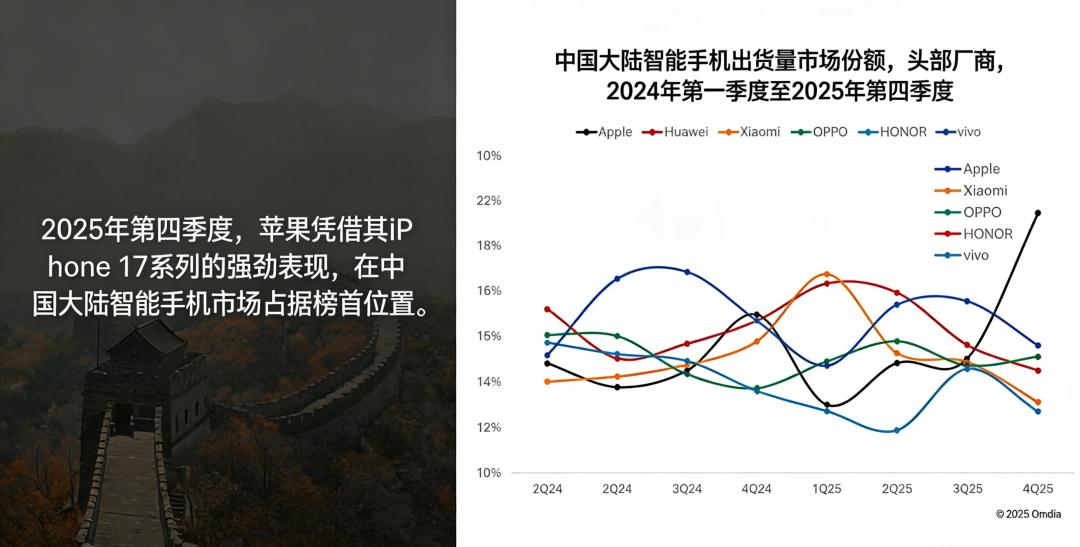
Although vivo lost the first position, its shipments still reached 46 million units, a remarkably stable performance. Apple ranked third, with shipments of 45.9 million units. Interestingly, although Apple ranked third in China, it had the largest growth rate among the top five.
What does this mean? It means that despite all the complaints, people still buy iPhones when they are on sale. The price cuts of the iPhone 17 series and the subsequent government subsidies made many people finally give in and make a purchase.
Xiaomi and OPPO ranked fourth and fifth respectively, both in the range of 43 - 44 million units, closely competing with each other.
Here's an interesting piece of data:
During the "Double 11" shopping festival in 2025, iPhone sales increased by 37% year - on - year, while Xiaomi's sales decreased by 11% and Huawei's by 22%. The main reason is that the release of the Xiaomi 17 series was advanced, shifting the sales peak forward. The Huawei Mate 80 series missed the promotion and thus the traffic bonus.
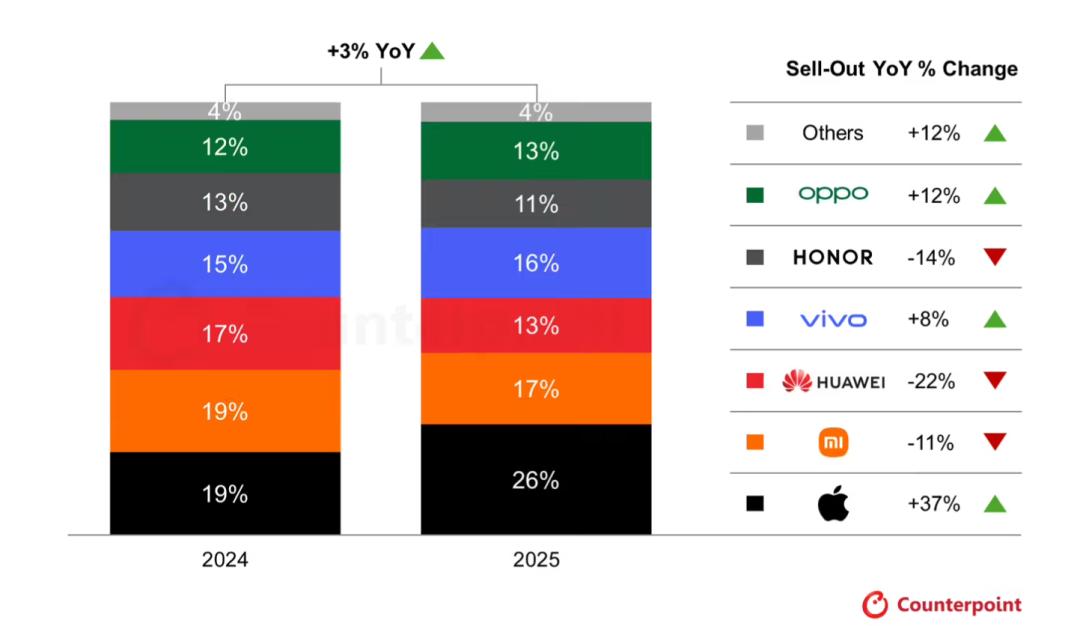
To be honest, Xiaomi timed its product release perfectly this year. It released new models one or two months earlier than its competitors, catching them off guard. After this experience, it's likely that other manufacturers will also advance their new product releases this year.
Foldable Phones:
Fewer Show - offs, More Practical Users
After talking about straight - screen phones, let's discuss foldable phones.
The biggest impression I got from the foldable phone market this year is that there are fewer people buying them just for show, and more people using them for practical purposes.
According to IDC, the shipments of foldable phones in China in 2025 were approximately 10.01 million units, a 9.2% year - on - year increase. Although the market is still growing, the growth rate has slowed down. In terms of form, large - foldable phones have become the mainstream, and small - foldable phones are no longer as popular.
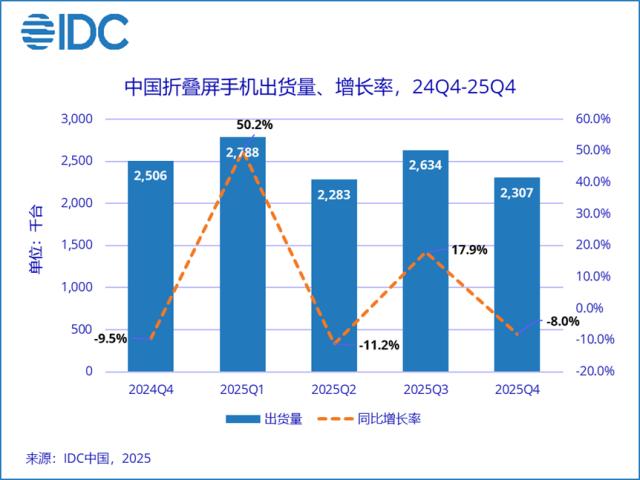
This indicates that the market has entered the "rational stage" from the "exploratory stage." In other words, those who are still buying foldable phones basically have a real need for a large screen.
The market share is even more one - sided. Huawei alone accounts for 70% of the market share, followed by Honor in second place and vivo in third.
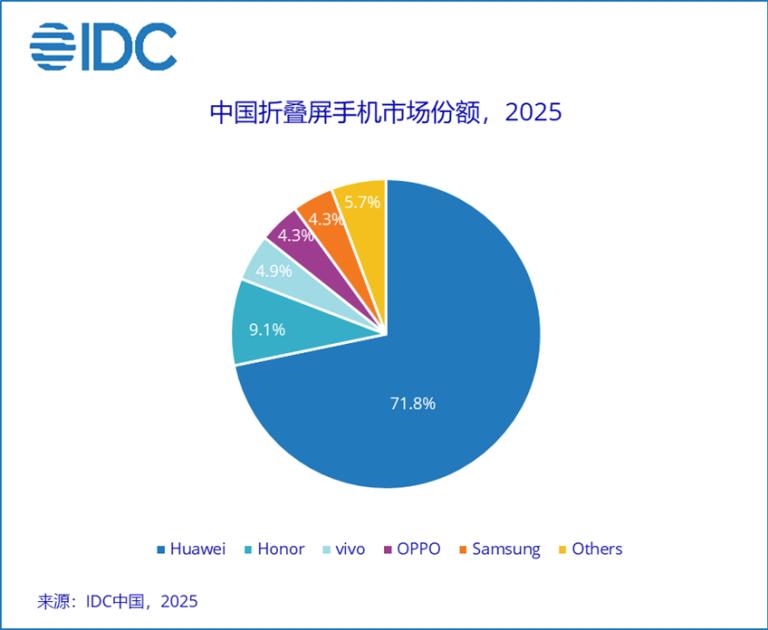
To be honest, the other brands are still in a supporting role in the foldable phone market. This has forced OPPO, vivo, Xiaomi, and Honor to adjust their strategies and learn from Huawei. We are unlikely to see large - foldable phones like the vivo X Fold 2 Pro with excessive features.
After all, no one wants to carry around a "half - pound phone" every day, right?
Tablets:
Government Subsidies are Great, Victory for the "Wait - and - See" Crowd
Now let's look at tablets. The tablet market in 2025 was a victory for the "wait - and - see" crowd.
Globally, according to Omdia, the global tablet shipments increased by 9.8% last year, reaching the highest level since 2020. Apple is still the leader, even with the increasing screen size of smartphones. It has to be said that the ecological moat of the iPad is still strong.
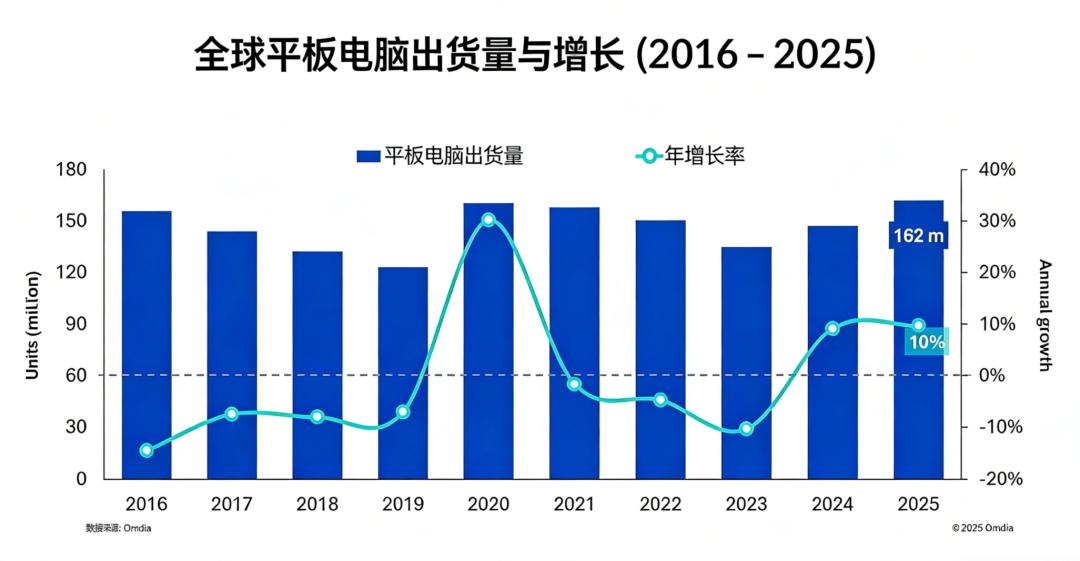
However, in terms of growth rate, domestic brands are leading. Lenovo's shipments in the fourth quarter increased by 36.2%, Huawei's by 14.8%, and Xiaomi's by 10.1%.
Lenovo's strong sales are mainly due to its aggressive shipments before the memory price increase. It filled its channels with inventory and managed to reach the third position globally in the fourth quarter through price promotions. In other words, you can criticize Lenovo's tablet system, but it's really a good deal after the price cut.