Five Observations from AWE 2026: What's More Eye-Catching Than AI and Robots Is "It"
If CES is the Spring Festival Gala of the tech circle, then AWE is the Spring Festival fair of the tech circle. The concepts and technologies that make stunning debuts at CES have to prove here that they can truly be accepted by consumers, who will then pay real money to take them home.
At this year's "fair", the most attention - grabbing protagonist is a bit unexpected: It's neither the robots that stole the show at the Spring Festival Gala nor the hottest AI hardware in the investment circle, but aircraft.
XPENG AEROHT drove its split - type flying car into the exhibition hall. Dreame, which aims to enter all fields, also launched a rotary - wing aircraft. The "cars" in the sky became the most eye - catching presence at this year's AWE. In addition, 3D printers and consumer exoskeletons have evolved from new species last year to a fiercely competitive niche market. There is also the Oriental Hub Hall representing overseas expansion, where large - model manufacturers and AI glasses manufacturers have quietly gathered, eager to find an overseas market for their products.
After two days of immersive walking of 30,000 steps, I've sorted out the five most notable changes at this year's AWE. There is a clear thread behind these changes: As AI moves from the large models in dialog boxes into reality, into furniture, appliances, transportation, and various smart wearable devices... The Chinese technology industry is answering a very real question in the most practical way: What kind of products will consumers actually pay for?
01
Observation 1: Flying robots become the new eye - catching species
"Why is there a helicopter here? Isn't this a home appliance exhibition?" As soon as I entered Hall W1, I heard an exclamation. "These days, helicopters can even be considered home products." At this year's AWE, in each exhibition hall, the most eye - catching things are no longer the cool - looking cars, but various "flying robots".
The most common ones are different types of drones. In front of the Yingling exhibition area, many visitors queued up to wear VR headsets to experience the flight of the Antigravity A1 from a first - person perspective.
"By 2025, the shipment volume of complete drones may exceed 10 million units," a person engaged in drone product sales revealed on - site. The shipment volume of drones has been growing faster than expected in recent years. He told us that in 2025, the production of civil drones in the country had exceeded 7.6 million units, and the number of exported drones reached 4.95 million units.
In addition to drones, eVOTL (Electric Vertical Take - Off and Landing Aircraft) also made its debut in the core view of the venue for the first time in a high - frequency and concentrated manner. Many eVOTL companies, such as Star Trek, XPENG AEROHT, Yufeng Future, and Shi's Technology, brought models of their new - generation aircraft.
"XPENG AEROHT is the largest flying - car company in Asia." Like many others, I was immediately attracted by the concept of "flying cars" as soon as I entered the XPENG AEROHT booth.
After an explanation, we learned that a flying car doesn't mean "adding propellers to a car to make it fly", but rather creating an aircraft similar to a car that can transport multiple people.
XPENG AEROHT launched the split - type flying car "Land Carrier", which is mainly divided into two parts. One is the land vehicle created by XPENG, which looks like an extended minibus. This land vehicle adopts a three - axle, six - wheel design, supports all - wheel steering, and is equipped with an 800V extended - range platform, with a range of over 1000 km. It also serves as a mobile helipad and a mobile charging station, capable of charging the aircraft.
The other part is the electric vertical take - off and landing aircraft. Users need a civil aviation aircraft license to operate it. The aircraft uses a six - rotor all - electric configuration, with a maximum speed of 360 km/h and supports both manual and automatic modes. After folding, the flying part can be automatically parked in the trunk of the land vehicle. "Currently, we don't have any direct competitors in the Asian market," a staff member in the exhibition area told me. It is understood that XPENG AEROHT has completed test flights of 5 Land Carriers and plans to start trial operations in 2027.
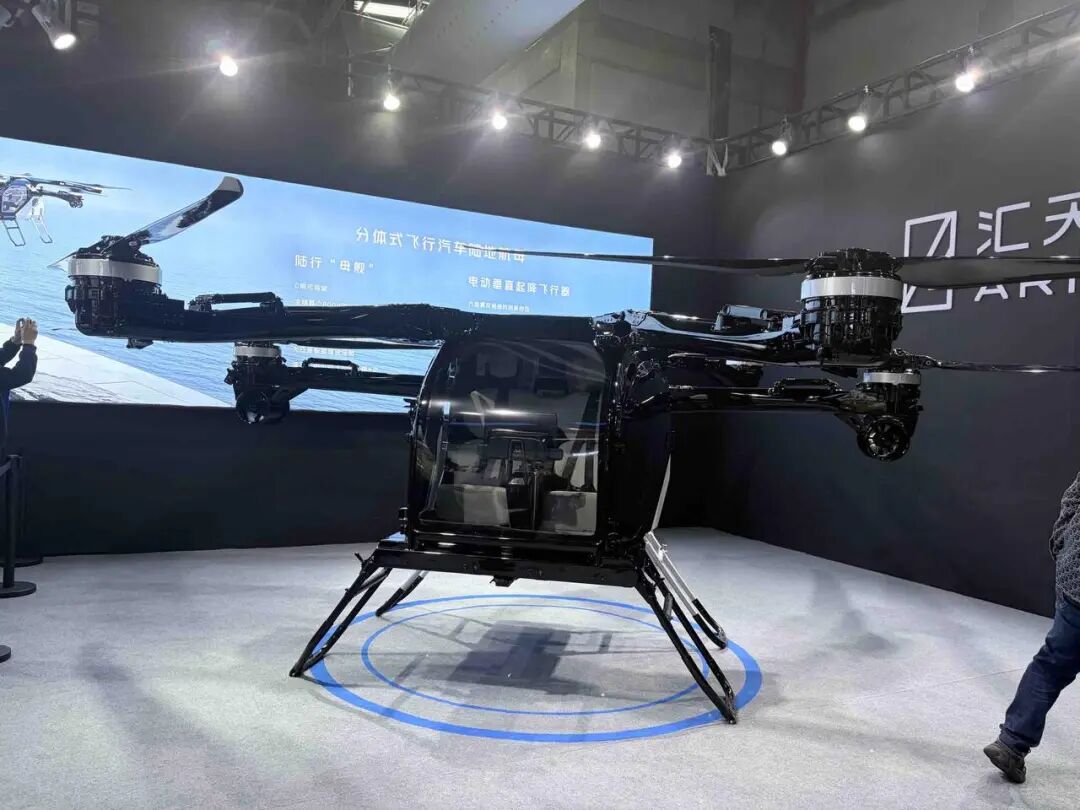
XPENG AEROHT exhibition site | Image source: GeekPark
But the most unexpected player is Dreame. This company, which started with sweeping robots, continued its bold style from the Spring Festival Gala and rented an entire exhibition hall this year. From flights to the future, to helicopters, and then to satellite plans, Dreame's investment in the aerial economy has been widely discussed.
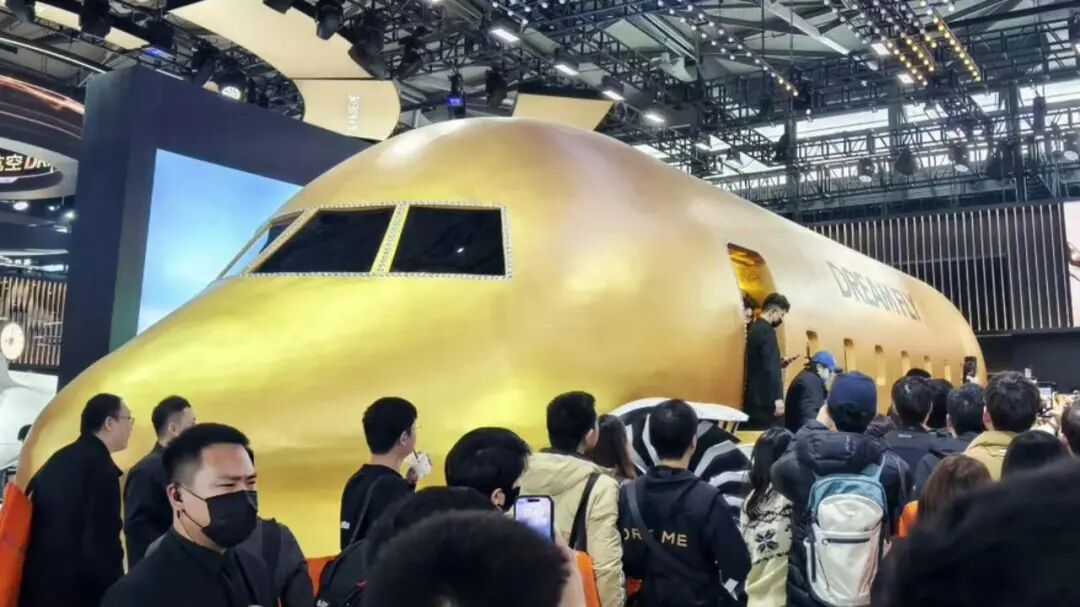
Dreame exhibition site | Image source: GeekPark
This year, Dreame's Dream Aerospace Company unveiled the Dreame Tilt - Rotor Aircraft and the manned aircraft eVTOL DREAM FLY. According to on - site introductions, the noise of this manned aircraft during cruising can be reduced to 45 decibels. Its power system uses a redundant design, and it can still land safely through gliding and wheeled landing gear in case of partial power failure.
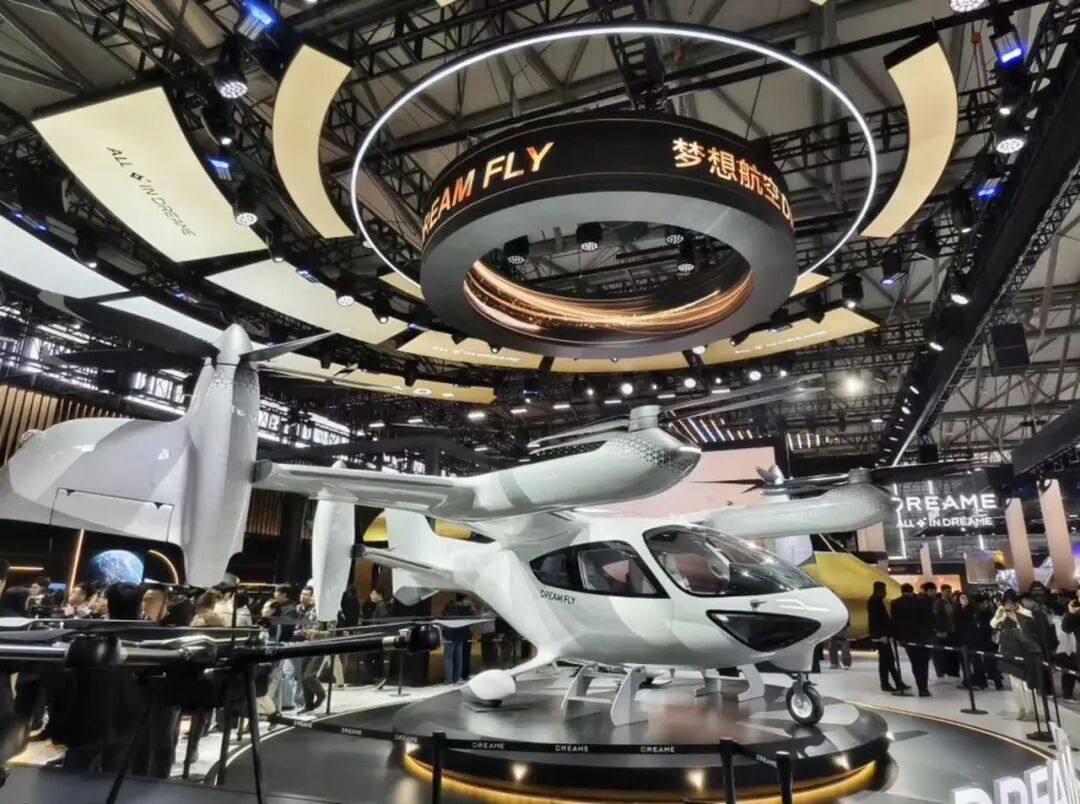
Dreame exhibition site | Image source: GeekPark
The low - altitude economy, which has been discussed for many years, seems to have reached a small climax this year. Concepts such as "air taxis" and "air buses" have become the most frequently mentioned business directions in the low - altitude economy field. Whether it's companies like Dreame and Mova that focus on smart home products or enterprises like XPENG that are involved in new - energy vehicles, they have all started to enter the low - altitude track.
"Although many well - funded companies can quickly launch relevant model aircraft, there are still many pitfalls in the aircraft industry that are difficult to avoid. There is still a big gap between developing a product and turning it into a business," a researcher engaged in spacecraft development in the venue told GeekPark. He believes that the popularity of the low - altitude track this year is partly due to the significant support from the state in the low - altitude economy in the past two years, which has even been included in the 15th Five - Year Plan and is regarded as the next big opportunity by many enterprises. In addition, the increasing shipments of drones and the expansion of drone delivery services in the past two years have also given enterprises new opportunities.
However, for most early - stage startups targeting the low - altitude economy, most of them have relatively mature business scenarios in inspection and security fields and can make some profits, which "subsidize" the R & D of B2C - type aircraft. Ultimately, they hope to sell these eVTOLs to aerospace companies to serve ordinary users and build an aerial transportation system. "In the future, it may only take about 15 minutes to travel from Shanghai to Suzhou," he mentioned.
02
Observation 2: More important than singing and dancing,
is how to get robots into homes?
In 2026, if a humanoid robot can only "take a few steps", it can no longer satisfy the public. After the Spring Festival Gala, many visitors would make comments when passing by the robot booths. "Wow, this performance is better/worse than those at the Spring Festival Gala."
Unitree Robotics set up boxing demonstration platforms in two exhibition halls this year to showcase the flexibility of its robots through boxing performances. Other demonstrations of humanoid robots are basically the same old three - piece set: dancing, walking, and doing somersaults, with not much change.
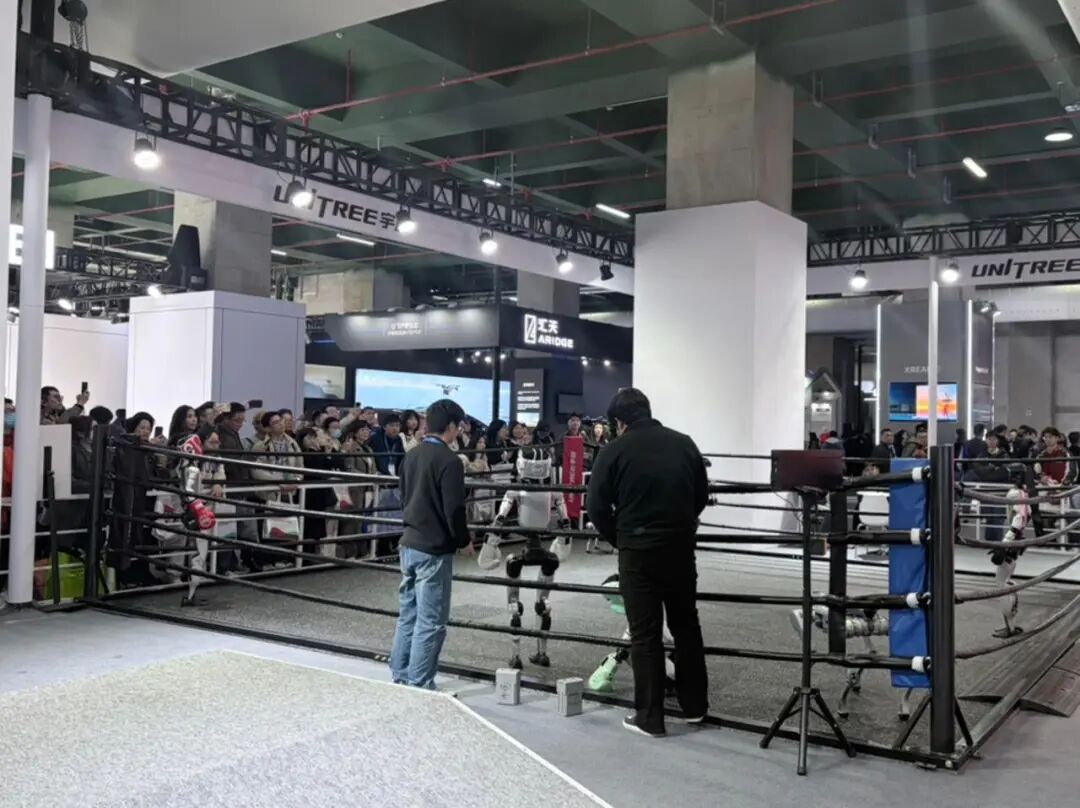
Unitree Robotics exhibition site | Image source: GeekPark
What's a bit different this year is that it's obvious that JD.com and many robot companies hope to send robots into users' homes through rental platforms.
ZhiYuan Robotics also showcased its Qingtian rental service and even came up with the slogan of "rent for 1 yuan instantly". It mainly transforms robot performances into on - demand rental services through shared rentals and platform scheduling. Currently, it is mainly used in commercial performances, catering, retail, exhibitions, and other scenarios.
JD.com also jointly displayed humanoid, quadruped, and companion robots with robot brands such as Zhongqing and Yun Shenchu. Currently, the rental price of a Unitree robotic dog is about 78 yuan per day, and the price of a U1 humanoid robot is about 1800 yuan per day. According to the on - site staff, during the Spring Festival, the robot rental market was quite active, and many orders were booked from the Spring Festival until mid - March.
However, when we randomly interviewed several interested visitors in the exhibition area, most of them were just curious. When asked if they would really consider renting a robot, most young people were eager to try it out but wouldn't rent it for a long time. Most middle - aged people, however, said no. "I don't know what to do with it when I bring it home. Just having a look at the excitement is enough." Obviously, the lack of obvious uses is still a core factor preventing robots from entering every household.
In contrast, people's attention to desktop robots has started to increase. Xiaotian launched a kilogram - level trainable robotic dog and opened up the programming program to users, allowing them to directly set the movement control of the robotic dog.
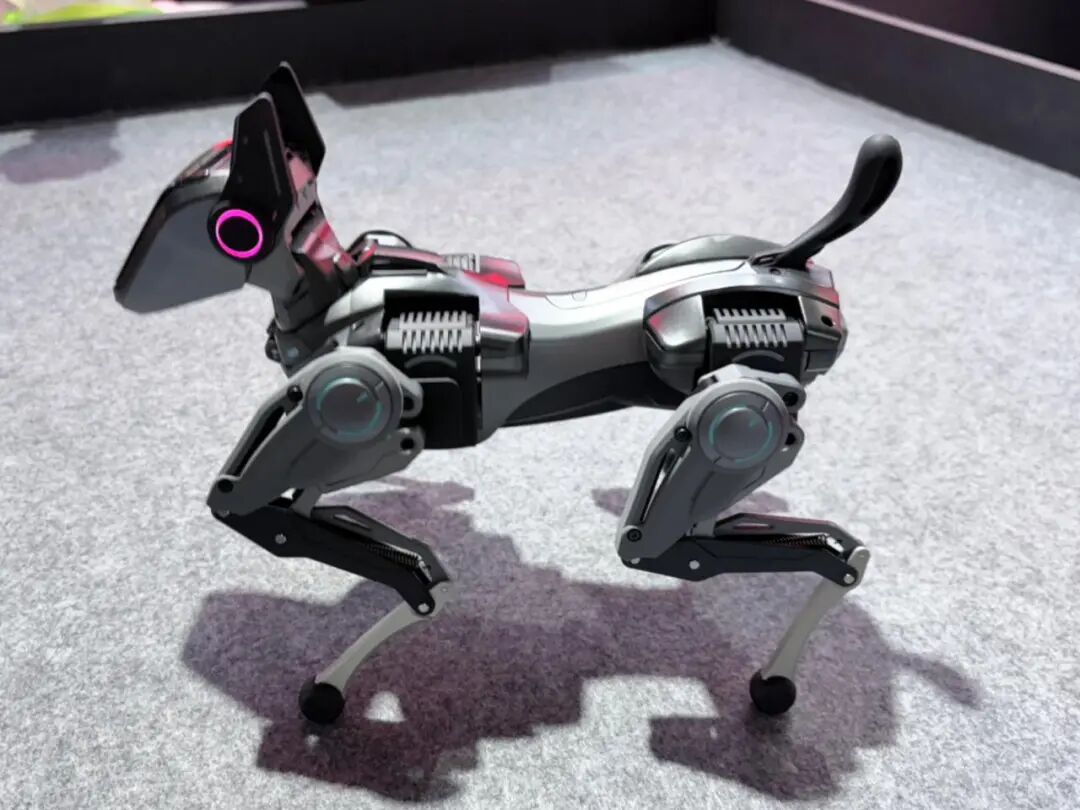
Xiaotian desktop robotic dog | Image source: GeekPark
Cell Wall Intelligence launched a six - axis desktop robot that can actively change according to a person's position. With three cameras, it supports gesture control and voice control and can also move the screen according to a person's gestures.
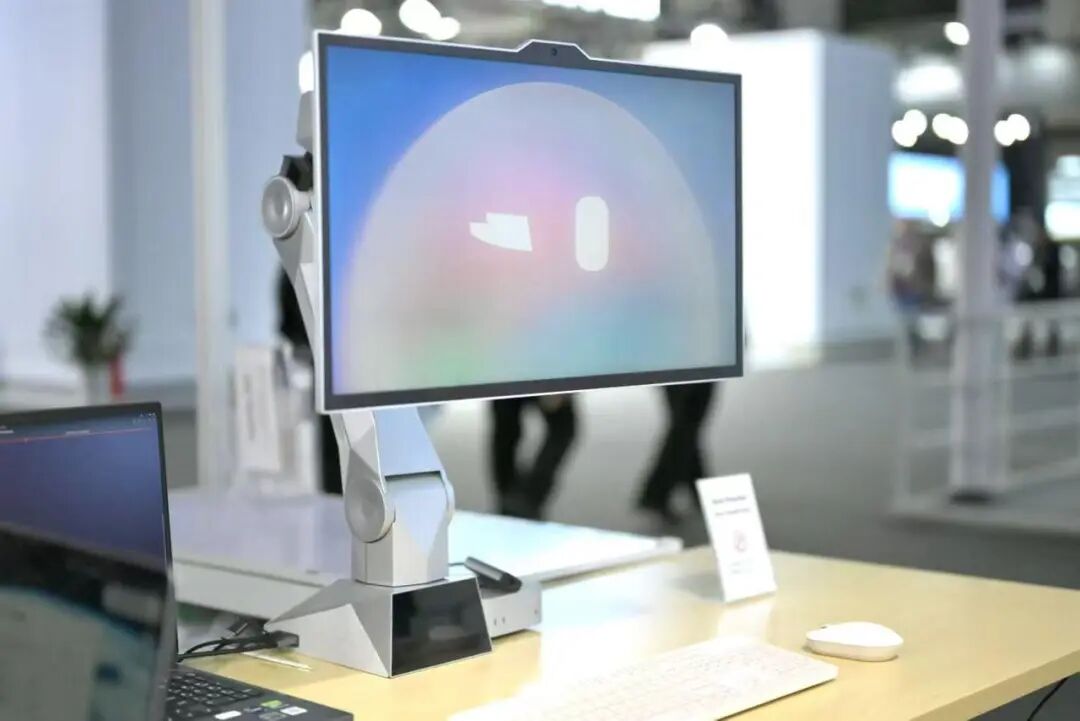
Cell Wall Intelligence | Image source: Cell Wall Intelligence
In the field of desktop robots, compared with the popular AI companion toys last year, the number of pure AI companion desktop robot products has significantly decreased this year, and the popularity seems to have dropped sharply. We also found that many enterprises have started to transform common hardware in the desktop office scenario into robots, combine them with AI for mechanical control, and emphasize active intelligence. In terms of interaction, compared with the multi - modal interaction ability emphasized last year, this year, more emphasis is placed on active interaction, active perception, and adaptive adjustment.
We simply learned on - site that the R & D cycle of small desktop robots has started to shorten. In the past, it took 1 - 2 years to develop a product, but now a product model can be quickly built in about 3 - 6 months. Compared with emotional - companion products, more startup teams value the real product uses of desktop robots in actual office scenarios rather than emotions. This is also one of the ways to ensure that their products can make a profit in the early stage. "We need to find people who really understand the value of these products to pay for them, rather than exploring an uncertain market," a member of a desktop robot startup team said.
Compared with the hot trend of the robot track in the past two years, this year, both users and R & D personnel seem to have become more rational in their expectations of robot functions and value judgments, and the design of robot functions has become more practical.
03
Observation 3: 3D printers and consumer exoskeletons,
have changed from new species to a niche competitive market
Not only are some popular technology tracks fiercely competing in terms of parameters and performance, but 3D printers and consumer exoskeleton robots, once regarded as new species, also have new competitors this year.
In the field of 3D printers, many 3C - oriented enterprises such as Anker and Mova showcased their new 3D printer products this year. eufyMake, a brand under Anker Innovations, presented its first consumer - grade stereoscopic texture UV printer, the eufyMake E1. It is understood that this device supports full - color pattern and stereoscopic texture printing on more than 300 types of material surfaces. In terms of software, eufyMake has also developed a series of portable design platforms to help users create their own designs.
A on - site staff member told us that AI - generated design has lowered the threshold of product design. With the help of AI, most users can design the models they want, creating space for 3D printing devices to enter the mass market.
Therefore, it's not difficult for enterprises with rich 3C hardware manufacturing experience to quickly launch a product. However, current 3D printing products not only test the hardware product capabilities but also the ability to build software - level work platforms and community capabilities. In addition, the entry of large enterprises can promote the popularization of product awareness, and more funds flowing into the consumables field have also contributed to the reduction of consumable costs. According to his analysis, the price of 3D printer consumables may decrease by about 1/4 this year.
It's not only 3D printers that have been made popular by leading companies in the track, but also consumer - grade exoskeleton robots. This year, a large number of consumer - grade exoskeleton robot companies, such as Aoshark Intelligent, Maibu Robotics, and Shengbu Innovation, have emerged like mushrooms after rain.
The consumer - grade lower - limb exoskeleton robot brought by Shengbu Innovation, an incubation brand of Zero, weighs 2 kg and can be quickly worn in three minutes, with a maximum battery life of about 10 hours. According to the introduction, this new product has improved the movement efficiency by 20% through design, has AI gait adaptation, and can support 13 complex movement modes in 0.2 seconds.
At the exhibition site, there were long queues at almost all consumer - grade exoskeleton robot exhibition areas, and users were queuing up to experience them. Some brand owners even had to limit the number of visitors in advance.
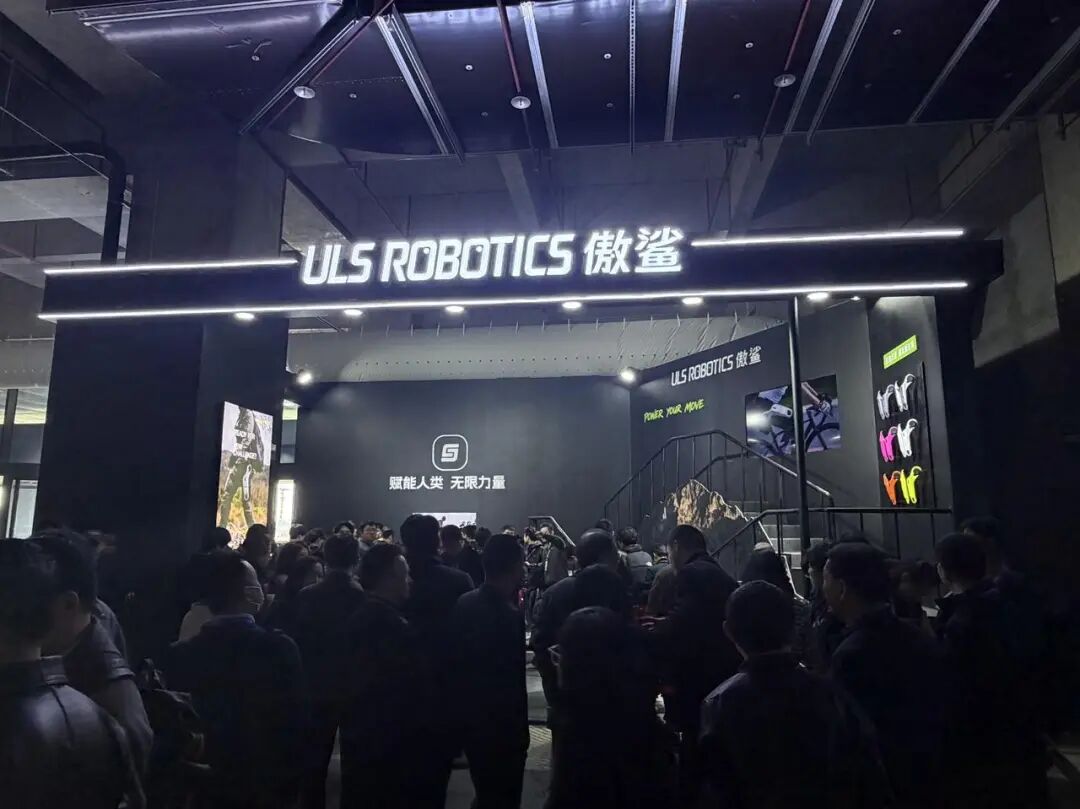
Aoshark exhibition site | Image source: GeekPark