How deep is DJI's talent pool amid its 100-billion-yuan breakout effort under the covetous eyes of countless rivals?
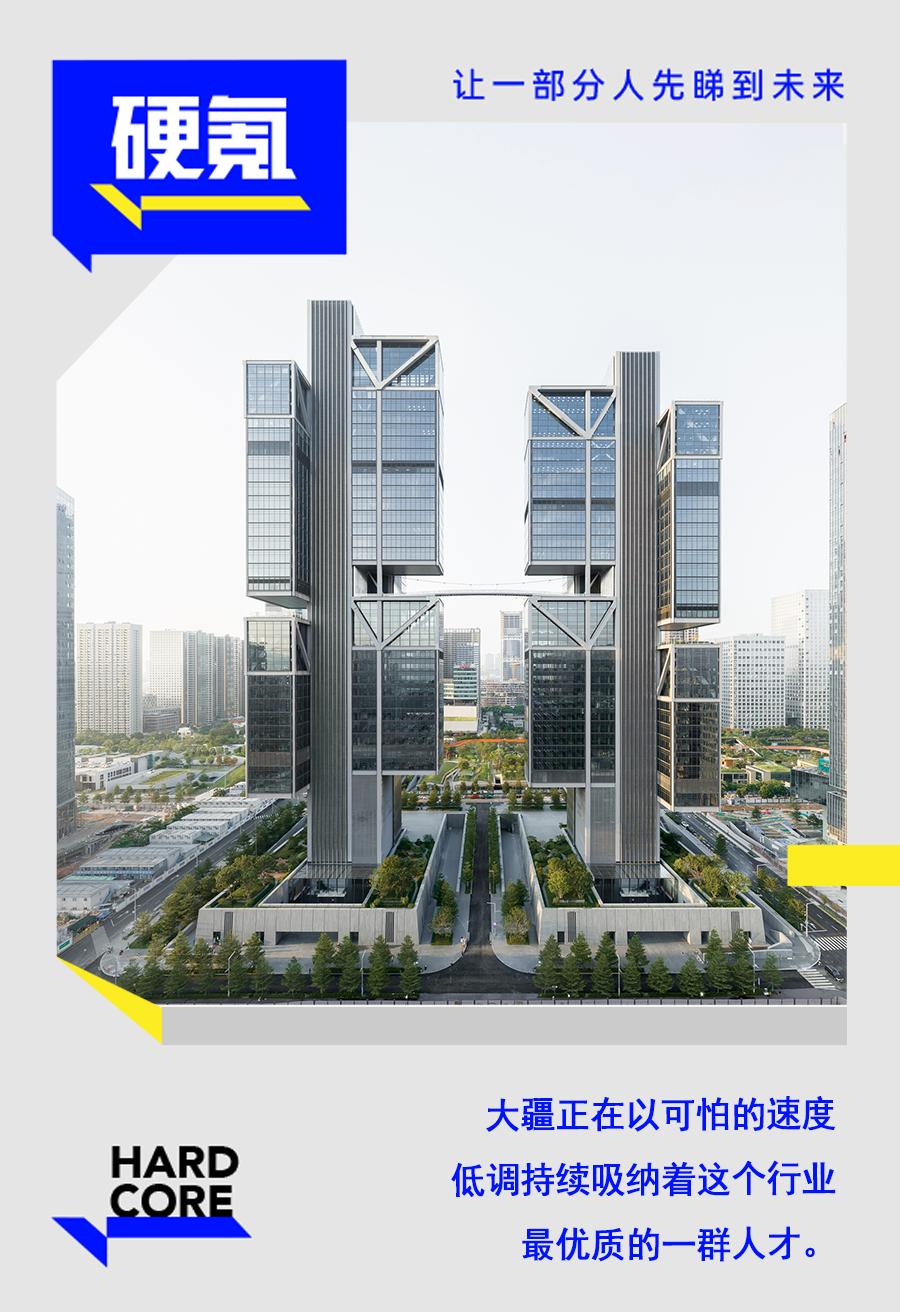
Among all Chinese tech companies, DJI is a uniquely special presence. It stays low-profile yet defines industry standards across multiple fields.
In recent years, a phenomenon has been repeatedly mentioned: former DJI employees frequently appear on the rosters of startups, at investors' dinner tables, and on headhunters' priority recommendation lists.
There is even a popular saying in the headhunting circle: "People who come out of DJI are hard currency." Over time, this saying was quietly distorted into a misinterpretation in market communication: DJI can no longer retain its talents.
However, if you carefully examine the gap between this judgment and the facts, you will discover a truth that has never been known before.
First, look at the operational level: in 2025, market rumors said DJI's revenue had approached 80 billion yuan; in a leaked internal letter, founder Frank Wang explicitly mentioned that the company is expected to steadily exceed 100 billion yuan in revenue in 2026.
At the same time, DJI is no longer just the "drone company": in the action camera sector, its global market share has long remained stably above 60%; in the panoramic camera market, it has taken nearly half of the market with a single product Osmo 360.

The product iteration pace is still accelerating, and new tracks are being explored. All these silently respond to the narrative of "brain drain": if DJI's core innovation capability continues to strengthen and its organizational resilience keeps improving, the essence of the problem may not be the issue of "whether talents can be retained" at all.
What is more worth exploring is how DJI, under the goal of hitting the 100-billion-yuan business scale, builds a more resilient growth model with a more diverse talent structure?
This is not only the key to understanding DJI's current state, but may also become a typical sample for observing Chinese tech companies entering the stage of high-quality development.

Behind the Misinterpreted "Brain Drain"
When "brain drain" is repeatedly discussed in many companies, it often means another signal: the company's attractiveness declines, outstanding people start to leave, and the upward expectation of the organization begins to slow down. But DJI has not shown the typical characteristics of such companies.
The core reason why the public forms the impression that "DJI is suffering from severe brain drain" is not that it really cannot retain talents, but that those who leave DJI are too easy to be "noticed". Former DJI employees usually enter the market with strong technical auras: they start businesses, develop products, meet investors, and naturally become more likely to be the talk of the market. As a result, the public only sees people "going out", but ignores the people "coming in"; they see lively resignation stories, but fail to notice the steady, continuous "living water" of talents flowing in.
This is a typical cognitive bias: The market tends to remember dramatic talent flows, while ignoring the stable overall base.
In fact, if a technical organization has really been "emptied", the most intuitive indicator is the change in its capabilities. The product line will shrink, the iteration pace will slow down, and cross-track expansion will become difficult. On the contrary, DJI's performance in recent years is completely different: it has not stayed at the single point of drones, but continues to develop and innovate in fields such as handheld imaging, spatial intelligence, and low-altitude economy.
More accurately, what DJI is experiencing now is not passive "brain drain", but an active "upgrading of a more diverse and open talent structure".
As the company grows from the 10-billion-yuan level to the 100-billion-yuan level, business complexity rises exponentially. The early model of relying on "genius individuals" to conquer the world can hardly support the stable operation of a huge system. The organization needs more interdisciplinary talents with systematic thinking, cross-departmental collaboration ability and in-depth management experience.
In this process, some employees with early-style work characteristics may choose to leave or transfer because their skill sets no longer fully match the needs of the company's new stage. This kind of flow is essentially a structural metabolism carried out by the organization to adapt to higher-dimensional competition.
The outside world only sees "people leaving", but ignores that DJI is on a large scale recruiting more experienced senior experts and organizational managers. What really determines the state of the company is never the outflow volume, but the net optimization degree of the talent structure. DJI's growth curve in recent years proves that this replacement has not weakened the organization at all, but made its foundation more solid.

The Inevitable Path from "Herbaceous" to "Woody"
To understand DJI's current talent layout, there is a very important clue, which is the internal letter from DJI founder Frank Wang that has been circulating in the tech circle recently.
In the New Year message to internal employees at the end of the year, Frank Wang used a vivid metaphor: Early DJI was more like a "herbaceous plant" — it grew fast and had strong vitality, but its organizational structure was thin; as the company has developed to today, it must evolve from a herbaceous plant to a "woody plant", which not only has lush leaves, but also has a trunk and branches strong enough.
This metaphor accurately presents the underlying logic of DJI's talent iteration.
In the early days of entrepreneurship, the core proposition of tech companies is "from 0 to 1", and the organization usually needs "genius-type" engineers, those who are capable of taking action, delivering results, and developing products. At that time, the organization pursued innovation, and whoever could deliver results and solve problems was the most important. At this stage, the enterprise's values naturally tend to respect the "leaves", that is, the innovators standing at the branches and responsible for photosynthesis. It is an era driven by "chlorophyll" (talent and passion).
However, when the enterprise sails into the deep water zone, the dimension of challenges has undergone fundamental changes.
The company no longer only needs a group of people driven by interests and passion, but also needs "trunk-type" talents who can help the company build systems, lead teams, and promote collaboration. The focus of enterprise development is shifting from simply pursuing the concentration of "chlorophyll" to building the density of "cellulose" — the silent but key backbone forces that can support the stable operation of the system.
This is why headhunters perceive that the "DJI popularity" is rising. It is not simply because the company is expanding recruitment, but because it is carrying out a deeper restructuring of its talent structure. In the past, the industry's impression of DJI was mostly "high density of geeks"; now, what DJI is supplementing is the talents that can support the sustainable operation of the entire system.
Many global tech companies have encountered this process and challenge, and DJI is just looking for its own solution through more philosophically reflective thinking.
When an enterprise grows from the 10-billion-yuan level to the 100-billion-yuan level, the hardest part is often not finding a few more smart people, but upgrading the organization with "a large number of smart people" into an organization that can operate stably even as a complex system. The former relies on talent density, while the latter relies on structural density. The former can win brilliant battles, while the latter can win protracted wars.

Therefore, the most notable change in DJI at present is not whether some people leave the company, but that it is actively upgrading "a group of geniuses who are good at doing things" into "an organization that can grow continuously".
This is also why the outside world has an illusion: on the surface, news of employee resignation keeps popping up; in fact, the organization is being quietly consolidated. What you see is the flow above the water surface, but you don't see the structural reshaping under the water surface.

Respect the Law of "Flow" and the "Long-termism" of Talents
What is a more advanced capability than "retaining everyone"?
It is not control, not binding, but forming a stable talent gravitational field: people can leave, but they still retain respect and recognition for this company, and even after leaving, they still retain and continue to benefit from the "wealth" brought by this company.
This is exactly the point most easily ignored in various external interpretations of DJI.
In some snippets of DJI's internal speeches that can be seen, the value of "seeking truth" written into DJI's corporate values is also reflected in its respect for objective laws — "Talents are the common wealth of enterprises and the society, and talent flow itself is a natural process of industry progress and value release." DJI is willing to acquire talents from the society, and also willing to cultivate more people with innovative spirit and practical ability for the society.
This sentence sounds very simple, but it is actually very difficult to implement. Because most companies' first reaction to talents is possession; but a truly mature organization understands flow, respects flow, and completes rapid growth and iteration to the next stage in the process of flow.
This kind of respect is also reflected in some emotional details.
For example, the "resignation gift box" incident that went viral before the Spring Festival. The recipients of the gift boxes were not current employees, but a group of former employees who had left for many years. The contents of the gift boxes were basically the same as those for current employees, including Spring Festival couplets, red envelopes, badges, tea sets, and pens, a complete set. Some people sighed in the comment area that after leaving DJI, they realize better how good it is; even though they complained a lot when they were there, no one who left would not be proud of having worked here.
The reason why this incident once went viral on the Internet when the talent contradiction is prominent is the signal it releases: this company does not treat employees as disposable resources. Leaving does not mean being deleted; remembering is the confident inclusiveness of an enterprise.
Nowadays, with increasingly fierce talent competition, this way of handling the relationship has instead formed a new attraction. Because top talents usually care most about not only salary and position, but also respect, growth and organizational temperament. A company that only emphasizes loyalty and does not understand flow can hardly really win the best talents; on the contrary, an organization that remains open to flow and maintains respect and warmth for former employees tends to more easily form a "siphon effect" on talents.
From a broader industrial perspective, DJI is undergoing an identity change: it is no longer just a company that manufactures hit products, nor just a place that exports hard tech entrepreneurs, but more like a dimension-elevated system that has begun to iterate on its own. In this system, some people leave, some people enter; it overflows outward and absorbs inward. If the outside world only focuses on "how many people have left", it will misjudge its real state.
In fact, the best criteria for judging whether a tech company has weakened are never "whether there are resignations", but three things: whether it can still attract top talents, whether it can still develop new products, and whether it can continue to grow in a more complex stage. At least for now, DJI is still on an upward track in all three aspects.
Therefore, what is really worth remembering about DJI may not be "who else has left", but that today's DJI is a "living reservoir" of talents, dynamic and full of vitality, and what remains after people come in and out is always the "essence" with the highest density.