Humanoid robots may be the first industrial revolution that we experience in its entirety.
The price has risen by over 120% in a year. The stock prices of Huashi Technology and Haitian Ruisheng have soared by more than 50% within two months, and some stocks of core component manufacturers have continuously hit the daily limit.
Humanoid robots, once a cutting - edge field that was just for "showcasing strength", are breaking through boundaries and experiencing explosive growth at an unprecedented speed.
In 2026, the industrialization inflection point of the humanoid robot industry is approaching: Industrial - grade humanoid robots have been deployed in batches in the smart factories of automakers such as BYD and Geely Zeekr, performing tasks such as logistics transfer and component assembly. The autonomous battery - swapping technology can complete the process without intervention in just 3 minutes. Service - grade products are also gradually infiltrating daily life. For example, companion robots in nursing homes can lead the elderly in rehabilitation training and broadcast current affairs, promoting the transformation of elderly care services from "basic care" to "intelligent companionship".
At the policy level, China officially released the "Standard System for Humanoid Robots and Embodied Intelligence (2026 Edition)" at the end of February 2026. This is the first top - level design of standards covering the entire industrial chain and the entire life cycle in China, paving the way for technology transformation and large - scale mass production.
This industrial competition centered around "embodied intelligence" has broken through the boundaries of the laboratory and is triggering a reshaping wave in the fields of industrial manufacturing, elderly care services, special operations, and even family life. At the same time, it has opened up a new trillion - level market opportunity.
01 A Trillion - Dollar Market
2026 is a crucial year for the catalytic fusion of humanoid robots. There will be qualitative leaps in three dimensions: technological maturity, mass - production scale, and commercialization scenarios. The prospects of the trillion - dollar market are becoming increasingly clear, making it the most promising core track after new energy and AI.
It can be said that the current humanoid robot industry is like the new energy industry 10 years ago, on the verge of an explosion.
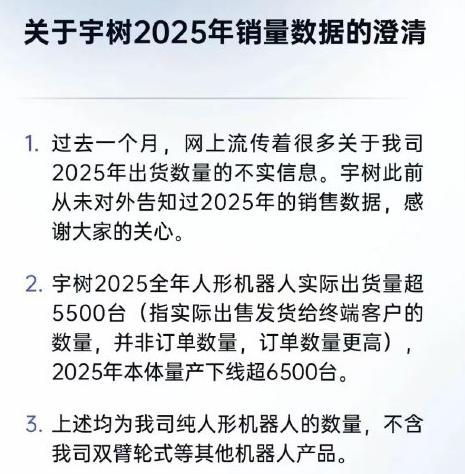
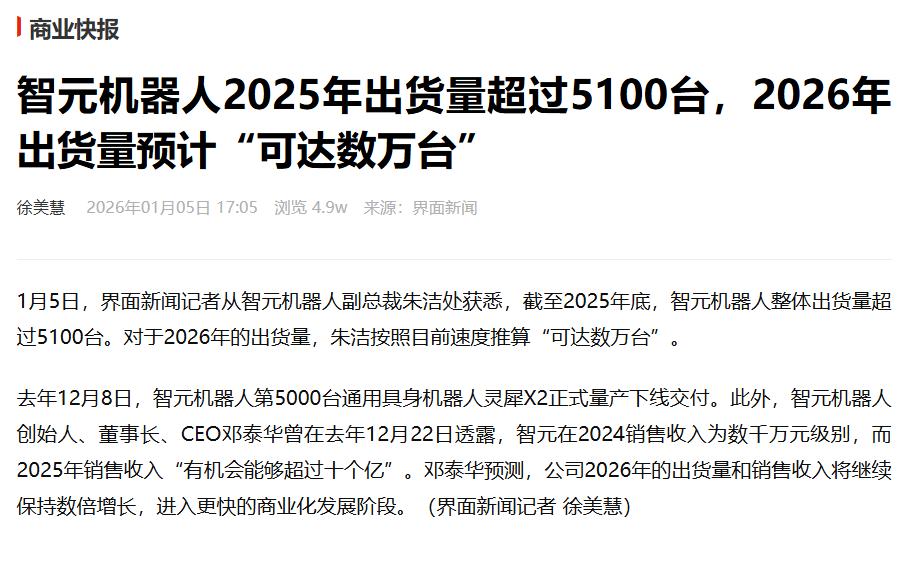
First of all, from the perspective of the industrial foundation, the industry's accumulation in 2025, especially the core industry data, confirms that the industrial inflection point has arrived. According to statistics from Soochow Securities, the shipments of domestic core humanoid robot enterprises experienced explosive growth in 2025. Yushu Technology's actual shipments exceeded 5,500 units, and the mass - production offline of robot bodies exceeded 6,500 units.
The shipments of Zhiyuan Robotics exceeded 5,100 units, and Ubtech's annual orders were close to 1.4 billion yuan, a growth of over 80% compared to 2024. Behind this, the cost - reduction of humanoid robot components has been remarkable. The price of planetary roller screws has dropped from several thousand yuan per piece to the thousand - yuan level. The comprehensive cost of Tesla Optimus' core components has decreased by 67% compared to 2023, and the unit value has dropped from 410,900 yuan to 138,200 yuan, clearing the cost obstacle for large - scale mass production.
Secondly, at the technical level, 2026 will witness multi - dimensional breakthroughs, which will become the core driving force for the industry's catalytic fusion.
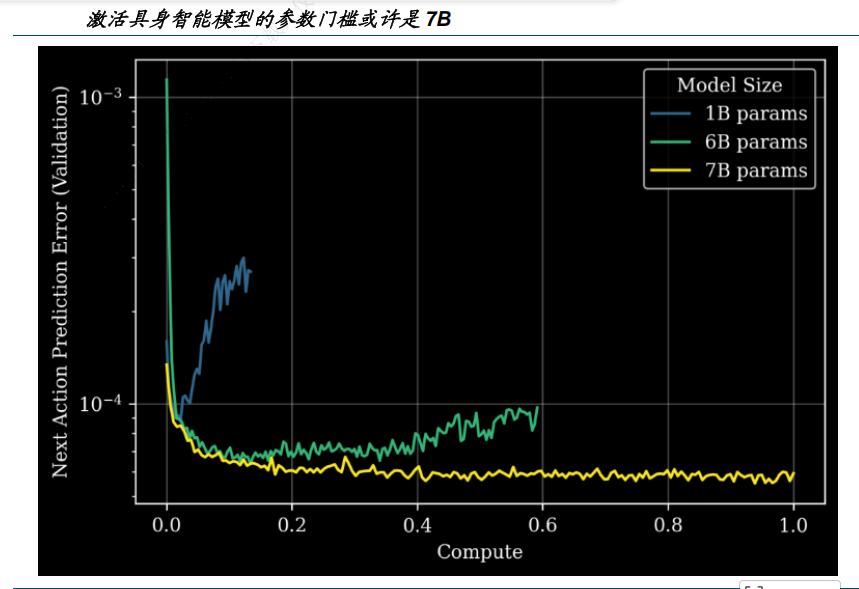
First, at the embodied intelligence model end, GeneralistAI has verified that 7B parameters are the key threshold for activating embodied intelligence. The industry is currently accelerating to break through this critical point. Tesla shares the world simulation model of autonomous driving with Optimus, and FigureAI has released the Helix02 system, enabling full - body dexterous and autonomous behavior and greatly improving the model's generalization ability.
At the hardware end, the iteration in fields such as dexterous hands, axial flux motors, and lightweight materials is accelerating. The cycle life of dexterous hands has increased from 200,000 times to over 150,000 times, and the micro - chain drive has replaced the tendon rope solution, solving the lifespan pain point.
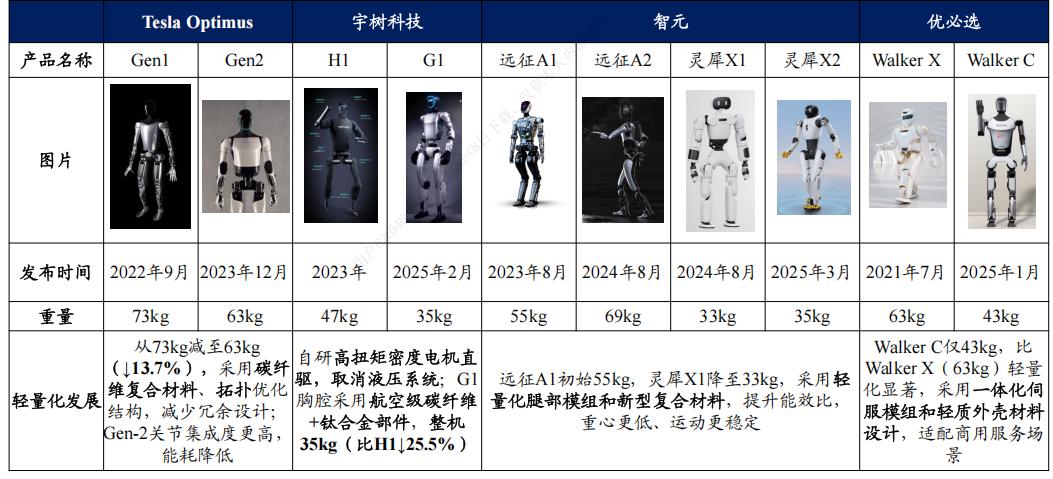
The torque of axial flux motors is 4 times that of traditional motors, and the volume is reduced by 30% under the same power. PEEK materials and magnesium - aluminum alloys are widely used. The weight of products such as Yushu G1 and Zhiyuan Lingxi X1 has been reduced to below 35 kg, and the battery life has increased by 40%.
Finally, the commercialization scenarios are being implemented on a large scale, becoming an important support for the industry's fusion in 2026. The four core scenarios are gradually achieving a profit - making closed - loop.
According to the calculation of Guojin Securities, the commercial market scale of humanoid robots will exceed 30 billion yuan in 2026, of which the special operations and industrial manufacturing scenarios in the ToB segment account for over 60%. In the industrial field, automakers such as BYD and Geely Zeekr have deployed humanoid robots in batches to complete tasks such as logistics transfer and component assembly. One robot can replace 2 - 3 workers, saving over 150,000 yuan in annual costs.
In the special operations field, Yushu Robotics has obtained batch orders for special scenarios thanks to its low - latency cluster collaboration ability. The unit price of its robots has dropped to less than 100,000 yuan, 80% lower than that of overseas competitors.
In the ToC segment, the scenarios of home care and personal companionship are rapidly penetrating. The Galaxy Universal Robot equipped with the Sharpa dexterous hand can perform delicate operations such as playing with walnuts and folding clothes. The Songyan Power companion robot can achieve precise emotional interaction, and the terminal price has gradually dropped to the 30,000 - yuan level, greatly increasing market acceptance.
The support from policies and capital further amplifies the catalytic effect on the industry in 2026.
At the end of February 2026, China released the "Standard System for Humanoid Robots and Embodied Intelligence (2026 Edition)", which is the first top - level design for the entire industrial chain. It sets the goal of achieving a 60% localization rate of core components in 2026. Domestic leading enterprises such as Yushu Technology have completed IPO counseling and are expected to go public in the first half of 2026.
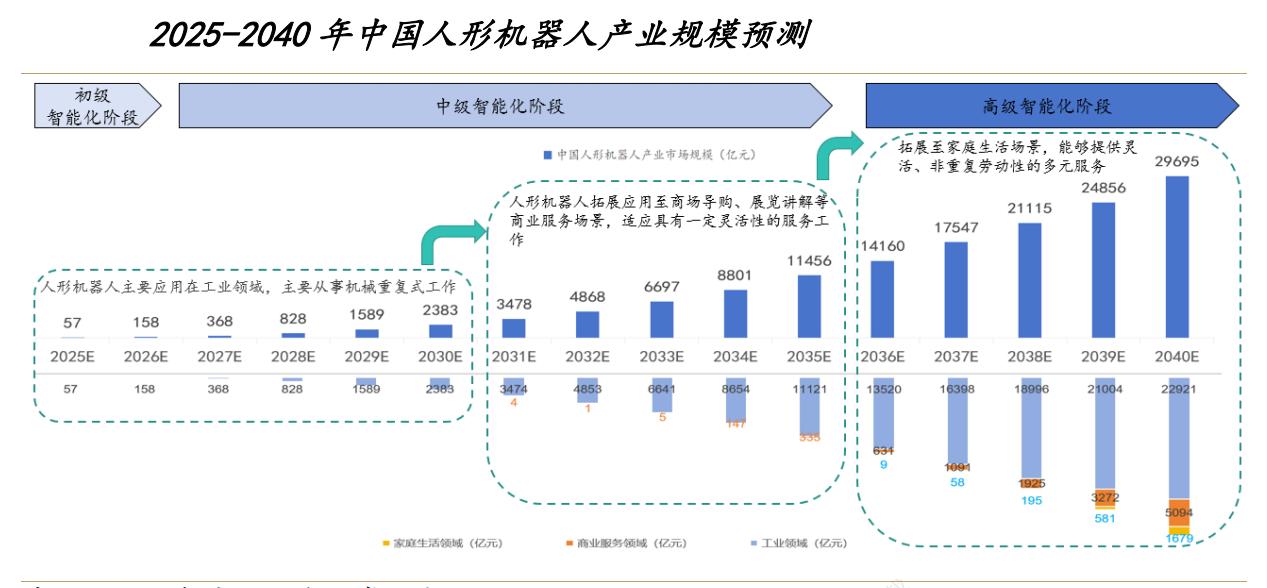
According to the calculation of Soochow Securities, the global mass - production scale of humanoid robots will exceed 30,000 units in 2026 and is expected to reach 1 million units in 2030, with the market scale exceeding one trillion yuan and an annual compound growth rate of over 80%.
And this is just the beginning. How to increase the production from 1 million units to over 100 million units, realize household use, and replace sweatshops will be the goals of the next stage for humanoid robots.
02 The Segmentation of the Sub - industries
The humanoid robot industry is at a critical stage of transitioning from technology verification to large - scale mass production, which depends on the collaborative breakthroughs between the upstream and downstream.
First, for the upstream core components, as the cornerstone of the industry, they feature high technical barriers and significant space for domestic substitution. Cost - reduction effectiveness is the key to mass production. The three core components, namely reducers, screws, and motors, account for over 60% of the total value of the whole machine.
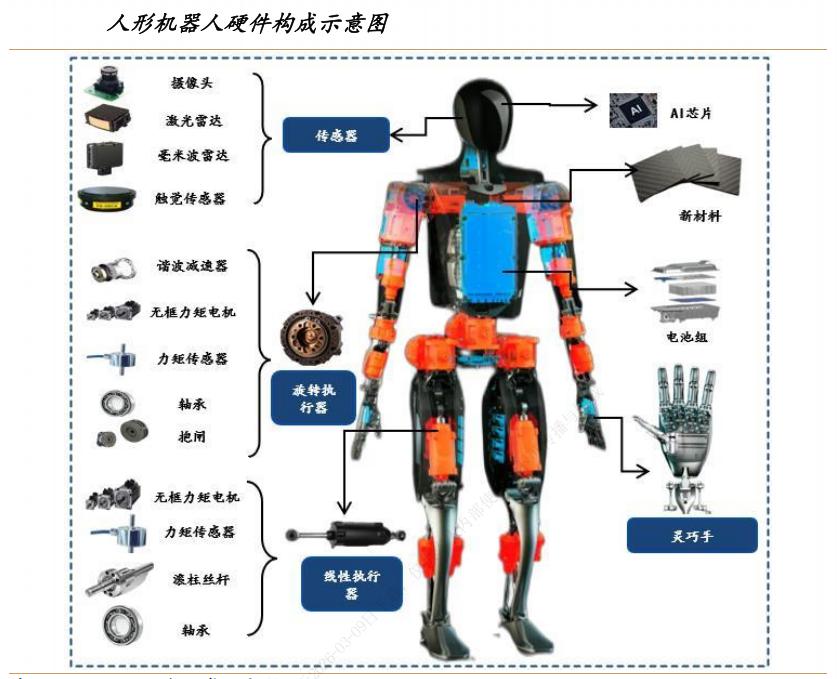
In 2025, there was a landmark cost - reduction breakthrough: for example, the unit price of planetary roller screws dropped from 10,000 yuan per piece to 2,000 yuan per piece, a decrease of 80%; the unit price of harmonic reducers dropped by 42%, and the unit value was compressed from 16,800 yuan to 9,800 yuan.
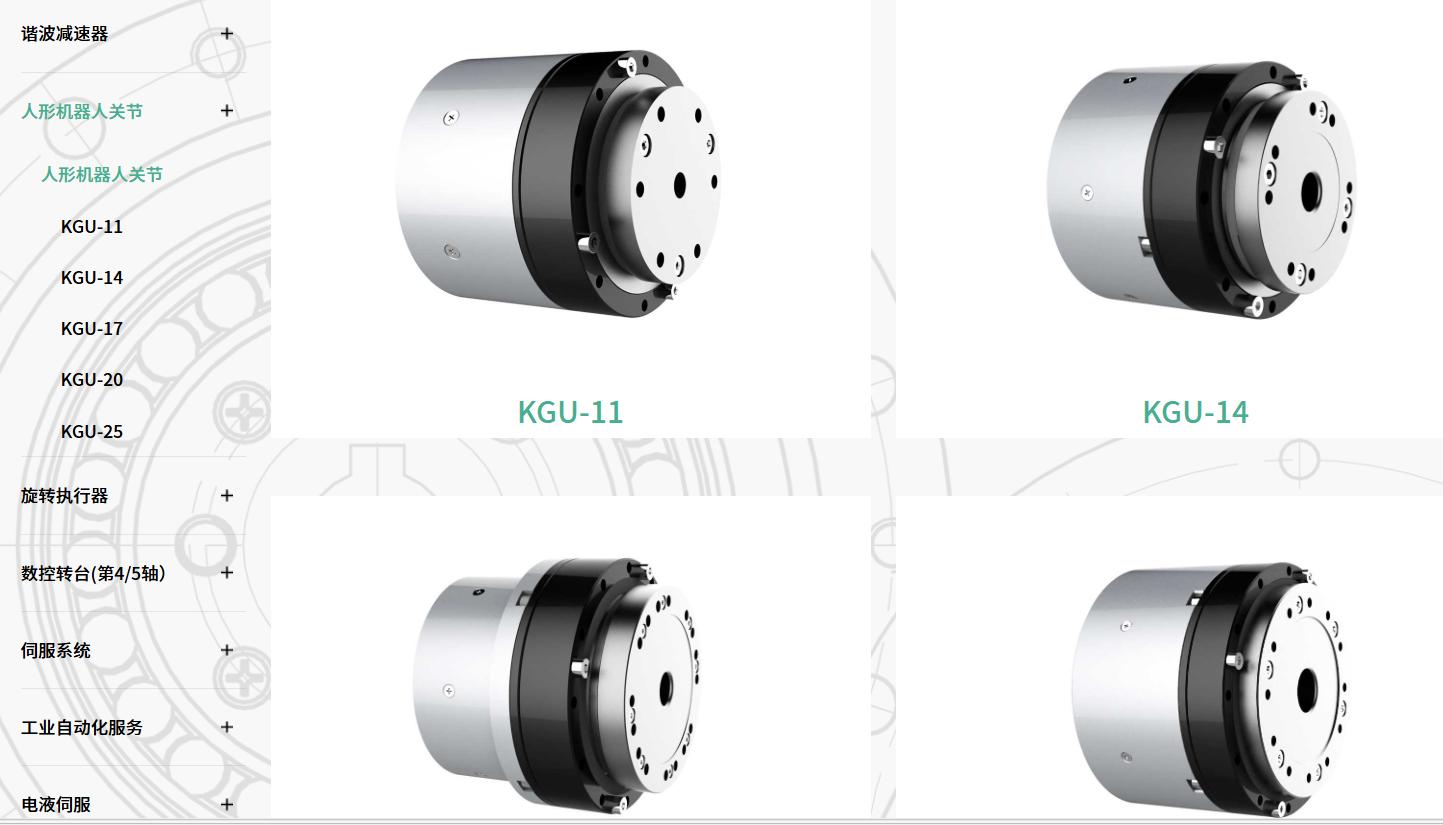
Axial flux motors are accelerating their penetration due to their performance advantage of a 4 - fold torque increase. Enterprises such as Hengshuai Co., Ltd. and Buko Co., Ltd. have delivered prototypes. The domestic substitution process is continuously accelerating. The yield rate of harmonic reducers of Green Harmonic and Siling Zhiqu has increased to over 95%. Hengli Hydraulics and Wuzhou Xinchun have successfully entered the core supply chain in the screw field, breaking the overseas monopoly.
Lightweight materials have become a new growth point. PEEK materials and magnesium - aluminum alloys are widely used. Yushu G1 uses aerospace - grade carbon fiber components, and the overall weight has been reduced to 35 kg, a 25.5% reduction compared to the previous generation. Enterprises such as Xingyuan Zhuomei and Xinhan New Materials have benefited significantly.
The mid - stream system integration, as the center of technology implementation, has approximately 40% of the industrial chain enterprises globally concentrated here, undertaking the core tasks of software - hardware integration and mass - production implementation.
The first - tier enterprises, represented by Tesla and FigureAI, have full - stack capabilities: Tesla Optimus reuses the autonomous driving world simulation model in the robot field, and the Grok large - model is expected to become the cluster scheduling center. Large - scale mass production will start in 2026. The Helix02 system released by FigureAI realizes full - body balance control at a frequency of 1kHz through a three - level collaborative system of S0 (cerebellum), S1 (spinal cord), and S2 (brain).
The second - tier domestic enterprises are accelerating their catch - up. Yushu Technology's shipments exceeded 5,500 units in 2025, and the mass - production offline of robot bodies exceeded 6,500 units; the shipments of Zhiyuan Robotics exceeded 5,100 units, and large - scale implementation has been achieved in government and data collection scenarios.
Currently, the technological iteration in the entire market focuses on two major directions. First, the degrees of freedom of dexterous hands have increased from 11 to 22. Through planetary roller screws and micro - chain drives, the lifespan has been extended from 1 - 2 months to over 1 year.
Secondly, the embodied intelligence model has crossed the 7B parameter activation threshold. The GEN - 0 model of GeneralistAI has verified the Scaling Law path, and data and engineering have become the core breakthrough points.
The downstream application scenarios are centered around "high value + low repetition", and the four sub - tracks are accelerating their growth.
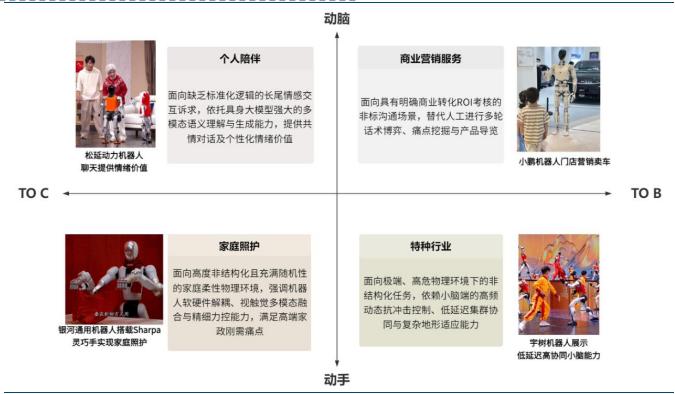
First, in the ToB + brain generalization scenario, for example, XPeng's IRON robot has been deployed as a car dealership guide, increasing the customer acquisition conversion rate by 30%. It can analyze non - standard requirements based on the VLM/VLA architecture.
In the ToB + cerebellum generalization scenario, the Yushu G1/H2 cluster has achieved millisecond - level collaboration among 20 robots. The unit cost has dropped to less than 100,000 yuan, 80% lower than that of overseas competitors, and it has entered the special operations field.
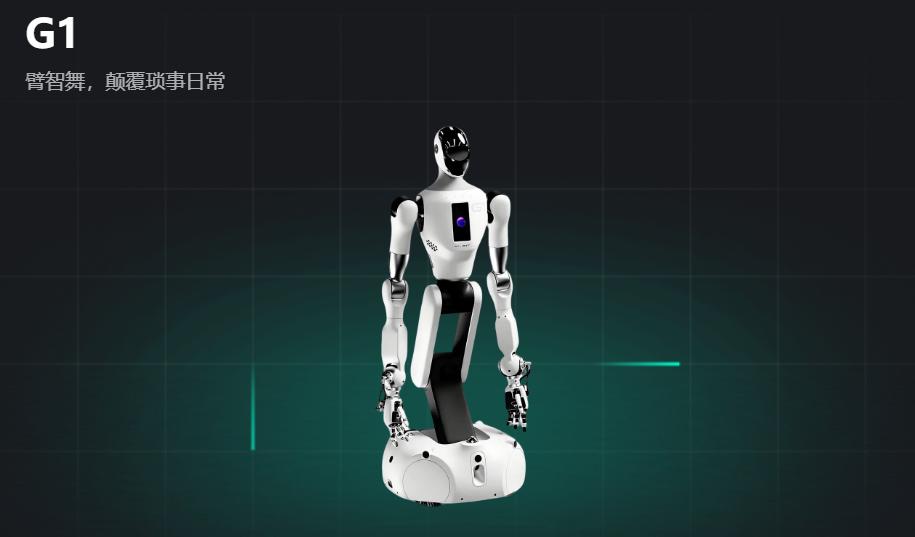
In the ToC segment, the scenarios are accelerating their penetration. The elderly care and home care fields are the first to be used. The Galaxy Universal GalbotG1 equipped with the Sharpa dexterous hand can perform delicate operations such as playing with walnuts and folding clothes, and the terminal price has dropped to the 30,000 - yuan level. In the personal companionship field, the Songyan Power E1/N2 has sold over tens of thousands of units annually through large - model semantic interaction, covering the elderly companionship market.
According to the calculation of Soochow Securities, the global mass - production scale of humanoid robots will exceed 30,000 units in 2026 and reach 1 million units in 2030. The annual compound growth rate of industrial flexible manufacturing and elderly care scenarios will exceed 50%.
In this process, from 2026 to 2030, in the B - end market and the vast C - end market, data and algorithms will become the core engines for cross - track empowerment.
After 2026, the humanoid robot track in the A - share market will surely experience segmentation, and the competition in sub - tracks will become the top priority.
Upstream enterprises need to continuously break through the bottlenecks in precision manufacturing and materials science. Mid - stream enterprises need to build the capabilities of "hardware integration + autonomous algorithms + stable mass