Industry Giants Unite and Technology Trickle-Down: The TV Industry's "Decisive Battle" at AWE, Three Major Trends Set
Another year, another AWE.
On March 12th, AWE2026 grandly opened in Shanghai. More than 1,200 domestic and international enterprises gathered together, presenting a dazzling array of new products and technologies. Lei Technology sent a reporting team led by Chief Editor Luo Chao to conduct intense on - site reports.
AWE2026 has once again become a showcase for cutting - edge technologies. As a major player in the home appliance product sector, the TV industry has brought in new technologies and products that are equally eye - catching.
After experiencing the exhibition on - site, our Lei Technology reporting team has felt three new trends in the TV industry: technology popularization, scene AI integration, and brand matrix development. Next, we'll transform our on - site feelings into words and images. Let's take a look.
Dreame: The "Transformable" TV is Here
Dreame, which rose rapidly with its sweeping robots, is now constantly expanding its ecological map. Last year, Dreame launched its first TV, the V3000 Aura, filling a gap in its hardware ecosystem.
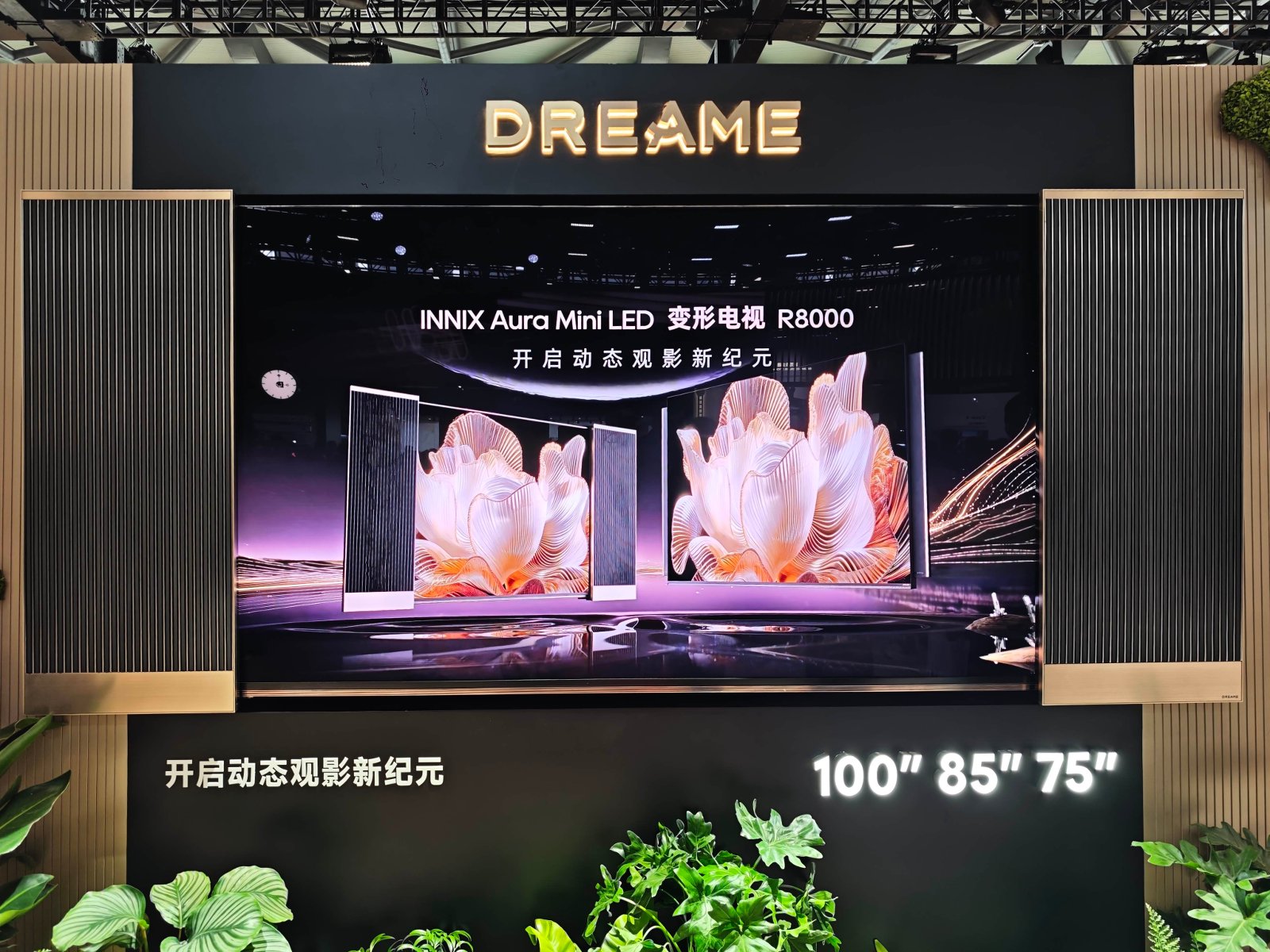
At this year's AWE, Dreame rented the entire E7 exhibition hall, presenting the whole Dreame universe to everyone. Dreame showcased several TV products this time, and the most eye - catching one is the "transformable TV" of the R8000 series.
(Source: On - site shooting by Lei Technology)
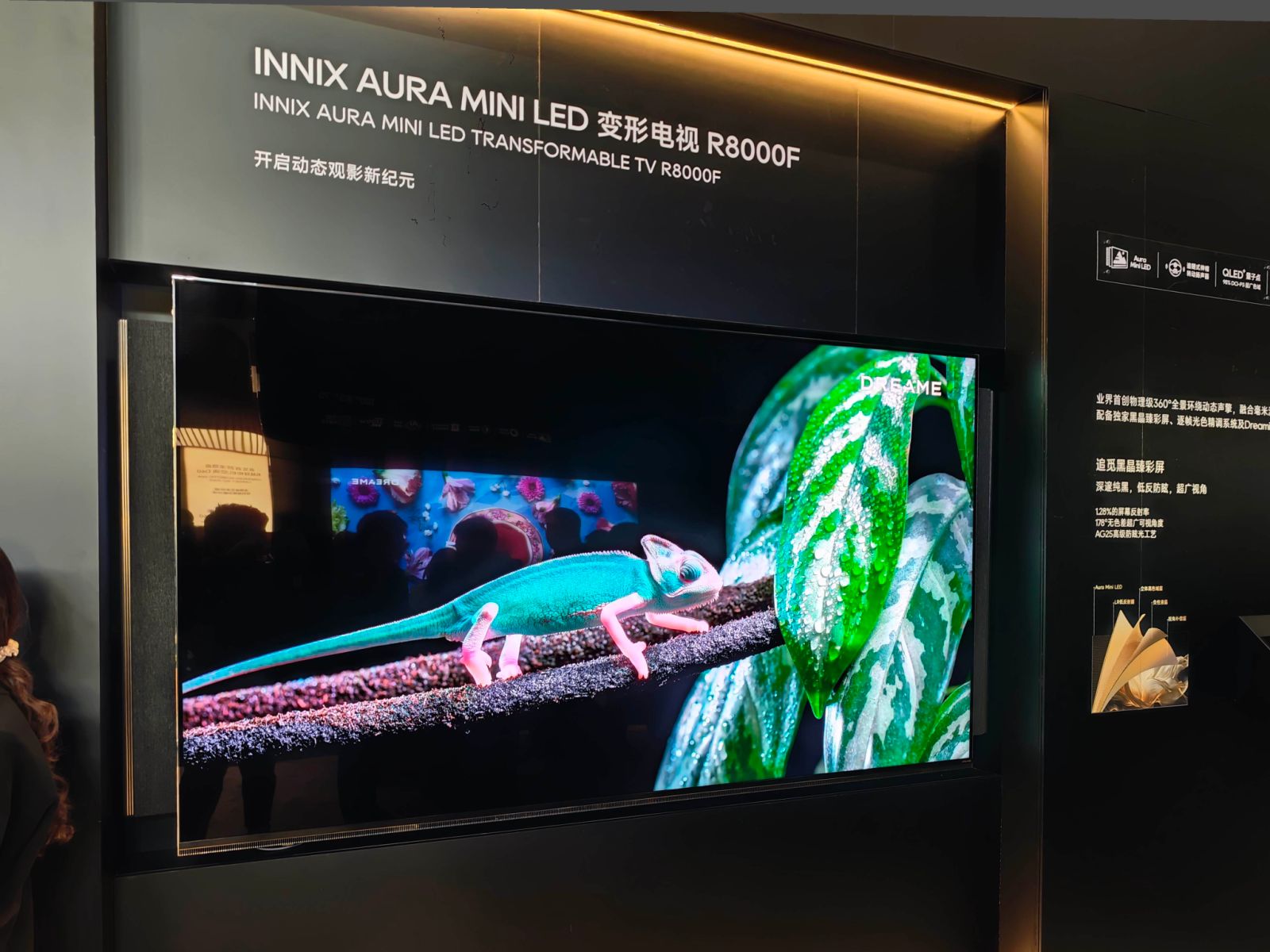
Specifically, the R8000 series links the acoustic structure of the TV with its mechanical structure. In this way, the TV can dynamically adjust the sound field through morphological changes, synchronizing the sound - emitting position with the user's position, allowing users to obtain a more immersive experience and have a better experience in scenarios such as watching movies and playing games.
(Source: On - site shooting by Lei Technology)
Putting a mechanical structure into a TV is a very imaginative and bold design. It breaks the shackles of the traditional TV form and solves problems in a brand - new way. Of course, this is related to Dreame's years of in - depth development in the sweeping robot field. Previously, Dreame had launched a sweeping robot with a mechanical arm that can climb stairs. Now, putting a mechanical device into a TV follows a similar concept.
Hisense & Toshiba: A One - Two Punch of Large Size + RGB Technology
When arriving at the W5 venue where Hisense and Toshiba are located, I immediately noticed many "big guys" on - site. There were quite a few TVs over 100 inches. What attracted me was the 163UX Pro, the world's first 163 - inch 4 - color Micro LED TV, with an exaggerated size of 163 inches. So, a more accurate name for it might be a "giant screen".
The 163UX Pro is a product full of a sense of the future, but Hisense's core product for the consumer market is still the RGB - Mini LED TV. Regarding RGB - Mini LED technology, Hisense's breakthrough is adding a fourth color on the basis of the three primary colors and launching the "four - core co - control" Xinxin AI picture - quality chip H7 Pro. Looking at the pictures it displays on - site, one can imagine how great it would be to watch the 2026 World Cup on it.

(Source: On - site shooting by Lei Technology)
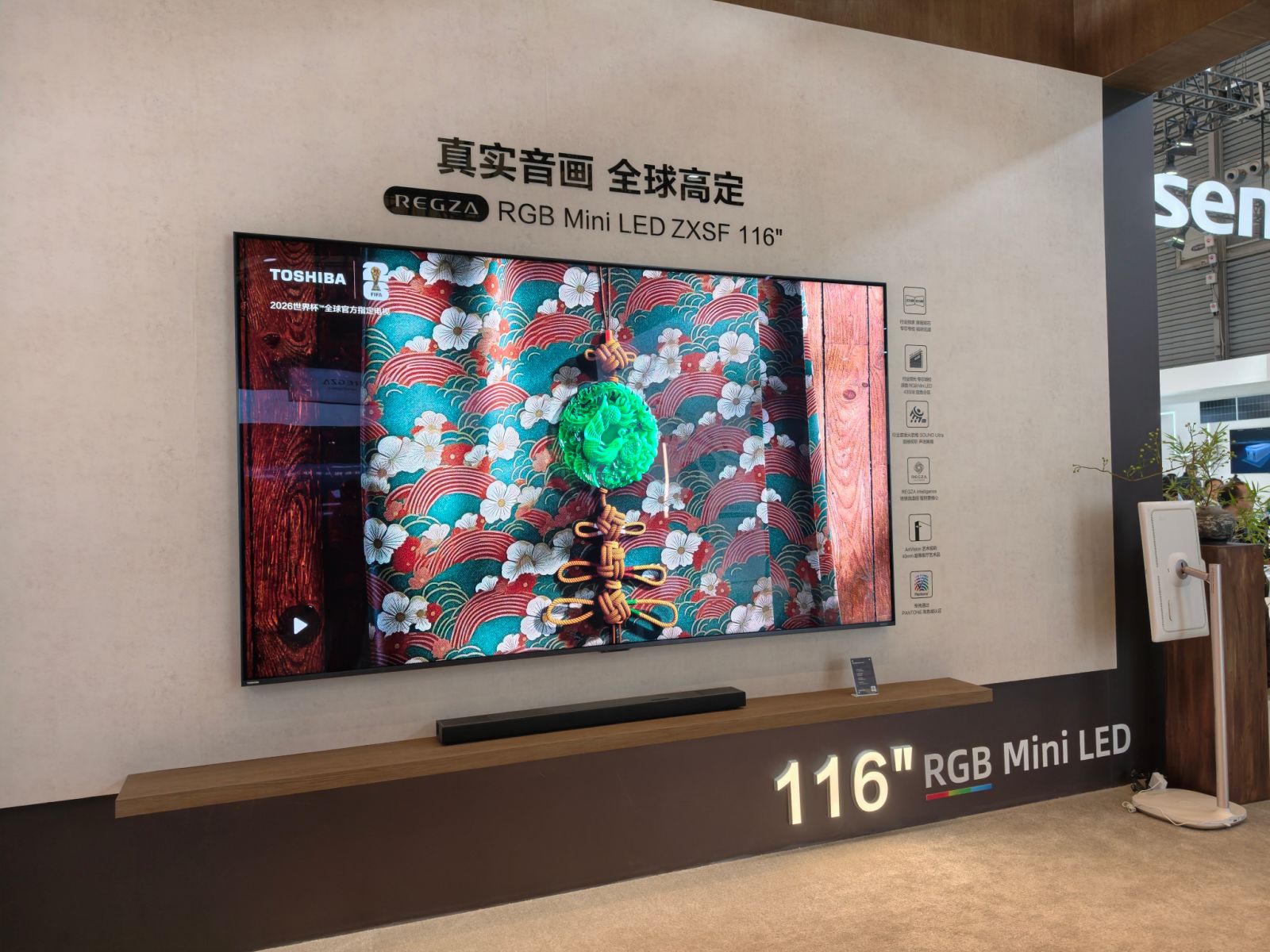
In addition, Hisense acquired Toshiba's TV business a few years ago, but Toshiba still maintains an independent brand operation. The high - end Toshiba REGZA series also uses RGB Mini LED technology as its core selling point. Most of the Toshiba TVs on - site are over 100 inches and have quite high aesthetics.
(Source: On - site shooting by Lei Technology)
Toshiba TV also provides AI - related solutions, mainly applied in more practical scenarios such as automatic adjustment of screen audio and video, protection of children's eye use, and intelligent screen - off energy - saving.
Skyworth: Wallpaper TVs, Competing in Picture Quality, Thickness, and Design
At this year's AWE, Skyworth made a big move. Its exhibition area is over 1,000 square meters, displaying its home appliance products of different categories. Of course, Skyworth's TV products still occupy the center of the exhibition area. Skyworth has been deeply involved in the art TV field for many years and is the sales champion in this category. On - site, we saw several Skyworth wallpaper TVs, each with a different design style.
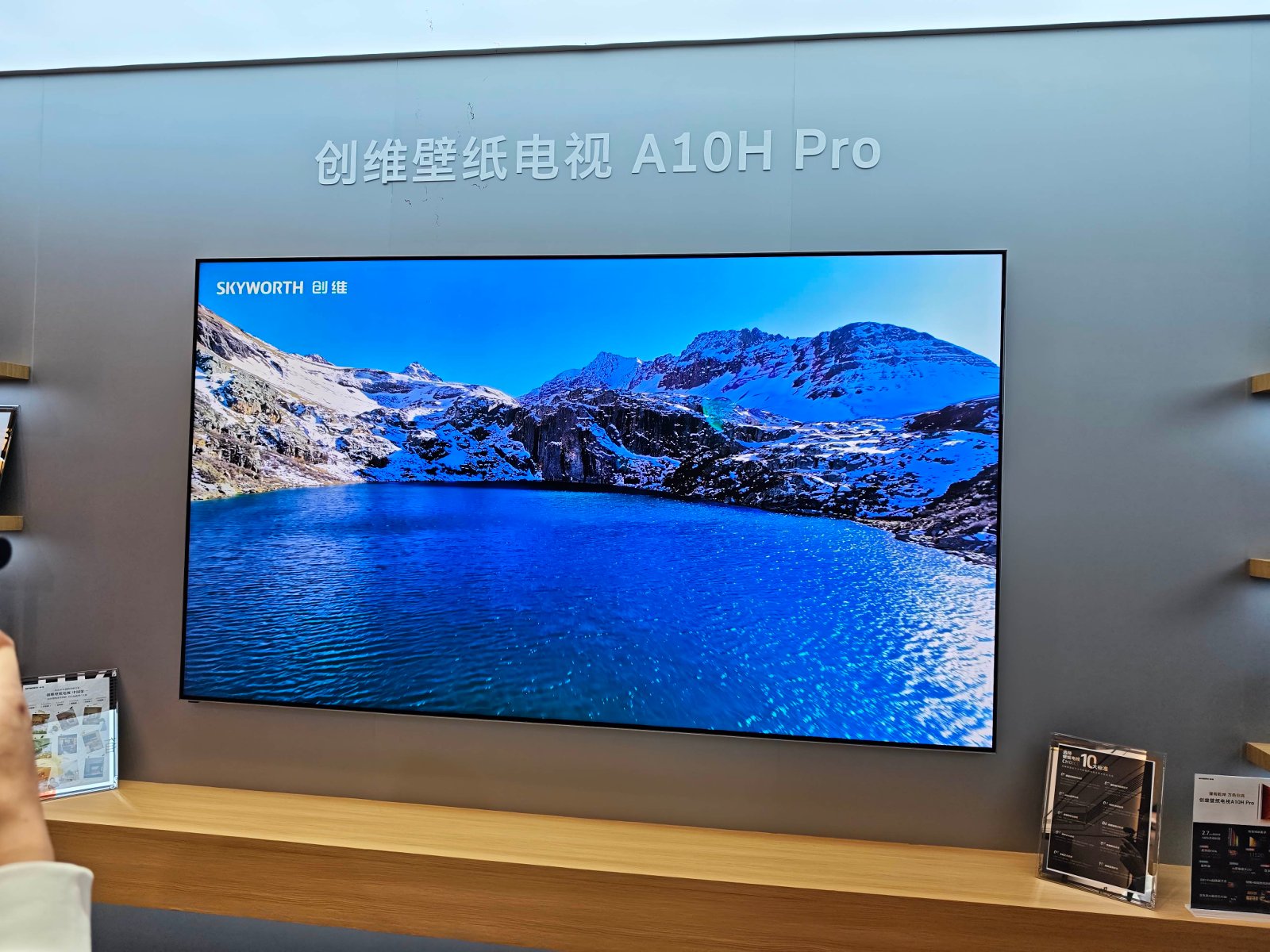
Compared with ordinary TVs, the biggest feature of wallpaper TVs is their thinness. They can seamlessly integrate with home products, bringing a huge visual impact while maintaining excellent design aesthetics. The core product Skyworth showcased this time is the A10H Pro, positioned as a super flagship. The first impression when seeing this product on - site was very shocking.
(Source: On - site shooting by Lei Technology)
This is mainly due to several aspects. First, it has a large size - 100 inches, comparable to a small cinema, and the black border is very narrow. Second, its thickness is only 2.7mm, extremely exaggerated. It really looks like it's pasted on the wall, worthy of the name "wallpaper TV". In addition, it uses SQD Mini LED technology with 11,520 partitions, and both the picture quality and brightness are quite excellent.
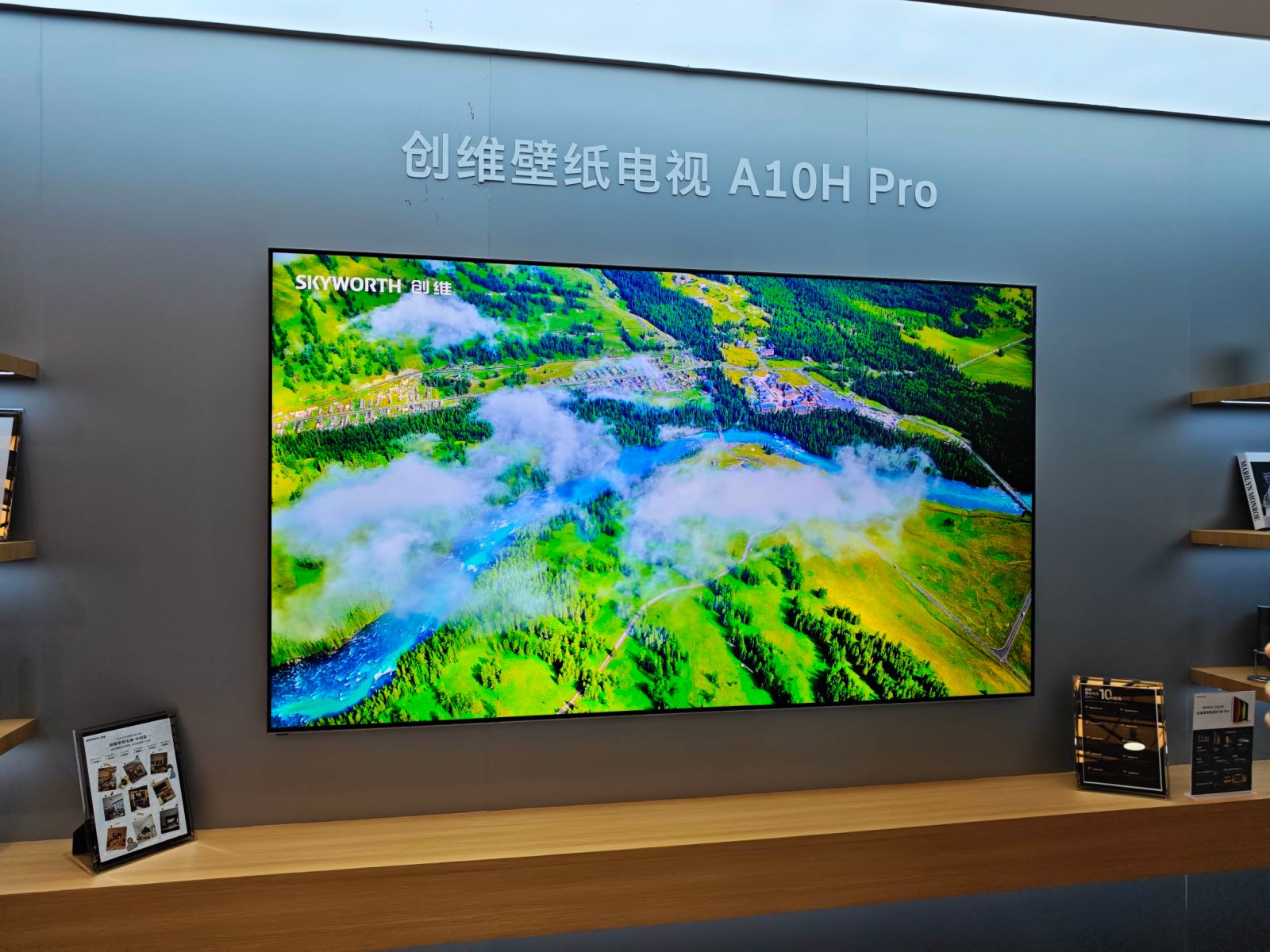
(Source: On - site shooting by Lei Technology)
Skyworth's wallpaper TVs are typical design - driven products with obvious aesthetic advantages. At the same time, they don't lag behind in advanced display technology and have excellent picture quality. The wallpaper TVs that compete in picture quality, thickness, and design are the way Skyworth has explored in the industry competition, forming a differentiated advantage.
TCL & Thunderbird: Display Technology is Their Strong Suit
In TCL's exhibition hall, we saw the previously launched X11L SQD Mini LED TV. According to official statements, TCL is the brand that first launched SQD Mini LED. In recent years, Mini LED technology has been widely popularized in TV products, evolving into segmented technology routes such as QD Mini LED, SQD Mini LED, and RGB Mini LED.
The X11L on - site is an 85 - inch version, and the "borderless" effect is very shocking at first sight. Moreover, the technical feature of SQD Mini LED is that it generates three - color light by exciting super quantum dots through backlight, which has more advantages in brightness, color, and lifespan than conventional Mini LED and OLED. From the on - site experience, the display effect of the X11L is really good, with excellent color and brightness.
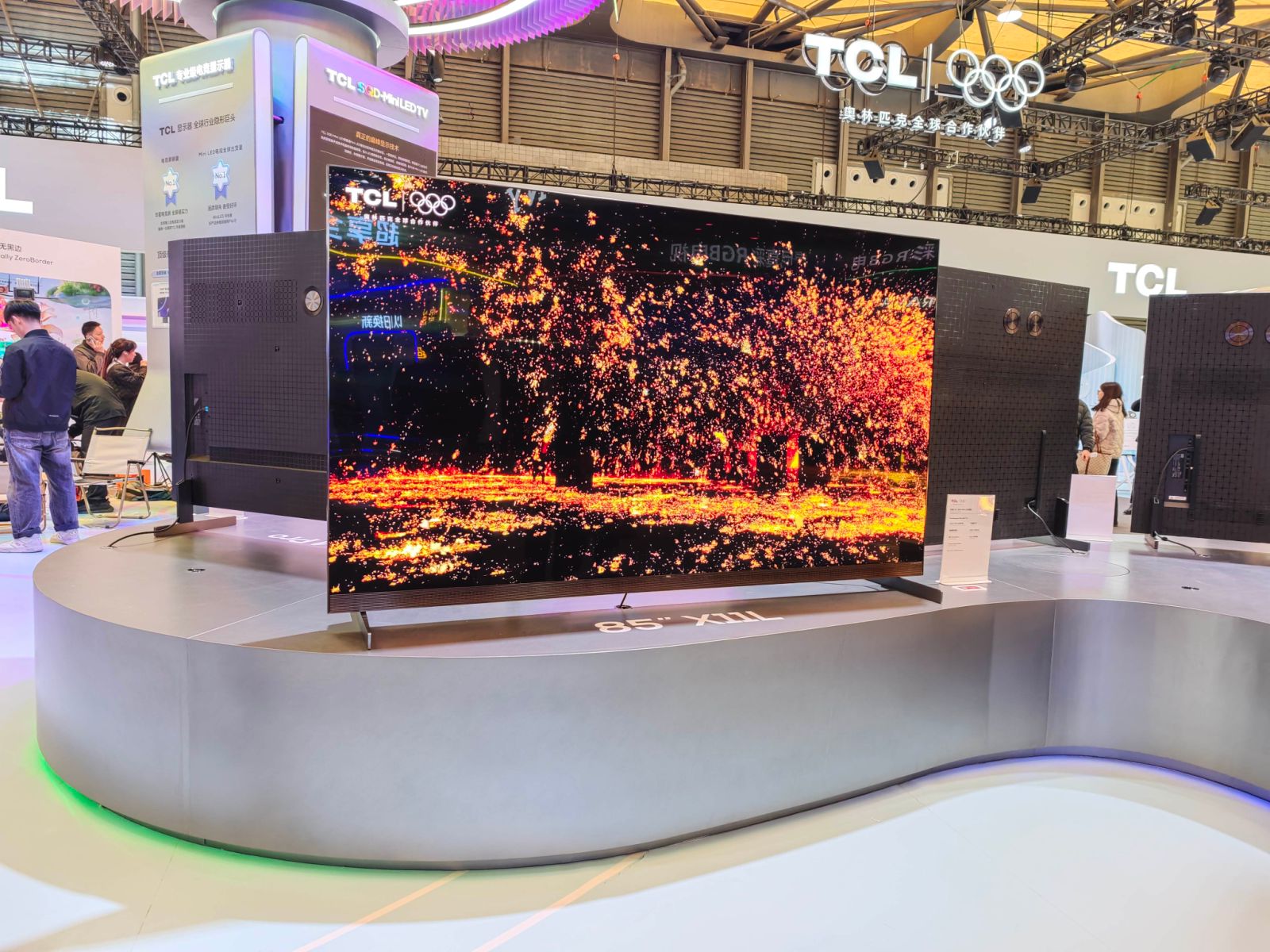
(Source: On - site shooting by Lei Technology)
Thunderbird, a brand under TCL, also brought TV products. A QD - Mini LED TV named Crane 6 ULTRA on the exhibition stand left a deep impression on me.
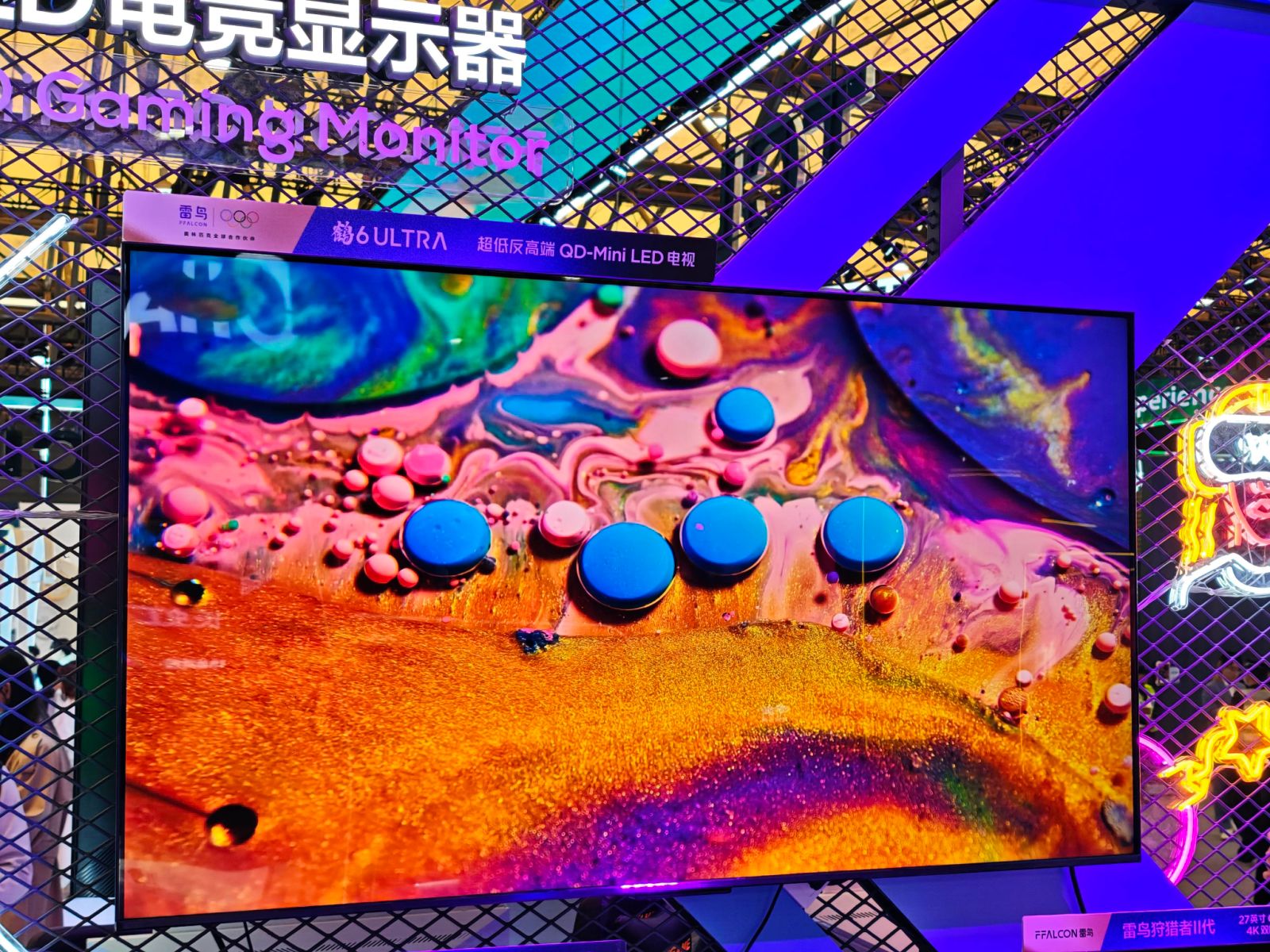
(Source: On - site shooting by Lei Technology)
Its main selling point is "ultra - low reflection". It uses the self - developed low - light film technology of Huaxing Optoelectronics to reduce the reflectivity and greatly suppress the screen reflection phenomenon. At the same time, its display effect is still as clear as a mirror screen, and the color display and brightness are not affected. This TV also supports a maximum refresh rate of 144Hz, which is very suitable for gaming scenarios.
Thanks to the panel technology support provided by Huaxing, TCL TVs have long maintained a leading position in display technology and have multiple technology routes, which can be adjusted according to different application scenarios and target groups.
Regarding AI, TCL has proposed the concept of "AI for practical use", advocating integrating TVs, other home appliances, and intelligent hardware products into the whole - house intelligent ecosystem to improve the actual user experience.
Changhong: TVs with Ambient Lights
RGB is undoubtedly a hot technology in current TV products, and Changhong also made RGB its core selling point at AWE. This time, Changhong launched its first "light - color - field co - control" RGB Mini LED TV, paired with the new Hongtu V8 AI picture - quality chip, which can ensure accurate color display in each frame, and each of the red, blue, and green colors will not be interfered with.
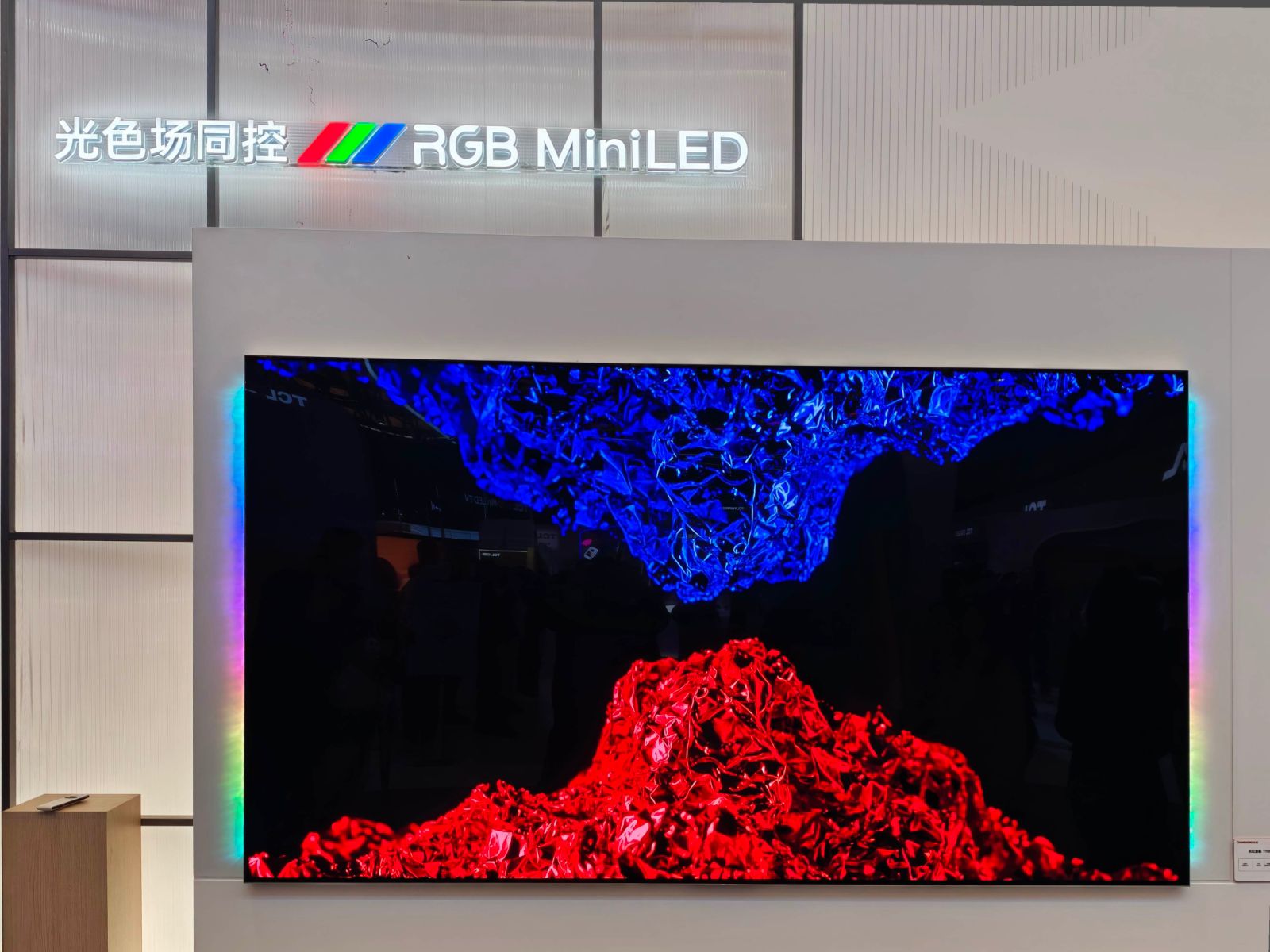
(Source: On - site shooting by Lei Technology)
Interestingly, most of the TVs Changhong showcased on - site are equipped with RGB ambient lights, which can generate different light and shadow effects and present different light effects according to changes in content and the environment.
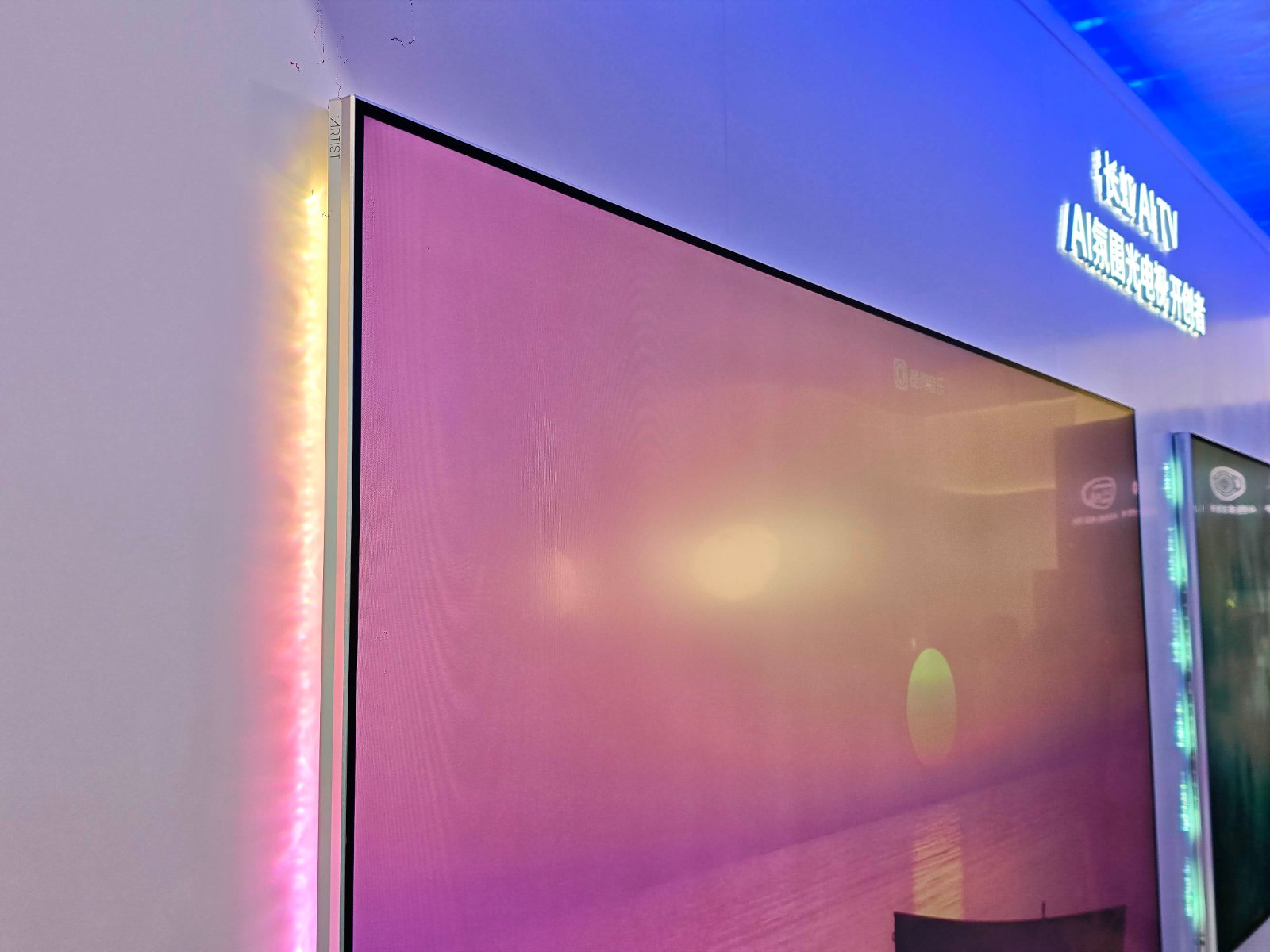
(Source: On - site shooting by Lei Technology)
I guess this design inspiration comes from the RGB ambient lights in the DIY field, but the RGB lights on Changhong TVs are also supported by AI technology, making them more intelligent and with more diverse forms.
LG: All About Black Technology
Different from most TV brands, LG TVs have long adhered to the OLED technology route. At this AWE exhibition stand, most of the LG TVs we saw used the OLED solution. The LG OLED evo W6, LG OLED evo G6, and LG SIGNATURE OLED T all made their first appearance at the Chinese exhibition stand.
LG has taken the ultra - thin feature of OLED to the extreme, introducing the concept of wallpaper TVs. Even more exaggerated, LG's wallpaper TVs use wireless connection technology, which allows them to further get rid of the shackles of cables.
In addition, LG also showcased a Micro LED giant - screen TV and a transparent TV with a strong sense of the future. Micro LED is regarded as the future evolution direction of Mini LED technology. The lamp beads are smaller, the zone - controlled dimming is more precise, and the display effect is very strong, but at present, the cost is high and the process is difficult.
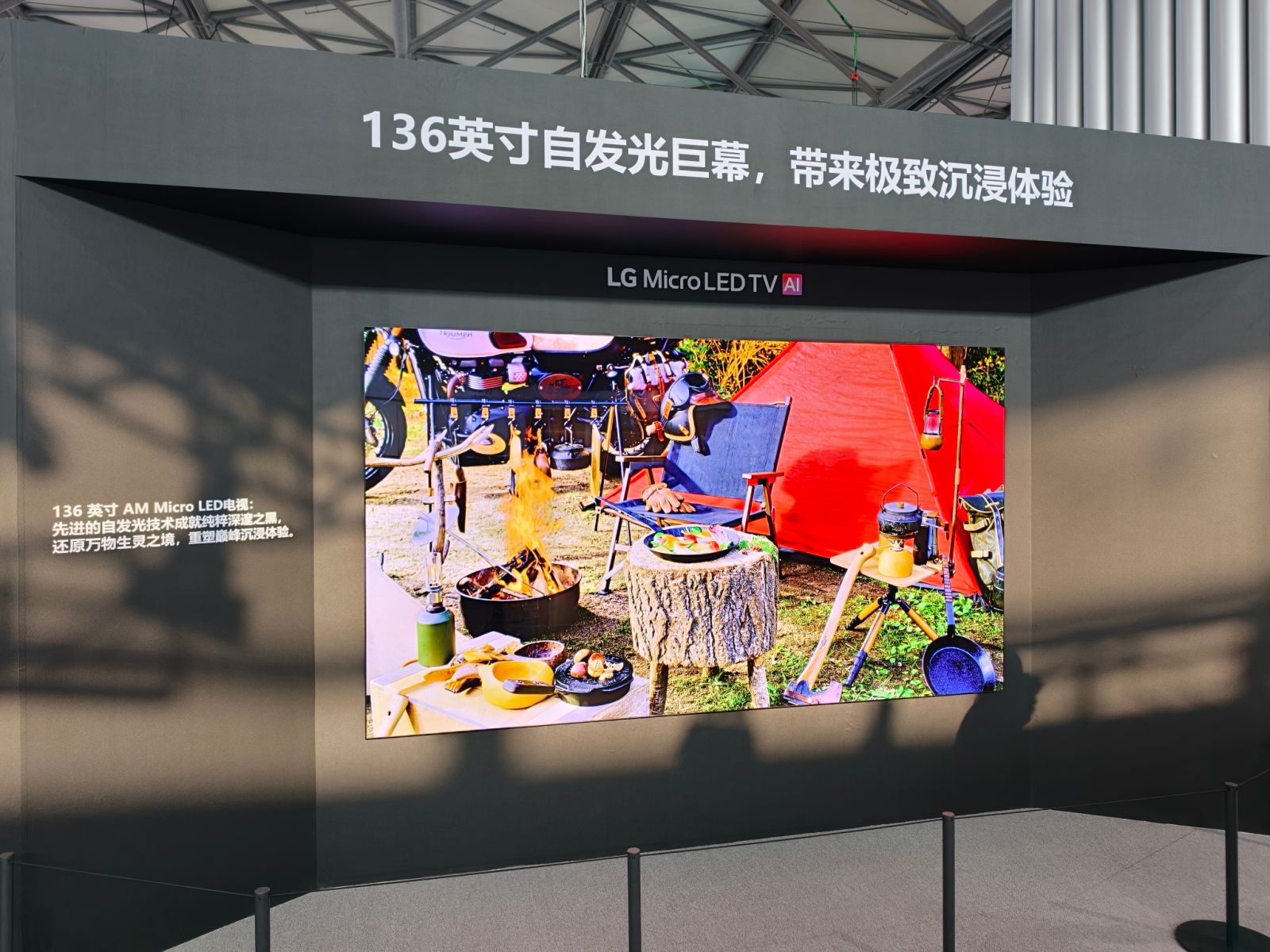
(Source: On - site shooting by Lei Technology)
The transparent TV is an even cooler black - technology product. At the venue, LG deliberately set the picture of the transparent TV to show an aquarium. When I first saw it, I thought it was a real aquarium and even suspected it was a so - called smart aquarium.
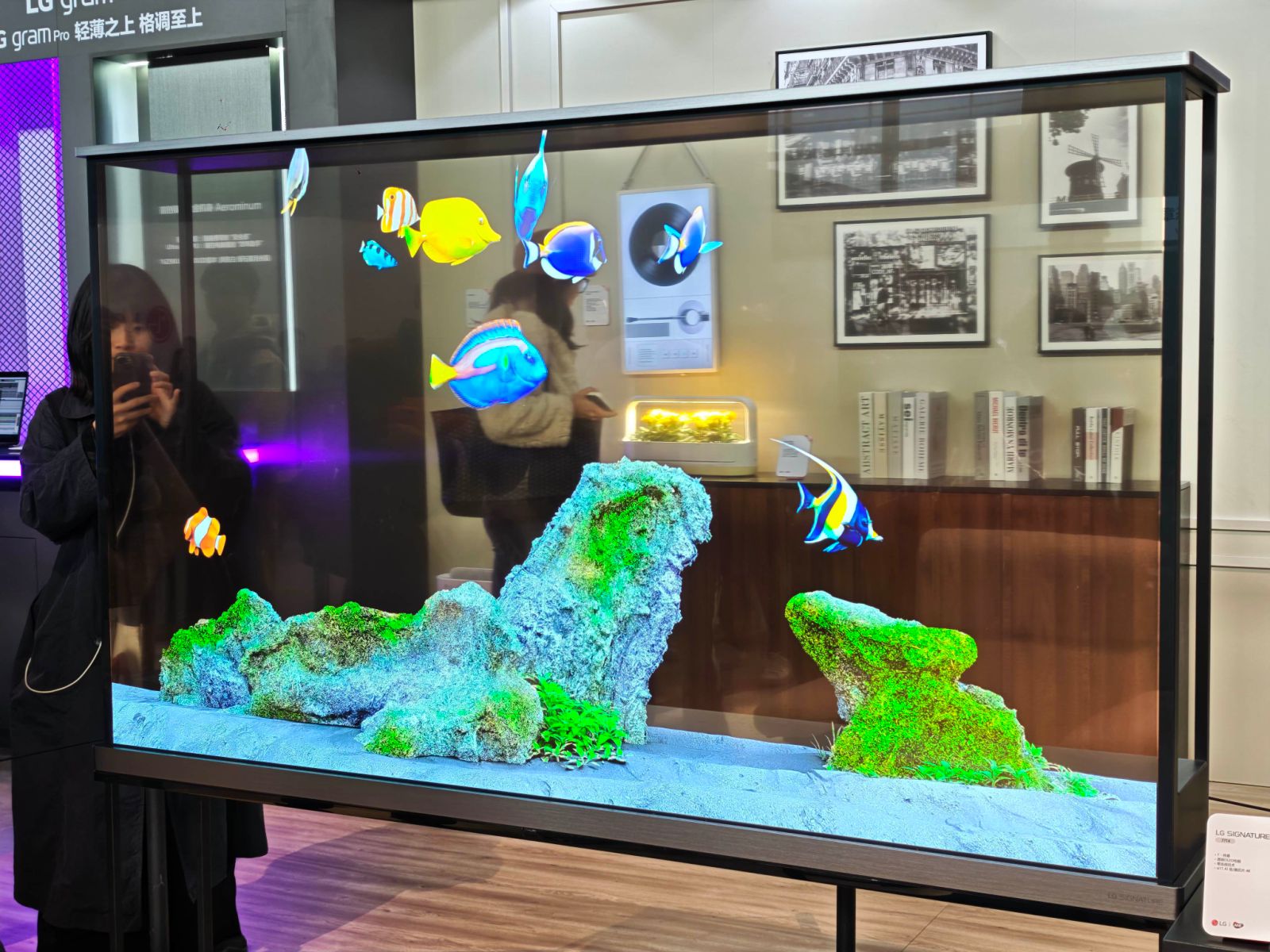
(Source: On - site shooting by Lei Technology)
From my observation, many viewers were deceived like me. They stopped in front of the TV, showing confused expressions. The technical principle of LG's transparent TV is to switch between displaying content and maintaining transparency by controlling pixel lighting.
As a major panel manufacturer, LG also has its own technological and brand advantages in the TV field