北约将活蟑螂的神经接入AI,化身无孔不入的赛博格侦察兵
Today, a rather shocking national defense news has broken out in the tech circle.
People usually talk about micro quadcopter drones and acrobatic robotic dogs, always thinking that they represent the peak of modern warfare technology.
Watching those metal machines shuttle through the ruins, people still marvel at the miracle of the combination of industry and AI algorithms.
Now, a German company has developed an extremely outrageous system - directly turning living bugs into "cyber scouts" with electronic systems.
To ensure a good reading experience for some readers, there will be no automatically playing GIFs in this article. Please feel free to read the text. Watch the video to experience the horror of militarized cyborg cockroaches.
This is not just a sci - fi concept used to attract investment and deceive money with PPTs.
Public information shows that the company named SWARM Biotactics is indeed working on a bio - robot system based on living insects, targeting scenarios such as national defense, national security, disaster response, and industrial inspections.
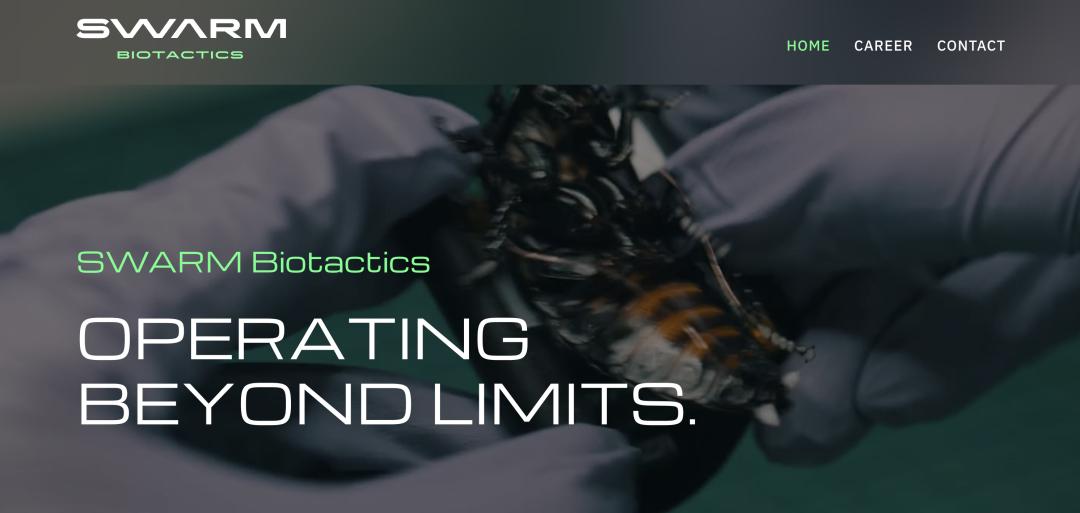
https://www.swarm-biotactics.com/
The company claims that it combines living organisms, edge AI, swarm intelligence, and secure communication to build a bio - robot system that can access areas difficult for traditional equipment to reach.
The well - known national defense media Defense Mirror even used a very eye - catching title:
"That cockroach in your kitchen could be a spy."

https://defensemirror.com/news/41200/That_Cockroach_in_Your_Kitchen_Could_Be_a_Spy
It's really outrageous.
"Cantonese double ponytails" are also starting to be involved in killing.

The reputation of Guangzhou Baiyun Airport is damaged.
Where traditional micro - drones can't enter, living organisms have an advantage
Those micro - drones with a high price tag usually seem very powerful.
However, in complex spaces where GPS signals are limited, there are reinforced concrete ruins everywhere, or underground passages are criss - crossed, they have obvious shortcomings: difficult navigation, limited space, limited continuous working ability, and noise and mobility can easily become problems in small and enclosed environments.
SWARM Biotactics is targeting precisely these scenarios where traditional equipment struggles the most.
The company's public materials clearly state that their system is designed for GPS - denied, Cluttered, Inaccessible environments, that is, places with limited signals, complex terrains, and difficult for ordinary robots to pass through.
So, what to do?
Where machines can't go, nature has paved the way through hundreds of millions of years of evolution.
The core idea of this system is very straightforward:
Use living insects directly as the chassis.
Public reports show that SWARM uses Madagascar hissing cockroaches (a kind of large African cockroach).
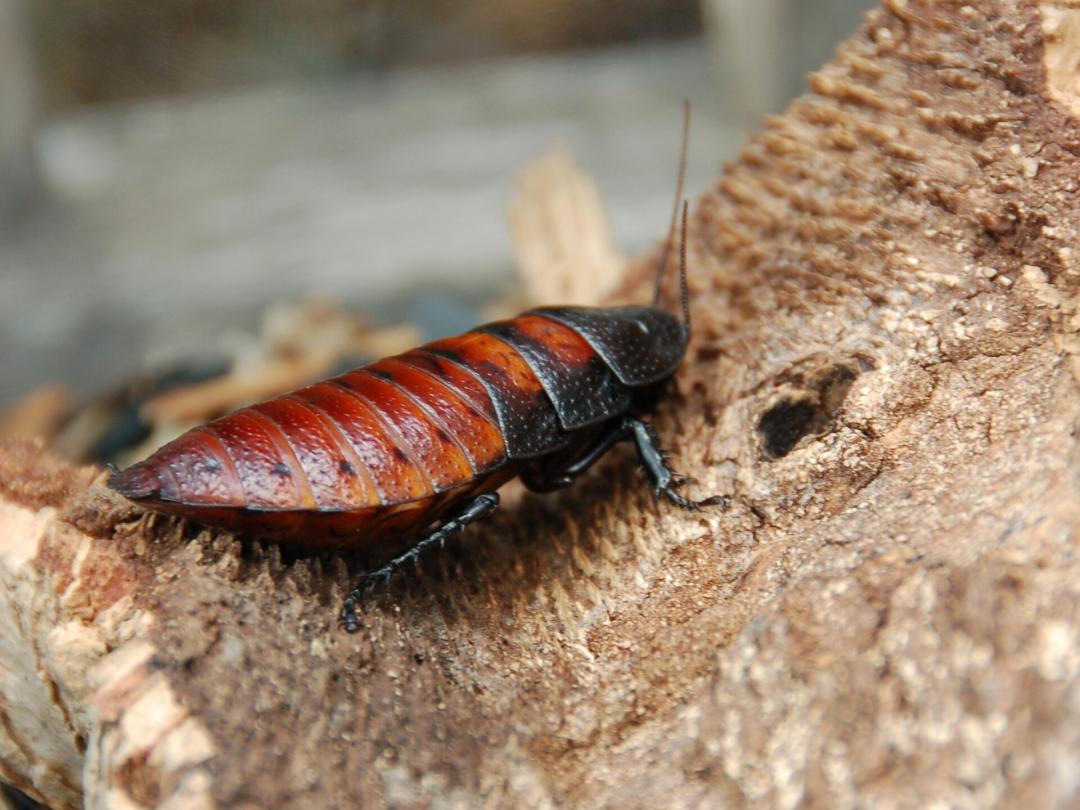
The engineering team will install a micro "backpack" on the backs of these insects, which integrates sensors, computing, and communication components.
The company's public statements mention edge AI, swarm intelligence, and secure communication ;
Media reports also mention cameras, microphones, and other sensors.
There are no complex mechanical legs.
There is no bunch of high - precision transmission structures.
It directly combines the mobility evolved by nature with the electronic systems made by humans.
What's most creepy is the control method.
According to public reports, this type of system uses a neural interface / electrical stimulation scheme, guiding the insects to turn, move forward, and perform path actions by applying control signals to their nervous systems.
The system combines living insects, neural interfaces, sensors, and secure communication to coordinate reconnaissance tasks.
The computing power given by humans is grafted onto the incredibly strong environmental adaptability of organisms.
This idea truly has a suffocatingly violent aesthetic.
What's really terrifying is not just the reconnaissance ability, but the expansion logic
If people think this is already outrageous enough, that's not the most extreme part.
What really sends a chill down one's spine is the expansion logic behind it.
In the end, traditional war machines compete in heavy industry, precision manufacturing, supply chains, and production capacity.
But what SWARM Biotactics wants to do is a different route.
The company's CEO, Stefan Wilhelm, has emphasized in external statements that they are pursuing a path of expanding capabilities through the biological system itself, rather than relying entirely on traditional factories to replicate mechanical platforms.

https://www.linkedin.com/posts/s-wilhelm_one-year-ago-this-didnt-exist-today-ugcPost-7432506784940011520-s8ns/
The impact of this statement is actually very great.
Because it points to a completely different physical intelligence expansion model -
It's not just about "building more machines," but "attaching electronic capabilities to reproducible and expandable organisms."
Of course, this statement is currently more of a company - level vision and roadmap, rather than an industrial reality fully verified externally.
But even if it only stays at the conceptual level, this direction is already chilling enough.
Why does this route make both the national defense and tech circles nervous?
The economic imagination of this thing is also extremely exaggerated.
Building a high - end micro - reconnaissance drone involves high costs in terms of production, maintenance, training, and supply, and none of these are easy.
The greatest temptation of the bio - robot route lies precisely in:
The mobile carrier (chassis) it relies on no longer comes entirely from traditional machining, but from living insects that can be obtained and cultivated.
The company's official website lists its advantages:
It can enter places where traditional platforms can't;
It can achieve continuous presence from hours to weeks;
It can obtain real - time data in complex, restricted, and high - risk environments.

In other words, what it offers is not "flying faster," but "being able to sneak in more easily, stay longer, and not be easily stuck by complex terrains."
This is indeed not on the same track as traditional micro - drones.
A newly established German startup is pushing the laboratory concept into the field
Who on earth came up with such an amazing thing?
Digging into this company, we'll find that it's not just a small team stuck at the concept - drawing stage.
Public information shows that SWARM Biotactics was founded in 2024, with its headquarters in Kassel, Germany, and a subsidiary in San Francisco, USA.

According to Crunchbase data, in June 2025, the company announced the completion of a €10 million seed - round financing, bringing the total financing to €13 million.

https://www.crunchbase.com/organization/swarm-biotactics
The company defined this round of financing as a key step "from the laboratory to the field" in its press release.
That's why this news has caused a stir in both the tech and national defense circles.
Because people suddenly realized that this is no longer just "someone thinking about it in a paper," but someone really taking money and leading a team to push it towards a deployable system.
From anti - tank dogs to cyber insects, this technology line didn't emerge out of nowhere
Peeling off this high - tech veneer, we'll actually find that:
Transforming animals into war machines is not a crazy idea that emerged only today.
During World War II, the Soviet Union tried to train "anti - tank dogs;"
The United States also carried out the famous Project Pigeon, attempting to train pigeons as part of a missile guidance system.
Smithsonian's materials clearly record this: Skinner designed a missile nose - cone prototype, putting trained pigeons inside, and they participated in guidance by pecking at the target image.
And in the "cyber insect" technology tree, people have been working on it long before today.
The U.S. Defense Advanced Research Projects Agency DARPA launched the HI - MEMS (Hybrid Insect Micro - Electro - Mechanical Systems) project in 2006, aiming to research embedding micro - electro - mechanical systems into insects to build a tightly coupled interface between machines and insects for reconnaissance and other tasks.
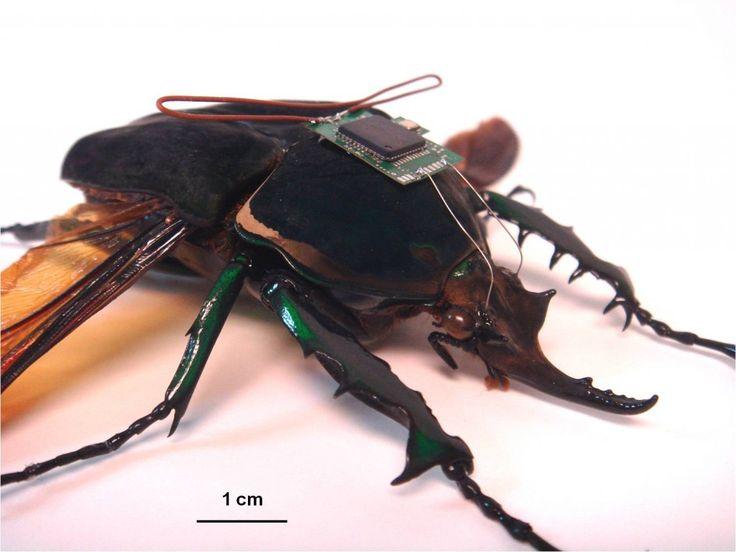
Related public information also mentions that the research team demonstrated the control of the take - off, turning, and flight behaviors of insects such as rhinoceros beetles.
In other words, this route didn't emerge out of nowhere.
It has actually been lurking in the laboratory for many years.
Limited by the past microelectronics, power supply, communication, and computing capabilities, such things have long remained at the "scientific research demonstration" stage.
Now, with the continuous maturity of miniaturized electronic systems, edge computing, and low - power communication, those once extremely outrageous experiments are getting closer and closer to applicable systems.
The boundaries between biology, electronics, and military technology are disappearing
The most uncomfortable but also the most worthy thing to face is:
When humans thought they could reshape everything with cold machines, reality reminds us that in some extreme scenarios, the living systems evolved over hundreds of millions of years may still be cheaper, more concealed, and more suitable for getting into the worst gaps than pure machines.
This doesn't mean that "cyber cockroaches have completely changed warfare."
Nor does it mean that the outside world has independently verified all the capabilities in the publicity.
But it at least means one thing:
The boundaries between biology, electronics, AI, and military technology are being forcibly removed.
And this is what really makes people shudder about this news.
This article is from the WeChat official account "New Intelligence Yuan", author: New Intelligence Yuan. It is published by 36Kr with authorization.