Why is battery swapping destined to be a tough battle?
Is there a future for battery swapping?
A press conference has reignited the debate about the "future" of electric vehicle energy replenishment.
Last week, BYD launched its second - generation blade battery and megawatt - level flash charging technology. What was most ridiculed by netizens was the comment "NIO has no future."
According to BYD's official data, the latest flash charging technology can charge the battery from 10% to 70% in just 5 minutes at room temperature, and it only takes 9 minutes to charge to 97%. Even in an extremely cold environment of minus 30°C, it only takes 3 more minutes than at room temperature.
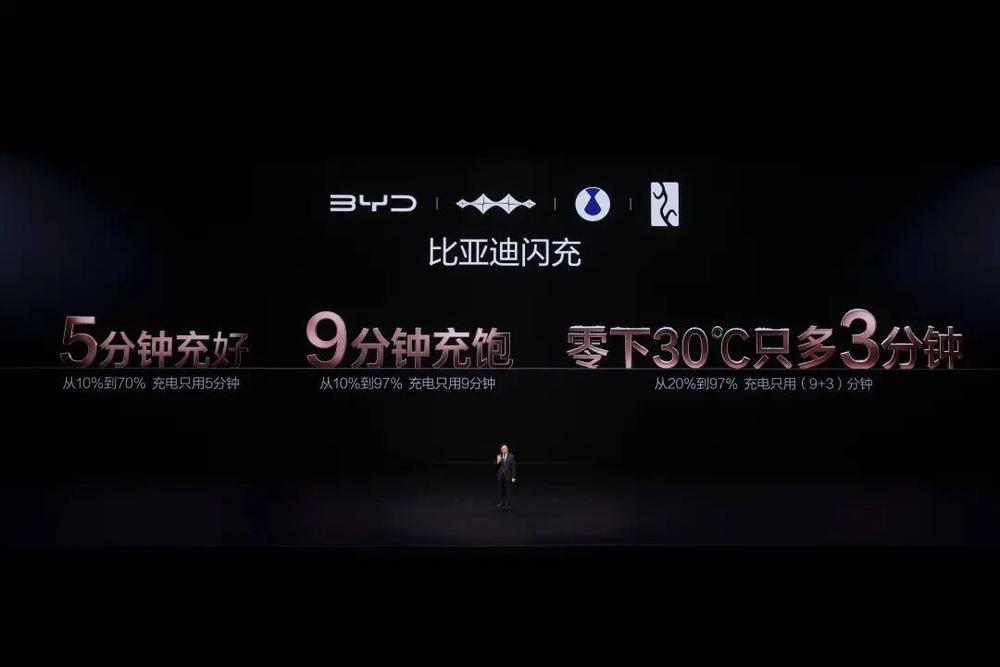
So, it's no wonder that netizens are skeptical. For a long time, two energy - replenishment methods, ultra - fast charging and battery swapping, have been directly compared by netizens. Which one is the better solution for electric vehicle energy replenishment?
01
Now, the answer may not be that mysterious.
Because when flash charging infinitely approaches battery swapping in terms of experience and time, the most fundamental problem of battery swapping is put on the table -
With the continuous evolution of battery technology, the battery - swapping model can hardly maintain a unified standard in the long run. This means that both scale and economy will become problems.
After all, business is ultimately a matter of accounting.
First, let's look at the experience.
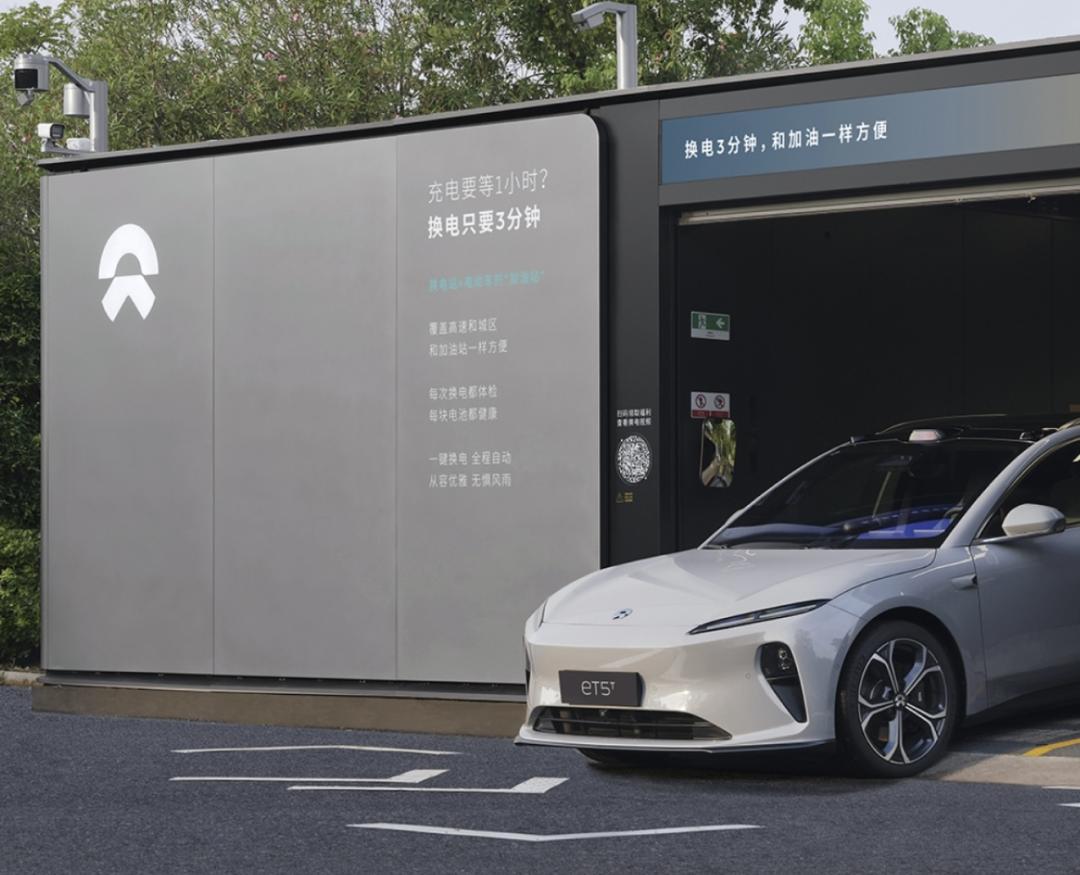
The picture shows a NIO battery - swapping station, sourced from NIO's official website
In the past, many people were willing to pay for battery swapping. To put it simply, it saves time. You don't need to get out of the car, find a charging pile, or wait for the battery to charge slowly. It can be done in a few minutes, just like "refueling an electric vehicle."
But now, after BYD put forward the slogan and technical parameter of "replenishing 400 kilometers in 5 minutes," the users' minds have changed:
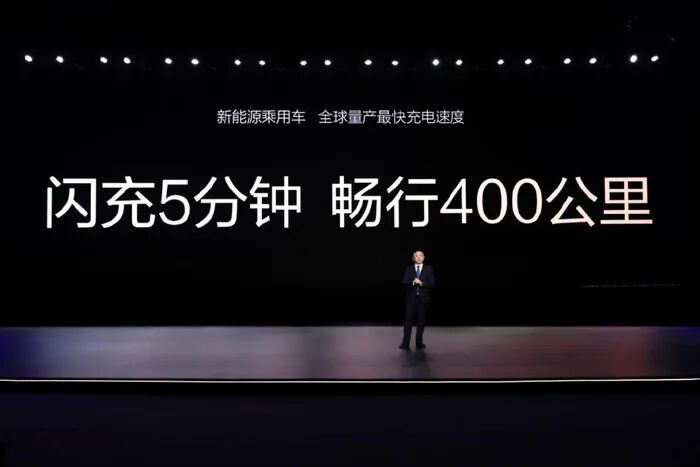
Previously, it was "battery swapping is much faster than charging." Now it has become "they are almost equally fast. Then why should I buy a car that can only be used in a specific system?"
When ultra - fast charging eliminates the biggest shortcoming of "slow charging," the experience advantage of battery swapping is no longer overwhelming, which means that this energy - replenishment method is no longer the only answer.
The straightforward statement on the Internet is quite vivid: Previously, battery swapping was like using a cheat code. Now, flash charging aims to make the cheat code a standard feature.
Two days after BYD launched its second - generation megawatt flash charging technology, Li Bin said in a CCTV program that frequent use of ultra - fast charging would damage the battery's lifespan, health, and long - term safety.
However, in fact, BYD claimed at the press conference that this extreme charging speed was not achieved at the cost of sacrificing battery safety and service life.
In a public demonstration, after 500 flash - charging cycles, the battery pack was undergoing high - power charging while being tested with a steel needle penetration, and there was no smoke or fire throughout the process.
Second, let's look at the economic aspect.
The essence of the battery - swapping model is heavy - asset investment. It's not just about building a station; you also need to stock batteries, carry out operation and maintenance, do scheduling, and account for long - term depreciation.
In fact, NIO has been expanding its network in recent years. Public media reports show that it plans to add 1,000 battery - swapping stations in 2026, and the total number will exceed 4,700 by the end of the year.
Moreover, in the cooperation between NIO and CATL, CATL will also promote a strategic investment of up to 2.5 billion RMB in NIO Energy. This itself shows that the battery - swapping network is a system that continuously "swallows capital."
BYD, on the other hand, has adopted the most cost - effective method to expand its charging network. They have widely promoted the "station - within - station" model, which means directly installing one or more flash - charging devices in existing third - party charging stations. Among the 20,000 flash - charging stations officially announced, 18,000 are of the station - within - station model.
Let's use data to illustrate:
NIO has cumulatively invested over 18 billion RMB and built over 8,600 charging and battery - swapping stations, including over 3,700 battery - swapping stations and more than 1,000 high - speed battery - swapping stations.
Under BYD's "station - within - station" model, the cost of a single station is only about 400,000 RMB, which is 1/5 to 1/3 of the cost of a battery - swapping station.
In contrast, although flash charging also requires investment in stations, upgrading of power distribution and energy storage, it is more like an upgrade of the existing charging system. Its replication logic is usually lighter and more universal than that of battery swapping.
Finally, and most realistically, the issues of standardization and openness have not been fully resolved. This is the biggest structural pain point of battery swapping.
Charging is naturally more like "public infrastructure" - interfaces, protocols, and charging stations are constantly moving towards unification, and the policy level is also promoting the standardization of megawatt - level charging.
On the contrary, for battery swapping, although NIO's fourth - generation stations already support multiple brands and models, and CATL is also collaborating with NIO on technical standards, this actually shows a reality:
To scale up battery swapping, standard unification cannot be bypassed. And standard unification means that the vehicle body structure, battery pack size, chassis interface, communication protocol, thermal management, and safety system all need to be unified. For car manufacturers, this means making concessions in the definition of core products.
The problem lies here - from the perspective of technological evolution, it is almost impossible to unify battery packs.
You know, the space inside a car is extremely precious. With the improvement of battery energy density, no car manufacturer will give up making the battery smaller.
Moreover, which car manufacturer would give up the design right of the most core part of an electric vehicle?
So, the deepest pain of battery swapping is not "high station - building costs," but that the more it wants to become an industry - wide infrastructure, the more it requires each car manufacturer to make concessions in battery design.
This is almost an impossible task.
Even if we look at NIO's own battery - swapping stations, the battery specifications cannot be unified, and the batteries of different models are not interchangeable. So, there is no way to talk about efficiency improvement.

Netizen comments
02
In contrast, for the ultra - fast charging solution, the charging stations are far less sensitive to space utilization than the interior of a car. So, no matter how the charging technology evolves, you just need to upgrade the charging piles.
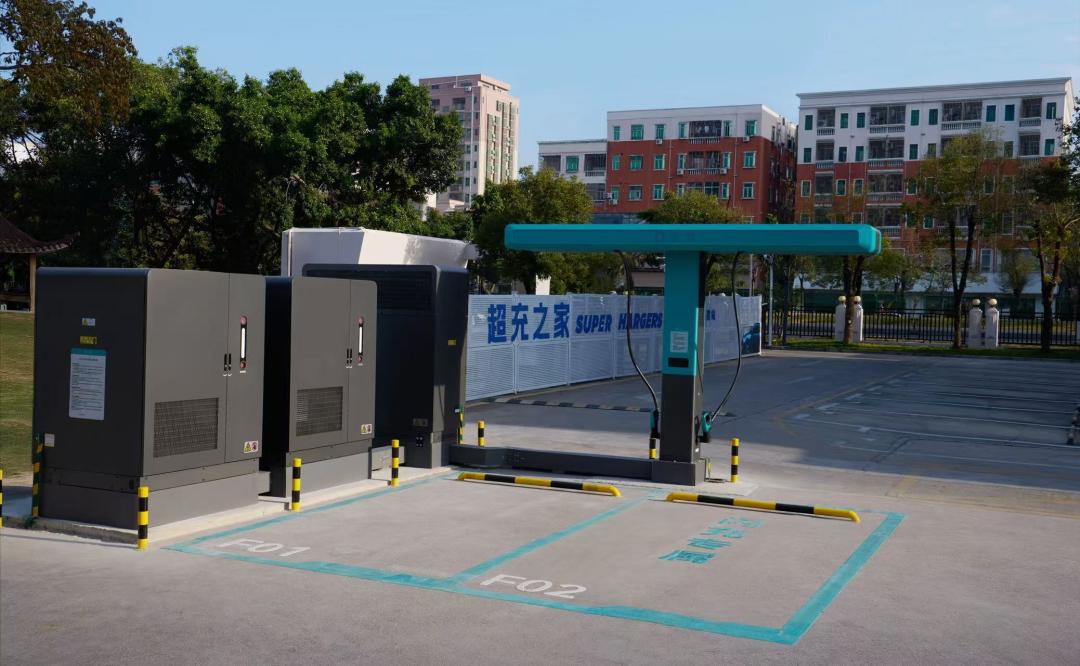
The picture shows a BYD flash - charging station, sourced from BYD's press conference
The scalability of flash charging means that it is not just about improving efficiency, but also weakening the brand - exclusive attribute of the energy - replenishment system and continuously enhancing economic efficiency.
In other words, in the past, the energy - replenishment network was more like a private traffic pool for car manufacturers. In the future, it may be more like highways, substations, and payment networks - anyone can connect, and everyone has to connect. Ultimately, it depends on interface capabilities, power management capabilities, energy - storage scheduling capabilities, and grid - friendliness.
Therefore, with the emergence of flash - charging technology and the continuous upgrade and iteration of ultra - fast charging technology, the path of battery swapping will probably become increasingly difficult.
In business history, the technologies that can become the "default answer" are often not the most expensive ones, but the ones that are most easily replicated on a large scale.
This article is from the WeChat official account "New Energy Industry Expert", author: Zeng Qiongyi. It is published by 36Kr with permission.