Quantum Computing: A New Era of Computing Power in the Post-Moore's Law Era
As "Moore's Law" gradually becomes ineffective and an obvious bottleneck in "unit computing power" emerges, quantum computing, after more than half a century of technological accumulation and iteration, has officially stepped onto the stage. It is expected to break through the limits of classical physics and open a new era of computing power. Internationally, more than 30 countries around the world have deployed in the quantum computing industry. The technological competition landscape presents a tripartite confrontation among China, the United States, and Europe. Breakthroughs in cutting - edge technologies and technological autonomy have become the focus of strategic competition, attracting extensive attention from all sectors of society.
This article aims to analyze the current development situation of quantum computing at home and abroad, sort out the industrial investment opportunities in the quantum computing track. There are sub - tracks worthy of key follow - up in fields such as quantum computing whole machines, upstream components, and downstream software applications.
Current situation and development trend of the quantum computing industry
Current situation of the quantum computing industry: the exploration period of quantum practical application
Quantum computing is a new computing paradigm that regulates information processing units based on the principles of quantum mechanics (superposition, entanglement, and interference). The core is to use qubits to replace classical bits, thereby establishing non - classical correlations through quantum entanglement and using quantum interference to amplify the probability of correct results. It can achieve exponential or polynomial - level acceleration compared to classical computers in specific problems (such as large - number decomposition, quantum simulation, and combinatorial optimization). Quantum computing has the following advantages compared to classical computing:
Information unit: Classical computers use classical bits, whose states are definite 0 or 1; quantum computers use qubits, which are like spinning coins and can simultaneously contain two states in the form of a superposition state α|0⟩ + β|1⟩. The squared modulus of α and β represents the probability of collapsing to |0⟩ or |1⟩ when measuring the quantum state.
State space: N classical bits can only represent N - bit information; when N qubits work together, they can achieve parallel processing of 2^N states through quantum superposition states. Its information capacity increases exponentially with the number of bits. This means that the computing space capacity of only 300 qubits has already exceeded the total number of atoms in the universe.
Processing mode: Whether it is the serial computing of the CPU or the parallel computing of the GPU in classical computers, they are all deterministic operations performed independently or in parallel on different data blocks. Quantum computers use quantum superposition to achieve quantum parallelism, and one operation can act on the superposition state of 2^N data.
Output result: The result of classical computing is deterministic, while the result of quantum computing is probabilistic and needs to be obtained through multiple measurements and statistical analysis.
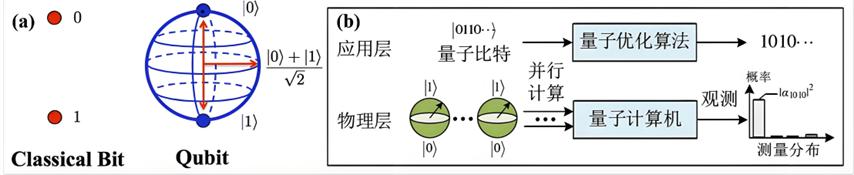
Figure 1: (a) Schematic diagram of the comparison between classical bits and qubits (b) Schematic diagram of the quantum computing process
Since Paul Benioff first proposed the concept of the "quantum Turing machine" in 1980, quantum computing has gone through four key stages:
1980 - 1994: The theoretical foundation period. Feynman proposed the concept of quantum computing, and Shor's algorithm demonstrated the potential of quantum superiority.
1994 - 2018: The technological exploration period. Grover, a computer scientist at Bell Labs, proposed Grover's algorithm. Technological routes such as superconductivity, ion traps, and photonic quantum began to develop in parallel. D - Wave launched the first commercial quantum annealing machine.
2018 - 2023: The NISQ era (referring to noisy intermediate - scale quantum computers, proposed by John Preskill in 2018. Intermediate - scale means that the number of qubits is between 100 and 1000, and noisy means that the fidelity of qubits is affected by internal and external factors and cannot be used for stable computing). Google's "Sycamore" processor with 53 qubits first achieved "quantum superiority", and the "Zu Chongzhi 3" of the national laboratory verified quantum superiority.
Since 2024: Entering the exploration period of practical application of noisy intermediate - scale quantum computing. The focus is on breaking through quantum error correction, demonstrating logical qubits, and promoting industry applications. It is expected that by 2027, a node leap of more than 100 logical qubits will be achieved, entering the stage of practical quantum computing with error correction and accelerating towards FTQC (Fault - Tolerant Quantum Computer).
According to the general development roadmap, the current main technological trends are: 1) Continuously expand the scale of qubits to achieve leaps of hundreds, thousands, and tens of thousands; 2) Further develop error - correction and fault - tolerance technologies; 3) Quantum computing (simulation) applications solve some practical problems.
There are many physical implementation methods for qubits. The industry mainly uses superconductivity, ion traps, photonic quantum, neutral atoms, semiconductors (quantum dots), NV (nitrogen - vacancy in diamond) color centers, topological quantum, etc. as physical implementation approaches. Among them, the first five routes are the mainstream technological routes in the current quantum computing field.
Superconducting route: It uses the Josephson junction composed of superconductor - insulator - superconductor (S - I - S) to form a non - harmonic oscillator energy - level structure. The lowest two energy levels are used as qubits (|0⟩ and |1⟩ states), and quantum gate operations are realized through microwave pulses. Main companies following this route include Google, IBM, Rigetti, IQM (Finland), and Chinese companies such as Guodun Quantum, Benyuan Quantum, Luoji Bit, and Liangxuan Quantum.
Ion trap route: It uses radio - frequency electromagnetic fields (Paul traps) or electrostatic fields (Penning traps) to trap ions (such as Ca⁺, Yb⁺, Ba⁺). The internal energy levels (hyperfine structure or Zeeman sublevels) of the ions are used as qubits, and the internal states of the ions are manipulated through lasers or microwaves. Main companies following this route include Quantinuum, IONQ, Oxford Ionics (UK, already acquired by IONQ), AQT (Austria), and Chinese companies such as Huayi Quantum, Yaozheng Quantum, and Guoyi Quantum.
Neutral atom route: It uses optical tweezers (highly focused lasers) to trap neutral atoms (such as Rb, Cs) to form two - dimensional or even three - dimensional arrays. The ground - state hyperfine energy levels of the atoms are used as qubits. The atoms are excited to the Rydberg state through lasers, and the Rydberg blockade effect is used to realize the interaction and entanglement gates between atoms. Main companies following this route include Atom Computing (USA), QuEra, Infleqtion (USA), PASQAL (France), and Chinese companies such as Zhongke Kuyuan, Liangyi Wanxiang, and Zhongqi Wuliang.
Photonic quantum route: It encodes qubits using the polarization state (horizontal/vertical), path state (two optical fibers), or time - bin state (different time slots) of photons. Quantum gates are realized through linear optical elements (beam splitters, wave plates, phase modulators). Main companies following this route include Psiquantum, Xanadu (Canada), and Chinese companies such as Turing Quantum, Bose Quantum, and Guizhen Quantum.
Silicon - based semiconductor: It uses gate electrodes to electrostatically confine and form quantum dots in semiconductor heterojunctions (such as GaAs/AlGaAs or Si/SiGe) to trap single electrons. The spin - up/down of the electrons is used as qubits. The spin state is regulated through electrical pulses, and the exchange interaction is used to realize two - qubit gates. Main international companies following this route include Intel, Diraq (Australia), and SemiQon (Finland).
The superconducting, ion trap, and photonic quantum routes have developed earlier, and the neutral atom route is a "dark horse" in recent years. Currently, each route is developing in parallel, with its own distinct characteristics, and there is no trend of full - scale technological convergence in any single route.
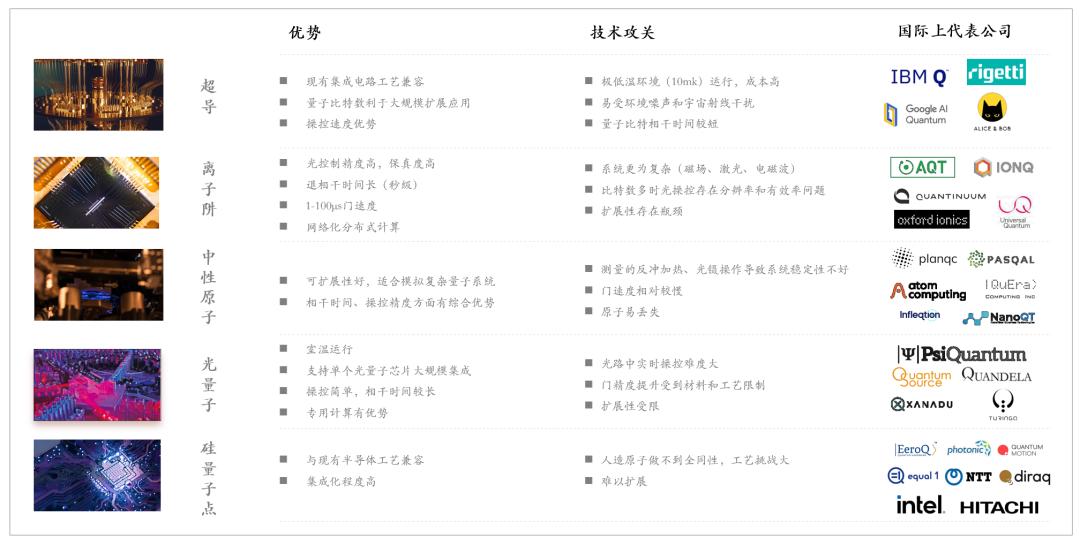
Figure 2: Characteristics of the five mainstream technological routes in quantum computing (compiled by Yunxiu Capital)
Development trend of quantum computing: quantum error correction and super - computing power
Quantum error correction becomes a competitive high - ground
Physical qubits are the original carriers of information, but they are very fragile. They are easily affected by environmental factors such as temperature, crosstalk from other electronic systems in the hardware, and measurement errors. They can also easily decohere, leading to the loss of information. To protect the information stored in qubits, a large number of unreliable physical qubits can be combined in a specific way to form quantum logical qubits with strong anti - interference ability. If a qubit malfunctions and causes an error, other qubits can help protect the system. This process is called quantum error correction, which can significantly reduce the error rate of quantum computing. For a general - purpose quantum computer with practical application value and capable of running complex algorithms, the basic units constituting the quantum gates should be quantum logical qubits.
The above - mentioned error - correction process of physical qubits can be realized through special encoding methods. The currently relatively maturely applied Surface Code encodes logical qubits on multiple physical qubits in a two - dimensional lattice (code distance d = 3, 5, 7...). It detects bit - flip and phase - flip errors through X - type and Z - type stabilizer measurements. This encoding method uses the topological properties of the quantum system to complete the encoding and storage of quantum information. The topological quantum states of such multi - qubit systems are insensitive to local perturbations and have excellent fault - tolerance characteristics for quantum information.
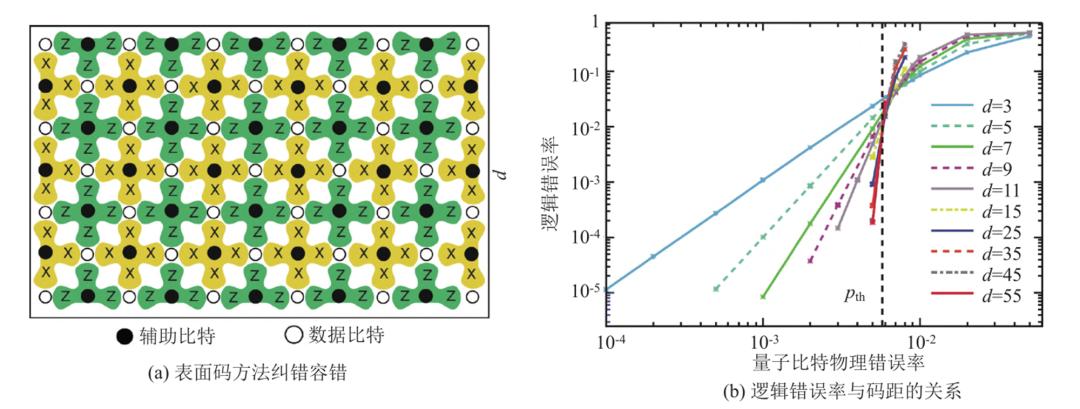
Figure 3: Quantum error - correction surface code and error - correction threshold (Source: Paper "A Review of the Development of Quantum Computer Technology")
To achieve effective quantum encoding, a basic condition must be met - the error rate of physical bits needs to cross the "fault - tolerance threshold". If the physical error rate > threshold, "the more you correct, the more wrong it gets"; if the physical error rate < threshold, "the more you correct, the more correct it gets". Currently, only Quantinuum in the United States, Google, QuEra, and the teams led by Academician Pan of the University of Science and Technology of China and Academician Yu of the Shenzhen Institute of Quantum Science and Engineering in China have achieved a breakthrough in the fault - tolerance threshold, crossing the critical point for expanding the number of qubits and enhancing the performance of quantum logical qubits. Quantum error correction has become another high - ground for technological competition after expanding the scale of qubits and verifying quantum superiority.
Quantinuum (USA): In April 2024, based on the H2 - 1 ion trap processor (56 physical qubits), it first exceeded the "error - correction threshold" of two - qubit fidelity of 99.9%. Using the surface code + lattice surgery technology, it created 4 logical qubits, with a logical error rate 800 times lower than that of physical qubits.
Google: In December 2024, Google released a new - generation quantum chip, Willow, which uses 105 superconducting qubits. Using the surface code method, it expanded the encoding grid from 3×3 to 5×5 and 7×7, achieving the effect of an exponential decrease in the logical error rate as the number of physical bits increases. It was the first in the world to achieve positive returns on error correction for quantum superconducting chips.
QuEra (USA): In 2025, it demonstrated an integrated fault - tolerant architecture with 96 logical qubits, proving that the logical error rate decreases as the system scale expands (below - threshold performance), and for the first time, achieved transversal algorithm fault - tolerance (AFT), reducing the error - correction time overhead by 10 - 100 times.
The team of Pan Jianwei/Zhu Xiaobo at the national laboratory: In 2025, based on the 107 - qubit "Zu Chongzhi 3.2" processor, using a more efficient "all - microwave control" method, it realized a surface - code logical qubit with a code distance of 7, and the logical error rate decreased significantly as the code distance increased.
The team led by Academician Yu Dapeng of the Shenzhen Institute of Quantum Science and Engineering: For the first time in the world, it used logical qubits encoded with discrete variables to extend the storage time of quantum information beyond the upper limit of the non - error - corrected physical system, breaking through the break - even point.
In addition to the quantum error - correction technology itself, more efficient error - correction codes are also highly concerned. The currently mainstream Surface Code has a good fault - tolerance effect but has a significant problem of high overhead (the ratio of physical bits to logical bits is 100:1 - 1000:1), which limits the scalability of larger - scale logical qubits. Therefore, the industry is constantly exploring new encoding and error - correction methods. Other relatively low - overhead and high - efficiency encoding methods such as qLDPC (Low - Density Parity - Check Code), Bosonic Code, Color Code, Concatenated Code are also in the stage of research or transition to engineering applications.
Combination of quantum computing and classical computing power provides super - computing power
As a new - paradigm computing power, quantum computing is moving from theoretical exploration to the application stage of solving practical problems. Although it can achieve quantum hegemony in some specific problems, due to the constraints of measurement time, fidelity, and scalability of quantum computers, it is more likely to move towards quantum - classical hybrid computing in the future. It reasonably distributes computing tasks between the quantum processor QPU and the classical processor CPU/GPU to maximize the potential of current hardware. In October 2025, after NVIDIA successively invested in three quantum computing startups through its venture - capital platform, it announced the launch of NVIDIA NVQLink™, an open - system architecture that can closely combine the extreme performance of GPU computing with quantum processors to build a quantum - classical hybrid - computing quantum supercomputer. This new architecture finds a balance between classical computing and quantum computing and provides a feasible paradigm for the future real "integration of quantum and super - computing". Just like the accelerated quantum supercomputer built by NVIDIA, it integrates the quantum processor with AI super - computing through the NVQLink open architecture to achieve low - latency and high - throughput collaborative computing. Such practices also verify the value of heterogeneous systems. This new architecture is also managed by a unified job scheduler and programming model, allowing a single application to collaboratively schedule tasks between different types of processors, aiming to empower the largest - scale scientific and engineering computing with quantum computing power.
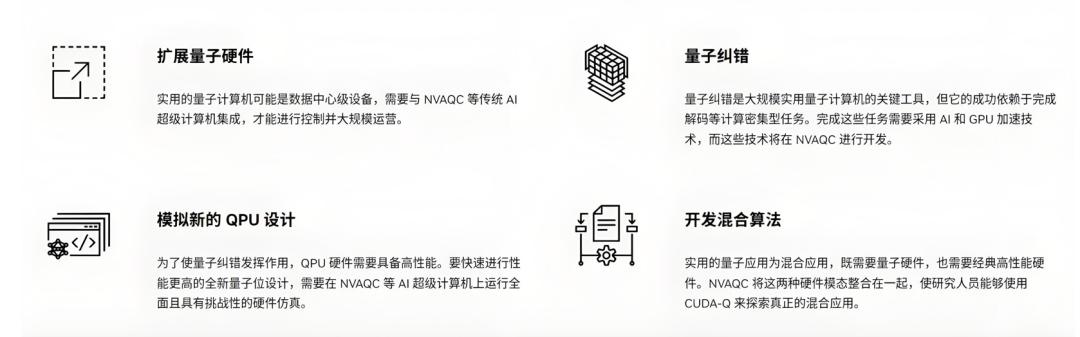
Figure 4: How NVAQC changes quantum computing (Source: NVIDIA official website)
Industrial pattern of quantum computing
Global distribution of quantum computing enterprises
Globally, the current quantum computing industry presents a competitive situation where China, the United States, and Europe are the main battlefields, and Canada, Australia, Japan, and South Korea are catching up and making layouts. According to data