A small computer factory was exposed for faking CPUs, and the root cause is the greed of the giants.
When the computer CPU can be blatantly "faked", is it because small manufacturers have high technical capabilities but use them in the wrong way, or is it an inevitable result of the laziness and greed of the entire industry?
For the PC industry, "obscure small manufacturers" often have more "tricks" than most people imagine. Although their products may have old chips or poor workmanship, on the one hand, these pieced - together things can indeed meet the needs of some users with severely limited budgets who need a computer. On the other hand, for some media that like to stir up trouble, exposing the various actions of obscure small manufacturers has become a current traffic - generating strategy.
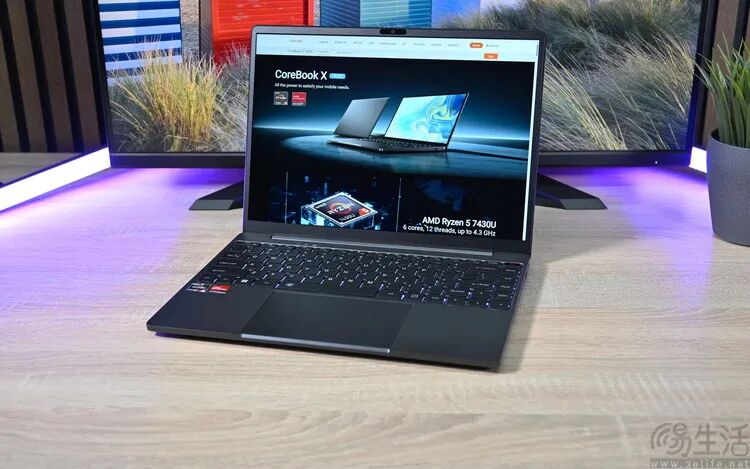
For example, recently, foreign media reported that they received reports from users saying that the "CoreBook X" laptop of Chuwi seemed to have a CPU - faking phenomenon, that is, using older CPUs to impersonate newer and more advanced models.
Intuitively, this seems impossible. It's not that the act of "faking CPUs" doesn't exist at all, but because "fake CPUs" often can't be actually powered on. So they usually only appear in the CPU retail field (such as returning fake CPUs), not in complete computers. After all, if the computer can't even be turned on, such a faking act would be exposed immediately.
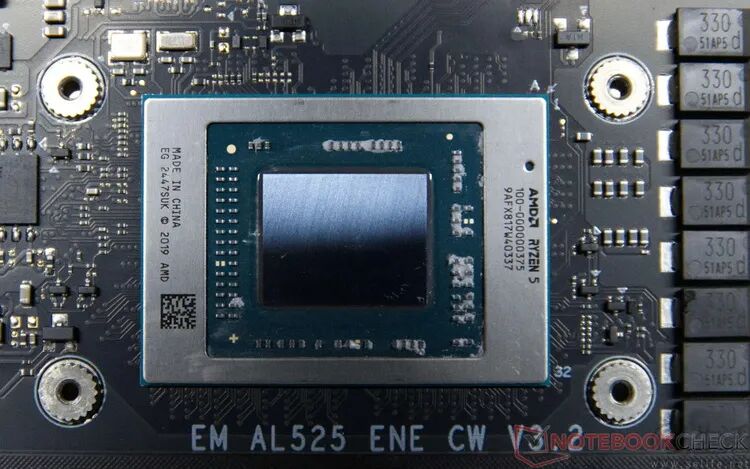
Image from Notebook Check
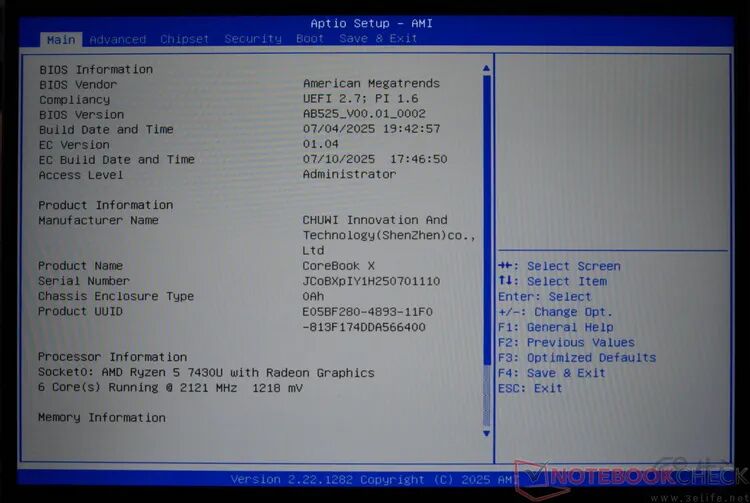
However, technicians found through disassembly and testing that the faking of this Chuwi laptop is not simple. Their "fake CPU" will display a false model in the BIOS and the system, and the computer can be powered on and used normally. Only by running test software or directly disassembling the computer can it be found that its performance does not match the chip.
So, how is this achieved?
To put it simply, this Chuwi laptop seems to use the AMD Ryzen 5 5500U to "impersonate" the Ryzen 5 7430U. Their method is actually very simple and crude, which is to directly modify the product name corresponding to the CPU ID in the BIOS. In this way, both in the BIOS and in the system, this old chip from 2021 will display as the "appearance" of the newer model from 2023.
But then a problem arises. Even if the displayed name of the CPU is modified in the BIOS, won't there be errors when installing drivers or running software?
Actually, there won't be. But this is not because the engineers at Chuwi are "highly skilled", but because AMD has left many "loopholes" in the mobile product line of the Ryzen 5000 series.
First of all, at first glance, the Ryzen 5 5500U is a member of the Ryzen 5000 series with the Zen3 architecture. But in fact, it is more like a product that combines the CPU part of the Ryzen 5 4600U with the Zen2 architecture and the GPU part of the Ryzen 5 5600U with the Zen3 architecture.
The Ryzen 5 5600U becomes the Ryzen 5 5625U after a slight official overclocking. Then in 2023, the Ryzen 5 5625U was "rebranded" and became the Ryzen 5 7430U.
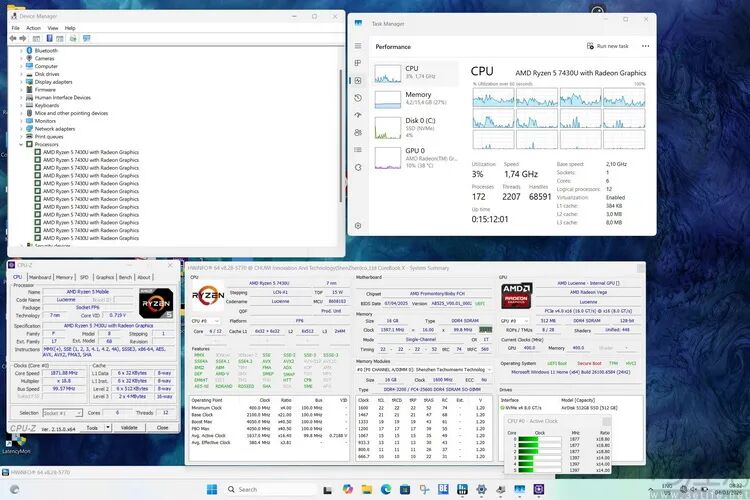
One is a 4000 - series pretending to be a 5000 - series, and the other is a 5000 - series pretending to be a 7000 - series, but they share the underlying code
In other words, although the 5500U and the 7430U seem to be a Zen3 of the 5000 series and a Zen4 of the 7000 series respectively, in fact, they are both "rebranded" products and once belonged to the same generation. Therefore, even though there is a generation difference in architecture, they can share the same set of CPU microcode from AMD and use the same drivers. So when the engineers of the small manufacturer "had an idea" and used the 5500U to "impersonate" the 7430U, there were no errors at the system and software levels, and the computer could operate normally.

Behind the audacity of counterfeit manufacturers is often the intentional clearance of inventory by large manufacturers or loopholes left in technology
Of course, from the perspective of chip manufacturers, they definitely won't encourage this kind of "rebranding and faking" behavior of downstream terminal manufacturers. But the problem is that it is the upstream manufacturers' past practices of mixing old and new architectures and rebranding a single chip across multiple generations that have left technical loopholes for today's "processor faking".
Similar things have actually happened more than once in the PC industry. For example, Intel also didn't change the architecture but changed the CPU interface for the 6th/7th/8th/9th - generation Core processors, resulting in a large number of counterfeit motherboards using B150 to "impersonate" Z390. Another example is that the B85 and X299 chip - sets, which have huge differences in architecture and functions, have become the objects of subsequent "counterfeit motherboard" modifications just because they support the same - generation CPU architecture and share the CPU microcode.
In essence, this is actually the upstream manufacturers leaving "reuse" loopholes in product design for the sake of convenience and cost - reduction. As a result, these loopholes have been used by counterfeit manufacturers to do bad things. Although it can be said that the upstream manufacturers didn't intend to encourage faking, if they hadn't laid the foundation first, users could have suffered fewer losses and been deceived less.
This article is from the WeChat official account "3eLife" (ID: IT - 3eLife), written by 3eLife, and is published by 36Kr with authorization.