What's happening in the lifestyle service industry after "value for money" becomes a common consensus?
In this year's consumption discussions, "caution" has almost become the default context.
With more transparent prices, more choices, and longer decision - making cycles, the lifestyle service industry is no exception. However, if we shift our focus from macro indicators back to specific scenarios, we'll find that another kind of change is taking place. Consumers haven't stopped going out, dining out, or traveling. Instead, they've become more picky with every choice. They start to repeatedly confirm what kind of experience they can get in return for their money.
In restaurants, people no longer only care about the dishes themselves. They also care about whether the space is comfortable and whether the service makes them feel relaxed. When traveling, the importance of the destination is giving way to the way of participation. In retail consumption, the appeal of low prices is decreasing, while trust, interaction, and a sense of identity are being continuously magnified.
These seemingly scattered changes are actually pointing in the same direction. As functions and prices gradually converge, the focus of consumption decision - making is quietly shifting towards something more subjective and stable. For example, whether emotions are taken care of and whether the experience is worth remembering.
Against this backdrop, Douyin Lifestyle Services, in collaboration with 36Kr and the Post - 90s Research Institute, released the "2025 Annual Lifestyle Service Merchant Trend Report" (hereinafter referred to as the "Report"). The Report summarizes this change as "emotional cost - performance" entering the core of consumption decision - making. When price no longer constitutes an absolute advantage, consumers start to pay for certain experiences and realizable emotional values.
This is not a rebellion against rational consumption but an adjustment of the consumption order. With a limited budget, people are more willing to spend their money on scenarios that can definitely bring emotional returns, experience confirmation, and a sense of psychological security. The lifestyle service industry is the first to bear the brunt of this change.
The question then arises. When "emotional cost - performance" becomes a consensus, how will the growth mode of the lifestyle service industry change?

When Consumption Starts to Yield to "Emotional Appeal"
Emotional value is becoming a new necessity.
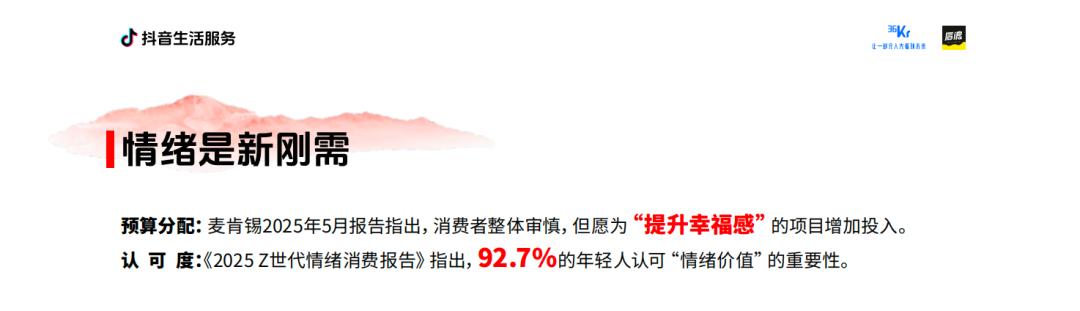
In the multiple sets of data presented in the Report, a recurring commonality is that consumers aren't simply "spending less money." Instead, they're reallocating their spending. Factors such as emotional value, experience memory, and social significance, which were previously regarded as add - ons, are now directly involved in payment decisions.
External research signals are consistent with this. Accenture mentioned in a related study that more than half of Generation Z views consumption as a way to explore themselves and socialize. McKinsey's judgment in a report in May 2025 was even more direct. Consumers are generally more cautious, but they will actively re - arrange their budgets for projects that "enhance happiness." This change isn't radical, but it's highly indicative: consumption is shifting from "is it cost - effective" to "is it worth investing my emotions in."
Emotional value isn't an abstract concept. On the content side, it has formed three highly concentrated keywords: atmosphere, sense of experience, and sense of ritual. Atmosphere corresponds to the attractiveness of space and field; the sense of experience emphasizes the participation process and memorable segments; the sense of ritual embeds ordinary consumption into life nodes, making a meal, a trip, or a product a moment worth recording.
The "emotional triangle" formed by these three elements is becoming the most active search and creation direction within the Douyin ecosystem. Creators continuously produce content around scenarios, participation, and nodes, while users look for specific emotional touchpoints in the content. They aren't isolated hotspots but together outline a demand trajectory: consumers are actively looking for real - world scenarios where they can place their emotions and confirm their experiences.
The actual presentation on the payment side makes the trend more concrete from a macro perspective. In various offline businesses, the phenomenon of paying a higher premium for experiences is expanding. In the catering industry, high - end group - buying packages priced over 200 yuan are on the rise. In the hospitality and tourism sector, experience - based products priced over 1,000 yuan remain active. In the retail and service industries, the trading activity of products with cultural and identity labels has increased.

Consumers have proven with their actual payments that when the experience is clear enough and the emotional return is certain enough, price is no longer the first hurdle.

"Centripetal Evolution" in Three Tracks
When "emotional cost - performance" becomes the underlying consensus, different industries show different evolutionary paths.
The three most typical lifestyle service tracks, catering, hospitality and tourism, and general retail, are showing a common trend: Consumption is no longer expanding outward but contracting inward, moving closer to emotions, experiences, and a sense of participation. This is a "centripetal evolution."
Catering: From "Filling the Stomach" to "Experiencing the Meal"
In the catering industry, the manifestation of "emotional cost - performance" isn't simply an upgrade of the environment or a re - organization of menu premiums. It's more of a re - definition of the overall experience. When consumers enter a restaurant, they're no longer just there to satisfy their hunger, or even just to take photos for social media. Instead, they hope to achieve a state that matches their current emotions during the meal, such as relaxation, being cared for, being understood, or simply having some quiet alone time.
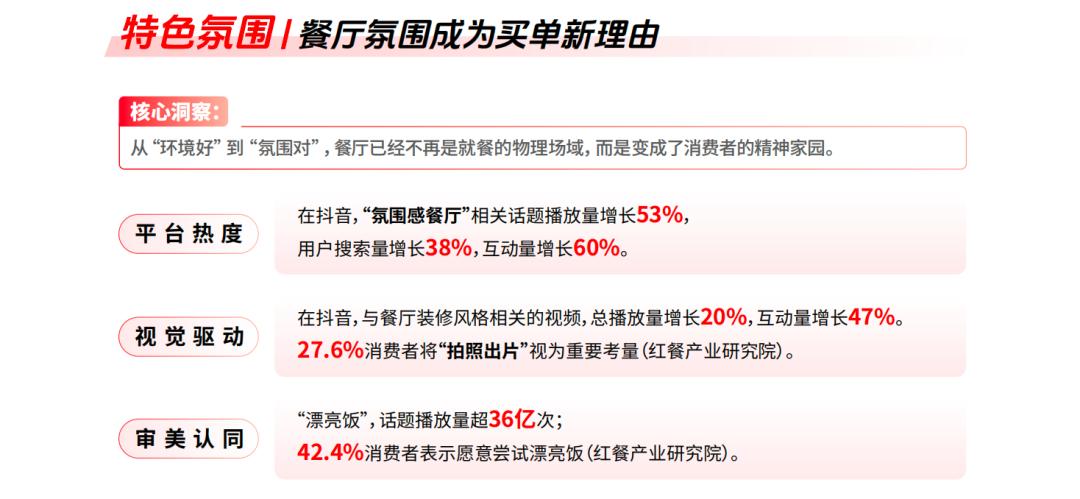
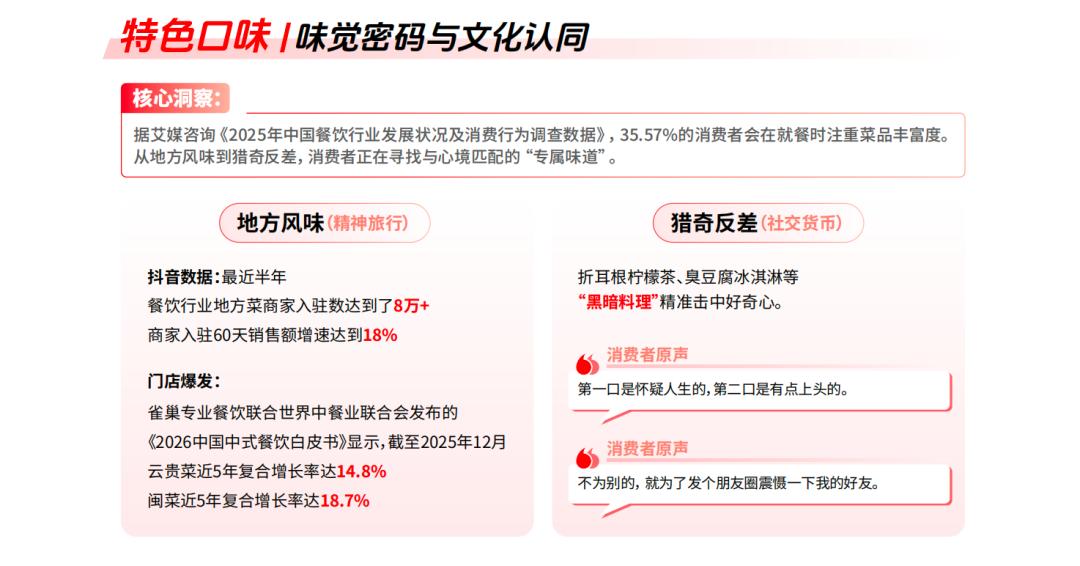
The breakdown of the catering industry in the report shows that distinctive atmosphere, distinctive emotions, and distinctive flavors are forming a synergy. On the one hand, the popularity of content such as "atmospheric restaurants" and "Instagram - worthy meals" on the platform continues to rise. On the other hand, seemingly scattered preferences such as dining alone, the charm of street food, and nostalgic flavors actually point to the same underlying need: to find an emotional foothold in this high - frequency daily activity of eating.
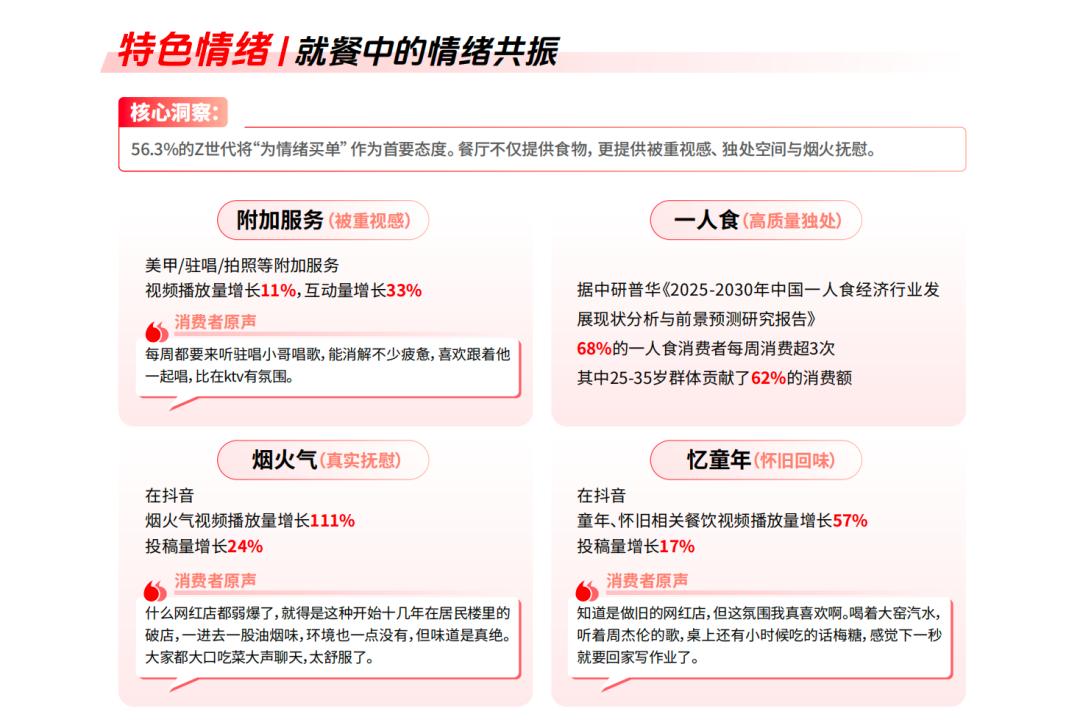
Take "dining alone" as an example. Against the backdrop of the continuously increasing demand for this emotional experience, Longge provides a more methodologically significant sample. In 2025, it successfully created four billion - level hit products such as pink mini - burgers, mini - yogurts, and mini - pizzas.
Its growth doesn't simply rely on cost - effectiveness. Instead, it has formed a content - driven hit - product mechanism around "listening to advice - launching new products - validating - scaling up." By continuously monitoring comments, interactions, and imitation behaviors on the Douyin platform, it selects products with visual impact and topic - worthiness as traffic entry points. Then, it uses the positive - review rate and repurchase data to calibrate the product structure in reverse, forming an iterative rhythm of "launching new products monthly and creating hit products quarterly." In 2025, Longge used this mechanism to create multiple billion - level hit products and, through its account matrix and cooperation with influencers, achieved a simultaneous increase in traffic and sales.
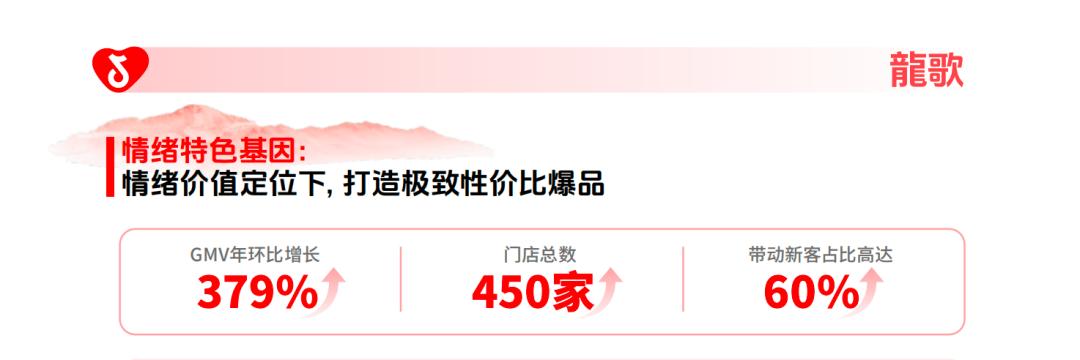
More importantly, it uses Douyin as both a tool for customer acquisition at the C - end and store expansion at the B - end. The hit - product content solves the problem of customer flow, and the founder's IP solves the problems of site selection and franchise resources, resulting in an increase of about 300 new stores in a year.
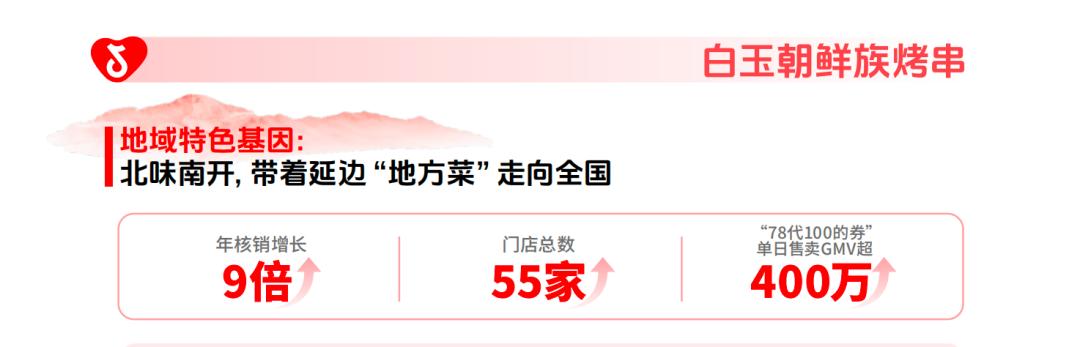
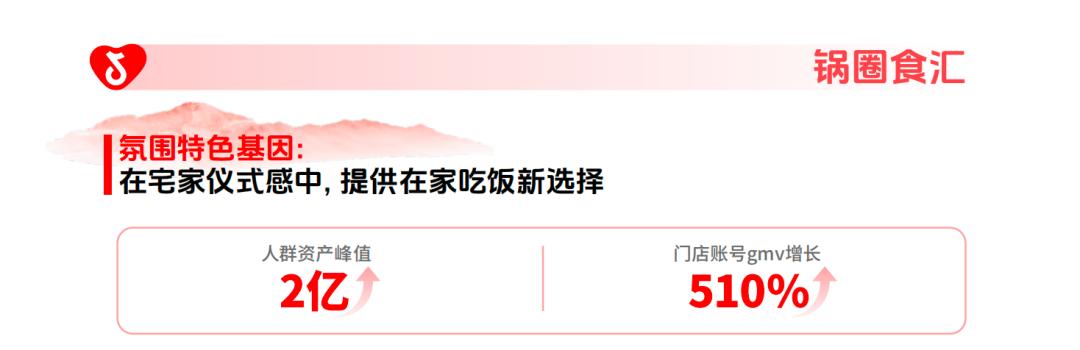
There's also Baiyu Chaoxianzu Kebab, which has turned a traditional Yanbian brand into a national chain, emphasizing the differential expression brought by ethnic flavors and visual recognition. Guoquan Shihui, on the other hand, has re - structured the home - based scenario choices around the "sense of ritual at home." Although the paths are different, the underlying logic is the same: by means of spatial expression, content operation, and personalized expression, restaurants are shaped into emotional fields. Users can pre - sense the atmosphere through short videos or live - streams and then complete the experience loop through in - store consumption.
In this structure, Douyin not only undertakes the function of product recommendation but also the functions of decision - making verification and transaction acceptance. The distance between content and transaction is compressed. This change in the model shifts the catering competition from a single - product dimension to a comprehensive ability of "scenario + content + experience."
Hospitality and Tourism: From "Viewing the Scenery" to "Becoming Part of the Scenery"
The changes in the hospitality and tourism industry are more intuitive. Standardized itineraries and traditional accommodation models are giving way to participatory experiences. Consumers are no longer satisfied with standardized itineraries and accommodation. Instead, they hope to truly immerse themselves in an experience through participation, interaction, and immersion. Immersive performances, local cultures, folk activities, and sports events are becoming important factors driving travel decisions.
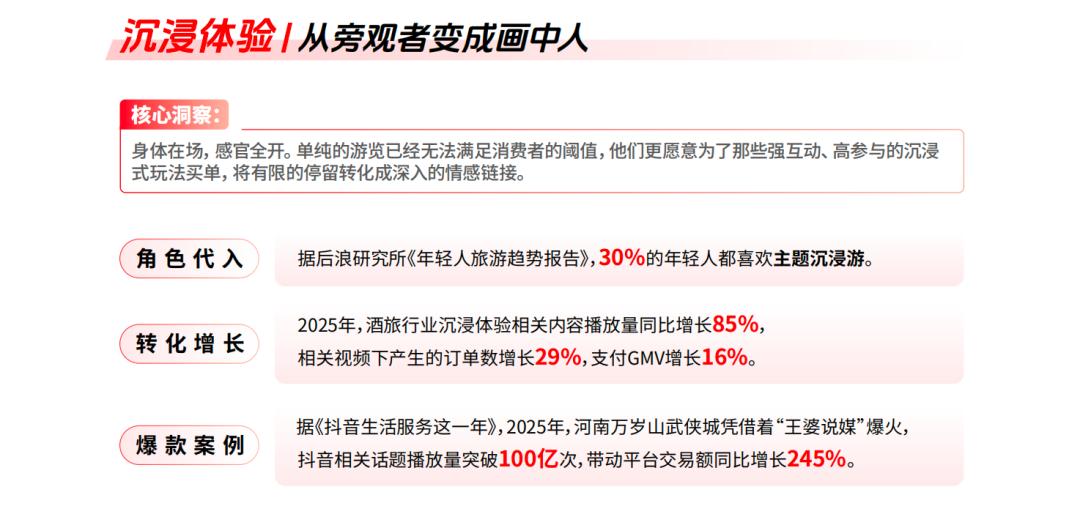
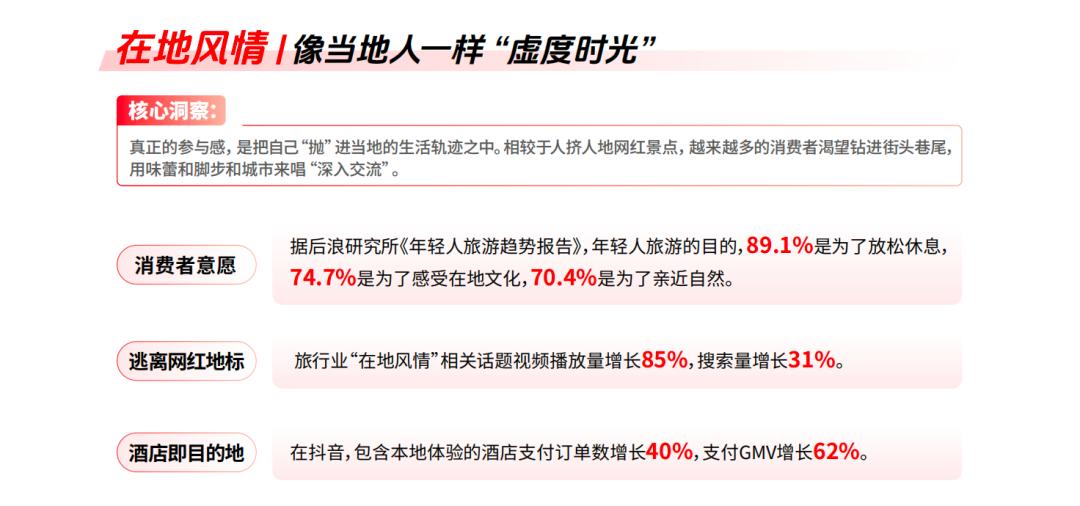

The center of the hospitality and tourism industry has shifted from "service delivery" to "emotional interaction."
The report mentions that the playback, search, and interaction of content related to "sense of participation" have increased significantly. Users are starting to pay for "what I can experience in this trip" rather than just "what I can see." This transformation also makes hospitality and tourism consumption gradually extend from one - time services to emotional memories and repeated experiences.
The cases of Shanghai Haichang Ocean Park and Longemont also confirm this.
The key transformation of Shanghai Haichang Ocean Park is to transform scarce resources into repeat - purchasable content assets and turn a single visit into an emotional memory that can be repeatedly activated. Relying on rare animal resources such as orcas and beluga whales, Shanghai Haichang Ocean Park has personified and star - ized the animals, constructing a content matrix of "official account + animal IP + animal keeper." This has transformed marine science popularization from static display to emotional interaction. The annual exposure of relevant topics reached