Mira Weng Li and Chen Danqi's company made Huang invest $60 billion.
Nvidia is providing both computing power and investment, pouring a large amount of resources into Mira's startup company.
Just now, Thinking Machines Lab officially announced a new round of cooperation agreement with Nvidia.
This cooperation will result in the establishment of a 1GW-scale data center with an estimated cost of $60 billion. Meanwhile, the agreement also includes cash investment from Nvidia.

At the same time as the company's official announcement, CEO Mira also issued a personal statement expressing gratitude to the Nvidia team and Jensen Huang.

Previously, Nvidia participated in the company's $2 billion seed-round financing and helped it achieve a valuation of $12 billion.
So far, the company's latest valuation has reached $50 billion.
Mira's Startup Signs a Big Order for 1GW of Computing Power
This time, the multi-year strategic partnership agreement signed between Nvidia and Thinking Machines Lab schedules the deployment of the first batch of computing clusters for early 2027.
The core of this agreement is to additionally deploy at least 1GW of next-generation Vera Rubin computing systems globally.

As the successor to the Blackwell architecture, the Vera Rubin platform consists of the R100 series of GPUs and the GR200 series of Grace Rubin superchips. Each GPU integrates 288GB of HBM4 video memory, with a memory bandwidth of 22TB/s and can provide 50PFLOPS of NVFP4 inference computing power.
The matching Vera CPU uses 88 Olympus cores, supports 1.5TB of LPDDR5X memory and a bandwidth of 1.2TB/s, and achieves an interconnection rate of up to 3.6TB/s per GPU through the sixth-generation NVLink technology.
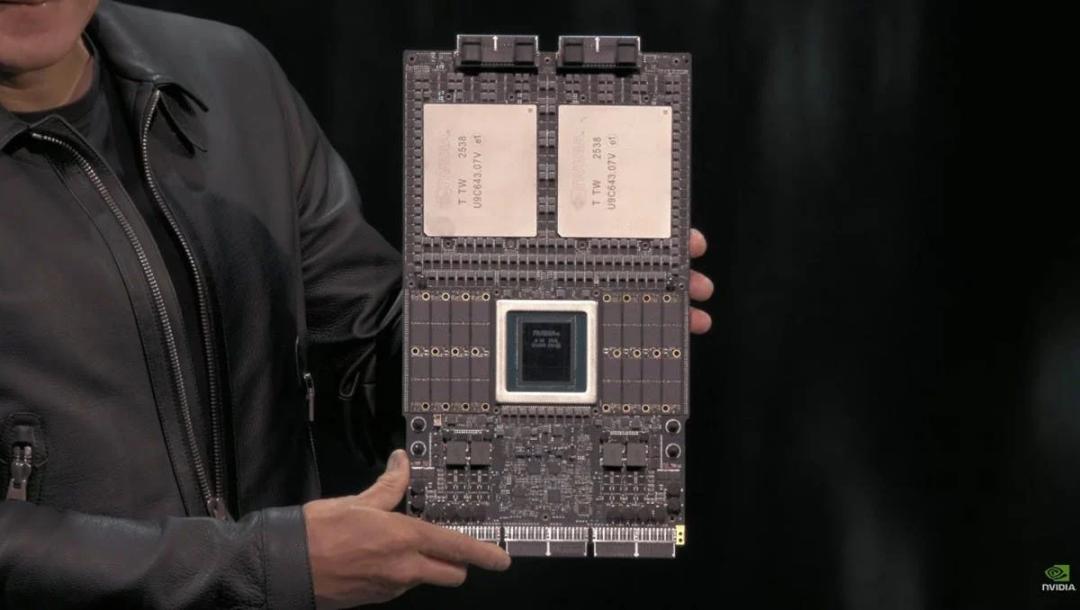
This ultra-large-scale computing facility will directly serve the cutting-edge model training tasks of Thinking Machines Lab and provide underlying support for platforms that deliver customized AI on a large scale.
The technical teams of the two companies will conduct in-depth cooperation to jointly design a model training and inference service system specifically adapted to the Nvidia architecture, further expanding the channels for global enterprises, research institutions, and the scientific community to access cutting-edge AI models and open-source models.
It is estimated that the total construction cost of the project is $50 - 60 billion, of which the value of the hardware and supporting solutions provided by Nvidia is approximately $35 billion.
In addition, the agreement also clearly includes a significant cash investment from Nvidia to support the company's long-term growth and technology R & D expenditures.
This heavy asset investment of tens of billions of dollars and the allocation of top chips have helped Thinking Machines Lab complete a deep lock-in in the underlying computing infrastructure.
Building a Moat with Computing Power
Thinking Machines Lab was officially founded in February last year. Its founder, Mira Murati, resigned as the CTO of OpenAI in 2024.
At that time, Mira not only recruited dozens of R & D elites from OpenAI, such as Weng Li, the former head of the security system, but also successfully invited Chen Danqi, a professor at Princeton University and a well - known scholar in natural language processing, to join the company.
This team structure composed of top engineering talents and academic experts has laid a very high technological starting point for the company and quickly increased its bargaining power in the capital market.
In July, the company received $2 billion in financing, with a valuation of $12 billion at that time. By the end of last year, the latest valuation had soared to $50 billion.
During this period, Thinking Machines Lab released its flagship product, Tinker, in October, which allows enterprises to customize large models using LoRA technology without purchasing their own servers.
However, this upward momentum faced the challenge of talent loss in January this year. The former Chief Technology Officer, Barret Zoph, led several technical backbones back to OpenAI, once triggering external concerns about the company's R & D sustainability.
To address this sudden change in the core team, Thinking Machines Lab immediately hired Soumith Chintala, the founder of PyTorch, as the new CTO to oversee the subsequent underlying software and hardware adaptation work.
This rapid iteration of top talents not only stabilized the R & D foundation but also demonstrated the company's strong resource mobilization and self - repair capabilities in the face of poaching by giants.
This cooperation with Nvidia to lock in next - generation production capacity is also a "second front" opened by the company outside the "talent defense war".
Against the backdrop of extremely frequent talent flow in Silicon Valley, controlling extremely scarce underlying computing resources has also helped the company build a more solid moat in addition to algorithm R & D.
Reference links:
[1]https://thinkingmachines.ai/news/nvidia-partnership/
[2]https://www.bloomberg.com/news/articles/2026-03-10/nvidia-nvda-to-invest-in-mira-murati-s-thinking-machines-lab-and-supply-chips[3]https://www.ft.com/content/a8853057-c0a3-46f6-817f-7a23e79ea4e2
This article is from the WeChat official account "QbitAI". Author: Focusing on cutting - edge technology. Republished by 36Kr with permission.