36Kr Global Exclusive Interview | Japan Talk: Qibo Technology's Counterintuitive Uphill Battle in the Japanese Robotics Market
Text | JETRO Guangzhou Representative Office
Introduction
36Kr Global, in collaboration with JETRO Guangzhou Representative Office, has launched the "Talks about Going to Japan" series of articles, introducing the cases and experiences of Chinese enterprises that have successfully entered the Japanese market. As a non - profit organization under the Japanese government, JETRO provides services such as market and industry information, introduction of service providers, temporary offices, and connection of relevant channels for Chinese enterprises going global to Japan.
In the wave of global commercial robot enterprises going global, the Japanese market has always been a battlefield that people both love and hate. There is a huge demand driven by the aging population, but there are also the world's most stringent service standards.
Facing fierce competition, iKitbot didn't choose the habitual fast - track of "Chinese speed" and "ultra - high cost - effectiveness". Instead, it took a highly counter - intuitive path of in - depth implementation: taking the standards of Japan's highest - level cleaning competition as a model; respecting the long and strict verification period and treating each POC as a real - life mine - clearing operation; insisting that the core management team go global in person and conduct in - depth joint operations with local partners.
Facts have proved that this kind of "slowness" is actually "quickness" in another sense. Since officially entering the Japanese market in April 2024, iKitbot has won orders worth hundreds of millions of yen from trading companies, and its products have been fully implemented in benchmark scenarios such as high - end hotels, hospitals, chain supermarkets, and exhibition venues. This time, we had an in - depth conversation with Tina Li, the President of iKitbot Japan to analyze this counter - intuitive Japanese market battle.

Tina Li, the President of iKitbot Japan
The following is the content of this exclusive interview (edited without changing the original meaning), where Q represents JETRO Guangzhou Representative Office and A represents Tina Li, the President of iKitbot Japan.
Interview Transcript
Q: Please briefly introduce iKitbot and its development process in Japan so far.
A: The core team of iKitbot consists of veterans who have been deeply involved in the service robot industry for more than a decade, with strong hardcore R & D engineering capabilities and global delivery experience. Our flagship product, the ONE PRO series, is an intelligent cleaning system specially developed for Japan's extremely demanding commercial environment.
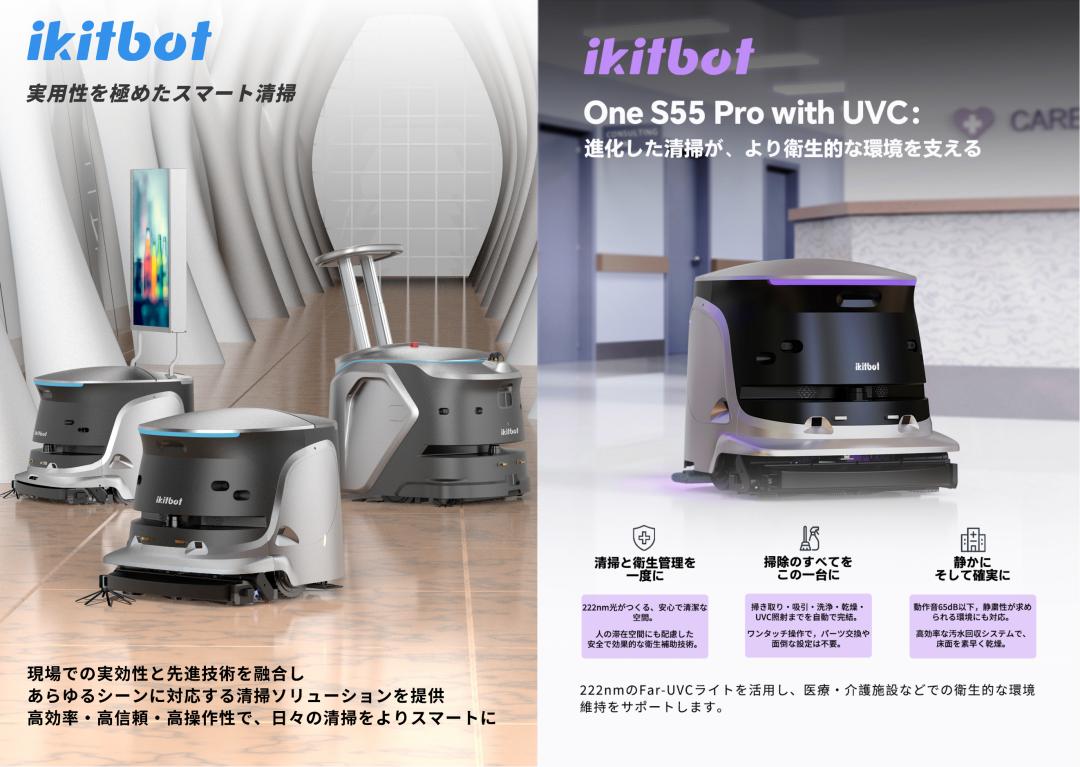
The products launched by iKitbot in Japan have a unique disinfection function.
In Japan, the product error tolerance rate is extremely low. Therefore, we spent a lot of time continuously iterating the liftable cleaning chassis and the industry - leading silent design, and focused on the safety and stability that customers care most about. After obtaining the PSE and TELEC dual certifications in Japan, we conducted a two - month in - depth POC in a major Japanese real - estate company.
In the past two years, we have personally participated in more than a hundred rounds of real - life battles. From the small - scale trial at exhibitions at the beginning, to the official mass production in 2024, and then to the large - scale delivery in 2025, every step has been taken very seriously and solidly.
Q: Why did you choose Japan as the first breakthrough point for going global?
A: We chose Japan because it is the precise intersection of rigid demand, policy, and a competitive gap.
In this extremely aging society, the average age of front - line cleaning staff has exceeded 53 years old. For enterprises, introducing robots is no longer just about cost - reduction and efficiency - improvement or calculating financial accounts, but about solving the survival crisis - they simply can't recruit enough people. This rigid demand is forcing the whole society to strongly promote digital transformation. However, in the face of the huge market demand, there is an obvious supply - side gap for medium - sized commercial cleaning robots. Relying on the agile iteration ability honed in complex domestic scenarios, Chinese service robots can precisely fill the most urgently needed ecological puzzle in the Japanese market, which is a market window full of imagination.
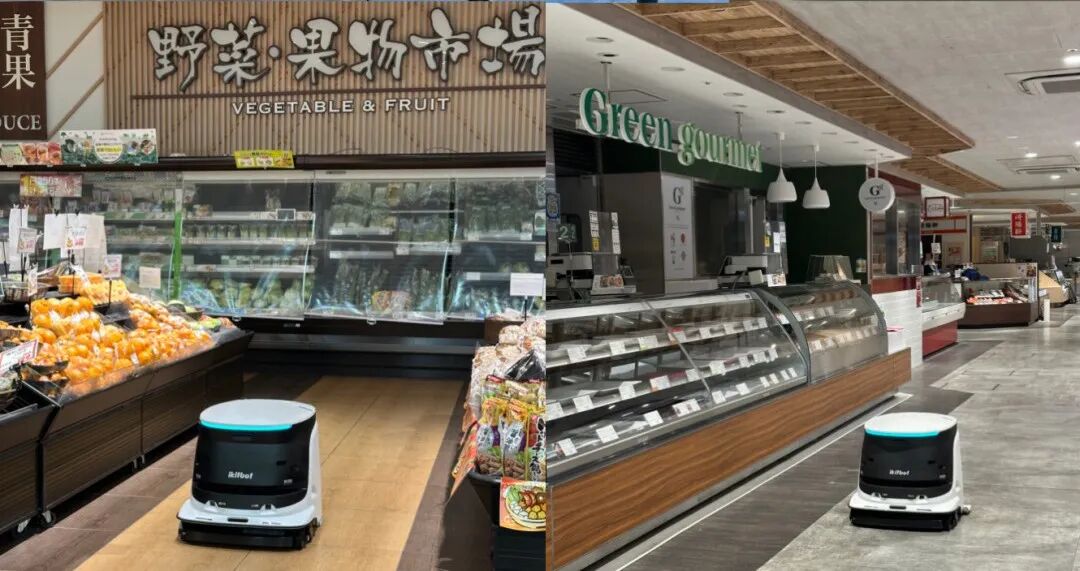
iKitbot cleaning robots in Japanese supermarkets and retail scenarios
Q: What are the unique features of the Japanese market? Why is it said that a counter - intuitive approach is needed?
A: Chinese enterprises' intuition when going global is usually "fast" - rapid product distribution, rapid iteration, and competing on extreme cost - effectiveness. However, in Japan's conservative business context, this is often a fatal trap.
Japanese B - end customers are conservative and naturally wary of low prices. They don't care whether the equipment is the cheapest, but whether it will malfunction, and whether it is safe, reliable, and has after - sales service. So we deliberately slowed down and took "not causing trouble to others" as the highest product standard. This kind of respect for the market is the real key to opening the Japanese market.
Q: In this unique market environment, what is iKitbot's differentiated competition strategy?
A: In Japan, a global benchmark market where "cleanliness" is engraved in the national gene, our strategy directly returns to the first - principle.
We never think that we are just making an upgraded version of traditional tools. Simply providing a useful machine can't fill the huge labor gap. iKitbot's ultimate goal is to maximize human - labor substitution. Therefore, we reject piecemeal micro - innovation and instead comprehensively replace traditional working methods. After deeply analyzing Japan's most stringent cleaning service standards, we transformed them into machine algorithms. When the product enters the site, what is delivered is not a semi - finished product that requires frequent manual intervention, but a closed - loop cleaning productivity system.
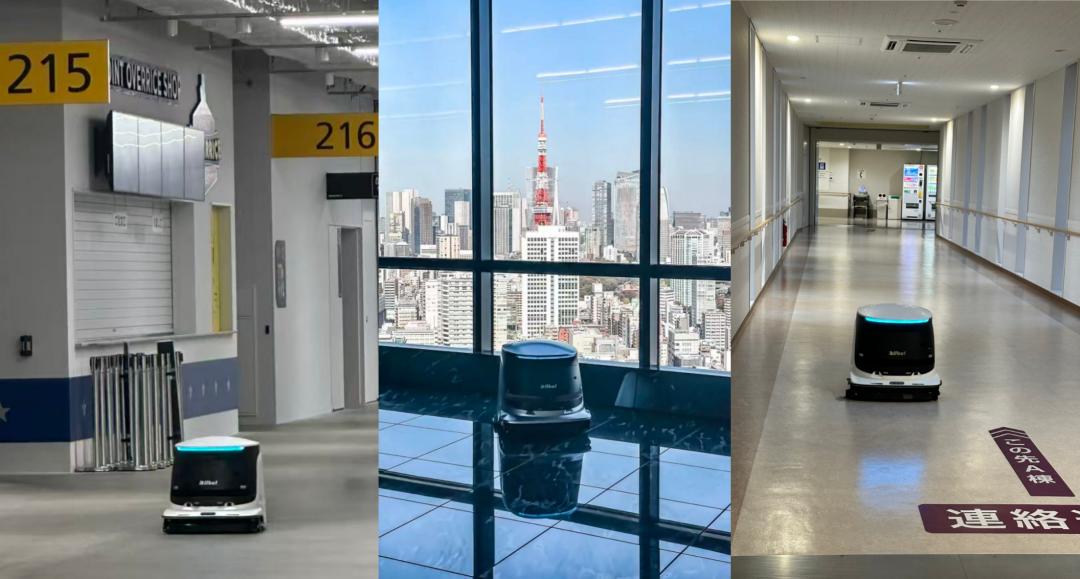
iKitbot cleaning robots in comprehensive commercial complexes, office buildings, and hospitals
Q: What challenges did you encounter in the process of building trust, and how did you overcome them?
A: Trust is not built by PPT presentations, but by persevering in extreme scenarios.
When we first entered Japan, our initial POC in a leading real - estate company lasted for two months. What the customer was assessing was not whether the robot could clean well, but the strict silent standard, the extreme water - return rate, and how the machine could seamlessly integrate into their existing SOP. Only by withstanding the scrutiny of these tiny hidden risks can we truly get the entry ticket.
In the process of breaking through the ice of trust, the support of JETRO (Japan External Trade Organization) is crucial. The endorsement of this official credit provides the underlying market and policy analysis, helps us set up an office in Tokyo, and fully supports our Tokyo agency learning sessions for channels. The injection of official credit has greatly shortened the long exploration period with the local business circle.
The final closed - loop of trust must be supported by local fulfillment capabilities. We have set up a Japanese office, a front - end warehouse, and built a third - party after - sales service system covering the whole of Japan. In Japan, local after - sales service is not just an added bonus, but a matter of life and death for staying in the game.
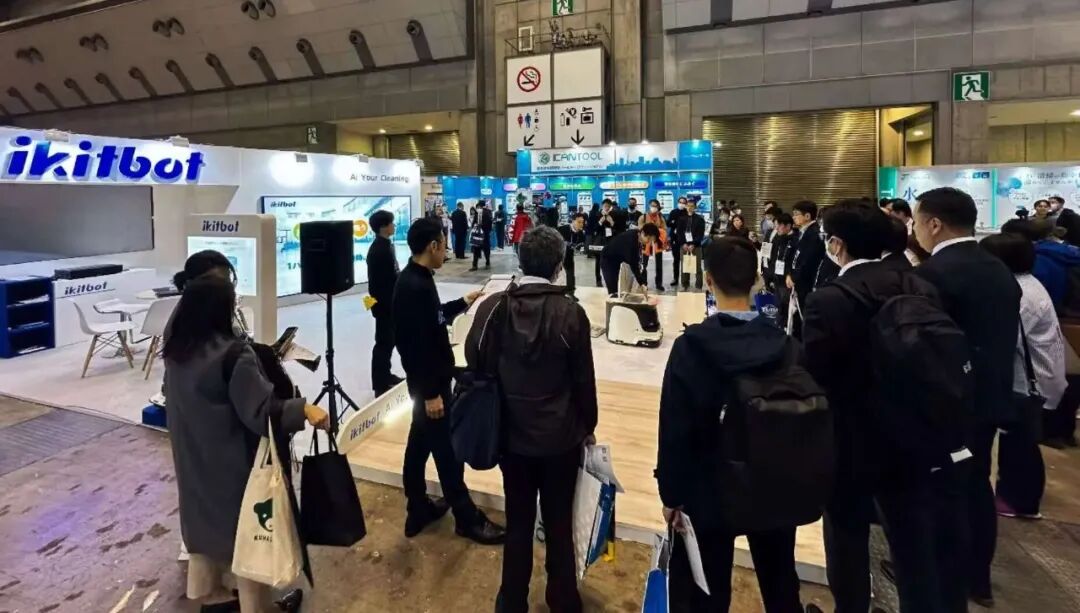
Tokyo Cleaning Exhibition 2024
Q: How do you view the future opportunities in the Japanese market?
A: In our view, Japan is not only an end - market driven by the aging population, but also a high - pressure test field and a strategic springboard for iKitbot to radiate globally.
In the short term, we cooperate with local strategic partners to deeply penetrate core scenarios one by one. For example, in response to specific needs, we have launched the AD large - screen version and the UVC disinfection version, aiming to establish a solid foothold in this market with extremely low error tolerance.
In the long run, Japan's paranoid requirements for quality are precisely the core lever for us to expand into a larger territory. Once we obtain the trust endorsement here, it will be a smooth ride when entering global markets such as Europe and the United States in the future. In 2025, iKitbot has verified this. Currently, we have covered more than 30 countries globally, and the cumulative global cleaning area has exceeded 75 million square meters.
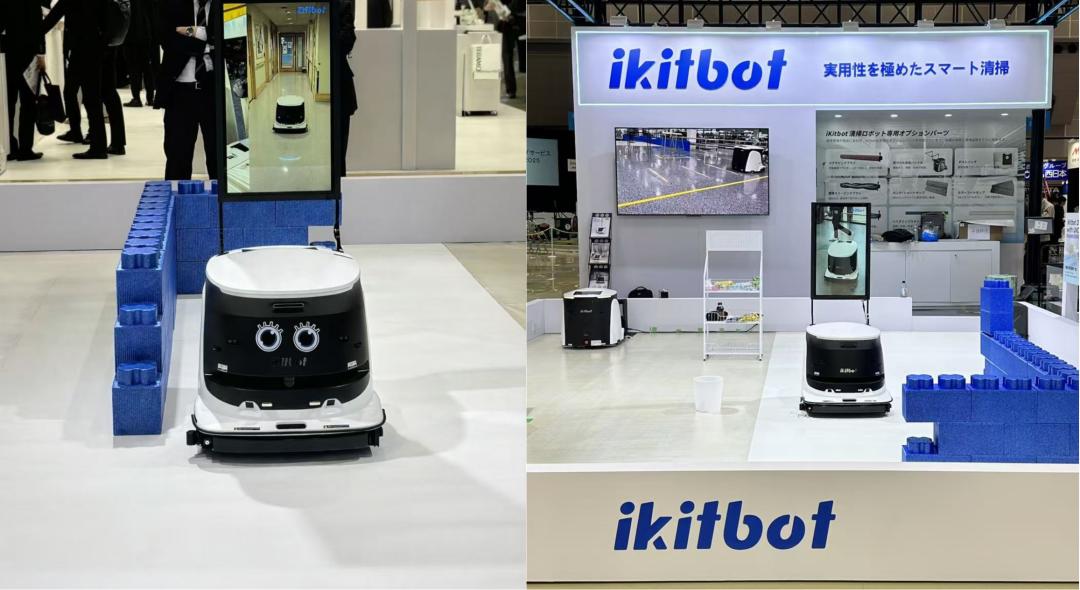
Tokyo Cleaning Exhibition 2025
Q: What specific implementation results has iKitbot achieved in Japan so far?
A: Summarizing our implementation results, the underlying logic can be summed up in four words: real labor shortage, real demand, real payment, and real channels.
Initially, we avoided core cities and focused on regions with a real labor shortage. Since 2024, we have targeted large factories, chain supermarkets, and nursing facilities that are extremely in need of labor. They are constantly struggling to recruit people, which is an irreplaceable real demand. When they voted with real money, our momentum naturally broke through upwards, and we naturally expanded to first - tier cities, successively entering well - known chain hotels and landmark business complexes in Tokyo.
What supports these orders is our in - depth empowerment of real channels. At professional exhibitions, the best testing ground, we accurately captured core partners with maintenance capabilities. What we pursue is not just Sell - in by pushing equipment to agents, but Sell - out by solving the pain points of end - users and achieving final verification and payment.
In 2025, we accidentally and luckily took the stage at the Osaka World Expo, but what really allowed us to make steady progress is always the practical operation of professional channels.
Q: Finally, what advice do you have for robot peers who also want to go global to Japan?
A: I summarize three pieces of advice.
First, abandon the obsession with cost - effectiveness. Safety, stability, and no trouble are the highest standards for opening the Japanese market.
Second, respect the long and strict verification period and treat each POC as a real - life implementation in a real scenario.
Third, don't just cast a wide net for channels. Going global in person can help you cooperate with local partners who really understand the on - site situation and can accompany you in the long - term.
About iKitbot
iKitbot was founded in 2021 and is headquartered in Shenzhen. It is a technology innovation enterprise focusing on the R & D and manufacturing of commercial cleaning robots. Its core product, the "ONE PRO" series of cleaning robots, has passed strict certifications such as PSE and TELEC in Japan and has been successfully implemented in real business scenarios such as large - scale chain supermarkets, complexes, well - known hotels, and medical facilities in Japan.
The company has gathered top R & D and management talents from leading technology enterprises in the robot industry. The core team has experienced the entire cycle of the industry from scratch, with strong hardcore product definition and global business implementation capabilities. They have led and managed the global delivery of more than 20,000 service robots in total. iKitbot is committed to reshaping service productivity for global customers with highly reliable intelligent cleaning equipment.
iKitbot official website: https://www.ikitbot.com/
About Japan External Trade Organization
JETRO is a government - established organization aiming to promote trade and investment between Japan and other countries. It provides information to Chinese enterprises and local governments, and conducts business to promote cooperation between Chinese and Japanese enterprises and support Chinese enterprises going global to Japan. At the same time, through activities such as providing negotiation support, consulting services, market information, and conducting dialogues with local governments on improving the business environment, it supports local Japanese - funded enterprises in carrying out business in China.
JETRO official website: https://www.jetro.go.jp/en/
Four Highlights of JETRO's Services
- Services provided by a government agency
As a government official agency, JETRO helps Chinese enterprises expand their business in Japan. JETRO can provide services unique to government agencies, such as the latest information on policy trends and introductions of relevant central ministries and local governments.
- Extensive service network
Service contact points have been established in eight major cities such as Beijing, Shanghai, and Guangzhou. There are a total of 52 offices in Japan. Through the nearest JETRO office, real - time information and networks from all over Japan can be accessed and used anywhere in China.
- One - stop service
We provide one - stop services, including information on the Japanese industry and market, support for participating in exhibitions and other activities, introduction of potential customers and partners, legal/tax/labor consulting, and provision of temporary office spaces. We will support you from the initial stage of planning to enter Japan to after you land in Japan.
- Free services
All the above services are provided for free (subject to screening based on investment intention and industry before using the services).
Service introduction website: https://www.jetro.go.jp/sc/invest/
If you have any questions, please feel free to contact the JETRO Guangzhou Representative Office.
Phone: 86 - 20 - 8752 - 0060
Email: pcg@jetro.go.jp