Cultural and tourism: A windfall for humanoid robots?
In the past year, a new presence, "robots," has emerged in popular scenic spots.
Robots capable of dancing interactively, selling cultural and creative products, creating calligraphy, and providing intelligent guidance have frequently made it onto the hot search lists due to their topicality, becoming the "new traffic carriers" in the cultural and tourism scenarios.
The popularity that started on the Spring Festival Gala stage has, from top - down, enhanced the public's awareness of embodied intelligence. The cultural and tourism scenarios seem to have found the traffic code in the technological era: tourists pay for novel experiences, and robot manufacturers gain brand exposure, presenting a picture of a two - way pursuit of "technology empowering cultural and tourism."
However, when returning to the essence of the industry, a core proposition needs to be clarified urgently: Can the cultural and tourism scenarios really become the growth point for the large - scale implementation of embodied intelligence?
From the perspective of manufacturers, although cultural and entertainment guidance has long been on the list of application scenarios, the traffic effect triggered by the implementation in scenic spots has obviously exceeded the initial expectations of the industry, being an unexpected traffic dividend.
But the key problem is that there is an obvious disconnect between this traffic and commercial value. In the current profit - distribution chain of cultural and tourism robots, leasing platforms, channel providers, and regional distributors hold the core power. When the tidal effect of the attention economy is significant, the short - term popularity is difficult to form a replicable large - scale delivery capacity; when the investment in customized development is too heavy and the marginal effect is difficult to decrease, if manufacturers engage in long - term development, they are likely to fall into a situation of imbalance between "input and output."
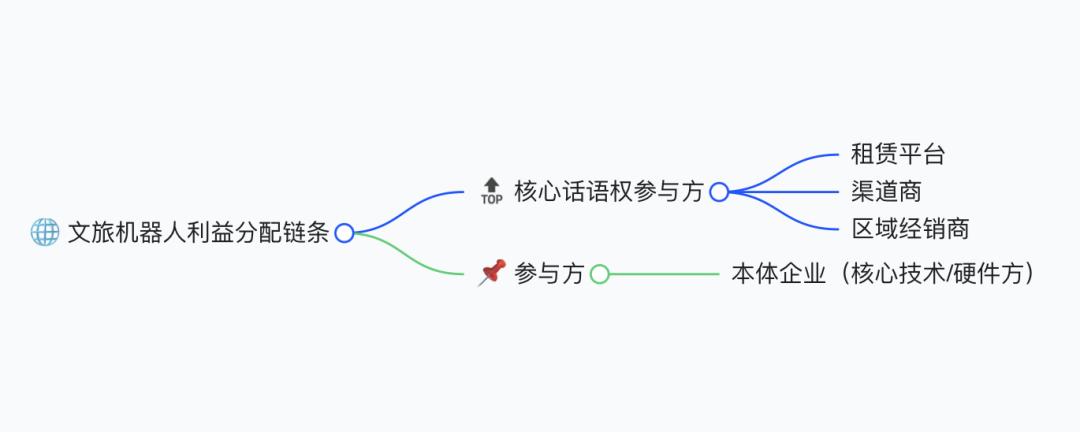
However, industrial opportunities often lie behind the "traffic bubble." For embodied intelligence manufacturers, the core value of cultural and tourism scenarios does not lie in short - term profit harvesting, but in technical training and data accumulation in real scenarios: if they can break away from the pursuit of attention and regain the right to speak, cultural and tourism will be a truly good scenario.
The Differentiation of Robots in Cultural and Tourism Scenarios
To understand the background of this upsurge, we first need to figure out where the robots in scenic spots come from and how they exist.
Currently, the supply of robots in cultural and tourism scenarios can be roughly divided into three categories.
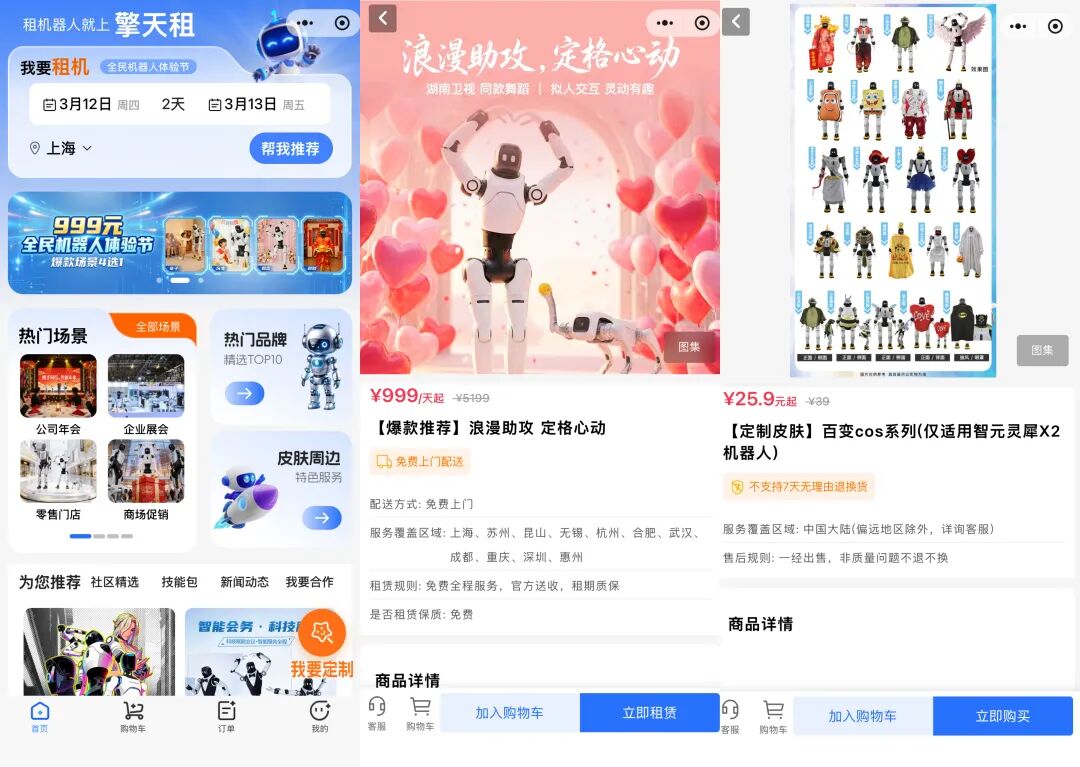
The first category is robot leasing platforms, which are currently the most mainstream supply source in cultural and tourism scenarios. This is related to the characteristics of the scenarios. Scenic spots are characterized by dense crowds during holidays, but the demand is highly discontinuous, with obvious "peak and off - peak seasons."
Therefore, from the perspective of return on investment, it is obviously not cost - effective to maintain a high - investment robot team for several Golden Weeks in the long term. This gives leasing platforms the opportunity to fill the gap.
According to JD's consumption trend data, in January 2026, the turnover of JD's self - operated robot leasing business increased by more than 100% month - on - month. Qingtianzu also disclosed that during the Spring Festival, its orders increased by more than 60% month - on - month. Facing the peak order period, they can allocate resources on demand and withdraw after use. This lightweight model is an important factor for them to capture the market share in scenic spots.
The second category is the joint customized development between local cultural and tourism departments and robot enterprises. Custom - developed robots often have names, personas, and the expectation of continuous operation, and can be incubated as IPs. However, the demand is limited, the development cycle is long, and it is difficult to achieve large - scale production.
For example, robot body enterprises can combine hardware with the needs of scenic spots. By customizing the appearance, building a dedicated Q&A knowledge base, and optimizing the multi - round dialogue ability, they can make the robots "tell the stories of this place" and even chat with locals in dialect.
Some local governments and cultural and tourism departments choose to cooperate directly with in - province robot enterprises or university laboratories to create characteristic robots tailored to local IPs and historical cultures, which is a way of "keeping the benefits within the family." The dinosaur robot and the humanoid robot "Jinbao" developed by the Chengdu Humanoid Robot Innovation Center belong to this type.
The third category is companies with cultural and tourism vertical tracks as their main business. These companies mostly focus on specific niche areas and need to continuously accumulate professional advantages to gain a foothold. For example, Qingbao has won real orders in many cultural and tourism projects with its highly realistic guide robots and coffee - making robots.
Looking at these three paths, there is a common problem: the robot body enterprises have relatively low power in the entire chain.
Except for the robot body enterprises deeply involved in cultural and tourism scenarios, a closer look reveals that the business logic of cultural and tourism scenarios is somewhat contrary to the commercial closed - loop of robot body enterprises.
Under the leasing model, the equipment pursues high turnover and high reuse. The procurement volume is fragmented, and the orders are highly dispersed, which completely deviates from the core commercial logic of large - scale shipment and standardized mass production of robot body enterprises. The customized cooperation with scenic spots is limited by large single - project investment, long cycle, and weak replicability. The input - output ratio is seriously imbalanced, and it is difficult to form large - scale revenue.
As a result, a fixed pattern has been formed: the traffic is concentrated in scenic spots, most of the data is collected by leasing platforms, but the value and dividends are rarely transmitted to the upstream robot body enterprises. Enterprises can neither achieve large - scale orders through the popularity of the scenario nor convert the high exposure in cultural and tourism scenarios into continuous accumulation of their own brand and technical assets. Most of the profits in the industrial chain are intercepted by leasing platforms, channel providers, and distributors. The robot body manufacturers that truly master the core hardware and technology have instead become "suppliers."
More importantly, the high - value data such as tourist behavior, cultural interaction, and service demand generated in the scenario interaction cannot flow back to the enterprises for algorithm training and product iteration. Eventually, an industrial closed - loop breakage of "implementation without data, data without iteration, and popularity without growth" is formed. Under the bustling surface of the scenario, robot body enterprises have not really benefited from this wave.
Where are the Opportunities in Cultural and Tourism Scenarios?
For robot body enterprises, is the cultural and tourism track really unprofitable?
The answer is not absolute. Currently, most of the robot applications in cultural and tourism scenarios still stay at the stage of "there is a robot." The core logic is to attract traffic by "the presence of a robot" rather than building irreplaceable scenario value. However, this does not mean that the track lacks potential. On the contrary, when the "novelty dividend" fades away, the real industrial opportunities will emerge.
As Wang Xingxing said, emotional value itself is value. Technology is not only an efficiency tool but also an attention entrance. Robots that can somersault and interact are essentially "generators" of scenario traffic. They have activated the public's imagination of human - robot collaboration and provided a low - cost market education window for robot body enterprises.
But the key question is: when the novelty wears off, how can robot body enterprises regain the right to speak in the industrial chain through capacity upgrading and achieve sustainable balance of ROI?
Currently, users' demands for robots have shown multi - dimensional characteristics. Immersion, participation, and sense of belonging are replacing the simple "curiosity psychology." This provides the first breakthrough point for robot body enterprises: upgrading from "simple display" to in - depth interaction ability. The evolution path of guide robots is particularly typical. In essence, they are "scenario - based emotional companion devices," and their core competitiveness lies in natural language understanding and humanistic perception ability. However, most current products still stay at the stage of "stylized Q&A," and most of them are just "robots that can recite scripts."
The future breakthrough direction lies in improving the generalization interaction ability through algorithm iteration: being able to accurately respond to tourists' personalized questions and output warm - hearted content in combination with the scenario atmosphere, so that robots can transform from "information broadcasters" to "scenario culture spokespersons."
Emotional value is the traffic entrance, but long - term survival must rely on "working ability." This is the core hurdle that cultural and tourism robots cannot bypass.
Currently, robots in scenic spots have basic working abilities and can perform tasks such as guiding, patrolling, retailing, cleaning, making coffee, and checking tickets.
However, most scenarios still face the situation of "able to do but not do well." The execution accuracy and stability of non - standard tasks and the high - dynamic and unstructured environment have become the core challenges for robot body enterprises. Take the cleaning robots in scenic spots as an example. There is no difficulty in dealing with stains on tabletops, but the cleaning of irregular areas such as corners and gaps still requires manual intervention. Even for seemingly simple retail services, links such as equipment failure and replenishment response still rely on human intervention. In essence, current cultural and tourism robots are still in the stage of "assisting humans," and there is still a gap from the goal of "efficiently assisting humans."
The future opportunity lies in overcoming the pain points of non - standard scenarios through hardware upgrading and algorithm optimization, improving the task success rate and stability, reducing the cost of manual intervention, and truly becoming the "efficiency core" of scenic spot operations.
There are already relevant development signs. For example, the ticket - checking robot in Baofeng Lake Scenic Spot in Zhangjiajie, Hunan, has increased the daily passenger flow processing capacity by 40%, and the tourist queuing time has been reduced from 15 minutes to 3 minutes.
The creative scenario presentation is another value depression for cultural and tourism robots. Although the initial ideas for scenario innovation mostly come from scenic spots, robot body enterprises can fully rely on their technological advantages to develop highly scenario - based products and gameplay, achieving the in - depth integration of "technology + culture."
For example, forms such as robot dogs performing dragon and lion dances, robot stage plays, and scenario - based cultural and creative co - branding not only fit the entertainment nature of cultural and tourism consumption but also can build a differentiated competitive barrier.
It is worth noting that the "error - tolerance space" of cultural and tourism scenarios provides unique advantages for technological iteration: occasional glitches or even falls of robots may be interpreted as "cute," which may even trigger secondary dissemination. This low - risk trial - and - error environment makes cultural and tourism scenarios a "product display window" for robot body enterprises. It can not only reach a large number of audiences and complete market education on human - robot collaboration but also optimize products through real feedback, promoting the relationship between humans and robots to progress from "strange and vigilant" to "accepted and trusted."
The core assets of cultural and tourism scenarios are not only traffic but also high - density real data. The interactive behaviors of a large number of tourists, environmental variables in complex terrains, and response scenarios for emergencies are real - world data that are difficult to reproduce in the laboratory. These data are the nutrients for the iteration of robot technology. After desensitization and algorithm training, these data can be transferred to higher - value vertical tracks such as elderly care, education, and medical care, becoming the technological cornerstone for robot body enterprises to build long - term competitiveness.
More importantly, the complex environment in cultural and tourism scenarios is forcing the upgrading of robot safety capabilities. Scenic spots with dense crowds put forward extreme requirements for the reliability and safety of robots. The trials in such high - pressure scenarios will accelerate the maturity of robot safety technology, improve basic capabilities such as obstacle avoidance, emergency response, and the boundary of human - robot collaboration, and clear the most crucial obstacles for robots to enter daily life.
In the current era where "technology is a topic," the existence of cultural and tourism scenarios has its industrial rationality. However, robot body enterprises must clearly recognize that the model centered on singing and dancing performances and simple cuteness is destined to be short - lived. Emotional value is not a sin, but a value - providing method lacking competitiveness will eventually be eliminated by the market. When entering the cultural and tourism track, the key is to build an irreplicable core barrier during the window period when the novelty still exists. The core purpose is not to "ride on the traffic wave and make quick money," but to use the scenario as the soil to cultivate technological capabilities, build industrial barriers, and accumulate long - term assets.
Only by breaking away from the "display - oriented thinking" and turning to the "value - oriented thinking" can enterprises truly reap the dividends of industrial growth after the upsurge subsides.
This article is from the WeChat official account "Embodied Research Society." Author: Aruna, Editor: Lv Xinyi. Republished by 36Kr with permission.