The configuration is unbeatable! The Xiaomi YU9 is exposed: Is it the strongest competitor for Li Auto and AITO?
In 2025, Xiaomi Auto ranked among the top in the sales list of new domestic car - building forces with a sales volume of 412,000 vehicles, and also made it into the top ten in global new - energy vehicle sales.
As the saying goes, "A tree that stands out in the forest is prone to be broken by the wind." Since officially announcing its entry into the car - making industry, Xiaomi has been constantly questioned. With the hot sales, various disputes have continued to ferment on the Internet, and the negative public opinion has had a certain impact on its brand image and product sales.
In the face of malicious smear campaigns on the Internet, what Xiaomi should do is not only to fight back, but also to continuously expand production capacity and sales scale. Which of the leading car companies such as BYD, Geely, and Great Wall has not encountered a public opinion crisis? In the face of huge sales volume, sporadic disputes are not worth mentioning.
In January this year, it was reported that Xiaomi would launch six cars (another version said four) in 2026, including three pure - electric models and three extended - range models, breaking the rhythm of launching only one new car per year in the previous two years. More than two months have passed in 2026, and the six models that Xiaomi is about to launch this year have gradually revealed their mystery. Among them, the high - end extended - range SUV, after its spy photos were exposed, has been photographed by netizens several times during road tests recently.
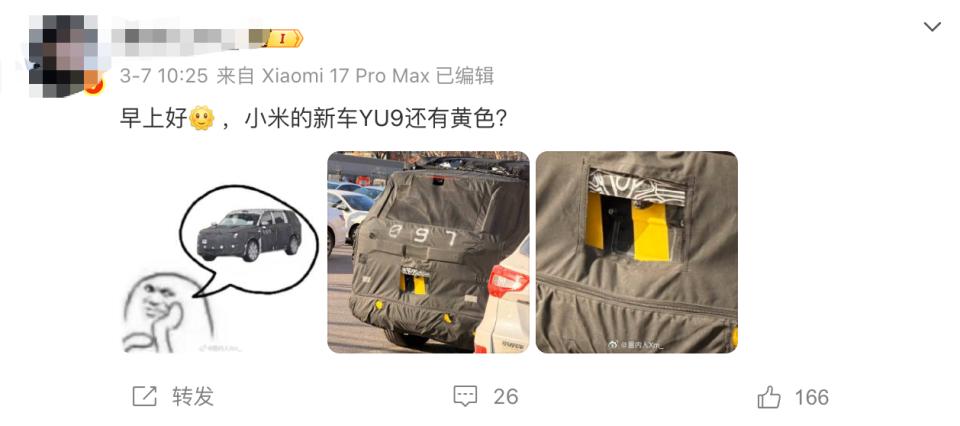
(Source: Screenshot from Weibo)
This high - end SUV, which competes with Wenjie M9 and Li L9, will be Xiaomi's core high - end model aiming for an annual sales volume of 550,000, but it is by no means the only reliance.
Get ready with 500,000 yuan, Xiaomi's largest SUV is coming
The extended - range SUV models that Xiaomi will launch in 2026 are codenamed "Kunlun", with three models N1, N2, and N3. Among them, N3 has the highest positioning, and the production - version may be named "Xiaomi YU9".
Judging from the photos taken by major bloggers and netizens on the Weibo platform, the length of Xiaomi YU9 exceeds 5.2 meters, the wheelbase is about 3.1 meters, and the body is much taller than an adult male. It is expected to be about 1.8 meters in height, belonging to a large - size SUV.
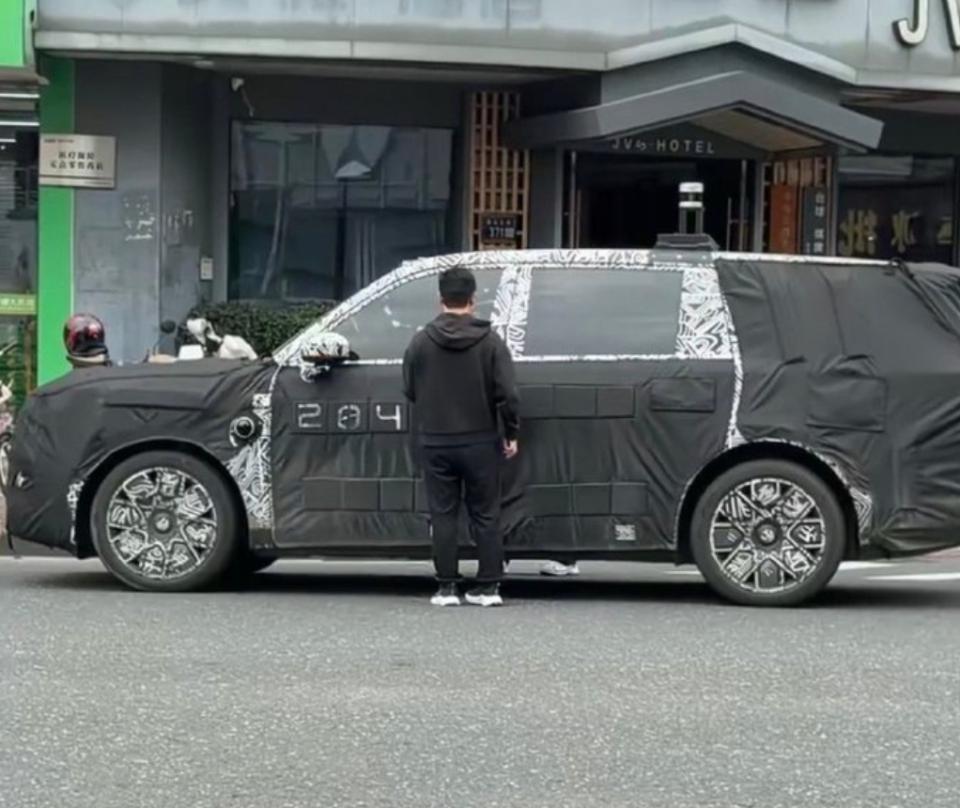
(Source: Screenshot from Weibo)
In terms of power, as Xiaomi's first extended - range power vehicle, YU9 is expected to be equipped with a 1.5T range extender + dual - motor four - wheel drive + large - capacity battery. Regarding the battery capacity of Xiaomi YU9, there are two statements on the Internet, 70 kWh and 80 kWh. There are also two pieces of information about the pure - electric range under CLTC conditions, 200 kilometers and 400 kilometers.
Electric Vehicle News believes that the pure - electric range of Xiaomi YU9 is most likely 400 kilometers or more. At present, many extended - range SUVs have achieved a pure - electric range of 300 kilometers, such as IM LS9, Wenjie M7/M8, Deepal S09, etc. Leapmotor D19 has even increased the pure - electric range to 500 kilometers. For the relatively high - positioned Xiaomi YU9, it is unlikely that the pure - electric range is lower than 300 kilometers.
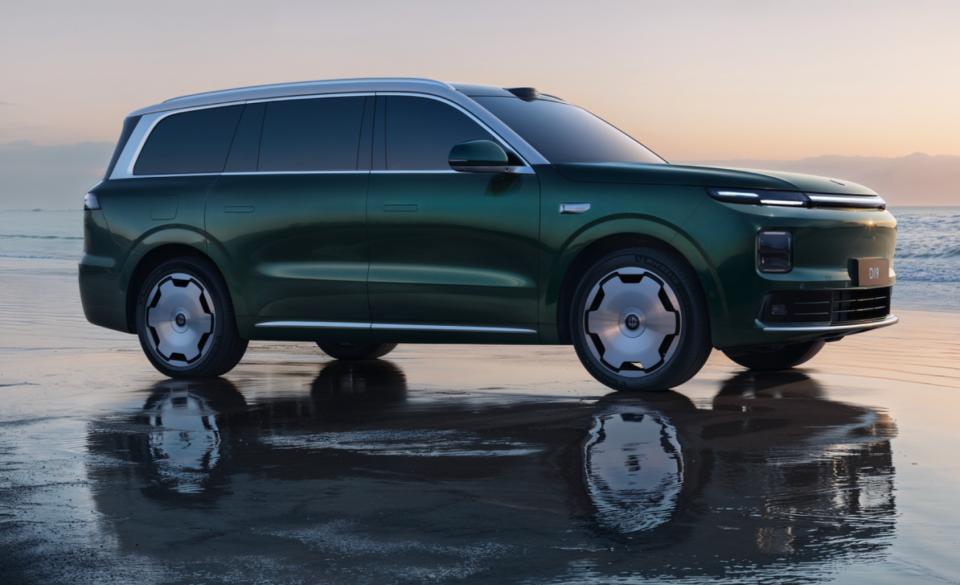
(Source: Leapmotor)
On the other hand, the reported battery capacities of Xiaomi YU9, 70 kWh or 80 kWh, do not match the 200 - kilometer range. For comparison, the IM LS9, also a large - size SUV, has a battery capacity of 66 kWh for the version with a 402 - kilometer pure - electric range. Therefore, it can be concluded that the pure - electric range of Xiaomi YU9 is not less than 400 kilometers, and the comprehensive range is quite considerable, possibly exceeding the 1454 km of IM LS9.
In order to quickly recharge the YU9, Xiaomi's self - developed 800V silicon carbide platform will naturally not be absent. With the 800V silicon carbide platform + 1.5T range extender, whether refueling or charging, Xiaomi YU9 can allow users to say goodbye to long - time waiting, and can also reduce users' travel costs with the advantage of low electricity fees.
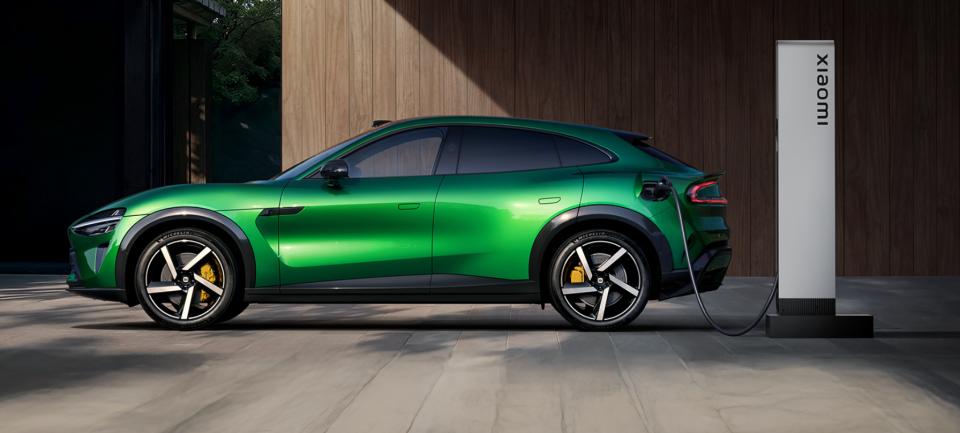
(Source: Xiaomi Auto)
For the unexposed configurations of Xiaomi YU9, you can refer to YU7. High - level assisted driving, lidar, high - performance in - vehicle system, zero - gravity seats, Super Xiaoai, intelligent chassis, etc., will all be equipped on YU9, and the experience will be no less than that of YU7. Correspondingly, the price of Xiaomi YU9 will also be higher than that of YU7.
The starting price of Xiaomi YU7 is between 253,500 yuan and 329,900 yuan. Electric Vehicle News predicts that the starting price of the higher - configured YU9 is expected to be between 350,000 yuan and 500,000 yuan, slightly lower than the high - end version of Wenjie M9 and relatively close to Li L9.
In terms of positioning, Xiaomi YU9 precisely targets the two kings in the domestic luxury new - energy SUV market, Li Auto and Wenjie. However, facing Li Auto and Wenjie, which have been operating in the 500,000 - yuan price range for a long time, can Xiaomi YU9 really be the last piece of the puzzle for Xiaomi to achieve an annual sales volume of 550,000 vehicles?
Launching six cars at once, YU9 is just the beginning!
Let's start with the conclusion. One YU9 alone cannot help Xiaomi achieve an annual sales volume of 550,000, but YU9 is just the beginning.
High price means a smaller target audience. The premise for Xiaomi's development and growth is to snatch the market from other car companies. Li Auto, Wenjie and other car companies have reached their current status by seizing the market from joint - venture car companies. Statistical data shows that among the top ten best - selling mid - large SUVs in China in January 2026, there is only one joint - venture model, the BMW X5. Xiaomi YU7 ranks first. Among the top fifteen best - selling large - size SUVs, there is not a single joint - venture model, and all are domestic cars.
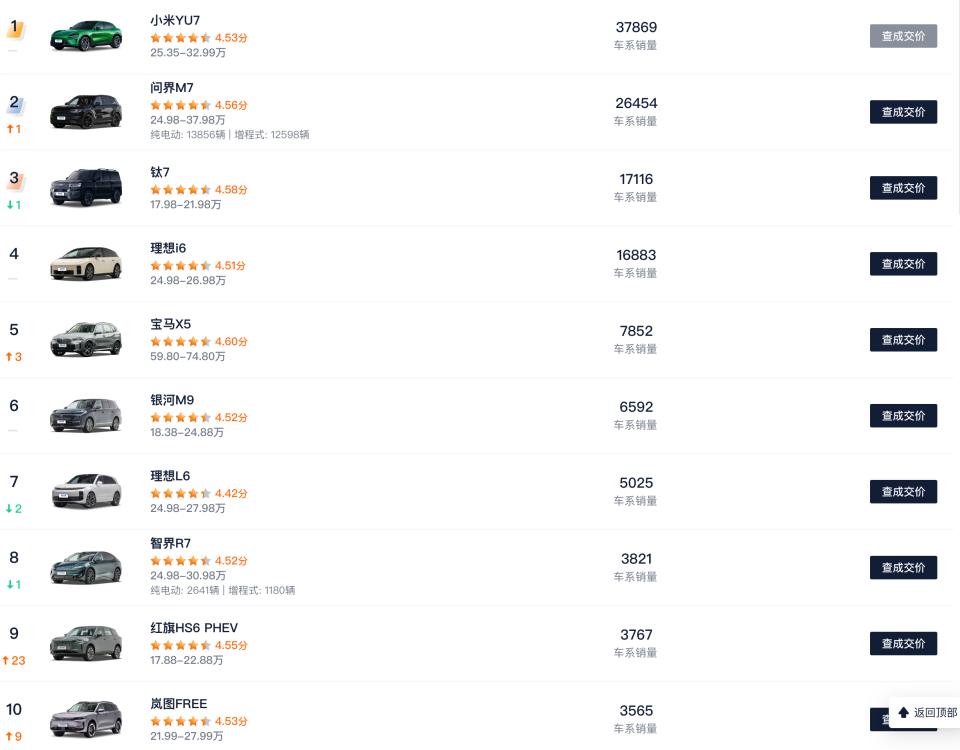
(Source: Screenshot from Autohome)
The competitors that Xiaomi YU9 faces include not only Li L9 and Wenjie M9/M8, but also IM LS9, Deepal S09, Lynk & Co 900, Denza N8L and other competitors, which are of similar size but more affordable.
Interestingly, in a situation where almost all the top - selling large - size SUVs are hybrid SUVs, NIO ES8 has outperformed all others and won the sales championship of large - size SUVs for two consecutive months in December 2025 and January 2026. The battery - swapping energy - replenishment design of NIO ES8 combined with more than 8,600 battery - swapping stations across the country makes its energy - replenishment experience no less than that of hybrid models, and it is also a strong competitor for Xiaomi YU9.
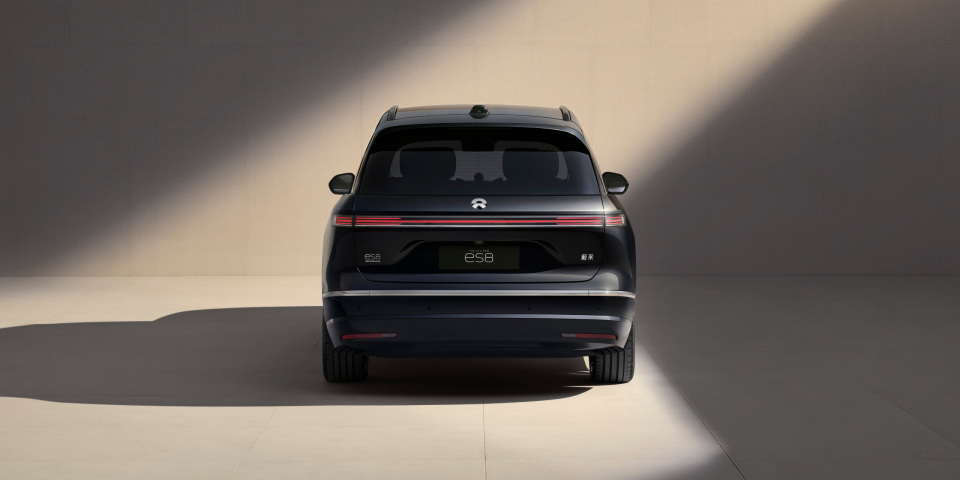
(Source: NIO)
It is extremely difficult for Xiaomi, which ranks first in the mid - large SUV market, to replicate the glory of YU7 in the large - size SUV market. Fortunately, Xiaomi has not pinned all its hopes on one model. The six models that are about to come include, in addition to YU9, the modified version of SU7, the executive version of SU7, YU7 GT, Kunlun N1, and Kunlun N2.
The modified version of Xiaomi SU7 is an all - round upgrade on the basis of SU7, targeting the young group who pursue speed and passion; the executive version of SU7 is positioned similarly to Enjoy S9, focusing on the luxury executive market; YU7 GT maximizes the sports attributes, providing a large space while having more prominent performance.
Kunlun N2 is a mid - large extended - range SUV, but it should not be the hybrid version of YU7, but a downsized version of YU9. It has relatively weaker sports attributes and a larger interior space, suitable for users with families. Finally, Kunlun N1 is a mid - size five - seat SUV, with a lower positioning than YU7. It may be named "YU5". This car is smaller in size and relatively more affordable, with a starting price possibly dropping to around 200,000 yuan, suitable for consumers with limited budgets.
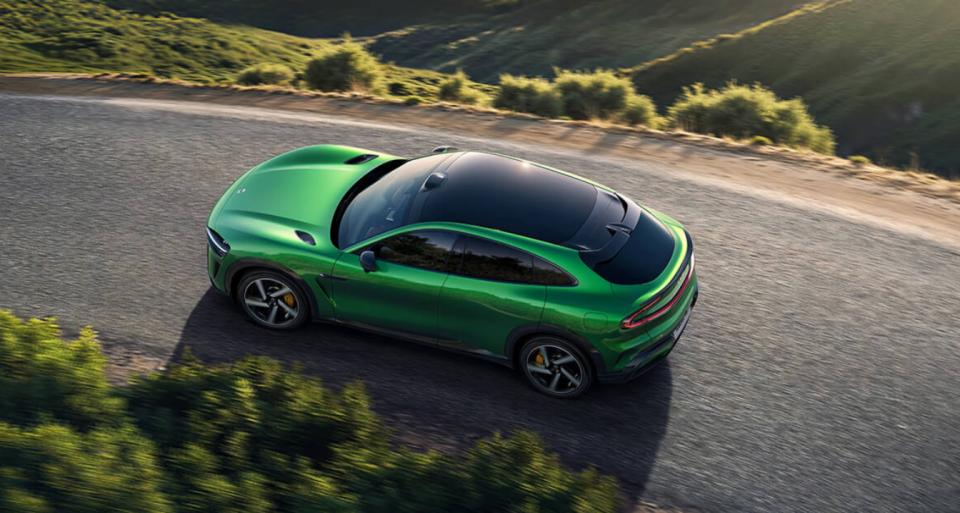
(Source: Xiaomi)
Different from the traditional brand's "car - sea" strategy, new car - building forces generally follow a high - quality route. Xiaomi's six models are positioned differently, covering the price range from 200,000 yuan to 500,000 yuan. Although Xiaomi SU7 and YU7 have different positioning, they both focus on sports attributes, while the three models of Kunlun N1/N2/N3 are more family - oriented, similar to the positioning of Li L6/L7/L8/L9. The executive version of SU7 explores the executive - class sedan market, further expanding the target audience.
According to a report by the market research and analysis institution Jielanlu, Xiaomi fans are mainly young people. The average age of YU7 owners is only 27.7 years old, with men accounting for as high as 86%, and nearly 60% are unmarried. The young group pays more attention to sports attributes and driving experience. The Xiaomi extended - range SUV and the executive version of SU7, which weaken sports attributes and enhance family - oriented attributes, may be more difficult to gain the recognition of young Xiaomi fans.
Of course, before the launch of Xiaomi's new cars, no one can be sure, because Xiaomi Auto has repeatedly surprised the doubters. Whenever we question the market competitiveness of Xiaomi's models, Xiaomi always creates miracles.
One YU9 may not be able to help Xiaomi achieve an annual sales volume of over 550,000 vehicles. However, with the successive launch of six new cars covering a wider price range and target groups, giving Xiaomi fans more choices, the possibility of Xiaomi achieving its sales target is naturally higher.
Slowing sales growth, but Xiaomi's ambition remains undiminished
In 2024, the cumulative sales volume of Xiaomi Auto was about 135,000 vehicles. In 2025, the cumulative sales volume was about 412,000 vehicles, a year - on - year increase of about 205%. However, the sales target set by Xiaomi Auto for 2026 is only 550,000 vehicles, an increase of about 33% compared with 2025. At first glance, it seems that Xiaomi's 2026 sales target is a bit conservative, but after careful consideration, it can be found that Xiaomi has a very accurate observation of the market.
Electric Vehicle News believes that there are three reasons for Xiaomi Auto's conservative sales target in 2026. Firstly, the market scale is limited. The higher the sales base, the smaller the growth rate will naturally be. For example, BYD, the global champion in new - energy vehicle sales, delivered 4.27 million vehicles in 2024 and 4.6 million vehicles in 2025, and the growth rate is no longer obvious.
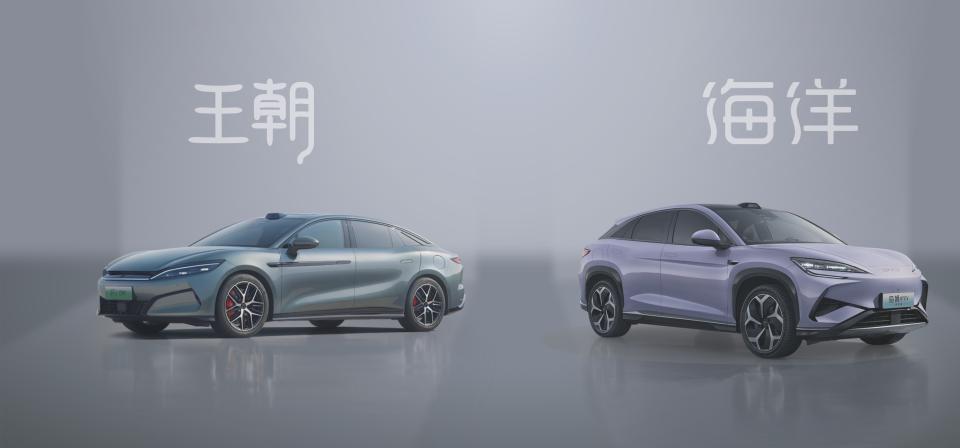
(Source: BYD)
Among new car - building forces, the sales targets of car companies such as Li Auto and XPeng in 2026 are also basically between 550,000 and 600,000 vehicles. Compared with the sales targets of 800,000 to 1 million vehicles in previous years, car companies are more conservative. This reflects that car companies have a deeper understanding of their own capabilities and the development status of the industry, and do not blindly set an unattainable target.
Secondly, Xiaomi Auto has recognized the negative impact brought by public opinion. At the 2025 World Intelligent Connected Vehicle Conference on October 16 last year, Xiaomi CEO Lei Jun angrily denounced the malicious smear campaigns of black public relations against Xiaomi Auto and revealed that Xiaomi's legal department had completed the legal evaluation of 16,000 public opinion clues and filed lawsuits against as many as 92 malicious accounts.
Fame attracts envy. Although Xiaomi has spared no effort to combat black public relations and online trolls, there are many "spontaneous supporters" who are jealous of Xiaomi Auto's sales, and various smear campaigns