Why can't Beijing Benz step on the gas when its net profit has dropped by 37% and the proportion of electric vehicle sales is less than 5%?
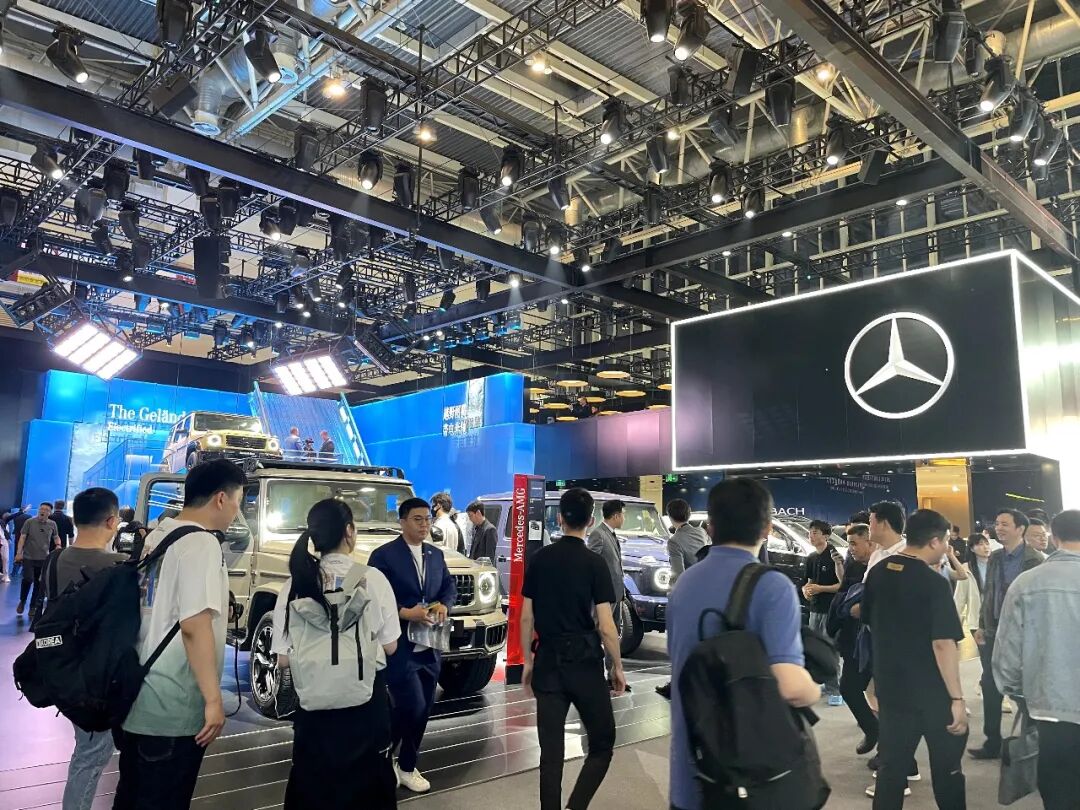
Image source: Du Ge
On March 5th, BAIC Motor (1958.HK) released an announcement regarding the financial information of Beijing Benz. In 2025, Beijing Benz's revenue was 16.72 billion euros, a year-on-year decrease of 2.312 billion yuan; the total comprehensive income was 1.519 billion euros, a year-on-year decrease of 36.81%.
The performance decline of Beijing Benz has also affected the performance of BAIC Motor. The financial report shows that BAIC Motor operates through four brands: Beijing Brand, Beijing Benz, Beijing Hyundai, and Fujian Benz. Not long ago, BAIC Motor issued a profit warning, expecting its net profit attributable to the company's equity holders in 2025 to be between 110 million yuan and 130 million yuan, a year-on-year decrease of approximately 86.4% to 88.5%.
Can Mercedes-Benz reverse its performance in the Chinese market?
01 Price Cuts and Leadership Changes
In 2025, Mercedes-Benz sold 18.0129 million vehicles globally, a year-on-year decrease of 9%. Among them, the sales volume in the Chinese market was 551,900 vehicles, a year-on-year decrease of 19%, making it the single market with the highest decline rate. This sales data also hit a new low for Mercedes-Benz's sales in China in the past decade.
Facing the decline in sales, Mercedes-Benz launched another price cut. On February 2nd, 2026, the All-China Federation of Industry and Commerce Automobile Dealers Chamber of Commerce issued a statement saying that after verifying with multiple Mercedes-Benz brand dealers, Mercedes-Benz had adjusted the manufacturer's suggested retail prices of some models on February 1st, with an adjustment range of about 10% for the relevant models.
It is reported that the models involved in this price adjustment by Mercedes-Benz include main models such as the C-Class, GLC, and GLB. Among them, the price of the C 200 L was reduced by about 33,000 yuan, the price of some GLB 200 models was reduced by about 38,000 yuan, and the price of the GLC 300 coupe model was reduced by about 68,000 yuan.
Behind this price adjustment is the pressure faced by Mercedes-Benz dealers. In January 2026, the All-China Federation of Industry and Commerce Automobile Dealers Chamber of Commerce issued a statement saying that at the end of 2025, it successively received feedback from some authorized Mercedes-Benz brand dealers. These enterprises generally faced problems such as excessive inventory, serious price inversion, long rebate settlement cycles, excessive business assessment pressure, and the lack of a network withdrawal compensation mechanism in their operations, and their business operations were under continuous pressure. The chamber sent a letter titled "Letter on Suggesting Adjustment of Business Policies" to Beijing Mercedes-Benz Sales Service Co., Ltd. (hereinafter referred to as Mercedes-Benz Sales Company), clearly putting forward specific suggestions such as controlling the dealer inventory coefficient within 1, optimizing the rebate settlement mechanism, and reasonably setting assessment targets.
Subsequently, Mercedes-Benz adjusted the manufacturer's suggested retail prices. The All-China Federation of Industry and Commerce Automobile Dealers Chamber of Commerce said that during the communication with the chamber, Mercedes-Benz's brand side once again stated that it highly valued the problems reflected by the chamber and the demands put forward by the dealers, and would continue to optimize and adjust relevant business policies in the future.
At the same time, Mercedes-Benz China also carried out personnel adjustments. Mr. Duan Jianjun, the current President and CEO of Mercedes-Benz Sales Company, has decided to leave due to personal reasons and will serve as the company's strategic advisor until the expiration of his term on April 30th. Meanwhile, starting from March 1st, 2026, Mr. Li Desi, the Executive Vice President of Sales of Mercedes-Benz Sales Company, will be appointed as the President and CEO; starting from April 1st, 2026, Ms. Zhang Mingxia will end her term as the Global Chief Marketing Officer of smart Brand Global Company (smart joint venture), responsible for global sales, marketing, and customer operations, and will take up the position of Executive Vice President of Sales of Mercedes-Benz Sales Company.
Data shows that Duan Jianjun is the first Chinese President and CEO of Mercedes-Benz China. He joined Mercedes-Benz Sales Company in 2013 and has served as the Executive Vice President of Sales and Marketing and the Chief Operating Officer of Sales and Marketing. Before joining Mercedes-Benz, he worked at Volkswagen China, Brilliance BMW, and other companies. The new President, Li Desi, is also a veteran of Mercedes-Benz. He joined Mercedes-Benz in 2002 and was appointed as the Brand Director of smart China in December 2012. Zhang Mingxia has been responsible for marketing and sales management at Daimler Group and Mercedes-Benz and has led the marketing and joint ventures of relevant brands in China.
This personnel change also reflects that Mercedes-Benz is further localizing its management in China.
02 Slow Electrification
After dealing with sales issues, Mercedes-Benz still needs to face challenges on the product side.
In 2025, Mercedes-Benz sold 359,100 electric vehicles globally, a year-on-year decrease of 11%. It sold 20,000 vehicles in China, a year-on-year decrease of 25%, and this figure only accounted for 3.62% of Mercedes-Benz's total sales in China.
According to data from the China Passenger Car Association, in December 2025, the retail penetration rate of new energy vehicles in the overall domestic passenger car market was 59.1%. Among them, the penetration rate of new energy vehicles among self-owned brands was 80.9%; the penetration rate of new energy vehicles among luxury cars was 39.1%; and the penetration rate of new energy vehicles among mainstream joint-venture brands was only 8.2%.
Mercedes-Benz's share of new energy vehicles is not only far lower than that of self-owned brands but also lower than the level of mainstream joint-venture brands.
In fact, in the past two years, Mercedes-Benz has been accelerating its electrification transformation in China. In September 2024, Mercedes-Benz Group announced that it plans to invest more than 14 billion yuan in China together with its Chinese partners to further enrich the localized product lineup of passenger cars and light commercial vehicles.
According to the plan, starting from 2025, Beijing Benz will produce new models based on the new Mercedes-Benz Modular Architecture (MMA) platform, including a new all-electric long-wheelbase CLA model tailored for Chinese customers. Another focus of the investment will be on the local R & D and production of a new long-wheelbase GLE SUV model exclusive to China, and the new long-wheelbase GLE SUV model will also be led by a Chinese team for the first time.
In the semi-annual report of 2025, BAIC Motor stated that Beijing Benz will continue to improve its product lineup with both gasoline and electric vehicles. The first new all-electric long-wheelbase CLA based on the Mercedes-Benz Modular Architecture (MMA) was unveiled, further expanding the all-electric lineup.
Mercedes-Benz also stated in its 2025 financial report press release that it will consolidate its position in China through a focused plan, expand local R & D cooperation, and accelerate the next-generation localization of the supply chain. By 2027, Mercedes-Benz and its local joint venture (Beijing Benz) aim to build a simplified and efficient value chain and operation, reduce local material costs by 10%, reduce variable production costs by 20%, and reduce fixed costs by 20% compared to the 2024 level, while continuing to carry out network optimization and efficiency measures.
Facing the multiple pressures of declining sales, lagging electrification transformation, and the dealer system, Mercedes-Benz is trying to stabilize its basic market in China through price adjustments, personnel localization, and strategic investment. Against the backdrop of the rise of self-owned brands and the continuous increase in the penetration rate of new energy vehicles, whether Mercedes-Benz can find a new fit between product definition and user needs and stabilize its luxury brand image will be its real test.
This article is from the WeChat official account "Visibility in the Auto Circle", author: Du Ge, published by 36Kr with authorization.