Is Apple about to launch a brand-new iPhone camera feature?
God Translation Bureau is a compilation team under 36Kr, focusing on fields such as technology, business, the workplace, and life, and mainly introducing new foreign technologies, new ideas, and new trends.
Editor's note: After many peers have tried and tend to give up, let's see what new tricks iPhone can come up with regarding the variable aperture. This article is from a compilation, hoping to inspire you.
[Image source: Unsplash]
After a major hardware upgrade in 2025, iPhone seems to be returning to a low - key mode this year. Bloomberg reporter Mark Gurman said in his newsletter that compared with the previous generation, the iPhone 18 Pro and 18 Pro Max will only have minor adjustments and will not be a major update. The market focus in the autumn of 2026 is expected to be more concentrated on Apple's first foldable phone.
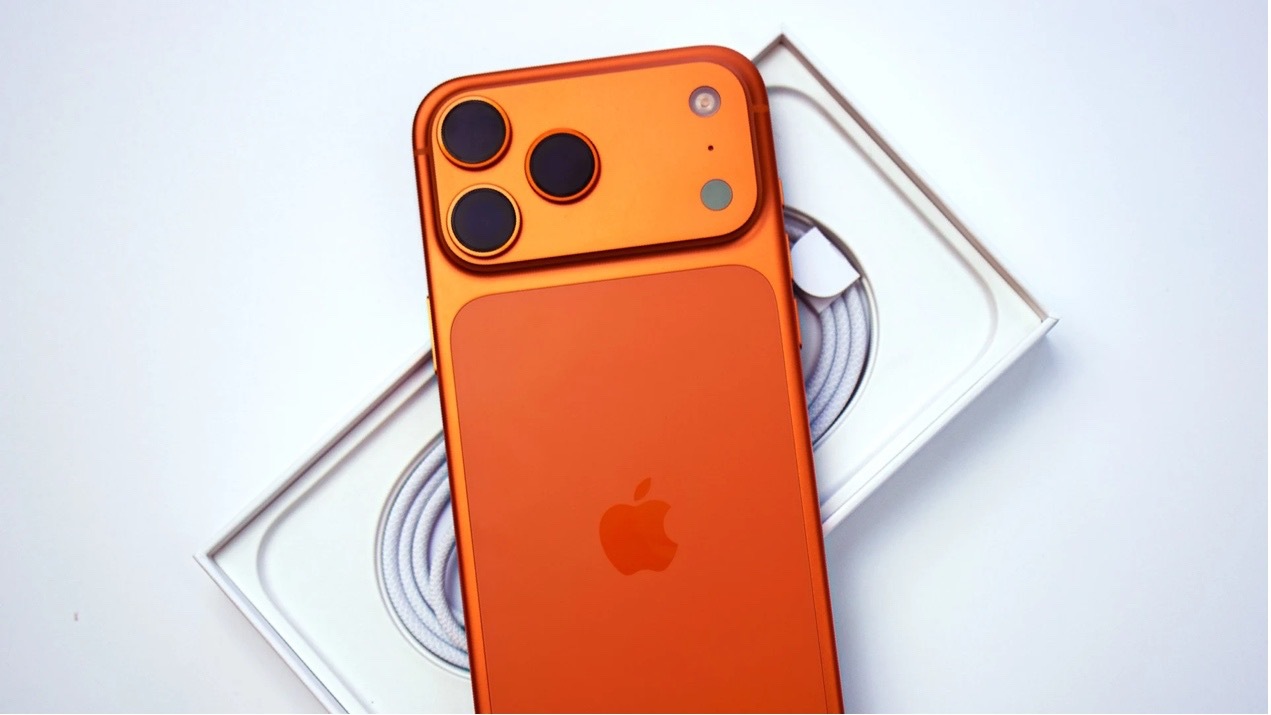
However, Gurman specifically mentioned that the iPhone 18 Pro and 18 Pro Max will be equipped with a brand - new camera system supporting variable aperture. As a mobile phone camera enthusiast, this immediately caught my attention. Rumors about this function have been circulating for years, but I didn't expect it to become the core selling point of the most anticipated iPhone this year.
The reason is that the variable aperture has had several ups and downs in the smartphone industry. Has Apple really brought a new solution, or is it just coming late?
Basic knowledge of aperture
Aperture refers to the size of the opening in the lens that allows light to reach the sensor (in the early days, it was film). This parameter is represented by the f - value, such as f/1.4, f/2.0; The smaller the value, the larger the aperture. The larger the aperture, the more light enters, and photographers can use a faster shutter speed under the same brightness; at the same time, a large aperture can bring a shallower depth of field, highlighting the subject by blurring the background.
However, a large aperture is not a panacea. On professional manual cameras, in strong - light environments, it is often necessary to reduce the aperture to avoid overexposure of the photo. Moreover, the lens usually has sharper image quality at medium apertures. Unless you have a clear creative intention, it is not recommended to always use the maximum aperture for shooting.
Aperture is a core parameter in professional camera photography, but it has never been that important on smartphones:
Mobile phone sensors are smaller, making it difficult to achieve a natural shallow depth of field;
The electronic shutter speed is much faster than that of mechanical cameras, and overexposure hardly occurs.
Therefore, the vast majority of smartphones are designed with a fixed maximum aperture because the advantage of light intake outweighs everything.
Previous industry attempts
Nevertheless, mobile phone manufacturers have repeatedly tried to use the variable aperture as a selling point.
The Nokia N86 in 2009 was one of the early representatives. Its equivalent 28mm f/2.4 lens was an ultra - wide - angle lens at that time, which could automatically reduce to f/3.2 or f/4.8 according to the ambient light and was equipped with a mechanical shutter, giving the variable aperture practical significance.
In 2018, the Samsung Galaxy S9 was the first to implement a similar design on modern smartphones. The aperture could reach f/1.5 and could also be reduced to f/2.4, but the actual effect difference was extremely small, and it was cancelled in the S10 series two years later.
Subsequently, Chinese manufacturers took this technology to a new level:
The Huawei Mate 50 Pro in 2022 achieved ten - level adjustment from f/1.4 to f/4;
The Xiaomi 13 Ultra in 2023 adopted a two - level design of f/1.4 and f/4. The following year, the 14 Ultra went a step further, supporting a stepless variable aperture from f/1.63 to f/4.
However, the last two generations of Xiaomi's flagship phones, the 15 Ultra and the well - received 17 Ultra (developed in cooperation with Leica), have both abandoned the variable aperture design. In my opinion, the reason is probably related to the super - long - focal - length module: in the internal space of the mobile phone, the mechanical structure of the variable - aperture lens is complex and takes up a lot of space.
Moreover, from a practical point of view, this function itself is not that necessary. I have used the 13 Ultra and 14 Ultra extensively. Even though they are equipped with the industry's top - notch 1 - inch large - size sensor, the system almost always defaults to using the maximum aperture. Only when shooting food close - ups can reducing to f/4 make the overall picture clearer, but even so, the difference is not significant.
Why is Apple entering the market at this time?
So, why is Apple launching its own variable aperture after many competitors have tried and given up? To be honest, I'm not sure.
Possible reasons:
Apple may use a larger sensor or a larger aperture and needs to control the depth of field in extreme scenarios;
It may weaken the previous heavy algorithmic sharpening and return to traditional optical image quality;
It may even just be to make the iPhone 18 Pro a food - shooting artifact.
I still don't think this is a cost - effective trade - off at present, but I'm very curious about Apple's implementation method. Apple has always been good at creating a better experience with mature technologies.
However, you can remember one thing:
When the iPhone press conference in September this year comes to the variable - aperture section, you should know that this idea has already been tried in the industry, and most manufacturers ultimately believe that it's not worth continuing to invest.
Translator: Teresa