Geely Galaxy has achieved what Chery failed to do.
Three years ago, behind the "King Di" (BYD), automakers such as Geely, Chery, Changan, and Leapmotor lined up. They benchmarked BYD's main-selling models, with only one goal: to catch up in the mass market of new energy vehicles.
In 2025, after the curve, Geely Galaxy and Leapmotor became the most eye-catching "taillights" after BYD, with year-on-year growth rates of 150% and 103% respectively. Their sales volumes were eight times and four times that of Chery Fengyun respectively.
In the cost-effective market, scale is not just an added bonus but an entry ticket. This year, the newly established domestic business group of Chery has set a sales target of 1.2 million vehicles, and most of the sales are expected to come from the Fengyun series.
Fengyun Pushed to the Frontline
In January 2026, Chery immediately announced its new-year sales target of 3.2 million vehicles.
In 2025, Chery's annual sales volume was about 2.8 million vehicles. Calculated, the target growth rate for Chery is about 14.3%. This figure is not radical; in fact, it's rather conservative.
However, this is just the tip of the iceberg. Under the seemingly moderate group target, Chery Fengyun has been pushed to the frontline.
We've exclusively learned that the sales target of Chery's domestic business group is 1.2 million vehicles, with an even higher challenge target.
By analyzing industry data, we've found that the total sales volume of this business group last year was less than 800,000 vehicles. To reach 1.2 million vehicles this year, it needs to achieve a growth rate of about 50%.
The majority of the incremental target falls on Chery Fengyun. Last year, the sales volume of Chery Fengyun was about 150,000 vehicles. To meet the target in 2026, its sales volume needs to more than double compared to last year.
Chery's domestic business group was established in July last year. To change the situation of scattered and self - consuming independent brands under the group, Chery integrated its domestic vehicle businesses, except Jetour, iCAR, and Zhijie, into the newly established business group, which was reorganized into four parallel business units: Chery Aihu, Fengyun, Xingtu, and QQ.
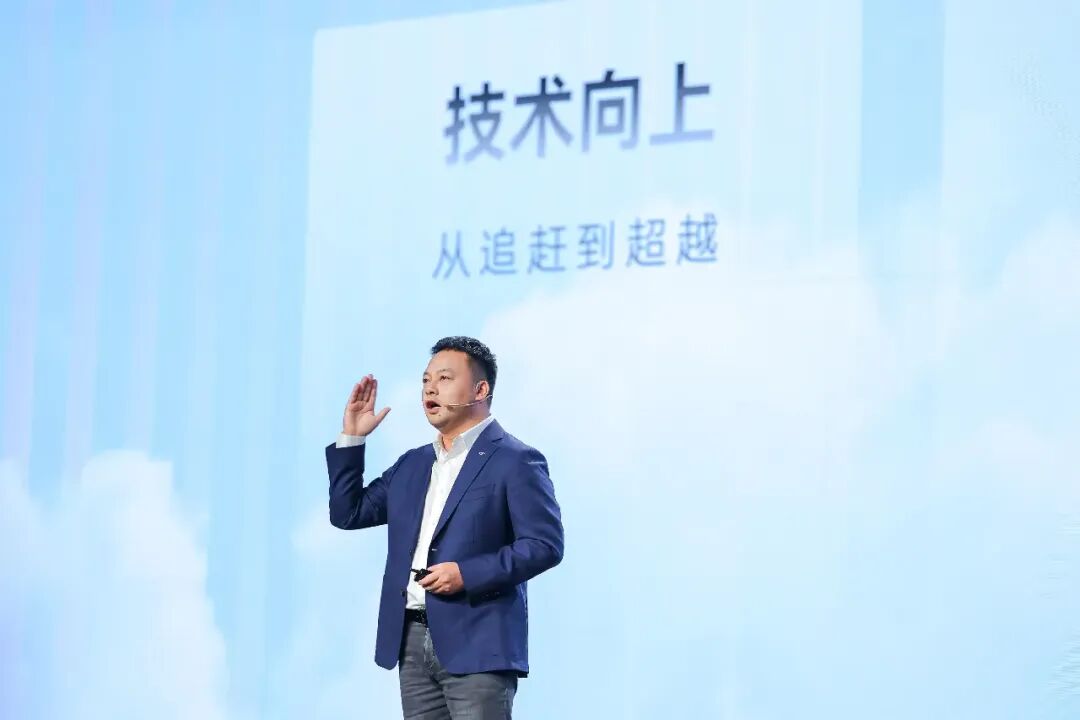
Li Xueyong, General Manager of Chery's Domestic Business Group
In 2025, Aihu was the pillar of the business group. Among the sales volume of less than 800,000 vehicles, Aihu accounted for more than 530,000 vehicles, over 66% of the business group's total sales.
However, this is exactly the situation that Chery's top management doesn't want to see. Among the four business units, Aihu is the most traditional one. Its models like Arrizo and Tiggo are essentially based on fuel - vehicle platforms. Even with plug - in hybrid technology, they are not the real focus of the group's new energy transformation.
If we compare with Geely's brand and product positioning, Aihu is roughly equivalent to Geely's China Star series. In 2025, the sales volume of Geely's China Star series was about 1.21 million vehicles. In Geely's total sales of 3.02 million vehicles, the proportion of the China Star series had dropped to 40%, less than half.
Geely Automobile managed to reduce the proportion of its traditional business to less than half in just one year in 2025, making a beautiful transformation. Its new energy vehicle business brought a 39% growth rate last year. From January to February this year, Geely's total sales continuously exceeded BYD's.
The largest increment came from the Galaxy brand. From its start in 2023 to 2025, the annual sales volumes of Geely Galaxy were 83,000, 494,000, and 1.24 million vehicles respectively.
Geely Galaxy's high - growth is not an isolated case. In the past few years, BYD has demonstrated the large - scale development ability of new energy vehicles in the cost - effective market. In 2025, the total sales volume of its Ocean and Dynasty series exceeded 4.1 million vehicles.
Benchmarking against BYD, Geely, Chery, and Changan have each launched their corresponding new energy brands. Coupled with Leapmotor, a new - force automaker, these companies are the most aggressive competitors in the domestic cost - effective market.
In Chery's camp, the one going head - to - head with them is Chery Fengyun.
In 2025, the other companies also achieved good results. Leapmotor's sales volume reached 597,000 vehicles, a year - on - year increase of 103%. Changan Qiyuan, which started late and didn't grow very fast, achieved a sales volume of 410,000 vehicles last year, a year - on - year increase of 42.6%.
The core element in the cost - effective market is scale. If a company fails to secure a place in the first echelon in terms of scale, it will be at a disadvantage in terms of cost and channels. Chery Fengyun needs to get on board before the ticket - checking gate closes.
The Misguided Benchmarking of "Spec - Chasers"
On October 16, 2023, Yin Tongyue, the chairman of Chery Automobile, said that the company "got up early but missed the bus" in the new energy vehicle business, and "next year (2024) ... we won't be so lenient in the new energy vehicle industry ranking."
One month after making this statement, Chery launched a new product series called "Fengyun" and unveiled its first model, the Fengyun A8, in the same month. The model was officially launched in January 2024.
Half of Yin Tongyue's "aggressiveness" was aimed at BYD. At that time, chasing after BYD was a trend in the market. The Fengyun A8 was benchmarked against BYD's Qin, and Geely Galaxy's L7 and L6 were benchmarked against BYD's Song and Qin respectively.
In April 2024, Yin Tongyue made a tough statement during a live - stream: "By the end of this year, Chery must become the second - ranked company in the industry and catch up with Wang Chuanfu."
This statement was directed at Geely, the second - ranked company in the industry. In this year, Chery Fengyun, which started late, launched four new models. After the A8, there were the T9, T6, T10, and A8L, with the number of products exceeding that of Geely Galaxy.
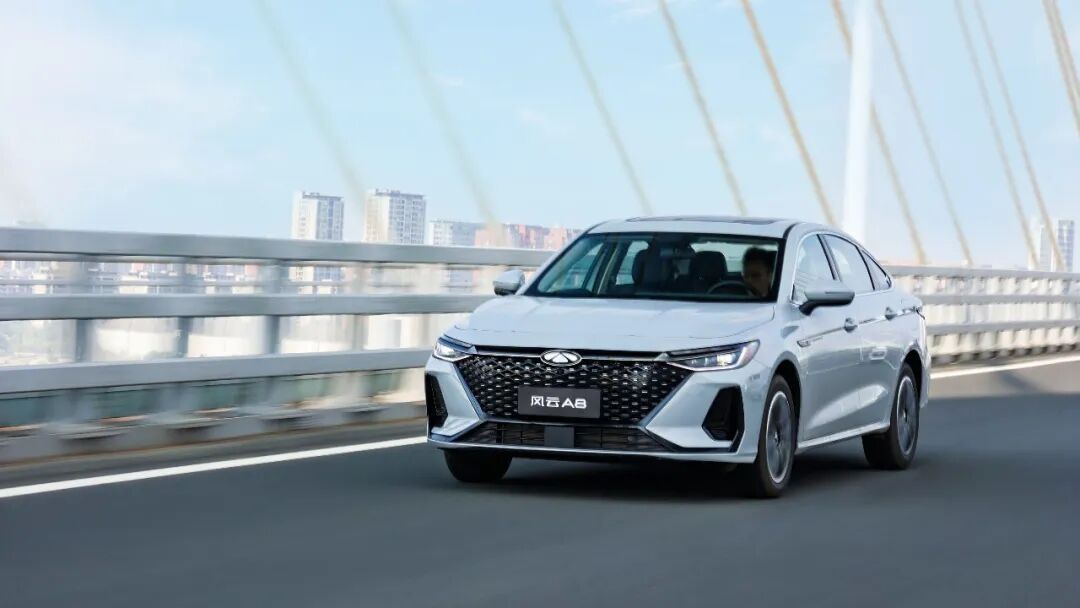
The First Model of Chery Fengyun, the A8
At this stage, both Chery Fengyun and Geely Galaxy can be said to be in the wrong direction.
In recent years, Chinese auto brands that have established themselves in the cost - effective market have almost all followed the same logic: first, create "well - rounded vehicles" with no obvious weaknesses in terms of space, range, energy consumption, and intelligence to gain entry into the market. Then, use the acceleration of technological iteration and the cost advantages of large - scale production to outperform competitors in some aspects.
To achieve this, a precise product strategy is needed. Don't waste money on features that users don't care about, and don't skimp on things that users value. Concentrate the BOM cost on areas that users can see, such as range, price, and the cockpit.
Both Chery Fengyun and Geely Galaxy's initial problem - solving approaches were still stuck in the inertia of the fuel - vehicle era. They continued to use the strategy they used to compete with joint - venture brands, focusing on the detailed parameters of competitors and trying to outperform them in engineering.
For example, the selling points of the Chery Fengyun A8 include engine thermal efficiency and the proportion of high - strength steel, still competing on parameters. Geely Galaxy's L6 and L7 both use a more complex three - speed DHT gearbox, aiming for performance advantages in the power system but sacrificing energy efficiency, which is exactly what users in the cost - effective market care about.
The result was a failure. In 2024, the total sales volume of the Chery Fengyun A8 was only 29,000 vehicles, equivalent to BYD Qin's monthly sales volume.
At the same time as the Fengyun A8, Geely Galaxy's new model E8, which was equipped with a full - width in - car screen, was also launched in November 2023 and went on the market in January 2024. Its competitor was the larger - sized BYD Han. From 2024 to 2025, the sales volumes of the E8 were 31,000 and 12,000 vehicles respectively, less than BYD Han's monthly sales volume.
If we compare the degree of failure, Geely Galaxy was in a worse situation at the beginning of 2024. By the time the third new model was launched as planned, it had benchmarked three out of BYD's four core models, except for the Tang. However, its total monthly sales volume remained at around 10,000 vehicles, making it an unknown player behind BYD in the new energy vehicle market at that time.
Since the second half of 2024, Geely Galaxy has changed its strategy. In August, it launched the pure - electric vehicle E5, eliminating weaknesses in terms of range, space, and intelligence, and also offering a pleasant surprise in terms of appearance. In October, it launched the new model Starship 7, which was re - benchmarked against BYD's Song. It adopted a new single - speed DHT EM - i hybrid system, downplaying the performance label and optimizing energy efficiency.
The effect of making the product more "well - rounded" was immediate. By the end of 2024, Geely Galaxy's monthly sales volume exceeded 40,000 vehicles, and the two new models contributed more than 85% of the sales.
Finally, by the end of 2024, Geely Galaxy could achieve in two months what Chery Fengyun achieved in a whole year.
The gap has since widened. In 2025, Chery's annual sales volume was 2.8 million vehicles, ranking third in China and twelfth in the world. However, on the new energy vehicle track that Yin Tongyue is determined to win, there are now more competitors in front of Chery.
Resource Concentration and Elite Troops in Place
Fengyun Pushed to the Main Battlefield
Chery is a company that is good at learning.
Among the top three independent automakers, BYD's engineers are mainly based in Shenzhen, Geely's in Hangzhou and Ningbo, while Chery's are in Wuhu, Anhui, allowing it to keep labor costs extremely low. Therefore, Chery's competition strategy is often to "have more children to fight better", with new brands competing internally and a continuous stream of new products.
With this advantage, Chery couldn't have failed to notice the changes in its competitors' product strategies and the resulting effects.
In 2024, Chery Fengyun launched new products at a faster pace than its competitors. However, in terms of underlying development, Fengyun reused the platform assets extended from Chery's traditional vehicles, sharing them with old models such as the Arrizo 8, Tiggo 9, and Explorer 06.
Geely Galaxy also did the same with its first three models. The L6 and L7 reused Geely's e - CMA platform from the Xingyue and Xingrui, and the E8 reused Geely's SEA vast platform from Zeekr.
However, starting from the highly successful E5 in 2024, Geely Galaxy has successively launched seven new models, all switching to the newly developed GEA platform. By the beginning of 2025, Geely Galaxy was upgraded from a product series under the Geely brand to an independent brand.
In the automotive industry, which involves heavy assets and long - term development, flexibility only exists at the strategic level. In actual implementation, Geely Galaxy was able to launch a series of "well - rounded vehicles" thanks to the concentrated resources of the entire Geely. The development of the new GEA platform took five years and cost nearly 10 billion yuan in R & D funds.
The cost - effective market is the foundation for Chery's survival and is obviously the top priority in its new energy transformation. However, the main force, Chery Fengyun, seems to be just one of the many options in Chery's multi - brand strategy.
Chery's best factories, platforms, and intelligent technologies are first allocated to Aihu and Xingtu. The former is Chery's foundation, and the latter, although with an annual sales volume of only more than 50,000 vehicles, carries the dream of high - end development.
It wasn't until four months ago that the situation changed.
In July 2025, Chery carried out a large - scale personnel and organizational structure adjustment, establishing a new domestic business group with four business units: Fengyun, Aihu, Xingtu, and QQ.
Just a few days later, Chery Fengyun was upgraded from a sub - series to an independent brand, gaining equal say with Xingtu and Aihu.
After that, Chery's elite post - 80s employees were transferred to Fengyun.
The Fengyun business unit is led by Hong Gaoming, who has a technical background. He is an executive who has been proven by the market and is good at solving problems in product and technology. The most popular model of Chery to date, the Tiggo 8, was initially developed under his leadership.
The entire business group is under the management of Li Xueyong, a marketing expert who has emerged from the front - line at Chery. Among the 1.2 million - vehicle sales target this year, Fengyun needs to shoulder the majority of the growth.
Adjustments require a time window. Chery Fengyun, which had planned to launch 11 new models in two years, put a halt to new - model launches in the first half of 2025 and didn't launch any new models.
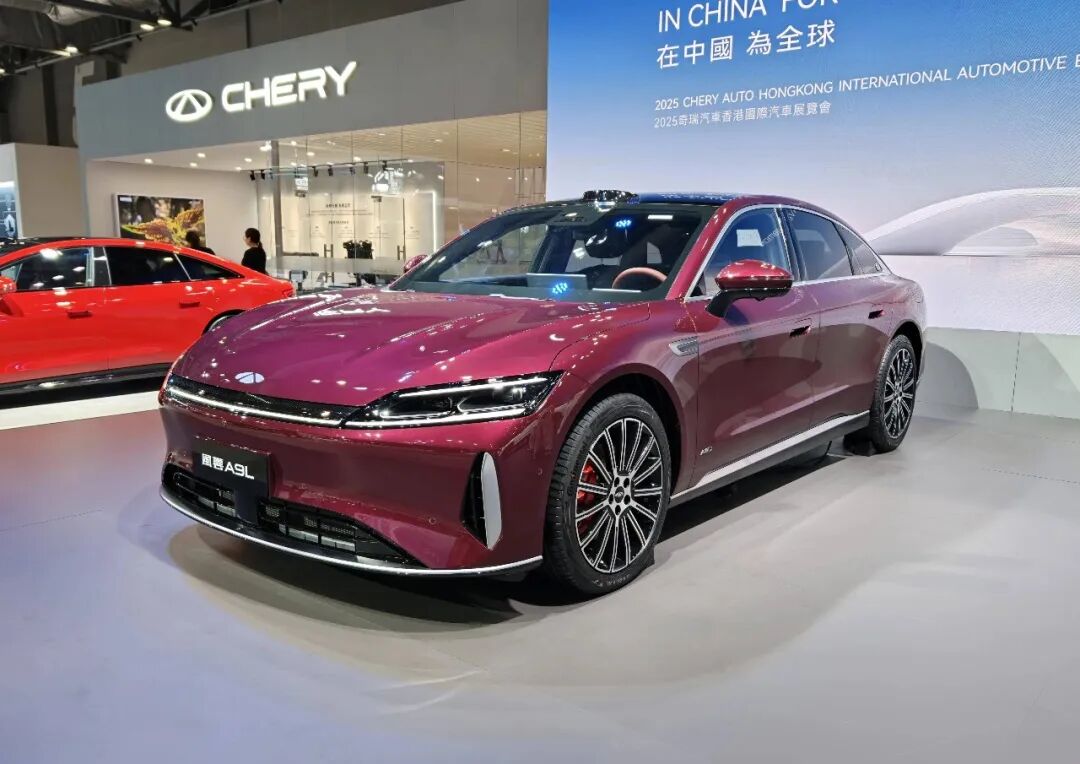
Chery Fengyun T11
It wasn't until July that the A9L was launched. This model seems to have brought out all of Chery's best - kept technologies at once. The E platform, Kunpeng CDM 6.0, Falcon 700 intelligent driving system, Bosch AI digital chassis... All the best technologies were finally given to Fengyun.
The A9L fired the first shot. This C - class sedan, which is benchmarked against BYD's Han,