Go all out against fuel cars. BYD's ace black technology: It only takes 5 minutes to fully charge. Even models in the 100,000-yuan range come standard with it. Building fast-charging stations is as easy as installing air conditioners.
2025, Intelligent Driving for All. 2026, Flash Charging Across China.
BYD, the best-selling car brand in China, has an annual strategy. This year, it's all about giving gasoline cars a tough fight:
You might scoff at this. It's 2026. What's so special about electric cars?
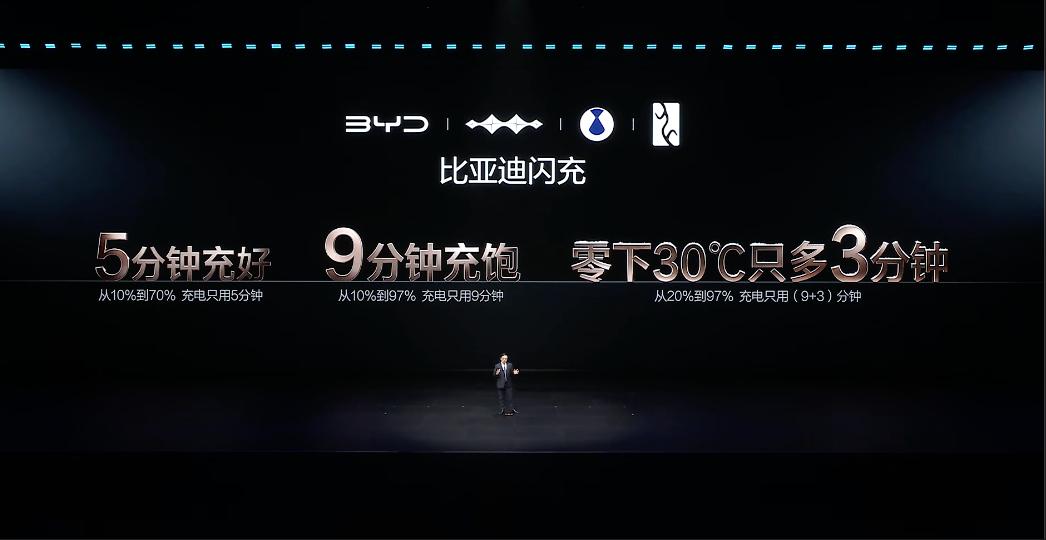
Thousand-kilometer range, five-minute flash charging, ten-minute flash charging in extremely cold conditions, and there will be tens of thousands of flash charging stations~
The core black technologies are the second-generation Blade Battery and the 1.5-megawatt flash charging with a 30% increase in power.
The real game-changer is here:
From the million-yuan Yangwang models to the 100,000-yuan Dynasty and Ocean series, all of BYD's new cars in the future will be equipped with these technologies as standard in mass production.
Put it this way, last year was about catching up and getting the ticket for the intelligentization competition. This year, BYD is back on its home turf and has set a milestone for the entire industry:
The first half of the electrification revolution in the automotive industry ends with BYD's second-generation Blade Battery and flash charging technology.
What was once the outside world's mockery of "not building charging piles but using dual-gun charging" now seems like "the retribution is just delayed."
"Fully charged in 5 minutes", electric cars can cross the Shanhai Pass
Why is the core of the black technology that "ends the first half of electrification" centered around the most basic, seemingly raw material-level battery?
Wang Chuanfu provided an explanation:
When buying a fuel car, who cares about the size of the fuel tank?
A fuel car can travel at most 500 to 600 kilometers on a full tank of gas, but no one ever thinks it's not enough because refueling is fast and there are many gas stations, so there's no need to worry.
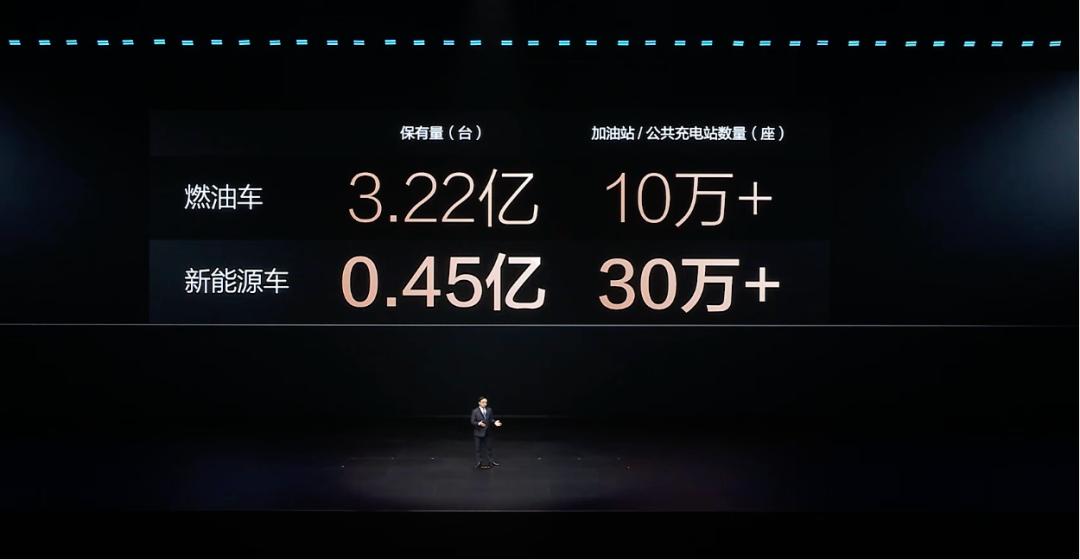
Now, many pure electric cars have a longer range than fuel cars, but when you buy an electric car, you still have range anxiety. You might spend an extra 10,000 to 20,000 yuan just to increase the range by 100 to 200 kilometers, and the car's weight increases by several hundred kilograms.
Wang Chuanfu believes that the core of all this is - the battery is not good. It has too small a capacity and charges too slowly.
So, the second-generation Blade Battery addresses these issues.
First, the capacity is increased. Take the latest Denza Z9GT as an example. With the wheelbase, size, and chassis structure remaining unchanged, the battery pack capacity has increased from 100 kWh to 120 kWh - corresponding to an increase in range from 600 km to 1036 km, setting a new record for the highest mass-produced pure electric range globally.
Second, to solve the problem of slow charging, on the one hand, in terms of infrastructure, the 1000kW peak-power megawatt flash charging has been upgraded to the second generation with 1500kW.
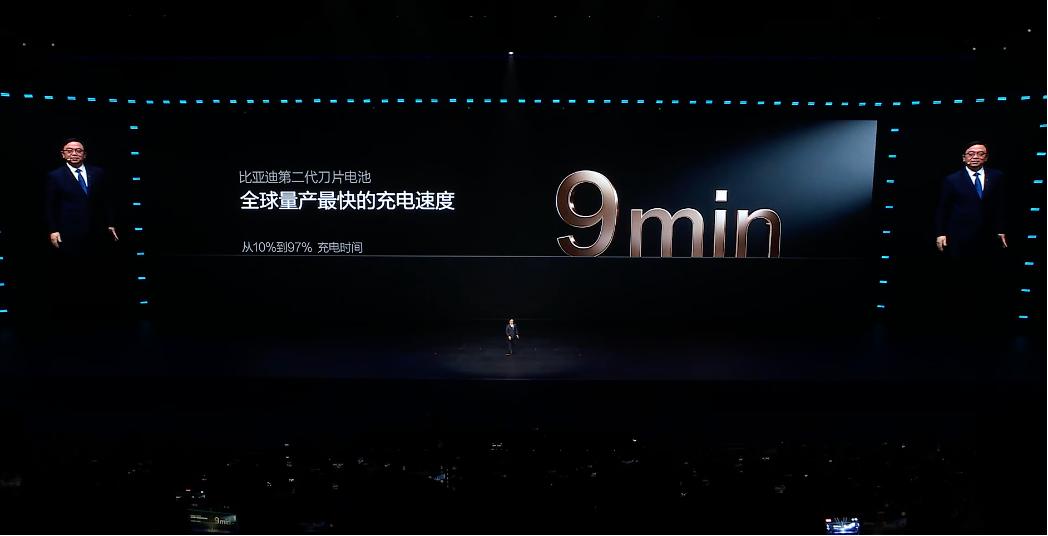
Moreover, Wang Chuanfu emphasized that it's not just the peak power that's high, but the average power throughout the charging process.
Generally, the industry uses the battery State of Charge (SoC) from 20% - 80% as a reference to measure the ultra-fast charging ability. If it takes less than 40 minutes, it's considered acceptable. Some players with weaker three-electric system capabilities will quietly change the lower or upper limit to 30% or 70% to make the charging time look better.
But BYD has truly ended this game:
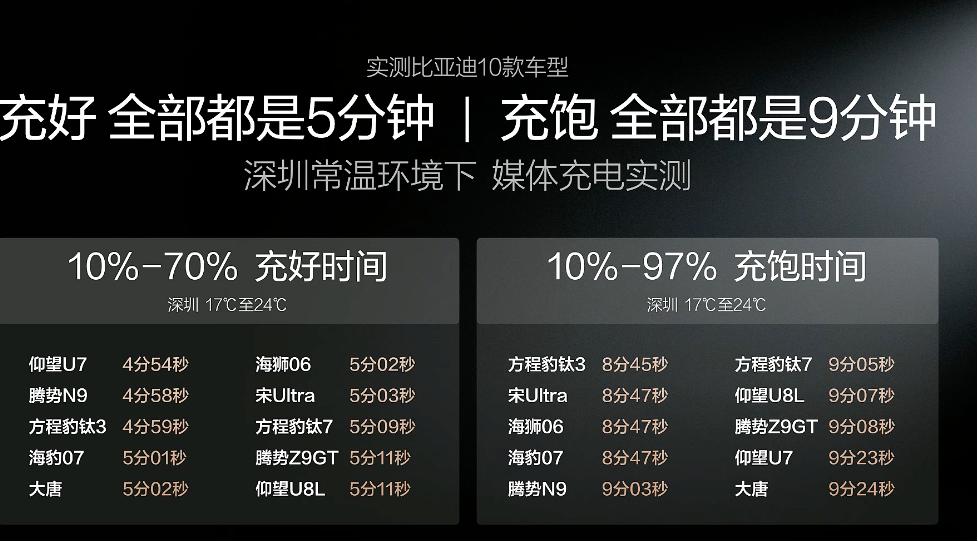
It takes 5 minutes to charge from 10% to 70%, and 9 minutes to charge from 10% to 97%.
Regardless of the model or price range, all of BYD's new cars this year are the same:
What about in extremely cold conditions as it is in normal temperature?
BYD has provided actual test results.
Before the Spring Festival, under the climate conditions of an average of -20°C in Harbin, BYD brought together new cars from brands such as Yangwang, Denza, Fangchengbao, Dynasty, and Ocean for testing this year.
First, water was poured on the cars to freeze them completely, then they were left outdoors for 24 hours to ensure the battery and electronic control systems were thoroughly frozen, and then flash charging was carried out without preheating:

At -20°C, it took less than 12 minutes to fully charge the cars.
Under the -30°C condition in the laboratory, using the same testing method, the cars could still be fully charged in less than 12 minutes:
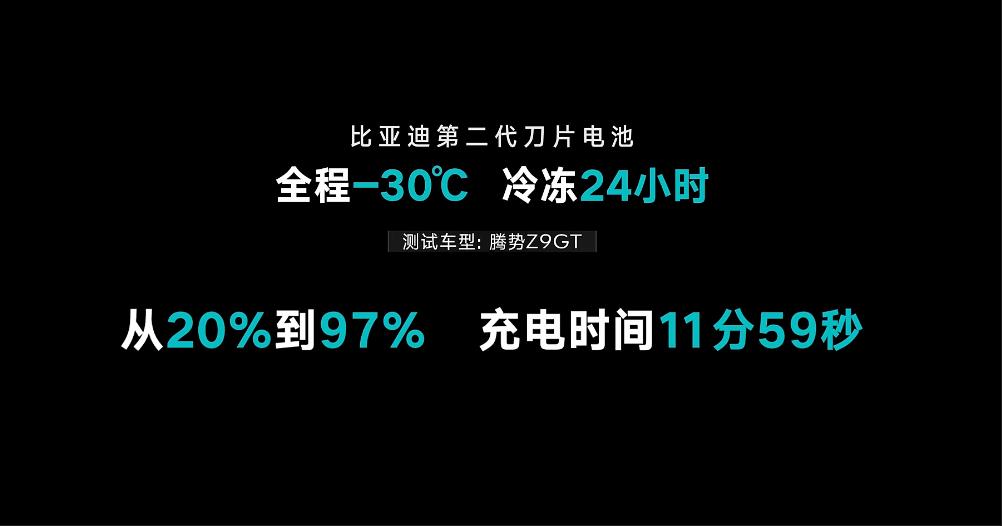
The saying that "electric cars can't cross the Shanhai Pass" has completely become history.
Technically, the second-generation product has redesigned the Blade Battery cells. This is one of BYD's core competitiveness. The specific implementation plan is not detailed, but there must have been a lot of innovation in the materials of the anode, cathode, electrolyte, and separator, as well as the process of cell stacking, creating a high-speed channel for electrons to move within the battery.
BYD has come up with a catchy slogan for the second-generation Blade Battery and megawatt flash charging: "Fully charged in 5 minutes, 90% charged in 9 minutes, and fast charging in 3 minutes in cold conditions":
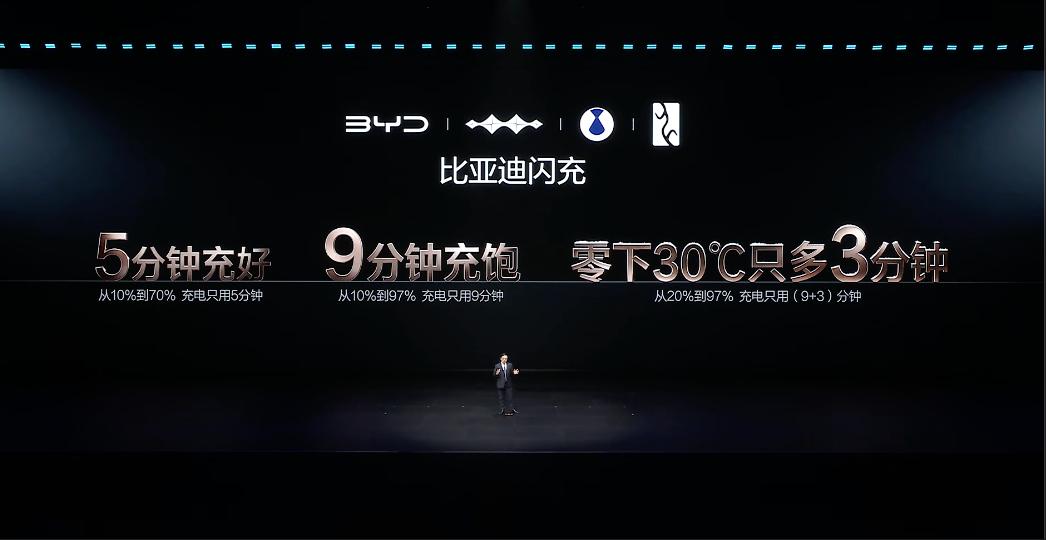
The huge benefits for ordinary users need not be elaborated.
In the time it takes to smoke a cigarette or go to the toilet, the car is fully charged and ready to go. Charging is as fast as refueling.
In terms of products, if last year only the over-200,000-yuan Han and Tang L models could enjoy these configurations, this year they are standard on all 100,000-yuan entry-level mass-market models.
Geographically, new energy vehicles, which have the same energy replenishment experience as fuel cars and an absolute cost advantage, have historically "crossed the pass" and have all the conditions to take over the last stronghold of fuel cars - the three northeastern provinces.
In traditional automobiles, turbocharging and direct fuel injection have made performance, cost, and energy consumption accessible to everyone, kicking off the popularization of family cars.
The significance of BYD's second-generation Blade Battery + megawatt flash charging can be compared. It has used technology to comprehensively catch up with and surpass traditional fuel cars in terms of product experience, and has achieved full price range and full geographical coverage that no one else can match.
The first half of electrification ends here. From now on, the work will be about marginal improvements with diminishing returns. As for the "summit" of three-electric technology, it may extend to the fields of motorsports or special vehicles.
BYD's Unbeatable Open Strategy: Building Flash Charging Stations is like Installing Air Conditioners
Three years ago when 800V was still a popular buzzword in the automotive circle, BYD once complained:
The 800V cars were built in 2016, but there were no matching charging piles on the market.
As a result, new car - making forces used a technology that BYD thought was "basic" to capture users' minds.
In 2026, BYD finally took the initiative. It is making efforts in both the charging piles and stations of megawatt flash charging:
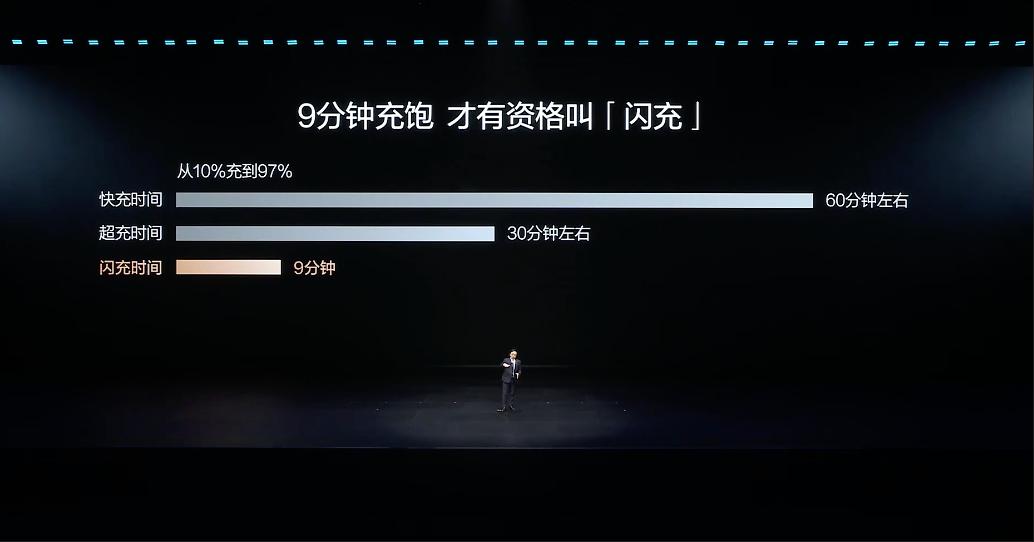
The peak power is 1500kW. For any BYD model, it takes no more than 12 minutes to fully charge the car even in extremely cold regions. All these have been mentioned before, and they have been tested on mass - produced cars and charging piles.
The construction of flash charging stations started earlier. After the first batch of cars with the second - generation Blade Battery were delivered in April, those who believe and those who don't can borrow or buy a car to test it in person.
Besides fast charging, let's talk about some of the advantages of BYD's flash charging itself. First, the design:
It is T - shaped, with two charging guns hanging on both sides. It has changed from the previous gun - with - cable design to the current cable - dragging - gun design - it is light and fast, and the weight is all borne by the base, so even girls can operate it easily.
The cable doesn't touch the ground, so it won't dirty the user's clothes or the car paint.
With the BYD Flash Charging APP, there's no need to swipe a card or scan a code. It supports seamless payment.
These are small but smart ideas to improve the user experience. The real "open strategy" lies in the construction of charging stations.
By comparison, Tesla currently has more than 2,400 Supercharger stations across the country, which took 10 years to build. The most powerful charging piles currently have a power of 250kW.
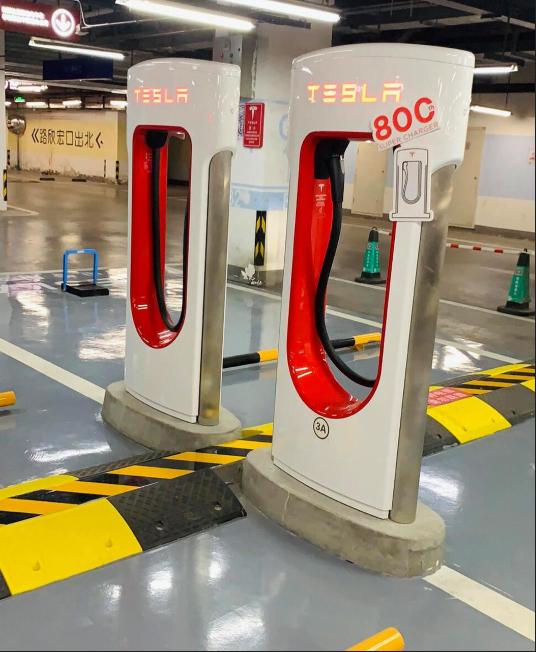
On average, about 200 Supercharger stations are built each year. Besides site approval and material costs, the most troublesome part is the expansion of the power grid quota, which greatly limits the progress and coverage of Supercharger station construction.
However, BYD promises to build 20,000 flash charging stations by the end of this year.
This is a bit unbelievable!
Not to mention the cost and site, just the power of megawatt flash charging is enough to exceed the total power generation in China:
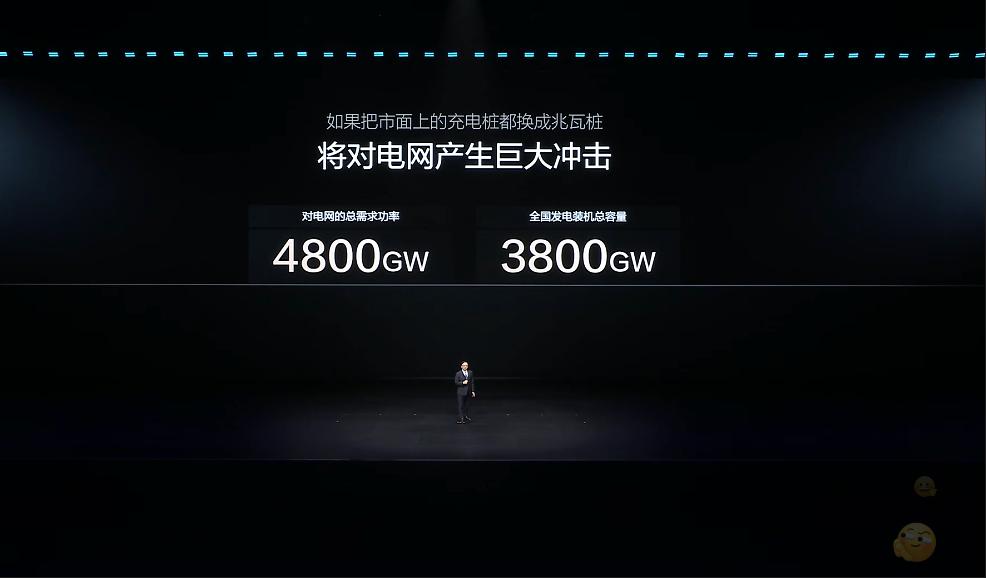
But Wang Chuanfu said that our flash charging stations don't require any expansion of the power grid and won't have any impact on the operation of the power grid!
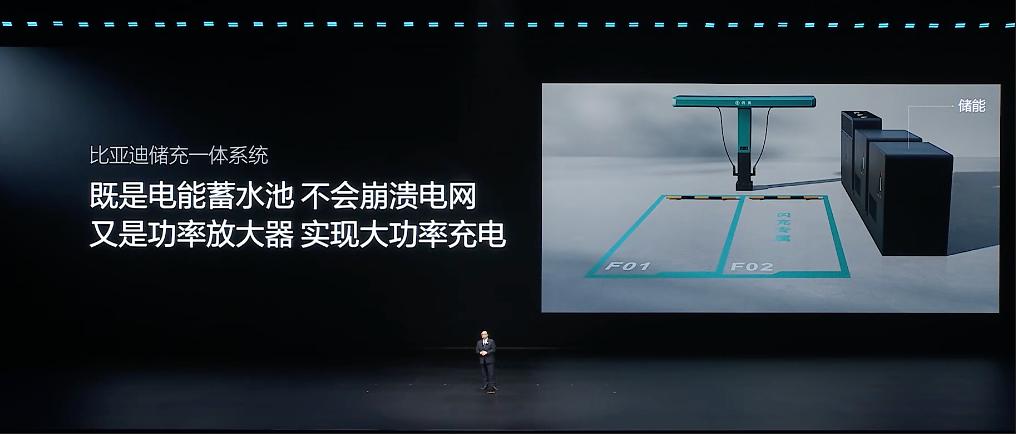
The self - developed lithium - battery energy storage facilities connect the charging piles and the power grid, acting as a "reservoir" and "regulator" for electricity. No matter what kind of current and voltage the power grid inputs, the output to the charging piles is always 1000V and 1000A.
Conversely, the fluctuations of the charging piles won't have any impact on the power grid either.
As long as there is electricity, BYD's flash charging system can function at 100% capacity.
What does this mean?
Any existing state - owned or private Supercharger station can install BYD's megawatt flash charging with almost no need to apply for power grid capacity expansion and almost no transformation cost!
The biggest task might be to find a place to install the energy storage cabinet:
