The cheapest Apple laptop is not aimed at you.
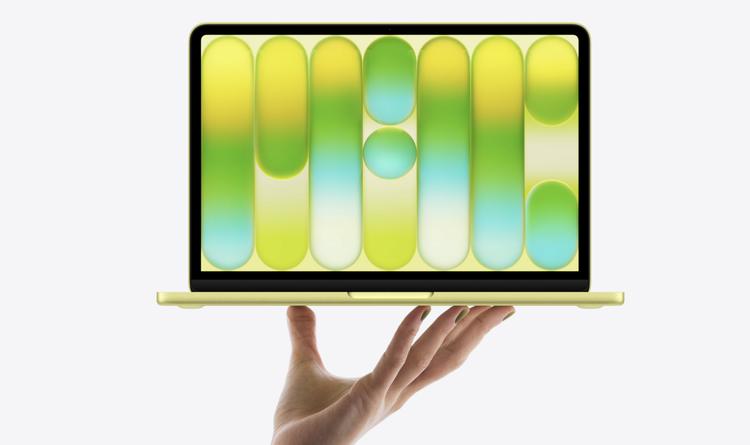
On the evening of March 4, 2026, Apple finally launched the long - awaited budget laptop, the MacBook Neo. The new product at Apple's spring event was not positioned as "high - priority" internally. There was no global live - streamed event, and no moment of Tim Cook shining on stage. This "budget MacBook," which had been speculated about by the outside world for a full year, made its debut in the form of a press release.
Source: Apple
Starting at $599, with a $100 discount for the education channel and priced from 4,599 yuan in the Chinese mainland market, the MacBook Neo is Apple's cheapest laptop ever. It's so affordable that it makes people wonder: Is this really something made by Apple?
But when you take a close look at its appearance and specifications, that familiar Apple feel comes back.
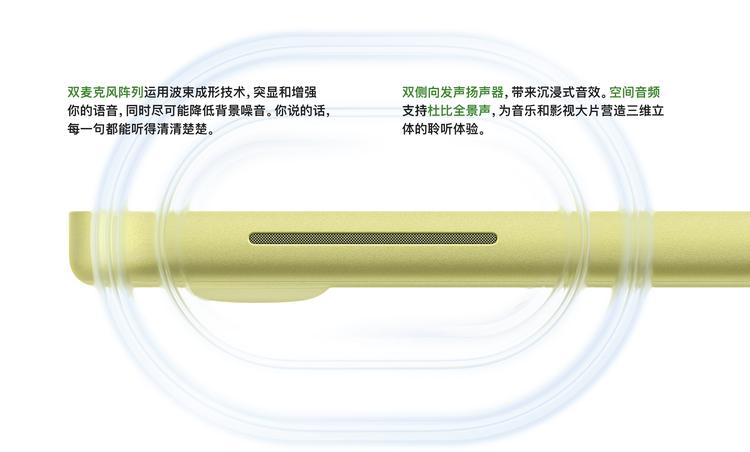
It features a 13 - inch Liquid Retina display with a 60Hz refresh rate, 500 nits of brightness, and support for one - billion - color display. It also has a Magic Keyboard, a large Multi - Touch trackpad, a 1080p FaceTime HD camera, and spatial audio speakers. The body is made of 90% recycled aluminum, and Apple says the MacBook Neo has the lowest carbon emissions among its MacBooks.

Source: Apple
Source: Apple
However, the real reason for its affordability lies in the chip.
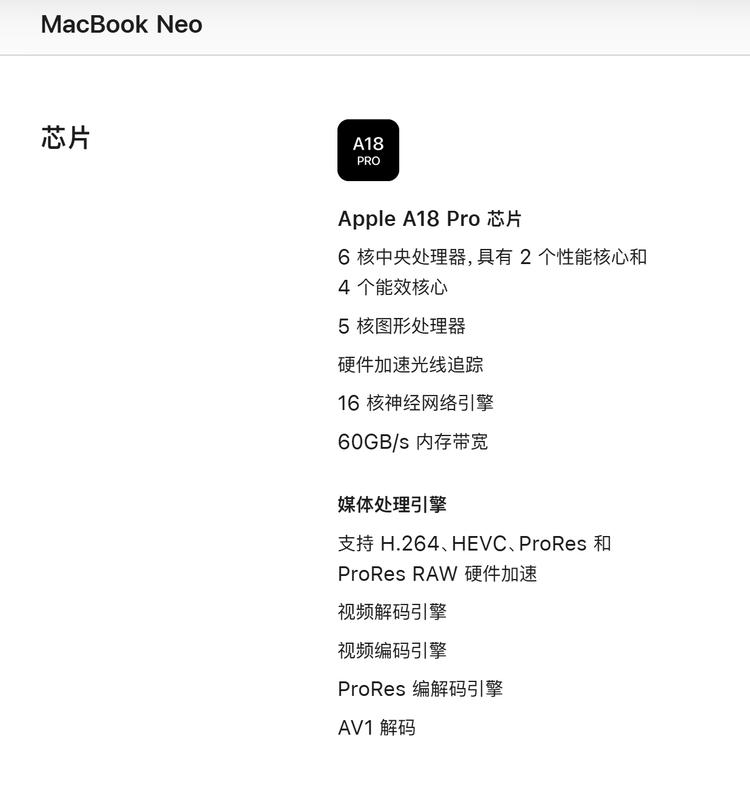
The MacBook Neo is powered by the A18 Pro, the same chip used in the iPhone 16 Pro. This is the first time Apple has replaced the M - series chips with the A - series from the iPhone in its Mac product line. This decision almost explicitly indicates the positioning of this machine: it was never intended for long - time Mac users from the start.
Is the A18 Pro sufficient? It depends on what you're comparing it to
In Geekbench 6 benchmarks, the A18 Pro's single - core performance is close to that of the M4, its multi - core performance surpasses that of the original M1, and its GPU performance is on par with the M1. Among mobile phone chips, this represents top - tier performance, but in the laptop arena, this result is a bit of a mixed bag.
Source: Apple
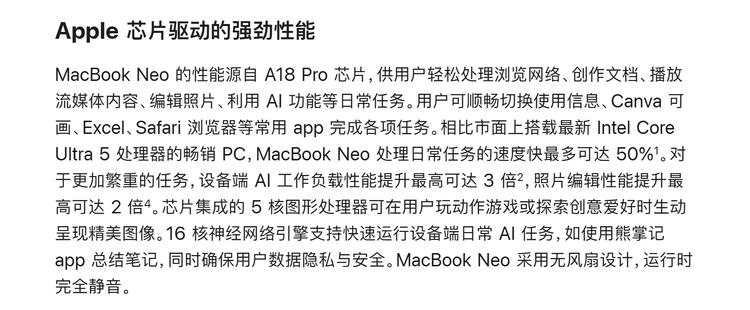
Apple's official comparison data is quite strategic: compared to the best - selling Intel Core Ultra 5 laptops on the market, the MacBook Neo is 50% faster in daily tasks such as web browsing, three times faster in local AI workloads, and twice as fast in photo editing.
Source: Apple
What Apple doesn't tell you is that when compared to Apple's own MacBook Air models equipped with the M3 or M5 chips, the A18 Pro significantly lags in multi - core performance and graphics processing capabilities. It doesn't support 4K video editing, can't handle 3D rendering, and can only be connected to one external display, similar to the 12 - inch MacBook of the past.
It has two USB - C ports, with USB 3 on the left and USB 2 on the right, and neither supports Thunderbolt.
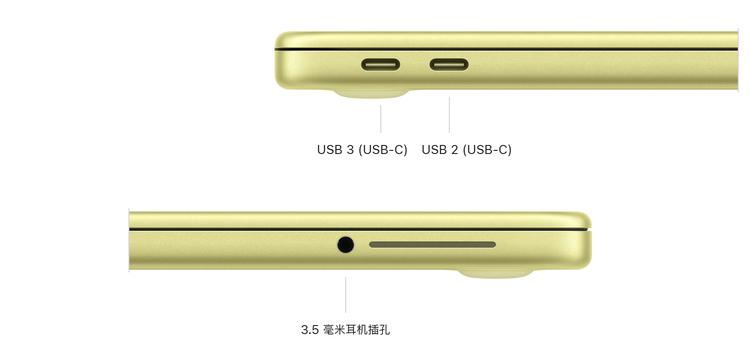
Source: Apple
For users accustomed to the MacBook Air and Pro, these compromises are almost unacceptable. With a starting storage of 256GB, 8GB of RAM, and single - display support, these specifications seem like products from the previous era in the 2026 laptop market.
But Apple clearly doesn't think so. Its real competitor has never been the MacBook Air.
To understand the MacBook Neo, we need to first look at Apple's position in the laptop market.
Over the past decade, Google's Chromebooks have been on a tear in the North American education market, capturing nearly 60% of the market share in 2017. Meanwhile, the growth rate of Apple's MacBooks has dropped from 50% to 20%.
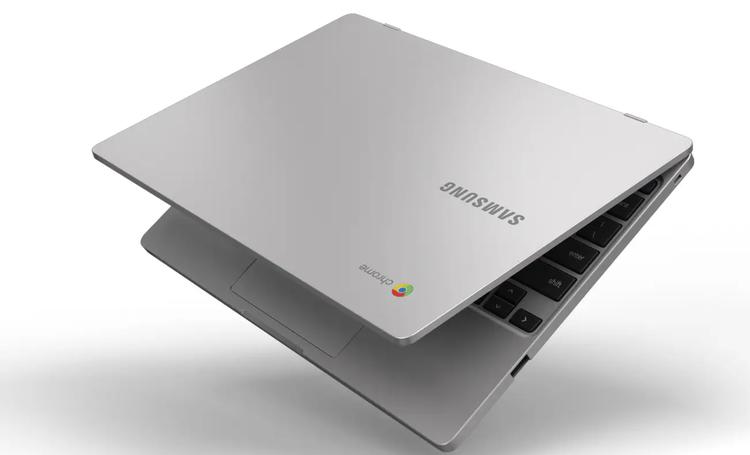
Source: Internet
It's not that the MacBook isn't good enough; it's simply too expensive. For school purchases, a MacBook Air that starts at $999 can't compete with a Chromebook that costs between $200 and $400.
Apple has tried to fight back.
The entry - level iPad, iPad Air, and even the price - cut M1 MacBook Air were all aimed at the education market. However, the iPad is ultimately a tablet. No matter how close the keyboard and trackpad experience is to that of a laptop, it still has inherent limitations in productivity scenarios. When the M1 MacBook Air was priced at $599, its specifications were outdated, giving the impression of a clearance of old inventory.
The launch of the MacBook Neo marks the first time Apple has truly tailored a device for the overseas education market.

Source: Apple
With an educational discount price of $499, it falls right in the middle between Chromebooks and traditional Windows laptops. The performance of the A18 Pro is more than sufficient for web browsing, document processing, online classes, and light photo editing. Its 16 - hour battery life can easily last through a full day of classes. The fanless design ensures a quiet environment in the classroom.
More importantly, it runs the full - fledged macOS.
The biggest weakness of Chromebooks has always been their software ecosystem. Chrome OS has limited offline capabilities and weak support for professional software, struggling with even slightly complex workflows. In contrast, the MacBook Neo can run the entire Mac software library, from Office to the Adobe suite, from Xcode to Final Cut Pro. Although its performance is limited, at least it can run these applications.
For school IT departments, this is a device that "gets the job done without being too difficult to use."
An awkward situation: created but can't be openly explained
The problem is that Apple can't be too explicit about the true intention behind the MacBook Neo.
If it publicly claims that "this is to compete with Chromebooks," it would be admitting the failure of its existing product line in the education market. If it emphasizes that "this is an entry - level MacBook," it will inevitably be compared with the MacBook Air, and once compared, the shortcomings of the A18 Pro will be fully exposed.
So Apple has chosen the safest statement: "To provide the Mac experience to a wider range of users."
This statement is flawless, but it masks the core contradiction of the MacBook Neo: this machine is a compromise Apple was forced to make to regain the education market, but the compromised product can't be too good, otherwise, it will eat into the sales of the MacBook Air.
Look at those deliberate specification cuts: only 8GB of RAM, a maximum of 512GB of storage, no Thunderbolt support, and a smaller screen than the MacBook Air.
These limitations are not due to technological constraints but rather Apple's "unwillingness."
If the MacBook Neo were equipped with 16GB of RAM, 1TB of storage, and a Thunderbolt port, the only difference between it and the entry - level MacBook Air would be the chip. And for non - professional users, the daily usage experience of the A18 Pro isn't significantly different from that of the M3. Then, who would still buy the MacBook Air?
So Apple has to carefully put constraints on it, making it "just sufficient" but "not quite good enough." This is a product that is destined to be sacrificed. Its existence is to fill a market gap rather than create a new product category.
The most prominent design feature of the MacBook Neo is its four lively color options: Blush Pink, Indigo, Silver, and Citrus Yellow.
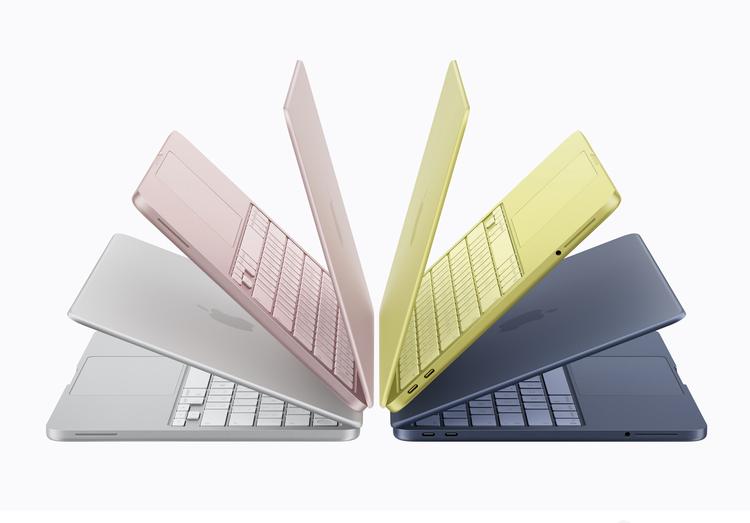
Source: Apple
This easily brings to mind the iBook G3 in 1999, the jelly - colored laptop that was once an iconic product in Apple's education market. More than two decades later, Apple has brought back the colorful shell, seemingly as a tribute to the classic but actually an outward sign of some underlying anxiety.
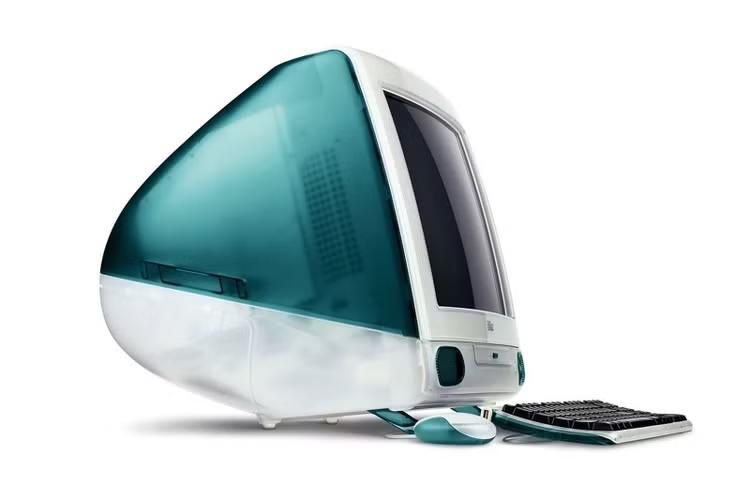
Source: Apple
Because apart from the color, there's really nothing memorable about the MacBook Neo.
It's not the first Mac to be equipped with an Apple chip, not the first fanless MacBook, and not even the first affordable Apple laptop (the price - cut M1 MacBook Air is more appealing). Its only uniqueness is the iPhone - derived chip, but this is precisely the most difficult thing to explain to consumers.
What's the difference between the A - series chips and the M - series chips?
For most consumers, this question is too technical. They only see two seemingly similar laptops, one priced at $599 and the other at $999. If no one tells them that "the cheaper one can't run Final Cut Pro," they might only realize they've been "duped" after they've made the purchase.
This is why Apple has focused on the color. When the product itself lacks strong differentiation, the appearance becomes the most noticeable selling point. Young people like colorful bodies, school purchasers like devices that can be easily distinguished by grade at a glance, and retailers like products that are eye - catching in the window display, just like the iPhone 5C back then.
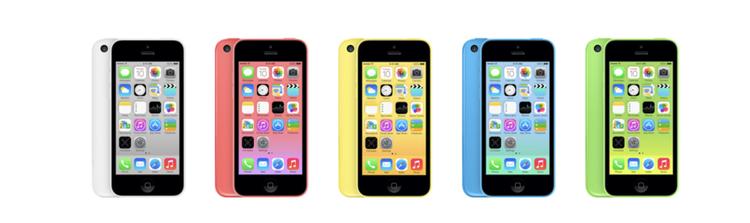
Source: Apple
Who should buy it?
If you ask Apple who the MacBook Neo is suitable for, they'll give you a bunch of standard answers: students, light - office users, first - time Mac users, iPhone users who need a second device...
But when you break down these groups, each situation is a bit delicate.
For students, the MacBook Neo is indeed sufficient. It can easily handle tasks like writing papers, creating PPTs, taking online classes, and watching videos. However, for students in design majors or those who need to run professional software, this machine will quickly become a bottleneck. What's more awkward is that although the educational price of $499 is affordable, adding $200 can get you a Windows laptop with better specifications or a refurbished MacBook Air.
For light - office users, the appeal of the MacBook Neo lies in the macOS ecosystem and its battery life. However, if their workflows rely heavily on external displays, multi - device collaboration, or require a large amount of local storage, the ports and specifications of this machine will seem inadequate.
For first - time Mac users, the MacBook Neo is a low - threshold entry. But behind this door might be a confusing Apple world. They'll find that this machine can't run the professional software recommended by their friends, the speed of connecting an external hard drive is extremely slow, and it's far from as appealing as the Mac mini.
The only group for which the MacBook Neo is truly irreplaceable might be the school IT procurement departments. Bulk purchasing, unified management, no risk of running strange software, and no need to worry about damage. In these scenarios, the shortcomings of the MacBook Neo actually become advantages. But the problem is that in mainland China, it seems that our universities don't have the tradition of large - scale laptop procurement for students.
Putting aside the controversies surrounding the product itself, the launch of the MacBook Neo at least shows one thing: Apple is finally willing to lower its stance and compete for price - sensitive users.
In the past few years, Apple's pricing strategy has become increasingly aggressive. The starting price of the iPhone has been