In 2026, which of the "Wei Xia Li" and Leapmotor will fall behind?
Ultimately, the competition to determine who will emerge victorious and who will be left behind is a comprehensive contest involving a company's strategic, technological, managerial, and cultural capabilities.
1
Over the past few years, the new energy vehicle industry has been the most competitive sector in China.
Before 2025, a number of companies were eliminated from the market each year due to insufficient competitiveness. For example, well - known new car - making brands such as Nezha, HiPhi, and Skyworth were among them. However, in 2025, there was a rather encouraging phenomenon: almost none of the remaining car manufacturers went bankrupt, and all of them persevered. This proves that the new energy vehicle companies currently in the market all have their own unique features. They can be roughly divided into four categories:
The first category consists of BYD and Tesla, the global leaders in the new energy vehicle field. They enjoy the greatest first - mover advantage, technological advantage, and brand advantage, and have achieved revenues in the hundreds of billions of RMB and profits in tens of billions of RMB.
The second category includes three domestic automotive giants from the traditional fuel - vehicle era: Geely, Chery, and Great Wall Motors. On the one hand, they have considerable profitability in the order of billions of RMB thanks to their accumulation during the fuel - vehicle era. On the other hand, they have successfully completed their strategic transformation, and the sales proportion of new energy vehicles in their business has been continuously increasing.
The third category comprises two technology giants from the smartphone era: Huawei (Hongmeng Smart Mobility) and Xiaomi. Relying on the strong financial, brand, intelligent, and channel advantages accumulated through their smartphone business, they have successfully transferred their core capabilities from smartphones to intelligent electric vehicles, becoming the two most likely challengers to the leading positions of BYD and Tesla.
The fourth category is represented by new car - making start - ups such as NIO, Li Auto, and XPeng, founded by well - known internet entrepreneurs who have crossed over into the automotive industry. They started relatively early in the new energy vehicle field, possess strong entrepreneurial spirit and financing capabilities, and have all achieved a monthly average sales volume of over 30,000 units, successfully surviving the first half of the new energy vehicle competition.
The fifth category includes new energy vehicle brands launched by state - owned automotive giants, such as Changan Shenlan/AVATR, SAIC IM, GAC Aion, Dongfeng Voyah, and BAIC ARCFOX. Although the sales of these brands are generally mediocre, with the resource support of their parent companies, they do not have survival concerns in the short term.
Beyond the above five categories of companies, there is an alternative company that cannot be classified into any of these categories: Leapmotor. Zhu Jiangming, the founder of Leapmotor, has no experience in car - making, no experience in giant enterprises, and no aura of well - known internet entrepreneurs. He was previously only a co - founder and technical leader of Dahua Technology, a traditional security enterprise, and was rarely known to the outside world.
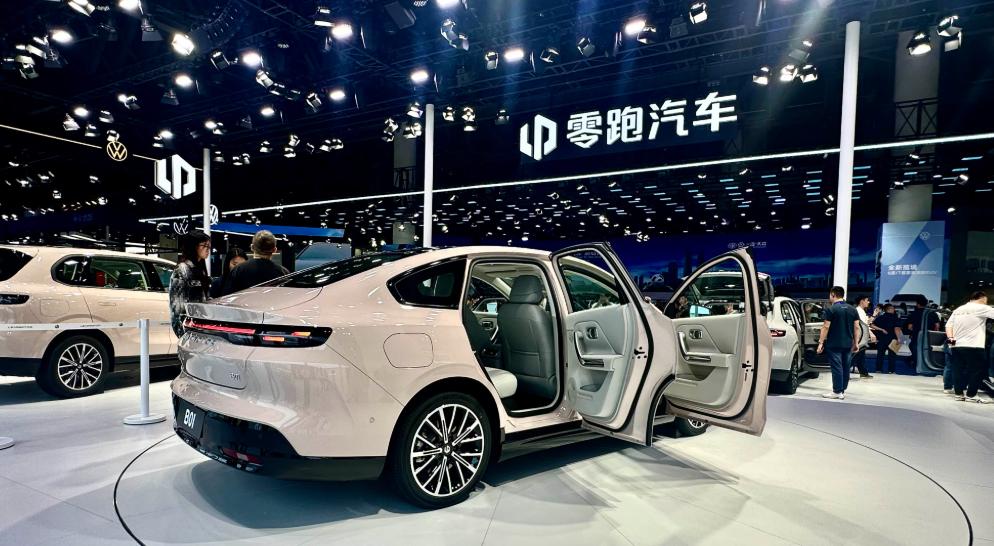
In terms of professional background, the founding team of Leapmotor, centered around Zhu Jiangming, is even less experienced than the founding teams of Nezha, HiPhi, and Skyworth, which have already been eliminated. According to normal logic, Leapmotor should have the lowest probability of success among new energy vehicle companies. However, Zhu Jiangming is an older entrepreneur with rich experience in real - business operations and a deeper understanding of the essence of business. During the development of Leapmotor, he did not engage in excessive marketing hype. Instead, he identified the real needs of users, established a precise strategic positioning, and carried out down - to - earth technological R & D, product development, supply - chain optimization, team training, and the construction of management and cultural systems. Eventually, Leapmotor mastered all the core technologies necessary for new energy vehicles, established a competitive self - manufacturing system for auto parts, and found the knack for creating hit cars, turning the impossible into possible.
2
Business competition is not static but dynamic. Although the competition in the Chinese new energy vehicle market remained relatively stable in 2025, it does not mean that the current competitive landscape will remain unchanged in the future.
Currently, the Chinese new energy vehicle market is approaching a stock market, and a fierce battle is inevitable. So, in 2026, who will win, and who will fall behind?
Among the first - category companies we mentioned, BYD and Tesla, as the long - term leaders in the industry, will surely survive, but they are bound to face more intense challenges from later - comers. This kind of challenge had a huge impact on BYD in 2025, causing a significant decline in the domestic sales of its main brand. Fortunately, the excellent performance of its sub - brand Fangchengbao and the overseas market led to a slight increase in its overall sales.
As a strategic brand for BYD to counter the invasion of new car - making start - ups, Fangchengbao is expected to launch more new models in 2026 and achieve further growth. However, the main brand BYD will still face fierce challenges, and it will be quite difficult to maintain its market share in 2025. Nevertheless, BYD's performance in the overseas market is still worth looking forward to.
Due to Tesla's unique corporate strategy, it does not focus on increasing sales by launching more models. This means that in 2026, Tesla will still mainly rely on the Model 3 and Model Y to compete in the market. In this context, Tesla's sales may continue to decline unless new hit models such as the Model 2 are launched. However, with its unique technological brand advantage, Tesla can still gain a considerable market share.
Among the second - category companies, Geely has the best performance in the new energy vehicle field. It has established three new energy sub - brands: Geely Galaxy, Zeekr, and Lynk & Co. In addition to its self - developed new energy sub - brands, Chery Fengyun and iCAR, Chery also cooperates with Huawei Hongmeng Smart Mobility to launch the Zhijie brand. Great Wall Motors' new energy vehicle business mainly focuses on the Wey and Ora brands, while the Haval and Tank brands also offer fuel and hybrid models. In 2026, although these three Chinese independent automotive giants from the fuel - vehicle era have some opportunities, it will be quite difficult for them to make further progress in the highly competitive landscape.
The third - category companies centered around Huawei Hongmeng Smart Mobility and Xiaomi are the most likely to achieve definite growth in 2026. Among them, Hongmeng Smart Mobility, with Huawei's profound corporate background, has demonstrated strong competitiveness in technology, products, brands, and channels, showing obvious competitive advantages among all new car - making start - ups. In 2026, it will launch a series of high - profile models such as the Wenjie M6 and Zhijie V9, which are bound to bring new sales growth.
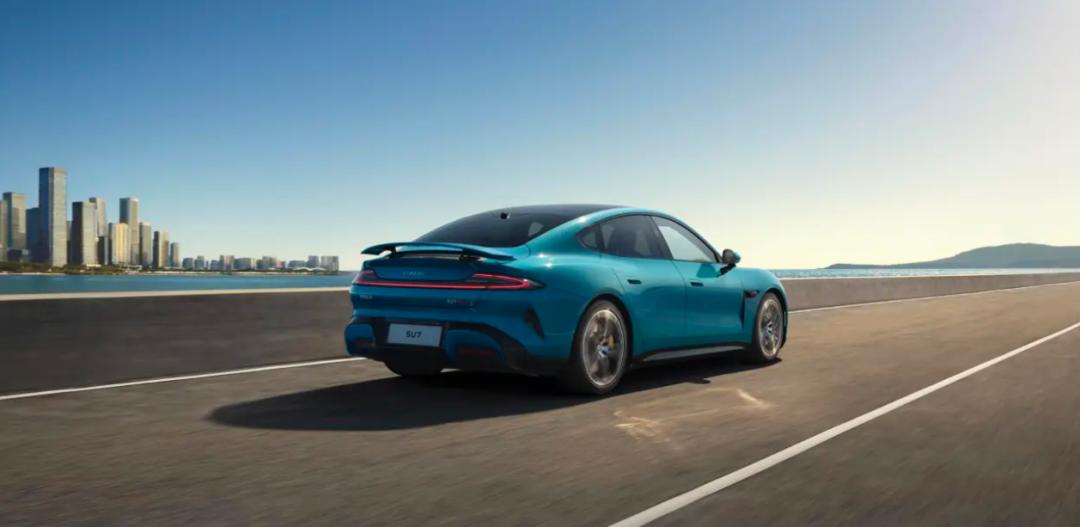
Before the launch of Xiaomi cars, they were not well - received by the public. However, through the SU7 and YU7 models, Xiaomi has fully demonstrated its ability to create differentiated hit products. These two products have long ranked first in the sales of sedans and SUVs priced above 200,000 RMB. In 2026, Xiaomi will launch multiple new models to fill the gaps in other market segments, and is expected to reach a new sales milestone.
The fourth - category companies centered around NIO, XPeng, and Li Auto will face huge growth pressure. In the early stage of the new energy industry, NIO, XPeng, and Li Auto attracted some young trend - following users with the sense of technology and innovation brought by their internet background. However, from the current competitive situation, their target users highly overlap with those of Hongmeng Smart Mobility and Xiaomi cars. From various aspects such as technology, products, supply chain, brand, channels, and management, NIO, XPeng, and Li Auto no longer have any significant differential advantages compared with Hongmeng Smart Mobility and Xiaomi cars. Therefore, they can only engage in a tough battle.
Due to the state - owned background of their major shareholders, we will not conduct in - depth analysis of brands such as Changan Shenlan/AVATR, SAIC IM, GAC Aion, Dongfeng Voyah, and BAIC ARCFOX. Due to institutional reasons, although they do not have a survival crisis, it is basically difficult for them to achieve significant growth.
Finally, let's look at Leapmotor, the biggest "dark horse" in the Chinese new energy vehicle industry. In 2025, for example, with an annual sales volume of 596,555 units, Leapmotor not only outperformed well - known new car - making start - ups such as Hongmeng Smart Mobility, Xiaomi, NIO, XPeng, and Li Auto but also snatched a significant market share from BYD, the industry champion. Different from other new car - making start - ups that aim for the high - end market, Leapmotor clearly positioned itself as a cost - effective brand early on. The price of its models at the same level is only half that of Li Auto. Due to the similarity of its product design to that of Li Auto, it is jokingly called the "half - price Li Auto" by the public.
Since BYD will surely strengthen its defense in 2026 after learning from the lessons of 2025, and other new car - making start - ups are constantly lowering their product positioning, Leapmotor will face much greater competitive pressure in 2026 than in 2025, and it will definitely not be able to maintain the strong growth momentum of the past year. However, because Leapmotor has initially established a scale advantage in the cost - effective market, it has a strong cost advantage among new car - making start - ups, which will support Leapmotor to continue to achieve a certain degree of growth in 2026.
3
From the above analysis of various car companies, we can see that, except for Hongmeng Smart Mobility and Xiaomi cars, which are expected to achieve definite growth, it will be extremely difficult for other car companies to achieve significant growth in 2026.
Since the Chinese new energy vehicle industry is currently a stock market, as the sales of Hongmeng Smart Mobility and Xiaomi cars increase, some of the other car companies are bound to experience a decline in sales. A decline in sales for any company will have a huge impact on its business quality and the capital market. Even worse, some companies may become the next Nezha, being completely eliminated due to a broken capital chain.
Ultimately, the competition to determine who will emerge victorious and who will be left behind is a comprehensive contest involving a company's strategic, technological, managerial, and cultural capabilities. We will not make detailed predictions and will just wait and see.
This article is from the WeChat official account "Lishi Business Review" (ID: libusiness)", author: Chen Ping, editor: Ping An. Republished by 36Kr with permission.