Wei Jianjun said, "The gap between Chinese cars and those from Europe, America, Japan, and South Korea is very large." Where exactly does the gap lie?
In the past few years, the rise of Chinese automobiles has been so rapid that it will surely be recorded in the annals of the global automotive industry. From the annual production and sales volume first exceeding 30 million vehicles, to the export volume surpassing Japan to rank first in the world, and then to the penetration rate of new energy vehicles exceeding 50%, the Chinese automotive industry has made remarkable progress in electrification, intelligence, exports, and the industrial chain, becoming an important force in the global automotive market.
Especially in the new energy vehicle segment, China has achieved a “leapfrog development”. In 2025, the production of new energy vehicles exceeded 16 million, and their monthly sales accounted for more than half of the total. For every three new energy vehicles sold globally, two are from China.
Leading automakers such as BYD, Great Wall, and Geely have ventured overseas and established a foothold in the European, Southeast Asian, and South American markets. BYD's overseas sales soared by 145% year-on-year. Great Wall has established production bases in many overseas countries, and SAIC's vehicles are selling well in many European countries. Chinese automobiles are transforming from “product exports” to “brand globalization”. Chinese-brand cars can be seen everywhere on the streets. Consumers' recognition of domestic cars has shifted from just “cost - effectiveness” to an appreciation of technology, quality, and intelligence.
For a while, there have been continuous voices saying that “Chinese automobiles are comprehensively leading” and “leapfrog development is a foregone conclusion”. It seems that we have completely surpassed established automakers in Europe, America, Japan, and South Korea and become the leader in the global automotive industry.
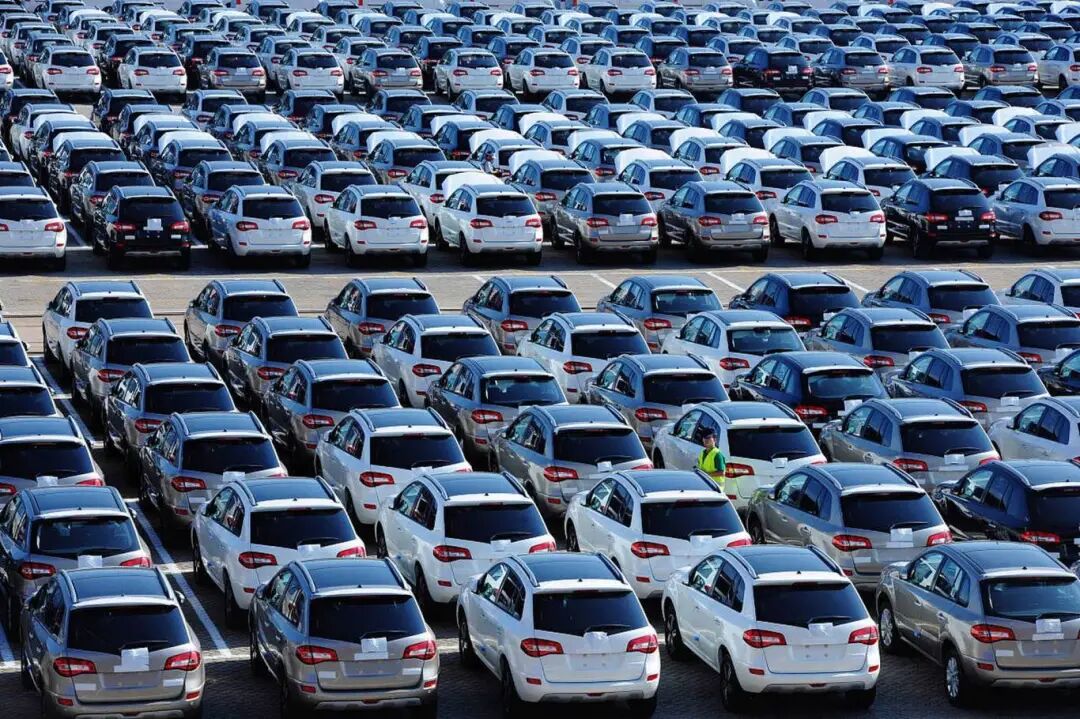
Amid this celebration, Wei Jianjun, the chairman of Great Wall Motors, recently poured a “bucket of cold water” on the Chinese automotive industry. He said, “Our Chinese automakers, including Great Wall, still have a long way to go compared with those excellent companies... Established automakers have a profound foundation in car - making, and the road ahead is still long. We need to learn hard, learn modestly, and learn in a down - to - earth manner.”
Admittedly, for many people, these words are a bit of a downer, but it's a good thing not to get overly complacent. Although Chinese automobiles have made great progress and have more say in the global automotive industry, when we deeply analyze the gap between Chinese automobiles and established giants in Europe, America, Japan, and South Korea, there are indeed many areas where we can learn.
This gap is not a shortcoming in a single dimension but a systematic one that runs through technology, brand, and details. This gap is temporarily masked by the dividends of new energy and short - term sales, but it cannot be truly ignored.
01
The Gap Still Exists, and the Chase Is On
If we list what Chinese automakers need to learn from established ones, technology is still an aspect that cannot be ignored. Currently, the lead of Chinese automobiles is concentrated in the new fields of new energy and intelligent connected vehicles, but there is still a gap in traditional core technologies and engineering systems.
Especially European and American automakers, after a century of development, have mature technological reserves and a complete R & D system in traditional powertrain fields such as engines and transmissions. Even in the transformation to new energy, their mechanical engineering skills have not been lost.
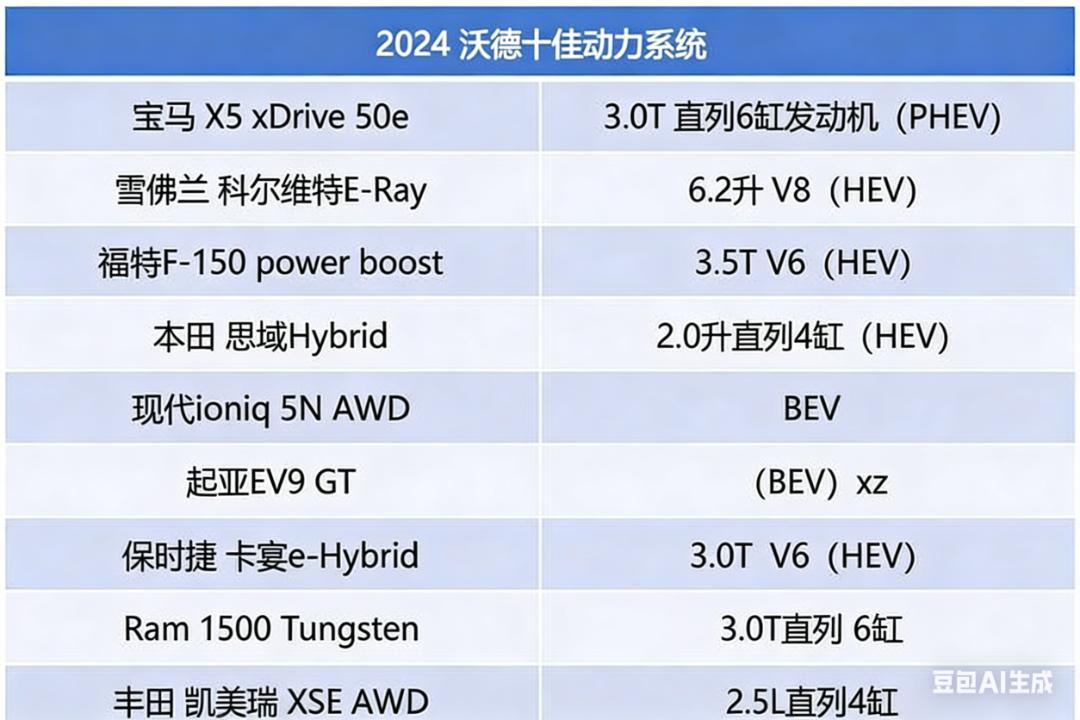
Take the engine, the “heart” of a car, as an example. The industry has an annual “Ward's 10 Best Engines” selection. Brands such as Volkswagen, Daimler, BMW, Nissan, Honda, Mazda, General Motors, and Cadillac have long been among the top ten, but few Chinese engines have been short - listed. In the most recent 2024, only BYD's 2.0T extended - range hybrid + e - Quad powertrain system was nominated.
Regarding chassis tuning, most Chinese automakers rely on foreign engineers or directly borrow from mature platforms, lacking a core methodology for independent R & D. Many domestic cars seem to have full configurations but still cannot achieve the stable quality of established automakers. Behind this gap is decades of engineering experience accumulated through repeated trial - and - error and iterations, which cannot be made up for by simply piling up parameters in the short term.
At the same time, due to the different competition rhythms in different markets, the Chinese market is highly competitive and has a fast iteration speed, which may lead to insufficient verification cycles. According to the industrial thinking of established automakers, a car model usually takes five to seven years of verification, covering extreme conditions such as high - temperature, cold, high - speed, and rough roads. However, affected by market competition and capital pressure, domestic new energy models have to be upgraded every two or three years, and many potential problems “haven't had time to surface” before hitting the road.
Beyond vehicle manufacturing, in the battery field, although the Chinese market leads in production capacity and installation volume, in some core material systems and industrialization experience, for example, LG maintains a first - mover advantage in specific technology routes (such as NCMA). In the underlying algorithms of intelligent driving, our advantages are concentrated in scenario - based applications, but we still rely on foreign suppliers in the core capabilities of chip design and algorithm iteration. This current situation of “emphasizing application over R & D” makes our lead somewhat “fragile”.
In addition, the gap in brand heritage is also an insurmountable chasm for Chinese automobiles.
Since its inception, the automobile has never been just an industrial product but also a carrier of brand culture and values. Traditional established automakers have formed unique brand genes and user perceptions after a century of accumulation.
For example, Mercedes - Benz represents luxury, BMW represents sportiness, Toyota represents reliability, and Volkswagen represents rigor. These labels are deeply rooted in the minds of global consumers. This brand premium cannot be established through short - term marketing or popular products but is the trust accumulated by generations of consumers through long - term use. In contrast, Chinese automobile brands generally lack the exploration and precipitation of brand culture.
This gap is directly reflected in pricing power and tolerance for mistakes: For the same quality defect, a luxury brand is considered an “isolated case”, while a domestic brand is labeled as having a “common problem”. For the same configuration choices, a luxury brand is interpreted as having an “engineering orientation”, while a domestic brand is accused of “cutting corners to make more profit”.
When it comes to one of the core pain points in the development of Chinese automobiles, profit is likely to exacerbate this pain.
In recent years, there has been a saying in the industry: “We work hard all year to sell 30 million cars, but the money we earn is still less than that of Toyota's 10 million cars.”
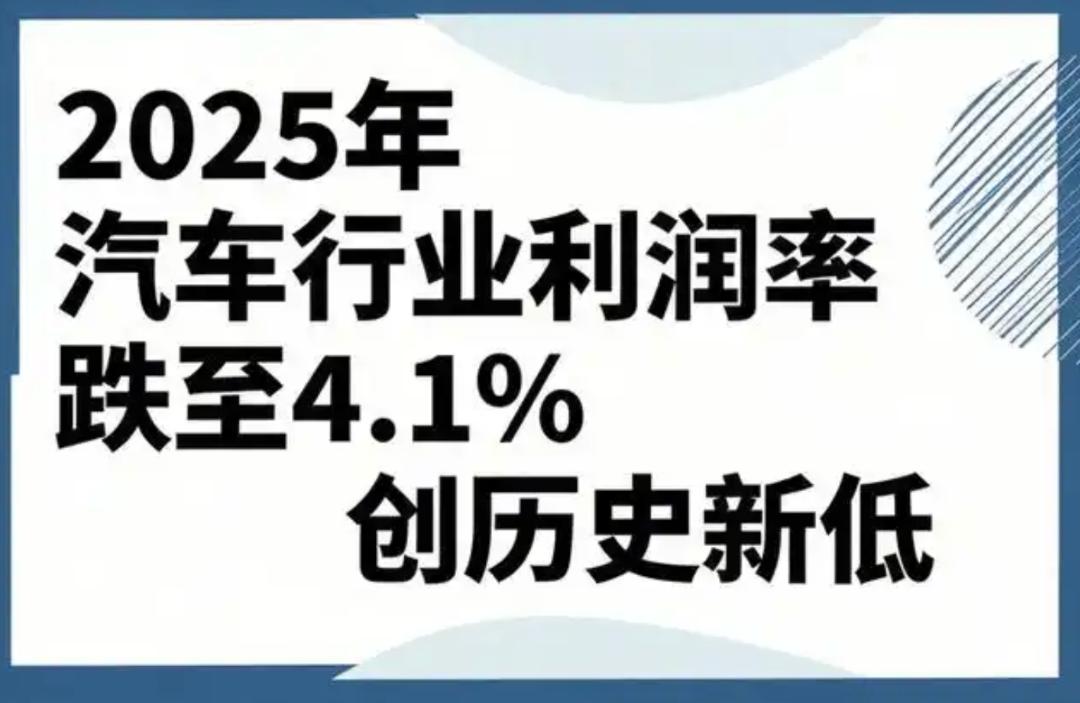
Data shows that in the fiscal year 2025, Toyota's net profit reached 4.765 trillion yen, equivalent to 237.7 billion yuan. This is nearly three times the total profit of 18 listed Chinese passenger - car companies in 2024. In contrast, among the 18 listed Chinese passenger - car companies, although 13 achieved profitability, their total net profit was only 122.677 billion yuan. If we also consider the 5 loss - making companies, the total profit will be further reduced by 33.2 billion yuan.
That is to say, the total annual profit of all Chinese listed automakers is less than half of Toyota's. During the same period, the profit margin of the domestic automotive industry was 4.1%.
Moreover, in terms of detail control in car - making, global supply - chain layout, after - sales service systems, and user operations, Chinese automakers also differ from established ones. The latter, with years of global layout, have stable supply - chain systems and complete after - sales service networks and can quickly respond to changes in the global market. In contrast, the supply chains of Chinese automakers are mostly concentrated in the domestic market, and their overseas supply - chain layouts are not yet perfect. Once they encounter risks such as geopolitical issues and trade barriers, they will face the crisis of supply - chain disruption.
02
Face the Gap, and the Future Is Promising
Of course, we cannot deny the progress made by Chinese automobiles in recent years just because of the existing gap.
In fact, in the global trend of the automotive industry's transformation towards electrification and intelligence, Chinese automobiles have seized historical opportunities and achieved a leapfrog development from “catching up” to “running side - by - side” and even “leading” in some fields. This achievement is worthy of our pride and recognition.
In the past five years, the charging efficiency of power batteries in China has increased by more than four times, and the motor and electronic control systems have reached the global leading level. BYD's Blade Battery and CATL's ternary lithium batteries not only dominate the global market but also have made great breakthroughs in safety and energy density.
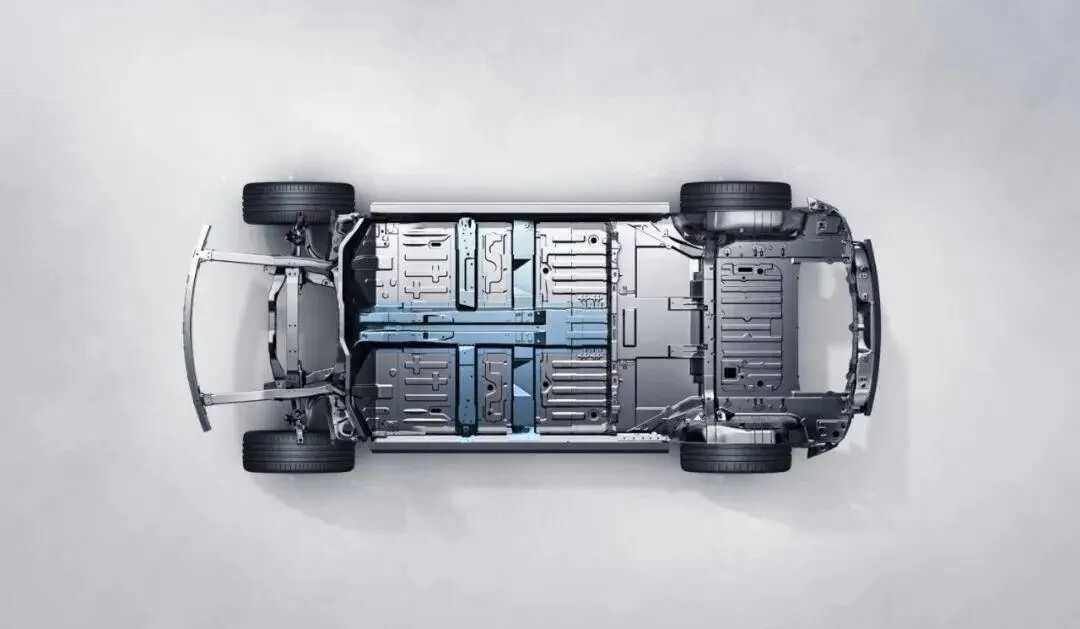
In the field of vehicle manufacturing, Chinese automakers were the first to launch dedicated pure - electric platforms, such as BYD's e - platform, Great Wall's Lemon Hybrid platform, and Geely's SEA vast platform, which have significantly improved vehicle performance and space utilization. In 2025, the production and sales of new energy vehicles in China both exceeded 16 million, making China an important force in the global new energy vehicle market.
In addition, compared with established automakers, Chinese automakers understand consumers' needs better and integrate technologies such as artificial intelligence, big data, and the Internet of Things into automotive products more quickly, creating a smarter experience that better suits users' scenarios. Currently, the penetration rate of L2 - level assisted driving of Chinese brands is constantly increasing, and L3 - level autonomous driving is also about to develop rapidly.
Meanwhile, guided by national policies and with the efforts of enterprises, China has established the most complete and resilient new energy vehicle industrial chain in the world. From upstream lithium and cobalt mines, to mid - stream batteries, motors, and electronic controls, to downstream vehicle manufacturing and after - sales services, a closed - loop industrial chain has been formed, which not only reduces production costs but also ensures the stability of the supply chain.
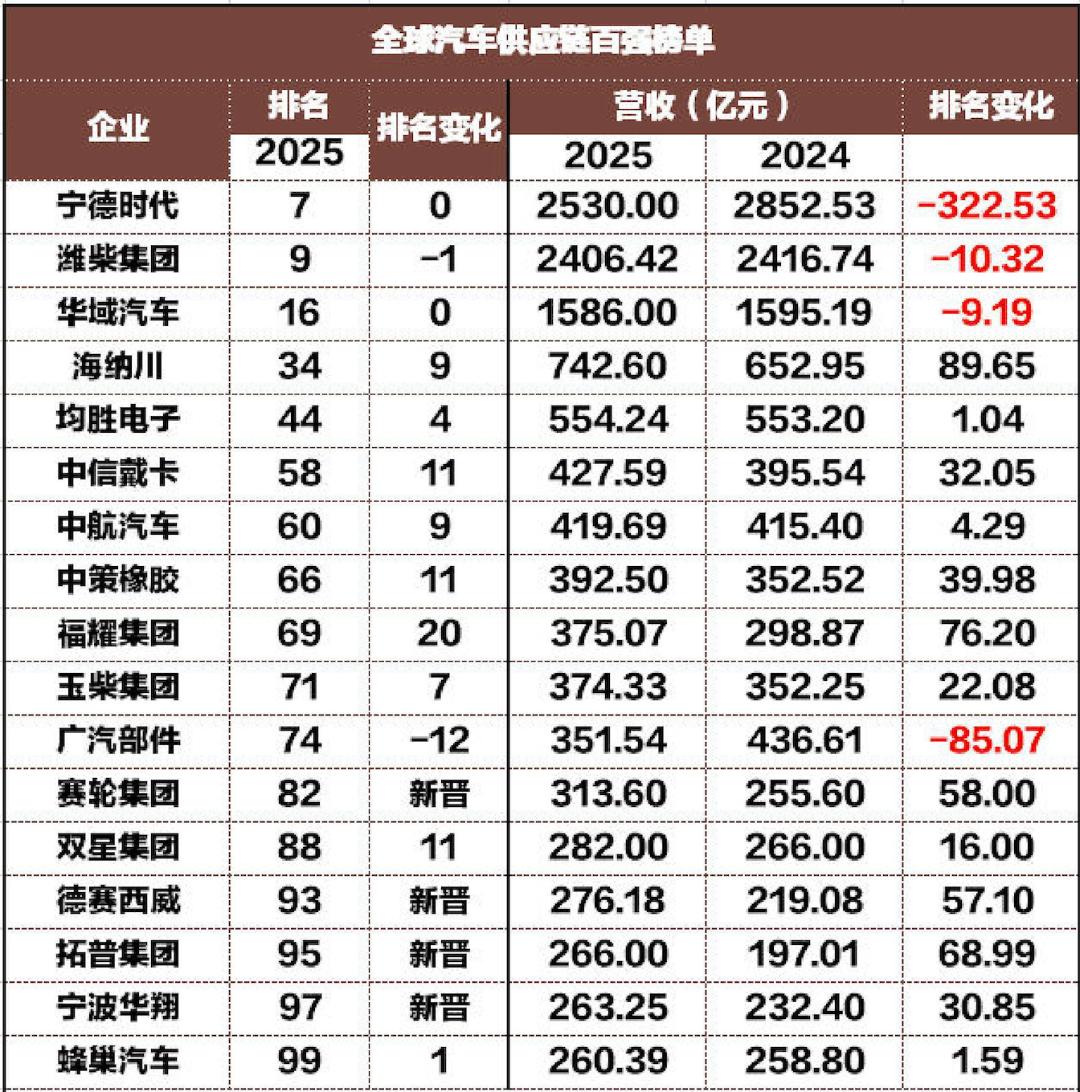
Currently, more than 10 Chinese auto - parts companies have made it onto the list of the world's top 100 auto - parts suppliers in 2025, covering multiple fields such as batteries, motors, and intelligent cockpits, breaking the monopoly of foreign auto - parts companies. This complete supply - chain system is difficult for automakers in Europe, America, Japan, and South Korea to replicate in the short term and is also an important support for Chinese automobiles to iterate quickly and capture the market.
In 2025, the sales volume of Chinese - brand passenger cars was nearly 21 million, with a market share of nearly 70%, an increase of about 30 percentage points compared with the end of the “13th Five - Year Plan” period, changing the pattern where joint - venture cars dominated the market. In terms of overseas expansion, Chinese automobiles are exported to more than 200 countries and regions. In 2025, the export volume reached 8.32 million, a year - on - year increase of 30%. BYD and Geely ranked among the top ten global automakers in terms of sales volume.
Moreover, more and more Chinese automakers have realized the importance of core technologies, increased R & D investment in core fields such as batteries, chips, and algorithms, established independent R & D systems, and trained core technology teams. They hold a large number of patents in fields such as batteries, motors, and electronic controls, achieving independent control of core technologies.
This emphasis on R & D is the foundation for the long - term development of Chinese automobiles and the key to narrowing the gap with established automakers.

In other words, we recognize the gap but do not belittle ourselves; we affirm our achievements but do not become complacent. This is the core meaning of Wei Jianjun's words and the kind of sobriety that the Chinese automotive industry most needs.
In today's increasingly competitive global automotive industry, a leading position in sales is only temporary. Only by facing the gap and problems directly can we make progress. Currently, the Chinese automotive industry is at a critical stage of transformation, facing both historical opportunities brought by new energy and intelligence and challenges due to shortcomings in technology and brand. Indulging in the “comprehensive leadership” argument and avoiding the gap will only lead to being eliminated by the market in the end. Only by staying sober and facing the gap can we develop healthily in the increasingly fierce competition.
This article is from the WeChat official account “Automobile Commune” (ID: iAUTO2010). Author: Li Sijia, Editor: He Zengrong. It is published by 36Kr with authorization.