The sincerity and "precision" of Apple's spring new products
As expected, the product circle this year will witness a widespread trend of "price hikes and feature cuts." Some "small manufacturers" have even announced the suspension of new flagship product R & D, and many "big manufacturers" have also postponed the launch of their non - peak models. However, Apple has gone against the trend, giving the entire industry a solid lesson with a dense spring product launch.
From the iPhone 17e with an epic doubling of the starting storage capacity, to the M5 Pro/Max MacBook Pro with sky - high performance, and even the long - awaited 120Hz high - refresh Studio Display XDR, Apple's core strategy has become evident: Comprehensively raise the threshold of basic hardware to pave the way for the edge - side AI ecosystem, and at the same time, maintain a strictly hierarchical product moat with extremely precise "product segmentation."
iPhone 17e: The "King of Pragmatism" with Reused Molds
As the most talked - about product among this week's new releases, the appearance of the iPhone 17e has undoubtedly dropped a bombshell in the mid - range market. Its upgrades are almost all on point: the most heart - warming one is that the selling price remains the same while the storage capacity has soared — it directly skips 128GB and comes with a standard starting capacity of 256GB. At the price range of 4,499 yuan (3,999 yuan after national subsidies, and it could be less than 3,500 yuan with platform coupons), this has undoubtedly redefined the storage baseline for mid - range phones (although the price of Apple's mid - range phones is still slightly high).
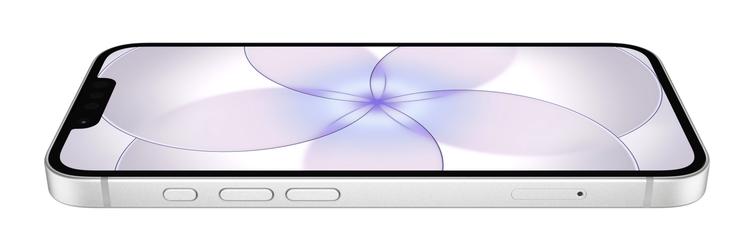
Image source: Apple
In terms of core computing power, it is equipped with the A19 chip (although it is a cut - down version with one less GPU core). Paired with the self - developed C1X baseband with double the performance and 30% lower energy consumption, and the MagSafe magnetic charging that was missing in the previous iPhone 16e, the iPhone 17e has made up for several of its most criticized shortcomings.
But Apple is still Apple. While endowing it with high cost - effectiveness, its product segmentation is still so precise that it makes people grit their teeth. In an era when high - refresh rate screens have been popularized in Android phones priced at around 1,000 yuan, the iPhone 17e still stubbornly adheres to a 60Hz screen. The legendary Dynamic Island is absent again, and it still retains the "notch screen" of the iPhone 16e. This deliberate hardware differentiation is obviously to safeguard the high - end positioning of the regular Pro series.

Image source: Apple
In addition, despite the significant improvement in the energy efficiency of the chip and baseband, its battery capacity is exactly the same as that of the iPhone 16e. The officially claimed 26 - hour video playback battery life has also remained the same. This is largely due to the screen not supporting an adaptive refresh rate, which prevents further reduction of power consumption.
As for the single 48 - megapixel camera with a 2x telephoto achieved by cropping, although it is sufficient for daily "scanning codes," the absence of macro photography, spatial video, and Center Stage still constantly reminds you that this is the most entry - level iPhone.
The iPhone 17e is like an excellent student with a bias in certain subjects. It maximizes cost - effectiveness with 256GB storage and the A19 chip, specifically targeting practical users who value performance and capacity. However, it also builds a high wall with its 60Hz screen, precisely steering users with higher experience requirements towards more expensive models.
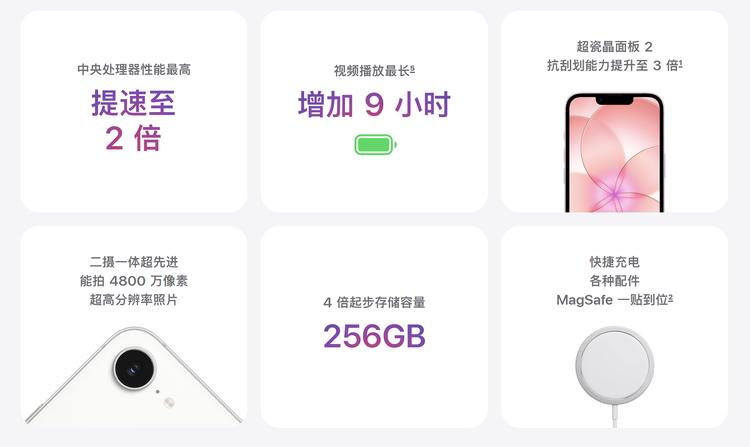
Image source: Apple
Oh, by the way, the iPhone 17e still has some "little surprises." It is the first product in mainland China to support both physical SIM cards and eSIMs simultaneously. It can support one physical SIM card and one eSIM or two eSIMs to standby at the same time. Users can enjoy the convenience of eSIMs during travel and freely replace physical SIM cards, which is much better than the iPhone Air.
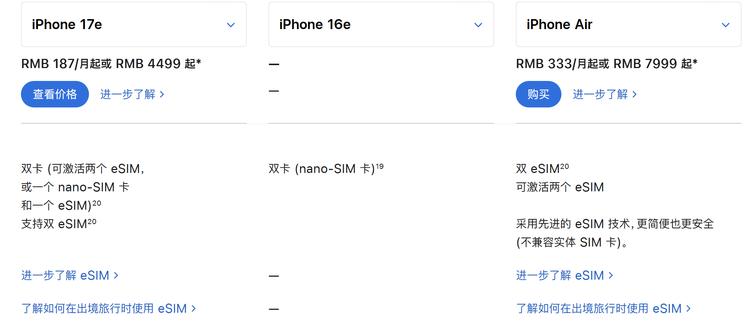
Image source: Apple
iPad Air M4: A Product with "Double Dilemmas" in System and Configuration
If the iPhone 17e is a "dessert" for users outside China to experience iOS, then the new iPad Air equipped with the M4 chip is Apple's core product to fully leverage AI on the tablet side.
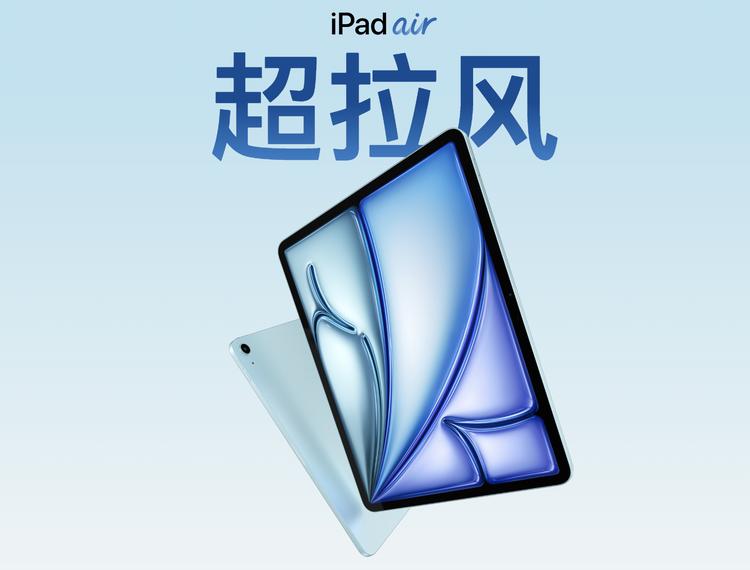
Image source: Apple
The most radical change in this generation of iPad Air is not the powerful M4 chip, but rather that in order to handle the increasingly large edge - side AI models, Apple has extremely rarely increased the unified memory by 50% to 12GB, and the bandwidth has soared to 120GB/s. Paired with a 16 - core neural network engine, whether it's intelligent typesetting in Goodnotes or one - click image matting in Final Cut Pro, it demonstrates the dominance of an iPad Pro. Coupled with the full replacement of the N1 chip supporting Wi - Fi 7 and the C1X cellular baseband with a 50% speed increase, the hardware foundation of this tablet has reached the "threshold" of the previous - generation iPad Pro.
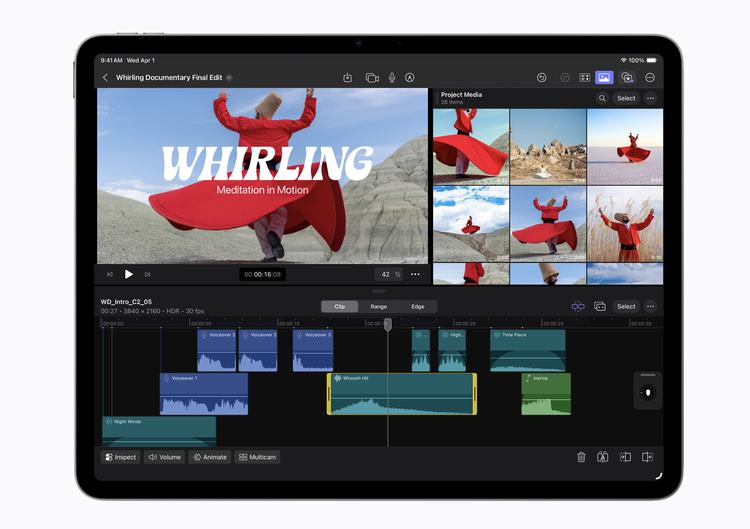
Image source: Apple
However, Apple's puzzling business logic is evident again. Since the iPhone 17e on the mobile side already starts with 256GB, the iPad Air M4, which is positioned as a "productivity tool" and needs to handle a large amount of multimedia materials, still starts with only 128GB of storage, which seems inadequate in the face of video project files that are often dozens of gigabytes.

Image source: Apple
In addition, although Apple has introduced a more flexible window system and an upgraded Files app, in actual high - intensity office workflows, the iPad still has a long way to go to achieve true desktop - level freedom. The excellent combination of 12GB of memory and the M4 chip often still falls into the anxiety of performance over - capacity where it has nowhere to show its strength.
MacBook Air M5: The "Well - Rounded Machine" Completing the Last Piece of the Puzzle
The MacBook Air has always been one of the world's best - selling ultra - thin laptops. However, in the past few years, the 256GB starting storage and the "slowed single - particle SSD" have been the core reasons preventing users from buying it. In the M5 generation, Apple has finally decided not to be stingy anymore.

Image source: Apple
The basic experience of the M5 MacBook Air has been fully unlocked: the starting capacity has doubled to 512GB (up to 4TB is available as an option), and the read - write performance of the new solid - state drive has doubled compared to the previous generation. The read - write bottleneck that previously troubled entry - level users has been completely shattered.
With the support of the M5 chip, not only has the unified memory bandwidth increased by 28%, but its speed in processing AI tasks is also an astonishing 9.5 times faster than in the M1 era.
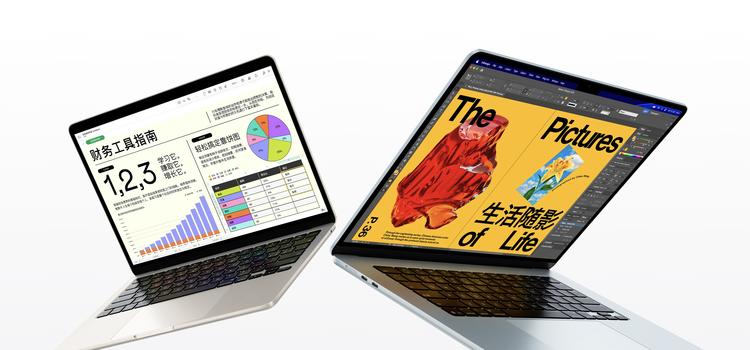
Image source: Apple
The most amazing thing is that while delivering such powerful performance, it still maintains a fan - less, zero - noise design and a legendary battery life of up to 18 hours. Coupled with the addition of features such as Wi - Fi 7, Bluetooth 6, and support for dual external displays, the M5 MacBook Air has almost become a "well - rounded mobile machine" without any obvious flaws.
Unfortunately, although the peak performance of the M5 is extremely impressive, during long - term, high - load continuous 3D rendering or local AI large - model training, the fan - less passive cooling design will inevitably reach the critical point of frequency reduction. However, for most writers, programmers, and light - duty video editors, this machine is almost perfect.
MacBook Pro M5 Pro/Max & Studio Display XDR:
The "Monsters" Built for the Extreme
In the professional - grade market, Apple doesn't even bother to pretend this time and has directly pushed the performance to an astonishing level. The upgrades of the M5 Pro/Max MacBook Pro are specifically targeted at Hollywood post - production workers, top - level programmers, and senior AI developers.
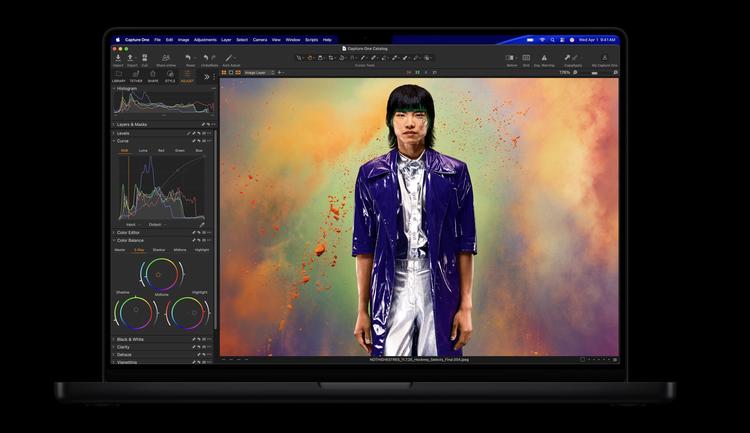
Image source: Apple
The M5 Pro comes with a standard 1TB of storage, and the M5 Max starts with 2TB. The peak speed of the solid - state drive reaches an astonishing 14.5GB/s. With a memory bandwidth of up to 614GB/s and a unified memory limit of 128GB, it can handle large - scale language models locally with ease.
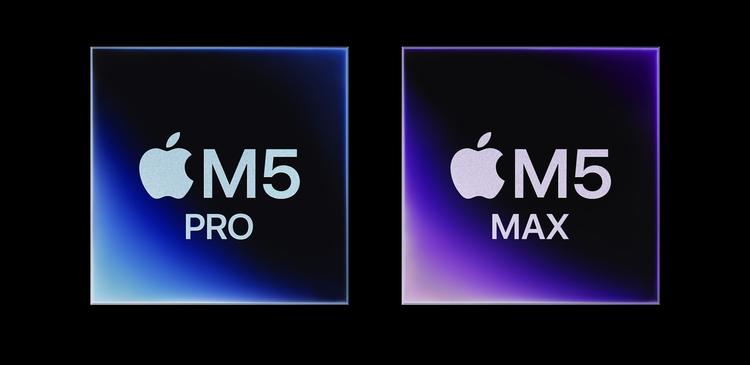
Image source: Apple
The addition of three Thunderbolt 5 ports, with double the bandwidth, paves the way for ultra - high - speed external arrays and multi - screen output, making the new MacBook Pro a top - level mobile workstation that can fit into a backpack.
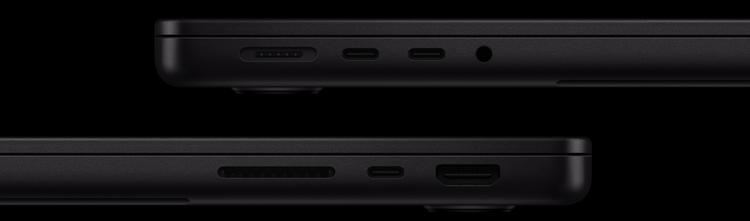
Image source: Apple
Alongside this performance monster, two Studio Display monitors have made their debut, filling the last gap in the desktop ecosystem.
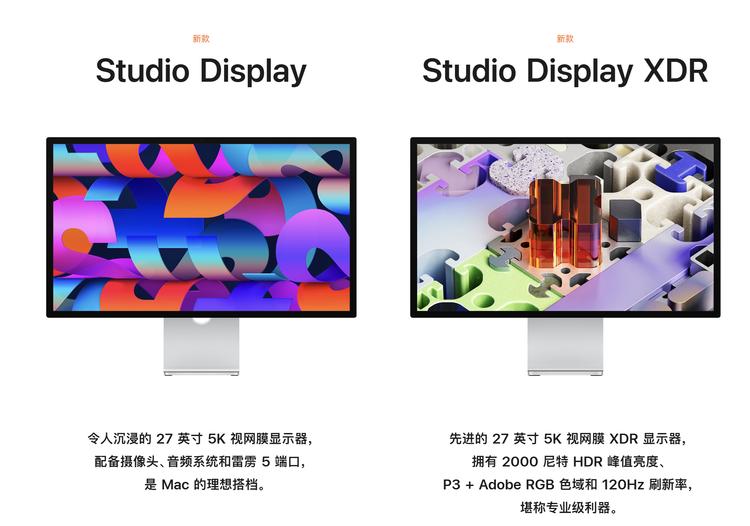
Image source: Apple
It features a 27 - inch 5K Retina display, mini - LED backlighting with 2304 zones, a peak HDR brightness of 2000 nits, and the long - awaited 120Hz ProMotion. It natively supports the Adobe RGB color gamut, and the Thunderbolt 5 port on the back can provide 140W of reverse charging. With just one cable, it can light up the screen and power a 16 - inch M5 Max MacBook Pro.
