Soaring 211%, the data of smart glasses in 2025 is out: Xiaomi stirs up the game, how can established brands break through?
In 2025, smart glasses finally proved themselves with their sales volume.
According to the latest annual data released by RUNTO, the sales volume of the Chinese smart glasses market reached 1.454 million units in 2025, a year-on-year increase of 211%. Among the sub - categories, the year-on-year sales growth rates of AR glasses and audio glasses reached 83% and 135% respectively. The shooting glasses achieved the feat of going from being ignored to selling 500,000 units annually.
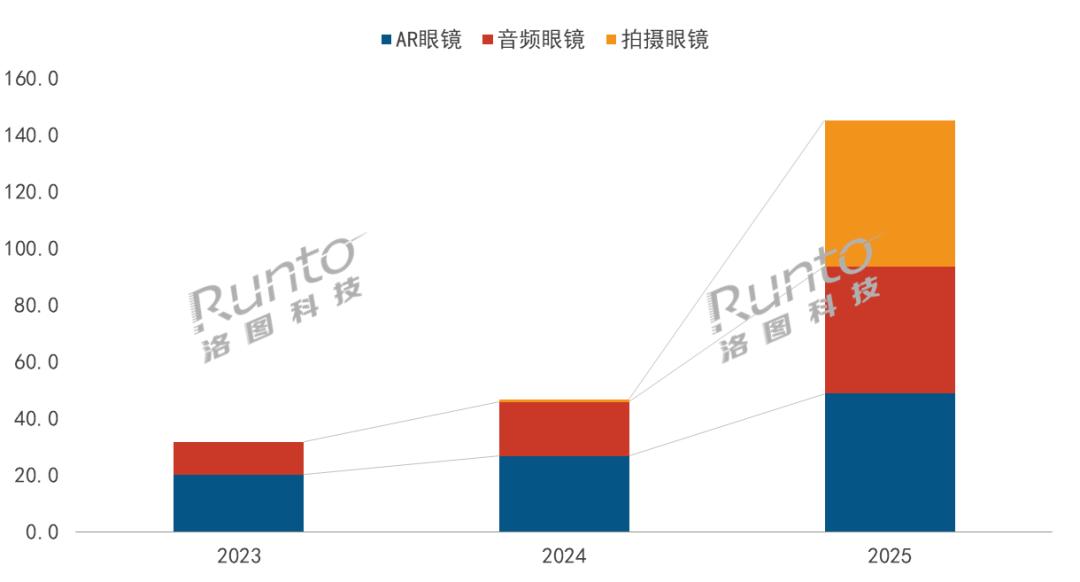
Image source: RUNTO
However, what's even more interesting is the performance of each brand in the category of shooting smart glasses. In Q1 2025, RayNeo once occupied nearly 50% of the shooting glasses market share. In the online sales channel, RayNeo even accounted for more than 90% of the sales volume share. But by Q3 2025, RayNeo's sales volume share was less than 30%. Xiaomi took its place and became the leading brand in the sales of Chinese shooting glasses.
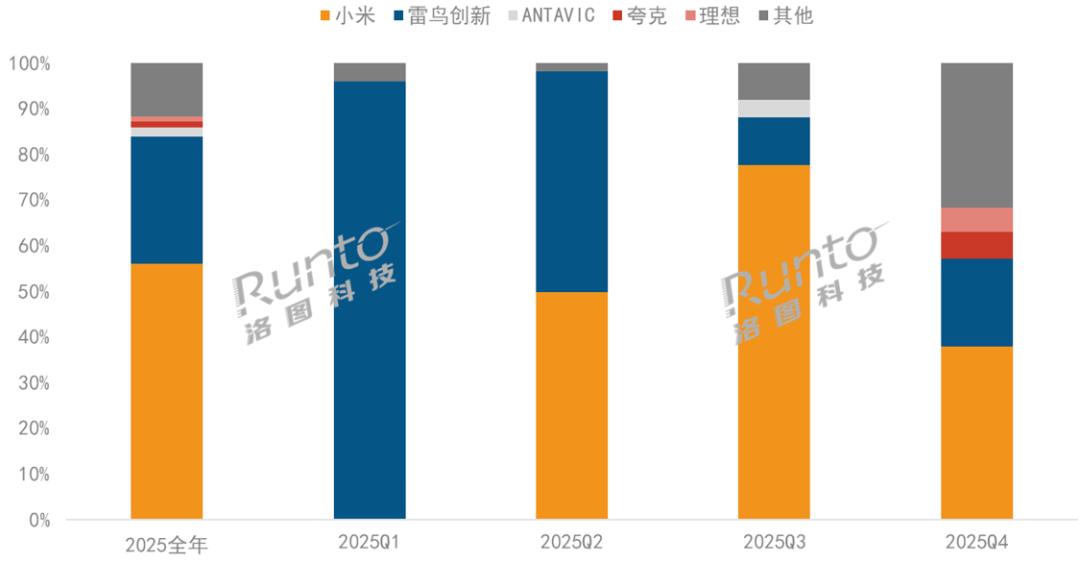
Image source: RUNTO
Behind the dilution of its share, what exactly went wrong with RayNeo? And more importantly, in the current situation where hardware solutions are highly similar, why can the "new forces" of smart glasses take over the market?
Difficulty in breaking through is the biggest challenge for traditional smart glasses brands
In the view of Lei Technology, for "established" smart glasses brands like RayNeo, the biggest problem is not that their products are not hardcore enough, but that their sales channels are insufficient.
Let's first talk about the short - board of sales channels. Taking RayNeo, which I'm familiar with, as an example, relying on the Internet brand Raybird, RayNeo has a natural disadvantage in offline channel layout. Currently, RayNeo only has mixed experience areas in a few high - end eyewear stores. Consumers can experience and purchase smart glasses under the guidance of the sales staff in the eyewear stores (not RayNeo's sales staff).
From offline observation, most eyewear store clerks do not deliberately guide consumers to experience smart glasses. And from the perspective of store display stand settings, unless consumers know about smart glasses before entering the store and specifically ask to experience relevant products, they can hardly access such products.
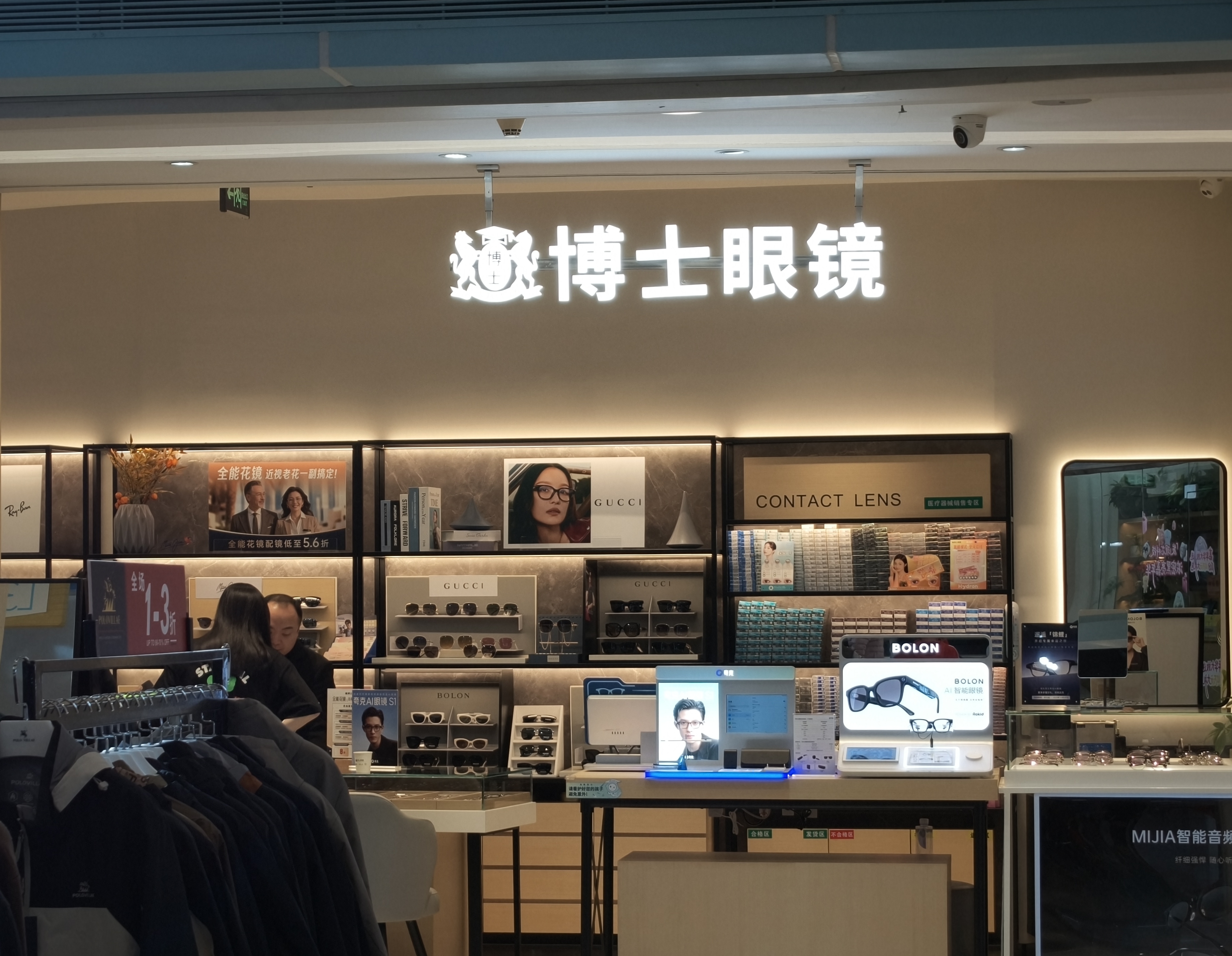
Image source: Lei Technology
In the view of Lei Technology, this offline sales channel layout, which has a lower presence than the "store - in - store" in offline shopping malls, fundamentally limits the user exposure of "traditional smart glasses brands" like RayNeo. Under this tilt towards online and away from offline, the offline partner stores that should have become sales entry points finally only became "service channels" for users with the need for myopia lens fitting, and the conversion rate is relatively limited.
Secondly, there is the "islandization" of the product ecosystem. Compared with mobile phone manufacturers (Xiaomi) or automobile brands (Li Auto), the ecological interconnection ability of traditional smart glasses brands is indeed relatively limited. Based on my own experience in the past year, most of the time, I choose to use the glasses to call the AI assistant or music service on my mobile phone. Although the glasses app integrates certain resources, the options are never as rich as those in the mobile phone app.
In addition, the brand appeal of RayNeo itself cannot be compared with that of large - scale ecological enterprises like Xiaomi. Although in the smart glasses category, RayNeo is on the same level as companies such as Meta Ray - Ban and Rokid, for potential users who are not familiar with this category and are preparing to buy their first pair of smart glasses, choosing a brand like Xiaomi that they've heard of can give them a sense of "security".
In fact, this brand appeal and distribution ability are also the core driving forces for Xiaomi's AI glasses to successfully break through in the market within a week of their launch.
However, it's true that Xiaomi has brand appeal that other brands can hardly catch up with. So, in terms of hardware experience, how did Xiaomi, as a latecomer, catch up with the pioneers like RayNeo and Rokid?
With comparable hardware strength, how did the new forces overtake violently?
This has to mention the biggest problem in the smart glasses category at present - the homogenization of core components.
From sensors to processors and then to acoustic units, the highly mature supply chain has almost eliminated the hardware gap between brands. As long as Qualcomm doesn't update its new AR glasses platform, smart glasses brands around the world will still have to polish their products around the "golden combination" of Snapdragon AR1 and Sony IMX 681. Of course, mainstream smart glasses brands will also pair the AR1 platform with a co - processor with lower power consumption. But in the current industry situation, the choices for co - processors are nothing more than BES and Yanjijiwei.
This has also led to the fact that in the past few years, there has been no real hardware performance breakthrough in the smart glasses category. Most of the differences are in product form (swappable battery) or product experience (lightweight, dual - optical engines, electrochromic).
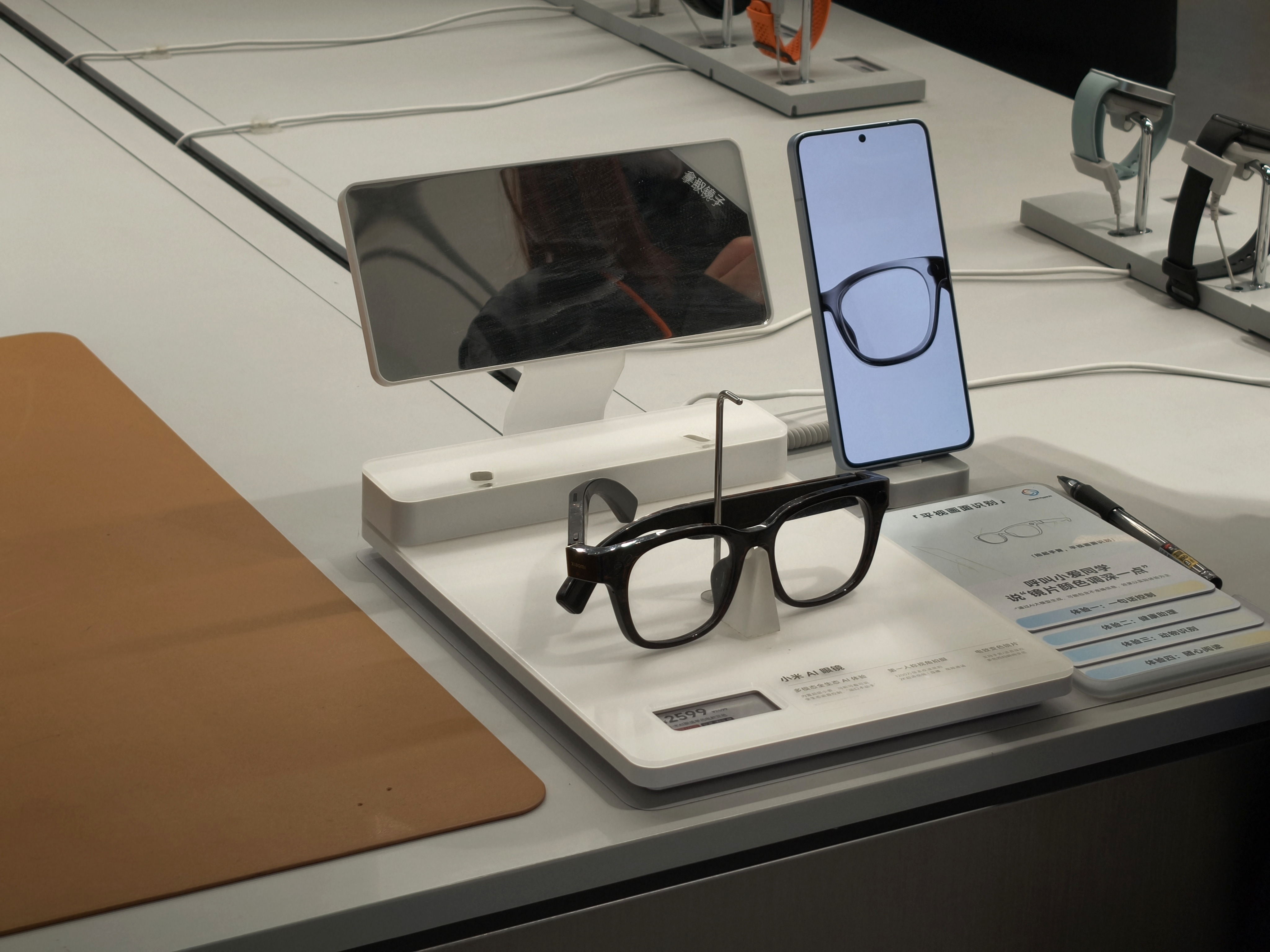
Image source: Lei Technology
For example, Xiaomi's AI glasses have built their own moat in terms of ecological experience and sales channels with Xiaoai Classmate, the Xiaomi Home ecosystem chain, and the offline channels of Xiaomi Home. Even though the hardware completion of Xiaomi's AI glasses is not very high, and the workmanship and hardware details are relatively average, they can still attract more consumers who don't pay much attention to smart glasses.
Meanwhile, white - label smart glasses on e - commerce platforms such as Pinduoduo are also besieging leading eyewear brands with lower product prices. RUNTO data shows that white - label and small - and medium - sized manufacturers occupy about 10% of the online market share. Thanks to the efficient domestic supply chain, white - label glasses can acquire a large number of customers at low prices on channels like Pinduoduo.
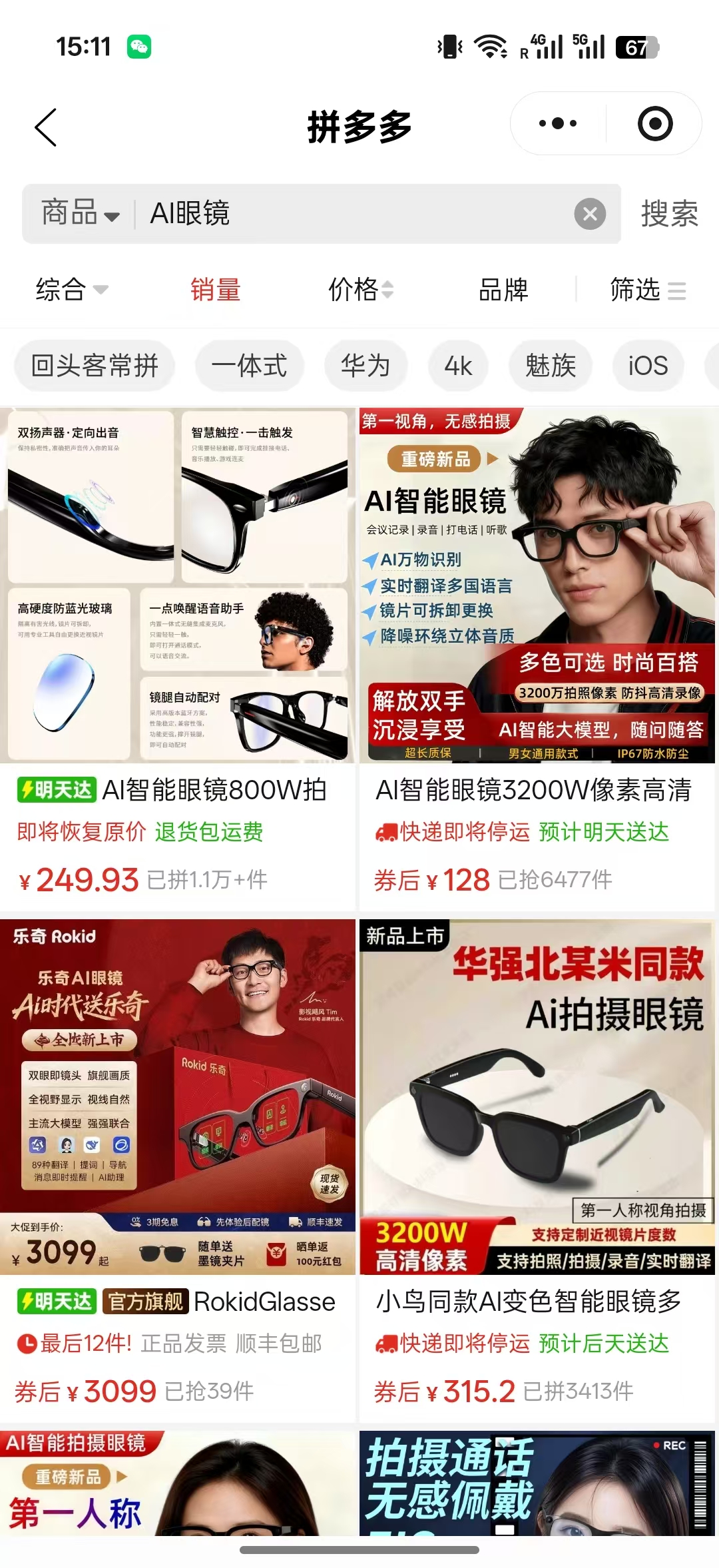
Image source: Lei Technology
Different from leading brands, these white - label products don't need brand premium, nor do they care about after - sales service and ecosystem. They only need to consider the cost - effectiveness of the most basic functions and mechanisms. You know, in the domestic consumer electronics field, price - sensitive users are always the main customer base.
Brands like RayNeo, which focus on the mid - to high - end online market, are squeezed by Xiaomi's ecosystem on the high end and besieged by the low prices of white - label products on the low end. Naturally, their survival space is extremely compressed.
With the upcoming chip update, the smart glasses market will surely undergo a second reshuffle
However, in the view of Lei Technology, the market pattern where "Xiaomi catches up from behind and leads the market" is likely to be broken in the second half of 2026 or early 2027. The reason is not complicated - the chips for smart glasses are going to be updated.
You know, the Qualcomm Snapdragon AR1 was released in September 2023, and in the past two and a half years, users' demands for smart glasses have already changed:
When the AR1 first came out, our expectations for smart glasses were just to shoot short videos, listen to music, and ask the weather from the mobile phone AI. But in 2026, we started to try to use smart glasses for live - streaming, and AI has the ability of AI Agent. Even the most basic microphone now needs to have the voiceprint collection ability at the financial payment level.
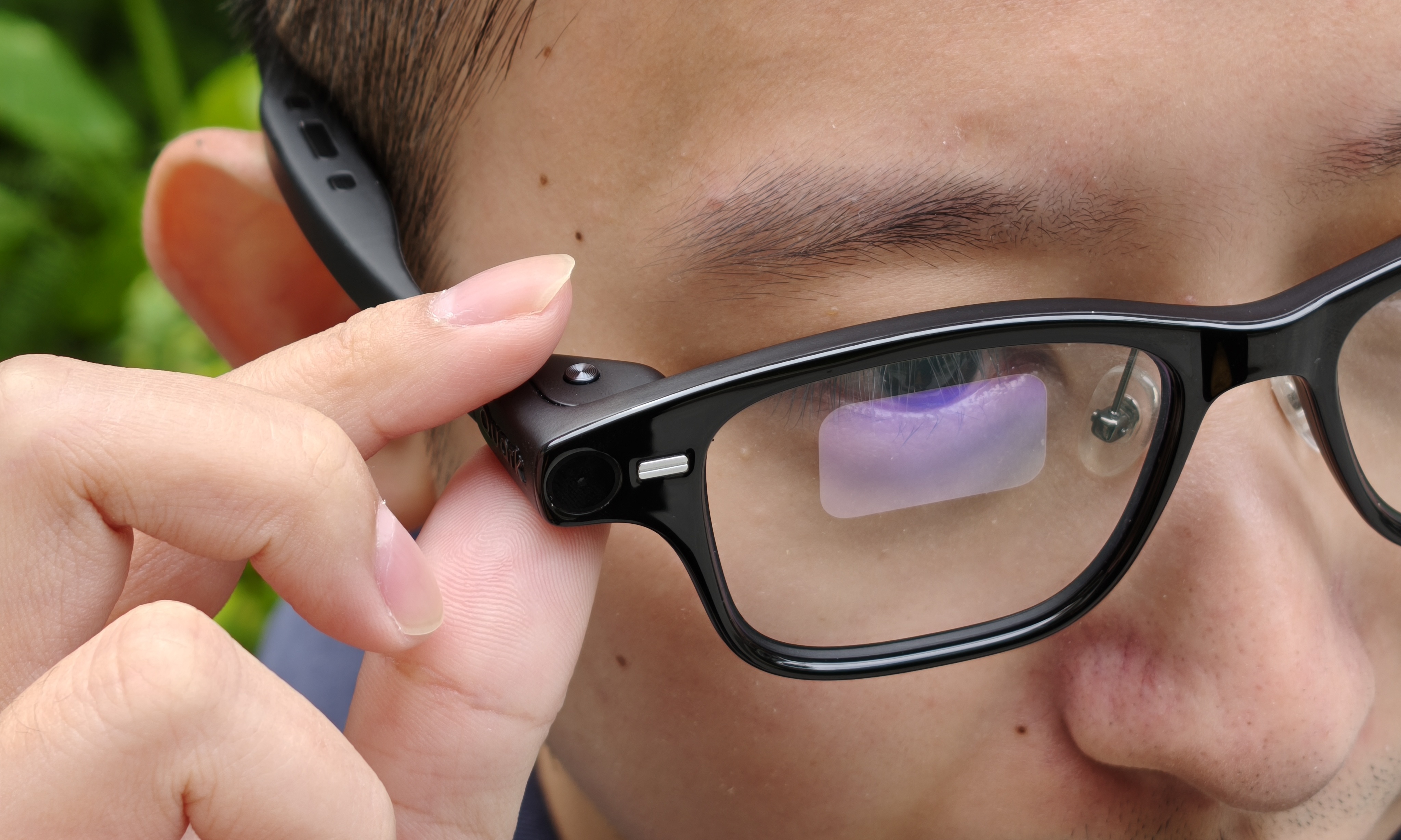
Image source: Lei Technology
For this reason, Lei Technology believes that at the latest at the Snapdragon Summit at the end of 2026, Qualcomm will release a new generation of Snapdragon AR chips. And new smart glasses products using the new platform will debut during the North American Christmas season in December 2026 and at CES in January 2027.
It's certain that the sharp increase in sales volume in 2025 can only be regarded as a sign of the "first stage" of the smart glasses market. With the entry of leading brands such as mobile phones (Xiaomi) and AI (Qianwen) into the game, the smart glasses market in 2026 will surely undergo a new round of reshuffle.
By then, which brand will be the final winner?
This article is from "Lei Technology" and is published by 36Kr with authorization.