The leading Chinese floor sweeper brand is desperately trying to save itself.
The leading Chinese floor sweeper manufacturer still hasn't "stopped the bleeding."
The latest performance report of Roborock Technology for 2025 shows that its revenue soared by 55.85% year - on - year, reaching 18.616 billion yuan. However, the profit growth significantly stalled: the net profit attributable to shareholders was 1.36 billion yuan, a year - on - year decline of 31.19%; the net profit after deducting non - recurring gains and losses was 1.087 billion yuan, a year - on - year decline of 32.9%.
This is a typical report of " scale victory but profit loss."
The 31.19% decline in net profit is the largest since the company went public in 2020. In 2022, the year with the sharpest previous decline, it was only - 15.5%. In five years, Roborock Technology has truly fallen into the deep water area of "increasing revenue but not profit" for the first time.
The question is: Is this the beginning or the end?
As early as when the third - quarter report of last year was released, the management set the tone for the profit decline: the decline in gross profit margin and net profit margin is a phased result of global expansion, full - price - band layout, and investment in new product categories. It is an active strategic adjustment rather than the deterioration of core profitability. At the same time, they predicted that the profit loss will be reduced by about 500 - 700 million yuan in 2026.
If we take the current net profit attributable to shareholders of 1.36 billion yuan as the base, it means that the loss must be narrowed by at least about 37% this year, and the net profit margin must be substantially repaired. This may not be a goal that can be achieved simply by "reducing advertising investment."
The most promising variable comes from the capital market.
Roborock Technology completed the overseas issuance filing at the end of last year, and the listing hearing in mid - January also completed the process. It is one step closer to listing. If the IPO is successfully launched, it can not only replenish the cash reserve but also provide more sufficient capital ammunition for global expansion.
Looking at the current adjustments of Roborock Technology in all fronts, to some extent, it is more like a "correction" rather than a "turnaround."
After experiencing both glory and setbacks, the "leading Chinese floor sweeper manufacturer" seems to have finally figured things out.
On Shaky Ground
Roborock Technology spent the past year almost in a storm of scolding and doubts.
On the surface, the annual stock price decline was less than 3%, which doesn't seem too bad. However, if you look closely, it's quite dismal: the single - month declines in April and October both exceeded 20%, and the stock price declined for four consecutive months starting from September, with a cumulative decline of nearly 30%.
The starting point of the stock price collapse was the cross - border foray into the automobile industry by the founder, Chang Jing.
Since April 2024, Chang Jing's identity label on social platforms has gradually changed from "Founder of Roborock Technology" to "Founder of Jishi Auto," and he almost updated daily to promote Jishi Auto. Judging from the performance at that time, this choice didn't seem out of place: in 2023, Roborock Technology was in a glorious period with a net profit growth rate as high as 73.3%.
However, the reality gave a very different feedback.
The first mid - to large - sized new - energy SUV, Jishi 01, launched by Jishi Auto in August 2023, only sold 912 units throughout the year. The gap between the sales scale and the investment intensity quickly turned the automobile - making narrative from "imagination" into a "war of attrition."
Subsequently, Chang Jing obviously devoted more energy to the automobile - making project. The outside world began to have the impression that the main business was slowing down and the founder was distracted. And the performance did give a cold response.
In the third quarter of 2024, the net profit attributable to shareholders of Roborock Technology declined by 43.4% year - on - year, and the net profit after deducting non - recurring gains and losses declined by 45.25% year - on - year, setting the largest single - quarter decline since 2021. On the first trading day after the release of the third - quarter report, the stock price tumbled by 11%. In the fourth quarter, the downward trend continued, and the stock price fell by another 40% within two months.
For the capital market, the "attention allocation" of the founder is itself a risk variable.
What's even more eye - catching is that at a time when the stock price was fluctuating violently and the performance was under continuous pressure, Chang Jing still frequently appeared in social content about desert off - roading as the "Founder of Jishi Auto." Shareholders directly shouted in the comment section: "Boss Chang, don't just focus on cars. Take care of Roborock Technology. Investors have been in tears for a month."
Chang Jing responded that "Roborock Technology is in a transitional stage from high net profit margin to high - growth transformation, and these investments are for faster growth in the future."
What's more delicate is that before this, Chang Jing reduced his shareholding twice at the high point of the stock price, cashing out a total of 888 million yuan. Against the background of declining profits and continuous investment in automobile - making, such a large - scale and precise shareholding reduction undoubtedly further amplified investors' doubts.
In April 2025, Roborock Technology launched a share repurchase plan; in September, it introduced a restricted stock incentive plan in an attempt to restore market confidence. However, within a week after the announcement, the stock price still fell by 8.1%.
It's not just shareholders who are angry. Since March 2025, a large number of consumers have started to report quality control and after - sales service issues of Roborock products on complaint platforms.
In March, many users reported water leakage problems with the washer - dryer combination. Some consumers even reported that company personnel visited them late at night after they filed complaints, which sparked controversy.
In May, hundreds of consumers snapped up the P20 Ultra/R20 Pro floor - sweeping robots at a price of 1339 - 1900 yuan in Li Jiaqi's live - streaming room and the official flagship store, with the original price being 5499 yuan. Subsequently, Roborock Technology unilaterally canceled the orders on the grounds of "system bugs leading to price errors," triggering a wave of complaints.
In November, some users reported that the newly purchased P20 Ultra/Plus floor - sweeping robots caused obvious scratches on the floor tiles after a few days of use. However, the company responded that "the product has been tested and will not scratch the floor" and refused to accept returns or exchanges.
In addition, complaints about data privacy, false advertising, and accessory quality have also emerged one after another. Throughout 2025, the cumulative number of complaints against Roborock Technology on the Black Cat Complaint platform exceeded 2,900.
The frequent quality control and function disputes may not be accidental. For a long time, the company's R & D expense ratio has been less than 10%, while the sales expense ratio has been over 20% all year round.
With both the stock price and reputation in trouble, the market will surely vote with its feet sooner or later.
Returning to the Right Path
Although the market is not enthusiastic about the share repurchase plan, at least in terms of business operations, Roborock Technology has indeed begun to show a more pragmatic side.
The change is first reflected in the structural change from "emphasizing marketing and neglecting R & D."
In the third quarter of 2025, the company's sales expenses increased by 61% year - on - year. Although the absolute value is still high, compared with 169% in the first quarter and 144.51% in the first half of the year, the growth rate has significantly slowed down. More importantly, the growth rate of sales expenses is roughly in line with the revenue growth rate for the first time, and the sales expense ratio has also dropped from over 27% in the previous two consecutive quarters to 24.39%.
Meanwhile, although Roborock Technology is still deeply trapped in the phased dilemma of "increasing revenue but not profit," judging from the changing trend of the full - year financial report data in 2025, Roborock Technology has entered an expansion phase.
The semi - annual report of 2025 shows that Roborock Technology's accounts receivable reached 1.168 billion yuan, a new high in the past three semi - annual reports. Meanwhile, the revenue also increased by 78.96% year - on - year. The logic behind this set of data is that the company is exchanging longer payment terms for a larger scale, especially in the overseas channel. Large - scale chain supermarkets usually have stronger bargaining power.
In other words, this is exchanging cash - flow pressure for market share.
On the other hand, the prepayments increased from 100 million yuan at the beginning of the year to 200 million yuan in the semi - annual report and further to 244 million yuan in the third - quarter report. Locking in production capacity and components from upstream in advance means that the company is preparing for production expansion and new product launches.
The company also explained the reason for the profit decline in the performance report: the improvement of the full - price - segment matrix of floor - sweeping robots, the development of new businesses, and the breakthrough in new technology categories have put phased pressure on the overall gross profit margin.
Put more simply: the entry - level products with lower prices have pulled down the average price, and the cost of new product categories has not been spread yet, diluting the gross profit margin.
If the sales end starts to converge, then the R & D end has obviously stepped up.
As of the first half of 2025, the number of R & D personnel in the company increased to 1,364, a year - on - year increase of 73.54%, and further increased to 1,446 in the third quarter. In the patent battle with Dreame, the company added 580 authorized patents throughout the year, including 88 invention patents. For a company that was once questioned about its insufficient technological barriers, this is an active attempt to make up for the gap.
The recovery of R & D is more importantly reflected in the adjustment of the product direction.
Previously, both the cold reception of Jishi Auto in the domestic market and the setback in the cross - border washing - machine business - the rumor of a more than 70% lay - off in the Nanjing washing - machine division at one time - illustrate one problem: excessive cross - border expansion is lengthening the front line and diluting the core capabilities.
After the trial - and - error process, the company began to return to the track of "reusable technological assets."
In September last year, at the IFA Berlin, Roborock Technology first exhibited the all - terrain intelligent lawn mowers, RockMow and RockNeo. On the one hand, the lawn - mowing robots can reuse the core technologies of floor - sweeping robots in navigation, obstacle avoidance, and path planning.
According to IDC's prediction, the global shipment of lawn - mowing robots will reach 11 million units in 2026, an increase of about 124% compared with the estimated 4.9 million units in 2025. Against the background of the slowing growth of floor - sweeping robots, this is a more elastic incremental market.
At the CES in January this year, Roborock Technology launched its first wheel - legged floor - sweeping robot, G - Rover - it is a floor - sweeping robot with "legs" that can go up and down stairs independently and avoid obstacles in complex terrains.
According to IDC data, 42% of floor - sweeping robot users had the pain point of uncleanable stair corners in 2025, and 71% of high - end users were willing to pay a premium to solve this problem.
Therefore, although the financial report data has not yet turned around, at least in terms of product logic, Roborock Technology has finally found a direction that matches its own capabilities.
It's more like a "returning to the right path" than a counter - attack.
Has Jishi Auto Turned the Tables?
The overseas market has always been the ballast stone for Roborock Technology.
In the first three quarters of 2025, Roborock Technology's overseas revenue reached 6.546 billion yuan, a year - on - year increase of 73.2%, and the proportion of overseas revenue exceeded 54%. Against the background of increasingly fierce competition and continuous price wars in the domestic market, the overseas market has become an important source of profit and growth.
More dramatically, Jishi Auto's performance overseas has outpaced that in the domestic market.
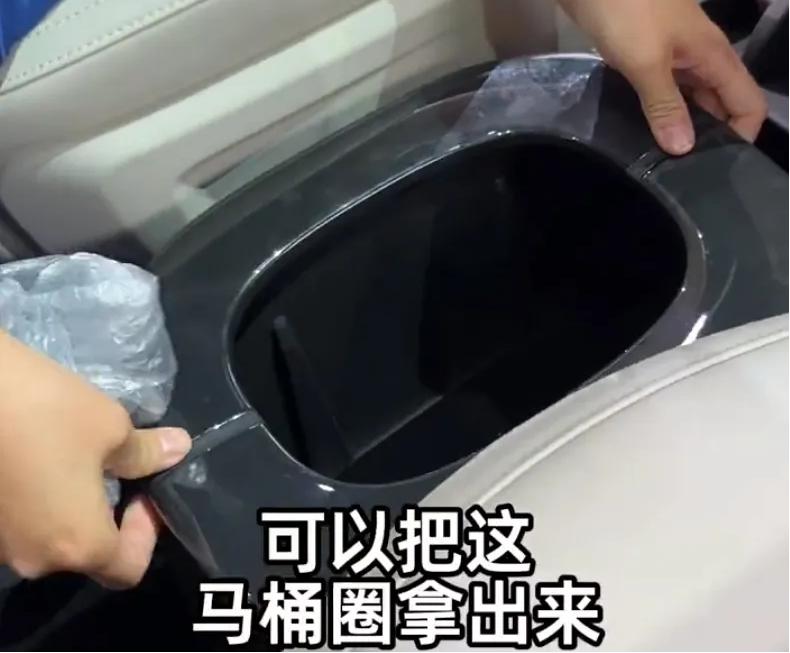
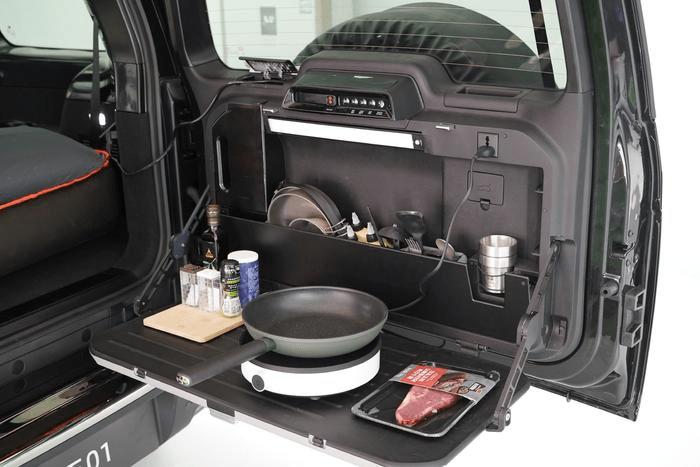
The Jishi 01, which once sparked controversy due to designs such as "toileting inside the car and cooking at the tailgate," has found a suitable scenario in the Middle East market. About 15,000 units were delivered throughout 2025, with over 10,000 units from the Middle East. For a new - energy vehicle startup, this scale is not enough to prove the viability of the business model, but at least it has completed the transition from a "prototype product" to a "marketable product."
More importantly is the pricing strategy. Jishi's prices in the Middle East are about 70% higher than those in the domestic market, and the price of the royal custom - made version is approaching one million yuan. Jishi has become the only Chinese brand in the Middle East market focusing on luxury SUVs priced over 500,000 yuan, actively avoiding direct competition with brands like BYD, which mainly target the mass - market segment.
Once, Chang Jing was ridiculed by shareholders as a "social media influencer" for his desert off - roading activities; now, the desert scenario has become a natural showcase for Jishi's off - road performance. Irony of fate is not uncommon in the business world.
However, behind the bright spots, caution is the main theme.
As of now, Jishi Auto only has two models, Jishi 01 and ADAMAS. The company has also clearly stated that it will continue to deeply explore overseas markets such as the Middle East, and the target for the domestic sales proportion in 2026 is only to be increased to 40%. This means that Jishi does not plan to expand on a large scale in the domestic market in the short term.
The underlying logic of caution is cash flow.
Roborock Technology is promoting the process of its Hong Kong IPO, and Chang Jing has promised not to reduce his shareholding in the next 12 months. While stabilizing the expectations of the capital market, this also limits the space for providing financial support to the automobile - making project through shareholding reduction. For Jishi, the timing and scale of the next round of financing will directly determine its survival scope.
The industry's judgment is that if Jishi can obtain a large - scale capital injection before exhausting its existing cash, it may gain a strategic window of 1 to 2 years; if the financing pace continues to slow down, it is not a low - probability event that it will face cash - flow pressure from the end of 2026 to the beginning of 2027. Its financing cycle has been extended from once every three months in the early stage to