The so-called "instant noodle essential tool" that has been ridiculed as outdated hides an industry worth hundreds of billions.
In 2007, upon its release, the Kindle led the trend of e-readers, and e-paper was truly recognized by consumers at that time.
Seventeen years later, the Kindle officially terminated its e-bookstore service in China. This once "top player" that monopolized the e-reading field has ultimately become a "noodles bowl cover" ridiculed by netizens, a relic of the past.
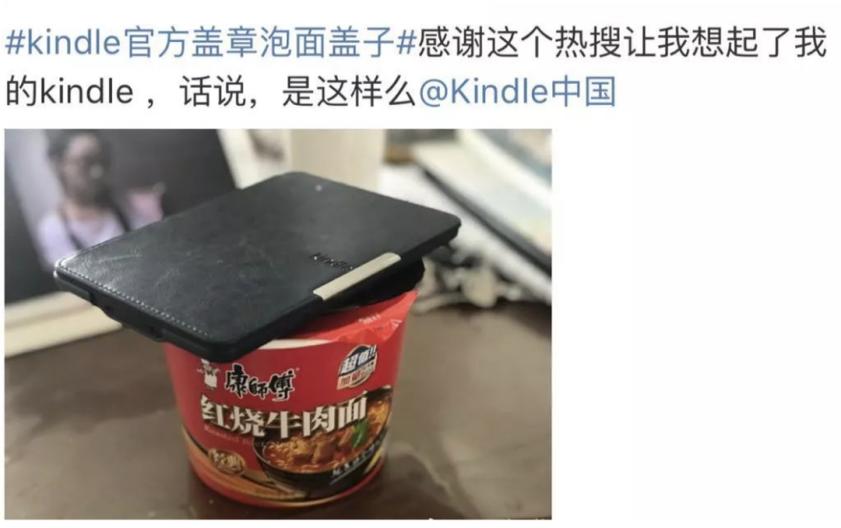
The Kindle being ridiculed as a "noodles bowl cover". Source: Weibo
Many people made pessimistic predictions that e-paper technology would fade from view and gradually "die out" with the departure of the Kindle.
However, the market gave the opposite answer.
Instead of disappearing, the e-paper industry has grown into a 100-billion-yuan industry.
Chinese domestic brands have also completed the market takeover and moved from "niche reading" to a larger blue ocean.
The Rise of Domestic Brands
When the Kindle exited the Chinese market, many thought that the Chinese e-book industry had reached its end.
That's not the case.
According to data from Counterpoint Research in 2021, the overall sales volume of e-readers in China decreased by 12.5%. Amazon Kindle experienced a decline in the Chinese market in 2022.
Behind this data is the fact that Kindle's market share has been continuously divided by domestic enterprises such as Xiaomi, iFlytek, and Huawei. Its market share in China has dropped from a peak of 80% in 2018 to only 7.7% in the first half of 2023.
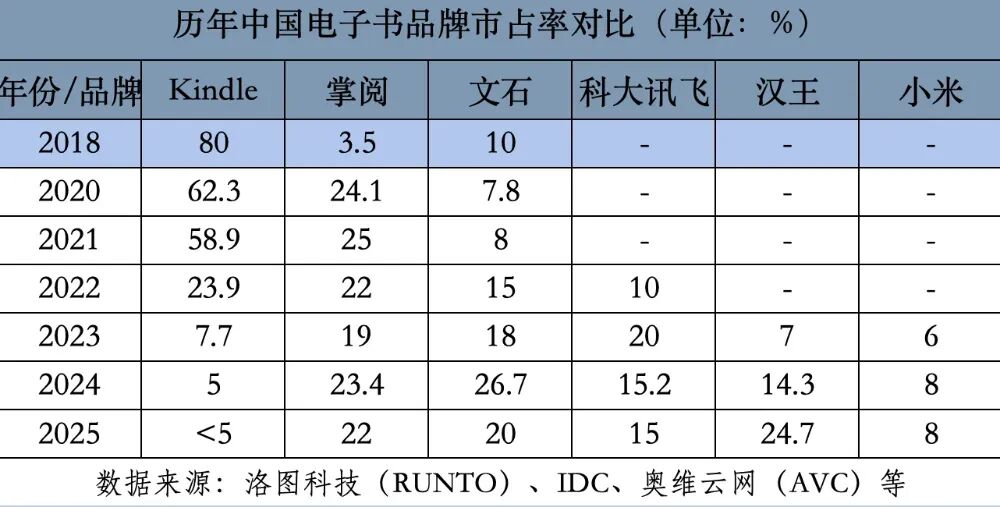
Comparison of the market share of Chinese e-book brands over the years. Data sources: LOTU Technology, IDC, and Aowei Cloud Network
Meanwhile, after the Chinese e-book market completed its structural adjustment and distribution, it quickly recovered and reached a new high in 2024. The combined market share of domestic brands exceeded 95%, and the top three brands, iReader, BOOX, and iFlytek, accounted for over 70%.
In 2025, the industry entered a period of explosive growth.
The sales volume of domestic e-readers reached 647,000 units, a year-on-year increase of 33.4%. The sales revenue was 800 million yuan, a year-on-year increase of 43.5%. The growth rate of sales revenue was higher than that of sales volume.
Evidently, Kindle's failure in China is essentially due to being replaced by the strong competition of domestic e-book enterprises.
These domestic brands have made great progress in all aspects. Compared with the single-function Kindle, they have significant cost-performance advantages.
In terms of performance, there have been significant improvements in color screens and high refresh rates.
Colorization has become the mainstream trend.
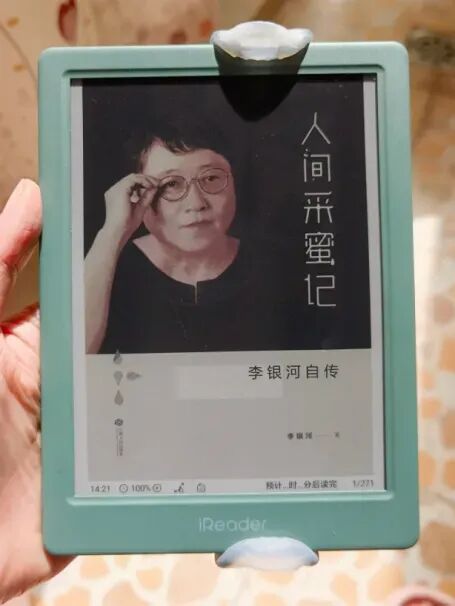
iReader Light 4C. Source: Xiaohongshu
As early as 2020, iReader and iFlytek launched the world's first color e-ink screen readers on the same day, leading e-paper into the color era. A number of brands such as Hanwang and JD.com also followed suit and launched new products.
In 2025, the online sales volume of full-color e-paper in China reached 159,000 units, a year-on-year increase of 60.6%. The market share was 12.5%, a 5.6-percentage-point increase compared to 2024.
The technological breakthrough in high refresh rates has promoted a revolutionary change in the e-paper scenario from "static display" to "dynamic interaction".
The Clear7 Ultra e-reader launched by Hanwang is equipped with the T2000 full-domain fast refresh engine, which increases the refresh speed by 35% and reduces power consumption by 30%.
Dasung Technology has achieved a super-high refresh rate of 60Hz through patented technologies such as optimizing the movement path of electronic ink droplets, completely breaking the stereotype of the "slow refresh" of e-paper and clearing obstacles for high-frequency interactive scenarios such as office work and creation.
In terms of functionality, the domestic market has long moved beyond single-function products and evolved into "digital stationery", further enriching product categories and application scenarios.
E-paper tablets are being upgraded from reading devices to efficient productivity tools. The product forms cover a variety of categories such as handwriting office notebooks, educational learning notebooks, and e-paper mobile phones. The core scenarios have shifted from reading to handwriting annotation, meeting recording, file management, and AI office work.
Leading brands represented by Hanwang and iFlytek have significantly improved writing and office efficiency through innovations such as 8192-level pressure-sensitive handwriting, screen layer reduction technology, and AI voice transcription and meeting minutes generation.
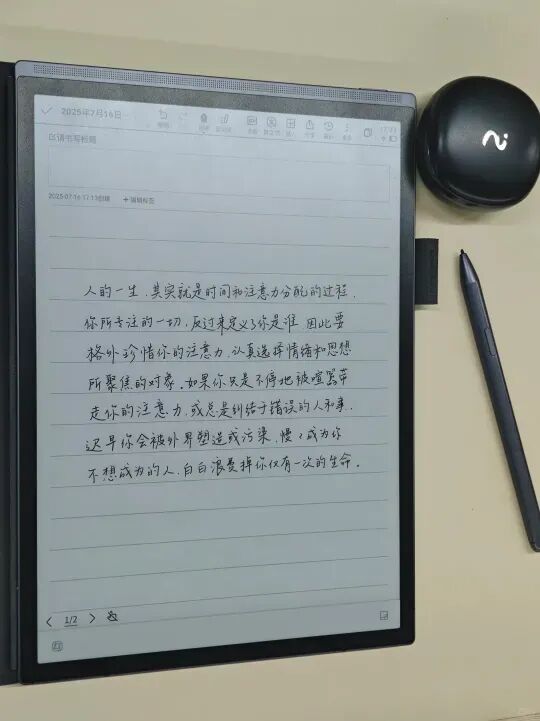
iFlytek Office Notebook X3 Pro. Source: Xiaohongshu
iFlytek's market share in the office notebook segment reached 49.5%, leading the market for four consecutive years.
Behind all this is the fact that Chinese e-paper has become increasingly user-friendly.
From "Readable" to "User-Friendly"
E-paper is a general term for a type of display technology that refers to a display technology that does not emit light itself, relies on natural light reflection for imaging, and can maintain static images in a bistable state without using electricity.
E-books are just one application product of e-paper.
The principle is to coat electronic ink on a plastic film, which can be attached to a thin-film transistor circuit. Controlled by a driver chip, it forms an ultra-thin and ultra-light display screen with pixel graphics, that is, a "display like paper".
The technological iteration of the e-paper industry has gone through three development stages.
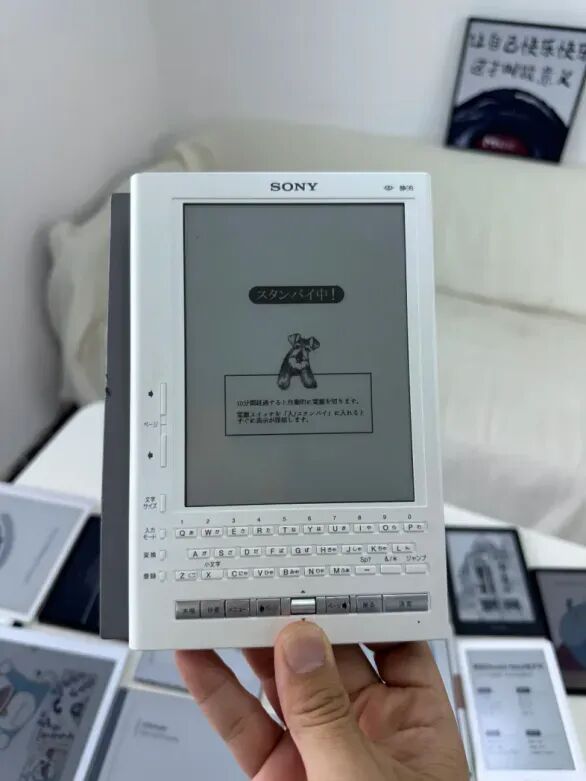
Sony LIBRIe, the world's first commercial e-reader. Source: Xiaohongshu
From 1998 to 2014 was the initial commercialization stage. In 2004, Sony launched the world's first commercial e-reader, bringing e-paper from the laboratory to the market.
From 2015 to 2018, the industry underwent adjustments. The e-book market cooled down, but electronic price tags at the retail end became popular, opening up new scenarios for e-paper.
Since 2019, it has been in a stage of comprehensive and rapid development. E-paper has established a foothold in niche markets, with more and more new applications emerging, and the industry has been growing rapidly.
2022 was a key year for the development of e-paper. E-Ink launched several color e-paper technologies, directly promoting the development of e-paper in the direction of color and diversification.
Subsequently, major companies such as Huawei and Amazon launched e-paper handwriting notebooks one after another, and this niche market also witnessed explosive growth.
The e-paper has always maintained its vitality and been favored by the market, mainly due to the following characteristics.
Firstly, the long-term advantage of e-paper lies in its green, low-carbon, eye-protecting, and energy-saving features.
Relying on its bistable display characteristics, e-paper consumes almost no power during static display and only consumes energy when refreshing.
According to industry estimates, its energy consumption is more than 90% lower than that of traditional LCDs, and its carbon emissions are much lower than those of LCD and OLED screens.
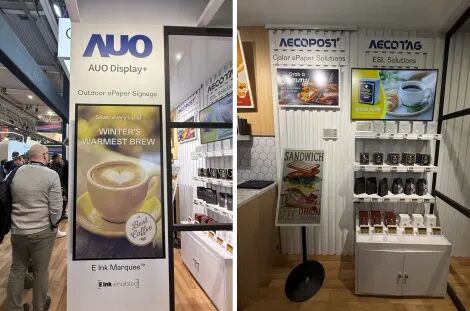
E-paper applications in multiple fields. Source: DISCIEN
At the same time, it uses reflective imaging, has no blue light and no backlight, which is more eye-protecting for long-term reading and can be widely adapted to scenarios such as retail, medical, office, and education.
The low-carbon and low-power consumption characteristics of e-paper technology are in line with the country's "dual carbon" strategy and consistent with the low-carbon trend of future display technologies.
Secondly, continuous technological iteration has truly upgraded the e-paper experience to be "more like paper and yet more than paper".
In recent years, domestic enterprises have continuously increased R & D investment. By optimizing image processing algorithms and upgrading local refresh technologies, they have completely solved the long-standing pain points of traditional e-paper, such as slow response, screen flickering, and image retention.
According to a report by DSCC, the response speed of the new generation of e-paper has increased by 80% compared to five years ago, and the probability of screen flickering has dropped below 0.1%. These technological breakthroughs have significantly improved the product experience and become the key for the e-paper ecosystem to break through bottlenecks and expand more application scenarios.
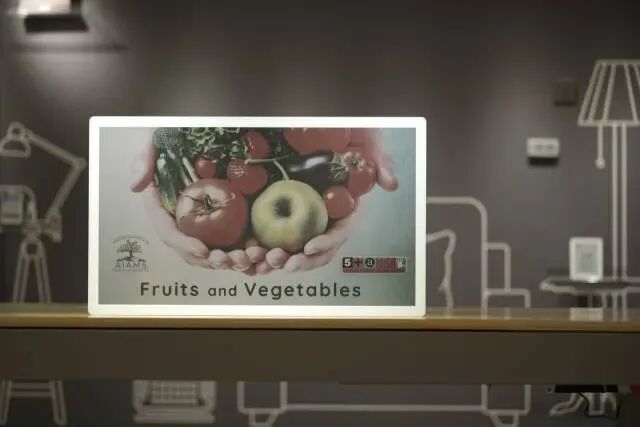
Oyes' video e-paper display screen. Source: Guangzhou Science and Technology Bureau
For example, Oyes' "cloud paper" technology has increased the refresh speed of e-paper by 200%, and Dasung Technology has achieved a super-high refresh rate of 60Hz, comparable to that of liquid crystal displays.
After the terminal products of brands such as Zuoyebang and Hanwang are equipped with relevant technologies, they have achieved zero-delay handwriting and smooth playback of short videos, successfully unlocking new application scenarios such as smart education and efficient office work.
Along with the trend of green, low-carbon, and sustainable development, e-paper has gradually become an indispensable core display material in the era.
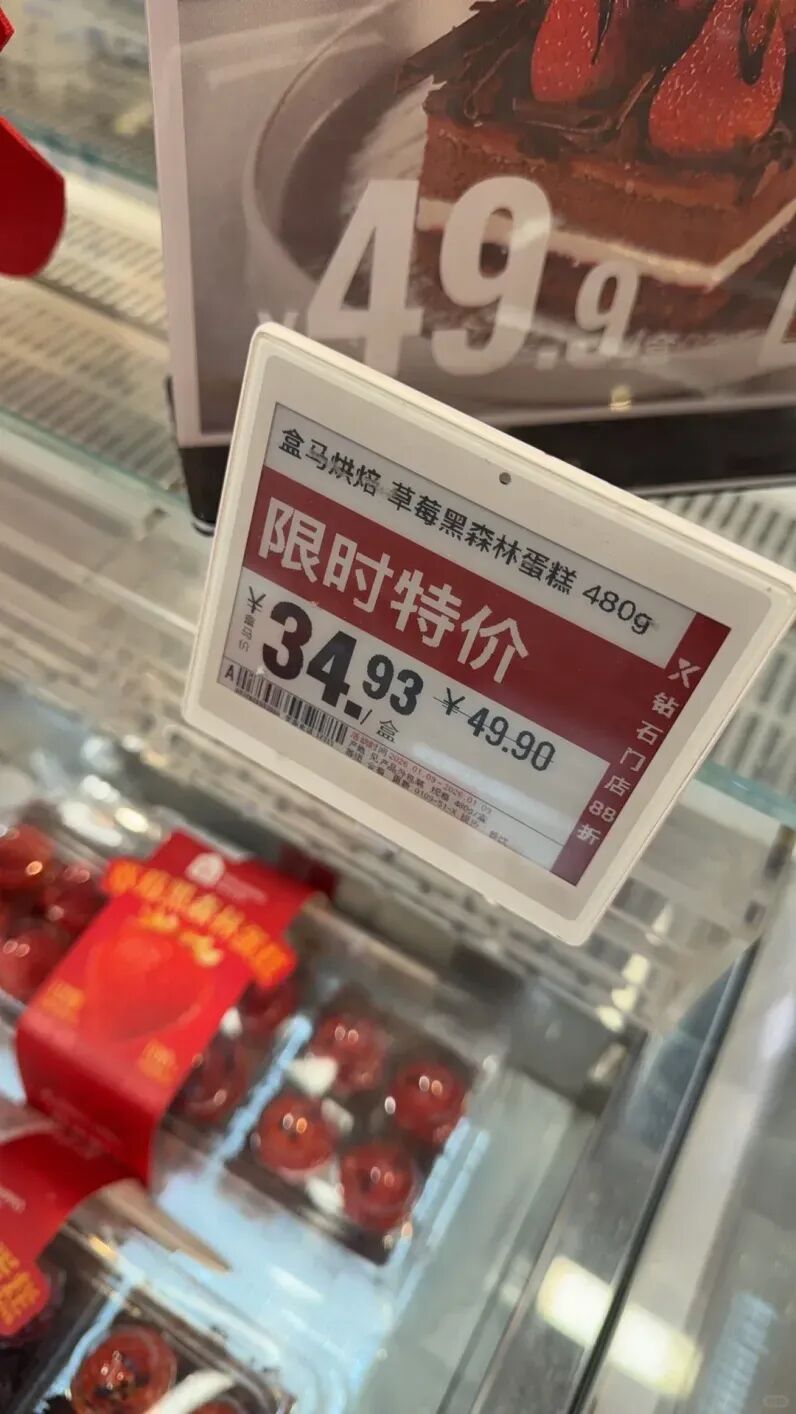
Electronic price tags used by Hema. Source: Xiaohongshu
As the largest user terminal, the global shipment volume of e-paper price tags soared by 88.0% in 2025.
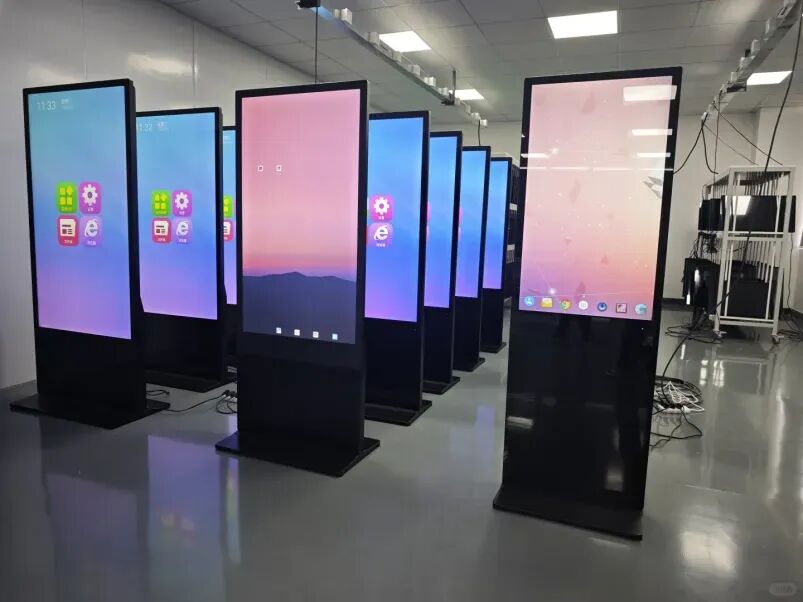
Vertical digital signage. Source: Xiaohongshu
The digital signage market is also growing rapidly.
Relying on its characteristics of ultra-low power consumption, economical operation and maintenance, and green compliance, e-paper is rapidly penetrating the digital signage scenario and is particularly suitable for public and commercial displays that are static and require low-frequency refreshing.
In 2025, the global shipment volume of e-paper digital signage was approximately 233,000 units, a year-on-year increase of 7.9%.
Combining environmental protection and experience upgrade, e-paper will replace traditional displays in more scenarios and become the mainstream choice for smart living and green commercial use.
Accelerated Overseas Expansion of Chinese Brands
The value of the e-paper industry chain has extended from the terminal to the entire chain, making it a 100-billion-yuan blue ocean market.
According to data from LOTU Technology, in terms of market size, in 2025, the global market size of typical e-paper application terminals exceeded 14.2 billion US dollars (approximately 100 billion yuan), and the output value of the entire e-paper industry chain exceeded 42 billion US dollars (approximately 300 billion yuan), forming a 100-billion-yuan industrial cluster.
Currently, the domestic e-paper industry chain has formed a complete layout, with significant synergistic effects between upstream and downstream.
Localization of upstream TFT backplanes has been basically achieved. Enterprises such as BOE, Visionox, and Shenzhen Tianma can provide stable supplies, accelerating the domestic substitution of core materials.
In the midstream module manufacturing field, the Chinese mainland has gathered the world's major production capacity, establishing a large-scale and low-cost manufacturing advantage.
Downstream, terminal demand is strong. The shipment volumes of core product categories such as electronic price tags, readers, and educational hardware are growing rapidly, driving the continuous expansion of the production capacity of upstream materials and midstream modules.
The technological breakthroughs in Chinese e-paper and the urgent need for low-carbon transformation in the overseas retail industry have directly promoted the acceleration of the overseas layout of domestic e-paper brands.
Relevant data in 2025 shows that the global shipment volumes of electronic price tags and e-paper tablets (including e-readers) increased by 53.7% and 119% year-on-year respectively. Chinese enterprises undertook more than 70% of the global electronic price tag orders, and the overseas performance of core product categories was remarkable.
Among them, the overseas expansion of the two categories of electronic price tags and e-readers has the fastest growth rate. Chinese brands such as Hanshow and BOOX have outstanding performances in the global market.
