Former Xiaomi executives start a robotics business, using the "blockbuster product logic" to develop industrial general embodied intelligence
Text by | Fu Chong
Edited by | Su Jianxun
Qiao Zhongliang, the founder of Xiaoyu Intelligence Manufacturing, has the typical characteristics of an "Xiaomi ecosystem" embodied intelligence entrepreneur: he is good at finding application scenarios for implementation and has a very practical commercialization mindset.
Since its establishment in February 2023, Xiaoyu Intelligence Manufacturing has targeted the goal of "industrial general embodied intelligence". As the first product in the "laying eggs along the way" strategy, the welding robot will enter the production lines of customers in the fourth quarter of 2025.
In 2010, after graduating with a master's degree from the Department of Computer Science at Beihang University, Qiao Zhongliang joined Xiaomi during its startup phase and became the first fresh graduate at Xiaomi. When he left, he had served as the R & D director of Xiaomi's MIUI for five years, setting the fastest record at Xiaomi for a fresh graduate to be promoted to general manager.
During his 13 - year tenure at Xiaomi, Qiao Zhongliang successively participated in the R & D and iteration of the mobile phone system and MIUI from scratch. He led the software architecture reform of "one - time development, multi - terminal deployment", enabling the same set of system to be deployed on multiple terminals such as mobile phones, watches, and TVs.
This experience has accumulated for Qiao Zhongliang the integration experience of large - scale software - hardware collaborative systems and also made him have an almost paranoid insistence on "generality": to develop intelligent products with reusable underlying logic. More simply put, instead of creating a "brain" for each device separately, create a general "brain" that can control different hardware "bodies".
With this idea, Qiao Zhongliang founded Xiaoyu Intelligence Manufacturing with the goal of "one brain, multiple forms": using a multi - modal embodied intelligent brain to drive robots of different forms such as single - arm, wheeled double - arm, and humanoid robots.
"However, we first need to let this'super brain' accurately find a commercialization scenario that can continuously generate profits and run through the data flywheel here." Based on the current development progress of algorithms, Qiao Zhongliang estimates that once 'one brain, one form' can be achieved in a certain scenario, the difficulty of cross - ontology adaptation in this scenario is expected to be reduced to about 10%.
In order to find application scenarios, at the beginning of the entrepreneurship, Qiao Zhongliang conducted a large amount of market research. He summarized the 'three laws' for Xiaoyu Intelligence Manufacturing's robots to select scenarios: do what people are unwilling to do, do what takes people a long time to learn, and do what has high added value.
With these three criteria, Qiao Zhongliang adopted a simple method - checking with the Ministry of Human Resources and Social Security which type of job has the largest shortage. Then he found that: for welders, the shortage of a single type of job is over 10 million, and there are 2 million just for gas - shielded welding, ranking first.
After visiting shipyards, construction sites, and heavy - industry enterprises, Qiao Zhongliang found that welding work is harmful to the lungs, eyes, and waist, and the training period is as long as one to two years. So, despite the average monthly income of welders reaching over 10,000 yuan, young people still don't like to do it.
More importantly, welding is one of the most complex scenarios in terms of physical feedback. The dynamics of the molten pool, the expansion and contraction of metals, the interference of smoke and dust... together form an environment with a huge amount of information and numerous variables. Qiao Zhongliang's judgment is that if the general brain can run through the physical closed - loop of "seeing accurately, aligning correctly, and controlling stably" in welding, then when switching to different bodies, the main task is just the differential adaptation of kinematics and sensor perspectives.
After targeting the welding scenario, Qiao Zhongliang transferred the "explosive product" methodology he accumulated at Xiaomi to the B - end: the core is to make the product excellent on the premise of ensuring experience and stability. For this reason, Xiaoyu Intelligence Manufacturing selects top - notch supply chains for core components, but spreads the R & D costs through large - scale shipments.
Xiaoyu Intelligence Manufacturing estimates that the demand for intelligent welding robots can reach the scale of tens of millions. As long as it occupies 10% of the market share, it fully meets the market conditions to become an "explosive product". Since Q4 2025, the welding robots developed by the company have been deployed in customers' factories, and there are more than a hundred potential purchasing units.
In terms of the technical route, Xiaoyu Intelligence Manufacturing follows the route verified by Tesla's FSD: end - to - end and data - driven. Similar to how intelligent driving controls a vehicle to drive on the road, welding embodied intelligence controls a robot to perform delicate operations, but the difficulty lies in "how to align the last few millimeters of welding".
For this purpose, the company adopts a data - driven native multi - modal 3D world model: in the pre - training stage, it uses simulation data with real scales, and in the post - training stage, it uses a large amount of high - precision sensor data accumulated in industrial scenarios to obtain a base model with the ability to understand real physical scales.
But welding is just the starting point. The future envisioned by Qiao Zhongliang is a "fan - shaped expansion" scenario: starting from welding, establishing a "base" and sufficient cash flow, and then expanding to upstream and downstream operations such as riveting, grinding, and spraying; the scenarios cover heavy industry, automotive, consumer electronics and other fields. After running through the welding scenario, he plans to establish an industry ecosystem, support solution providers, reuse the supply chain, channels, and brand, and jointly build a data platform and base capabilities. Qiao Zhongliang calls this approach the "united front", which in essence is to replicate single - point capabilities and expand business operations through investment and cooperation.
Recently, "Intelligent Emergence" exclusively learned that Xiaoyu Intelligence Manufacturing has completed its Series B financing. This round of financing was led by Huaye Tiancheng, and co - invested by China Merchants Bank International, Moutai Fund, and Guizhou Provincial Science and Technology Innovation Angel Fund. Old shareholders Didi and Li Wanqiang, a co - founder of Xiaomi, made additional investments. Since its establishment, Xiaoyu Intelligence Manufacturing has also received investments from well - known institutions such as iFlytek and Beijing Information Industry Fund.
The following is an interview with Qiao Zhongliang by "Intelligent Emergence", organized by the author:
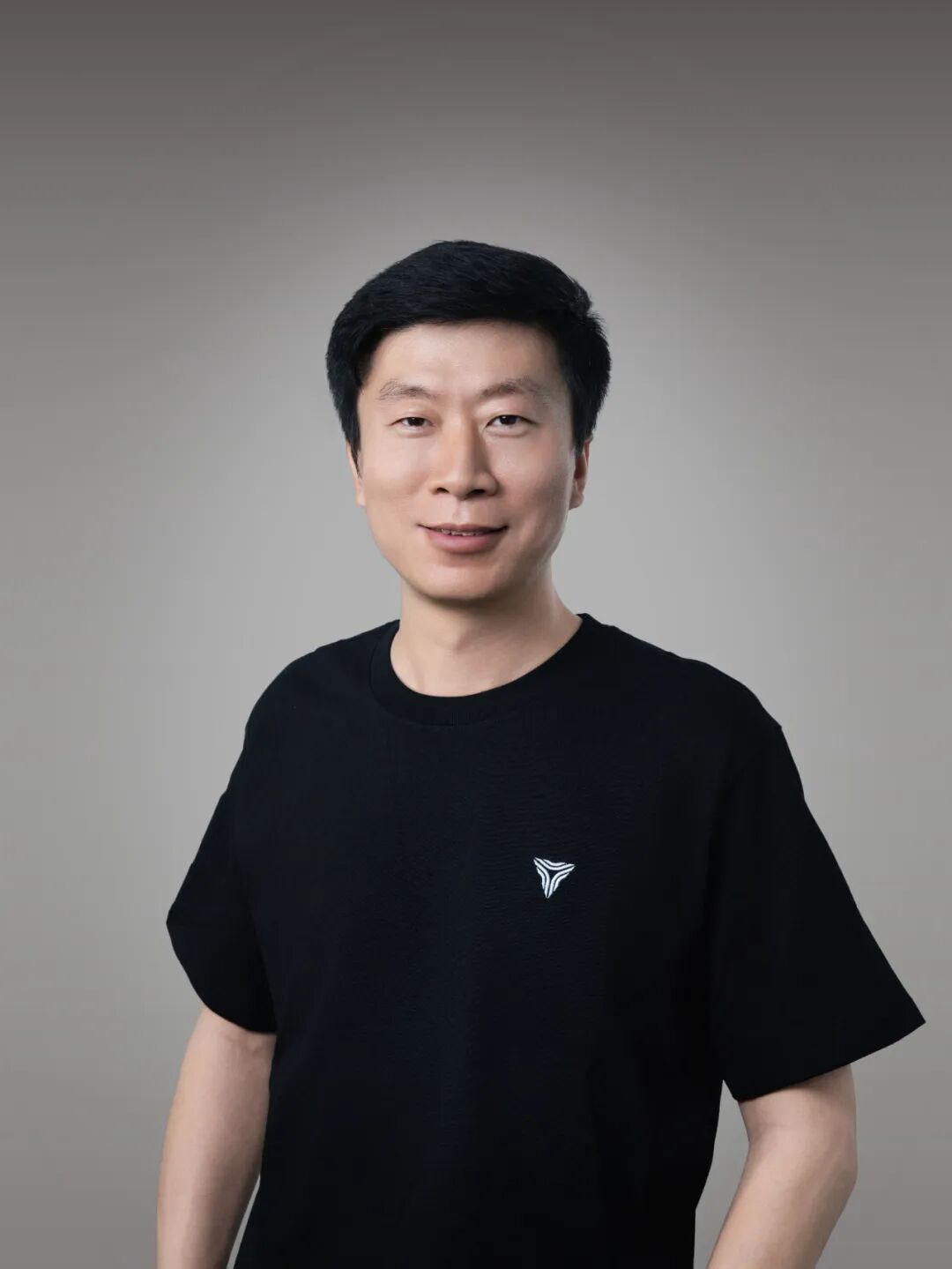
△ Qiao Zhongliang, the founder of Xiaoyu Intelligence Manufacturing. Photo provided by the interviewer
"One Brain, Multiple Forms" and Fan - shaped Expansion
Intelligent Emergence: Xiaoyu Intelligence Manufacturing aims to develop welding robots with the concept of "one brain, multiple forms". What is the current form of the product? It's already very difficult to control "one brain, one form". How can you achieve "one brain, multiple forms"?
Qiao Zhongliang: The core of our "one brain, multiple forms" concept is to first train the "brain" and then adapt it to different "forms". We believe that industrial scenarios do not require expensive "rule - stacking" but a "general brain" that can evolve by itself.
Specifically, the core form of the robots we use is a combination of "hand, eye, brain", that is, "arm, camera, and brain model". Our current main product is a single - arm + camera + brain model. But this brain can drive single - arms, mobile robotic arms, wheeled double - arms, and humanoid robots in the future.
"One brain, one form" is the most difficult part. Once you train a brain to control a single - arm well, making it know how to weld, avoid obstacles, and adjust its posture, more than 80% of the general capabilities are already solved. We judge that once the first full - scale scenario is conquered, the difficulty of cross - ontology adaptation is expected to be reduced to about 10%.
Intelligent Emergence: Emphasizing "one brain, multiple forms" may make people think that Xiaoyu Intelligence Manufacturing mainly focuses on developing the brain. So, what is the accurate positioning of the company?
Qiao Zhongliang: Although we currently deliver a software - hardware integrated solution to customers, our R & D focus is indeed on the brain. You can see from our personnel composition that two - thirds of the engineers are involved in model algorithm - related work, mainly focusing on the "brain".
Intelligent Emergence: Does the business plan of Xiaoyu Intelligence Manufacturing seem like a story of "laying eggs along the way and finally moving towards generality"?
Qiao Zhongliang: To be precise, our expansion path is a "fan - shaped" one. We first enter the welding scenario and then gradually expand like a fan, with more and more application scenarios and stronger computing capabilities.
I don't build a very thick model without implementation. On the one hand, the data cannot form a flywheel closed - loop, and on the other hand, there is no cash flow support. This path of starting from a single point and gradually expanding ultimately aims to become a general embodied intelligence company.
Intelligent Emergence: You said that welding is like a "base" in the "fan - shaped expansion". How can we move from such a niche welding scenario to a more general future market?
Qiao Zhongliang: We first enter the welding scenario as a "base" and then gradually expand like a fan.
For example, after doing a good job in the welding scenario, we can expand to upstream riveting and downstream grinding, which are similar in technical essence, and then extend to tasks such as spraying. Once we thoroughly run through the welding scenario, proving that we can succeed on this path, we can gradually replicate our capabilities to run through more scenarios.
Intelligent Emergence: Do we need to handle all the scenarios in the fan - shaped expansion ourselves? Will it be operated in a way similar to establishing many business units (BUs)?
Qiao Zhongliang: We won't build 100 BUs to take on all the work ourselves. We plan to build an industry ecosystem and support more solution providers to work together. They can reuse our supply chain, channels, and brand, and I will provide them with financial support. We will jointly build and share the data platform and base model.
Intelligent Emergence: Xiaoyu Intelligence Manufacturing currently has several industrial investors. What resources can they bring for the implementation of scenarios?
Qiao Zhongliang: They can provide strong scenario synergy. For example, China Merchants Group has shipbuilding and various infrastructure and heavy - industry scenarios under its subsidiaries, with an annual business volume of over 100 billion yuan. Since they have invested in us, we will definitely give priority to conducting experimental implementation in their scenarios. Another example is Xiaomi, which has extremely rich production - line scenarios in the automotive, home appliance, and 3C fields.
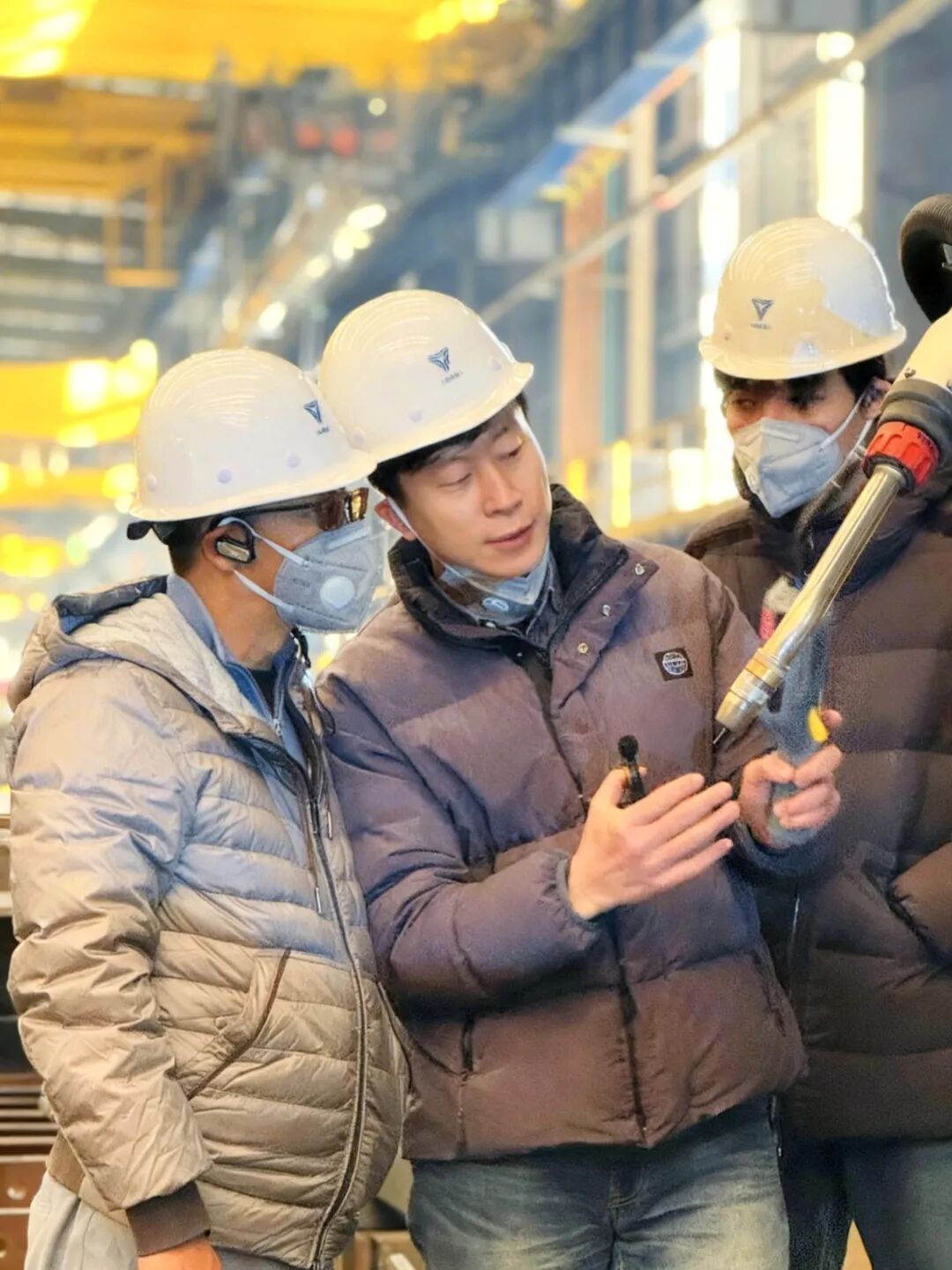
△ Qiao Zhongliang (middle) conducts research on industrial scenarios. Photo provided by the interviewer
Training the Brain's Capabilities in Industrial Scenarios
Intelligent Emergence: In order to develop welding embodied intelligence that meets customers' needs, do you have to learn welding yourself?
Qiao Zhongliang: We must get involved. We need to go to the site to see how users use the product and where the pain points are.
We even need to switch to the customers' language system. For example, the "arc - starting rate" often mentioned by welders refers to the number of hours the welding torch is lit in a day divided by the working hours of the workers. In the welding field, this is an indicator similar to "ROI", measuring the work efficiency of workers.
By going to the scenario in person, we can better understand the importance of the "arc - starting rate", and our next step will be to improve the "arc - starting rate" of the robot.
Intelligent Emergence: Although robots don't get tired like humans and can ensure the arc - starting rate, at the current stage, can the quality of welding completed by robots controlled by the embodied intelligence model in unit time reach the level of human workers?
Qiao Zhongliang: When it comes to the work quality of welding robots, there are mainly two indicators:
First, the level of spatial generalization. That is, whether the welding torch "reaches the right position" - the welding torch has to reach the position that needs to be welded, which can be achieved in 80% of the scenarios at present;
Second, the operation and process level of welding. This means that on the premise that the welding position and path are correct, whether the welding torch can complete the welding. In the scenarios that have been entered, currently, it can cover more than 50% of the work content in this scenario.
Overall, although the robots of Xiaoyu Intelligence Manufacturing are still far from the level of "national master craftsmen", they can reach the level of excellent welders.
Intelligent Emergence: How is the welding of embodied intelligence robots technically realized?
Qiao Zhongliang: We follow the route verified by Tesla's FSD (Tesla's intelligent driving model): end - to - end and data - driven. They control a vehicle to drive on the road, and we control a robot to perform delicate operations.
Intelligent Emergence: Welding in path planning is indeed a bit like "industrial - version autonomous driving", but the difficulty doesn't seem to be "finding the right route" but "how to align the last few millimeters". What is the most difficult part in your model training? How to solve it?
Qiao Zhongliang: Not only in the welding scenario, but in high - precision industrial embodied tasks, the difficulty lies in making the model understand the real scale of the physical world.
Specifically, we pre - trained a native multi - modal 3D world model. The robot obtains multi - perspective images through pure vision, and the model outputs a 3D structure and physical properties with scales - not only knowing "what it is" but also knowing "how far it is from me".
But this "sense of distance" is not innate. First, in the pre - training stage, we conduct pre - training through a large amount of simulation data with real scales. Then, in the post - training stage of the model, we use a large amount of high - precision sensor data accumulated in industrial scenarios to perform SFT (supervised learning), thus obtaining a base model with the ability to understand real physical scales.
From "Xiaomi" to "Xiaoyu"
Intelligent Emergence: During your 13 - year work at Xiaomi, you experienced different industrial tides such as the Internet, mobile Internet, and AI. What was the biggest gain? How is this gain applied to the current entrepreneurship of Xiaoyu Intelligence Manufacturing?
Qiao Zhongliang: I mainly learned three things at Xiaomi: explosive products, the mass line, and the united front.
The logic of explosive products is the core feature of the Internet industry because the Internet follows the winner - takes - all principle. In simple terms, the specific approach is to make the product and experience excellent, making it difficult for competitors to enter. But to achieve this level, usually, you have to push yourself to the limit and do your best in every aspect such as R & D, user experience, and supplier management.
The mass line means that we need to get close to the users and not develop products behind closed doors. This is especially important for industrial scenarios because we are the users of mobile phones ourselves, but in the industrial field, we are solving problems for others. Without going to the site, we won't have a real sense of the situation.
The united front is about uniting all forces that can be united. For example, like the Xiaomi ecosystem, we support solution providers, share the supply chain, channels, and brand, and finally expand our business scope through investment.
Intelligent Emergence: Among the experiences you have accumulated in the past, what are the path dependencies that need to be avoided