One person earned 16 billion from Apple.
In 2011, the classic American sitcom "Two and a Half Men" announced a major decision: the rising actor Ashton Kutcher would replace Charlie Sheen, who had appeared in all eight previous seasons, as the new lead actor. For the production team, this was the optimal solution because Charlie Sheen was involved in a drug - related scandal and was in jail, with no chance of rehabilitation. Ashton Kutcher, on the other hand, is tall, handsome, sunny, and healthy. He is the most comically talented among all rising actors and has the most potential as an idol - type actor among all comedians.
Judging from the subsequent results, the production team really made the right bet. The first episode of the ninth season with Ashton Kutcher as the lead actor attracted 28.7 million viewers, setting the highest viewership record since the show premiered. The tenth season of "Two and a Half Men" aired in 2012 was highly anticipated, attracting a large number of advertisers. It became the most profitable season of the show, with a single - episode revenue of over $3 million. In 2013, Ashton Kutcher became one of the hottest young actors in Hollywood by playing Steve Jobs in the biographical film "Jobs".
However, at that time, the core fans strongly opposed the decision. Their reason was that the soul of "Two and a Half Men" lies in the fact that the two lead actors in the show are respectively a "hedonistic rich man" and a "divorced man with a child". These two character settings should have no intersection in real life, but the screenwriters made them live together forcefully by the setting of "brothers". The "family affection" and the "private - property - first" culture of the old - fashioned capitalist society are intertwined, creating a lot of dark humor, which is very exciting. In contrast, Kutcher is too sunny and healthy. He clearly hasn't suffered the hardships of life and has eight - pack abs.
Therefore, on the premise of ensuring the comedic effect and reducing the cost of explanation, the screenwriters designed a well - recognized character for Kutcher: The character he plays is a Silicon Valley lucky guy. He started his business in the millennium era. At a young age, he became a billionaire by selling his products to a large company. Everything came too easily, so his life entered a state where he was materially well - off but spiritually empty. He needed to find fun through alcohol and relationships.
The protagonist of our story today is almost a copy of this character: He also started his business in the millennium era, targeting the IT industry. At the age of 29, he successfully sold his technical solution to Microsoft and earned his first pot of gold. In 2013, Apple officially bought his company for $360 million, achieving complete financial freedom and being named "one of the most outstanding entrepreneurs under 40" by many media that year. According to the above - mentioned classic group image, what awaits him should be a life of debauchery and extravagance, or like Peter Thiel, he would engage in philosophy or ideology, using a new worldview to fight against nihilism.
However, when he reappeared in the public eye, people saw such a story: After earning $360 million from Apple, he didn't choose to rest. Instead, he continued to start a business and successfully sold his company to Apple again at a "record - breaking" price, making a fortune.
He is Aviad Maizels, a man who has no concept of "lying flat" in his dictionary, has earned a total of $2.36 billion (about 16 billion RMB) from two successful business ventures, and has made both Apple and Microsoft willing to invest in him. On January 30, 2026, Beijing time, many media reported that Apple would acquire his artificial - intelligence startup Q.ai at a valuation of $2 billion (about 13.8 billion RMB), creating the largest acquisition case by Apple in the past 10 years. After the transaction is completed, Maizels, who has sold his company to Apple for the second time, will lead his founding team to officially join Apple's artificial - intelligence hardware - related business, responsible for the research and development of technologies such as image processing and machine learning.
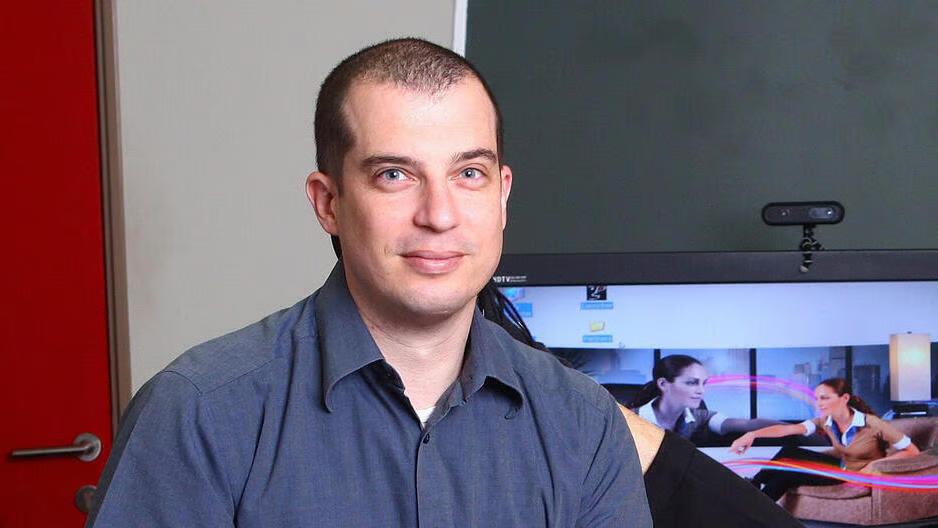
(Aviad Maizels, source: personal social media)
The "Lucky" Tech Geek
As mentioned at the beginning, although people often say that "art comes from life but is higher than life", and although "Two and a Half Men" is a sitcom known for its "dark humor", the screenwriters' portrayal of Ashton Kutcher's character can be called "realistic". Because an obvious fact is that the Internet era has completely changed the growth path of "entrepreneurs". Before the Internet era, only "the strong" had the opportunity to start a business. After the Internet era, objective factors such as age, gender, and region became less important. People could make the world notice their insights and talents just through a computer and create a company worth billions of dollars in a garage or a college dormitory.
This is of course very romantic, but it also means that entrepreneurs often achieve success at a young age, without fully experiencing the world. Their worldviews and values are far from mature, and they are unable to deal with the various temptations that come their way. More importantly, many times, even the investors and entrepreneurs themselves can't tell whether their own abilities or luck play a more decisive role in these entrepreneurial stories that occur during the "economic up - cycle".
So, not only "Two and a Half Men", but also film and television works like "The Social Network" that positively praise the image of Silicon Valley entrepreneurs will inevitably show some scenes of debauchery and extravagance when depicting "entrepreneurial success". Even Steve Jobs had a hippie period when he was young, going to India and Japan for "spiritual cultivation" to fill the "inner void". This is the "ought - to - be" of that generation of entrepreneurs in the era, and it is also the fundamental reason why Aviad Maizels surprises people:
From any perspective, an entrepreneur like him is a typical product of the era, not to mention that he was able to achieve entrepreneurial success again after 20 years.
Aviad Maizels' entrepreneurial story can be traced back to 2005. At that time, he had just finished his military service and hadn't found a job yet. He played games at home every day. Over time, he found that he had "gaming fatigue" and was seriously tired of the existing games on the market. After further thinking, he believed that the root cause was that game designers generally lacked creativity and the game mechanisms were too monotonous. His college major was "Computer Science and Applied Mathematics", which made him subconsciously have a reverse thinking: "The essence of playing games currently is that players actively understand the computer. Can we try to make the computer understand the players to achieve innovation?"
With this idea, he contacted several comrades - in - arms who also liked playing games and were unemployed after their military service. These comrades - in - arms all had degrees in mathematics, engineering, or related fields. They hit it off and thought it was necessary to do something for the game industry to "save their boring summer vacation". They also generally thought that the venture - capital market in 2005 had emerged from the shadow of the "Internet bubble" and it was a good opportunity to "be their own bosses".
With the encouragement of a group of game - loving guys, Maizels' first company, PrimeSense, was born. As the name suggests, he and his team members all believed that the most direct way to make the computer understand players was to make the computer have "vision" and read the world in the same way as humans. Based on this premise, they decided that the first product direction was to develop a camera that could perform 3D mapping of people and objects. Players could operate games directly through this camera without using a controller.
Then, as they predicted, they quickly got positive feedback when looking for investment with their business plan. Many VCs who were optimistic about the consumer - electronics field showed great interest, and they successfully got angel investment within the first month after the company was established. They used this money to quickly complete the development of the prototype and successfully signed up for the 2006 E3 Game Show (Electronic Entertainment Expo) before the deadline, demonstrating on - site how to operate Tetris by gesturing with hands.
This was the first time they were "favored by the era".
In May 2006, Maizels brought PrimeSense's prototype to the E3 venue as scheduled and kept demonstrating how to play games without touching the controller. At first, he wasn't nervous at all because he was a "game geek" and the E3 Game Show was his "comfort zone". But as more and more people gathered around, his "heartbeat gradually accelerated" because he found that there was actually a hardware - incubation team from Microsoft in the crowd.
Although in terms of data, the total sales of XBOX had exceeded 25 million units in 2006, making it one of the world's three major game consoles, Microsoft clearly realized that they had almost no competitive advantage in game fields other than "racing, shooting, and sports" games. RPG games and Soul - like games, which could consume more of users' game time and sell at a higher premium, were firmly in the hands of Sony's PS. Family - friendly games, which could attract casual players and had more diverse scenarios, were Nintendo's forte. The Nintendo Wii released in November of that year did become the game console with the fastest - growing sales in history. A company like Microsoft didn't want to miss any opportunity to dominate the industry. After watching Maizels' demonstration, Alex Kipman, the general manager of Microsoft's hardware - incubation team leading the participation in the 2006 E3 Game Show, thought that PrimeSense provided such a possibility.
This was the second time they were "favored by the era". Few companies could get the opportunity to cooperate with Microsoft and directly participate in the core business less than half a year after starting their business. Microsoft hoped that PrimeSense could join their "Project Natal" to jointly explore motion - sensing games. In return, Microsoft would not only provide sufficient R & D funds for PrimeSense to ensure their livelihood but also help them optimize their products with rich market experience. For example, Raghu Murthi, the person in charge of the Xbox 360 user interface at Microsoft, clearly put forward a requirement to PrimeSense:
If they wanted to truly become a supplier for Microsoft and the solution for XBOX motion - sensing games, they had to solve the problems of the current visual sensor being too large in size and too high in cost. It was best to make it "almost invisible, making users not feel its existence".
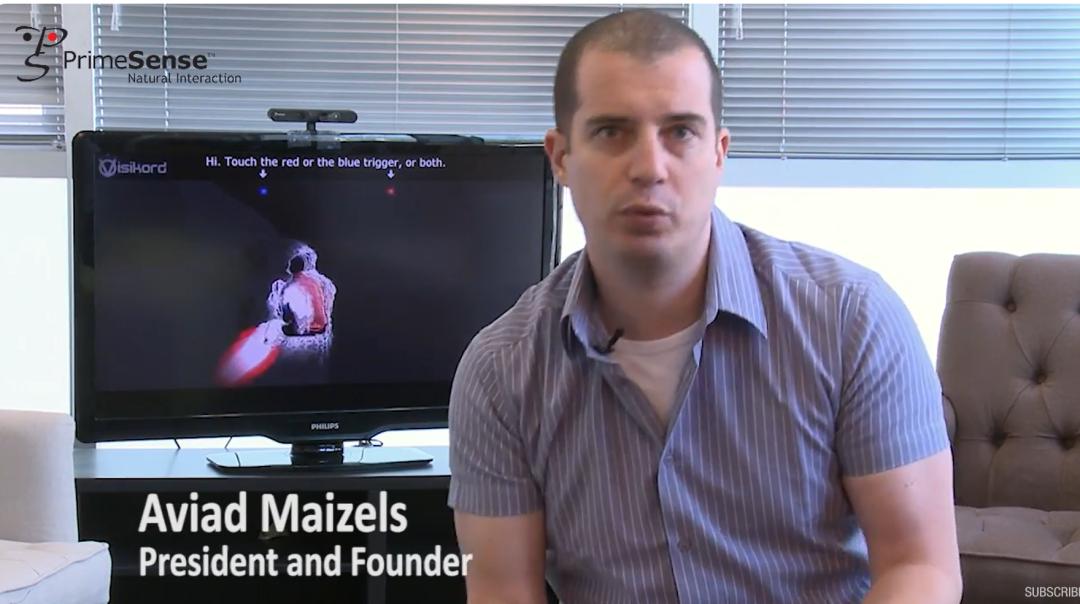
(Aviad Maizels introducing Kinect, source: PrimeSense historical page)
In 2009, Microsoft officially released the final result of Project Natal, the XBOX motion - sensing game device Kinect. By the time it was taken off the market in March 2011, the total sales of Kinect had exceeded 10 million units, with an average daily sales of over 130,000 units. It became the "consumer - electronics product with the fastest - growing sales in history" certified by the Guinness World Records. As the solution provider, PrimeSense also completed a complete transformation and gradually developed from a "creative small team" participating in E3 to a technology unicorn comparable to CES (Consumer Electronics Show in the United States), becoming one of the most - watched companies in the fields of motion recognition and visual sensors.
In the press release announcing the completion of a $50 - million strategic financing in 2011, Maizels said proudly: "We have received a large number of acquisition offers, and the prices are quite high... But we plan to build our own industry, and we won't make a decision easily."
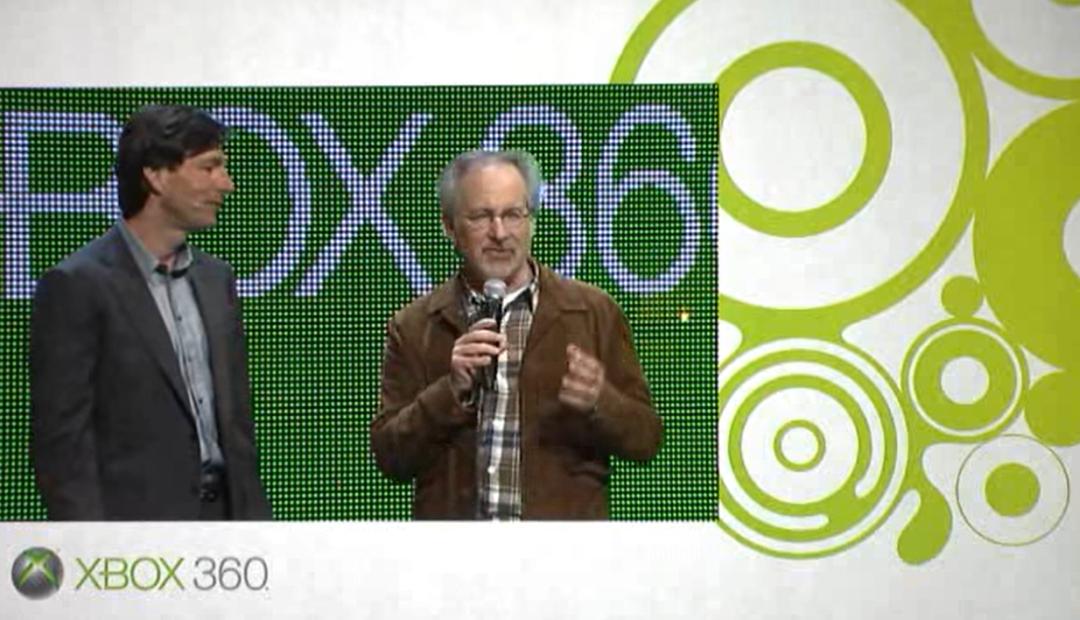
(In 2009, Steven Spielberg was invited to jointly release Kinect, source: video screenshot)
To be fair, the interviews in press releases are generally of questionable reference value and can be regarded as a formality after "successful financing" to reassure existing investors. But they really got the third "favor from the era":
Maybe Apple hoped to replicate the success of Kinect on Apple TV and officially enter the living - room usage scenario; maybe it saw the breakthroughs of competitors like Samsung in gesture recognition, which made Apple realize that its technological advantage was being gradually eroded; maybe after Steve Jobs' death, Apple had been unable to launch a star product that could "amaze the market" for two consecutive years. In short, in 2013, Apple officially finalized the acquisition of PrimeSense at a price of $350 million. Maizels explained the reason for selling the company that year: "If PrimeSense's technology can be successfully integrated into Apple's commercial products, PrimeSense's vision will be more ambitious than our initial assumption."
Four years later, in September 2017, PrimeSense really made a stunning appearance at the Steve Jobs Theater, helping Apple launch one of the most important products in the past decade: Face ID.
The "Anxious" Ordinary Person
Actually, Aviad Maizels' story could be told in another way.
Back in 2005, if you had the chance to meet Aviad Maizels at that time, he wouldn't show any firm entrepreneurial ideas. Different from geniuses like Steve Jobs, Aviad Maizels didn't show extraordinary talent from a young age and didn't have any clear career plan. He mainly "took advice": He joined the army because Israeli law requires adult men over 18 to serve three - year military service; he chose to study Computer Science and Applied Mathematics during his military service because his friends told him that "if you want to get a good job, the first thing you need to do is to find a good teacher", and the place where he could think of a good teacher was the famous Weizmann Institute of Science in Israel.
His willingness to start a business also came from the influence of his teachers. In a later recollection, Maizels described his university professors, Prof. Shamir and Prof. Simon Litsyn, as his role models because they always told the confused Maizels "the real value of science is to promote economic development", which made him realize that his learning goal should be "to integrate the valuable discoveries and research results of scientists into the commercial market".
The process of creating PrimeSense was not as smooth as it seemed on the timeline. For example, the olive branch thrown by Microsoft almost became a "death sentence". The invitation for PrimeSense to jointly develop Kinect with Microsoft started in May 2006. At that time, PrimeSense was just a "creative small team" composed of five veterans, and Microsoft still referred to their development plan as "Project Natal". Both sides thought that more communication and mutual understanding were needed before officially starting the cooperation to finalize the most feasible and resource - efficient direction.
However, in November 2006, the Nintendo Wii was officially released and quickly became the game console with the best - growing sales in history. Its biggest selling point was full - support for motion - sensing games. This directly disrupted Microsoft's rhythm. The hardware - development team had to re - evaluate the technical route and concluded that Nintendo's "motion - sensing remote control" strategy was indeed the most feasible and user - friendly solution at present. In contrast, although the "depth - sensing technology" adopted by Microsoft could theoretically achieve "true motion - sensing" and "true wireless", it required the relevant technologies such as bone tracking to be mature enough; otherwise, it couldn't achieve all - around motion perception.
Based on this evaluation, Microsoft's final decision was to reduce the investment in "depth - sensing technology" and divert some resources to develop XBOX's own "motion - sensing remote control". PrimeSense was valued by Microsoft's hardware - incubation team precisely because they could provide sufficient support for "bone tracking" in the "depth - sensing technology" route.
Maizels fell into deep anxiety. He said: "The product effect of the Wii was very similar to our idea, which made me very nervous. If the Wii didn't perform well, players would lose interest in motion - sensing games, and our work would be meaningless; if the Wii performed well, players would regard