I drove 5,000 kilometers during the Spring Festival and discovered 7 bugs in pure-electric travel.
During the Spring Festival holiday, He Chang (a pseudonym) who works in Beijing completed a pure - electric self - driving journey of over 5,000 kilometers in 13 days.
He set off on February 11, passing through Wuhan in Hubei, Changsha in Hunan, Guilin and Yangshuo in Guangxi. Then he headed north, passing by the ancient city of Fenghuang in western Hunan and Ankang in Shaanxi, and returned to his home in Xi'an. After a few days of rest, he returned to Beijing on the evening of February 23.
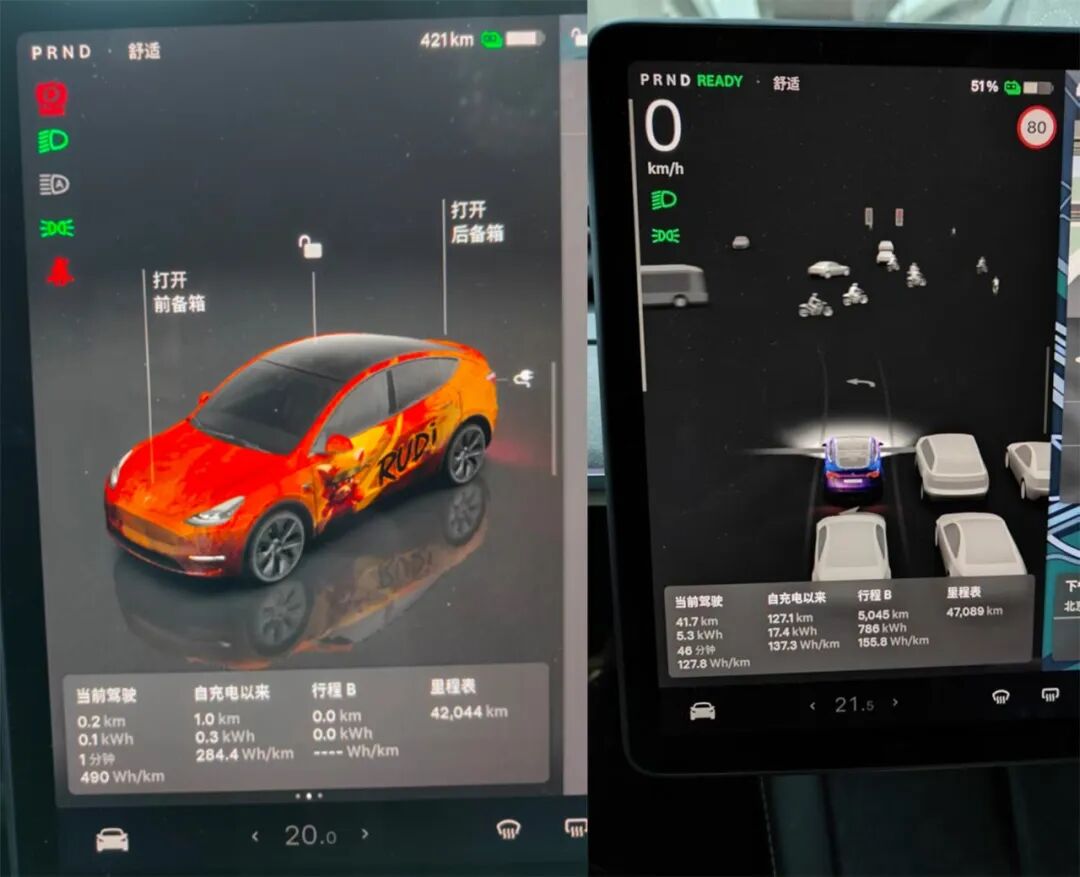
Photo/He Chang's itinerary Source/Photo provided by the car owner
Looking back on this journey, He Chang was quite satisfied. He visited the Hubei Museum, the Yellow Crane Tower, the Hunan Museum, Orange Isle, Yuelu Academy, the Elephant Trunk Hill Scenic Area in Guilin and the landscapes of Yangshuo; tasted dishes such as lotus root and sparerib soup, stir - fried pork with chili, beer - cooked fish and taro and spareribs, and also checked in at the snack streets in various places.
The key thing is that the charging and energy - replenishing process along the way was much smoother than expected. He Chang only had to wait for more than ten minutes at a service area once. In other cases, either there were empty charging spots and he could charge directly, or when he encountered a long queue, he would directly drive to the next service area or parking area to replenish energy. He didn't have to worry about the battery range.
For the 5,000 - kilometer journey, He Chang spent nearly 1,150 yuan on charging, which is about 0.23 yuan per kilometer. Comparing with other electric car owners, he found that this cost was not high. The main reason is that he stayed in many cities and tried to start with a full - charged battery at the hotel. He tried to charge less at service areas as much as possible.
However, during several charging processes at service areas, He Chang still found 7 bugs.
1. The electricity fee is outrageously high, and there is hardly any electricity priced below one yuan per kilowatt - hour
It has to be said that the phenomenon of long queues for charging at highway service areas has been much less this year. He Chang didn't plan a charging route for this trip. He only checked the congestion situation of the nearby service areas when the remaining battery range was 100 kilometers. If there were idle charging piles, he would go there to charge and rest. If not, he would go to the next service area.
We also contacted other car owners who drove electric cars on long - distance trips during the Spring Festival holiday. They rarely had their trips delayed due to queuing for charging.
However, regarding the problem of high charging fees at highway service areas, everyone has a lot to say.
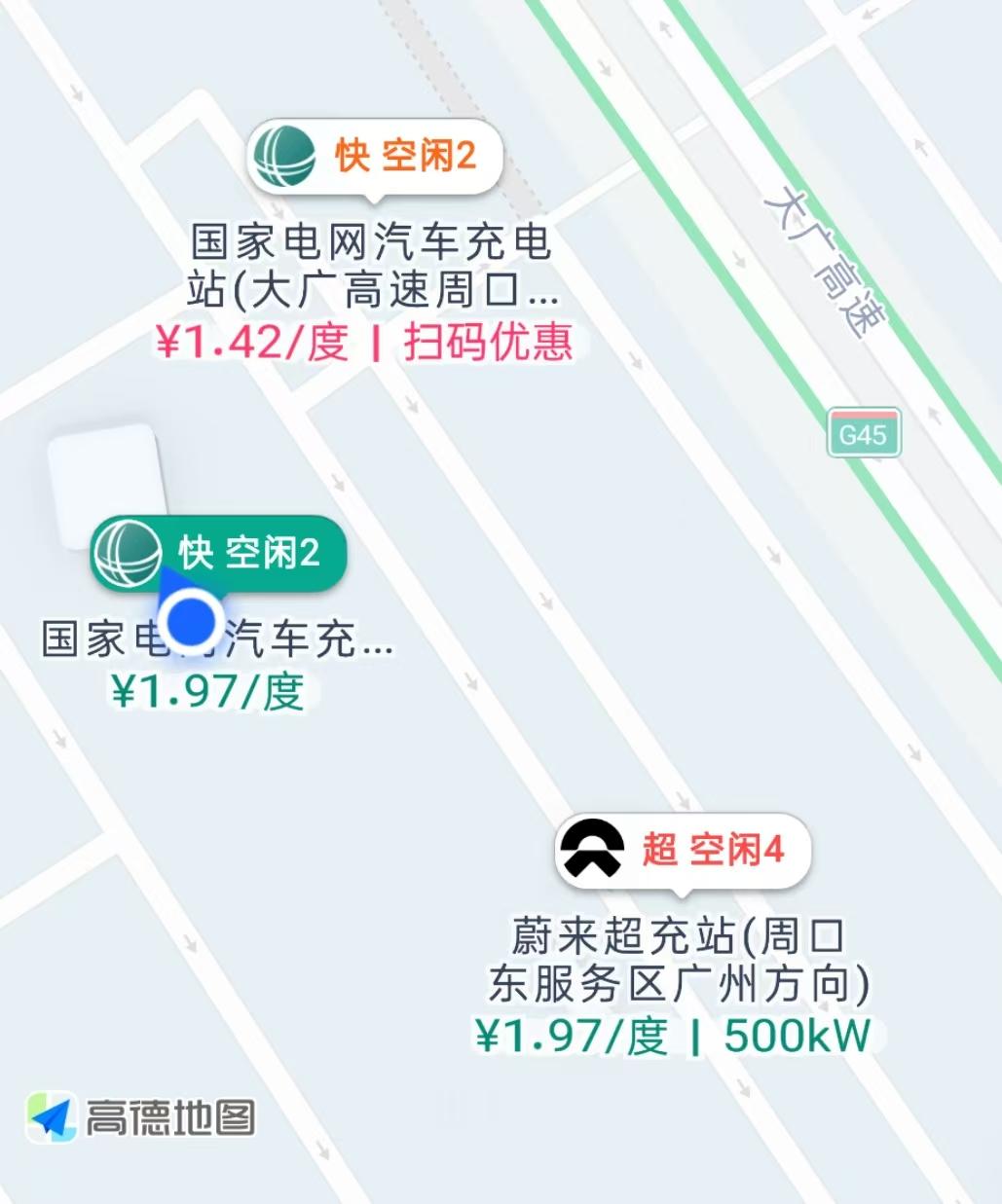
Photo/Charging station fees Source/Photo provided by the car owner
The cheapest charging He Chang had at a highway service area was at Niutuo Service Area in Gu'an, Hebei. He caught the lowest price at noon, which was 1.18 yuan per kilowatt - hour. The most expensive charging cost him 1.97 yuan per kilowatt - hour. He spent 116.15 yuan to charge 59 kilowatt - hours. Even when he charged at Zhoukou East Service Area and Linfen Service Area at midnight, the electricity fees were 1.21 yuan and 1.40 yuan per kilowatt - hour respectively.
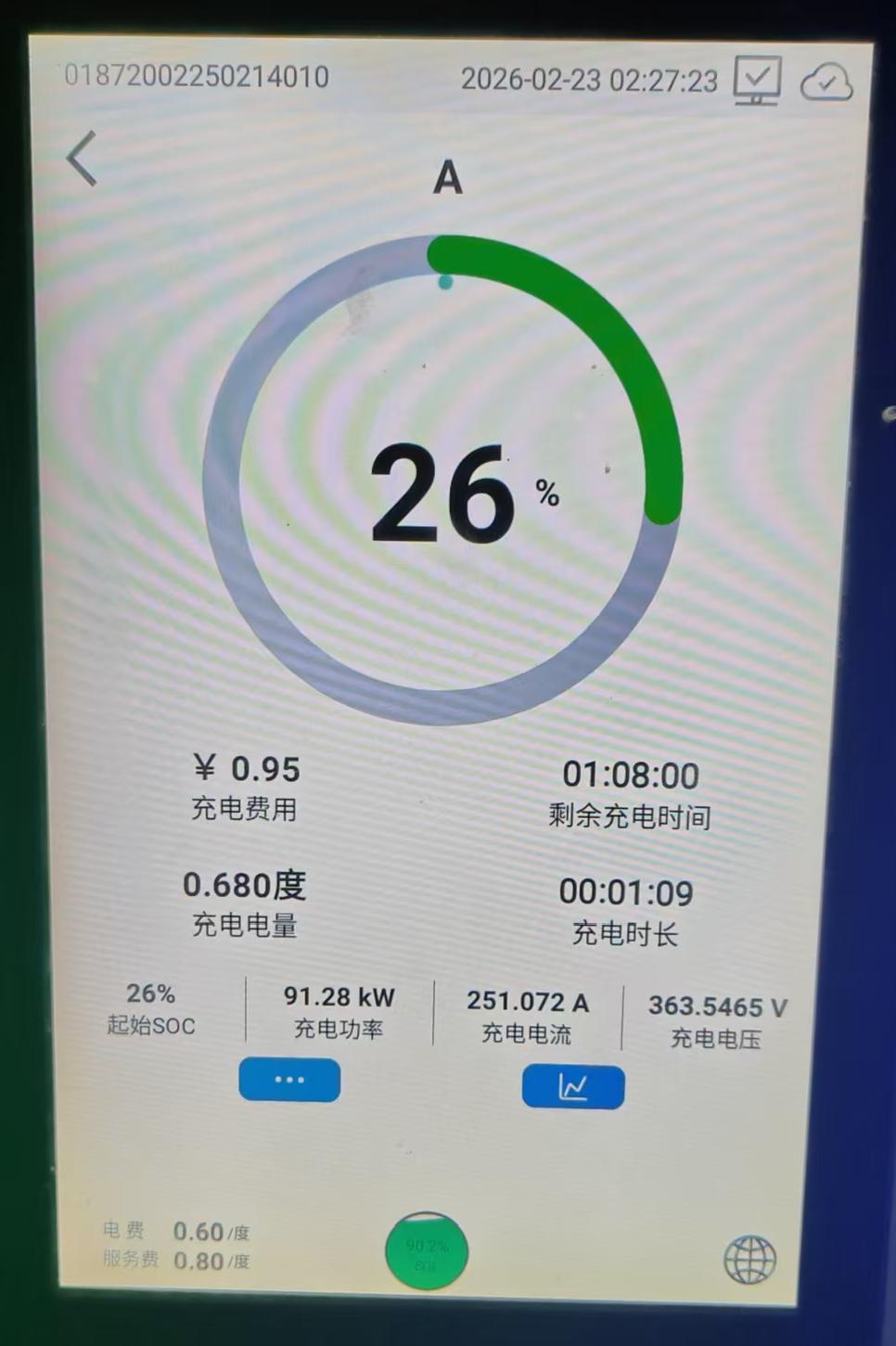
Photo/Charging situation of a car owner Source/Photo provided by the car owner
In fact, it's not uncommon to see electricity priced at 2 yuan per kilowatt - hour at highway service areas. Some car owners reported that they charged at 2.5 yuan per kilowatt - hour at Chonghe Service Area and said they would avoid it next time to avoid spending such unnecessary money.
Everyone knows that electric cars consume more electricity on highways. If an electric car can travel 6 - 7 kilometers per kilowatt - hour under normal circumstances, it can only travel about 5 kilometers on the highway. If the electricity price exceeds 2 yuan per kilowatt - hour, the cost per kilometer is 0.4 yuan, which is relatively high.
2. The charging stations are far from the restrooms, and the nearby ones are often occupied by fuel - powered cars
In addition to the high electricity price, another unfriendly aspect of highway service area charging stations for electric car owners is that they are generally far from restaurants and restrooms. While fuel - powered cars can usually park at the entrance of the service area, which is convenient for car owners to dine or go to the restroom.
For electric car owners who need to charge, in order to save charging time, they usually follow the signs or the guidance of the staff to the charging station, plug in the car, and then go to the restroom. If it's raining or they are in a hurry to use the restroom, this distance will make them struggle with whether to solve the charging problem first or other problems.
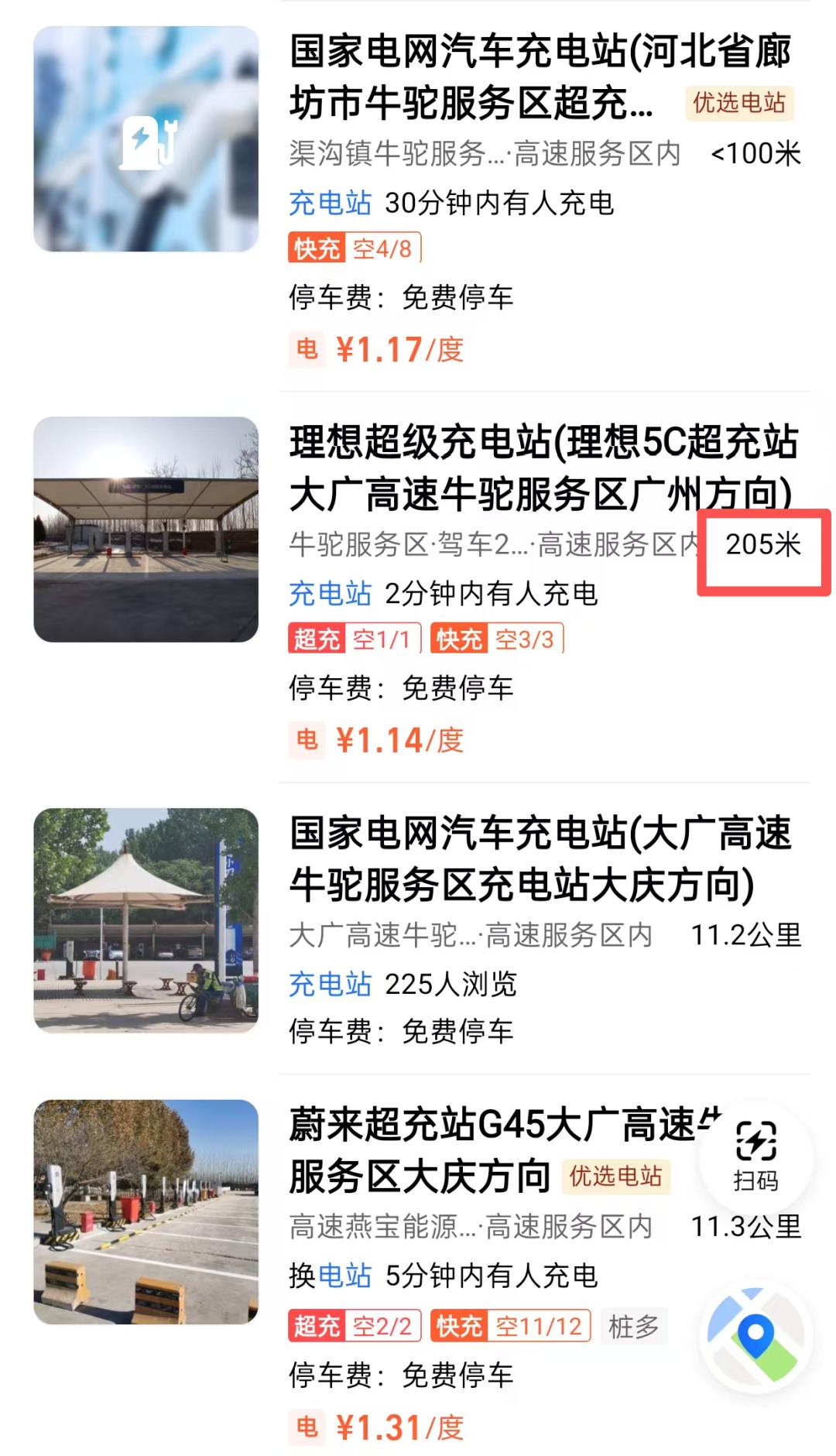
Photo/The charging station is far from the restaurant Source/Photo provided by the car owner
He Chang found that in a service area in Guilin, Guangxi, the charging station was extremely far from the entrance of the restaurant, with an estimated distance of over 200 meters. The Li Auto Super - charging Station at Niutuo Service Area is also quite far. You need to make a turn after passing the gas station, and the map shows it's 205 meters away.
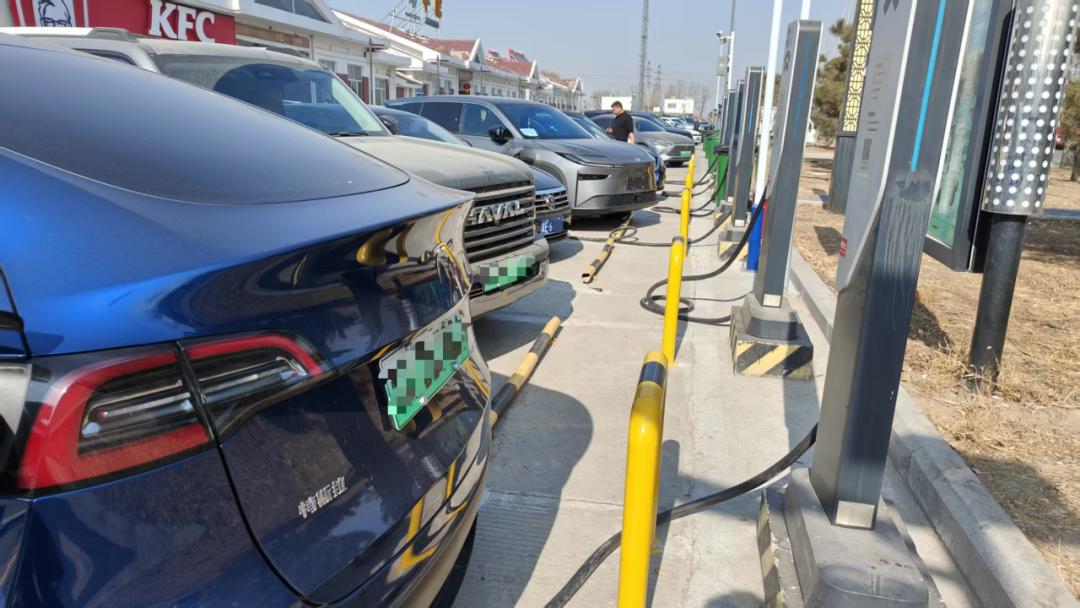
Photo/Charging parking spaces are occupied by other vehicles Source/Photo provided by the car owner
However, there are also cases where the charging station is at the entrance of the restaurant, such as the NIO charging station at Niutuo Service Area. But there is another problem. Since there is no dedicated person on duty, some charging parking spaces are occupied by fuel - powered cars or electric cars that don't need to charge, which brings inconvenience to the vehicles that want to charge.
In fact, the phenomenon of fuel - powered cars or non - charging electric cars occupying charging parking spaces is very common. He Chang once searched for charging piles on the navigation and found that there were several empty spaces at the Xiaoju Charging Station in a certain community, and the price was also low. So he drove there to charge. But when he arrived at the community entrance, he was stopped by the security guard, who said that those charging spaces were always occupied by fuel - powered cars and they couldn't do anything about it. The charging station was almost useless.
3. Queuing for charging depends on self - awareness. Without management, it will cause unpleasantness
In multiple service areas and parking areas, He Chang only saw staff maintaining charging order at Lingling Parking Area in Hunan. There were only 2 charging piles at this parking area, and there were many vehicles in the queue. The staff was directing everyone to go off the highway to charge.
He Chang didn't come to this service area to charge. Since the tire pressure exceeded 3.1 due to the rising temperature, he came to the repair shop at this parking area to deflate the tires.
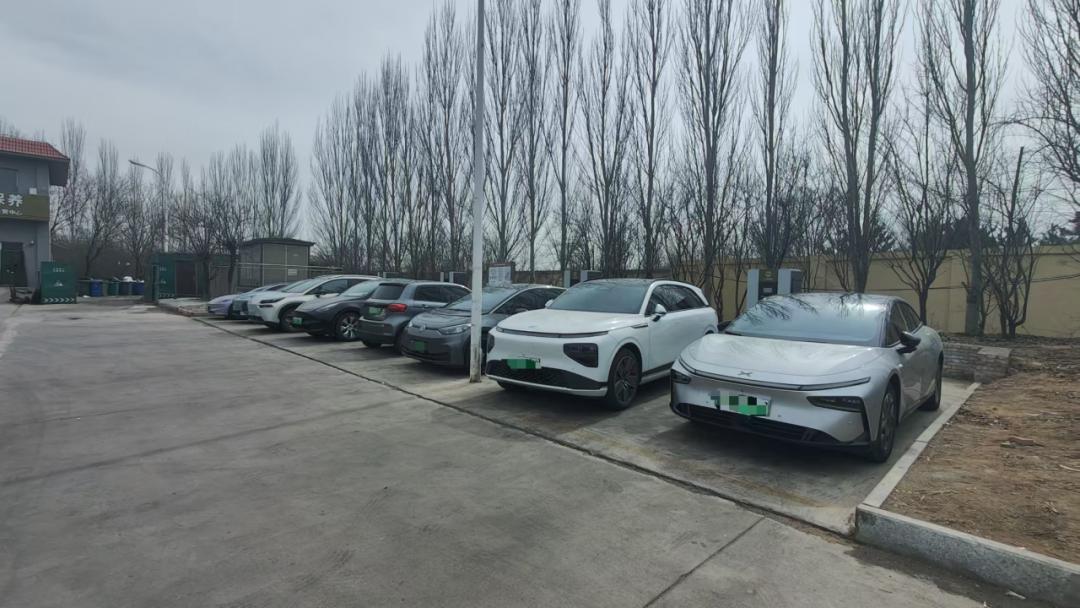
Photo/A Li Auto Super - charging Station Source/Photo provided by the car owner
What really made He Chang encounter a queuing situation was at Yuxian Service Area on his way back to Beijing. When they arrived at the charging station, there were already two cars in the queue. After experiencing an hour of traffic jam, they were exhausted. Seeing that several cars had charged to over 90%, He Chang decided to wait there and let his family go to the service area to eat first.
During the waiting process, several cars didn't know where to queue and drove in front of the first - in - line car. After being told how to queue, the car owners drove to the end of the queue friendly. But Xiao Ye (a pseudonym) from Zhejiang encountered an uncivilized queue - jumping situation and even reported it to the police because of being pushed by the other party.
In terms of charging station management, Li Auto made a big splash this holiday. According to the feedback of many car owners, they saw that all Li Auto Super - charging Stations had staff on duty to guide the queue, prohibit fuel - powered cars from occupying spaces, and even give priority to Li Auto owners when the traffic was heavy, providing a great emotional experience.
It is understood that these staff are usually villagers near the service area. They start work at 10 a.m. and finish at 7 p.m., and their daily remuneration is more than 100 yuan.
Many consumers we contacted said that this is a win - win situation, spending a small amount of money to achieve great results. They hope that the operators of other charging stations can learn from this and promote it.
4. There is no refined management of charging piles. In case of queuing, charging should only be allowed up to 90%
He Chang found that another reason for the long queues at service area charging stations is that everyone wants to charge the battery to 100%. At Yuxian Service Area, he found that the car owner was playing with the phone leisurely in the car, and the charging pile behind the car showed that the SOC was 95%, that is, the battery was charged to 95% of its full capacity. Some people even waited until it was charged to 99%.
To drive 20 kilometers, or even 5 kilometers more on the highway, he had to wait for more than ten minutes.
We all know that when an electric car is charged to 80%, it can almost reach the maximum power of the charging pile. But when it exceeds 80%, the power drops sharply. From 95% to 99%, the power may only be a dozen kilowatts, and from 99% to 100%, the power drops to a single - digit value. In other words, the time it takes to charge an electric car from 80% to 100% is much longer than that from 0% to 80%.
Since there is no dedicated person to manage the charging station and there is no charging limit constraint in the background, those who are queuing for charging can only wait anxiously. After all, you can't morally pressure others.
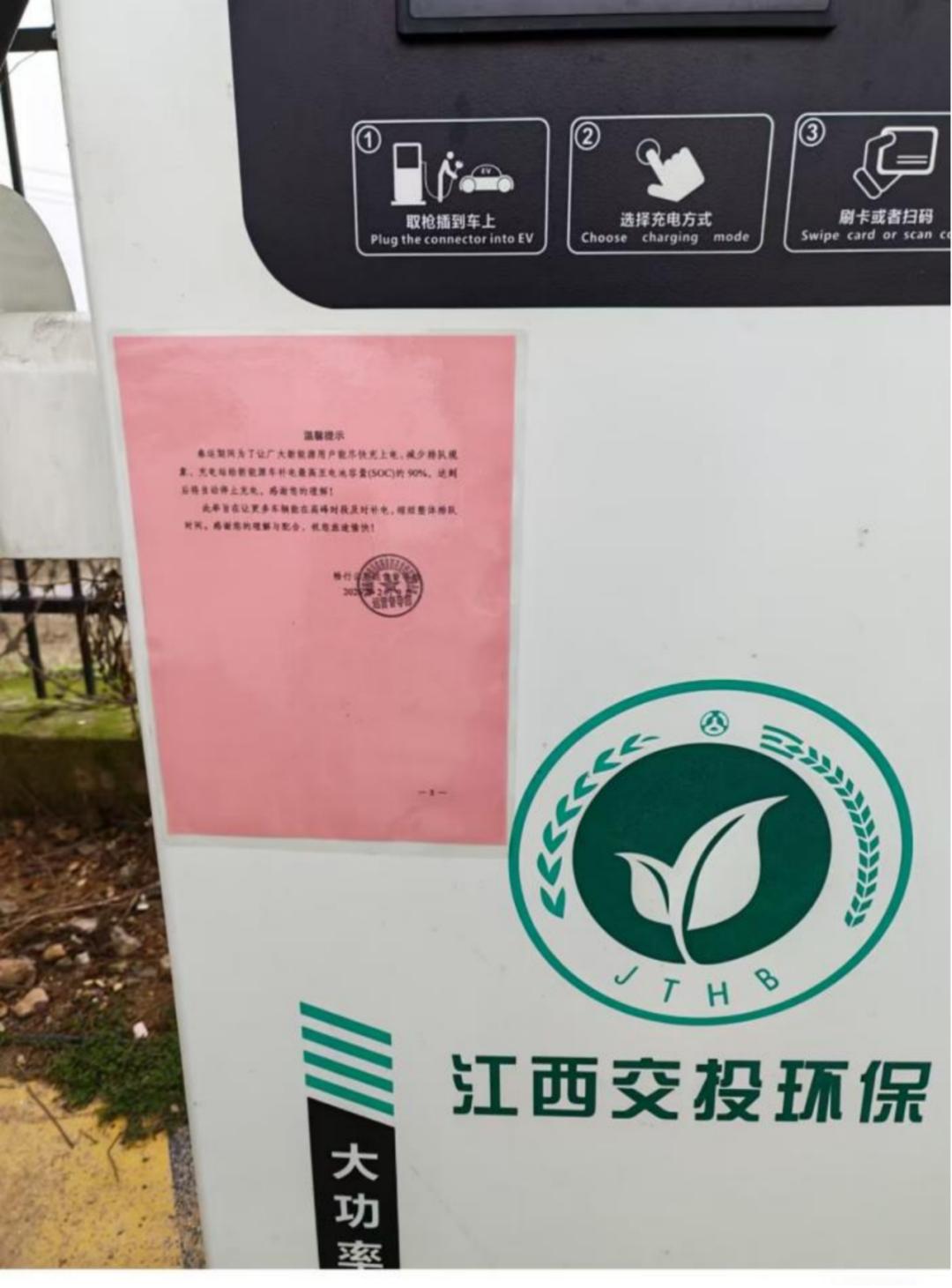
Photo/A warm reminder of "charging will automatically stop when it reaches 90%" Source/Photo provided by the car owner
But in charging stations with management and terminal restrictions, the situation is much better. For example, Jinxi Service Area has a "warm reminder" specially posted on the charging pile. In order to allow new - energy users to charge as soon as possible and reduce queuing, charging will automatically stop after reaching 90% of the battery capacity.
Some car owners also suggested that it could be made more refined. For example, when all the charging piles at a station are in use, the rule of stopping charging at 90% SOC should be implemented.
5. The charging power is low, and there are even broken piles that are not updated in time
Another reason for the difficulty in charging during the holiday is the low charging power.
Although it is the era of fast - charging now, there are Li Auto's 5C Super - charging Stations, Huawei's liquid - cooled Super - charging Stations, and even 600 - kilowatt super - charging guns have been installed at highway service areas in various provinces and cities. However, it cannot be ruled out that the early 60 - kilowatt or even 40 - kilowatt charging piles are still in normal operation.
Take He Chang's electric car as an example. It has a 78 - kilowatt - hour battery. If it is charged at a low - power charging pile, it will take more than an hour to charge to 80%, and even two hours to charge to 90%.
Xiao Tian (a pseudonym), a car owner from Shandong, found that the charging power of his car was only 20 kilowatts, and it wasn't because his car was almost fully charged. In fact, the battery was not even half - full. Some car owners also confirmed that the power of the State Grid charging stations in many service areas in Shandong still remains at 40 kilowatts, and it will drop below 40 when there are more cars.
In addition to the slow charging speed, some car owners we contacted also said that some maps show that there are charging stations at service areas and they are all idle, but when they arrive, they find that the charging stations are under repair due to transformer room failures and cannot be used at all.
As early as October 2025, the National Development and Reform Commission issued a document requiring the acceleration of the renovation of charging facilities at highway service areas. By the end of 2027, 40,000 "ultra - fast and combined" charging guns with a power of over 60 kilowatts will be newly built or renovated at highway service areas (including parking areas), and the construction of high - power charging facilities is encouraged.
6. Some charging stations are not shown on the map, making it easy to miss new stations and new guns
Undoubtedly, most electric car owners use navigation to plan the service areas to stop at for charging and rest. But this leads to another bug. Newly -