Meizu Exits, Honor Raises Prices, vivo Changes Leadership: The Mobile Phone Landscape in 2026 Has Changed Drastically
The new order in the mobile phone market is being reshuffled in the spring of 2026.
At the beginning of the year, two major institutions, Gartner and IDC, gave the same prediction: the industry will enter a structural contraction. Gartner predicted that the global smartphone shipments in 2026 are expected to decline by 8.4%, hitting the lowest level in the past decade; IDC's data is even more pessimistic, with a decline of up to 12.9%.
The basis of the two institutions points to the same source: since the beginning of 2025, due to the demand for artificial intelligence data center construction, the supply of key components such as memory chips has been continuously tight. In 2026, the shortage of production capacity remains unresolved, and the price of memory has been rising.
The consumer electronics industry is sensitive to this. Lu Weibing, the president of Xiaomi, once admitted in a live broadcast at the end of 2025 that the increase in memory cost has far exceeded that of processors and cameras, becoming the "biggest part" of mobile phone cost.
This wave of price increases triggered by memory chips is like a high - intensity stress test, pushing the differentiation of the mobile phone market to the extreme.
Some players have been overwhelmed by the cost. It is reported that Meizu has suspended its mobile phone business, and Asus has withdrawn from new mobile phone R & D. Some manufacturers are struggling in the cracks. Honor raised prices under performance pressure, and Red Magic is struggling in the niche market. Even leading players dare not slack off. Reducing order volume, declining sales, and profit pressure have become the norm they must face.
Facing the new cost structure and market environment, manufacturers must re - find their positioning and survival logic.
1. The Wave of Price Increases: Some Break Through, Some Leave
If we use two words to describe the mobile phone market at the beginning of 2026, the most appropriate ones may be: differentiation.
In late February, a piece of news spread in the industry: Meizu's mobile phone business has actually stopped and will officially withdraw from the market in March. According to Jiemian News, there are still more than 1,000 people in the Xingji Meizu Feishu group, but many employees have proposed to leave, and a small number of employees have transferred to ZEEKR, a subsidiary of Geely.
On February 27, Meizu issued an announcement on its official Weibo, saying that it will suspend the self - developed hardware projects of new domestic mobile phones and is actively contacting third - party hardware partners, while the original business will not be affected.
It also mentioned the reason for this adjustment - the competition in the domestic mobile phone market in recent years has been more intense than expected, and the continuous skyrocketing of memory prices recently has made the normal commercialization of new products in the next step impossible.
Meizu mentioned that it will carry out a comprehensive strategic transformation, shifting from a hardware - dominated model to an AI - driven software product - dominated development direction, and building an enterprise with a healthy operation based on the Flyme open ecosystem.
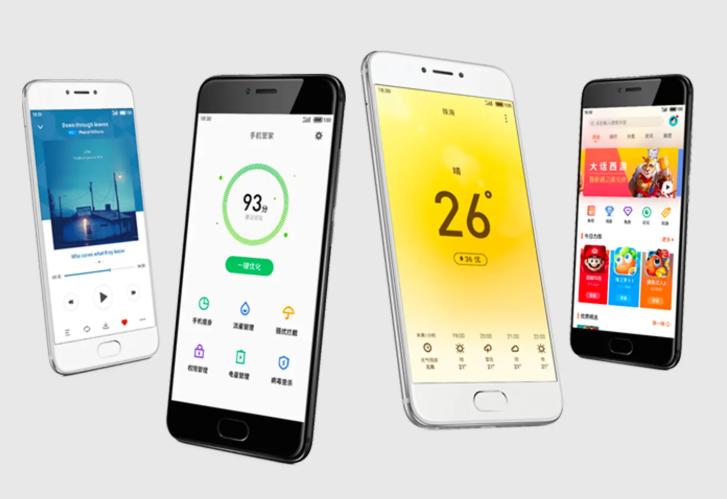
On the evening of March 1, Wan Zhiqiang, the CMO of the China region of Xingji Meizu Group, revealed that the Meizu 22, Meizu Note 16 series, and Meizu Lucky 08 are still on sale normally and will not increase in price in the future. The Meizu 23 has been developed but will not be launched in the market. In addition, the 1TB version of the Meizu 22 is sold out on the official channel, and there are not many Meizu 22 Return versions left. Regarding the subsequent operation and maintenance arrangements, Wan Zhiqiang said that the Flyme system will no longer launch major version updates but will continue to provide basic maintenance.
This pioneer in the Chinese smartphone industry, which started the era of domestic smartphones with the Meizu M8 in 2009, has now fallen before dawn under the final blow of memory price increases.
For players like Meizu, the increase in memory price is almost a fatal blow. Entry - level mobile phones already have thin profit margins, and the proportion of memory cost is extremely high. Manufacturers with small scale and scattered orders can neither get preferential prices nor even may not be able to get the goods.
Wan Zhiqiang once said that the significant increase in memory price is a huge impact on its mobile phone business plan.
Before the news of business suspension spread, Meizu had already cancelled the launch plan of the Meizu 22 Air. Now the Meizu 23 will not be launched in the market, which means that Meizu mobile phones will actively withdraw from market competition and enter a period of silence.
Photo/Meizu official website
The same scenario is also playing out at Asus. This brand, which has been marginalized in the mobile phone industry, announced during the same period that it will no longer launch new mobile phones and will focus on PCs and AI devices.
When the cost pressure exceeds the tolerance range, stopping losses and exiting may be a rational choice.
While mid - and low - end players are forced to leave the market, leading manufacturers are not having an easy time either. Even though they have a mature product layout, large - scale channels, and stronger bargaining power in the supply chain, they must still find a balance point for profits between the highly competitive mid - end market and the high - end market with higher entry thresholds.
According to an incomplete statistics by Yike Business, from January to February 2026, the starting prices of new mobile phones launched by brands such as vivo, Xiaomi, and Samsung generally increased by 200 yuan to 1,000 yuan compared with the previous generation models.
In January, the starting price of the vivo S50 series was set at 2,999 yuan, a 400 - yuan increase compared with the previous generation. The starting price of the Realme Neo8 increased by 200 yuan. In February, the Samsung Galaxy S26 series was launched, and the starting prices of the standard version and the Plus version directly increased by 1,000 yuan.
Among all leading manufacturers, vivo may be under the most delicate pressure.
According to IDC data, in 2025, vivo shipped 46.1 million units, accounting for 16.2% of the market share, dropping from the first place in 2024 to the third place. It is worth noting that the year - on - year decline in shipments of 6.6% is the largest among the top five.
The root of the problem lies in being "squeezed from both ends". Upward, there is still a long way to go in high - end development compared with Huawei and Apple. Downward, the performance in the mid - and low - end markets is not satisfactory, dragging down the overall sales volume.
In the first half of 2025, vivo was in a stage of product transition. The new flagship X200 Ultra and the minor - iteration X200S had not been launched, and the old flagship X200 series had been on the market for more than half a year. As a result, there was a lack of new models in the high - end market, and the growth momentum was lacking.
Although the X300 series launched in October regained the situation with its imaging differentiation: through in - depth cooperation with Zeiss and Samsung, it was equipped with a 200 - megapixel telephoto lens and self - developed dual chips, and its sales volume exceeded that of the X200 series within two months after the first sale. However, the explosion of a single product is difficult to support the whole year, and vivo still lacks a presence in the ultra - high - end market above 6,000 yuan.
Photo/vivo official website
However, in the current mobile phone market, it is a luxury for any manufacturer to sit firmly in the first place. According to IDC data, the shipments in the Chinese market in 2025 were about 285 million units, a slight year - on - year decline of 0.6%, but 75% of the market share was divided among six manufacturers - Huawei, Apple, vivo, Xiaomi, OPPO, and Honor, each with a market share of more than 15%. The difference in shipments between Huawei in the first place and OPPO in the fifth place was only 3.3 million units.
Under the melee situation of "Huawei, Apple, vivo, Xiaomi, OPPO", the gap between the leading players has been compressed to the extreme, and no one has room to breathe.
It is at such a node that vivo made a key adjustment.
In February 2026, it was reported that Shen Wei, the founder of vivo, resigned as president, and Hu Baishan, the executive vice - president, took over.
Who is Hu Baishan? He has been at vivo for more than twenty years and has long been in charge of technology and medium - and long - term layout. He promoted the establishment of the Central Research Institute, which is internally called the "lighthouse", and facilitated the long - term imaging strategic cooperation with Zeiss. In 2025, he personally led the establishment of the "vivo Robotics Lab" and bet on the home robot track.
Letting a technology - oriented person take the helm points in two directions: one is the high - end breakthrough in the mobile phone main business, and the other is the breakthrough in new businesses.
Looking back at vivo's high - end campaign, the real turning point was the "cooperation with Zeiss" promoted by Hu Baishan - using the professional endorsement of a century - old optics brand to break through the homogenization bottleneck of mobile computational photography and establish a professional benchmark for vivo in the field of mobile imaging. Now that Hu Baishan has been promoted, it means that he can further coordinate the continuous iteration of core technologies such as imaging, AI, and MR to consolidate the high - end advantages of the mobile phone business.
For first - tier players like vivo, they must continue to move towards the high - end and cannot be trapped in the shrinking mid - range market.
The industry predicts that the new production capacity added by this round of memory price increases may not be released until 2027. This means that the cost pressure will continue in the next one to two years.
On the one hand, leading manufacturers are accelerating technological breakthroughs. On the other hand, marginal players are leaving the market dejectedly. In the mobile phone market in 2026, the differentiation has just begun.
Brands that cannot withstand the cost pressure and cannot build core barriers will be accelerated out of the market in this wave of price increases. Only those that survive are qualified to enter the next round of the game.
2. The Suffering of the Middle - Tier Players in the Dilemma of Price Increases
If the fate of low - end players is to be directly cleared from the market, then the situation of mid - tier mobile phone manufacturers is a long - term suffering.
Among the nearly one billion users in the Chinese smartphone market, about 500 million people use mid - tier mobile phones in the price range of 2,000 yuan to 4,000 yuan. This is the largest user group and also the most profit - thin battlefield. The already meager premium space has been squeezed to the limit in the wave of memory price increases in 2026.
Manufacturers are left with only two options: either withdraw from this price range or raise the product prices.
However, the problem is that they don't have many choices. Compared with high - end mobile phones, mid - tier mobile phones already have a narrow profit margin, and the aggressive configuration due to the intense competition in 2025 has made the situation worse. Raising prices may directly shake the foundation of survival, while not raising prices makes it difficult to withstand the cost.
Under such helpless circumstances, many manufacturers still chose the former.
According to Counterpoint Research data, the average price increase of mobile phones in the Chinese market in 2026 will be higher than the global average of 6.9%. Among the new products launched after March, the average price has increased by 15% - 25% compared with the same - grade models in 2025, especially for mid - and low - end models.
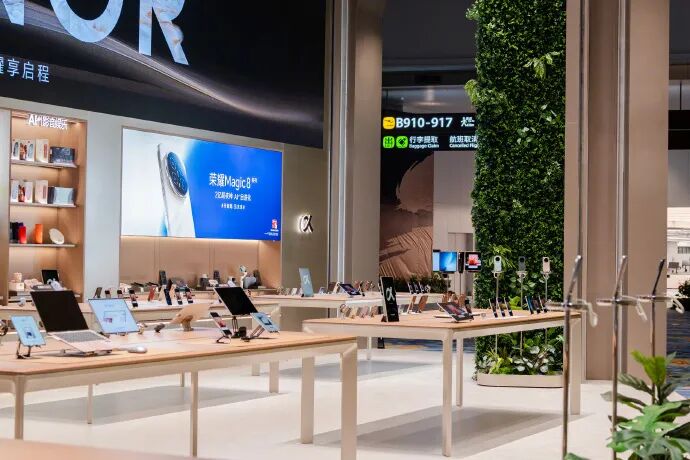
Honor is one of them. At the beginning of 2026, Honor not only did not participate in the Spring Festival promotion and price cuts but also raised the prices of some models. Take the Honor Power2 (12GB + 256GB version) launched on January 5 as an example. The starting price is 2,499 yuan, a 500 - yuan difference compared with the previous generation model's price of 1,999 yuan.
Photo/Honor Weibo
This is a risky choice.
In the past few years, Honor's strategy has been to avoid direct competition in the high - end market and concentrate its resources on the mainstream price range. However, this has also led to it being caught in the middle, and its market space has become increasingly narrow. In 2024, it ranked fifth with a 15% market share. By 2025, it rarely appeared in the top five lists of mainstream institutions. According to IDC data, it ranked seventh with a 13.4% market share, behind OPPO and Transsion, which are also in the third - tier.
Honor has not completely lost its competitiveness. Its product line (Play/Changwan, Digital/X series, Magic series) has a complete coverage and clear division of labor, but it has never been able to establish a stable advantage that can withstand market cycles. Its attempts to enter the high - end market have repeatedly failed - the charging port of the Magic 2 was broken, and the Snapdragon 888 of the Magic 3 had problems. Two consecutive generations of flagship models had issues, weakening its credibility in the high - end market.
Against the background of poor performance, Honor should have chosen to increase market share by offering low - price products in large quantities instead of easily raising prices. However, the pressure of memory price increases left it with no other choice.
Almost all mid - tier manufacturers have felt this kind of suffering. Jiang Chao, the product manager of the Red Magic brand, once posted on a social platform and admitted: "We really can't fully digest the pressure of this wave of cost increases. In fact, not only us, but the entire industry is facing such a dilemma, and price increases have become an irreversible trend."
Red Magic is a typical example of struggling to find a way out in the niche market. In the early days of the gaming mobile phone market, there were multiple brands competing, such as Black Shark, Red Magic, ROG, Legion, and Razer. Now, Black Shark and Razer have become silent or transformed, Legion has not been updated for a long time, and Asus has decided to suspend the launch of ROG. In 2026, Red Magic is the only remaining professional gaming mobile phone brand.