Breaking the Deadlock of Energy Anxiety: ZTE New Energy Defines the Second Half of Residential Photovoltaic Market
In the proposals for the 15th Five - Year Plan, "accelerating the construction of a new energy system" and "accelerating the formation of green production and lifestyle" have been established as core strategic goals. Compared with the proposals for the 14th Five - Year Plan, this is the first time that specific plans have been made for the energy and power systems.
Meanwhile, the industrial side has also started to take action. According to the information released by the State Grid, its fixed - asset investment during the 15th Five - Year Plan period is expected to reach up to 4 trillion yuan, a significant jump of 40% compared with the 14th Five - Year Plan period.
The convergence of policies and funds means that building a comprehensive power system covering "power sources, grids, loads, and energy storage" has become the core requirement of the country's industrial development. For market participants, breaking the barriers of single links and deeply embedding into the new power network with comprehensive energy service capabilities across the entire chain has become the key to success.
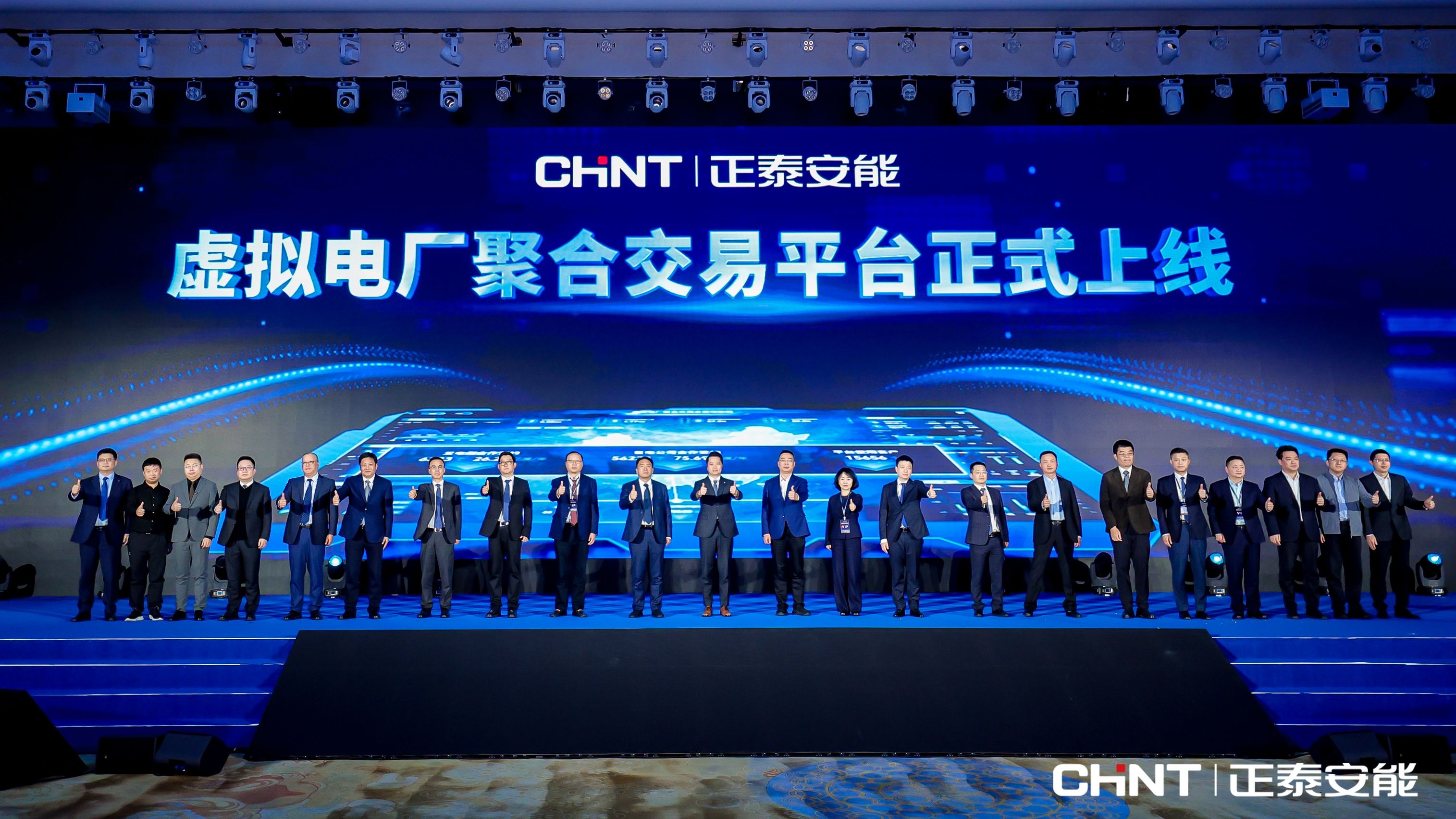
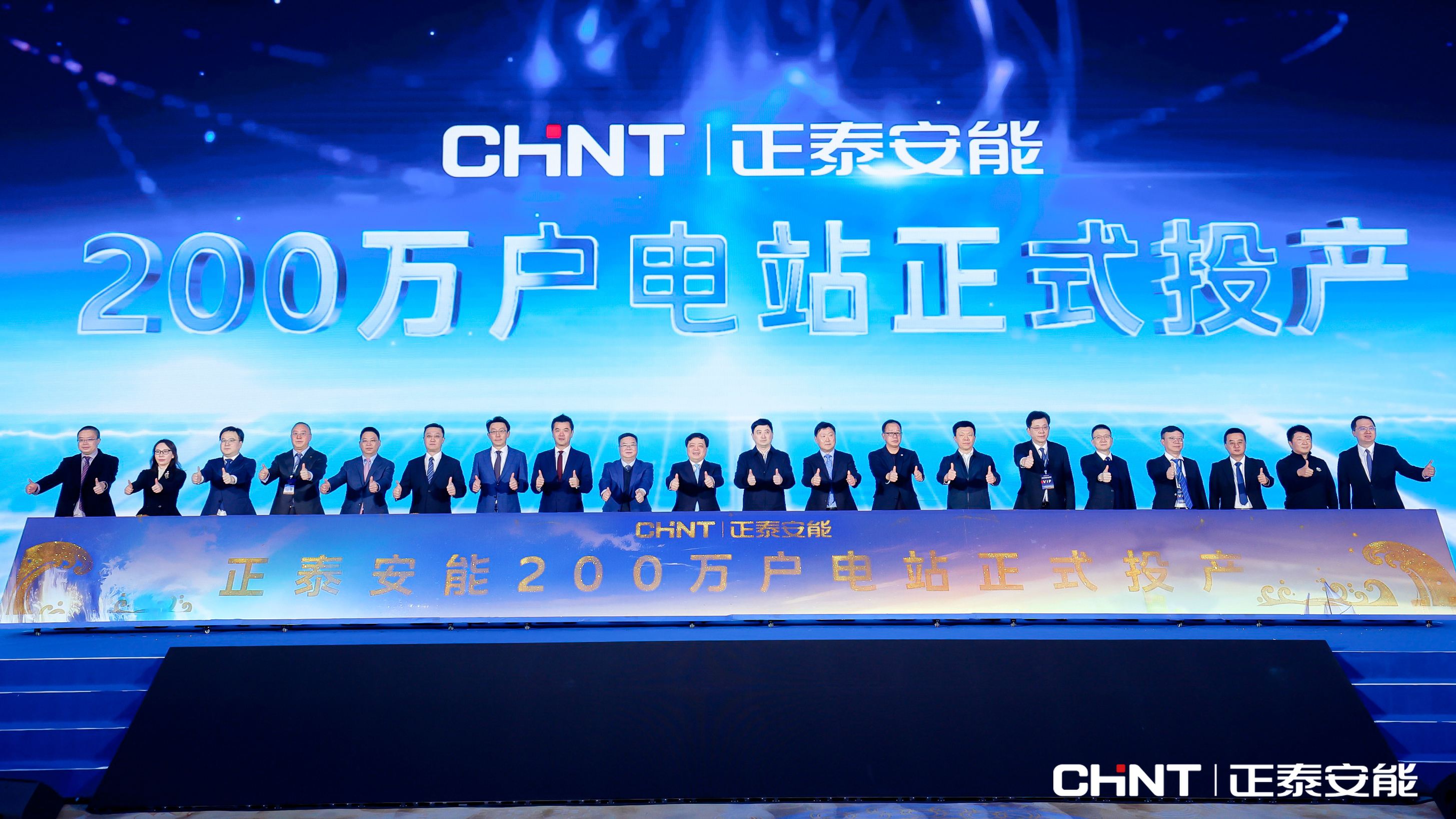
Facing the reconstruction of industrial logic, Zhengtai Energy has seized the opportunity in advance relying on its years of in - depth operation in the industry. The "Fourth Conference on Innovative Development of Comprehensive Energy Services and the Commissioning Ceremony of 2 million Household - use Power Stations of Zhengtai Energy" held on February 27 is a display of the company's response to policy guidance and adaptation to the trend of the times.
01. Breaking the "Energy Anxiety"
A company's mission answers the core business philosophy question of who it creates value for and what kind of value it creates. In the official statement, Zhengtai Energy's mission is to "accelerate the world's early achievement of carbon neutrality." If we further break down this macro - proposition, the core value it creates is actually to relieve the "energy anxiety" of families, enterprises, and society.
First, there is the "electricity bill anxiety" in the family scenario. As high - energy - consuming devices such as charging piles and smart home appliances have become standard equipment, the electricity consumption and electricity bill expenditures of ordinary families have increased significantly. The public's urgent expectation for greener and more economical electricity constitutes the most basic driving force for the social energy transformation.
Second, there is the "anxiety about the shortage of green electricity" which is crucial for the survival of enterprises. Against the background of intelligent transformation, whether it is the power supply constraints faced by the rapidly developing AI industry or the transformation pressure faced by traditional high - energy - consuming industries when dealing with green trade barriers such as the EU Carbon Border Adjustment Mechanism (CBAM), obtaining sufficient and affordable green electricity has become an issue of the times for enterprises.
Finally, from the macro level of society and the country, there is a huge gap between the new carbon emission demand generated by economic development and the limited carbon reduction space. At the stage of carbon peak, green electricity not only needs to support the new electricity consumption but also shoulder the arduous task of replacing a large amount of existing fossil energy, and the supply shortage is becoming increasingly prominent.
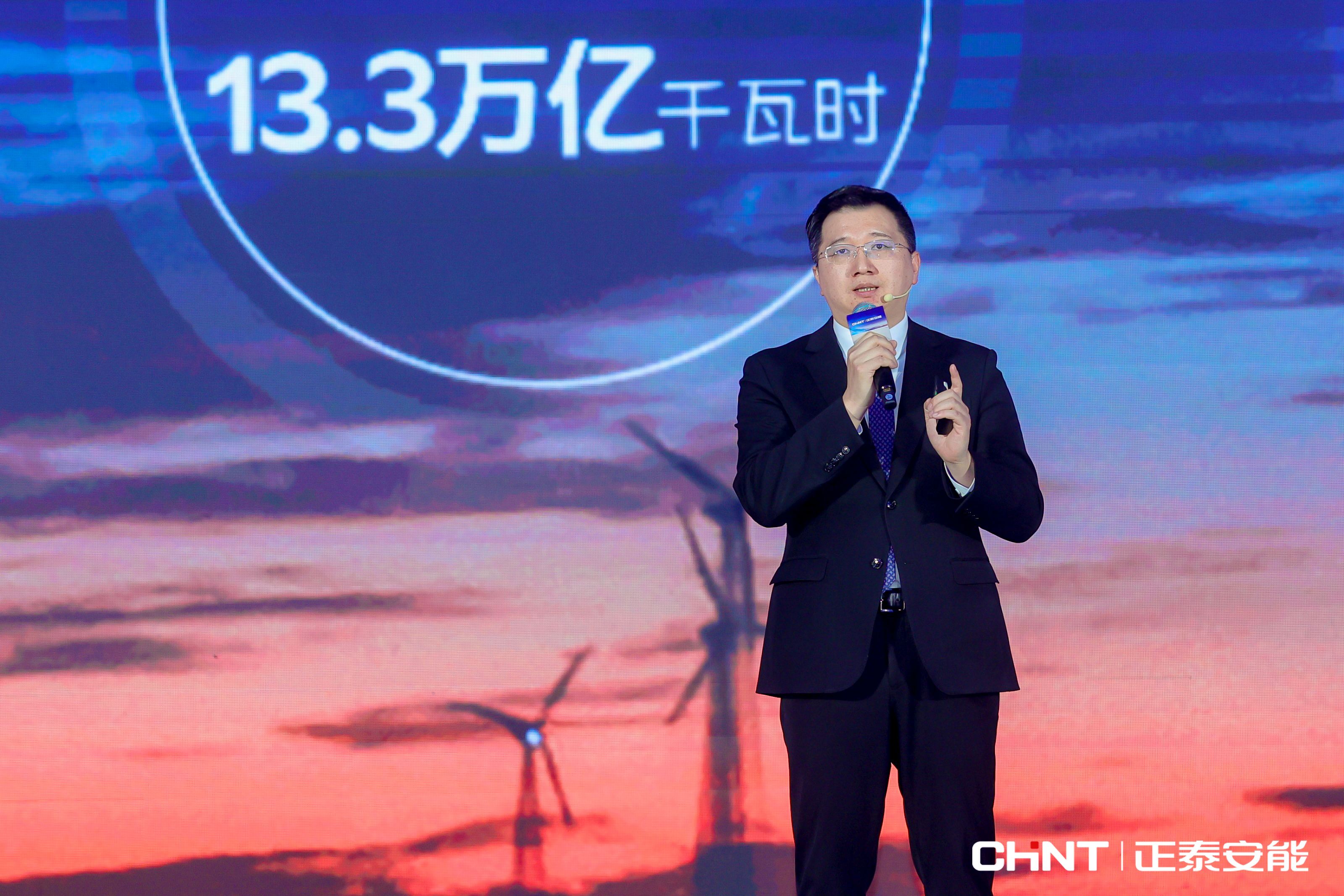
Lu Kai, the president of Zhengtai Energy, pointed out at the conference: "Anxiety means pain points. All anxieties ultimately point to the same definite solution - building a new energy system with new energy as the main body."
At the same time, Lu Kai also shared the company's value creation achievements: As of now, the company has built more than 2 million domestic household - use photovoltaic power stations, which can generate about 59.3 billion kWh of green electricity annually. It has distributed nearly 8 billion yuan in benefits to the owners, and driven more than 300,000 rural employment opportunities. The company's business has covered 29 provinces across the country, and it has successfully entered high - value and high - growth regions such as Europe and Africa in the international market.
However, this is just the starting point. There is still huge growth potential for household - use photovoltaic power in terms of both total volume and penetration rate. According to the data shared by Lu Kai, there are 260 million rural households in the country. The exploitable rooftop resources amount to 50 million, but currently only more than 7 million rural households have installed photovoltaic power, with a penetration rate of less than 15%. In the overseas market, there are still 583 million people without electricity in Africa, corresponding to 100 million households without electricity. There are still 60 million households that can install photovoltaic power.
Under the huge growth potential, a real - world problem is that when the new energy installed capacity reaches a massive level, simply expanding the scale can no longer solve the new challenges brought about by the complex power network, and the evolution logic of the industry is quietly changing.
02. From Competing for Installation Capacity to Competing for Services
If the winning strategy for China's new energy industry during the 14th Five - Year Plan period was to "race to seize territory" and compete for installation capacity, then as we enter the 15th Five - Year Plan period, the key to success in the industry has quietly changed to "quality improvement" and "system integration."
Data shows that in 2025, the market - oriented trading volume of electricity in China reached 6.64 trillion kWh, accounting for more than 64%. With the full entry of green electricity into the market, the sharp increase in consumption pressure, and the implementation of policies such as Document No. 136, the era of linear growth where "more installation means more subsidies" has come to an end. In the face of frequent negative electricity prices and the wave of market - oriented trading, the single model of "grid - connected power sales" is no longer effective. This forces enterprises to "cut costs" through digital and refined operations internally and "increase revenue" by venturing into new business formats such as power trading, energy storage dispatching, and carbon asset trading externally.
Facing this historical turning point, "comprehensive energy services" have become the inevitable direction for the entire industry to break through the bottleneck. As Tao Ye, the deputy director of the Renewable Energy Development Center of the Energy Research Institute of the Chinese Academy of Macroeconomic Research, pointed out, the future core is no longer limited to the single development side but the integration of high - dimensional capabilities such as supply - demand matching and technology integration, aiming to provide users with "one - stop" services including green electricity supply, energy efficiency management, and demand response.
Adapting to the trend of the times, Zhengtai Energy's ultimate goal is to become the global leader in comprehensive energy services.
To achieve this, Zhengtai Energy has constructed a high - dimensional strategic panorama: aiming to meet users' green electricity needs, taking comprehensive energy solutions and intelligent micro - grids as the "physical foundation," and taking virtual power plants (VPP) and energy - as - a - service (EaaS) as the "digital platform" to fully connect the entire life cycle from investment and construction to operation, management, and power sales.
The grand planning blueprint has now been translated into tangible and impressive achievements:
The comprehensive energy solutions for households cover rural areas, urban areas, and overseas regions without electricity. More than 2 million household - use photovoltaic power stations have been built in rural areas, generating 59.3 billion kWh of green electricity annually. The company has also explored the international off - grid market through the "Light Up Africa" program.
The intelligent micro - grid solutions focus on zero - carbon villages, zero - carbon industrial parks, and zero - carbon transportation. The company has currently implemented 30 projects for the development of entire villages, increasing the average annual income of each household by 3,000 yuan. In the field of zero - carbon transportation, it has launched a charging product matrix covering 3.5kW - 720kW to meet diverse energy consumption needs.
In terms of comprehensive services, the Songjiang Virtual Power Plant of the company has aggregated over 100MW of adjustable resources, with a maximum adjustable load of nearly 40MW, and has obtained the virtual power plant operation qualification in Zhejiang and Guangdong. The EaaS business has successfully signed third - party operation and maintenance contracts and has been recognized by core customers such as Huadian.
03. Strengthening the Ecosystem for Win - win Cooperation
The continuous value creation for families, enterprises, and society forms the cornerstone of Zhengtai Energy's long - term development. At the same time, the value created by Zhengtai Energy is also "feeding back" into its ecosystem.
Ma Yifeng, a consulting expert in the energy field, pointed out in his speech at the conference that in the future, distributed photovoltaic power will no longer be "connected to the grid at single points" as before but will rely on platforms for aggregated trading. The growth logic has also shifted from "seizing resourceful rooftops" to "seizing high - quality load consumption and green electricity attributes." Stable power supply, grid transmission capacity, and system regulation ability will become the value anchors of the future power system.
For many owners of household - use photovoltaic power stations, the previous model of relying solely on power sales for profit is becoming difficult to sustain. However, this does not mean that owning a photovoltaic power station will bring no profit. The aggregation of Zhengtai Energy's 2 million household - use photovoltaic power stations has opened up new profit - making opportunities for all parties.
Under the transformation of the comprehensive energy service model, these 2 million photovoltaic power stations are no longer "isolated single - power generators" but form a large - scale, decentralized energy Internet of Things. Through technological means such as micro - grids and virtual power plants, these originally scattered rooftop power stations are aggregated into "super nodes" with strong regulatory capabilities.
A key logical deduction is that the market - oriented reform of the power industry is an inevitable national strategy, and micro - grids and virtual power plants will also be important participants. The essence of marketization is to optimize resource allocation. In this process, those who master flexible regulatory capabilities and a large number of high - quality assets will benefit from marketization. The energy network composed of a large number of underlying assets is undoubtedly Zhengtai Energy's most important trump card in the power market - oriented trading, and the company is also capable of enjoying the dividends of this policy shift.
On this basis, in order to stabilize and expand this large - scale ecological network, Zhengtai Energy has launched an innovative "Evergreen Plan" service system for its channel partners. This system has reshaped the cooperation mechanism between the enterprise and its channels, redefining traditional "distributors" as "partners" with equality, respect, and value sharing. The company provides hierarchical support through the "Guardian Plan" to nurture "young seedlings," the "Growth Plan" to consolidate the "green mountains," and the "Leadership Plan" to support the "rising stars," and escorts its channel partners with the concept of "co - construction, co - existence, and win - win cooperation."
Overall, Zhengtai Energy has stepped out of the single role of a traditional photovoltaic developer and transformed into a comprehensive energy service ecological platform driven by digital technology.
From the original mission of resolving "energy anxiety," to the asset accumulation of over 2 million power stations, and then to the ecological expansion of the "Evergreen Plan," Zhengtai Energy has accurately grasped the rhythm of the times in building the new energy system during the 15th Five - Year Plan period. In this second - half battle centered on "system integration," Zhengtai Energy, armed with a large number of high - quality assets, strong regulatory capabilities, and a solid channel ecosystem, is accelerating towards its ultimate goal of becoming the "global leader in comprehensive energy services."