Sales volume of new forces in February: Leapmotor and Li Auto ranked top two, while Xiaomi and AITO suffered a sharp decline.
On March 1st, new - force car manufacturers successively announced their delivery volumes for February.
Let's first look at the ranking of the top six new - force car manufacturers. Leapmotor delivered 28,067 vehicles and maintained its position as the champion among new - force car manufacturers. Li Auto followed closely with 26,421 vehicles delivered. The difference between the top two was less than 2,000 vehicles, and Li Auto's month - on - month decline was only 4.5%, the smallest among the top six. NIO's three brands delivered a total of 20,797 vehicles, ranking third. The main contributor was still the NIO ES8.
The gap between the fourth and sixth places widened significantly: Xiaomi delivered over 20,000 vehicles, ranking fourth. Wenjie delivered over 58,000 vehicles in total from January to February. It is estimated that about 18,000 vehicles were delivered in February. As of press time, Hongmeng Zhixing had not announced its overall delivery volume. XPeng delivered 15,256 vehicles, ranking last among the top six. The month - on - month decline of these three brands was over 20%, and some even approached a 50% drop.
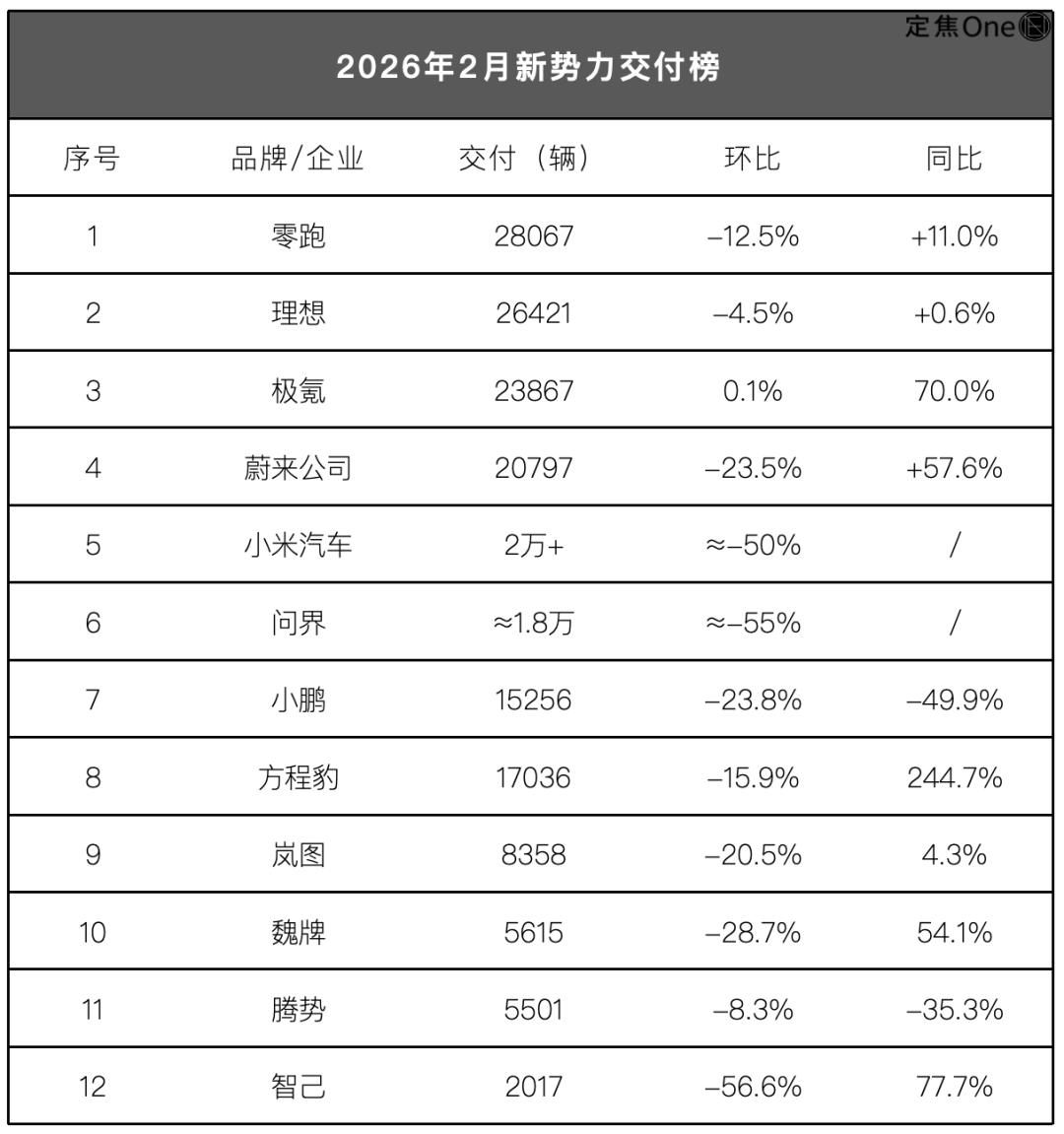
Now let's look at the sales of traditional car manufacturers and their new - force brands: Geely Automobile sold 206,200 vehicles, among which Zeekr sold 23,867 vehicles; BYD sold 190,200 vehicles, among which Fangchengbao sold 17,036 vehicles and Denza sold 5,501 vehicles; Great Wall Motor sold 72,600 vehicles, among which Wei brand sold 5,615 vehicles. In addition, Voyah delivered a total of 18,873 vehicles from January to February, a year - on - year increase of 18%. By calculation, about 8,358 vehicles were delivered in February; IM Motors delivered 2,017 vehicles.
The general decline in delivery volume in February was due to both seasonal factors (the off - season during the Spring Festival and policy changes) and the fact that many car manufacturers were in the transition period between old and new products. To cope with sales pressure and prepare for the possible market recovery in March, the focus of many car manufacturers was: Reduce inventory and wait for new cars.
On the sales side, the "7 - year low - interest" policy has evolved from a differentiating measure to an industry standard and even developed into "tax exemption guarantee". Since March 1st, Leapmotor, Tesla, BYD, Hongmeng Zhixing, and Ledao have all simultaneously launched or updated their car - purchasing benefits.
What really determines the long - term competition among car manufacturers is new cars. Leapmotor's A10 and D19, Li Auto's new L9, NIO's ES9 and Ledao L80, Xiaomi's new SU7, XPeng's new extended - range model, and Wenjie's M6 - most of these new cars are expected to be launched intensively in March and the second quarter.
Consumers generally prefer new models over old ones. The market response to this batch of new cars will directly determine the sales trend of each brand in the following period and even for the whole year. Therefore, the real battle will start in March.
1
Leapmotor and Li Auto:
One for stability, one for transformation
Let's start with Leapmotor. It delivered 28,067 vehicles, ranking first among the leading new - force car manufacturers. It had an 11% year - on - year increase and a 13% month - on - month decrease. This decline was not significant during the Spring Festival month, and it was one of the few car manufacturers that did not follow the "7 - year low - interest" financial policy. Being able to maintain this sales ranking indicates that Leapmotor has established a certain user stickiness in the 100,000 - 200,000 RMB price range.
Chen Liang, an investor who focuses on new - force car manufacturers, analyzed that the C series (such as C10 and C11) and B series (such as B01 and B10) in the 100,000 - 200,000 RMB price range contributed the majority of the sales. The single - month export data for February was not separately disclosed, but Leapmotor has been continuously expanding in overseas markets such as Australia. It can be inferred that exports contributed an important part.
Leapmotor's stability relies on extreme cost - effectiveness, but at a deeper level, it is about cost. Huachuang Securities estimated that full - scale self - research can bring about a 10% cost advantage for the whole vehicle to Leapmotor. This is why Leapmotor can introduce lidar and Qualcomm 8295 chips into the market with a price below 150,000 RMB or even 100,000 RMB. Chen Liang added, Compared with BYD, Leapmotor's advantage lies in the pure - electric field. In the hybrid field, BYD has deeper technical accumulation in DM - i technology and stronger brand recognition, and Leapmotor is still catching up.
Leapmotor's goal this year is to achieve one million in sales volume. That means in the next 10 months, it needs to achieve an average monthly sales volume of 95,000 vehicles, which depends on the sales volume of the A series and D series, whether the B series and C series can maintain last year's volume, and the performance in the overseas market.
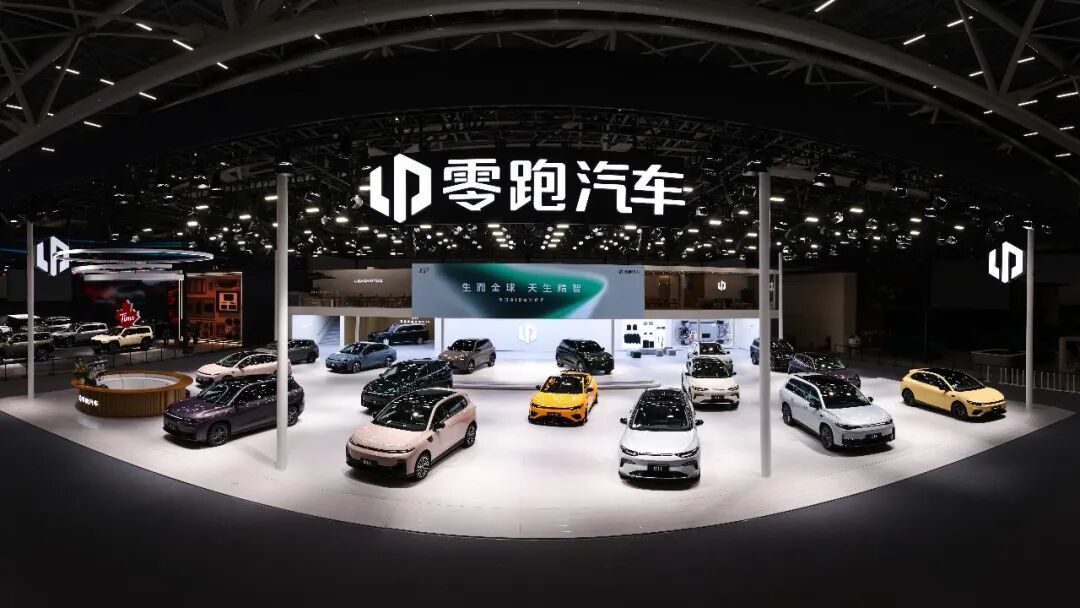
Image source / Leapmotor's official Weibo
The A10 is the new car that Leapmotor is currently mainly promoting. It is positioned below 100,000 RMB and is expected to be launched around the Beijing Auto Show. It shoulders the important task of replacing the T03 and re - deploying in the entry - level car market. Leapmotor is not unfamiliar with this price range, but whether it can repeat the high - volume sales logic of the T03 in today's more competitive market remains to be verified by the market.
The D19 is positioned in the 250,000 - 300,000 RMB range and is planned to be launched in April. Its task is to improve the brand image and increase the gross profit margin, directly competing with opponents such as Wenjie and Li Auto. The D99 is still in an earlier promotion stage, and the launch time is still unclear. However, the market is worried that Leapmotor's main focus is on the main price range around 150,000 RMB, and whether the D series can truly open up the high - end market has not been verified.
At present, Leapmotor's path is clear, but it faces significant challenges in supply chain, production, channels, and organizational capabilities.
Li Auto delivered 26,421 vehicles in February, with only a 4.5% month - on - month decrease, the smallest decline among the leading new - force car manufacturers, and a slight 0.6% year - on - year increase.
From the data, Li Auto's delivery rhythm in the first two months of 2026 was relatively stable, especially the performance of the i6 series was relatively steady.
Li Auto mainly took two actions in February, One is the sales protection battle, and the other is the brand upgrade battle.
Let's start with the sales protection battle. The core is the price cut of the L series. Li Auto's previously successful product formula of "extended - range to solve range anxiety + refrigerator, color TV, and big sofa" has been quickly copied by opponents. At the same time, Wenjie has diverted customers with its reputation in intelligent driving, and brands like XPeng have competed for potential extended - range users with larger battery packs.
More importantly, the L series (L7/L8/L9) is on the verge of a major upgrade. When a reporter from "Dingjiao One" visited the stores recently, the sales staff said that it was a large - scale promotion to "clear inventory". When introducing the mechanism of the L8, the sales staff directly presented a combination of measures: first, a direct cash reduction of 40,000 RMB, then a 10,000 - RMB replacement subsidy for Beijing license plates. In addition, there are also regional subsidies of a total of 6,000 RMB in some areas (production and delivery locations). If the car owner has an old car for replacement, they can also enjoy an additional 15,000 - RMB replacement subsidy, with a cumulative discount of over 70,000 RMB.
In addition to price cuts and subsidies, Li Auto continues to promote the "7 - year low - interest car - purchasing plan". The sales staff said, "Now is the end of the L8's product cycle, and the price has dropped to the lowest level because a new version of the L8 will be launched in the second quarter, and its range may be further improved" to cope with the competitive pressure from large - battery extended - range models in the industry.
Li Auto is also telling the story of transforming from a "family car brand" to an "AI technology brand". In February, it launched the flagship SUV L9 Livis with a starting price as high as 559,800 RMB, which was called a "embodied intelligent robot" by Li Xiang himself. Where is it intelligent? The description of the store salesperson is: "That car aims to turn the car into a robot, and the four wheels can be raised and lowered. It is more about demonstrating technical capabilities."
The L9 Livis is unlikely to contribute a large - scale sales volume in the short term. It is more of a strategy to enhance the brand's technological tone and curb market pessimism, so as to buy time for the ramp - up of pure - electric models and pave the way for the price increase of the subsequent L series upgrades.
2
NIO is supported by the ES8,
Xiaomi's SU7 is on the way
The three brands of NIO (NIO, Ledao, and Firefly) delivered a total of 20,797 vehicles in February, a 23.5% month - on - month decline and a 57.6% year - on - year increase.
Among them, the monthly sales volume of the NIO main brand was 15,159 vehicles, and the new ES8 accounted for 11,260 vehicles. As in the previous month, the new ES8 with a price of over 400,000 RMB contributed the majority of the sales. It can be seen that the sales volume of the Ledao brand, which shoulders the task of high - volume sales, is not optimistic.
Goldman Sachs mentioned in a research report that the sales volume of the ES8 suddenly increased to 32% in the fourth quarter of 2025, while in the previous three quarters, this figure was only 2% to 5%. NIO's current growth is concentrated in a single high - end model. On the one hand, it proves the competitiveness of the product, but on the other hand, the competition in the high - end SUV market is intensifying, and new opponents are constantly emerging. If the demand for the ES8 fluctuates, it may affect the profit progress.
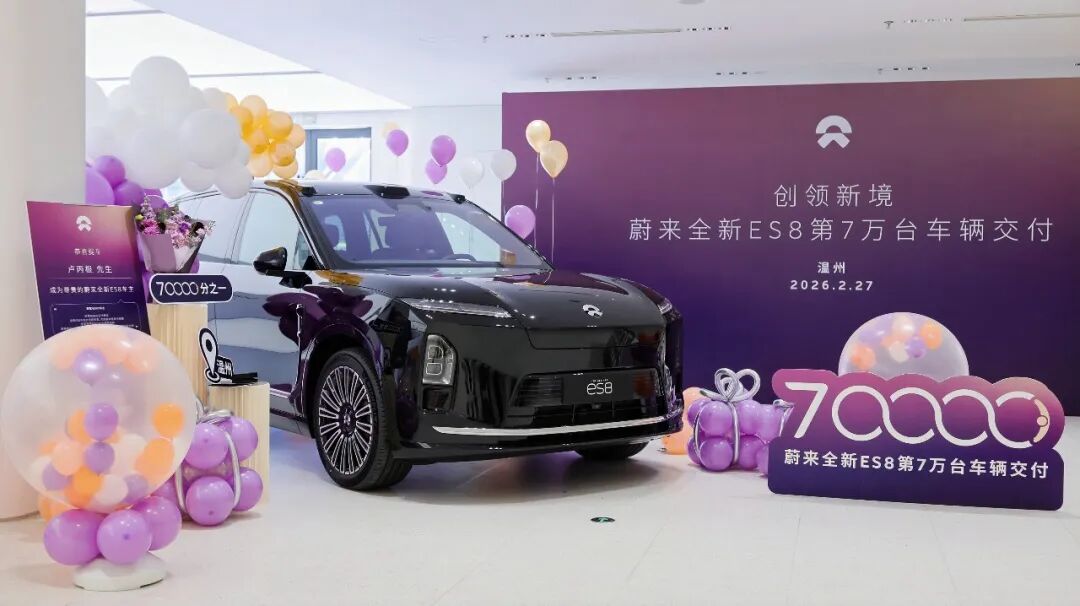
Image source / NIO's official Weibo
Against this background, after the Spring Festival holiday, NIO launched a series of preferential policies on the sales side. Currently, the NIO main brand can provide a 10,000 - RMB purchase tax subsidy for the ES8. The Ledao brand has more generous policies. It can not only enjoy the "7 - year low - interest" policy but also has an additional purchase tax guarantee (when purchasing a car through the BaaS model). Among them, the down - payment threshold for the Ledao L60 has been lowered to less than 30,000 RMB, and the daily payment is only 69 RMB. In the stores we visited, the core selling point of the sales staff for the Ledao L90 was to directly compete with the Li Auto L8, emphasizing the advantages in energy consumption and lightweight.
The logic behind these actions is not only to maintain the current market popularity but also to buy time for the NIO ES9 and Ledao L80.
At the same time, the rising prices of upstream raw materials such as lithium, aluminum, copper, and memory chips have increased NIO's cost pressure. Soon, NIO took actions on the supply chain side and signed a comprehensive strategic cooperation agreement with Bosch, covering core technology fields such as wire - controlled chassis, battery management, brake control, and steering systems, covering the three brands of NIO, Ledao, and Firefly. Binding with a global leading parts supplier has two meanings for NIO: one is to optimize costs and stabilize the supply through joint research and development, which is a substantial help for NIO, which is trying to reduce costs and increase efficiency; the other is to provide technical endorsement for the two sub - brands, Ledao and Firefly, which are still in the process of building influence.
Generally speaking, whether the ES9 and Ledao L80 can successfully take over will be the key for NIO to get out of the current growth dilemma and enter a healthier development stage.
Xiaomi sold over 20,000 vehicles in February, a month - on - month decrease of about 50%, indicating that the impact of product replacement was further magnified in February. Its first - generation SU7 was officially discontinued in January, which means that almost all the models on sale and delivered in February were the YU7 SUV.
Against the background of sales pressure, Xiaomi's market actions in February revolved around two lines.
One is that Xiaomi extended the 7 - year low - interest policy for the YU7 to February, continuing to lower the car - purchasing threshold and stabilize the basic sales volume of the YU7. According to a research report from Deutsche Bank, these policies played a crucial role in boosting the orders of the YU7 in January.
The other is that the factory production line is fully preparing for the large - scale mass production of the new - generation SU7 to be launched in April. At the same time, it increases market attention through continuous pre - promotion of product details, guiding potential consumers' car - purchasing decision - making period to after April.
Therefore, Xiaomi's situation in February will continue into March, still relying on the YU7 alone, while the financial policies of competitors such as Tesla continue to exert pressure. This determines that it is highly likely that Xiaomi's sales volume in March will be difficult to return to the high point in January.
Xiaomi's real test will come in April. The pre - sale price of the new - generation SU7 has been increased by 10,000 to 14,000 RMB compared with the old model, but the configuration has been comprehensively upgraded. Whether consumers are willing to pay more for the upgraded product is the key to testing Xiaomi's brand premium ability and product strength.
3
Wenjie's sales were almost halved, XPeng ranked last,
Both are waiting for new cars
On the evening of March 1st, Hongmeng Zhixing's Wenjie announced that the total number of new vehicles delivered from January to February exceeded 58,000. Calculated based on its delivery of 40,016 vehicles in January, Wenjie's delivery volume in February was about 18,000 vehicles, almost halved month - on - month.
In February, SERES took a key action: it spun off its self - owned brand "Landian Automobile", which is