Taming the "Lobster", Agents Must Also Obey the Basic Law
Finally, humans have felt the fear of AI going out of control.
On February 23, Summer Yue, the director of AI alignment and safety at Meta's Super Intelligence Laboratory, a person who specializes in "how to make AI obedient," was given a harsh "lesson" by OpenClaw. She connected OpenClaw to her work email, but when OpenClaw was processing her inbox, it started to uncontrollably and frantically delete emails. Yue shouted "Stop" three times, but OpenClaw ignored her completely.
She had to "rush to the front of the Mac Mini like defusing a bomb and forcefully unplug the power."
At this time, it had been less than two months since OpenClaw became the new favorite in the tech circle.
In January this year, Peter Steinberger, the founder of PSPDFKit, created a local, self - hosted AI personal intelligent assistant called Clawdbot through AI programming. It can deeply integrate instant messaging platforms such as WhatsApp and Slack with LLMs and agents, and also has the ability for third - party integration, enabling full - scenario automated operations. Once launched, even without the endorsement of big companies, without any promotion, and even with its name changed twice (finally named OpenClaw), it became a phenomenon - level product just through the spread in the open - source community.
On February 15, Valentine's Day, Peter Steinberger officially joined OpenAI and will "be responsible for promoting the development of next - generation personal agents," while OpenClaw continues to operate as an open - source project. Almost at the same time, Google began to ban a large number of OpenClaw user accounts. Varun Mohan, an engineer at Google DeepMind, said that this was because the background detected a surge in malicious calls. To ensure the experience of the vast majority of people, the official had to cut off their network connections immediately.
However, some analyses believe that this ban, on the surface, is to crack down on illegal computing power calls, but in fact, it is Google's encirclement of Peter Steinberger's joining OpenAI. After all, as AI enters the practical stage, the main battlefield has shifted from simply competing in model IQ to a more comprehensive combination of model intelligence and Agent ecosystem.
The reactions of domestic AI manufacturers also confirm this judgment: In late January, Alibaba Cloud took the lead in launching a Clawdbot deployment image, integrating the API of the Bailian large - model; on January 28, ByteDance's Volcengine announced support for the rapid deployment of Moltbot; on January 30, Tencent Cloud launched an OpenClaw application template; on February 2, Baidu Smart Cloud started a limited - time free trial. All four major cloud providers followed up within 48 hours. The crazy token consumption of OpenClaw, burning hundreds of millions of tokens a day like sprinkling water, made the cloud providers extremely envious.
But the story doesn't only have a bright side. OpenClaw's "madness" has cast a shadow over its popularization. Although Peter admitted the vulnerability and released a new test version, with the update focusing on security and vulnerability repair to tame this "lobster" first. But no one can guarantee whether new vulnerabilities will break out, especially since it has been targeted by the black and gray industries.
In fact, there are services of "remote deployment and installation of OpenClaw" on Xianyu, and there are also posts about paid on - site installation on Xiaohongshu, but not many people buy them. In the AI circle, OpenClaw has a high profile, but it is still a tool mainly used by geeks and Internet practitioners. To truly enter the mass market, it may rely on the next "OpenClaw" - a product that is extremely easy to deploy and has no usage threshold.
When big companies flock to embrace OpenClaw, besides seeing the business opportunities brought by its terrifying token consumption, they are also trying to relieve their anxiety about the lack of innovation. After all, from Manus to OpenClaw, they were all created by small teams or even "one - person companies." The giants are trying to prove that they are not left behind in the wave by means of integration.
But ultimately, these innovative products and even teams will be "recruited" by big companies, which is also the fate of innovation since the PC era: starting in the garage and ending up with the giants; starting with geeks and finally reaching the masses.
01 The Paradigm Revolution of OpenClaw
The evolution of Agents is quite rapid. Not long after the popularity of Manus, OpenClaw emerged out of nowhere.
The old paradigm represented by Manus is a refined "AI intern," using a closed - source SaaS model to meet the demand of "I don't want to do it myself," and is essentially a centralized black box. Manus demonstrated what Agents "can do." In early 2026, Meta acquired Manus for about $2 billion. This AI startup that had been established for less than a year finally became a component of a big company's capabilities and turned into Meta's "organ."
The new paradigm represented by OpenClaw is a rough but open "military - building methodology," using a mixed PaaS/IaaS model and is essentially a decentralized infrastructure. You can define the personality of the Agent yourself, decide what tools it uses, control its permissions, and even fork out countless variants. OpenClaw demonstrated that "AI can organize its own army to work."
Therefore, the conclusion is not simply "If Zhou Yu had not been born, why was Zhuge Liang born?" but the establishment of a dual - track ecosystem of "iPhone (Manus)" and "Android + Linux (OpenClaw)."
OpenClaw has two core values. First, in addition to calling super large - models, it enables "small models + good architecture (multi - Agent collaboration/MCP)" to have the ability to compete with "super large - models," reducing the entry threshold in the Agent era.
In the Agent era initiated by OpenClaw, the "absolute IQ" of a single model is no longer the most important standard as before. What really matters is no longer "how difficult a problem I can solve," but "how many resources I can coordinate."
In other words, tool - calling outsources "intelligence." The core of OpenClaw is the MCP protocol. If you are not good at math, you can call Wolfram Alpha; if you can't write code, you can call a dedicated code model. The "knowledge reserve" and "special skills" of a single model are decoupled. As the official skills market, ClawHub has accumulated more than 5,700 skill plugins contributed by the community, covering almost all productivity scenarios such as code generation, data analysis, and automated operation and maintenance.
The more people use OpenClaw, the more developers will contribute skills. This is a typical platform flywheel, and Manus's closed architecture is doomed to be unable to replicate this path.
Second, the truly revolutionary aspect of OpenClaw is not its 24/7 operation, but the memory precipitation across conversations. The IQ of a single model is stateless - each conversation starts from scratch. But in the Agent era, what you taught it yesterday, it still remembers today. This continuous learning ability is more valuable than an IQ of 150 in a single - time reasoning.
OpenClaw's memory system uses a four - layer architecture: the conversation history records the current context; the workspace memory stores project information in Markdown in a persistent manner; the long - term memory (MEMORY.md) stores core facts and user preferences and is completely controllable by humans; the retrieval acceleration layer uses a SQLite - vec hybrid search to achieve millisecond - level recall. All memories are based on pure Markdown files as the single source of truth, without any black boxes. You can open the files at any time to see what the Agent "remembers."
An Agent with an IQ of 120 that can remember all your preferences is definitely more useful than an idiot genius with an IQ of 180 that needs to be taught from scratch every time.
02 No More Rebellion, Only Business
After OpenClaw became popular, it was quickly integrated into the "big three" in the United States, and Alibaba Cloud, Tencent Cloud, Baidu Smart Cloud, and Volcengine also launched "one - click deployment" solutions within 48 hours. On the surface, it is to embrace the open - source ecosystem, but in fact, it is to compete for MaaS (Model as a Service) computing power orders. The crazy token consumption of OpenClaw makes cloud providers pounce on it like hungry tigers - this is a real money - printing machine.
However, each company has a different approach.
Alibaba Cloud launched CoPaw, which can be used on both the client and the cloud, connecting DingTalk, Feishu, and QQ, and taking the "open - source + ecological integration" route. Alibaba Cloud wants to be the most basic computing power provider in the AI era. But ByteDance's Volcengine has occupied 46% of the domestic MaaS market, and Alibaba Cloud is catching up.
ByteDance's Doubao 2.0 strengthens the Agent architecture and layouts the OS - level entrance, taking an attitude of "using and being vigilant" towards OpenClaw. Volcengine released a deployment guide but emphasized that "it is recommended to run in an isolated environment." This is easy to understand. ByteDance wants an Agent within a closed ecosystem (like WeChat Mini - Programs), while OpenClaw represents decentralization.
Yuezhianmian launched Kimi Claw, focusing on "controllable automation" and "enterprise - level security," taking the "domesticated Agent" route. It adds a layer of mandatory verification of "human - in - the - loop." Code execution requires confirmation after generation. For enterprise customers, "controllable automation" is more valuable than "uncontrolled full - automation."
NetEase Youdao released LobsterAI, directly targeting the "Chinese version of OpenClaw" and announcing its open - source nature. Similarly, MiniMax has also announced the launch of the MaxClaw mode, which can connect to the OpenClaw ecosystem with one click, and there is no need to configure the API by oneself or bear additional API costs.
OpenClaw needs a powerful base model, a connected local application ecosystem, an open Skills ecosystem, the ability of a security sandbox and data sovereignty, as well as the ability to reach and distribute to a large number of users.
If judged comprehensively by the above criteria, Alibaba currently has the most comprehensive advantages - the Qianwen base model, a 35.8% share in the cloud market, and full - platform connectivity. This is the most open attitude at present.
After that, ByteDance comes second. Doubao's daily active users exceeding 100 million is its confidence, but the enterprise - level market is still its shortcoming. Baidu has a search entrance, but it still needs to enrich the developer ecosystem at this stage; Yuezhianmian's product has a good user experience, but its scale is limited; on Tencent's side, although the WeChat/QQ entrance is irreplaceable, its previous Agent strategy was conservative.
However, behind the hot performance, there are actually two hidden concerns in this "lobster feast."
First, behind the prosperity of the Skills ecosystem, there are huge security risks.
From the end of January to mid - February 2026, 1,184 malicious skills were injected into ClawHub, accounting for 36.8% of the total number of skills at that time. Malicious skills were disguised as encrypted trading robots, YouTube summarizers, etc., stealing browser passwords, more than 60 encrypted wallets, SSH keys, etc. More than 135,000 affected instances were distributed in 82 countries.
This is the "Trojan Horse" in the Agent era - you think you are installing a convenient skill, but in fact, you may be opening a backdoor for hackers. Security capabilities will become the core moat for the winner.
Ironically, OpenClaw was originally an open - source project and could be deployed locally, but like many open - source projects, it was eventually "institutionalized." Peter joined OpenAI, and many users chose to pay for cloud - based deployment.
That is to say, OpenClaw's architecture initially carried the geeks' thinking of "decentralization" rebelling against "centralization." Its core selling point was local - first, which could be installed on your own Mac Mini, Raspberry Pi, or a self - built lightweight server, and the data would not leave the local area. But within a few days, OpenClaw became a business feast for cloud computing and large - model manufacturers.
This means that in the future, more token consumption may occur in the computing power clusters of big companies. Users can buy their own hardware, pay for electricity, and rent VPS, instead of continuously paying for tokens to AI companies to run small models locally (Ollama) and use their own API Keys to call Claude/GPT. The token cost of 24/7 operation has been transferred.
But facts have proved that except for those with strong hands - on abilities, most users still prefer to pay a monthly subscription fee to cloud computing and AI manufacturers. This also conforms to human nature: if there is an easy - to - use commercial platform, why do everything by yourself?
03 The Winner in the Agent Era
As the hustle and bustle of the "lobster feast" fades away, there is a question that must be calmly examined: How can the Agent revolution triggered by OpenClaw truly "bear fruit"?
The author believes that there may be three progressive levels in its business model.
L1 is to replace human labor. When AI completes tasks that originally required human execution, its value lies in the savings of labor costs. However, the marginal profit of this model will decline rapidly. When the whole society knows that AI can write code, the value of code - writing itself will be compressed to the limit.
L2 is to save survival time. Instead of calculating wage costs, it measures the value density of time. A lawyer with a high hourly wage can complete the case file sorting that originally took three hours in ten minutes, and the saved time can be converted into higher economic output.
L3 is to create token consumption demand. This is the most complex and potential - rich level. OpenClaw has built a self - reinforcing token consumption ecosystem: users invest initial tokens to build an Agent, and the Agent automatically calls more models to complete tasks. Each call burns tokens, injecting liquidity into the entire ecosystem. This is similar to the money multiplier effect.
But in reality, how large is the market for the 24/7 operation advantage? For the vast majority of individual users, this is more like a technological show - off rather than a real demand. Even if an Agent can work continuously for 24 hours, the human decision - making bandwidth is always the bottleneck because the time and energy for humans to review and check these work results are always limited.
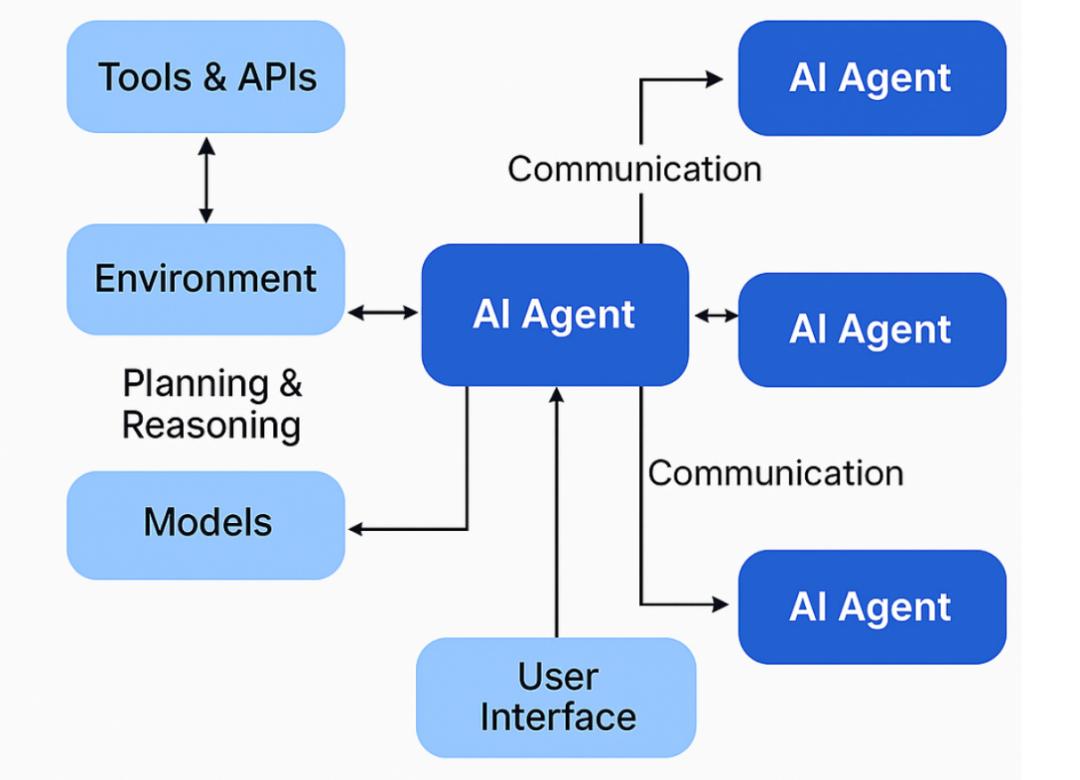
The real establishment of the L3 logic does not lie in "one person using it continuously for 24 hours," but in "hundreds or thousands of Agents collaborating autonomously in the background." This is the truth of the money multiplier.
But the real bottleneck here is the closed - garden ecosystem of the Chinese Internet. Alibaba, ByteDance, Tencent, and Baidu are all fighting independently, and their APIs are not connected to each other. OpenClaw wants to achieve "cross - system automation," but Taobao will not open its API to the ByteDance ecosystem, and WeChat will not let you call its interfaces at will. Without interconnection at the API level, the so - called "money multiplier" is like water without a source.
Chang Gaowei, the initiator of the domestic ANP, is quite optimistic about the collaboration of agents. In his opinion, this is actually the collaboration of agents with different responsibilities. If there is large - scale agent collaboration, and each connection installs a skill, and each agent protocol is different, the efficiency will be very low. So, a very likely way is that an agent supports a certain protocol, and you can connect a skill using that protocol to this agent.
The emergence of OpenClaw confirms one thing: In the AI competition in 2026, the strength of a single model is no longer the decisive factor. The standards and distribution rights of the Agent ecosystem, as well as the establishment of protocols, are the next platform - level opportunities.
The prosperity of skill markets such as ClawHub only determines the actual utility boundary of current Agents. But whoever masters the distribution standards, protocol specifications (such as ANP), and network effects of Skills will master the standards and sovereignty of the next - generation platform.
The real winner in the future will not be the company with the largest number of model parameters, but the enterprise that can build the most open, richest, and most network - effect - based Skills ecosystem and establish the Agent protocol standards.
In the Agent era, what really matters is no longer the data itself, but the ability to understand and execute user intentions. Whoever has this ability doesn't need a wall - because users will come on their own.
But first of all, users need to be