How many young entrepreneurs have been harmed by pitfalls in rural cultural and tourism projects?
Recently, short - video platforms have successively reported "suspension notices" of multiple rural cultural and tourism projects, such as the internet - famous village coffee shop "The Universe is a Granary" and Luming Courtyard in Xuancheng, Anhui.
"The Universe is a Granary" was once the most representative internet - famous village coffee shop. A post - 90s girl quit her job in the public sector and transformed a cowshed into a coffee shop in the rural paddy fields of Jing County, Anhui in 2023. With its eye - catching scene design and short - video marketing, it became an internet sensation in rural cultural and tourism. It not only made itself popular but also brought the whole village into the spotlight. Many villagers set up stalls around the project to welcome customers. However, in early February 2026, the project officially closed. The person in charge of the shop published an article titled "Idealism Has No Home", looking back on the reasons for closing the shop. Full of beautiful ideals for rural cultural and tourism entrepreneurship, they encountered various difficulties in reality. After the coffee shop became popular, there were many conflicts with the surrounding villagers. Eventually, unable to bear the pressure, they chose to close the shop and leave.
Luming Courtyard in Xuancheng, Anhui is a rural cultural and tourism project, including rural vacations, rural amusement parks, homestays, and special farmhouse cuisine. It aimed to create a poetic rural vacation life. The project opened in October 2025. Just a few months later, due to a change in the original owner's idea and the plan to sell the project land, a contract dispute arose with the cultural and tourism team that leased the project, and both parties went to court. In early February 2026, even though the cultural and tourism team won the lawsuit, the original owner cut off the water and power supply, forcing the project to suspend operation.
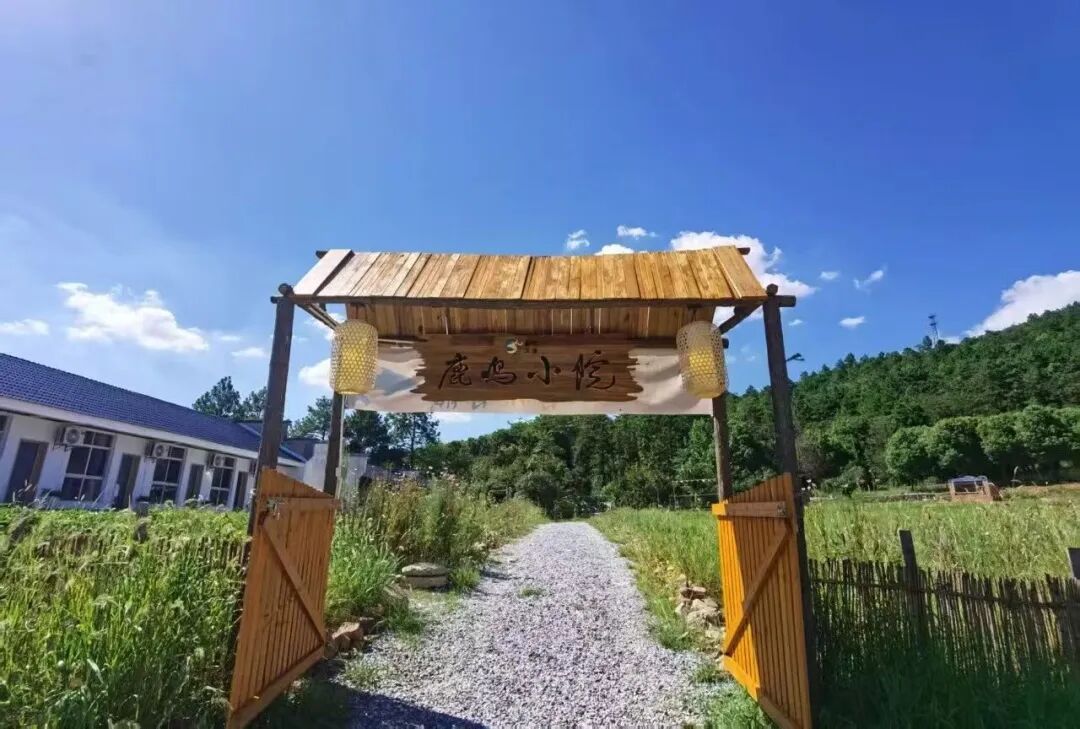
Image source: Official website of Luming Courtyard
The above two cases are just the tip of the iceberg. In the past two years, many rural cultural and tourism projects have been forced to rectify or shut down due to land - related violations.
Among all cultural and tourism formats, the investment threshold for rural cultural and tourism projects is the lowest. For example, the initial investment of the internet - famous village coffee shop "The Universe is a Granary" was only about 100,000 yuan, which is even lower than opening a milk tea shop in the city. The combination of this low threshold and the poetic and idealized life carried by rural cultural and tourism has attracted many young people tired of urban workplaces to engage in rural cultural and tourism.
The advantages of young entrepreneurs are that they are creative, have ideas, know how to stimulate the excitement of the new generation of tourists with internet - famous scenes, and are good at short - video traffic play. This has made many rural cultural and tourism projects quickly become popular. However, the drawback of young entrepreneurs is that they are too young and inexperienced, and their expectations for the operation of rural cultural and tourism are too simplistic and idealistic.
Young entrepreneurs in rural cultural and tourism often fall into three major pitfalls.
First, land nature. Rural cultural and tourism is different from urban projects. In cities, land management is standardized and clear, with clear divisions of residential land, commercial land, industrial land, etc. In rural areas, the land nature is extremely complex. There are land use divisions such as permanent farmland, general cultivated land, forest land, homesteads, and collective land, as well as various land red lines such as ecological and environmental protection red lines, flood control areas, geological disaster prevention and control areas, urban development boundaries, and mineral resource protection areas. Rural cultural and tourism entrepreneurs often ignore and underestimate the power of these land red lines.
In rural areas, many villagers, village collectives, and town governments are not very sensitive to land violations and don't care whether the entrepreneurs' land use is compliant. The entrepreneurs and the land providers are willing to cooperate, and they start cultural and tourism development muddle - headedly. Only when they are punished by the superior land management department do they realize they have stepped into a big pit.
Second, rural society is different from urban society. The city is an open society of strangers. Anyone can come to the city to work and start a business. The prosperity of the city is based on clear rules and fair rule of law. In contrast, the countryside is a closed society of acquaintances. Villagers always distinguish between insiders and outsiders, and it is difficult for entrepreneurs to truly integrate into the countryside.
In the eyes of many villagers, the countryside belongs to the "insiders", and all resources and wealth distribution should give priority to the "insiders". When outsiders come to the countryside to make money, they are considered to be occupying the village's resources and sharing the village's wealth. The large number of tourists brought by rural cultural and tourism has made some villagers benefit, while others have gained nothing, which has caused dissatisfaction and resistance among some villagers.
The famous successful benchmark of rural cultural and tourism, Yuanjia Village, owes its success mainly to the village secretary leading the villagers to start businesses and get rich. Yuanjia Village established a collective and fair distribution model from the beginning, enabling every villager to enjoy relatively equal benefits. The village secretary and village cadres lead by example, doing more and taking less, which makes the villagers convinced.
The internet - famous village coffee shop "The Universe is a Granary" is a typical case of outsiders being unable to integrate into the countryside. The entrepreneurs were full of idealism and worked hard to create an internet - famous project, thinking they were bringing wealth to the countryside. However, in the rural ecosystem, it was precisely the sudden wealth that triggered strong dissatisfaction among some villagers due to uneven distribution, and then the conflicts intensified. The person in charge of the coffee shop was so harassed that they were forced to close the shop.
In the city, when starting a business, the rules are clear and the law provides a guarantee. Entrepreneurs only need to focus on dealing with customers. In the countryside, entrepreneurs need to handle the entire rural community and lead the whole village to build a path of shared prosperity with shared interests and equal distribution. This is a huge challenge for young entrepreneurs.
Third, the traffic of rural internet - famous projects is not sustainable. In recent years, rural cultural and tourism has been very popular on short - video platforms. There have also been many marketing accounts and promoters who specifically share successful cases of rural cultural and tourism, camp parks, village coffee shops, and agricultural - cultural - tourism characteristic projects, and promote their supporting services such as operation courses, design plans, equipment, and advertising and marketing. The promotion of these marketing accounts and promoters creates an illusion that there are rural internet - famous projects everywhere, making many young entrepreneurs excited. They think that by creating a few internet - famous scenes and taking a few operation courses, they can enjoy the dividends of the rural cultural and tourism boom.
However, rural cultural and tourism has never been an industry on the upswing. In the short - video era, it is easy to stand out by creating a few innovative scenes. In the first few months after opening, it can attract all the surrounding tourists, and the project becomes another popular case in the mouths of marketing accounts. But after the novelty wears off, the surrounding tourists won't come again after the first visit, and the passenger flow drops sharply. This is almost the inevitable fate of rural internet - famous projects.
The popularity at the opening does not equal the success of the project, and the online traffic does not equal the real offline passenger flow demand. This is something that entrepreneurs in many rural cultural and tourism, camp parks, agricultural - cultural - tourism, village coffee shops, and homestays must deeply understand.
Generally speaking, rural cultural and tourism has the characteristics of low investment threshold, internet - famous popularity, and easy to stand out, which attracts many young entrepreneurs. The young people's weariness of urban workplaces and their pursuit of poetry and the distant also determine that they are prone to have the impulse to start a business in rural cultural and tourism. However, the pitfalls of rural cultural and tourism are often hidden in places that young people can't see, and it has extremely high requirements for experience and ability. If young people rush into it, the ending may be a sigh like "Idealism Has No Home". It is hoped that young people will carefully choose the rural cultural and tourism track when starting a business.
This article is from the WeChat official account "Zhiku Cultural and Tourism", author: Wu Moyan. It is published by 36Kr with authorization.