Workers group-buy GPT, while elders take photos and ask Doubao: This Spring Festival, AI exploded in the sinking market.
In the tech circle, AI is no longer a new topic. Almost everyone discusses it on various occasions. So, what about outside the circle? For the general public, who are not geeks or digital enthusiasts, will AI be relevant to their work and life?
During the Spring Festival holiday, I had the opportunity to have in - depth conversations with my relatives and friends. They have different occupations, ages, and educational backgrounds. Before this conversation, I never thought that AI had penetrated so deeply into the sinking market.
Urban white - collars: Workers can't do without AI
At a Spring Festival gathering, I met my high - school classmate Xiaoxian. After graduating from university in Shanghai, she has been working there. Now, she is a brand copywriter for a company. In my impression, Xiaoxian is a novice in the field of technology and digital products. She even asked me for advice when buying a mobile phone and a laptop. Unexpectedly, Xiaoxian is already a heavy AI user. She said that now AI plays a very important role in both work and life.
Take Xiaoxian's specific work as an example. As a copywriter in the e - commerce department, her core job is to write product detail pages. In this process, she needs to transform obscure technologies into simple and understandable product selling points. It's really difficult for Xiaoxian, who is not a technical person, to understand technical principles.
At work, the R & D and product teams will provide Xiaoxian with relevant technical materials, and she will also communicate with them directly. However, sometimes the effect is not good. On the one hand, it is difficult and time - consuming for a "layman" like her to read and understand a large amount of technical materials. On the other hand, the R & D staff are very busy and don't have the time and energy to explain things in detail. Moreover, Xiaoxian doesn't like the superiority complex that the R & D department employees sometimes show. For example, a R & D colleague once said, "Isn't this just middle - school physics knowledge?" which made her feel uncomfortable.
In this situation, AI has become Xiaoxian's best helper. The AI products she uses most often are ChatGPT and Gemini. She even found a partner to split the cost of a ChatGPT membership, which costs about 50 yuan per month. She thinks these two AI products are the most user - friendly, especially when organizing and summarizing foreign literature. The reason for getting a membership is mainly that the paid version has fewer restrictions and is smarter, which can improve work efficiency. Paying this little money is definitely worth it.
Xiaoxian regards the large - scale AI models as an assistant that she can talk to at any time. If she doesn't fully understand a technical concept, she will ask the AI to explain and analyze it. If she is worried about the accuracy of a piece of copywriting, she will also ask the AI to make a preliminary judgment.
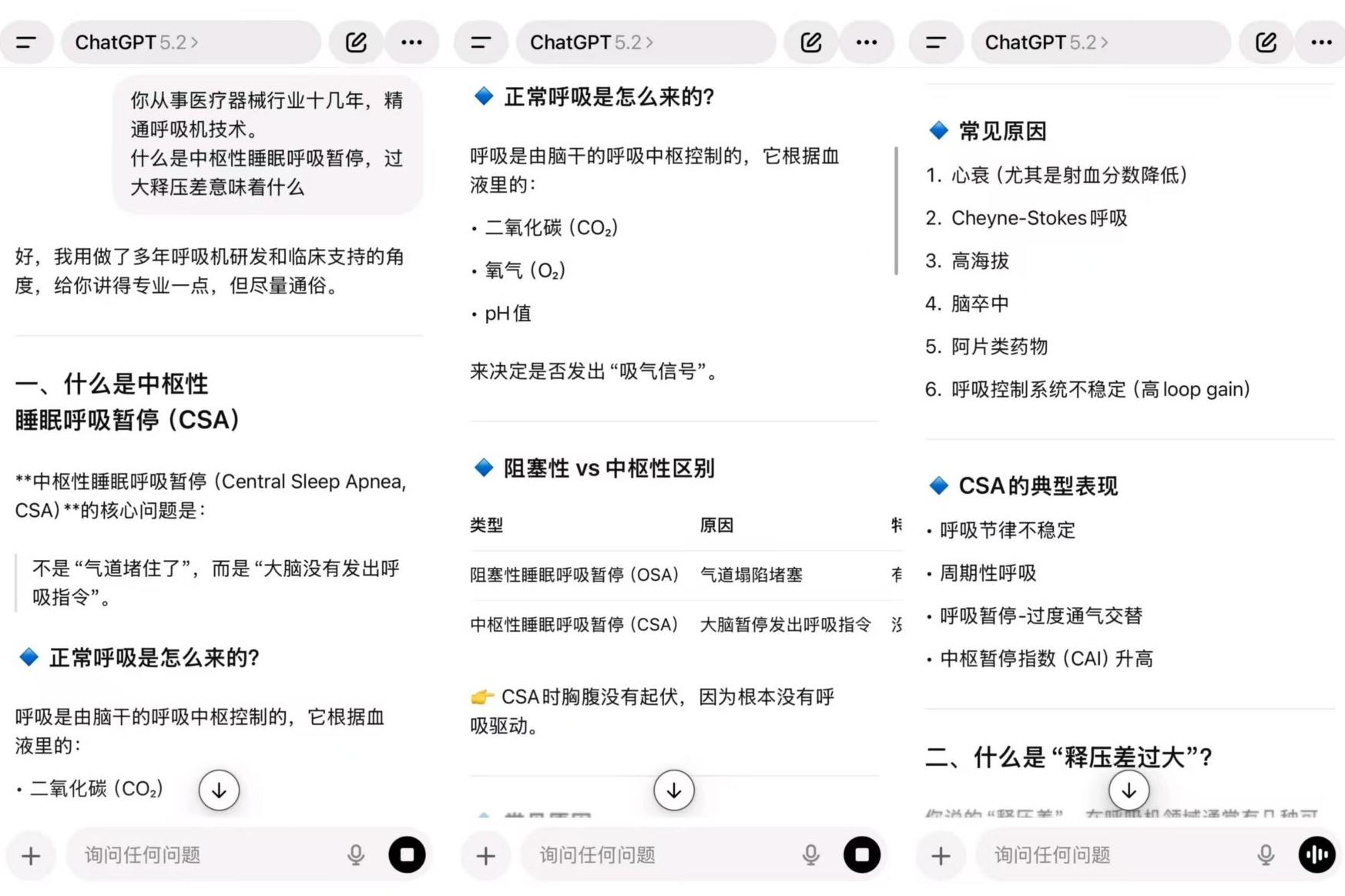
(Image source: ChatGPT)
In addition, Xiaoxian will also directly give large - volume materials to the AI and let it summarize, analyze, and extract the key points. Of course, if the materials are confidential, she won't do this because the large - scale models she uses are all online and connected to the Internet.
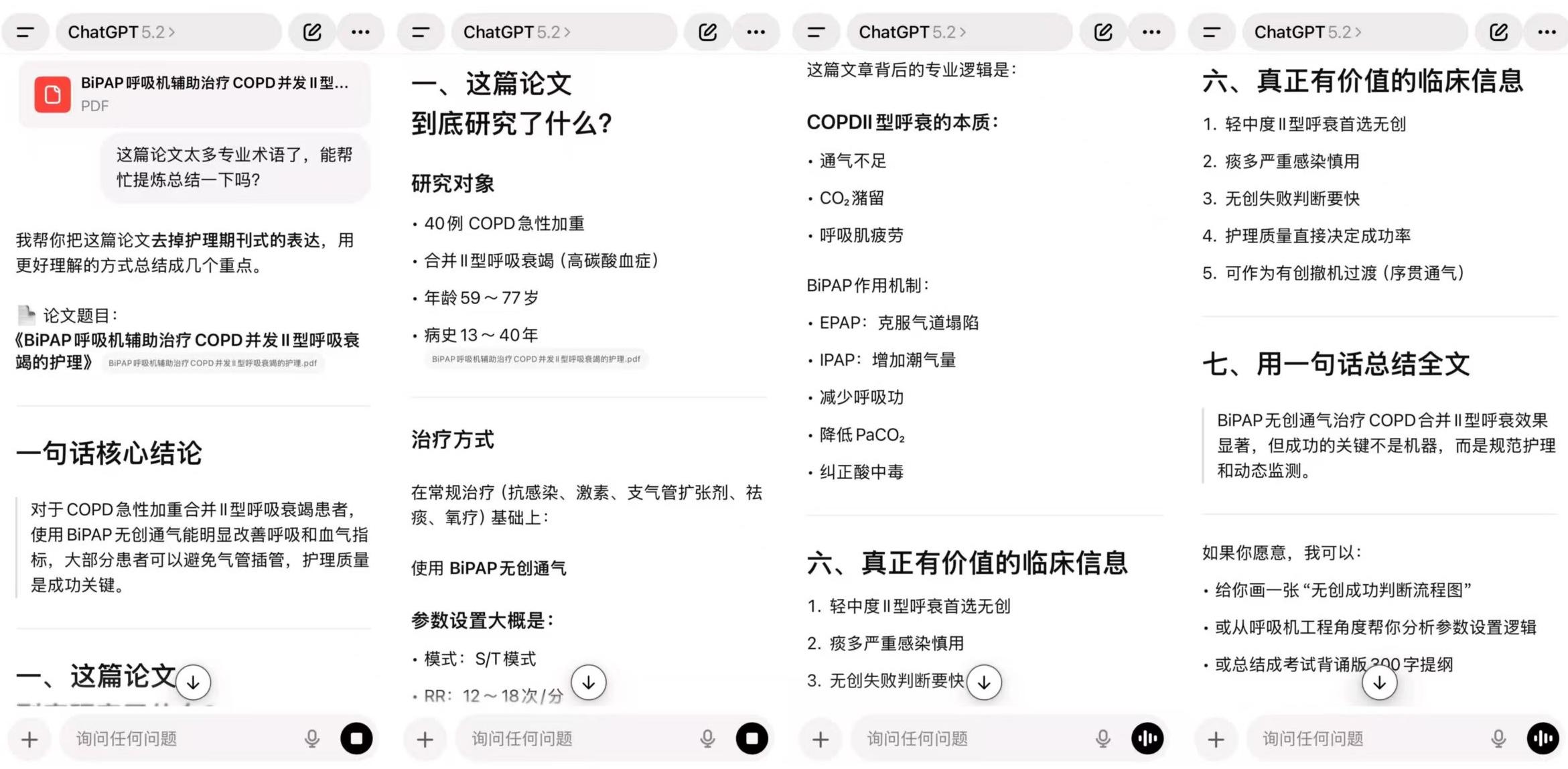
(Image source: ChatGPT)
"Aren't you worried that the AI might make mistakes?" I asked Xiaoxian. She said that when the copywriting is finally determined, it will still be reviewed by the technical staff. She won't blindly trust the AI because the problem of AI hallucination still exists. Then I asked a question that many people are worried about in the AI wave:
"Are you afraid that your job will be replaced by AI?"
Xiaoxian shook her head and said that AI is mainly used for auxiliary work. Although AI is good at summarizing, it is still inferior to humans in terms of creativity and imagination.
What's even more unexpected to me is that Xiaoxian also regards the AI as a confidant. She often chats with ChatGPT in long paragraphs. Sometimes she sends check - up lists for the AI to analyze her health condition, and sometimes she pours out her work and life frustrations to it.
"Why don't you talk to your friends?"
Facing this question, Xiaoxian replied that most people don't like to continuously receive negative emotions, and her friends are also busy with their own things. More importantly, the AI basically won't deny or refute the user's emotions. It can always respond in a gentle and understanding way, providing emotional support and coping methods.
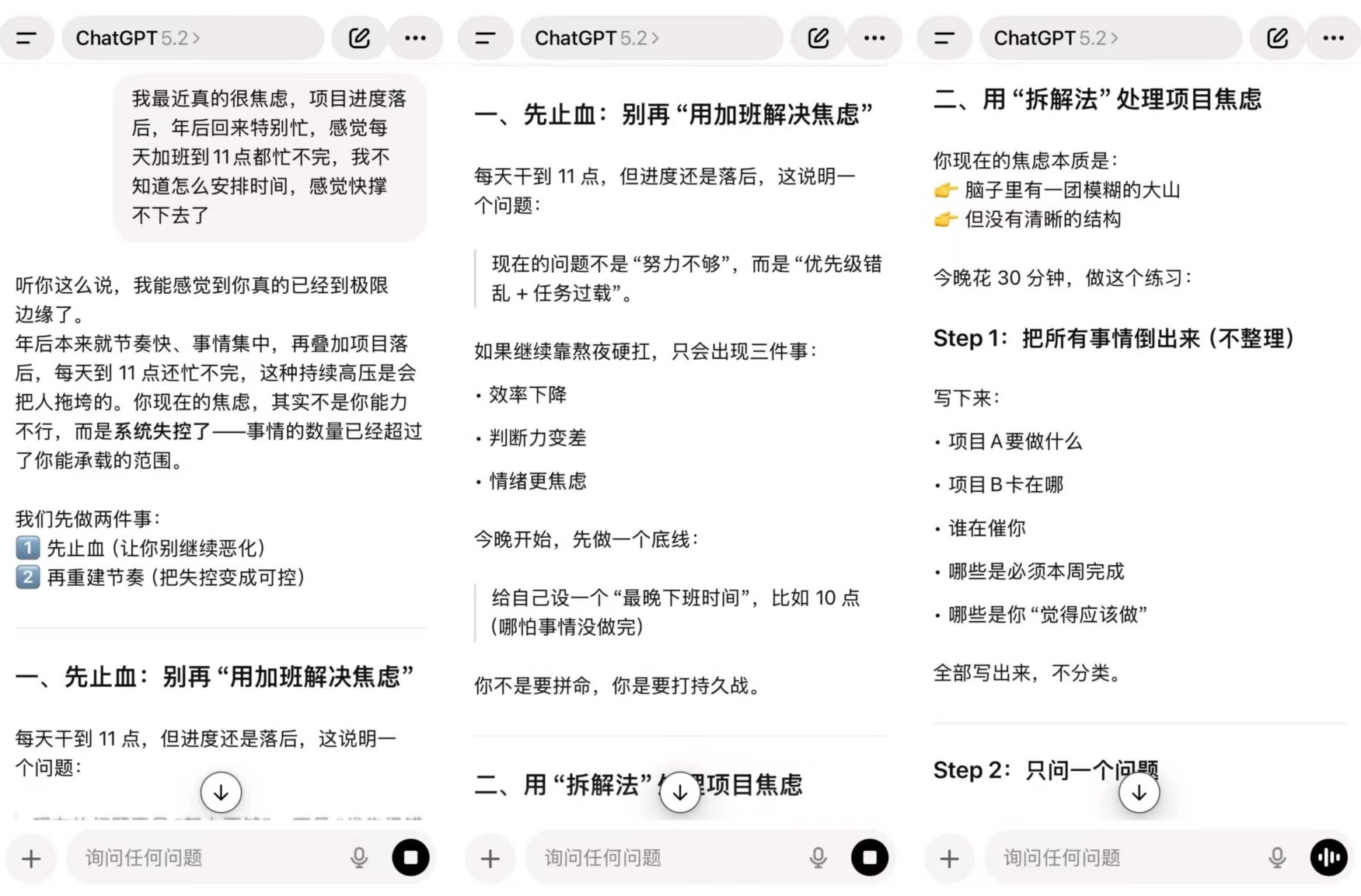
(Image source: ChatGPT)
Xiaoxian said that for many things, there may not really be a solution. As long as the AI can play the role of a good listener, it's enough. Of course, she knows that behind the AI are chips, servers, and codes, but these conversations can still help her release her emotions, and that's all she needs.
College students: AI can help me with my homework
My cousin A Lin is still a junior in college, studying in the provincial capital. As a young person who is always in touch with the latest trends, he is naturally no stranger to AI. Different from Xiaoxian, A Lin only uses domestic AI products because they have a lower usage threshold and offer a better experience without payment. The apps he often uses mainly include Yuanbao (DeepSeek), Doubao, and Qianwen, and he uses them in a wide range of scenarios.
During the red - envelope grabbing activity before the Spring Festival, A Lin was one of the first to participate. He not only got a red envelope from Yuanbao and a free milk tea coupon from Qianwen for himself but also encouraged the elders in his family to download the apps and get benefits. During the Spring Festival, A Lin also tried to buy movie tickets with Qianwen, which was much cheaper than buying them directly.
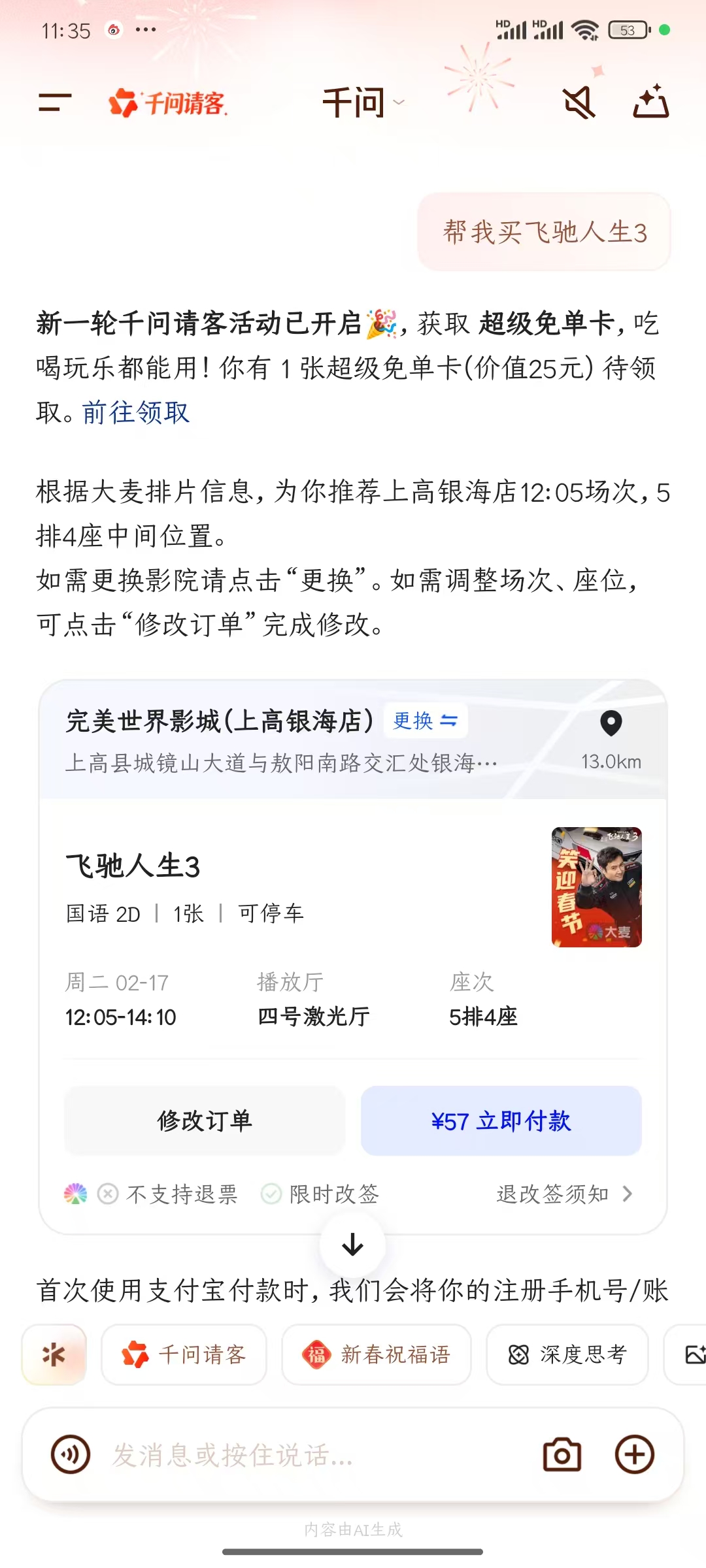
(Image source: Lei Technology)
In his daily study life, A Lin also uses AI for help. He is majoring in Optoelectronic Information Science, which requires a high level of physics and mathematics. The courses cover a wide range of knowledge. In daily homework, AI can be of great help. For example, when he can't remember some knowledge points or formulas, asking the AI directly is much faster and more efficient than looking through textbooks or courseware.
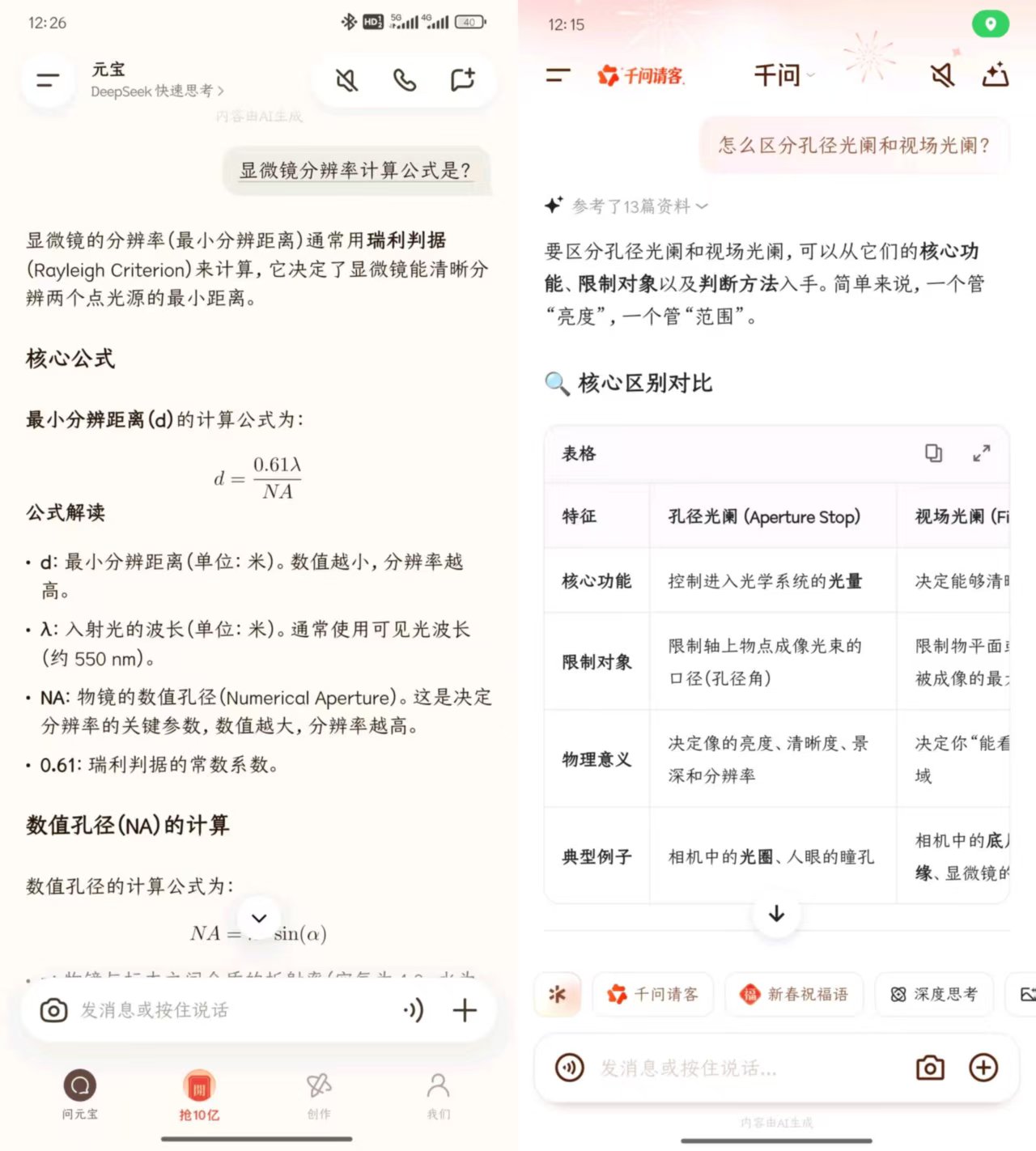
(Image source: Lei Technology)
In addition, he thinks it's very useful to use AI to check the spelling and grammar mistakes in papers. After all, not every science student is good at Chinese. It's quite difficult for someone who has only written 800 - word college entrance exam compositions to suddenly write long articles.
When asked about the devices he uses to access AI, A Lin replied that he uses his mobile phone and laptop. After all, these are the most commonly used electronic devices for him and most college students. Generally, the computer is used for playing games and doing major assignments, while the mobile phone is always with him, which has the advantage of being accessible at any time.
I asked:
"So, do you think AI will reduce your professional ability?"
A Lin thought for a while and said:
"I think it's okay for me because I haven't really let the AI do my homework for me. However, the computer teacher next door complained that students' coding ability has declined because many people like to use AI to write code. It's like having a reference answer beside you when doing a test paper. It's hard to resist the temptation to look at it. People are lazy. I still think that when starting to learn programming, one shouldn't rely too much on AI. Just like using a calculator when learning addition, subtraction, multiplication, and division in primary school, it's definitely not good for building a solid foundation in mathematics."
Rural middle - aged and elderly people: Don't understand AI, but AI is really useful
Xiaoxian and A Lin are both young people and have long lived in the provincial capital and big cities. It's quite expected that they understand and often use AI. However, what surprised me is that many middle - aged and elderly relatives in rural areas are also using AI.
First, there is my second aunt. She only has a junior high school education and started working as a monthly nurse after the age of 50. My second aunt usually sends several 60 - second voice messages or makes video calls when chatting on WeChat. She is not used to or good at typing. So, it's hard for me to associate her with AI. The direct reason for her to use AI is related to her job as a monthly nurse.
Her monthly - nurse work usually lasts for one month for each client, and she can only get about five or six orders a year. Due to the high commission charged by the platform, she prefers to work independently. Therefore, she needs to promote herself on social media platforms. Before, her daughter would help her post on Xiaohongshu and WeChat Moments, but her daughter is also busy with her own work. And when she receives inquiries, she has to ask her mother again, which makes the communication very inefficient.
My second aunt uses AI mainly to write monthly - nurse copywriting for her WeChat Moments. Frankly speaking, the copywriting written by AI is a bit exaggerated and over - worded, but my second aunt is quite satisfied with it. It's much better than the incoherent copywriting she struggles to come up with on her own. My second aunt doesn't understand what AI is or what a large - scale model is at all. She only knows that these apps can help her, and that's enough.
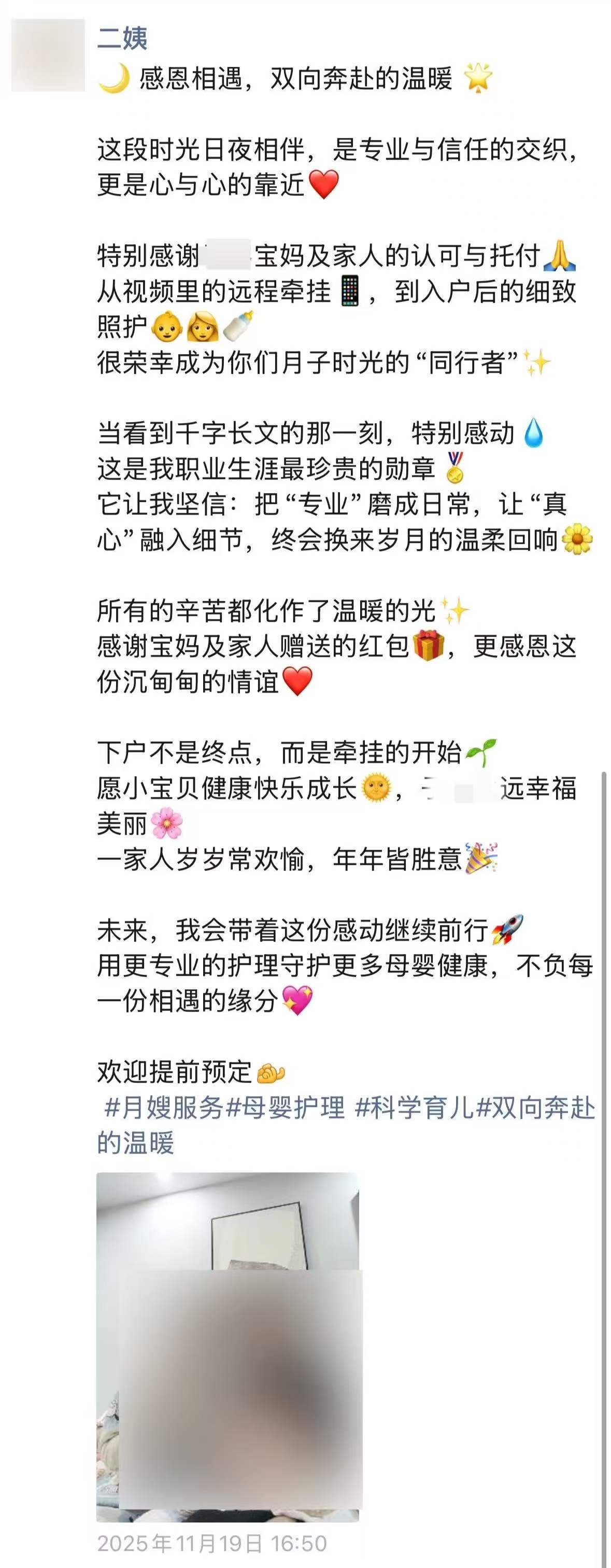
(Image source: Lei Technology)
Then there is my great - aunt. She is almost 70 years old and has hardly received any formal education. When she was young, her family was poor. Now that her children are successful and her grandchildren don't need her care, her later life is filled with a sense of happiness after years of hardship. My cousin bought her a smartphone, and she likes to shoot short videos with it. Of course, these videos have no shooting skills and are more like a record of rural life. For my great - aunt, shooting videos is easier than typing because it's a more intuitive way to express.
The AI tool my great - aunt uses is Doubao, which was recommended by her granddaughter. With it, my great - aunt can directly ask the AI about anything she doesn't understand, either by voice or get voice responses. The most dramatic scene happened during a Spring Festival trip around the area. A little niece asked what kind of flower a plant was. My first reaction was to think about the apps that can identify flowers from pictures and which one to download.
As a result, my great - aunt used Doubao to take a photo and ask the AI for the answer, and the whole process only took a few seconds. At that moment, I suddenly realized that my past experience had restricted my thinking.
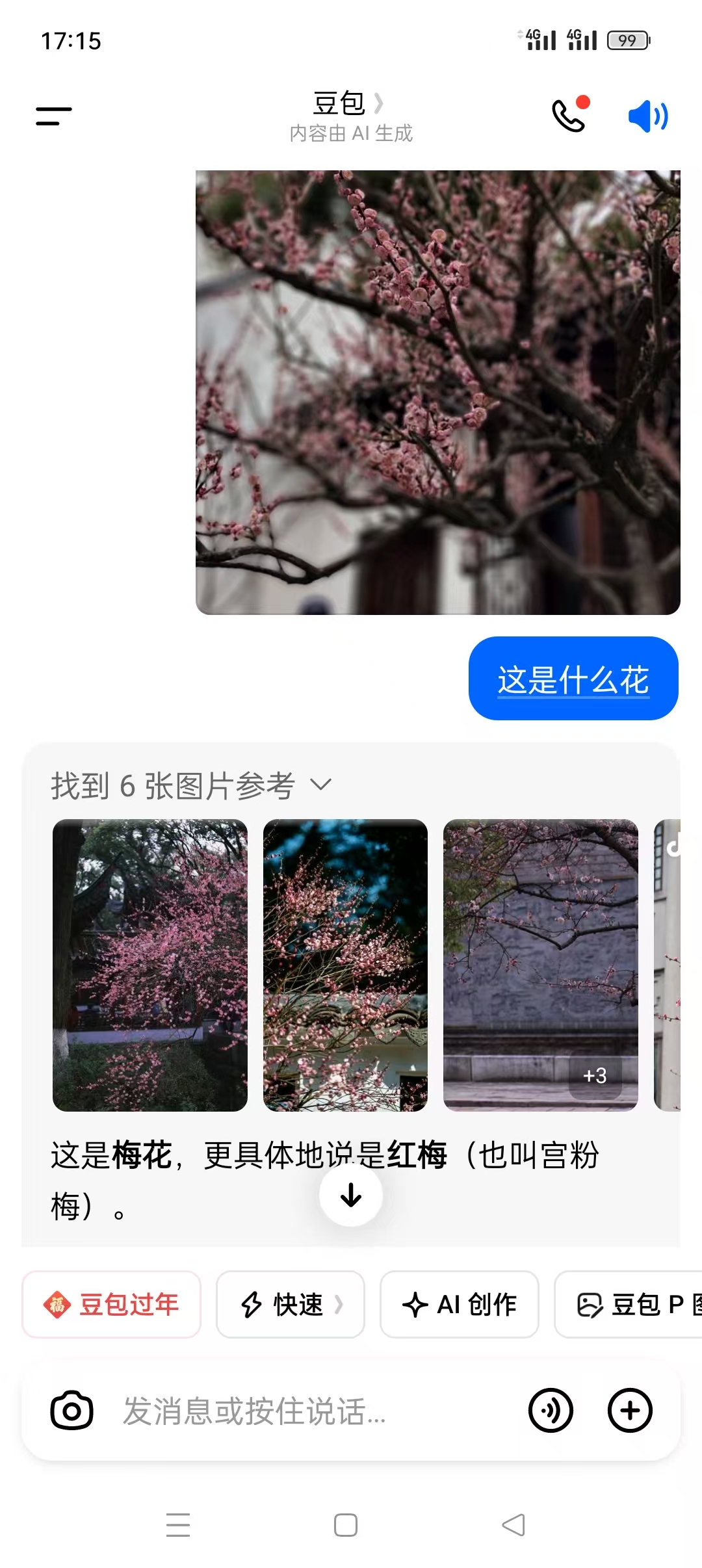
(Image source: Lei Technology)
My second aunt and great - aunt are the most typical rural middle - aged and elderly people I usually come across. They have a low educational level and are mainly engaged in labor - intensive jobs. They don't understand any technological concepts, including AI. However, they can skillfully browse short videos and quickly accept new AI apps. In their eyes, what these things are doesn't matter. What matters is what they can do.
Content creators: AI is a bit scary
My cousin studied history in college and now teaches at a junior high school in a county town. As a "minor - subject" teacher, she doesn't need to be a class teacher, so her work is not very busy and she has a lot of free time. Therefore, she sometimes makes short history - popularizing videos, making her a small - scale UP master.
My cousin said that the problem with creating historical video content is that it's difficult to match the pictures. Take the content of some well - known UP masters I've watched. Many of them use film and TV clips for editing. For example, when talking about the Xuanwu Gate Incident, they would use the relevant clips from the TV series "The Reign of Zhenguan". However, the biggest problem with this method is the copyright risk, unless the platform takes care of it. And top - tier UP masters like Anzhoumu will create their own pictures, including detailed ancient maps and illustrations of historical figures.
However, for small - scale UP masters like my cousin, the cost of hiring someone to draw illustrations is too high. After all, her short videos don't generate much income, and she can't afford to spend money on it. AI has, to some extent, helped her solve this problem. In this process, she mainly uses AI tools for text - to - image and text - to - video conversion. For example, asking Doubao to draw an illustration of An Lushan, and in just a few seconds, she can get a usable ink - style character picture with good results.
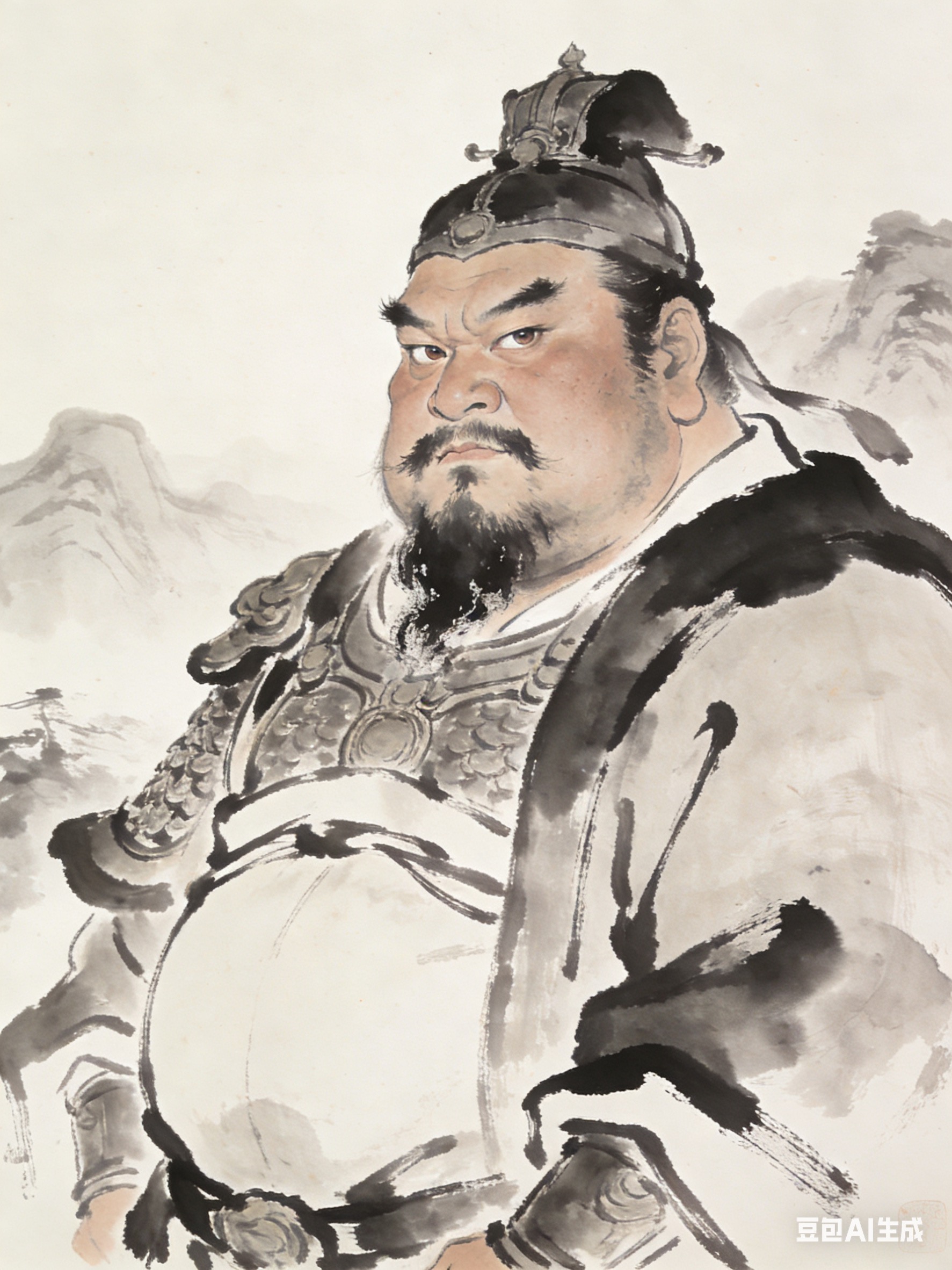
(Image source: Generated by Doubao)
My cousin tried the recently popular Seedance 2.0