Before the IPO, Unitree was targeted by patent sniping. The whole story of how Unitree was set up.
In February 2026, a judgment from the Supreme People's Court rarely used eight Chinese characters to criticize a company named Luweimei: "Calculating meticulously" and "Capricious".
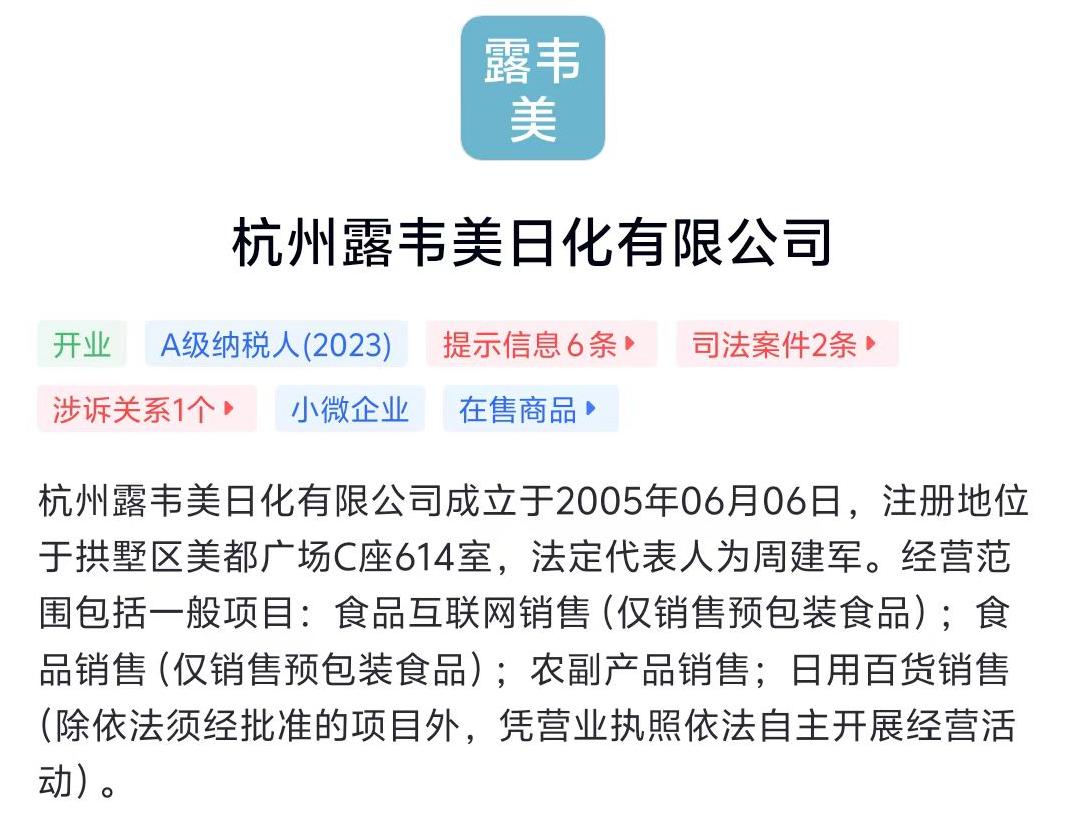
Public information shows that Luweimei's main business is pre-packaged food and daily necessities. The defendant it sued is Unitree Robotics, a robotics company. Its products have been on the Spring Festival Gala, and it is known in the market as "the world's first consumer-grade bionic robot" innovative company.
▲ Photo/Screenshot from Qichacha
The case process shows that in July 2025, Luweimei sued Unitree Robotics in the Hangzhou Intermediate People's Court on the grounds of infringement of invention patent rights. In the complaint, Luweimei claimed that Unitree Robotics had obtained illegal profits of up to tens of millions of yuan through infringement. It also requested the court to apply punitive damages based on Unitree Robotics' sales of 78 million yuan, with the total amount possibly exceeding 70 million yuan. However, it also wrote a figure in the complaint: the claim amount was 500 yuan.
On one hand, there was a claim of 70 million yuan, and on the other hand, a claim of only 500 yuan. This lawsuit seemed unusual from the very beginning.
Contrast: A Department Store Sues a Robotics Company
Let's first look at the two parties in the lawsuit.
Unitree Robotics is a leading player in the consumer-grade robotics field. Its quadruped robot dog "Go2" has accumulated sales of over 78 million yuan on e-commerce platforms. The sales volume of just one flagship store exceeded 3,000 units, with sales of 32.295 million yuan; the sales volume on another platform exceeded 5,000 units, with sales of 45.9854 million yuan. This company has just appeared on the Spring Festival Gala. When the founder, Wang Xingxing, responded to questions about the robot performance on Weibo, he said that the technology is still in its early stage, and large-scale application will have to wait for three to five years. However, the capital market's expectations for it are obviously not limited to just three to five years.
Luweimei, established in 2005 with a registered capital of 550,000 yuan, has a business scope of "internet sales of food and sales of daily necessities". Looking through its public information, there is no trace of any business related to robotics, artificial intelligence, or even the manufacturing industry.
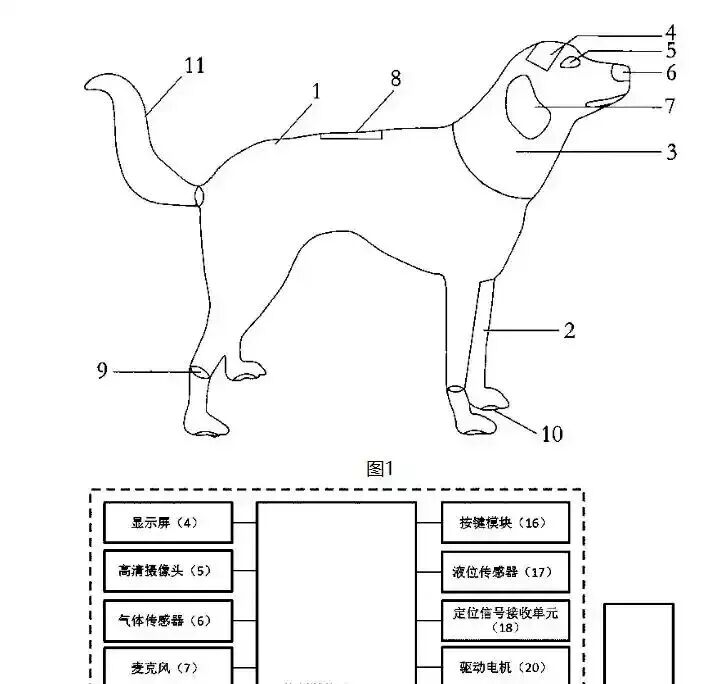
In January 2025, the patentee of the involved patent "An Electronic Dog" was changed to a certain company in Hangzhou. On June 25, 2025, it was changed to Luweimei. Five days later, it sued Unitree Robotics for infringement in the Hangzhou Intermediate People's Court with the newly obtained technical drawings.
▲ Photo/Screenshot from the National Intellectual Property Administration
In the complaint, Luweimei calculated an account: Unitree Robotics' infringement behavior had caused it direct losses of over 200 million yuan; calculated at a 5% patent license fee rate, the loss was 3.914 million yuan; calculated at a 30% product profit rate, Unitree Robotics' illegal profits from infringement reached 23.4841 million yuan. It requested the court to apply punitive damages at 3 to 5 times the illegal profits, with a total amount of 70.4523 million yuan.
But in the claim amount column, it wrote: 500 yuan.
A department store with no connection to the robotics industry sued a star robotics company just five days after obtaining the patent, claiming that the other party should compensate tens of millions of yuan but only claiming 500 yuan. This contrast puzzled many people following the case. As the case progressed, the intention of this lawsuit gradually became clear.
Calculation: A Low-Cost, High-Leverage Litigation Strategy

If we break down this lawsuit, we can see a clear strategy.
Step 1: Initiate at a low cost.
When filing a patent infringement lawsuit in a Chinese court, the litigation fees are prepaid according to the proportion of the claim amount. If the claim is 500 yuan, the litigation fees may only be a few dozen yuan. With a cost of just a few dozen yuan, the plaintiff can obtain the court's right to investigate, the right to preserve evidence, and may even apply for property preservation of the defendant's bank account.
For a growing startup like Unitree Robotics, once its account is frozen and financing is put on hold, the consequences may far exceed the lawsuit itself.
Step 2: Apply phased pressure.
After losing the first-instance trial, Luweimei appealed to the Supreme People's Court. The day after the second-instance inquiry ended, it suddenly increased the claim amount from 500 yuan to 80 million yuan.
Rather than being confident of winning, this seems more like a psychological battle - using inflated claims to create public opinion pressure. During the critical window period when Unitree Robotics was preparing for listing, it forced the opponent to choose to settle in fear. For many companies, "spending a few million to settle the matter" is a more cost-effective choice than "fighting a lawsuit that may be won but is time-consuming and labor-intensive".
The Supreme People's Court pointed out sharply in the judgment that Luweimei's intention in doing so was, on the one hand, to avoid paying the high litigation fees for a large claim amount, and on the other hand, to impose additional litigation pressure on the other party.
Step 3: Retreat in time.
When the judge's attitude became clear and defeat was inevitable, Luweimei quickly reduced the claim amount back to 500 yuan. Why? Because if it insisted on the 80 million yuan claim amount and lost the lawsuit, it would have to bear the corresponding second-instance litigation fees for 80 million yuan - that would be a loss of hundreds of thousands of yuan.
The Supreme People's Court used eight Chinese characters to describe this series of operations in the judgment: "Calculating meticulously" and "Capricious".
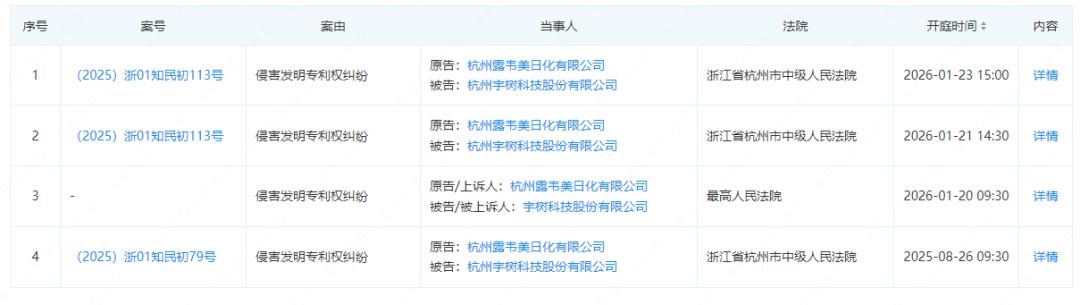
▲ Photo/Screenshot of the court session announcement from Qichacha
This kind of operation is not an isolated case in the field of intellectual property litigation. There is a phenomenon called "reverse patent trolls": instead of initiating lawsuits by accumulating a large number of patents, they look for target companies in specific industries whose patent rights may be declared invalid, and use "not requesting the patent office to declare the other party's patent rights invalid" as a bargaining chip to extort property from the other party. Since the "Patent Law" grants the right to "any unit or individual" to request the declaration of patent rights invalid, this kind of operation has a low cost and is easy to implement.
However, the attitude of the Supreme People's Court is clear. Article 20, Paragraph 1 of the Patent Law stipulates that "applying for patents and exercising patent rights shall follow the principle of good faith and shall not abuse patent rights to damage public interests or the legitimate rights and interests of others." The court pointed out that anyone who exercises rights and participates in litigation shall follow this principle.
Crisis: What Would Happen If the Strategy Succeeded?

Let's make a bold assumption: What would happen if Luweimei won the lawsuit, or if Unitree Robotics couldn't bear the pressure and chose to settle?
For Unitree Robotics, it might need to pay a substantial settlement fee. This money could have been used for product R & D or team expansion. More importantly, if the lawsuit happened during a critical financing period, investors would be scared off by the "lawsuit" and might re - evaluate the risks, resulting in financing being blocked or delayed.
In a typical case released by the Intellectual Property Tribunal of the Supreme People's Court, a company was facing a critical period of listing when it was sued, and the lawsuit led to the suspension of the review of its rights issue. Although the review was finally passed, the twists and turns and uncertainties during that period actually damaged the company.
For a star startup like Unitree Robotics, being entangled in a lawsuit would result in not only a loss of money but also a loss of the time window and development opportunities. For the entire robotics industry, the consequences would be even more terrifying.
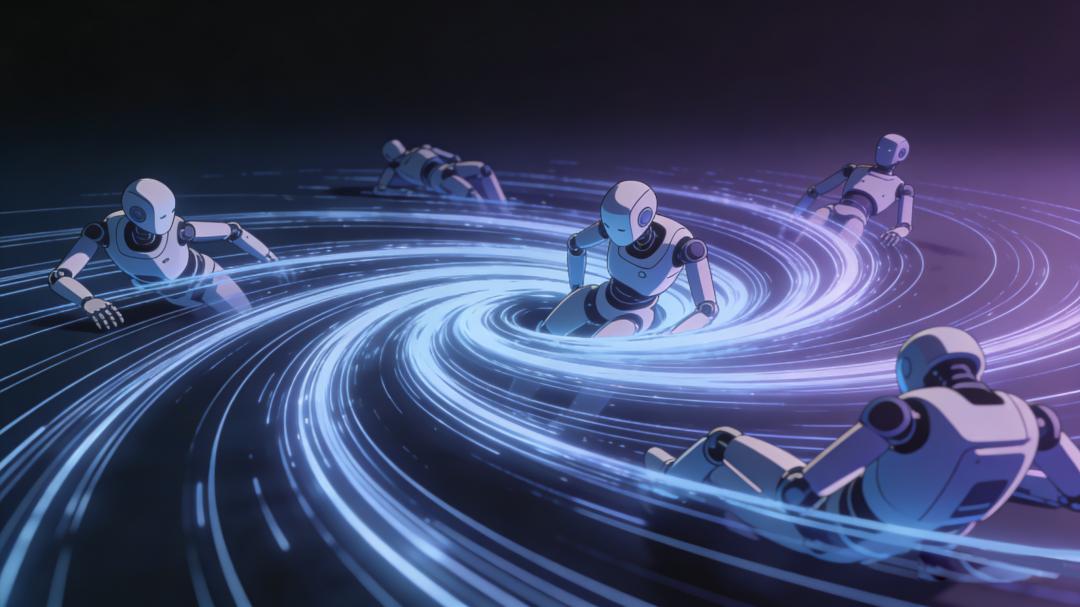
▲ Photo/AI - generated
If Luweimei's operation succeeded, it would send an extremely dangerous signal: innovative companies in popular technology tracks might become targets of "litigation arbitrage". Some entities might acquire old patents with vague technical features but wide coverage and target newly - established innovative companies to initiate lawsuits.
By then, innovative enterprises might need to invest more resources in dealing with lawsuits instead of focusing on R & D. This case, on the surface, is a patent dispute between two companies, but in fact, it is a life - and - death battle between "innovators" and "arbitrageurs".
Breaking the Deadlock: A "Shot in the Arm" from the Supreme People's Court
Finally, this lawsuit ended with Unitree Robotics' victory.
After trial, the Supreme People's Court found that Unitree Robotics' "Go2" robot dog lacked three necessary technical features of the involved patent - "liquid level sensor", "gas sensor", and "color - changing bionic fur", and did not constitute infringement.
The judgment elaborated in detail why these technical features did not constitute equivalent infringement:
Regarding the "liquid level sensor", the specification of the involved patent states that its function is to "monitor whether there is water accumulation at the location and promptly alert the user when water accumulation is found". The foot - end force sensor of the alleged infringing product is used to sense the stability of the robot during movement. The technical means, functions, and effects of the two are all different.
Regarding the "gas sensor", the specification of the involved patent states that its function is to "identify the owner's identity and call different feedback mechanisms according to different owners". The lidar of the alleged infringing product is used to sense the external environment for obstacle avoidance, and the two do not constitute equivalence.
Regarding the "color - changing bionic fur", Luweimei argued that it could be achieved by dressing the robot dog in different colors of clothes or spraying different colors of paint. However, the court held that these methods did not belong to the "color - changing bionic fur" in the patent and could not be regarded as equivalent infringement.
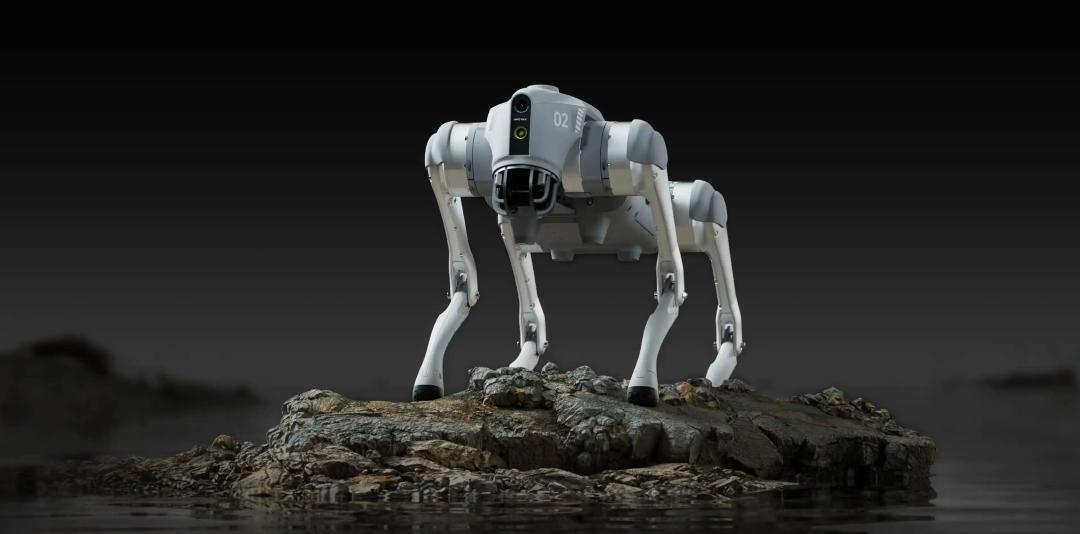
▲ Photo/Unitree Robotics' "Go2" robot dog
But the reason this case attracted wide attention is not only that Unitree Robotics won but also the court's statement in the judgment.
"Its behavior can be described as both calculating meticulously and capricious."
These eight Chinese characters define Luweimei's litigation behavior. It is not a simple moral condemnation but a negation based on clear legal grounds. The Supreme People's Court pointed out that Luweimei's above - mentioned actions in the first - and second - instance trials were intended to avoid litigation fees and impose additional litigation pressure on the other party, which violated the principle of good faith.
The Supreme People's Court sent a clear signal to society through this judgment: Patent rights are not tools for extortion, and litigation is not a bargaining chip for games. Anyone who exercises rights and participates in litigation shall follow the principle of good faith.
You Yunting, a senior partner of Shanghai Dabang Law Firm, said in an interview: "The behavior of suddenly changing the claim amount significantly is not common. In this case, the plaintiff only claimed 500 yuan in the first - instance trial, then increased the claim to 80 million yuan in the second - instance trial, and then reduced it back to 500 yuan. There is indeed a problem with its integrity."
This is a warning to those who try to use the judicial process to obtain improper benefits. It is also a support for innovative enterprises troubled by malicious litigation.
The department store company finally failed to leverage 78 million yuan with just 500 yuan.
But without this judgment from the Supreme People's Court, the next target could be any Chinese technology company that is focused on R & D. It could be a company in the chip industry, the AI industry, or the biomedical industry. As long as the track is hot enough, the valuation is high enough, and the financing window period is critical enough, there will be people who dare to come with an old patent.
For the Chinese technology industry to go further, it needs not only the courage to overcome technology but also the support of the judicial system for innovators.
This support is gradually emerging.