As the new round of urban competition accelerates, how can sub - provincial central cities break through?
The whole year's work depends on a good start in spring.
As the Spring Festival holiday in 2026 came to an end, cities across the country held their "first meeting of the new spring." For a city, this "first meeting of the new spring" often serves as a guide for the whole year's work. In the eyes of the outside world, it is also an important window to observe its development trends and paths.
This year, from Chengdu focusing on the construction of key industrial chains and Wuhan on technological innovation among provincial capitals, to Zunyi focusing on industrial transformation and development and Luoyang on the business environment among provincial sub - central cities, the themes of the "first meeting of the new spring" in many cities pointed to specific work areas.
Meanwhile, some cities had more macro - level considerations. On February 24, Mianyang, Sichuan, held the "2026 Promotion Conference on Leveraging the Advantages of China Science and Technology City to Accelerate the Construction of a Provincial Sub - economic Center."
With the "first meeting of the new spring" focusing on the same theme for the second consecutive year, under the heavy responsibility entrusted by Sichuan Province to "build a provincial sub - economic center by 2027," Mianyang is trying to establish an irreplaceable position in the new pattern of regional development with a clear self - positioning, a firm attitude of striving forward, and continuous focus.
This year is the beginning of the 15th Five - Year Plan period. The "Proposal of the CPC Sichuan Provincial Committee on Formulating the 15th Five - Year Plan for the National Economic and Social Development of Sichuan Province" previously released proposed to strengthen provincial sub - economic centers and regional central cities, and support Mianyang, Yibin - Luzhou, and Nanchong - Dazhou to actively undertake major productivity layouts.
As the only city among them to build a sub - center without a group form, Mianyang's "report card" in the past five years confirms its city positioning. It was the first non - provincial - capital city in the province to exceed 400 billion yuan in GDP, and its average annual growth rate ranked first in the province. In the final year of the 14th Five - Year Plan, its GDP exceeded 460 billion yuan, with a growth rate of 6.5%.
In recent years, to better participate in regional competition and lead the provincial development, the "strong provincial capital" strategy has gradually become the mainstream choice for central and western provinces. In such a trend of the times, how can non - provincial - capital cities define and realize their "central" value? Mianyang's practice is quite reference - worthy. As the "first meeting of the new spring" sets sail for the 15th Five - Year Plan, we can more comprehensively understand the "Mianyang solution" in practice from three aspects: the city, industry, and people.
01 The City's Strategy: Highlight the Determination of Top - level Design through Strategic Focus
A wise person is good at making plans.
A city's ability to plan top - level design usually determines the upper limit of its development to a large extent. In the planning process, the key lies in whether it can face up to the impacts brought by increasingly fierce regional competition and an increasingly complex external environment, firmly grasp its core advantages, and make the most of its strengths.
At this year's "first meeting of the new spring," Mianyang once again set the theme as "Leveraging the Advantages of China Science and Technology City to Accelerate the Construction of a Provincial Sub - economic Center." In the past year, around the goals put forward in the "Three - year Action Plan (2025 - 2027) for Leveraging the Advantages of China Science and Technology City to Accelerate the Construction of a Provincial Sub - economic Center," such as accelerating the construction of a pilot area for scientific and technological innovation under socialism with Chinese characteristics, a modern industrial base with core competitiveness, and a sub - consumption center, Mianyang vigorously implemented eight actions led by the scientific and technological innovation empowerment action, continuously promoting the transformation of the "rich scientific and technological resources" into real productive forces.
Behind this, all policy designs and resource allocations clearly point to one goal: to focus more on Mianyang's strategic advantage as the only science and technology city in China approved by the Party Central Committee and the State Council, and firmly and continuously transform it into an irreplaceable development advantage on the road to building a provincial sub - economic center.
While some cities are being "pushed" by the new round of regional competition, blindly pursuing a complete range of industries or simply following the hot - spot trends, Mianyang's determination in the changing situation is commendable. This means that while some cities are still anxious about "what to do," Mianyang is considering "what I should do" based on its own endowments, and the traditional passive thinking mode of making choices is gradually changing to actively defining the propositions.
To understand the essence of this determination, we also need to understand where the changing situation comes from.
Macroscopically, China's urbanization is shifting from a rapid growth period to a stable development period, and urban development is moving from a stage of large - scale incremental expansion to a stage mainly focused on improving the quality and efficiency of the existing stock. The "Opinions of the CPC Central Committee and the State Council on Promoting High - quality Urban Development" (hereinafter referred to as the "Opinions") issued last year put forward five "transformations" in the requirements for urban work, including "transforming the driving force of urban development and paying more attention to characteristic development."
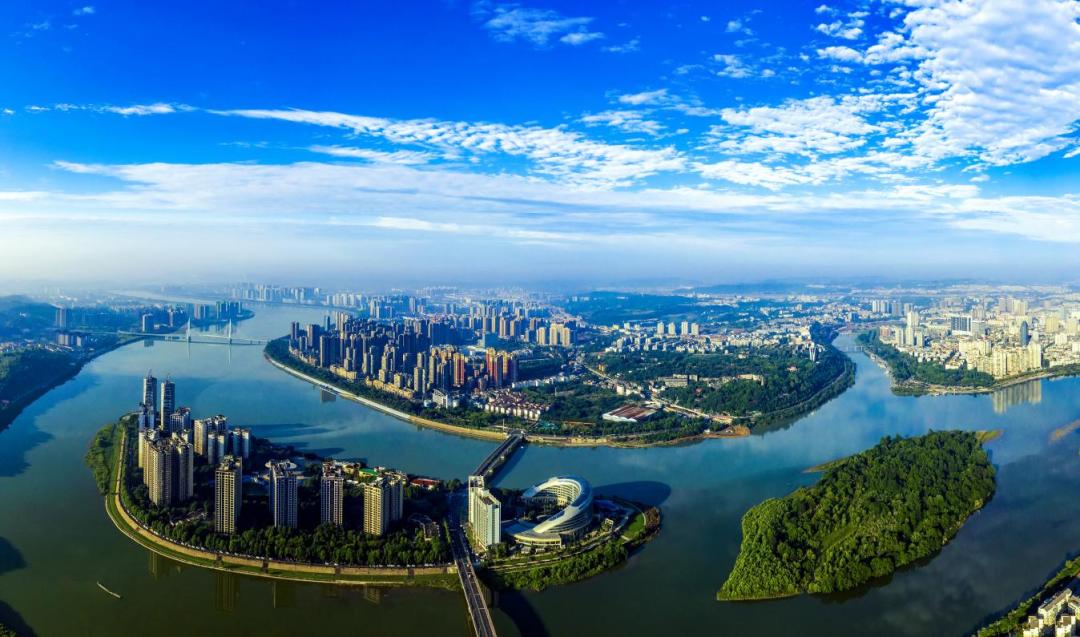
Cityscape of Mianyang Photo source: Wang Jingwei
More specifically, the "Opinions" also proposed to "encourage qualified provinces to cultivate and develop provincial sub - central cities." Compared with the statement in the "Several Major Issues Concerning the Medium - and Long - Term Economic and Social Development Strategy of the Country" in 2020, which first mentioned that "qualified provinces and regions in the central and western regions should consciously cultivate multiple central cities," both the scope and intensity have been further enhanced.
In the view of Song Xiangqing, the deputy dean of the Government Management Research Institute of Beijing Normal University and the vice - president of the China Society of Commercial Economics, this means to some extent that the construction of provincial sub - central cities has been upgraded from local exploration, and resource allocation may be more inclined to sub - central cities, forcing sub - central cities to improve their industrial levels and avoid homogeneous competition.
Therefore, from this perspective, Mianyang's firm implementation of the three - year action plan and playing the two city - characteristic cards of "China Science and Technology City" and "Provincial Sub - economic Center" is not a "gamble" out of eagerness to boost the economy, but a move in line with the new development stage and an opportunity - seizing effort in the new development opportunities.
Of course, the strategic determination in the wave of the times ultimately needs to be tested by development achievements. Looking back at the first year of the "three - year action," Mianyang launched a series of policy combinations such as the "17 Measures" to promote the continuous improvement of economic operations, the "15 Measures" for high - quality industrial development, and the "4 Measures" to promote the improvement and expansion of consumption, helping the city achieve a GDP of 460.066 billion yuan, ranking second in the province and achieving a high growth rate of 6.5%. The total fixed - asset investment ranked second in the province, with a growth rate of 2.6%, and the construction of the provincial sub - economic center showed strong momentum.
02 Industrial Changes: Promote the Integration of Science and Industry with Unprecedented Efforts
Beyond the economic data on paper, the effectiveness of strategic determination has more concrete manifestations. One of them is using science and technology to empower industrial innovation.
In the past year, at the 13th China (Mianyang) Science and Technology City International Science and Technology Expo, the "Mianyang - made" robot team brought the first - ever on - stage performance of robots from multiple enterprises and models in China. The first provincial - level embodied intelligent robot training ground in the western region was established in Mianyang, addressing key industry problems such as the scarcity of real - world training scenarios. Mianyang developed and launched landmark products such as the quadruped "Robot Wolf," the "Wanda" wheeled robot, and the "Kuafu" humanoid robot... From the expo venue to the industrial reality, as the top of the 17 industrial chains promoted by Sichuan, the rapid rise of the artificial intelligence industry is a microcosm of Mianyang's in - depth integration of scientific and technological innovation and industrial innovation.
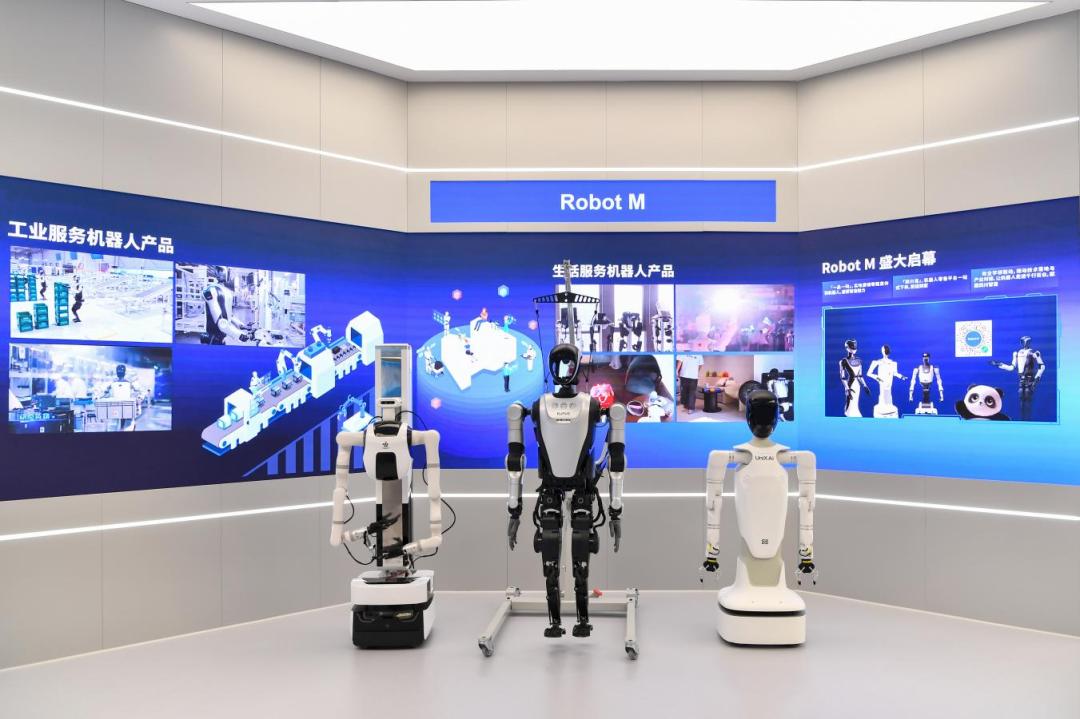
Robot display at the Sichuan Provincial Embodied Intelligent Robot Training Ground Photo source: Wang Yong
Data shows that in 2025, Mianyang's R & D investment intensity continued to rank among the top in the country and first in the province. 160 scientific and technological achievements such as micro - drive robots were transformed into practical applications, and the city's technology contract turnover exceeded 23 billion yuan, a year - on - year increase of 15.4%.
With the continuous enhancement of the scientific and technological innovation source function, Mianyang is making unprecedented efforts to promote the integration of science and industry by focusing on building the "587⁺" key industries and accelerating the transformation of "new tracks" into "main tracks."
It is reported that in 2025, on the basis of promoting the quality improvement and multiplication of characteristic and advantageous industries such as electronic information, Mianyang planned and formed the "587⁺" industrial development system by comprehensively considering its own characteristics and scientific and technological advantages.
Among them, "5" refers to focusing on the development of five industrial chains, namely artificial intelligence, aerospace, medicine and health, new display, and low - altitude economy, as the main carriers in the province. "8" means vigorously cultivating eight industrial chains as collaborative development areas, such as high - end energy equipment. "7" is to accelerate the development of seven new characteristic industrial tracks, such as robots. The "+" sign represents an open framework for dynamic adjustment according to the evolution of new technologies and industrial development trends.
A distinct feature is that almost all these emerging industries can find corresponding sources in the "technological treasure trove" of local scientific research institutions in Mianyang. For example, in the new track of nuclear medicine, Mianyang has 10 national and provincial - level nuclear medical innovation platforms, such as the Key Laboratory for the Transformation of Nuclear Technology in Medicine of the National Health Commission, and established the Fujiang Laboratory focusing on nuclear medicine. Currently, it has successfully broken through a number of key core technologies, such as FLASH radiotherapy radiation sources and new isotope preparation.
This shows that Mianyang is consciously and systematically transforming its potential scientific and technological advantages into future industrial definition rights. The fundamental logic is not to blindly pursue "what is available outside, I will introduce," but to focus more on "what top - notch technologies I have, and then cultivate future industries around them." Data shows that last year, the scale of the five industrial chains with Mianyang as the main provincial carrier increased by 11.2%, and the scale of the seven new characteristic industrial tracks increased by 25%. The results of the integration of science and industry are gradually emerging.
In addition, in terms of industrial factor guarantee, Mianyang also established a 20 - billion - yuan "587⁺" industrial guidance mother fund, and explored a dual - wheel - driven institutional mechanism of "innovation platforms are responsible for selection and transformation + science and technology investment companies are responsible for early - stage and small - scale investment." Relying on the advantages of the science and technology city, Mianyang seems to have found a solution to the "two - piece problem" between science and technology and the economy: let those who know technology best identify value, and let those who know the market best allocate capital.
"The differentiation among provincial sub - central cities in the central and western regions essentially reflects the differences between resource - based economies and innovation - driven economies, and between the transformation of traditional industries and the cultivation of emerging industries," said Song Xiangqing. Last year, due to the fluctuating decline of coal prices in China, Yulin, the city with the largest economy among prefecture - level cities in the central and western regions and the provincial sub - central city of Shaanxi, once experienced an economic slowdown. Behind this is the cross - influence of factors such as the periodic pain of resource - based cities and the transformation and upgrading of traditional industries.
In contrast, Mianyang has chosen a path that relies more on innovation - driven and the integration of science and industry, with the core being endogeneity and source - based. This year, Mianyang also proposed at the "first meeting of the new spring" to make breakthroughs in scientific and technological collaborative innovation to further generate the maximum increment for the construction of the provincial sub - economic center.
In the short term, this path may not be able to quickly form large - scale output value like resource - based cities or those that undertake mature industries. However, what it cultivates is a core R & D ability and a rooted industrial cluster that can better resist risks and are difficult to relocate, which is the foundation for building long - term competitiveness.
03 The Foundation of People: Interpret the Profound Development Logic through "Investing in People"
The Fourth Plenary Session of the 20th Central Committee of the Communist Party of China made an important deployment of "combining the improvement of people's livelihood and the promotion of consumption, and combining investment in objects and investment in people." People are the most dynamic production factor in the economic system. Ultimately, the ultimate goal of urban work is to serve people.
"Investing in people" directly points to consumption and areas directly related to people's livelihood and welfare. Today's residents' consumption is no longer just simple survival - oriented consumption, but also includes development - oriented and enjoyment - oriented consumption. Therefore, the focus of "investing in people" should naturally be guided by people's needs, make efforts in housing, medical care, culture, tourism, etc., expand the supply of high - quality consumer goods and services, and create new consumption scenarios.
In October last year, the 2025 Sichuan Provincial Culture and Tourism Development Conference and the 11th China (Sichuan) International Tourism Investment Conference were held in Mianyang. This was the first provincial - level culture and tourism development conference after the Sichuan Provincial Party Committee made a decision to promote the in - depth integration and development of culture and tourism and strengthen the culture and tourism industry.
In the spotlight, as the carrier of the three IPs of "Hometown of Li Bai, Cradle of the Two Bombs and One Satellite, and Panda Habitat," Mianyang not only made its cultural and tourism resources more well - known, but also launched the "Falling in Love with Mianyang" cultural and tourism brand, promoting the in - depth integration of all fields, aspects, and the whole chain of culture and tourism.
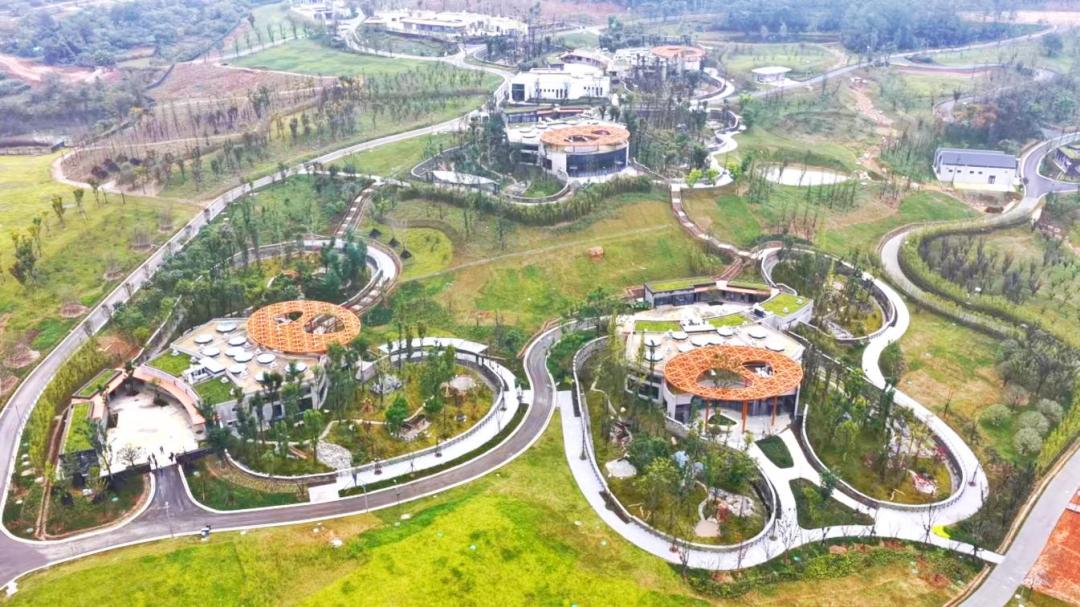
The Jiuzhaigou - Mianyang Expressway was officially opened, connecting a major cultural and tourism corridor. The Mianyang China Giant Panda Park was officially opened and became a new popular tourist destination. Mianyang took advantage of the "Sichuan Super League" to create consumption fairs, second - viewing points, and other scenarios, attracting more than one million visitors and driving comprehensive consumption of more than 240 million yuan during the event... Throughout 2025, Mianyang's cultural and tourism consumption continued to show new vitality outside the conference venues.
With this boost, Mianyang was successfully selected as one of the first batch of national pilot cities for retail innovation and improvement, the second batch of national pilot cities for the modern commercial circulation system, and the pilot cities for new consumption formats, models, and scenarios last year. The total retail sales of consumer goods in the city increased by 7.1%, making it the first non - provincial - capital city in the western region to exceed 200 billion yuan in total retail sales of consumer goods.
M