When the desktop starts to “grow”: Doyin and its pixel content ecosystem
What should your ideal computer desktop look like?
Some people pursue minimalism. A height - adjustable desk and a laptop are enough. Others are fond of "stacking up materials". Flagship keyboards and mice, ultra - wide monitors, gaming chairs, and fully - lit RGB effects make it like a small gaming cabin. There are also those who fall somewhere in between, caring about both efficiency and atmosphere.
For most desktop setup enthusiasts, the desktop is not just a workbench but also a "personal space" that can carry emotions, interests, and even memories.
Just as tea lovers like to buy tea sets and raise tea pets, after spending a long time on desktop setups, you'll always find that keyboards, mice, and monitors alone can't support the soul of a desk. You need some "electronic ornaments" that can display information, interact, and create an atmosphere. They don't have to be expensive or large, but they give the desktop a sense of vitality.
In recent years, such products are not rare. There are smart alarms, pixel - screen speakers, desktop secondary information screens, etc. However, there are actually only a few companies that have innovative ideas and can form a system.
Now, when several products from Divoom are placed on the desk, there's an increasingly clear feeling that perhaps there's a company that might really have hit the sweet spot for young people.
1. Desktop Setups: A Exclusive Space for Young People
The concept of desktop setups has undergone two significant shifts in the past decade.
In the 1.0 era, people competed with flagship models of peripherals: mechanical switches, high refresh rates, DPI values. Parameters were the top priority. In the 2.0 era, RGB lighting effects became mainstream, with synchronized lighting and music rhythm, and visual unity became the standard.
Today, desktop setups are entering the 3.0 stage. The competition on parameters has reached its limit, and lighting effects are similar. What really makes a difference is the atmosphere and personalization.
Your desktop should tell your story. It should have the data you care about, the colors you like, and the people and memories you can't let go of.
This is exactly the area where Divoom excels. Many people first heard of Divoom because of a speaker with a pixel screen. In 2015, when the entire audio industry was still debating Bluetooth audio quality, the company did something that seemed "off - track" at that time: it put a 16x16 LED pixel screen into a speaker, which became a hit.
In the following nearly ten years, Divoom has been extending along the path of "combining sound and light". However, if you look deeper, you'll find that the core of this company is not just hardware but also a unique "pixel content" and interactive experience.
Pixel speakers, pixel photo frames... Divoom's product matrix comes in different forms, but the underlying logic is highly consistent: the hardware is the "frame" and "terminal" for presenting content, while the software and community are the continuous "digital pigments".
For example, instead of the common electronic photo frames, Divoom has launched the "Time Realm" transparent floating photo frame. It's hard not to be impressed by its visual effect when you first power it on. It's not the kind of electronic photo frame that sticks photos on glass. Through the precise cooperation of three - layer tempered glass and the backlight structure, the pictures truly have a floating feeling, as if the photos are frozen in the center of the transparent medium, with a clear and transparent surrounding, just like the holographic operation interfaces floating in the air in science - fiction movies.
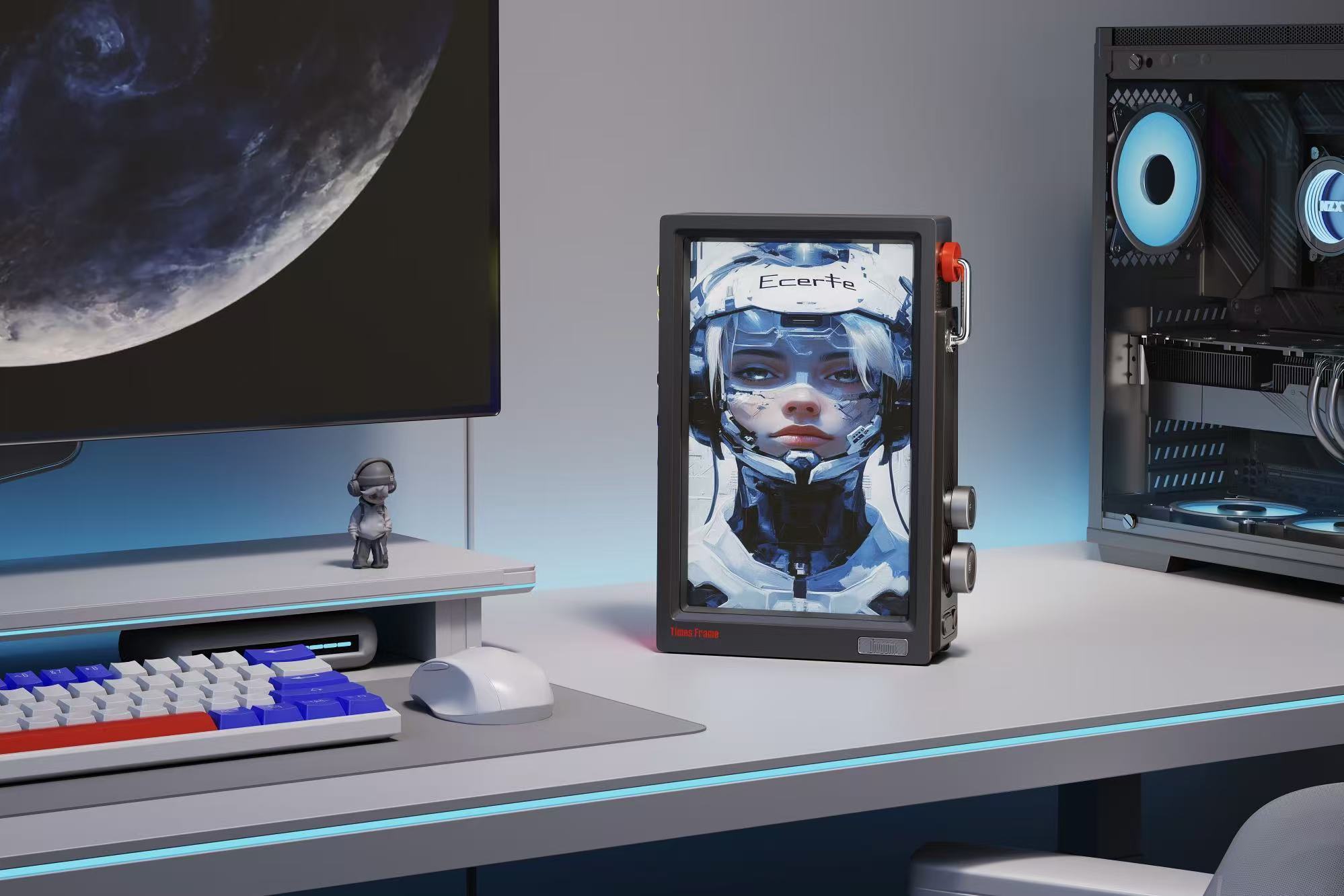
However, what really makes people want to keep it on the desk is not just its appearance. The first appealing detail is the metal mechanical knob on the side. In an era when touch - screen interaction dominates, turning this physical knob with a clear damping feeling and hearing the "click" sound while switching photos and adjusting brightness brings a long - lost sense of healing. It successfully creates an immersive feeling, as if you're operating some sophisticated equipment rather than just swiping through a photo frame.
The second is the functions like remote photo transmission. Family members can also upload photos from afar through the official app: the newly - bloomed flowers at home, the dishes cooked on the weekend, or the cat sleeping on the windowsill. With just a glance, you can see these pictures, making the photo frame like a silent communication window. It doesn't disturb you or wait for a reply. It just exists quietly, delivering the fragments of life from afar to your desktop on time.
The electronic photo frame is no longer just a tool for displaying memories but has become a channel for connecting memories.
Of course, it's not just a photo frame. When switched to the information dial mode, it can display stocks, weather, and time in real - time. With more than 400 built - in dynamic dials, ranging from cyber data streams to retro pixel styles, it can match various gaming desktop setups. However, in terms of personal preference, the best way to use it is to let it quietly rotate through photos. The combination of cyber - tech style and the warmth of daily life creates the strongest atmosphere.
2. Customize Your Personalized Life on the Desktop in One Step
If the transparent photo frame is responsible for creating the atmosphere, then this mini computer pixel speaker called MINITOO is the most multi - functional and appealing little thing on the desktop.
With its retro gray - white color scheme, old - fashioned computer shape, and cute mini joystick and keyboard, at first glance, it's easy to mistake it for a toy model.
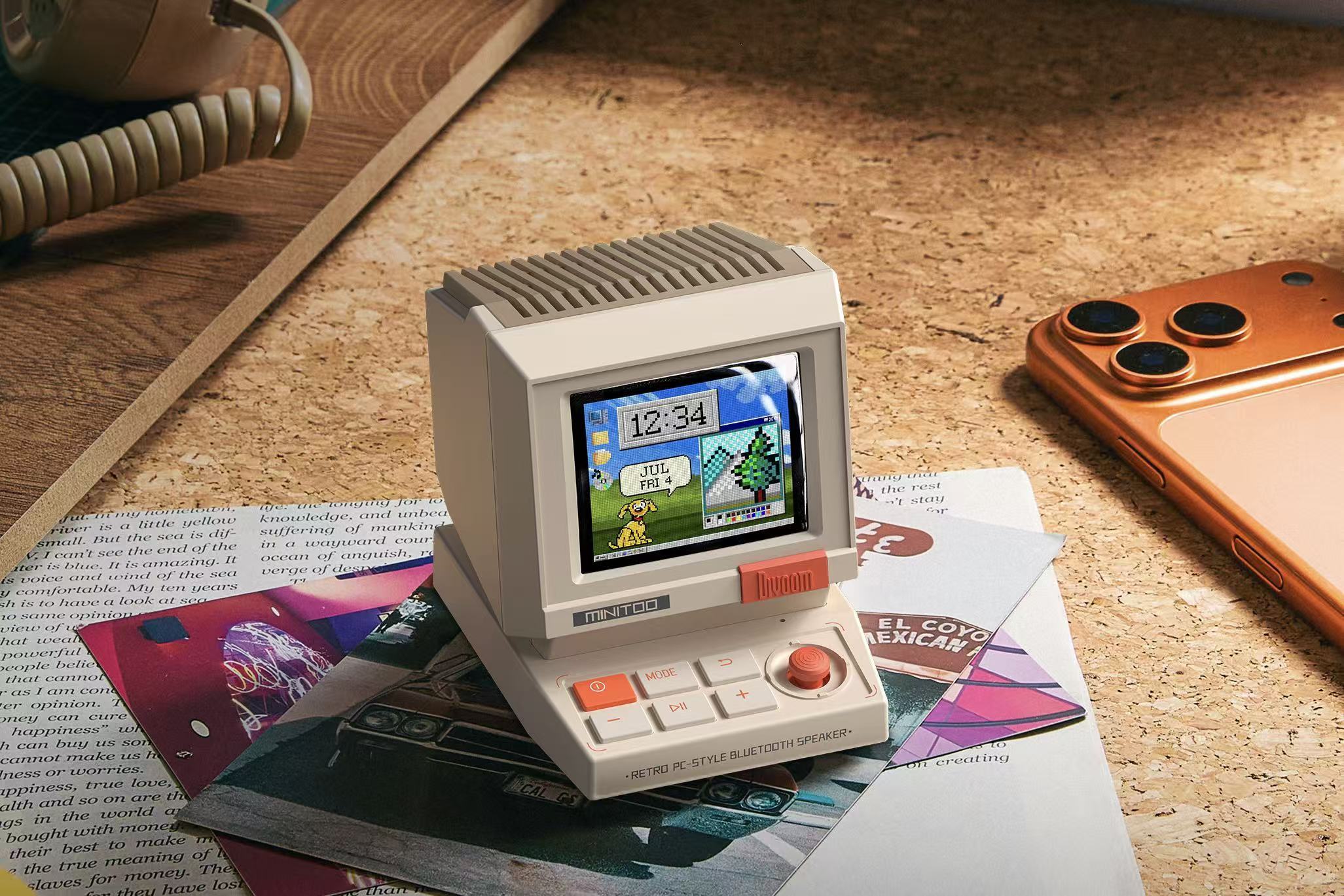
However, when you turn it on, the first surprise is its sound quality. Despite its small size, it is equipped with a 40mm dual - magnetic speaker and a low - frequency passive diaphragm. With a 5W driving power, the bass is quite powerful. As a desktop background music player, it's more than enough for listening to pop music, watching Vlogs, or podcasts, even exceeding expectations.
The real essence lies in its pixel screen and multi - function integration. In the morning, it serves as an alarm clock, waking you up from a light sleep with pixel animations; during work, it can be switched to the Pomodoro timer, with 25 minutes of focus and 5 minutes of rest; when you're tired, you can play 15 built - in pixel mini - games like Snake and Tetris, which are simple but stress - relieving; at night, switch it to the white noise mode, with sounds of rain, campfire, and waves to accompany you to sleep.
What's very attractive is that users can draw their own pixel pictures using Divoom's official app or download various strange dials created by users from the community. One day it can display a cute Shiba Inu wagging its tail, and the next day it can be switched to a real - time scrolling screen of the number of fans. It's like an electronic pet that will never get boring, always having new functions for you to explore.
The value of MINITOO lies precisely in this. It integrates music playback, time management, light entertainment, and atmosphere creation into a device smaller than a coffee cup with a unified interaction logic, becoming the most appealing companion on the desktop.
3. A Companion and a Productivity Booster
Can desktop setup products bring productivity besides creating an atmosphere and providing entertainment? Divoom gives a definite answer with this "Time Portal" arbitrary screen.
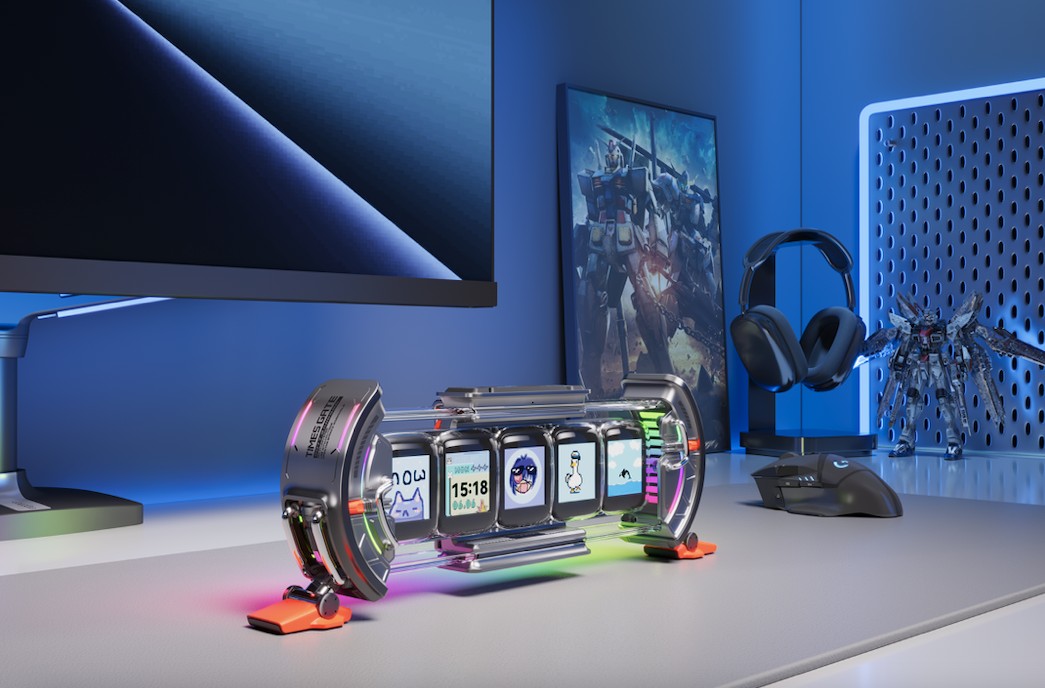
This product has a very special form. It's a long - shaped cabin with five independent IPS screens in the front and a row of high - brightness RGB light bars at the bottom. Placed under the monitor, it just fills the 1㎡ golden area between the keyboard and the screen.
The core value lies in the five - screen linkage. You can freely configure the information you need. For example, the first screen shows the main global stock indices, the second screen scrolls the RSS summaries of technology media, the third screen displays custom pixel animations, the fourth screen updates the weather in real - time, and the fifth screen is connected to the game achievement API... The five screens have their own functions, and the information comes in an orderly manner. It feels like opening a mini "mission command center" on the desktop.
For those who need to balance entertainment and work, the most amazing thing about this product is not how much information it can display but that it gives you the ability to decide which information is worth seeing.
We're used to being fed by mobile phone notifications. The information is fragmented, passive, and always interrupting you. The Time Portal provides the opposite logic. You actively select the data sources, decide how the information is presented, and salvage the data that was originally hidden in the app notification bar or buried in the information stream, making it an orderly and even aesthetic presence on the desktop.
In addition, the 45 RGB light beads at the bottom support 16 million colors for customization. Through the app, you can create very complex dynamic lighting effects, and it can also be linked with the music rhythm. If you're a fan of lighting effects, it can become the control core of the desktop lighting system.
There's also an easily overlooked but very practical function: cross - network remote control. For example, if you're on a business trip on a special anniversary, you can use your mobile phone to update the screen content of the Time Portal at home, such as putting a group photo or changing a message. This ability to interact beyond the physical space also gives the desktop ornament the property of remote emotional transmission.
4. The Community and Ecosystem: The Secret to Keeping Hardware "Fresh"
It's not hard to find that behind the three hardware products with different forms and functions, there's the same software support.
The official Divoom app is Divoom's biggest moat. And the most core asset in the app is the pixel community that has been in operation for nearly ten years and the user ecosystem behind it.
Many people think it's just a dial gallery when they first enter it. However, after using it for a while, you'll find that it's a content ecosystem that drives the continuous evolution of hardware.
In this community, users can create and share their own pixel pictures, which are synchronized globally and updated in real - time. More importantly, Divoom has actively connected with weather, stock, exchange rate, and social media data, as well as various external API interfaces. Users can grab this real - time information, combine it with pixel art and user photo album content to create dynamic dials with rich information and diverse styles.
Now, AIGC functions such as AI image generation and AI painting have also been integrated into the community. The threshold for creation has been further lowered. Even users with no experience in pixel drawing can generate exclusive pixel images through text descriptions.
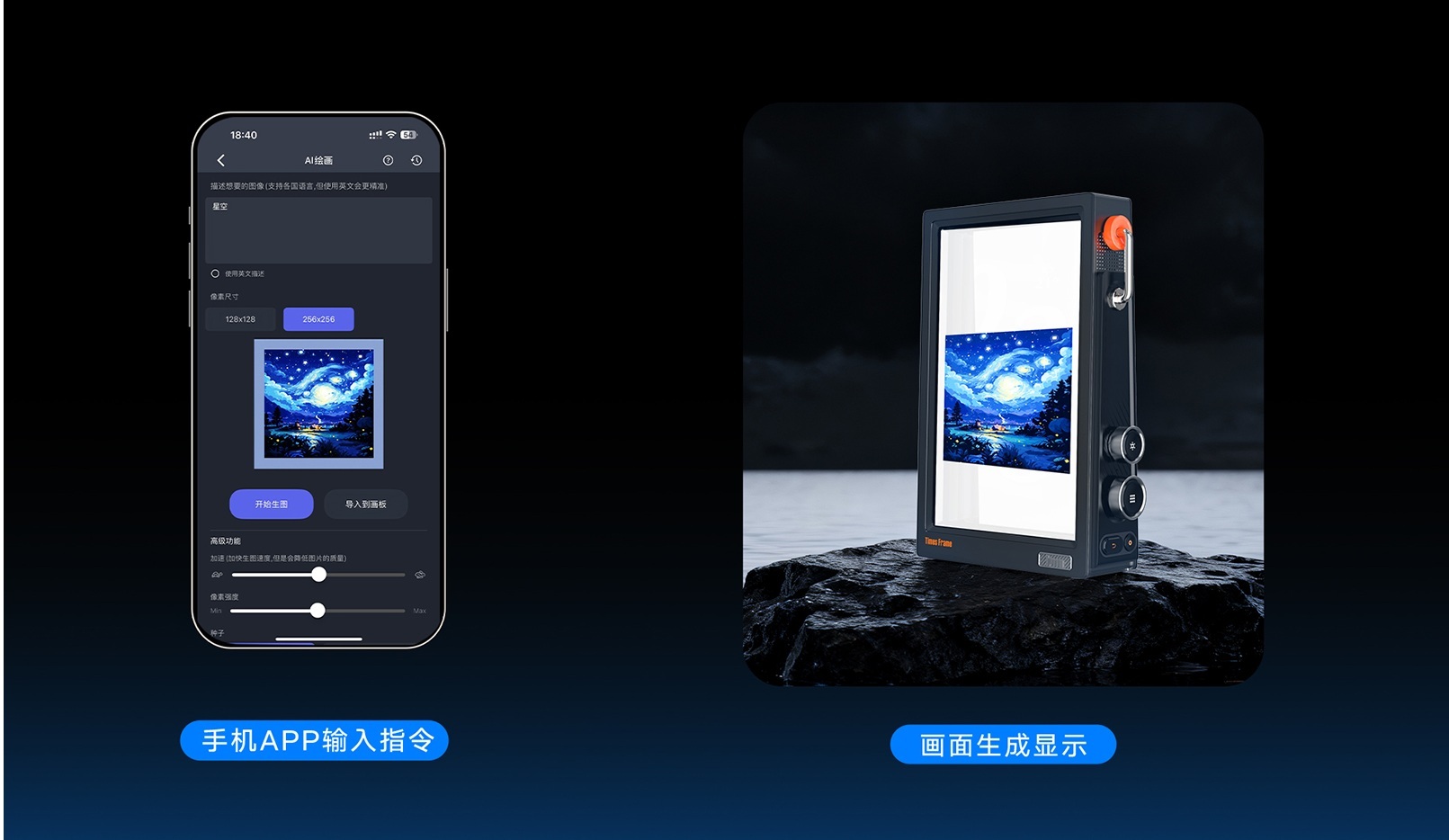
This means that the Divoom hardware you buy is a content terminal that will continue to grow. As long as the community is updated, your device can continuously get new dials, animations, and gameplay through the software. The freshness and experience it brings won't depreciate because of the factory date but will increase over time.
Currently, this community has gathered more than 3 million registered users globally, including many professional pixel artists from Japan, Germany, and the United States. Ono Shuu, the former chief designer of Nintendo, has also publicly recommended the Divoom app and its pixel products. It's quite rare in the consumer electronics field for a Chinese original brand to attract top global creators to join and continuously produce content.
Going back to the question at the beginning: What should your ideal desktop look like?
Different people have different answers. However, a possible consensus standard is to use various companions and ornaments to build a personal space that can reflect your current state and provide emotional or practical value.
It can be warm, like the transparent floating photo frame that quietly rotates through family photos, bringing the long - distance concerns back to your sight; it can be fun and stress - relieving, like the mini computer speaker, allowing you to play pixel games during Pomodoro breaks and listening to its solid low - frequency sounds; it can also be hardcore and efficient, like the five - screen arbitrary screen, freezing the flowing data stream into an orderly visual display.
The value of Divoom lies in that it has spent nearly ten years building a complete product family and a creator community around pixel content, allowing users to combine their own desktop systems like building blocks according to their needs and aesthetics.
In the emerging field of smart desktop setups, Divoom has established quite deep product and community barriers because of its early start and unique path. Its products may not be perfect in every function, but the sense of play and connection it provides is especially heart - warming in the cold world of hardware.
Becoming an extension of the intersection between the self - world and the real world. Perhaps this is the most charming part of desktop setups.