Still looking at the sleep monitoring function of smartwatches? Its accuracy is even worse than flipping a coin.
Guys who still wear smartwatches or fitness trackers while sleeping at night, raise your hands in the comment section. Let me see how many of us are in the same boat?
Seriously, I'm not sure if it's because of our age, but I've noticed that our generation of young people is extremely concerned about sleep – to an almost absurd degree. In the past, we used to compete over who could stay up the latest. Now, we're comparing who can have the longest deep sleep.
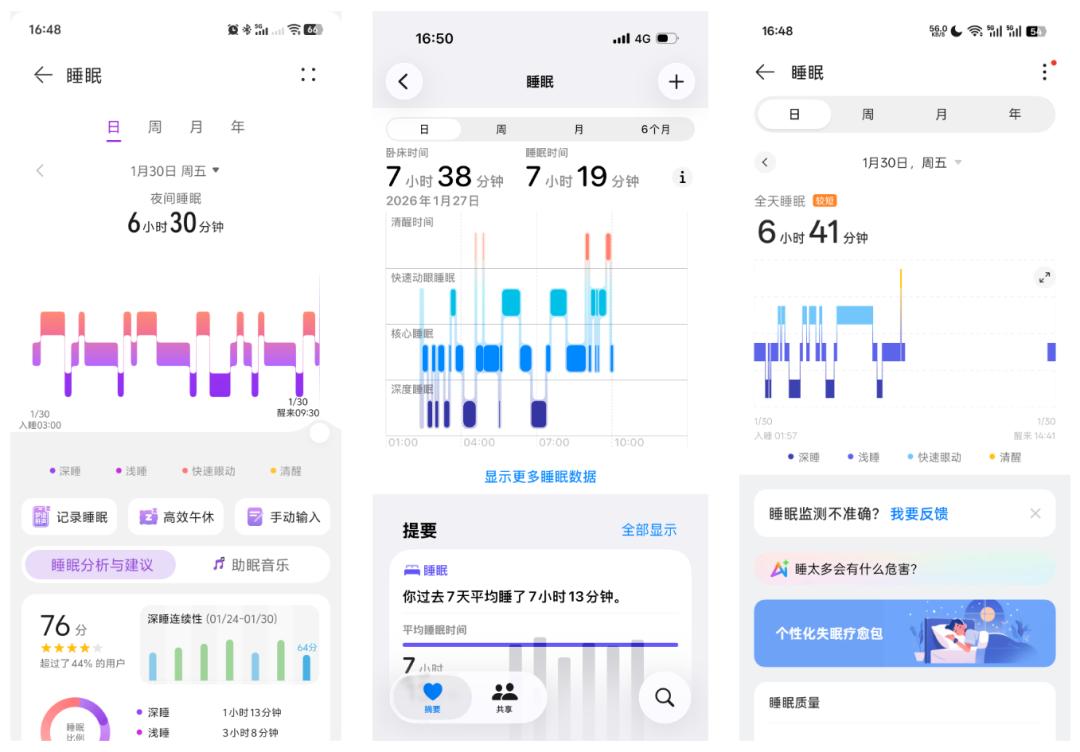
At least that's the case for me. I usually wear my watch all the time, only taking it off when I'm taking a shower or charging it. And the first thing I do every morning when I wake up is not to reach for my phone, but to swipe my watch to check the sleep report and see if I slept well last night.
If the app shows that I slept for eight hours last night, with nearly two hours of deep sleep and a score of 80, I'll feel energetic throughout the day.
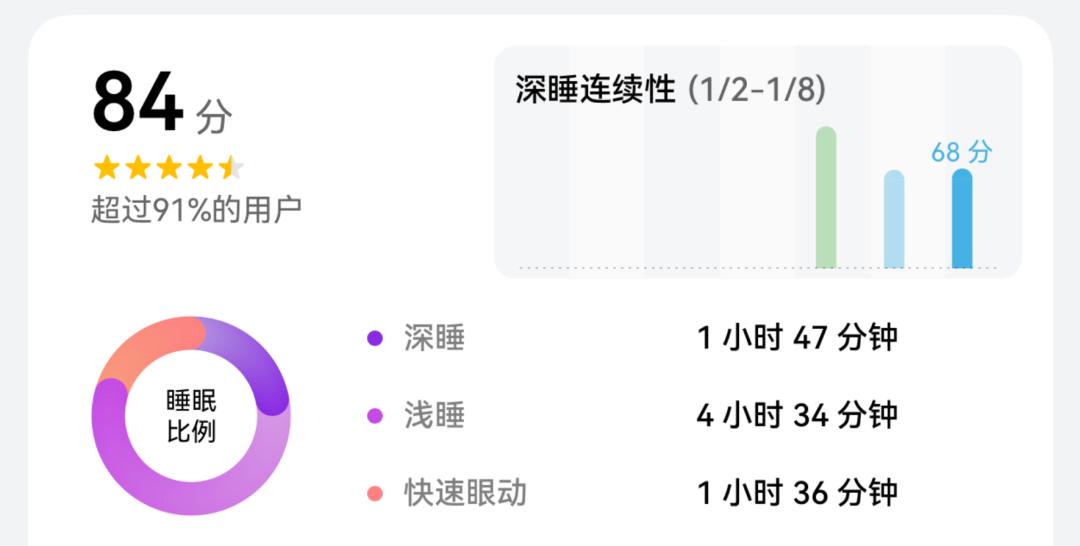
But if one day I open the app and find that my deep sleep was less than an hour and the score was only in the 60s, then I'm in trouble. Even if I subjectively feel okay, I'll be in an uncomfortable state all day, feeling groggy.
It wasn't until last month that I got a new watch, and the results really stunned me...
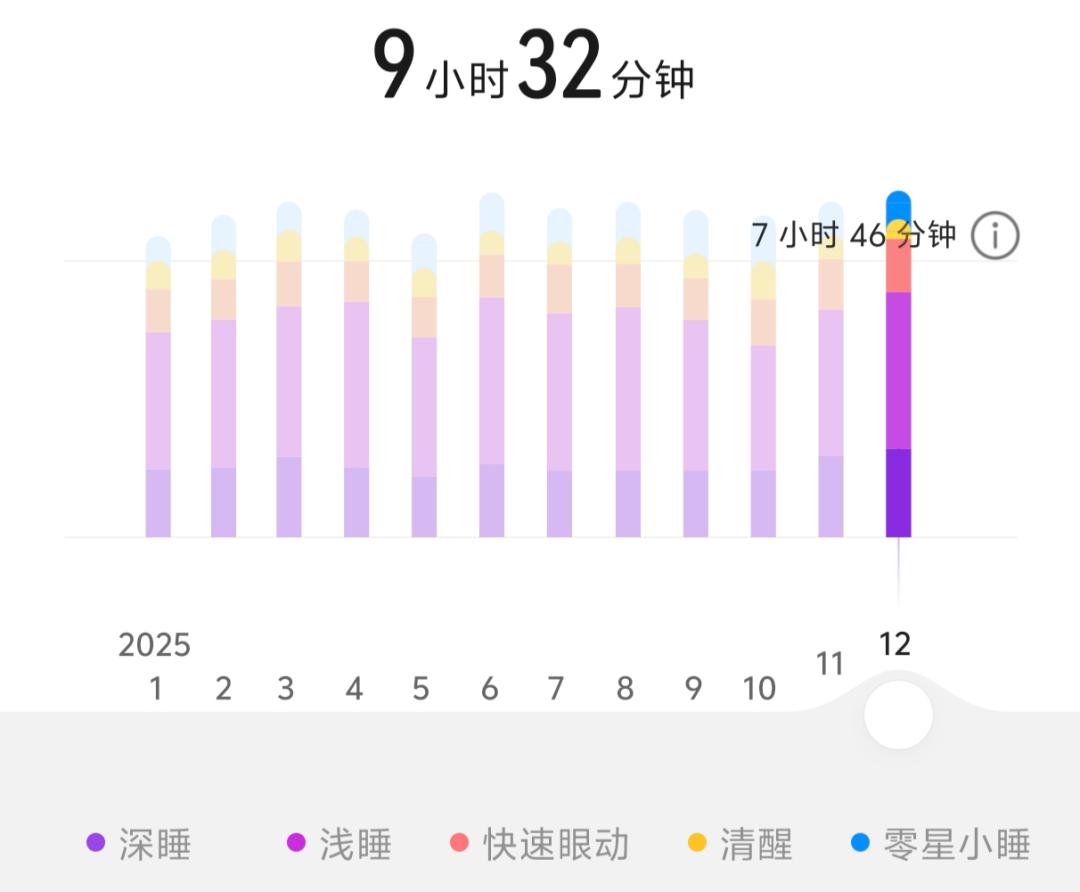
Since I started wearing the new watch, I've noticed that my deep sleep has suddenly increased from a pitiful one hour to more than two and a half hours, and my sleep score has never dropped below 80. My sleep data has suddenly improved.
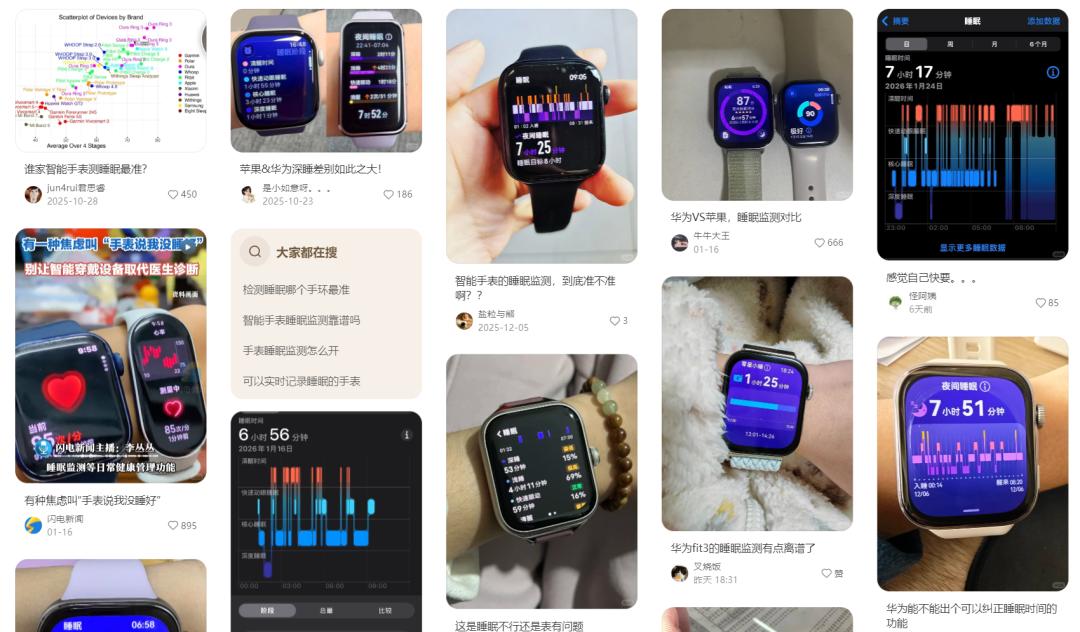
Then I searched on Xiaohongshu... Well, it turns out I'm not alone. Many netizens have been complaining about similar experiences.
Some people think the Apple Watch is more accurate because it can detect every time you wake up. Others believe that Huawei devices are more stable with better data continuity. Some people even wear different brands of watches on each hand, and the data can differ by more than an hour.
Goodness! Does that mean all my previous days of anxiety about not sleeping well were in vain?
To figure this out, I did a thorough study. Today, I'm going to have a good chat with you guys – how much of the sleep anxiety caused by smartwatches over the years is real science, and how much is just a mystery.
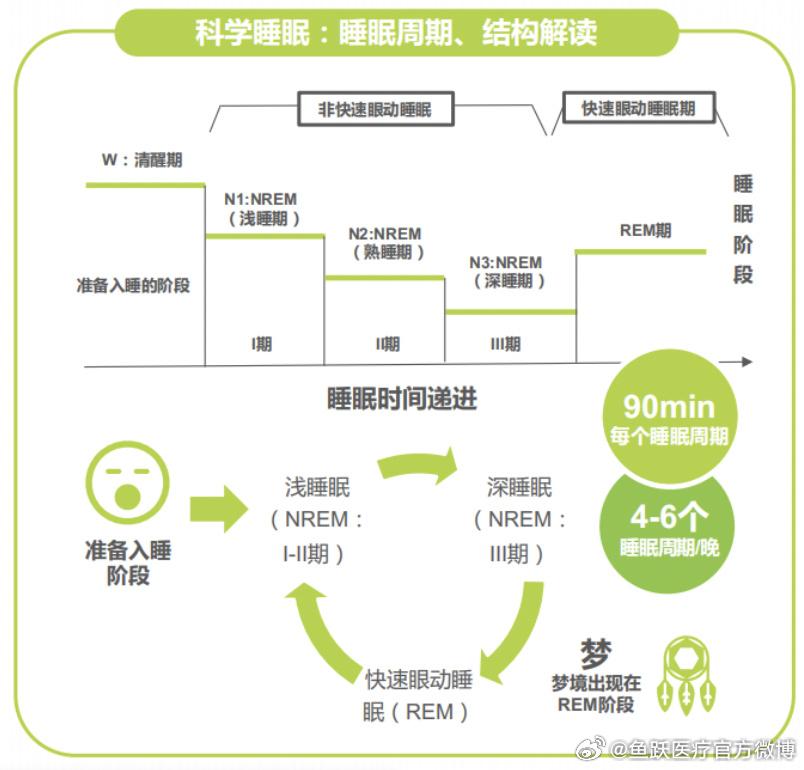
First, we need to reach a consensus: Sleep is not a simple process from "awake" to "asleep" and then to "awake" again.
You may notice that many smartwatches simply divide sleep into three stages: "deep sleep", "light sleep", and "rapid eye movement (REM)". But in fact, in the medical field, sleep is usually divided into "non-rapid eye movement (NREM)" and "rapid eye movement (REM)" stages.
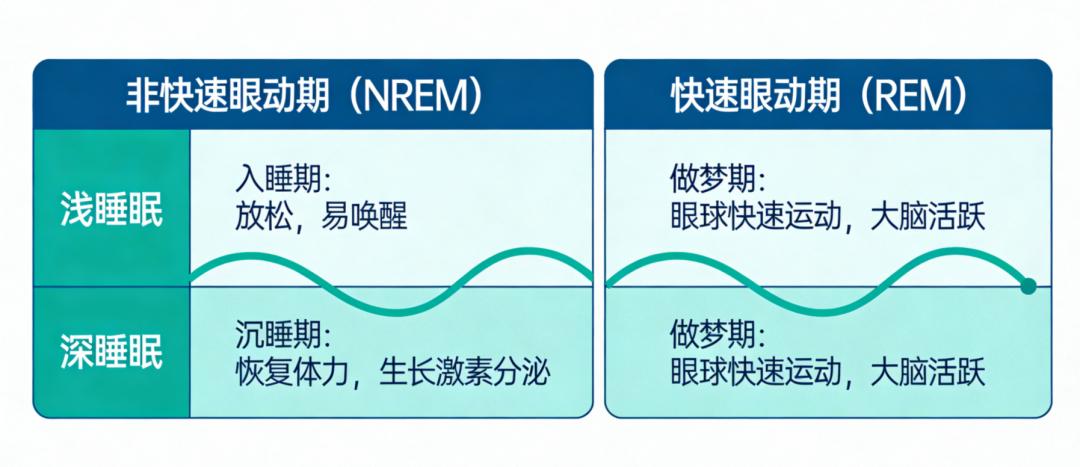
The "non-rapid eye movement (NREM)" stage is further divided into three sub - stages: N1, N2, and N3.
I guess many of you have had this experience – you're lying in bed, put down your phone after browsing, and your consciousness starts to get fuzzy. Just as you're on the verge of sleep, your body suddenly jerks, as if you've been electrocuted, and you think you're about to fall out of bed.
Don't panic. It's neither "sleep paralysis" nor necessarily a sign of calcium deficiency. Most likely, you're in the N1 stage. At this time, your brain isn't completely shut down, and your muscle tension is unstable. The sudden jerk indicates a mode switch, which is a normal reaction.
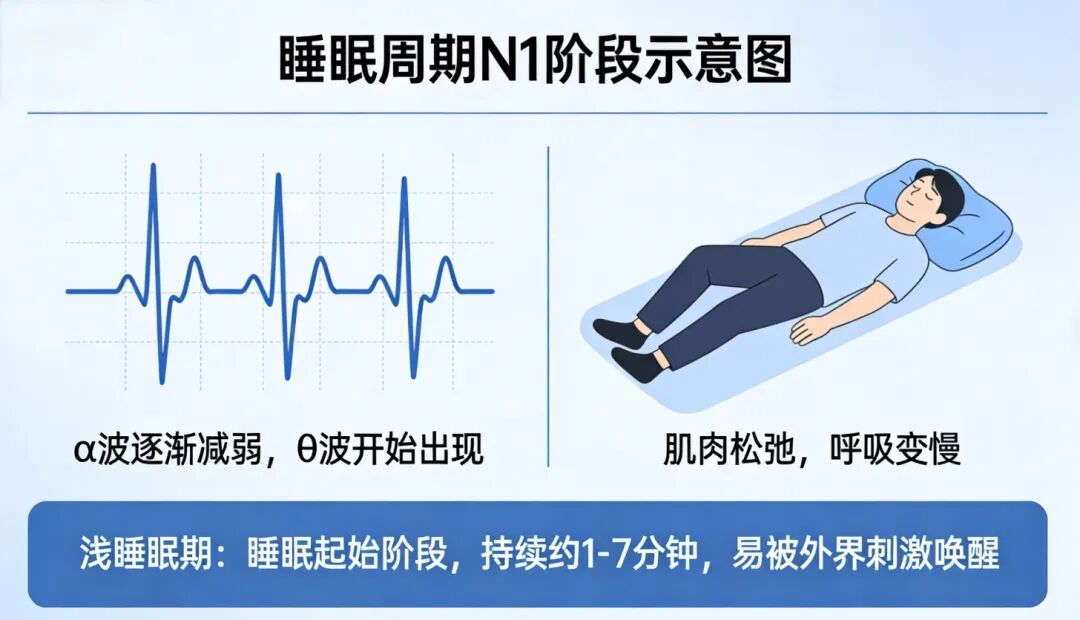
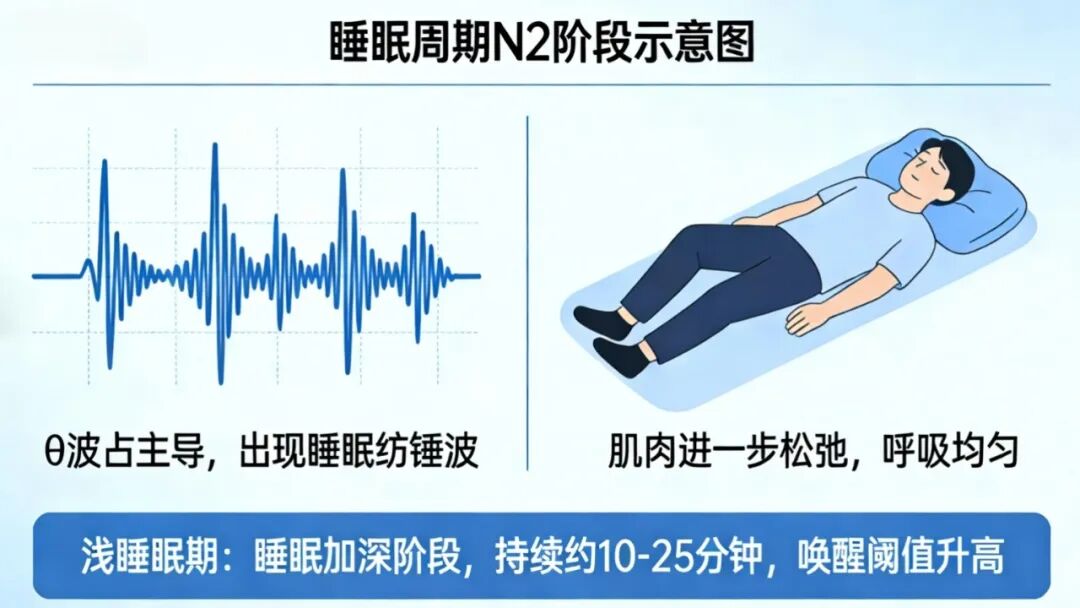
Once you're truly asleep, you'll spend most of your time in the N2 stage.
This stage takes up the most time in sleep. Your heart rate will slow down, and your body temperature will start to drop. But if something suddenly falls upstairs, you might be startled. If someone calls your name, your brain may still respond.
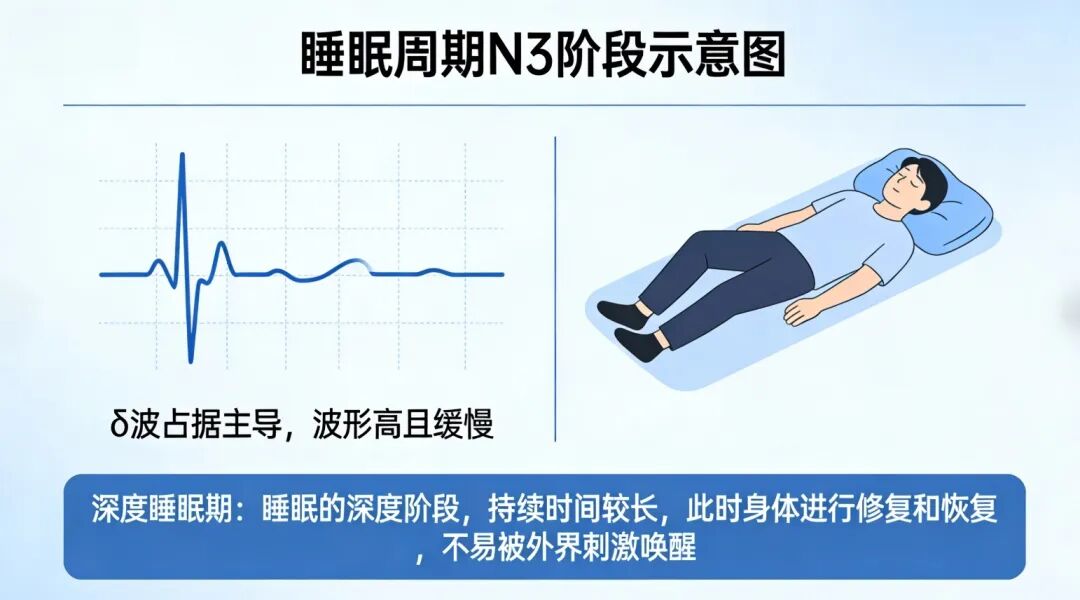
The N3 stage is what we usually refer to as "deep sleep".
Growth hormone is mainly secreted during this stage. Many important "background maintenance" tasks, such as body cell repair and memory consolidation, also occur during this period. The "deep sleep" shown on smartwatches mainly refers to this stage.
As for the "rapid eye movement (REM)" stage, it's the peak time for dreaming.
At this time, our brains become active, but to prevent us from acting out our dreams, our bodies send signals to temporarily "paralyze" our muscles. If you wake up during this stage, you'll probably remember clearly what you dreamed about.
Our complete sleep throughout the night is actually a cycle of these stages. One cycle lasts about 90 to 120 minutes, and we can go through several cycles in one night.
OK, now that we understand the sleep stages, let's see how these stages are monitored in the medical field. By comparison, we can see how "primitive" the watch's monitoring is.
The gold standard for sleep staging in medicine is called polysomnography, abbreviated as PSG.
You need to go to the hospital and spend a night there. Dozens of electrodes will be attached to your body. For example, an electroencephalogram (EEG) electrode is attached to your scalp to monitor brain waves, an electrooculogram (EOG) electrode is attached near your eyes to monitor eye movements, and an electromyogram (EMG) electrode is attached to various parts of your body to measure muscle tension.
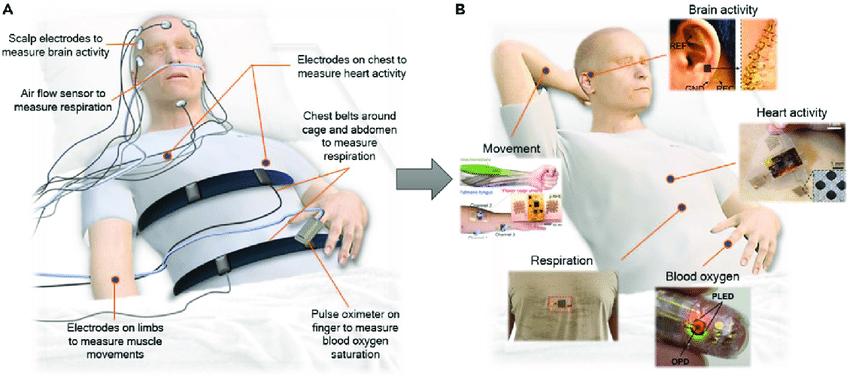
In addition, a bunch of sensors for monitoring electrocardiogram, respiration, blood oxygen, etc., will also be attached. Doctors can accurately determine which sleep stage you're in by analyzing the comprehensive changes in your brain waves, eye movements, and muscle activities throughout the night.
After learning about medical monitoring, take a look at that small, lightweight watch on your wrist. Don't you think it seems a bit "shabby"?
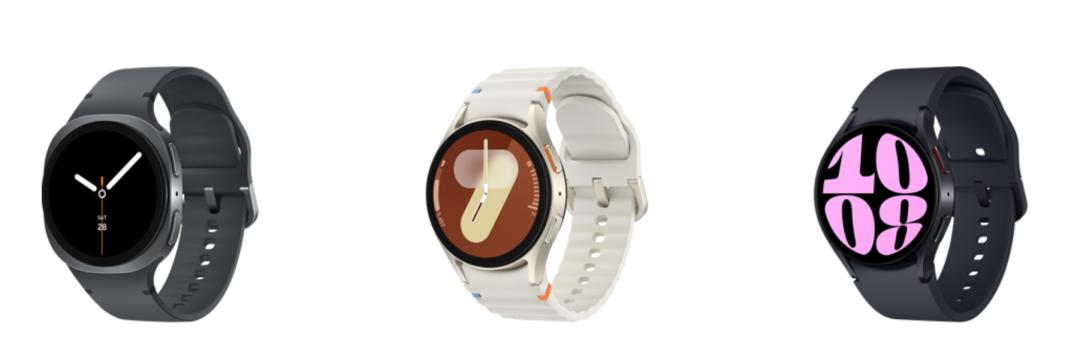
To put it simply, no matter if it's an Apple, Huawei, Xiaomi, OPPO, or vivo smartwatch, they don't have the ability to directly measure brain waves, eye movements, and muscle tension. Their sleep monitoring is essentially "guessing" –
That is, using sensors to collect indirect signals and then using algorithms to infer which sleep stage you're in.
The core relies on two sensors: the "accelerometer" and the "PPG photoelectric sensor". Some high - end smartwatches may also add a microphone to detect snoring and a temperature sensor to assist in judgment, but the basic logic remains the same, which is indirect inference.
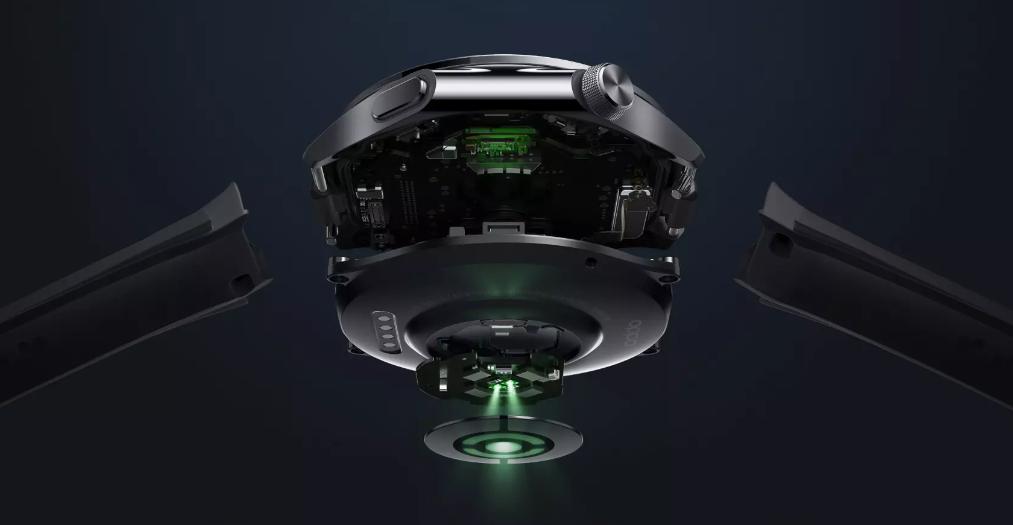
The accelerometer can capture the amplitude and frequency of your wrist movements, such as turning over, raising your hand, or kicking your legs. It can record all these movements.
For example, during deep sleep, your body muscles are the most relaxed, and you hardly move. Even if you do move, it's just a slight wriggle. During light sleep, your brain isn't completely "shut down" yet, so you may turn over or adjust your sleeping position occasionally, and there will be relatively more movements.
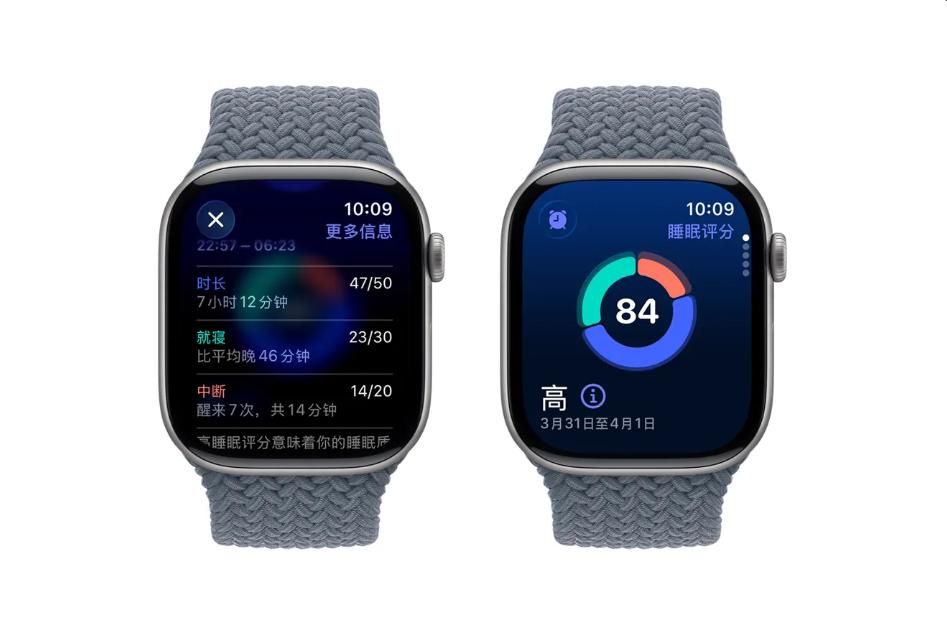
However, it only looks at "whether you moved" and doesn't care "if you're really asleep".
For example, if you're lying in bed, awake but quietly browsing your phone with your wrist still, the watch may misjudge you as being in deep sleep. On the other hand, if someone bumps into you while you're in deep sleep and your wrist moves, it may be judged as light sleep.
That's when the PPG photoelectric sensor comes in to help. It emits green or infrared light that penetrates your skin. By detecting the changes in light reflection caused by blood flow, it can calculate your heart rate, heart rate variability, and blood oxygen saturation.
Its judgment logic is as follows: During deep sleep, your heart rate drops to the lowest level of the day and remains very stable with little fluctuation. During light sleep, your heart rate is slightly higher, and the fluctuation also increases. When you enter the REM stage, your heart rate speeds up.
It can be said that most smartwatches nowadays use a combined analysis of "body movement + heart rate" to determine a person's sleep state. It's more accurate than just relying on body movement to guess, but it still has significant limitations.
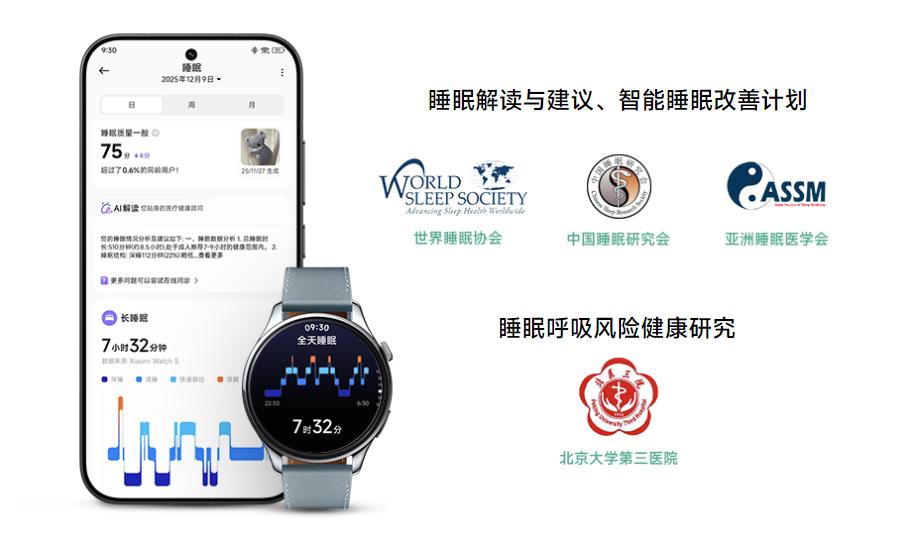
For example, if the watch is worn too loosely and the sensor doesn't fit tightly against the skin, the heart rate data will be inaccurate. If it's worn too tightly, it may compress your wrist and affect blood circulation, also leading to inaccurate data. Even a dark - skinned wrist or a tattoo can affect the sensor's signal collection.
The most crucial point is that there are significant differences in algorithms between different brands.
For Apple, the core of its algorithm relies on the body movement signals captured by the accelerometer, combined with the heart rate data from the PPG photoelectric sensor. A large amount of clinical polysomnography records are also included in the training data, and more weight is given to the regular changes in body movement.
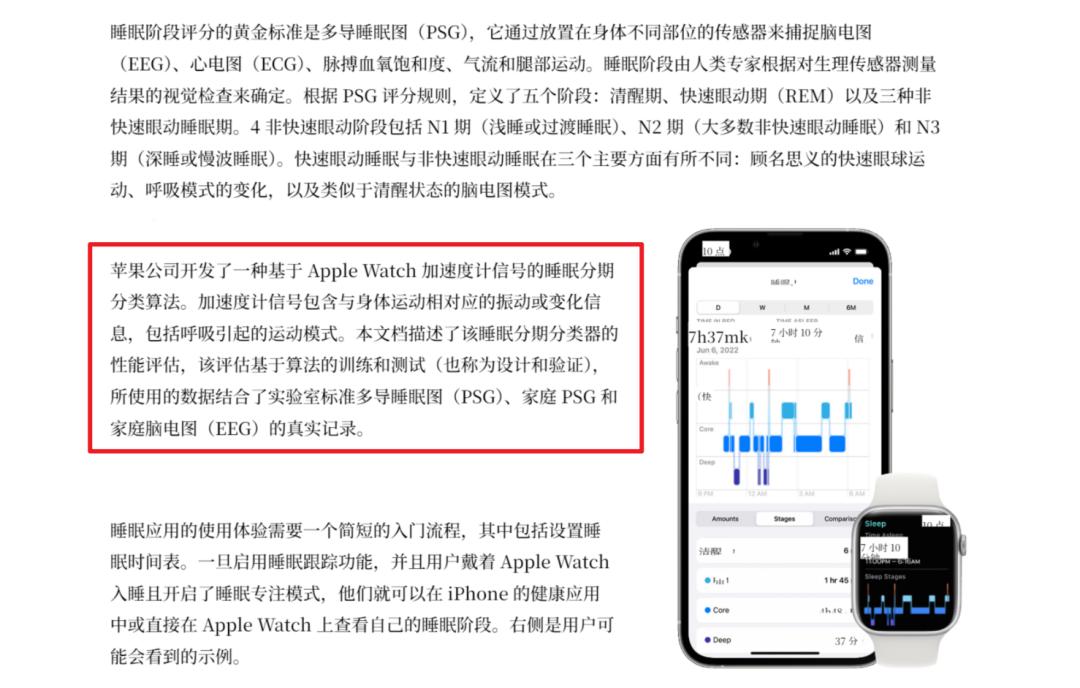
Apple's technical white paper on sleep monitoring algorithms
Huawei, on the other hand, focuses more on physiological indicators such as