A high-price acquisition? A 20-person game team was acquired for $1 billion, and its product's daily revenue exceeded one million within less than a year.
Recently, there has been another high - profile acquisition case with extremely fast pace in the mobile game industry.
The publisher Scopely announced the acquisition of a majority stake in the Turkish studio Loom Games. The transaction adopts a multi - year, performance - linked structural arrangement. The valuation of this transaction exceeds $1 billion.
The acquired Loom Games was founded in 2025, with a team of about 20 people. Its first product, "Pixel Flow!", has been on the market for less than a year. However, it has already achieved seven - figure daily revenue and ranked among the top 20 in the monthly best - selling list in the United States. This means that a casual product in the early stage of its life cycle has already received a valuation of over $1 billion from a leading publisher.
From the timeline, the progress of this transaction is also quite rare. The product was launched in 2025, and the seed - round financing was just completed in early 2026. A few months later, the majority stake was sold. In contrast, large - scale mergers and acquisitions in the mobile game industry in the past often occurred after the product life cycle was relatively mature and the revenue structure was relatively stable. This time, the transaction took place when the product was still in the rapid growth stage.
When a product that has been on the market for less than a year can obtain a valuation endorsement of over $1 billion, it is no longer just a "blockbuster story", but more like a microcosm of the structural changes in the industry.

I. Who is Loom Games?
In terms of scale, Loom Games can be regarded as a "small studio".
The company was founded in 2025 and is headquartered in Istanbul, with a team of about 20 people. The founders, Kübra Gündoğan and Emre Çelik, previously worked at Crescive Games and have many years of experience in casual game development. "Pixel Flow!" is not an "accidental work" starting from scratch, but more like a concentrated outbreak after years of product accumulation by the team.
What really caught the industry's attention is the growth curve of its first product, "Pixel Flow!"
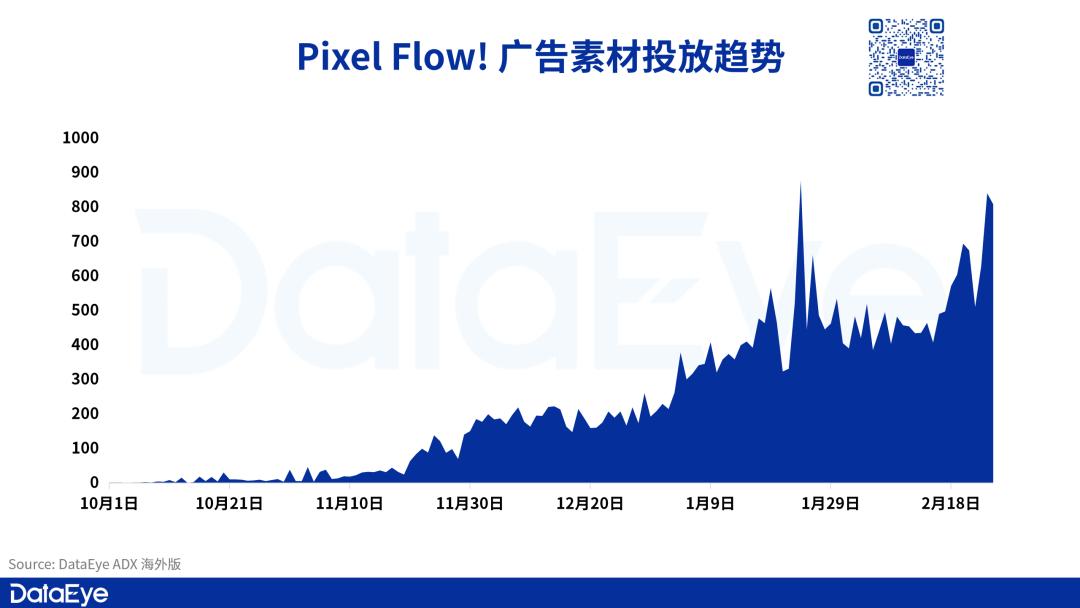
The product was launched in the second half of 2025 and then entered the stage of large - scale growth in October. According to disclosures, its daily revenue has reached a seven - figure scale, and its monetization model covers both advertising and in - app purchases. It has successfully entered the top 20 of the monthly best - selling list in the United States. For a hybrid casual product, such a revenue structure and list performance are not common.
The hybrid casual game track has long been regarded as a category with "high efficiency but relatively short life cycle". There are not many products that can establish a stable in - app purchase structure in addition to advertising monetization. "Pixel Flow!" showed strong user stickiness and payment conversion ability in the early stage, which is also an important basis for the rapid increase in its valuation.
What is even more noteworthy is the product's mechanism. Many media mentioned that "Pixel Flow!" introduced a new core gameplay mechanism and was verified by the market in a short time. Although there are already copycat products in the market, the team emphasized that its core advantage lies in the ability of continuous iteration and high - frequency optimization, rather than a single idea itself.

In other words, what Scopely is betting on this time may not only be a product with outstanding early performance, but also a small team that shows the dual abilities of "mechanism innovation + execution efficiency" in the hybrid casual game track.
In the mobile game industry, there are not many cases that can achieve growth speed, revenue scale, and product structure simultaneously. That's why this studio, which has been established for just over a year, has come into the acquisition vision of leading publishers.
II. Accelerated M&A Pace: What is Scopely Compensating for?
Putting this transaction in Scopely's M&A trajectory in recent years, its strategic significance becomes clearer.
In 2023, Scopely was acquired by Savvy Games Group for $4.9 billion. Then in 2024, it acquired the game business of Niantic for $3.5 billion, bringing mature products such as "Pokémon GO" into its system. In just a few years, Scopely has gradually shifted from a publisher driven by the blockbuster "Monopoly GO!" to a combined layout of multiple products and multiple studios.

This majority - stake acquisition of Loom Games further extends its territory to the hybrid casual game track. "Pixel Flow!" has become a rare "product in the early stage of its life cycle" in its product matrix. Different from the previous integration of mature long - term products, this is more like an early lock - in of the growth curve itself.
It is worth noting that the transaction adopts a phased structure linked to performance, rather than a one - time buyout. This arrangement allows the publisher to lock in potential high - growth assets in advance and control risks when the long - term performance of the product has not been fully verified. For the publisher, this is a strategy that combines offense and defense.
From a more macro perspective, the growth logic of leading publishers is changing. As the customer acquisition cost continues to rise and the difficulty of replicating a single blockbuster increases, expanding through M&A and integrating external innovative teams may become a more certain path. Compared with the uncertainty of internal incubation, directly investing in verified products and mature small teams is more predictable in terms of efficiency and success rate.
In this context, this transaction may not only be an endorsement of "Pixel Flow!", but also an active adjustment by Scopely at the product structure level - maintaining the layout of medium - to - heavy long - term products while compensating for the high - efficiency and high - turnover hybrid casual game track.
III. Is the Valuation Logic of Casual Games Changing?
Looking back at this transaction, the key lies not in the short - term explosion of a single product, but in the superposition of three structures: a small team has achieved a growth and monetization model in the hybrid casual game track; a leading publisher has advanced the M&A window in the early stage of the product life cycle; and the transaction structure hedges uncertainty through performance binding.
In the past, large - scale acquisitions in the mobile game industry often occurred after the product was mature. In recent years, whether it is Voodoo's continuous investment in hybrid casual game teams after the decline of the hyper - casual game market or the Turkish teams being locked in by capital during the growth stage, it shows that the time point of M&A intervention is moving forward.
The valuation logic of casual games is changing - when the difficulty of replicating blockbusters increases and the efficiency of internal incubation decreases, the strategic choice of the mobile game industry in the stock stage is shifting from confirming historical scale to predicting the growth structure and efficiency model.
In this context, the transaction of Loom Games may not only benefit from the industrial soil of "small teams, high efficiency" in Turkey, but also fit into a broader industry cycle: when growth certainty is more important than scale fantasy, locking in verified models in advance may become a more normalized strategy for leading publishers.
This article is from the WeChat official account "DataEye" (ID: DataEye), author: DataEye. Republished by 36Kr with authorization.