Behind OpenClaw: The Key Points That Haven't Been Fully Explained
The world of AI remains bustling, and recently, the spotlight has been on OpenClaw.
However, while everyone is discussing OpenClaw, a possible question arises: What's the difference between this thing, which requires a local computer, and the past products like Claude Code, Manus, and Cowork?
Actually, there's not much difference in terms of functionality, but there are significant differences beyond that.
Looking beyond the surface of functionality and from the deeper perspective of who controls AI and its impact on the future Internet, the emergence of OpenClaw is essentially a decentralization of power regarding "who has the right to control AI."
For decentralization, it means everyone should be able to use it. So, the form of open - source is crucial.
This is much more user - friendly than past products, similar to the difference between paper gold and a real gold bar in your hand.
The "Everyone Has a Gun" Version of AI
OpenClaw is actually the first popular Personal Agent.
Behind this, there's a rarely discussed perspective: The essence of OpenClaw is to weaken the control of large companies.
If this trend continues, some large companies, especially platform companies, might go out of business.
To put it more directly, if this thing becomes more and more useful, why would you use Doubao or Yuanbao?
For example, when booking a hotel, there are only so many hotels in a city. Why not let the AI compare and make a decision? What's the need for Ctrip?
It's like a new version of "beating the Shaolin and Wudang sects"!
We often divide various intelligent agents we've mentioned in the past into two categories:
● Managed Agents (Manus / Claude Code): They represent prosperity within a "jurisdiction." You must operate within the boundaries set by the service provider, pay rent (subscription fees), and abide by their rules (filters and safeguards). Obviously, in this case, the decision - making mode and power are in the hands of the hosting party, and users just wait for the results.
● OpenClaw (Sovereign Agent): It stands completely on the user's side. Since it runs locally, it's more like a situation where "everyone can have a gun." When each individual has the "digital power" to operate the Web independently, freely call different models, and not be monitored by the cloud, the monopoly of large companies on traffic, data entry points, and operation paths will be completely broken. This is your own territory, and you can control all its actions.
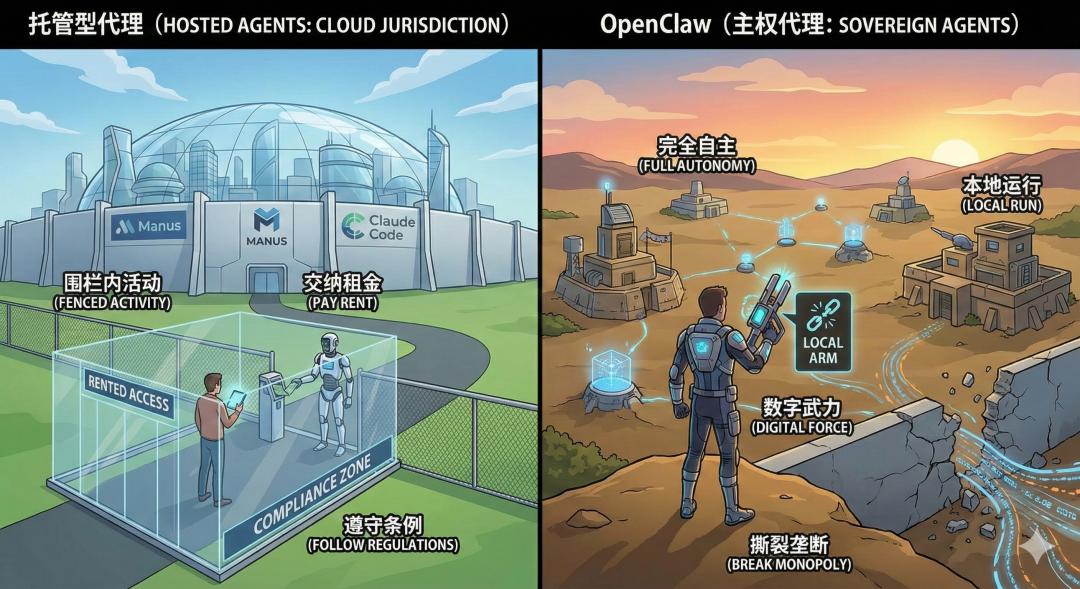
(Schematic diagram generated by AI)
With complete ownership and the ability of OpenClaw to take the initiative instead of waiting passively, it inherits your real Cookies and identity. It's the physical "you." This subjectivity makes it no longer just a "tool" but another AI version of you or an AI - version employee.
This is truly a solid step on the road to a no - human company.
The final key point is the open - source form mentioned above.
What's the concept of open - source?
It means this thing is completely yours, running on your computer, and you can modify it as you like. Although most people may not actually make modifications, the ownership has completely changed. For example, with Manus, if it changes certain preferences and shows you content from specific websites, you may not even know it.
Now, it's different. You have the priority over the content. Although part of it still depends on the model, in theory, you can choose the model. If a model is too unobjective, you can stop using it.
The biggest change is this. After using apps for so many years, we've never had such a situation. And the right of choice that we entrusted to major platforms has become the foundation of the business models of large platforms like advertising.
Now, this self - determination, whether for individuals or companies, potentially leads to the development of no - human companies.
What are the impacts?
If this system matures, the future economic form will shift from the "platform economy" to the real "sovereign individual economy."
Intermediaries will disappear, the moats of platforms will become ineffective, and productivity will no longer be the exclusive privilege of large organizations.
Everyone will have their own "golden cudgel" and can smash whatever they want.
To put it vividly, if it works well, it will make decisions for your shopping.
If it makes decisions, what's the use of advertising? Even recommendation algorithms will be useless because it will make comparisons and selections according to your standards. Recommendation algorithms will only waste your tokens at most.
This thing is simply incompatible with the Internet model.
Meanwhile, if there's no difference in models, models will be modularized. Modularized models won't be that valuable. In the past, there were many algorithms in a system like Windows, but the value ratio of these algorithms to Windows might be 1:1000.
So, you can see why Google is so annoyed by this thing.
If you use it, won't things like Gemini lose their way and become just big laborers?
It's easy to understand why OpenAI supports it. Anyway, it has nothing, so it's better to grab the new possibilities first.
An interesting thing to gossip about is that if the deal for Manus isn't completed, this is definitely a negative factor, even more negative than censorship.
If this thing becomes more and more useful, why would you use Manus!
In terms of development space, everyone will definitely look forward to improving their own OpenClaw rather than waiting for a more powerful Manus.
It's not a technical problem. OpenClaw has an unparalleled advantage in addressing privacy concerns. No other general intelligent agent can compare.
In the future, privacy concerns may be a greater obstacle to the development of AI capabilities than all other factors.
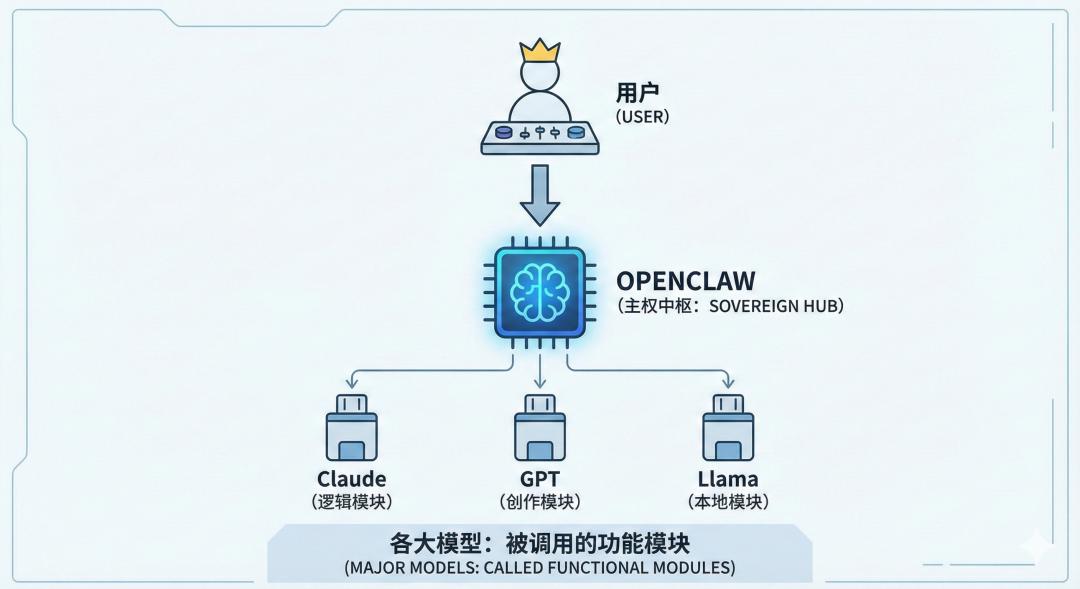
The above is a schematic diagram made by AI: The user will become the king, OpenClaw will become the scepter in the king's hand, and the rest will be the AIs commanded by it. It seems very reasonable, but it goes against the division - of - labor model of the past few decades. For the first time, users truly gain sovereignty. (Now we can say we hope it will succeed, but there's still a long way to go.)
Interestingly, when I was writing this text, a message like this was sent in the group where we discuss things:
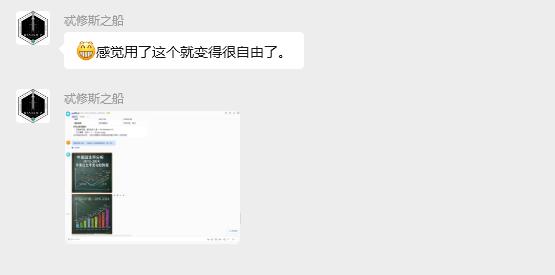
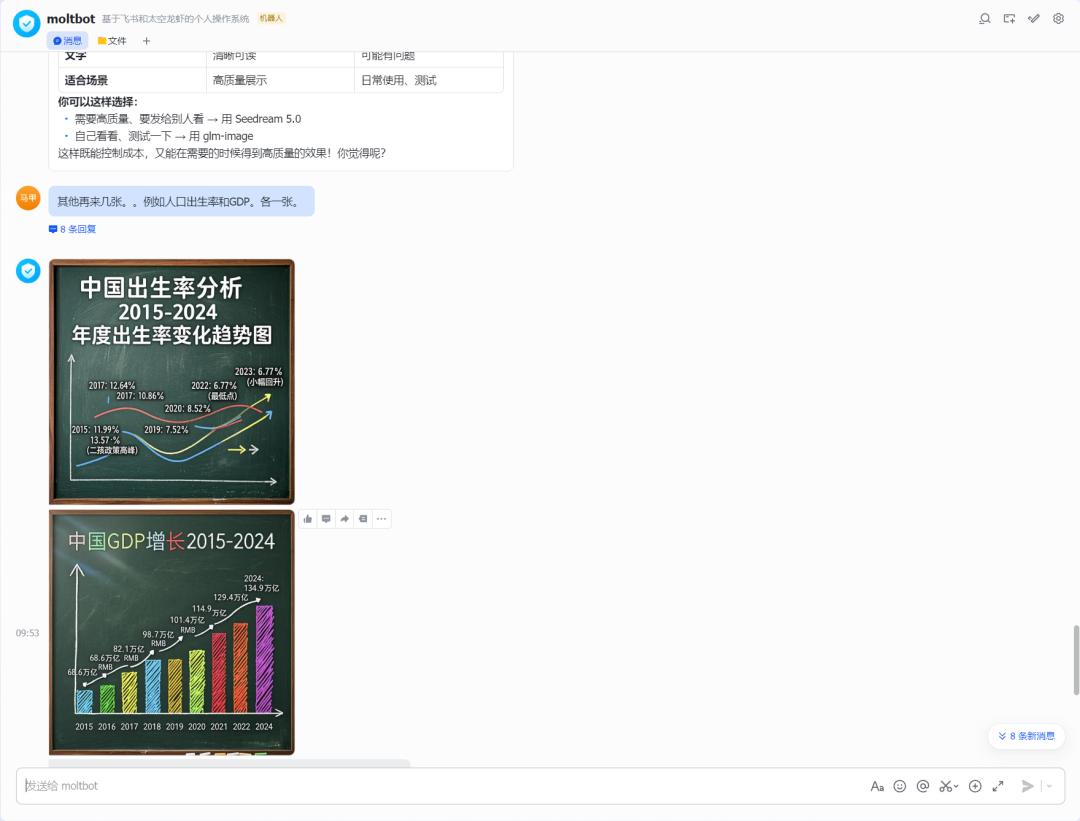
By now, many students may be eager to deploy more OpenClaw to complete the "uprising" process, but the current OpenClaw is still far from ideal. It's like a gun in the stage of a fire - stick.
Without a domain model, a gun is just a fire - stick
There's a huge unrecognized gap between what we imagine and what we have.
When we use non - autonomous intelligent agents to do work, we ourselves are actually a memory bank and a ruler for value alignment. We need to know who is speaking and what they're saying.
The situation in a no - human company is similar. The company is the memory bank and the ruler for value alignment, but it consists of a group of people.
This is the cold reality: Without an Ontology (similar to Palantir's) (I've always called this the domain model), OpenClaw can only do shallow personal work.
The depth of autonomy is highly restricted.
It looks like a gun, but in fact, it's a fire - stick or can only be used to shoot balloons.
● What is Ontology? It's the underlying modeling of the messy world. In the decision - making system, it knows the business causality behind a "button." If we regard OpenClaw as an airplane, this part is actually the runway on a muddy road.
Without it, this Personal Agent can't take off.
● The dilemma of OpenClaw: It has extremely good "vision" and "hand - speed," but it lacks the "cognitive ontology." It can see every pixel on the screen, but it doesn't know what this operation means for the financial health of your "no - human company."
This requires another model, which is much more complex than expected.
At 19:30 on the 28th, the live - stream in the group where we discuss things will delve into this topic.
As long as this gap doesn't disappear, the Agent will never be able to make the leap from "booking tickets for me" to "running a company for me" or "running myself."
This is the leap from a tool to a business unit.
The significance of the result is simple. If it makes the leap, it can replace a hundred; if not, it may not even be able to replace ten.
The Demo Stage: As Far as the Eye Can See, but a Long Way to Go
The underlying reason for the above - mentioned dilemma is actually simple.
AI is not all - knowing and all - powerful, and running a business depends on certain non - public implicit knowledge.
Implicit knowledge needs to be continuously injected into the AI system like fuel.
This is the key to the domain model.
My prediction about the general development of these products more than two years ago is largely related to this.
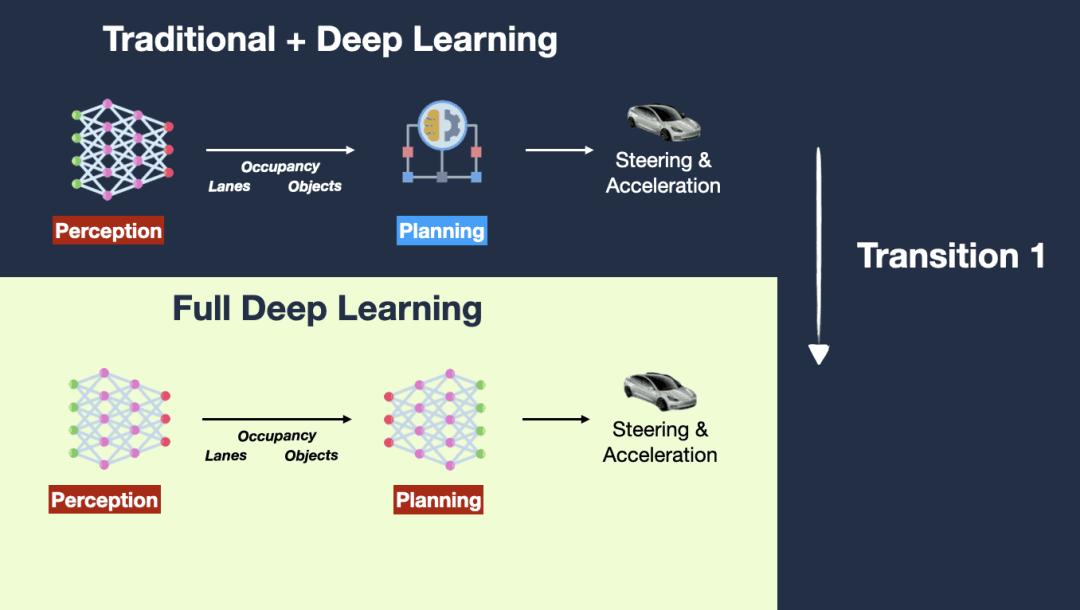
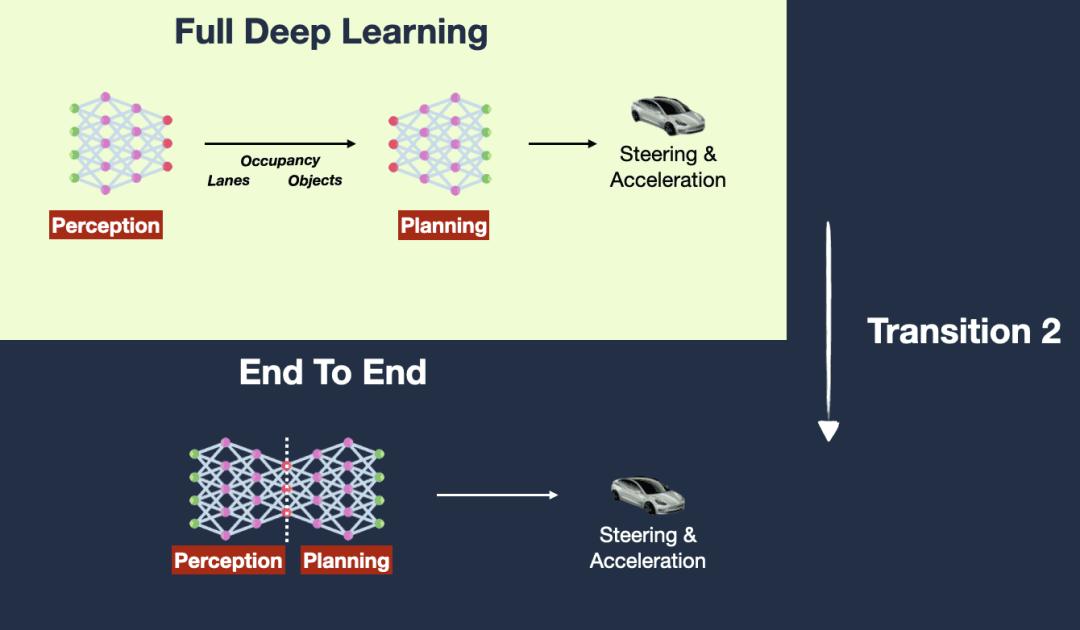
There's only one situation where this domain model isn't needed, which is the end - to - end model.
But since OpenClaw is designed for everyone, it can't be a complete end - to - end model. If it's for everyone and end - to - end, it means AI is all - knowing and all - powerful.
Technically speaking, OpenClaw can only occur in Transition1 of FSD, not Transition2. Because it has a wide scope, and if Transition2 occurs with a wide scope, it's like the scenario in The Matrix coming true.
So, a dual - model structure is needed.
Anyway, OpenClaw is very meaningful.
If we compare the journey to a "no - human company" to climbing a mountain, the emergence of OpenClaw means we've climbed a step higher.
Visually, it seems we're closer to the mountaintop (the no - human company), and we can even see the flag on the mountaintop.
But as the saying goes, "The mountain looks close but is far away." Before the Ontology system that abstractly describes the real world can interact organically with the execution system represented by OpenClaw, this thing is by no means a money - making tool.
In most cases, it actually results in losses.
Currently, OpenClaw is more like an exciting Demo.
It proves the possibility of "individuals having guns" and shows the flexibility of "digital legs and feet," but it hasn't evolved the "commander's will" to lead the overall situation and automatically create value in the messy world.
If this thing could make money, could you still imagine so many people working for others?
Conclusion
The key point about OpenClaw that hasn't been fully explained is: It gives you the weapon and freedom, but it hasn't given you the brain. OpenClaw is the solid fulcrum, but the real leverage still comes from your private formula for the business ontology (Ontology).
Finally, with the popularity of OpenClaw, the term "no - human company" has also become a hot topic. As the foundational book on no - human companies, the content in No - Human Company may become even more significant now or in a few months. Students who have read it can read it again. If you think it lacks depth, you can also take the supporting courses.
This process, which requires continuous calibration of the business based on the perception space, intelligent space, and tool space with a dual - model (AI large - scale model and traditional domain model), is much more complex than expected. Any underestimation will come at a cost.
This article is from the WeChat official account "Zuo Moshi", written by Li Zhiyong, and is published by 36Kr with permission.