A person who engages in outdoor activities starts to doubt the outdoor world.
Written by | Wang Li
Edited by | Weiweizi, Wang Xiaokun
In the late summer of 2022, bulldozers rolled into a desolate area in the southeast of Milan. Their tracks crushed the gravel and weeds and stopped in front of several low - lying old factories.
The brick walls of the factories were mottled, most of the round windows were broken, and dead vines climbed on the walls. This used to be a freight station. In the past, the smell of engine oil filled the air, workers shuttled back and forth, and the sounds of loading and unloading echoed one after another. After the factories gradually moved away, this land gradually fell into silence.
Until the Olympic Village was selected to be built here. In the following three years, the desolate area was reborn. Tower cranes rotated and welding sparks flew from dawn to dusk.
Across the street, a golden tower stood silently. It is the headquarters and art center of the Fondazione Prada. This area is far from the "fashion heart" of Milan. However, in 2015, due to the completion of this building complex, it returned to the public eye. A few years later, people saw the same name again on the list of investors of the Olympic Village - Prada.
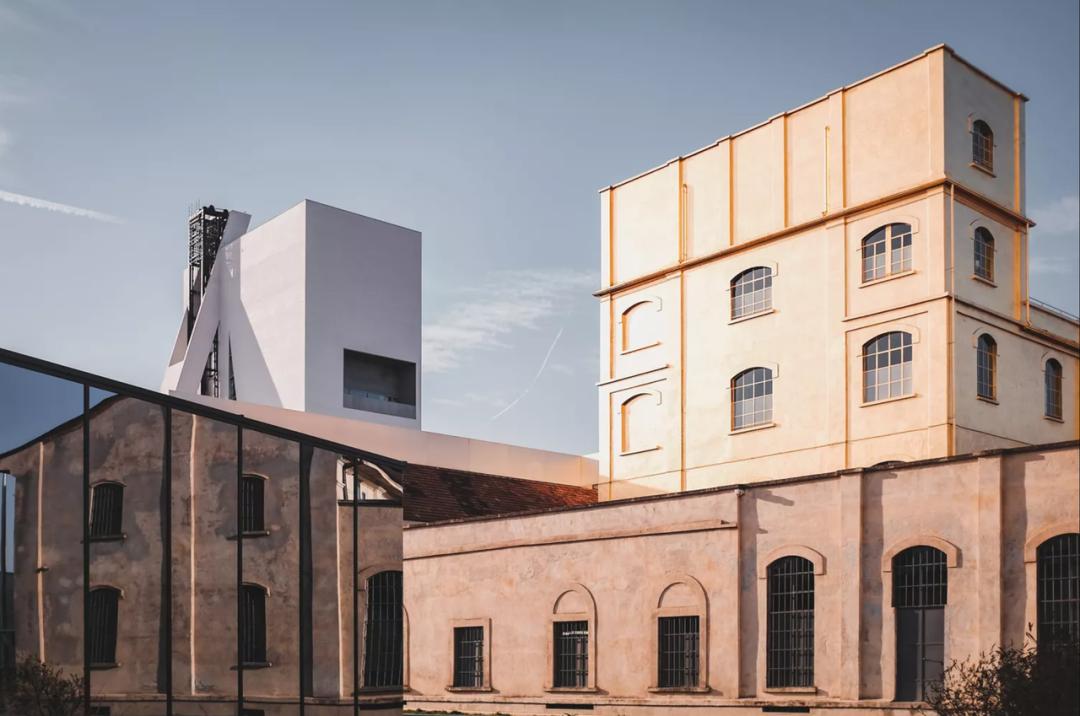
Fondazione Prada, Image source: italia.it
The tentacles of luxury brands have long reached out to the Winter Olympics. Armani sponsored the Italian team, and Ralph Lauren designed the uniforms for the US team... These actions may not be directly aimed at the Winter Olympics, but they blurred the boundary between fashion and the outdoors.
At least, that's what the public opinion says.
Thousands of kilometers away, the Chinese market is also restless. Outdoor brands are collectively moving towards "fashion". Whether they are new favorites of capital or traditional brands, they are all trying to squeeze into the field long - dominated by Western brands.
Assuming that luxury goods keep getting closer to the outdoors, is there still a place for Chinese brands in the high - end market?
Zhou Shao'en may be a good person to answer this question.
He is an associate professor at the Beijing Institute of Fashion Technology. He was in charge of the fashion design for the "Beijing 8 - minute" show at the Pyeongchang Winter Olympics and the Beijing Winter Olympics. He is also the designer of the women's softball national team.
But when you push open the door of his office, it's hard to think of his titles first. It's more like an exhibition site with an outdoor theme: posters are hanging on the walls, hard - shell and soft - shell jackets are lined up on the hangers, and four pairs of snowboards stand beside the bookshelf. Among all the colors and lines in the room, the most eye - catching thing is the bright purple - framed glasses on his face.
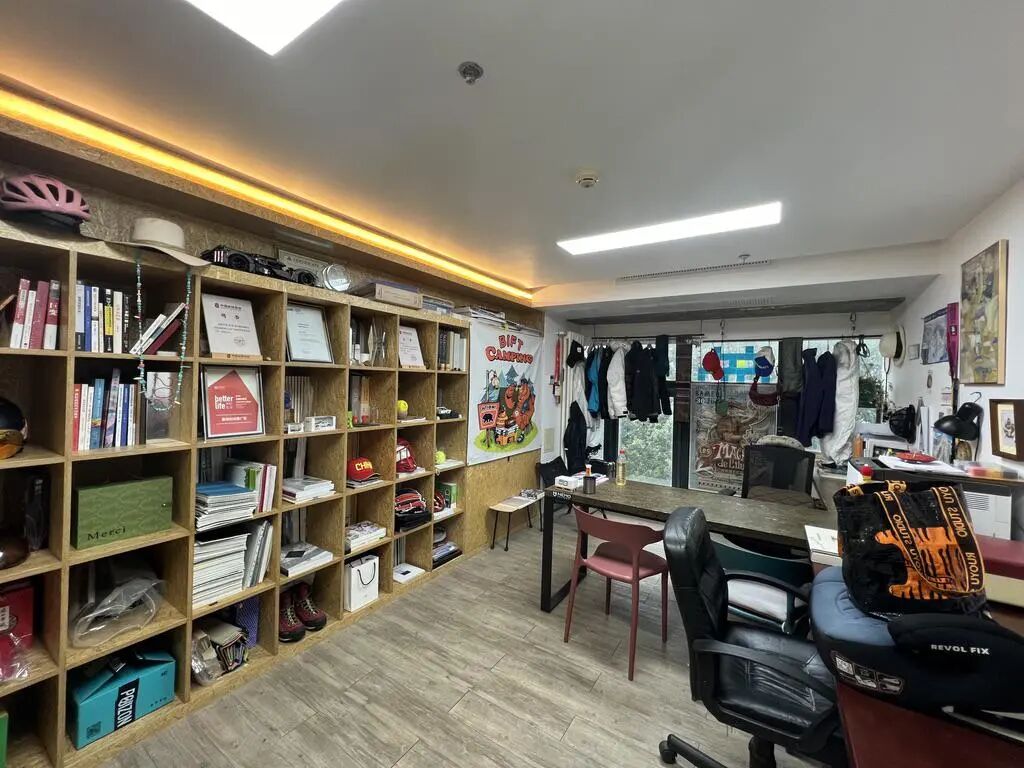
Zhou Shao'en's office at the Beijing Institute of Fashion Technology
On December 12, 2025, the heavy snow outside the window was covering the campus in white. I sat across from him. As soon as I started the conversation, Zhou Shao'en took out a book.
On the pure - black background of the cover, illustrations of outdoor products were collaged unevenly. At the top, it said "Encyclopedia of Outdoor Items". When I opened the pages, there were yellow scratches and annotations between the lines. "You're not a professional outdoor person. Will you be interested in such a book?"
Then, we talked from the process of writing the book to the current situation of the Chinese outdoor industry. Two hours passed, and that question still remained unanswered. When I thought I could only hear the story of writing the book, Zhou Shao'en suddenly stopped and said, "You know, when I finished writing this book, there was something I didn't realize before."
"All are names of countries." His eyes dimmed slightly.
"You'll find that after 30 years of development in the Chinese outdoor industry, the selling points and technologies we're proud of all bear foreign names. The zippers are YKK¹ from Japan, the adhesive tapes are Bemis² from the United States, and the fabrics are GORE - TEX³ from the United States."
He paused for a moment and then added, "On the websites of many brands, there isn't even a story about themselves."

Zhou Shao'en participating in an industry forum
5000 copies
At first, Zhou Shao'en didn't think "writing a book" was very difficult.
In the first half of 2025, the outdoor industry was extremely hot. Besportble was sprinting for listing on the Hong Kong Stock Exchange, and more than 24,000 new outdoor - related enterprises were established. When you opened social media and scrolled through a few screens, you could see "mountain - style outfits" of outdoor bloggers everywhere. Taking advantage of this upsurge, publishing an outdoor book seemed a logical thing to do.
As he envisioned, "Encyclopedia of Outdoor Items" was not an obscure industry - history popular science book, but a product - reading book with both pictures and texts, which detailed the background knowledge and usage methods of products. Moreover, there was a lack of such systematic sorting in China.
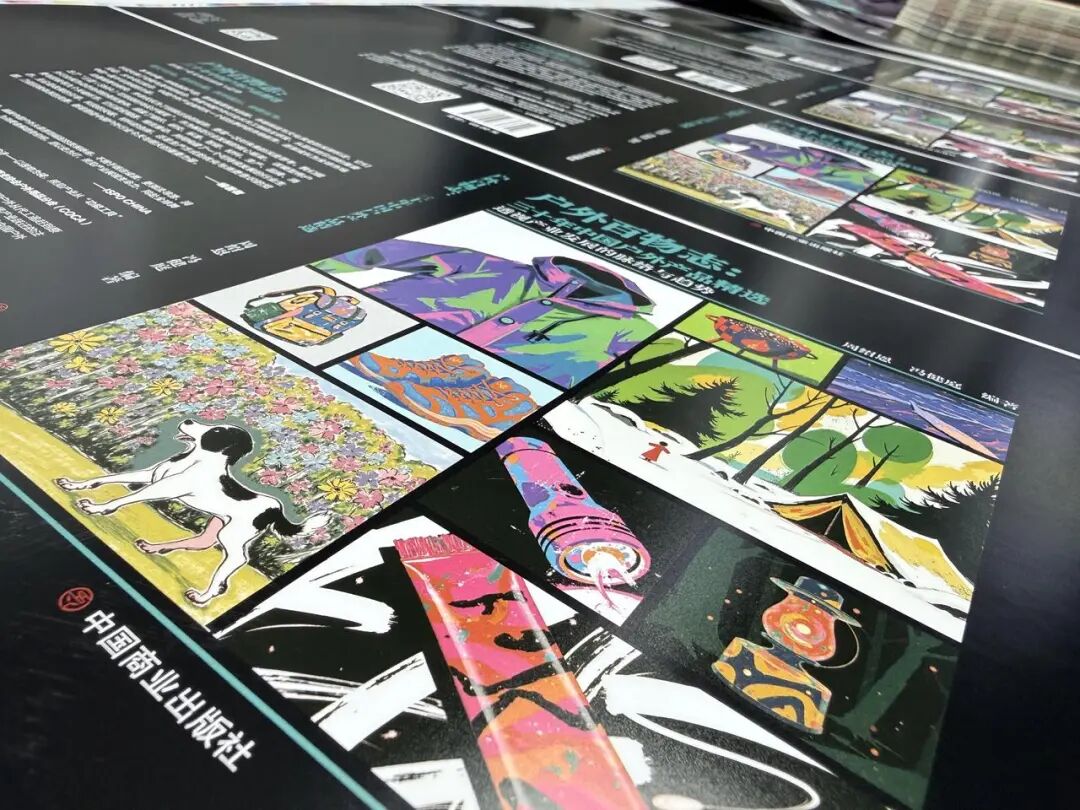
Cover of "Encyclopedia of Outdoor Items"
As soon as the sample chapter was sorted out, Zhou Shao'en immediately visited several publishing houses. The responses came quickly and were all the same: not interested.
A friend in the publishing industry said bluntly, "The topic of the outdoors is too narrow and niche in the book market. Even if the topic is submitted, it won't pass the company's review."
Looking at this reply, he typed several lines of explanations in the dialog box and then deleted them one by one. Finally, he only replied with two words: "Understood."
After several rejections, Zhou Shao'en accepted a fact: the prosperity of the outdoor industry and the popularity of professional content are two different things.
He didn't give up and continued to contact other publishers. He even proposed to not only be responsible for the content but also share the financial risks. However, the responses from the publishing houses remained unchanged.
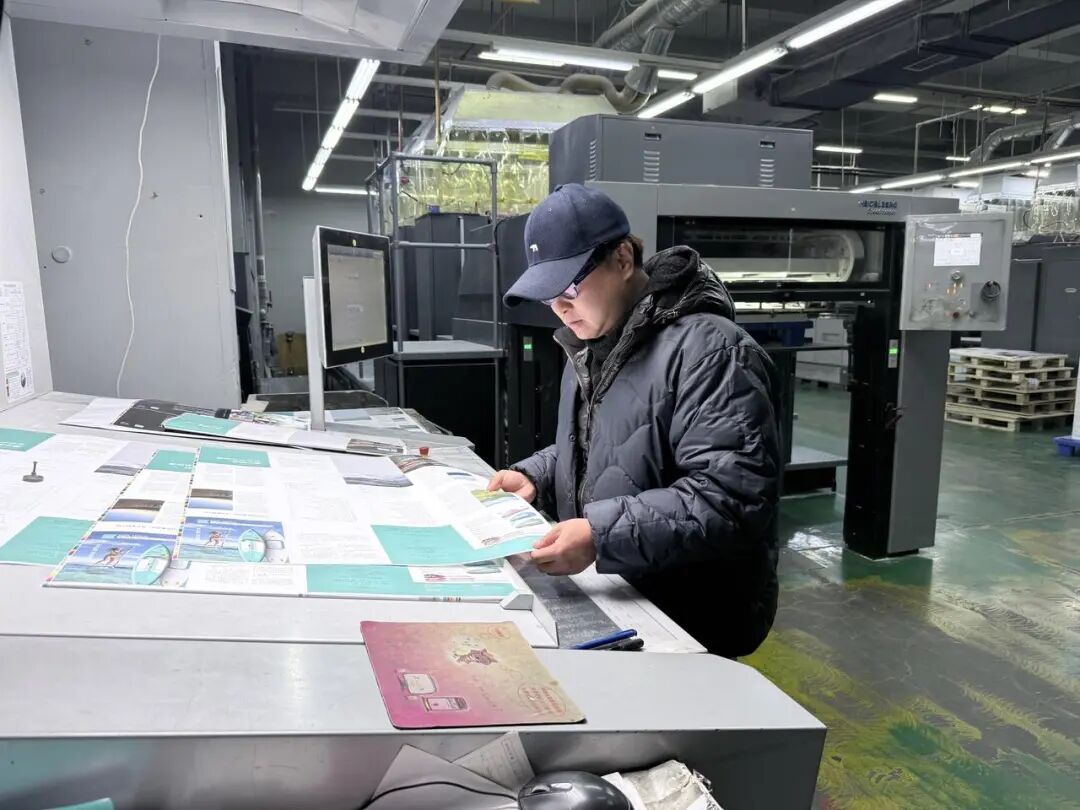
Zhou Shao'en in the printing factory
Since the conventional path didn't work, Zhou Shao'en simply paid out of his own pocket, took on the risks, and personally controlled the details.
"It's quite interesting to think about it," he said word by word. "I write a book. I do the work. I spend the money." He paused for a moment and laughed first, "And I still have to follow the rules."
On the day of the interview, in front of me, Zhou Shao'en calculated the accounts. He rubbed the corner of the paper. "The paper is imported from Japan. For a full - color book to show its texture, we can't save on the paper."
The book number, paper, printing... Each item is a hard cost. The price should not only cover the cost but also not seem too expensive. For this reason, he asked all his students, friends, and colleagues, and finally set the price at 68 yuan.
"The Chinese market is huge. Even if the market is niche, as long as we can capture this group of readers, I think it's enough."
Then, Zhou Shao'en pulled the computer over and opened the sorted - out promotion form. The fluorescent light of the screen was reflected on his purple glasses. He counted on his fingers and murmured to himself. After several estimations, the target was set at 5000 copies.
"But this is just my assumption."
He closed the computer, pushed the sample book aside, and didn't calculate anymore.
This is not the first time Zhou Shao'en has challenged himself.
3.8 cm
It was Zhou Shao'en who insisted on reducing the size of the zipper of that down jacket.
After the sample garment came out, it had to be reviewed as usual. In the office, he handed the down jacket to Hans, the boss, and pointed to the zipper.
This change was not discussed in advance. It was his judgment when making the sample - a smaller zipper would make the proportion more coordinated.
In 2010, after teaching at the Beijing Institute of Fashion Technology for two or three years, Zhou Shao'en joined OZARK. This Chinese outdoor brand was founded by a Swiss and attaches great importance to professional performance. He worked as a part - time design director there.
In that era, functionality was the primary standard for product development. Clothing might be bulky and rough, like unpolished industrial products, but it was solid and reliable. OZARK was no exception.
Influenced by European design training, he attached more importance to the aesthetics and narrative of clothing. In 2011, when designing the "Mountain Cat" series of equipment for the national rock - climbing team, he tried to incorporate ancient cultural images.
Without changing the structure, Zhou Shao'en modified this unnoticeable detail of the zipper.
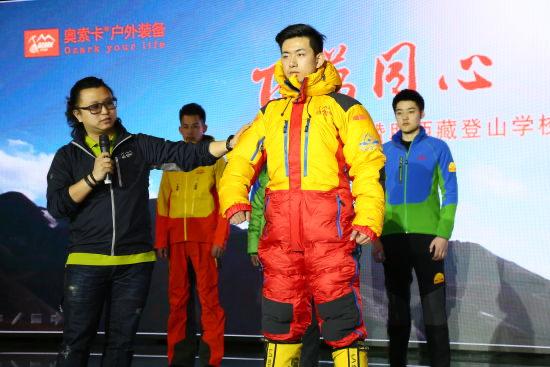
A mountaineering project sponsored by Zhou Shao'en. The picture shows one of a set of clothing.
Hans took the sample garment, pulled the zipper a few times, "Too small." He shook his head. "It's a professional garment."
The feedback was short. Hans put the sample garment back on the table without explanation. Zhou Shao'en didn't argue and put away the clothes without changing it back.
In May 2012, he wore this sample garment to participate in the "Snow Mountain Protection Plan" organized by the company. The destination was the Karola Glacier. In this activity, Hans required all core products to be tested in a high - altitude environment.
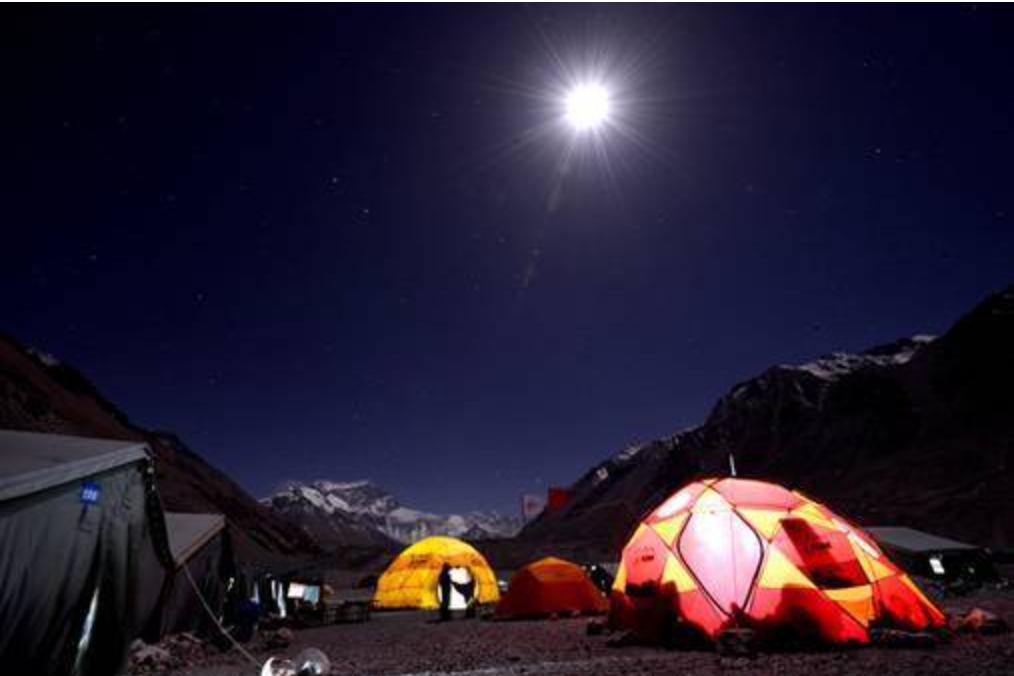
In 2012, the "Snow Mountain Protection Plan" camp at the Everest Base Camp. Image source: Douzi
The convoy stopped at a pass more than 5000 meters above sea level. Soon after getting off the car, Zhou Shao'en felt that his body was out of control: his feet felt like stepping on cotton, his ears were buzzing, and the voices of his teammates seemed to come from the bottom of the water.
In a daze, he instinctively wanted to zip up the down jacket, but he found that wearing thick gloves, he couldn't hold the smaller zipper pull at all. The cold wind rushed in through the front of the clothes. The more anxious he was, the stiffer his hands became; the stiffer his hands were, the harder it was to hold the zipper. In that environment, every second of delay meant a risk of frostbite.
After returning to Beijing, without being reminded by Hans, he actively changed this design.
But he didn't go back to the original design. Instead, he led the team to conduct repeated tests, simulating grasping in extreme environments while wearing gloves. After dozens of blind tests, the size of the zipper pull was fixed at 3.8 cm.
Since then, functionality has become the bottom line of Zhou Shao'en's design.
The birth of a best - selling product
When Zhou Shao'en first joined the company, a three - in - one windbreaker led by the sales manager was already on the market.
In internal discussions, Hans always opposed it: it was not suitable to wear the inner layer alone, nor the outer shell alone. When the two were worn together, there was a draft at the zipper in the middle. He couldn't figure out how to wear it.
"It has no defined positioning."
In Hans' dictionary, layering must correspond to clear scenarios, rather than simple stacking.
Adhering to this principle of "scenario - based design", in 2010, Hans began to look for designers who were familiar with European culture and not restricted by experience. That's why Zhou Shao'en joined the company. He went abroad with Hans every year to communicate with the R & D teams of major outdoor brands.
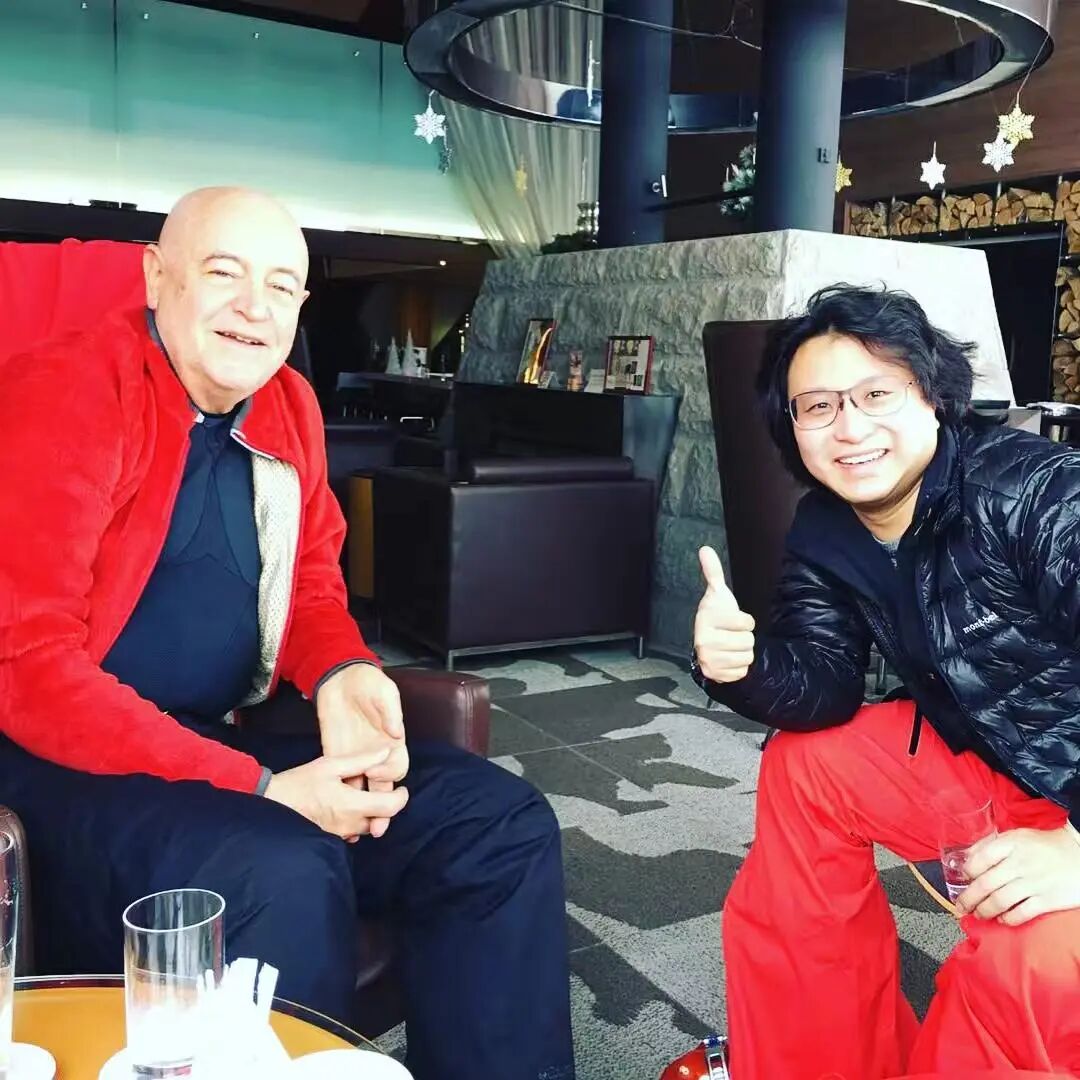
Hans and Zhou Shao'en
However, once a product starts selling well, principles will take a back seat.
Once the sales data came out, the focus of the discussion shifted. It changed from "whether it meets the scenario" to "how to sell more". Zhou Shao'en privately inquired about the reason for the popularity. The salesperson's explanation was simple: "It's cost - effective. You can buy two pieces of clothing with one - time payment, and there are three ways to wear them. It can be worn almost all year round."
Although Hans still had doubts, the production line didn't stop. Products in the "windbreaker +" series, such as "windbreaker + soft - shell" and "windbreaker + cotton -