The "Expedition" of a Pair of Underpants: Badigao Tries to Bridge the Trust Gap in Disposable Underpants with "Zero Hand Contact" | Early-stage Project
In the past two years, the disposable underwear market in China has entered a period of rapid growth.
Against the backdrop of frequent travel and the continuous warming of the "lazy economy", this once obscure product category is moving from the periphery to the mainstream consumer market. In addition to high - frequency usage scenarios such as outdoor activities and business trips, disposable underwear has also gradually penetrated into areas such as postpartum recovery and medical care. The expanding demand has driven brands in the textile, clothing, and mother - and - baby sectors to enter the market more quickly, creating a new consumer boom. Relevant data shows that from 2022 to 2024, the growth rate of China's disposable underwear market exceeded 200%, and the overall scale has reached the tens of billions level.
However, while the consumer enthusiasm is rising rapidly, another side of the industry is gradually emerging. Although the State Administration for Market Regulation issued the mandatory national standard "Hygiene Requirements for Disposable Sanitary Products" (GB 15979 - 2024) in July 2024, and for the first time listed "disposable underwear" separately and specified hygiene and safety requirements, problems such as workshop - style production and mis - matching products still exist in the fast - growing industry.
Against this background, 36Kr learned that on January 30th, the world's first automated production line for pure cotton disposable underwear of the travel daily - use brand BuddyGo was officially put into operation in Jinhua, Zhejiang. It attempts to introduce a "zero - hand - touch" mechanized production method in the fabric cutting and sewing process of pure cotton disposable underwear to meet consumers' basic requirements for the hygiene and safety of disposable underwear.
For the past 10 years, BuddyGo has been focusing on the niche market of disposable underwear. What it wants to do is to reconstruct the trust system in the travel scenario in its own way and bring this booming tens - of - billions market back to a proper clean standard.
01 A Difficult Choice about "Standards"
BuddyGo's origin can be traced back to a self - driving trip of its founder Zhu Yao and his wife in 2016.
On a cold and wet night on the plateau, Zhu Yao's wife was very troubled by the underwear that was difficult to dry and had a damp and unpleasant smell. She couldn't help sighing, "I originally wanted to buy disposable underwear, but either they are made of non - woven fabric and not comfortable to wear, or they just look unhygienic and I dare not wear them." For the first time, Zhu Yao realized that there was an obvious product gap in this seemingly niche category of disposable underwear.
This became an opportunity for Zhu Yao to systematically understand the disposable underwear industry, and BuddyGo germinated from this. However, it was not until he really delved into the industry, especially after understanding the supply chain, that Zhu Yao realized that making a pair of disposable underwear, though seemingly simple, was actually not easy.
"After looking at the supply chain, I found that there were no production standards in the entire industry at all," Zhu Yao recalled. At that time, most manufacturers only cared about whether the disposable underwear "could be worn" and "was cheap enough", rather than the most basic premise for a close - fitting product - safety and comfort. In such an environment, it was even more impossible to build consumer trust.
During this exploration process, BuddyGo gradually clarified its direction.
Zhu Yao said that BuddyGo did not follow the conventional practices in the clothing industry. Instead, it introduced medical - grade sterilization methods from an early stage. At the same time, antibacterial treatment was carried out in advance in the fabric stage to reduce the risks during close - fitting use.
In addition, Zhu Yao broke down BuddyGo's advantages into three core dimensions - the comfort of the fabric, the fit of the pattern, and the strictness of the production process.
In the early stage of the product, BuddyGo used conventional pure cotton fabric. However, as consumers' requirements for close - fitting experience continued to increase, problems began to emerge. For example, after wearing for a long time, the underwear was prone to loosen and deform, and the buttocks lacked a sense of wrapping; the elastic band around the waist also had insufficient elasticity and unstable rebound. These details were magnified in daily wearing and became obstacles to repurchase.
Based on these feedbacks, BuddyGo began to repeatedly adjust the fabric and pattern design. While retaining the cotton feel, more elastic materials were introduced; the structures of the waist and legs were re - polished to make them fit the body without excessive pressure; the elastic band needed to be elastic but soft enough. It took nearly half a year to polish this core product from material selection to finalization, and it eventually became the product with the highest repurchase rate for the brand.
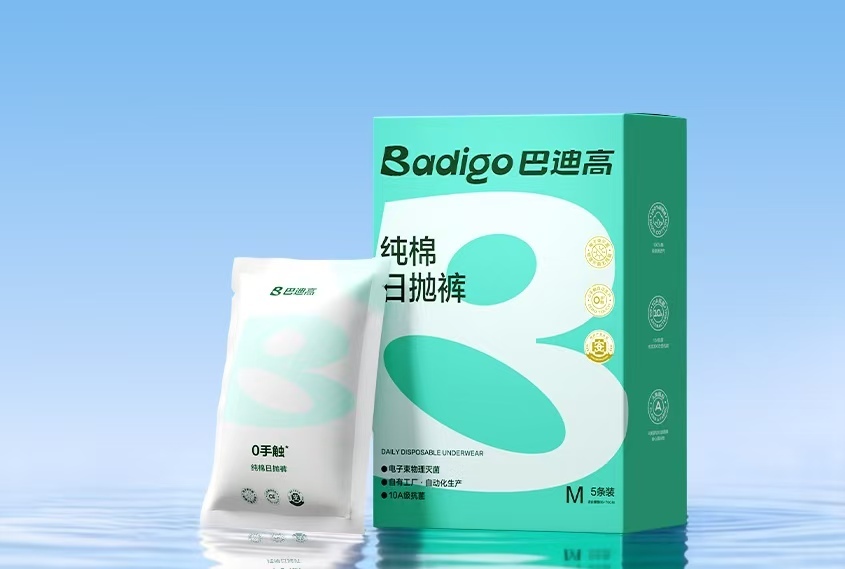
Product image
In the early days, BuddyGo had almost harsh and demanding requirements for the supply chain, which forced the supply chain to make many standardization attempts.
For example, BuddyGo established unique process standards. In the industry, a tolerance of ±0.5 for the waist circumference of disposable underwear is generally allowed, but BuddyGo only accepts positive tolerances and does not allow it to be loosened at will. "A slightly larger waist circumference will not particularly affect the consumer's experience. But a smaller one will be very tight because the fabric of disposable underwear has different elasticity from normal underwear," Zhu Yao explained. This requirement also made it difficult for many partner factories to adapt.
In 2021, when BuddyGo cooperated with a newly - partnered factory, there were problems with positive and negative tolerances in the products. The sizes of two products in the same package were significantly different, and there was a shortage of fabric. More fatally, the differences in the operating habits of workers during the sewing process affected the stability of the products.
However, considering the most basic standard of user experience, BuddyGo chose to take all relevant products off the shelves and stop selling them, involving an inventory of about 300,000 yuan. After two months of unsuccessful negotiation, BuddyGo finally destroyed all the goods. "At that time, 300,000 yuan might have been our whole - year profit," Zhu Yao admitted.
In the real business world, making the "right choice" is easy to say but difficult to do. It tests whether an enterprise can pay for its values with real money. At least in BuddyGo's view, this should not just stay at the slogan level.
This batch of destroyed inventory also became a spiritual guide for BuddyGo to move towards "zero - hand - touch" production. Zhu Yao realized that as long as human hands were still touching the products, consumers' uneasiness could not be eradicated, and the product stability caused by positive and negative tolerances would be uncertain.
02 Breaking the Ice in the Industry: "Automated Production" of Pure Cotton Materials
In July 2022, Zhu Yao made up his mind that BuddyGo should leap from "being a little better than others" to "redefining the standards".
He broke down the core factors affecting the "cleanliness" of disposable underwear into four dimensions: fabric, hand - touch, bacteria, and dust. The final solution pointed to a goal that the industry had never achieved - the full - process automated production of pure cotton materials.
In the eyes of industry insiders, this was almost a wild fantasy.
Non - woven disposable underwear can achieve automation through bonding or ultrasonic processes because there are almost no pattern problems. However, pure cotton underwear is different. It must achieve fit and comfort through sewing and elastic band structures, which means that more than six fine sewing processes need to be completed. The softness and elasticity of pure cotton fabric are precisely the biggest enemies of automated equipment. Wrinkles are easily generated during machine operation, and once it becomes unstable, the entire production line cannot continue.
The BuddyGo team visited most of the domestic automated equipment factories, and almost all the responses they got were "no". "A pair of underwear only sells for a few yuan. It's not worth investing tens of millions in R & D." "Underwear is a non - standard product. The machine simply can't sew the crotch and leg circumferences accurately."
The turning point came in September 2023. Through a friend's introduction, Zhu Yao met Liu Hangdong, an expert in textile automation, and General Manager Wang, an expert in clothing manufacturing. The three of them talked from 9 a.m. to 8 p.m., a full 11 hours, from user pain points, industry dilemmas, to equipment difficulties and product processes. The more they talked, the more compatible they became.
After that, BuddyGo launched a technical challenge that lasted for more than two years.
The first problem the R & D team faced was how to make the machine "understand" flexible fabrics. Traditional sewing relies on the fine - tuning of workers' hands, while automated equipment requires absolute precise positioning. They started from developing machine equipment, went through more than 200 iterations of pattern drawings, adjusted thousands of sets of parameters, involved 2,000 users in - depth, and polished more than 100,000 trial - wearing samples. Finally, they innovatively developed the "three - dimensional sewing" technology.
The breakthrough of this technology lies in that through millimeter - level visual positioning, the machine can accurately grasp and sew the fabric at the moment of advancement, just like a skilled tailor. At the same time, it solves the problems of insufficient stitch accuracy and difficulty in fitting the human body curve under automated conditions.
The equipment supplier once suggested simplifying the pattern and straightening the curves to reduce the difficulty of automation, but this proposal was rejected by Zhu Yao. "I'd rather come and study the machine myself than sacrifice my promise to consumers' comfort," he said.
This also came at a cost. The production line originally planned to be put into operation in 2025 was postponed several times due to repeated debugging and was finally launched on January 30, 2026. However, these 1,275 days of perseverance made BuddyGo the world's first brand to achieve "zero - hand - touch" production of pure cotton disposable underwear.

03 Leaving Reusable Capabilities for the Industry from the Perspective of Cleanliness
On the day of the production line launch on January 30th, BuddyGo simultaneously released a new series of products called "Naturally Clean, Zero - Hand - Touch". At the same time, the group standard "Technical Specification for Fully Automated Zero - Hand - Touch Production of Disposable Underwear", in which BuddyGo participated as the first drafting unit, was also introduced. This also marks BuddyGo's attempt to promote "zero - hand - touch" as the technical standard for the entire industry.
Walking into this factory with a total investment plan of about 1 billion yuan, you can see how this standard works:
First, the "human factor" is removed. With 150 automated production lines and 20 automated processes, from the fabric being loaded onto the machine to being folded and bagged, the core links achieve zero - hand contact. The production efficiency is more than 10 times that of the traditional manual mode, and the standardization rate reaches 99.9%.
Second, "dust" is controlled. While most disposable underwear on the market only has a single dust - removal process either when the fabric is loaded onto the machine or in the finished product stage, BuddyGo's workshop adopts a 100,000 - level clean standard and innovatively constructs a "sky - net" four - gradient dust - removal system. The dust load is reduced to one - tenth of that of traditional factories. This ensures that the dust that is almost inevitable in the cutting and sewing processes is continuously sucked away as soon as it is generated, rather than being cleaned up later.
Third, "bacteria" are eliminated. During the production process, two processes are used simultaneously: treatment in a 10A photon antibacterial chamber and physical sterilization with a 10MeV high - energy electron beam. Electron - beam sterilization is widely used in the food industry and baby products. The principle is that high - speed electron flow directly penetrates the product, and bacteria can be eliminated in about 15 seconds. 10A means that the pure cotton fabric still has antibacterial function after being washed 300 times. This "dual - sterilization" configuration is the first in the disposable underwear industry.
Finally, the "source" can be traced. Each pair of underwear is assigned a unique code, and consumers can scan the code to view information such as the quality inspection report, factory environment, and production links. In the later stage, the traceability content will be further enriched and online, including even the traceability of cotton fields.
BuddyGo's smart factory also introduces the latest AI technology. Each finished product will undergo a full AI visual inspection to try to detect defects that originally relied on human experience in advance on the production line.
Behind these technologies, there are more obvious changes in the wearing experience. Disposable underwear has changed from being made of multiple pieces to being cut from a single piece, with fewer seams and a better fit. The crotch uses a softer boneless sewing method, which is less likely to cause friction during exercise. At the same time, machine production makes the size of each pair of underwear more consistent, and the wearing feeling is more stable.
In July 2024, the State Administration for Market Regulation issued the mandatory national standard "Hygiene Requirements for Disposable Sanitary Products" (GB 15979 - 2024), for the first time listing "disposable underwear" separately and specifying hygiene and safety requirements. This sets a bottom line at the national standard level, and what BuddyGo does is to set a higher benchmark for itself and the industry on this bottom line.
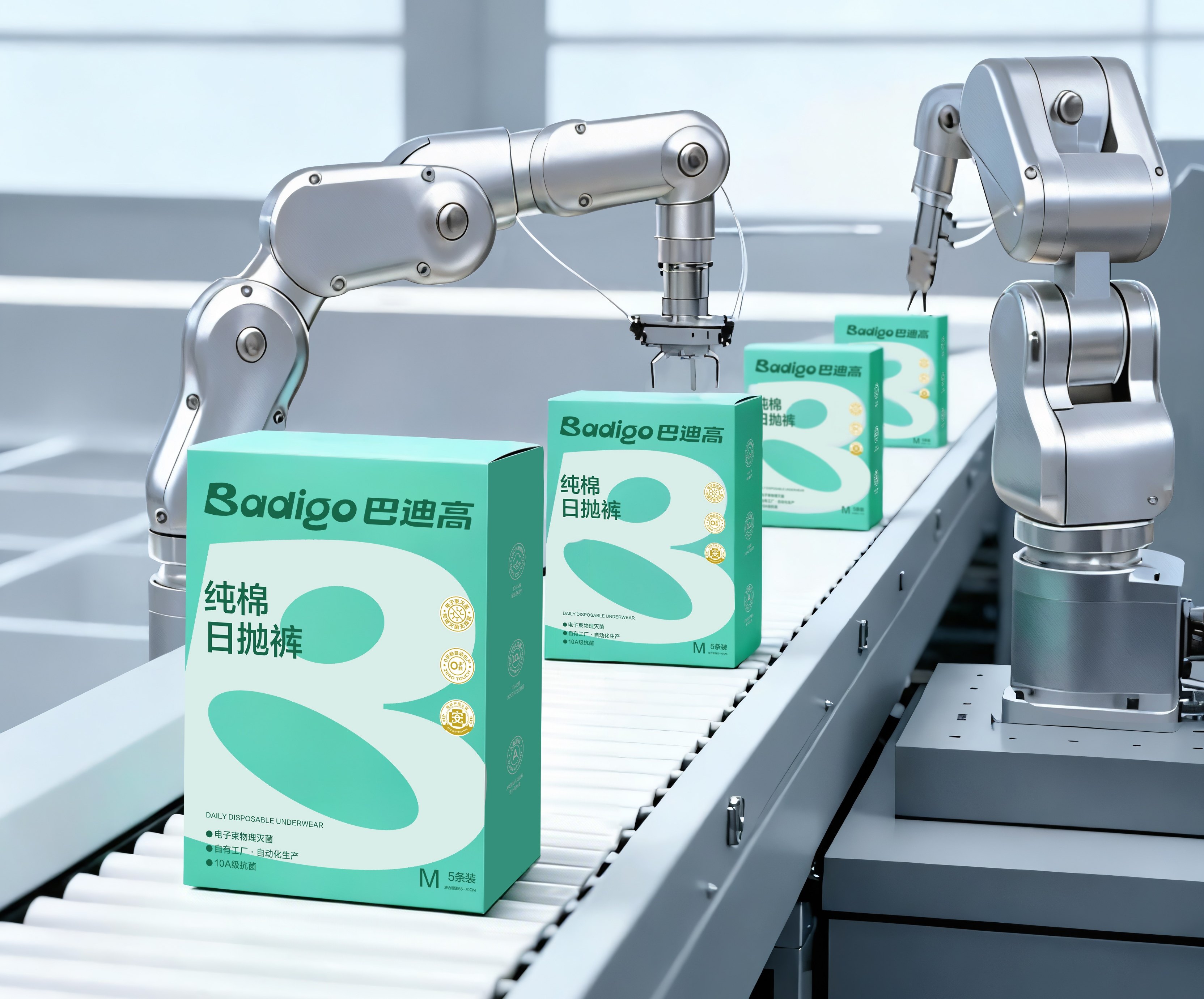
"A pair of disposable underwear only sells for a few yuan. Is it worth investing hundreds of millions in R & D?" Facing such a question, Zhu Yao said that compared with the profit margin of a single product, the team values more whether automation can leave a set of long - term reusable capabilities for the industry. Even if it bears greater cost pressure in the early stage, once the production logic is redefined, its value is no longer just "how much money is earned", but to build a sustainable production foundation for the entire category.
It is understood that in 2025, iiMedia Research, a leading global third - party data mining and analysis institution for the new economy industry, conducted a survey on the disposable underwear market. BuddyGo was in the leading position in multiple dimensions such as market sales and word - of - mouth, and was recognized as the "No. 1 brand of disposable underwear", with the highest sales volume of disposable underwear for three consecutive years.
From products to standards, from enterprise capabilities to industry consensus. When consumers' trust is consumed again and again, what can really rebuild it is never marketing slogans, but a production system that can withstand scrutiny.
BuddyGo has chosen a slower and more arduous path. But perhaps, this is the only way to bring this booming tens - of - billions market back to the proper "clean standard".