Fu Jixun: "FOMO" is not necessarily a bad thing.
The development of AI and embodied intelligence technologies is advancing at breakneck speed, with various industry trends rising and falling. The FOMO (Fear Of Missing Out) mindset seems to have become a prevalent social sentiment. As a seasoned investor who has witnessed multiple cycles in the venture capital industry, in the view of Fu Jixun, the managing partner of GGV Capital, FOMO isn't necessarily a bad thing. FOMO makes people anxious, which drives them to think, explore, and try new things. This is a very good thing.

"I believe that FOMO isn't necessarily a bad thing. The anxiety it brings can, to some extent, push you to think, explore, try new things, and use new products. This is its positive side. However, at the same time, it needs to be balanced - and what balances it is rationality. You need to analyze and judge, which is extremely important. Rationality will act as the 'brake' for FOMO, allowing you to think more calmly and deeply: Whether it's robots, embodied intelligence, or AI, is the vision itself correct? I believe the vision is definitely correct.
The truly crucial thing is the path to realizing the vision. The path determines whether you can make it more realistic and achievable. So, when I often communicate with entrepreneurs, startup founders, investment teams, and friends in the investment circle, I always say: Everyone can boldly believe in the vision and actively explore. But when exploring the path, you must stay rational because the path will bring you closer to reality." Fu Jixun said.
Author: Fu Jixun

The World Economy is Being Reshaped
In the year 2025, I believe most of us have generally felt that the capital market is gradually recovering. Both the primary and secondary markets are becoming more active.
Some of my overseas friends in the venture capital industry have also told me that their experience in China this year is very different from what it was a year ago. Especially in big cities like Beijing, compared to before, it gives people a brand - new impression. The whole city shows more positivity, people are becoming more optimistic, and many industries are in the process of development in all aspects.

In addition to China and Singapore, I also visited more places around the world in 2025, including Southeast Asia, the Middle East, Europe, and the United States. In these global markets, I have personally felt that some forces are reshaping the world economy. Geopolitics is, of course, a very important aspect. However, in the past year, the most exciting change has undoubtedly been the rapid development of AI. I believe that at the end of the year, if anyone were to present a PPT reviewing the 2025 market, the first chapter, the first page, and the first line would definitely be about AI. In my opinion, the most interesting perspective for discussing AI at this moment is that it has evolved from the stage of competing for computing power in the past two years to the current stage of competing for applications and implementation. In the past year, we have seen large - scale models starting to play a role in application fields such as robotics, healthcare, transportation, and energy.
In this wave of booming AI development, China is clearly at the forefront of the world. China's technological strength comes from the breadth and density of its scientific and technological talents. Whether in the fields of algorithm engineering, chip design, or operating system development, China has a large number of innovative talents. Even in some overseas AI - related research institutions, it's common to see researchers with Chinese backgrounds.
Meanwhile, the supply chain that the entire AI industry relies on is still mainly distributed in Asia. China still has a huge advantage in the relevant manufacturing fields. In the past few years, with the reshoring of some manufacturing and the partial reconstruction of the supply chain, some downstream links have indeed migrated to Southeast Asia - I believe this is also an inevitable trend in globalization. However, in terms of the integrity of its own industrial chain, China remains an indispensable part of the global AI manufacturing field. For example, in the optical module industry, although some downstream assembly parts have migrated to Thailand, Malaysia, etc., the most upstream Silicon Photonic (silicon photonics technology), an important part of it, is still designed and produced in China. And precisely because of the maturity of the supply chain and the cost advantage in electricity consumption, China can move faster in the field of AI applications, especially in hardware.
The rapid changes in the field of AI applications have given many innovative small enterprises more opportunities. Because applications always correspond to scenarios, and scenarios are numerous: industrial scenarios, commercial scenarios, logistics scenarios, home scenarios, etc. Within each major scenario, there are countless specific sub - scenarios. Large companies cannot extend their capabilities to every specific scenario. And this provides a stage for startups to showcase themselves. Choosing what capabilities to use, which technological direction to pursue, and which scenario to target? Answering these questions well can give small companies a chance to find their own place in the game of the AI market alongside large companies.
Going global is also one of the keywords in 2025. Under the new global landscape, we have seen more and more Chinese enterprises not only consolidating their relative advantages in the domestic market but also actively spreading their influence overseas and boldly venturing out. In Southeast Asia and Latin America, we can see many newly - globalized Chinese enterprises. In today's world where geopolitical changes and supply - chain reconstruction have become the norm, it has become increasingly important for Chinese enterprises to find their long - term positioning in the global market.

Bubbles aren't scary. Where there are bubbles, there is room for imagination, volume, and demand
In 2025, a year filled with both challenges and opportunities, uncertainties and vitality, GGV Capital's investment amount reached nearly 3 billion RMB, and our overall investment pace increased by 2.5 times compared to 2024. In terms of exits, we retrieved more than 2 billion RMB in cash. Last year, 4 of our invested companies went public, and there are more than 20 invested companies preparing for an IPO.
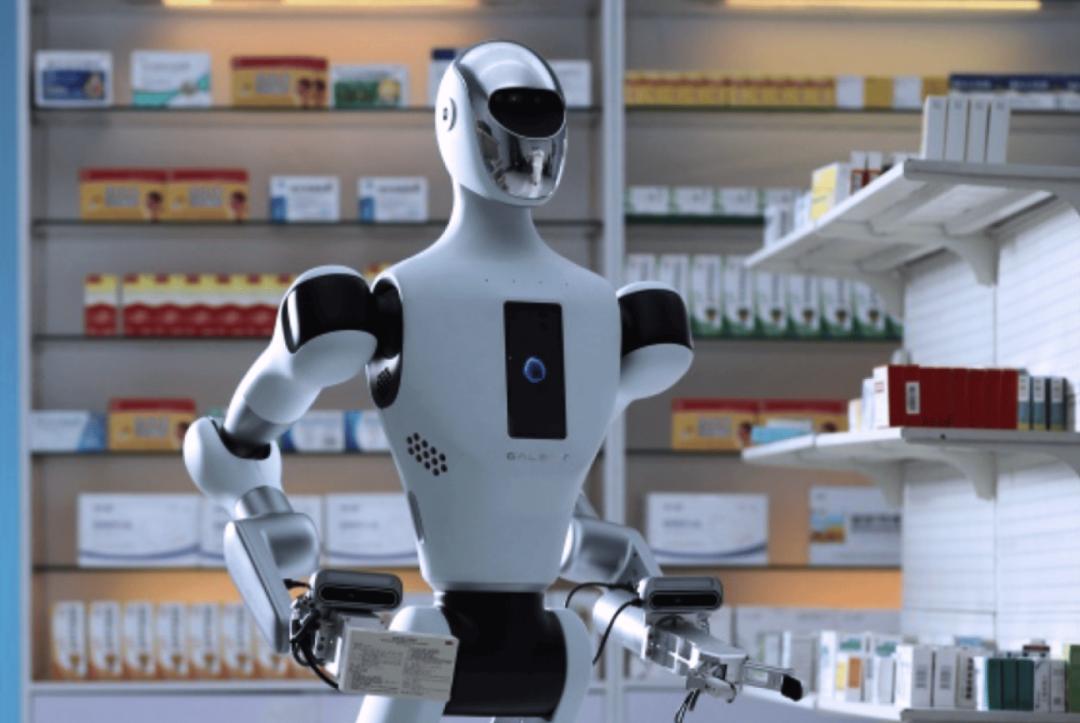
We started investing in the broad field of AI nearly 10 years ago. In recent years, with the maturity of large language models and the increasingly obvious trend of intelligence and agent - based applications, our investments have begun to yield returns. So far, we have invested in more than 50 AI - related companies and 8 embodied intelligence - related companies. Among them, companies like Galaxy Universal, which appeared on the Spring Festival Gala this year, and Geek+ which went public last year, have all achieved remarkable performance in the industry. Of course, as AI develops into a new stage of self - learning large models, our future investment strategies will also be continuously iterated.
In 2025, the performance of the global market, the domestic industry, our invested companies, and ourselves has made me feel a very familiar sense of enthusiasm. Even Anthony, the founder of Grab, told me that although they have reached a relatively comfortable position in the industry, they still closely hope to keep up with the pace of innovation in this era. Embodied intelligence and low - altitude economy are all new fields that both large and small enterprises want to explore. Every such interaction has continuously made me feel the vitality of the entire industry.
Some people say that the rapidly developing AI market will definitely generate a lot of bubbles. But in fact, in the past 20 years, every exciting transformation has been accompanied by bubbles. Bubbles aren't scary. Where there are bubbles, there is room for imagination. Where there is room for imagination, there is volume, demand, and the aggregation of capital and talent.
I believe that, like every era of innovation, the era of great AI development will first attract many outstanding young people. Because young people have no psychological burdens and no inertia from the previous era, they can run towards the new direction first.
Whether in the internet era or the AI era, those young 'native forces' will always have an advantage. They are born in the process of innovation, so they are more likely to have sudden ideas, are more unrestricted, and have more impulse to gather like - minded partners and put their ideas into practice. Every generation has its own opportunities. AI is the opportunity for today's young people.

"FOMO" isn't a bad thing
Behind the vitality of the era, there often lies people's inner fear - the faster the era develops, the more people are afraid of being left behind by this train. A concept that has emerged in recent years, FOMO (Fear Of Missing Out), precisely interprets this mindset.
On a geopolitical scale, in fact, every country has its own FOMO. Recently, some European countries have visited China one after another. In essence, it is also a kind of fear - the fear of missing out on opportunities in China. Of course, the underlying mechanism of geopolitics is quite complex, and this is just an analysis of one aspect.
More typical FOMO naturally occurs in the ever - changing market. In fact, that is what people often call "anxiety". Not long ago, at an important meeting of a large domestic company, I felt the anxiety that could penetrate different levels of the company. Facing the changes of this era, specifically, the rapid progress of AI technology, everyone is afraid of falling behind in the process.
This anxiety is ubiquitous and can almost cover all individuals in the market. Whether it's founders or ordinary employees, whether it's large enterprises valued at one billion US dollars or small startups, everyone is under the pressure brought by this anxiety. Especially those in management positions, their anxiety has more complex aspects. They are afraid of not understanding new technological changes and also afraid of not being able to find excellent enough talents to help the company. Some top talents, like Yao Shunyu, who is often discussed recently, may be extremely difficult to find under the current environment and conditions.
Of course, investors are also the group most prone to FOMO. Every gain is accompanied by a loss. Every choice and every decision may mean missing out and having to bear the anxiety caused by the fear of missing out.
Sometimes, excessive anxiety can make people's emotions override their rationality, leading to misjudgments and wrong actions - The valuation of this company is so high. Is there an aspect that I haven't understood? This embodied intelligence product has such a high evaluation in the industry. Can it really disrupt the industry and conquer the world? Elon Musk said that he will shift his focus from car production to robot production in the future. What does this mean for the industry and for myself? The more you think about these questions, the more anxious you become, and then you may blindly rush towards a direction you don't understand and a thing you haven't thought through.
A grand vision is important, but the actual path is equally important. And the choice of a specific path requires strong rationality as support.
If you say you want to make robots, do you want to make an all - round robot like those in science - fiction movies or a dedicated robot focusing on a specific function? Excessive anxiety may make people take a more generalized path, lose some realistic considerations, and forget that the most important thing is to ensure the project can be truly implemented.
Looking back at the development path of intelligent cars - in fact, intelligent cars also belong to a type of dedicated robot. The entire industry took more than 10 years to raise its level of intelligence and automation to the current degree. If during this period, someone, due to excessive anxiety and fear of falling behind, tries to skip some necessary steps, they may end up being the first to fall behind.
However, for each individual, FOMO may not be a bad thing. It will drive people to think, learn, and try new things, take them out of their comfort zones, and make them think about and do things that they might otherwise miss. Fear can often make people burst out with unprecedented strength.
After all, an era that makes people experience FOMO is also an era that looks forward and moves forward. It's true that everyone may fall behind. But at the same time, everyone is