During the Spring Festival, young people have turned bathhouses into "cost-effective hotels".
The "hot spring bathing craze" has quietly emerged among young people.
"If there is a place that can meet all my leisure and entertainment needs, it must be the hot spring resort," said Chen Xing (a pseudonym), a post - 2000s generation.
Hot spring resorts are also commonly referred to as bathhouses. Different from traditional "bathrooms", these bathing places that integrate "eating, drinking, having fun, soaking, scrubbing, washing, and steaming" are becoming a new choice for young people's leisure and vacations.
"It is estimated that the passenger flow during this Spring Festival will be larger and more concentrated than last year," Zhang Weizhi, the general manager of Shenyang Qinghe Peninsula Resort Hotel, told China News Service on February 11. To welcome the peak of "hot spring bathing" during the Spring Festival holiday, the hotel has added 1,000 lockers in the hot spring bathing area.
According to Meituan data, in January 2026, the search volume for "nearby bathhouses" on the platform increased by 113% year - on - year, and the search volume for "bathhouses with buffet" increased by 63% year - on - year. Among the searchers, those aged between 20 and 35 accounted for 58%.
"Fell in love with it after one visit"
Chen Xing currently works in Yantai, Shandong. Since she fell in love with "hot spring bathing", she basically goes once a month. She even applied for a membership card at a local chain hot spring resort. In her opinion, there is no better leisure way for her than "hot spring bathing".
"Today's hot spring resorts are comprehensive places. You can take a bath, get a body scrub, have a massage, enjoy a variety of self - service delicacies, and participate in entertainment activities. You can stay there for a whole day. I usually like to play mahjong, sing karaoke, and sometimes have a meal with friends. All these can be done in the hot spring resort, which basically meets all my leisure needs," said Chen Xing.
As for the cost of each "hot spring bathing" experience, Chen Xing said that if you only have a simple bath, scrub, and soak, the per - capita cost is between 100 and 200 yuan. If you add other services such as massage, beauty treatment, and dining, the per - capita cost will be between 400 and 500 yuan.
Zhao Jing (a pseudonym), a post - 2000s generation working in Beijing, has also fallen in love with "hot spring bathing" in the past two years and has visited several hot spring resorts in Beijing, Jinan and other places.
"It has five floors, and each floor has different leisure and entertainment facilities. In the self - service fruit area, there are common high - end fruits in the market such as durians, mangosteens, and avocados. In the self - service beverage area, you can drink yogurt and all kinds of drinks for free. The bath products and hair dryers provided for free in the bathing area are all well - known brands. I fell in love with it after one visit," said Zhao Jing, still immersed in the memory of her latest "hot spring bathing" experience in Beijing.
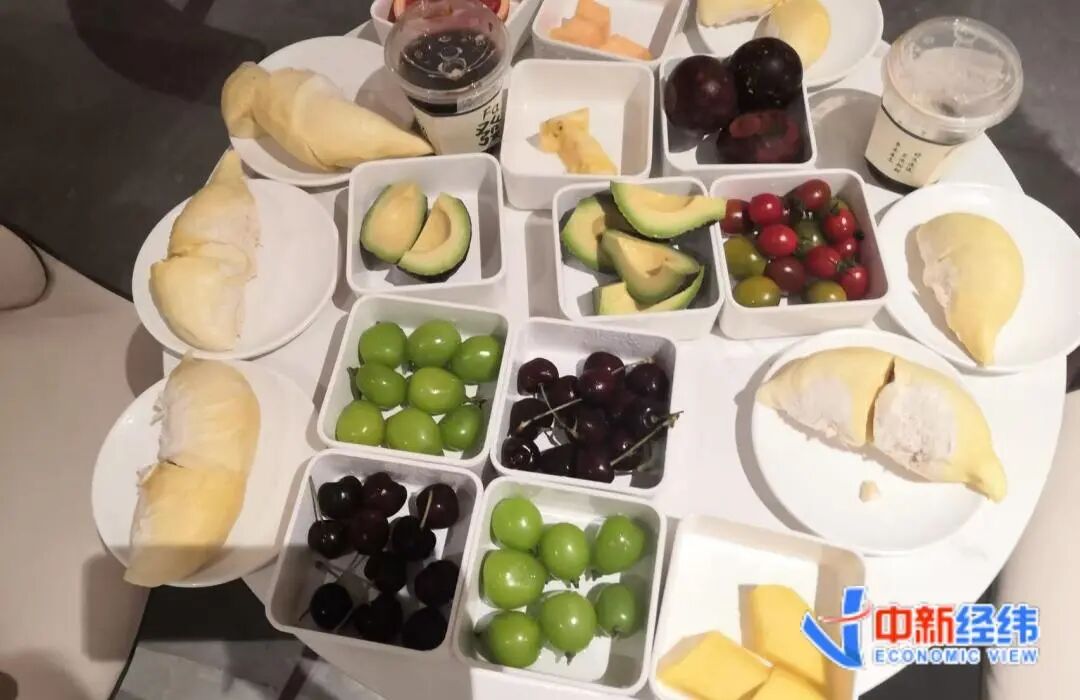
Self - service fruits in a Beijing hot spring resort. Photo provided by the interviewee
Zhao Jing said that she and her friend went there after 9 p.m. on a Friday and stayed until about 10 a.m. the next day. They also had breakfast there. "There were already a lot of people when we arrived, and the number of people kept increasing. Especially after midnight, I could clearly feel that the e - sports area became lively, and many young people were playing games there. There were also many people working or studying in the office area with their laptops."
Zhao Jing said that she and her friend spent less than 600 yuan in total for this "hot spring bathing" experience, and there were no other additional expenses except for the ticket price.
Shen Mo (a pseudonym), a post - 1995s generation working in Beijing, recently had her first "hot spring bathing" experience at a hot spring resort in Shenyang. She also went there on a Friday night. That day, she and her friend took a high - speed train from Beijing. After getting off at the high - speed railway station, they went straight to the hot spring resort with their suitcases.
"It's completely different from the bathhouses I used to know. There are many entertainment facilities here. Besides taking a bath and getting a body scrub, we also watched a movie and played e - sports games inside," said Shen Mo.
The large number of people was another impression left on Shen Mo during this "hot spring bathing" trip. "We arrived there at around 6 p.m. The buffet was fully booked, and there were no available standard rooms. In the end, we booked a room with a private hot spring. Including the ticket price and other expenses, we spent nearly 1,000 yuan in total for the two of us."
"Sixty percent of the customers are young people"
Quite a few young people have fallen in love with "hot spring bathing".
Meituan data shows that as of November 2025, the search volume for keywords such as "girls' gathering" and "company team - building" soared by 230% year - on - year. The order volume of bathhouses equipped with e - sports areas, KTV rooms, and script - killing facilities increased significantly. Among the user group, those aged between 18 and 35 accounted for 58%.
Douyin data also shows that from November 1 to December 10, 2025, the order volume of group - buying related to bathing and hot spring experiences on the platform increased by more than 38% year - on - year, and the sales revenue increased by 50% year - on - year. Among them, the order volume of the 18 - 23 - year - old consumer group accounted for 18%, with a year - on - year increase of 55%; the order volume of the 24 - 30 - year - old consumer group accounted for 29%, with a year - on - year increase of 41%.
"About 60% of our customers are young people," Zhang Weizhi told China News Service on January 12. The hotel covers an operating area of 180,000 square meters and integrates functions such as hot spring bathing, leisure and entertainment, catering, children's playground, water park, and ice and snow park. The main building of the hot spring bathing comprehensive area alone covers an area of 60,000 square meters.
"Our bathhouse has many special projects, and many of them are targeted at young people. They are very photogenic. This winter, for example, we added a 168 - meter - long hot spring swimming pool. After New Year's Day, the 521 - meter - long aerial spinning ice slide in the snow - playing park was also opened to the public. In addition, we upgraded the swimsuit snow slide, which attracted many young people to take pictures and check in," said Zhang Weizhi.
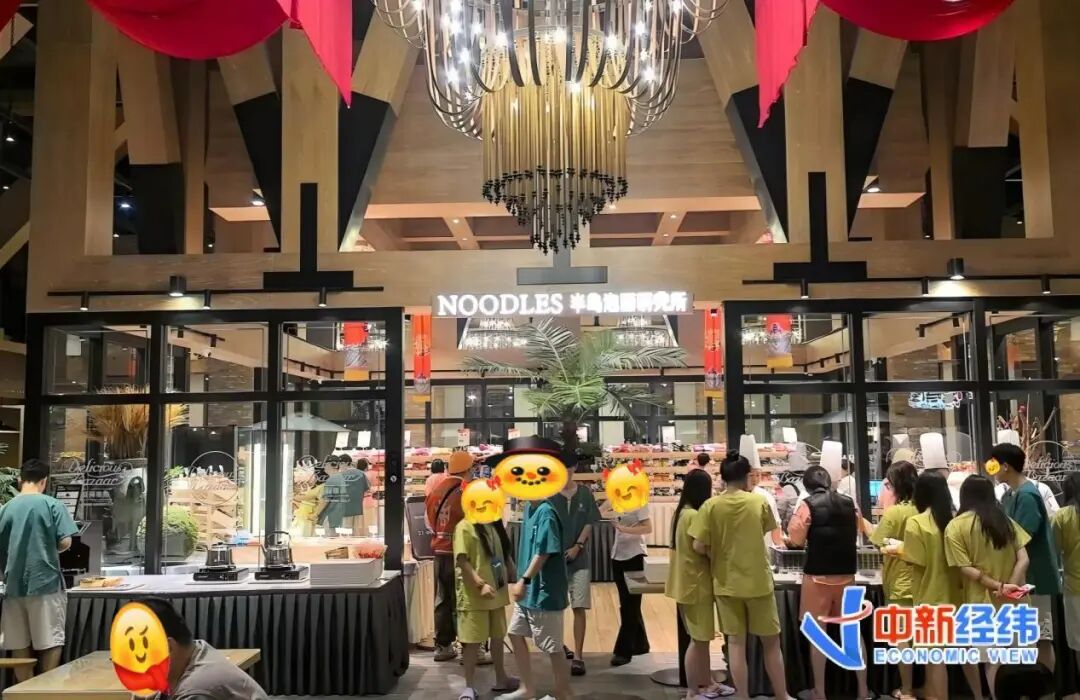
The instant noodles research project launched by Qinghe Peninsula Resort Hotel. Photo provided by the interviewee
According to Zhang Weizhi, the passenger flow of Qinghe Peninsula Resort Hotel during this New Year's Day was about twice that of last year. "The passenger flow on New Year's Day last year was 2,800 people, while it was 5,500 people on the first two days of this New Year's Day holiday."
Yang Xi (a pseudonym) in Tianjin planned to take her child to a hot spring resort on New Year's Day this year. However, she was informed that the resort was under traffic control at 9 a.m. "They said we had to wait until some people left at noon before we could enter. When we left, we saw many young people dragging their suitcases out. They probably stayed here as a hotel after the New Year's Eve," said Yang Xi.
Yang Xi said that staying overnight in a hot spring resort is very cost - effective. It only costs three or four hundred yuan per night, with plenty of fruits and drinks and many amusement facilities. It is more cost - effective than staying in a hotel. "The membership price of the hot spring resort I went to is 138 yuan. It costs an additional 29 yuan to stay overnight. If you book a room, it costs 339 yuan."
Yang Xi said that when she goes to a hot spring resort, she usually meets two types of people: young college students and families with children. "The experience is usually good, but it gets crowded during holidays."
Meituan data shows that in the week before New Year's Day 2026, the search volume for keywords such as "24 - hour bathhouse" increased by more than six times year - on - year.
Jiang Han, a senior researcher at the Pangu Think Tank, told China News Service that young people's love for "hot spring bathing" is affected by various factors, including the reconstruction of social interaction methods, the rise of self - indulgent economy, and emotional value consumption.
"Against the background of high - pressure workplaces and the prevalence of digital social interaction, contemporary young people are eager for a real, relaxing, and low - threshold offline interaction space. The hot spring resort provides an 'informal public place' where girls can have a small gathering, couples can have a date, and companies can hold team - building activities. It combines privacy and openness, meeting the complex needs of Generation Z for 'light social interaction + strong experience'," said Jiang Han.
In addition, Jiang Han mentioned that young people no longer only pursue functional consumption but also attach more importance to experiences that can bring a sense of healing, ritual, and "small but certain happiness". Designs such as hot spring bathing, sauna, fruit - all - you - can - eat, and sleep pods precisely target their psychology of "rewarding themselves". Spending two or three hundred yuan to get several hours of physical and mental relaxation is far more cost - effective than a short - distance trip or staying in a high - end hotel, which reflects the characteristics of "rational yet emotional consumption".
Text: Yan Shuxin, Wang Yuling
Editor: Wang Yuling
Managing Editors: Chang Tao, Luo Kun
This article is from the WeChat official account "China News Service". Author: Yan Shuxin, Wang Yuling. Republished by 36Kr with permission.