Boutique coffee shops in county towns rely on the Spring Festival to "stay alive".

Coffee shop in a county town
Is selling coffee at 30 yuan a cup in a county town still a good business?
Probationary author | Wang Hanxing
Editor | Wei Jia
At 10 a.m. on the second day of the Lunar New Year, Chen Ting, the owner of a specialty coffee shop in Pujiang, was wearing a gray-and-white checkered shirt and hadn't had time to put on her work clothes when the first group of customers walked into the store.
During the Spring Festival holiday, business at the store was particularly good. "The boom exceeded our expectations," Chen Ting told "Focus One".
With an average per capita consumption of over 50 yuan, a cup of coffee costing around 30 yuan, and a serving of fries at 35 yuan... Such prices, which are basically on par with those in first-tier cities, are not considered cheap in Pujiang County, a small county in Jinhua, Zhejiang, with a permanent population of only 460,000.
For Chen Ting, the about 10-day holiday during the Spring Festival is the most important money-making window of the year. Although the business during these days has been better than expected, it is not enough to dispel the survival anxiety of this specialty coffee shop in the county town. Because after the Spring Festival, business will cool down rapidly, and until the next Spring Festival arrives, it will be a long "off-season for breaking even".
Inside an independent specialty coffee shop in a fourth-tier small city in Jilin, Zhang Chao is calculating the turnover of the past few days of the Spring Festival with the clerk. On normal days, the shop sells at most 50 cups of niche specialty coffee a day, but during the holiday, the daily sales soared to over 200 cups, which might be the sales volume for half a month in the off-season.
Zhang Chao told "Focus One", "There are only these seven or eight days in a year when we can make money. What we earn during these days is not profit, but the capital to sustain us for the next 350-odd days."
When Starbucks China first proposed in 2022 to open stores in county towns, people were still questioning who would buy a cup of coffee for over 30 yuan in a county town. However, a large number of independent specialty coffee shops had already penetrated into the daily lives of young people in county towns (Note: Starbucks is not strictly a specialty coffee, but its price is similar to that of specialty coffee).
Relying on internet celebrity check-ins, local specialty drinks, and social and spatial attributes, these specialty coffee shops have successfully sold coffee at over 30 yuan a cup to young people in small towns. Opening an independent specialty coffee shop in one's hometown county town has also become a business startup choice for many workers in first-tier cities at that time.
However, as the penetration of coffee into lower-tier markets has gradually become an industry consensus, since 2023, more branded chain specialty coffee shops and chain commercial coffee brands represented by Luckin, Cotti, and Starbucks have flooded into lower-tier cities and county towns, and the survival environment of independent specialty coffee shops has changed drastically.
For most people, selling coffee at 30 yuan a cup to young people in small towns is no longer a good business.
Earn enough profit for the coming year during the 9-day holiday
In 2021, Chen Ting opened her first specialty coffee shop in Pujiang, pricing a cup of coffee between 20 yuan and 35 yuan, which was definitely considered high consumption in Pujiang at that time.
At first, her family didn't support her business startup because there were almost no coffee shops in Pujiang at that time, and there were relatively few local young people, so the potential consumer group for specialty coffee was very limited.
But Chen Ting thought this was actually a good opportunity.
After graduating from university, she lived in Hangzhou for a short period of time and witnessed the booming development of the coffee industry. In 2021, the competition in the coffee market in first- and second-tier cities had reached a white-hot stage. Luckin launched the hit product "Sheng Ye Latte" and rapidly expanded through franchising; Starbucks' performance in the Chinese market declined due to intensified competition; and Xing Yun Coffee, a subsidiary of Mixue Bingcheng, emerged from the lower-tier markets.
Beyond what Chen Ting saw on the surface, the scale of China's coffee market had exceeded 380 billion yuan that year. According to the data from IT Juzi that year, the total financing amount of domestic coffee brands in 2021 was 5.921 billion yuan, more than twice the sum of the financing scale in the previous two years.
So, Chen Ting resolutely opened her first specialty coffee shop in the cultural and creative park in Pujiang. "The cultural and creative park is not a very ideal location. There is almost no natural traffic there, but the business after opening was unexpectedly good."
At first, the customer group mainly consisted of office workers in their 80s and 90s. They would come to the coffee shop to check in, and gradually a group of regular customers emerged. In a small county town like Pujiang, a specialty coffee shop with internet celebrity attributes quickly spread. Then, younger junior high and high school students began to come to the shop in groups to check in.
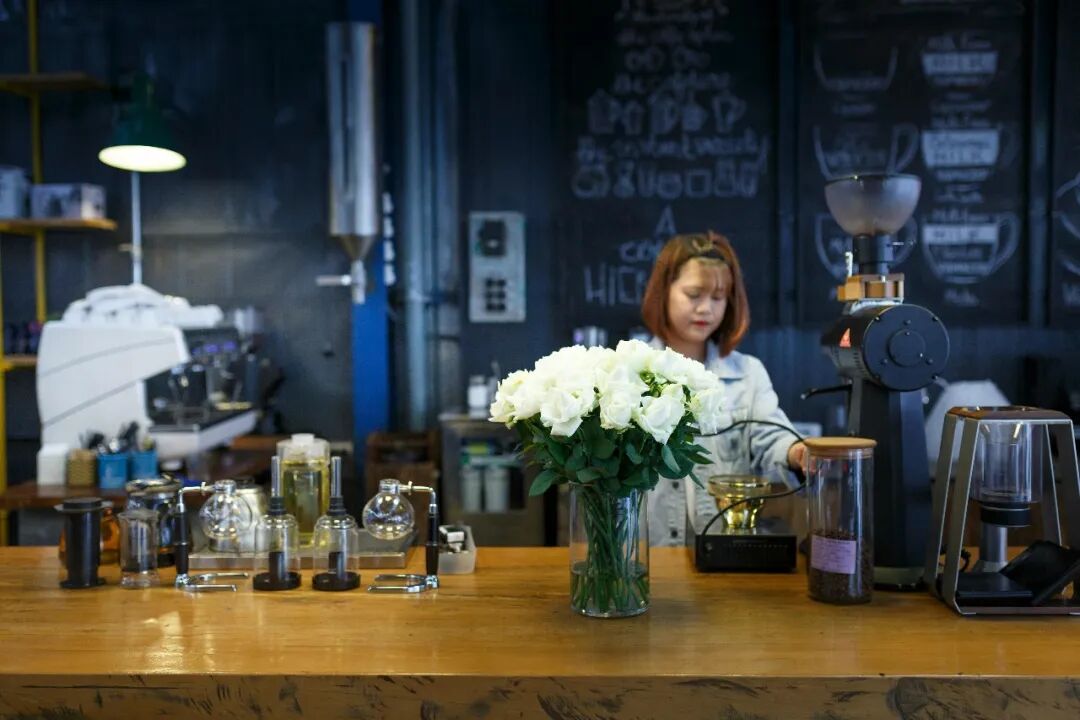
Coffee shop in a county town
In Chen Ting's words, the first few years of starting the business were full of hope. But in 2023, the environment began to change. Coffee chain brands such as Luckin and Cotti successively opened stores in the commercial area of Pujiang, and then Starbucks also came to this small city and opened 3 stores in Pujiang in just a few years.
The customers began to be diverted.
In October last year, due to the urban planning of the local government, Chen Ting had to move her coffee shop to a business district near Jinshi Lake. The renovation of the new store cost more than 1 million yuan in total. If it was five years ago, this investment of more than 1 million yuan might have been recovered quickly, but today, Chen Ting admitted that "the pressure is great."
Although the business during the Spring Festival was still booming and the store was full of people both inside and outside, she knew clearly that this wave of popularity that only lasted for a few days would quickly subside after the Spring Festival holiday, and this specialty coffee shop would enter a long off-season for breaking even. In order to maximize the seat utilization rate during the Spring Festival, Chen Ting also posted an announcement saying "During the Spring Festival, one customer, one seat, one consumption. Order according to the number of people."
Zhang Chao's experience is similar to Chen Ting's. His specialty coffee shop opened in 2023. There are only two employees in the small shop including himself. The price of a cup of coffee ranges from 25 yuan to 35 yuan. In the first few months after opening, the monthly profit could easily reach more than 10,000 yuan.
But last year, except during the Spring Festival, the average monthly profit was only a few hundred yuan, and most months were struggling on the break-even line.
Zhang Chao simply calculated an account for "Focus One". This specialty coffee shop has two floors, and the area of each floor is about 40 square meters. The monthly rent is about 3,000 yuan. Excluding his own salary, the cost of one employee in the shop is 4,300 yuan per month. Among the utility bills, electricity is the major part, and the difference varies greatly in different seasons. On average, it is calculated at 800 yuan per month.
"Including material losses, the daily cost is about 300 yuan. The gross profit margin of a cup of coffee is less than 60%. Selling about 20 cups a day can basically break even, and this doesn't even consider the losses of equipment and decoration," he said.
The investment in equipment and decoration for this specialty coffee shop in the early stage was 120,000 yuan. On normal days in the off-season, it can occasionally sell 50 cups on holidays, but most of the time it's only a dozen or twenty cups, and sometimes there are even single-digit sales in a day. By selling some snacks and desserts with higher gross profit margins, it can "barely maintain".
"If we can't earn enough 'life-sustaining money' after the Spring Festival during these few days, we'll sell the shop after the Spring Festival," Zhang Chao told "Focus One".
It's not that the 30-yuan-a-cup coffee in the county town is no longer appealing. It's just that there are too many substitutes for it.
Li Tongtong just left Chen Ting's coffee shop with her friend. The two of them drank coffee, had a "nice meal", and chatted for more than an hour, spending a total of more than 130 yuan. For her, this consumption is not cheap, but during festivals and holidays, finding a nice place with friends to chat and take pictures, a specialty coffee shop in the county town is still a good choice.
But on normal days, she prefers to order a cup of Gu Ming coffee. "Spending less than 10 yuan can keep you awake all day."
Stuff 10 coffee shops into a street in a county town
In today's coffee market in county towns, it is already crowded with leading brands offering "9.9 yuan" coffee, milk tea shops and fast food restaurants that have crossed over into the coffee business, and world-class coffee giants. Everyone's living space is being compressed.
The manager of a Luckin coffee shop in a county town told "Focus One" that it's not just the specialty coffee shops in the county town that are facing the dilemma of "making money during the Spring Festival and breaking even at other times". Even for some national chain brands, it's difficult to make money during the consumption off-season in county towns.
Compared with independent specialty coffee shops, the upfront cost of opening a franchised Luckin coffee shop in a county town is much higher. According to him, Luckin doesn't charge a franchise fee, but it will charge for decoration, equipment, and a deposit in the early stage, with a total cost of about 400,000 yuan.
However, the average customer order price of chain coffee brands is more in line with the consumption habits in county towns, and the daily customer flow is still guaranteed to a certain extent. Taking his store as an example, "Even on normal days in the off-season, we can sell 200 cups a day, and during the Spring Festival, the daily sales start from 1,000 cups (most of which are takeaways)."
Calculating based on Luckin's average customer order price of 13 - 14 yuan and a single-cup gross profit margin of about 55%, although the payback period is longer than that of independent specialty coffee shops, the 'break-even threshold' is relatively lower.
A franchisee of a branded coffee shop believes that specialty coffee chain brands represented by Manner Coffee and M Stand started testing the county town market several years ago, but they have always remained in the stage of opening a small number of stores for trial and error. From their actions, it can be seen that the survival situation of specialty coffee in county towns is actually not optimistic.
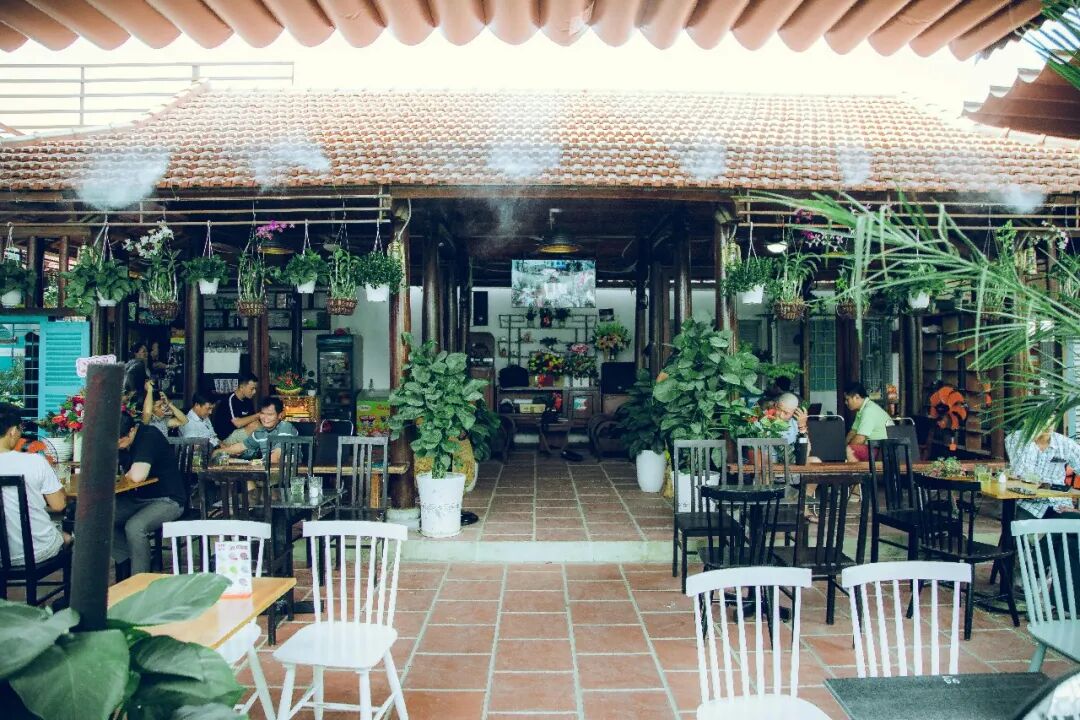
Coffee shop in a county town
Several practitioners of specialty coffee shops in county towns told "Focus One" that according to their observations and actual experiences, the key turning point from easily earning over 10,000 yuan a month to barely "sustaining life" only by the Spring Festival occurred in 2023.
According to the data previously released by Meituan, in 2021, the growth rate of online coffee merchants across the country was 27.81%, among which the growth rate in first-tier cities was 42.42%, and the growth rate in each county town was 27.80%. By 2023, this growth rate data had clearly "reversed". The market in first-tier cities was approaching saturation, and the growth rate dropped to 28.17%, while the growth rate of the coffee market in county towns soared to 66.68%.
Similarly, 2023 was also an eventful year for the Chinese coffee market.
In this year, Luckin's sales in China exceeded those of Starbucks China for the first time. After securing the top position in the industry, Luckin repeatedly expressed its expansion plan to accelerate the penetration into the lower-tier markets through the joint-venture model.
On the other hand, in the year when Starbucks lost its top position in the Chinese market, Howard Schultz, the founder of Starbucks, visited China again after a five-year absence. During his speech at Peking University, he proposed that the number of Starbucks stores in China would exceed 10,000 in the future and cover 3,000 county towns in China.
The two coffee giants began to accelerate their competition for the county-level market in China.
Meanwhile, Cotti Coffee launched a promotion activity of "opening thousands of stores in a hundred cities" this year, bringing the "9.9 yuan" coffee war to the lower-tier markets.
According to the data from GeoQ Data, as of December 2023, the total number of branded coffee stores in county towns across the country was 5,454, among which 68% (3,700) were opened within the year of 2023.
Today, it is no longer a rare sight to see Luckin, Cotti, Xing Yun Coffee, and Starbucks simultaneously appear on a commercial street of three or four hundred meters in the core business district of a county town with a permanent population of about 500,000.
In the vicinity of People's Square, the central business district in Pujiang County, there are 5 stores of chain coffee brands, including two Luckin stores, one Starbucks store, one Nowwa store, and one Cotti store. In addition, there are also two or three independent specialty coffee shops.
Chen Ting deliberately avoided the highly competitive central area of the county. But recently, she found that on the other side of the mall a few meters away from her specialty coffee shop, a new Gu Ming has just finished its decoration and is expected to open after the Spring Festival.
The long breakout battle of specialty coffee shops in county towns
Specialty coffee shops in county towns face far more challenges than those in first- and second-tier cities.
A senior coffee practitioner summarized three reasons for "Focus One". The first and most obvious one is the price factor. The price of a cup of specialty coffee ranging from 30 yuan to 40 yuan does not match the average consumption level in county towns. One-time check-in consumption is the mainstream, and it is difficult to form high-frequency repurchase.
The second reason is the different priorities in consumers' decision-making. Coffee consumers in first- and second-tier cities tend to have a rigid demand for coffee. They value the product itself more than the brand, such as whether the taste is suitable, whether the product quality is stable, and whether it is convenient to purchase, etc.
However, coffee consumers in county towns have not fully developed the habit of drinking coffee. Their consumption is more inclined to have social and leisure attributes. Therefore, the brand is more important in their consumption decision-making.
"This is also why whenever Starbucks enters a lower-tier city or county town, it always triggers a wave of check-ins among consumers. This is mainly because Starbucks' high-end brand image is well-known," he said. Independent specialty coffee shops in county towns are naturally at a disadvantage in terms of